Most rentals come with skimpy storage. You still need a tidy place for clothes, dishes, and daily items. Piles of bins are not a long-term plan.
Renter-friendly shelves here means no drilling, low wall risk, and easy removal when you move. This guide focuses on safe, no-damage fixes that protect your deposit and add real storage and display space.
First, we explain what makes a shelf rental-safe. Then we show top picks under $25 and under $50. Finally, we match options to rooms and apartment sizes so you know what fits your life.
Most no-drill options hold light-to-medium loads. I’ll show how to avoid accidents with smart placement and weight limits. If your cabinets are full or you lack an entry drop zone, these picks are worth trying.
Expect clear pros and cons, who each type suits best, and alternatives for studio vs larger spaces. The goal is practical storage that keeps your landlord happy and your home working for real life.
Key Takeaways
- These no-drill options add storage without risking your deposit.
- Guide organized by safety, budget tiers (small-space fixes), and room use.
- Most choices are best for light-to-medium items; follow weight limits.
- Under $25 and under $50 picks focus on portability and durability.
- Good for studios, tiny closets, and entryway drop zones.
- Each pick includes pros/cons and who it’s best for.
What Makes Shelving Rental-Safe in a Rental Home
Start by checking how a shelf mounts and what it will do to your walls. Rental-safe means the unit „comes down cleanly“: no new holes, no cracked tile, and no adhesive that strips paint when removed properly.
No-drill mounting types that avoid holes
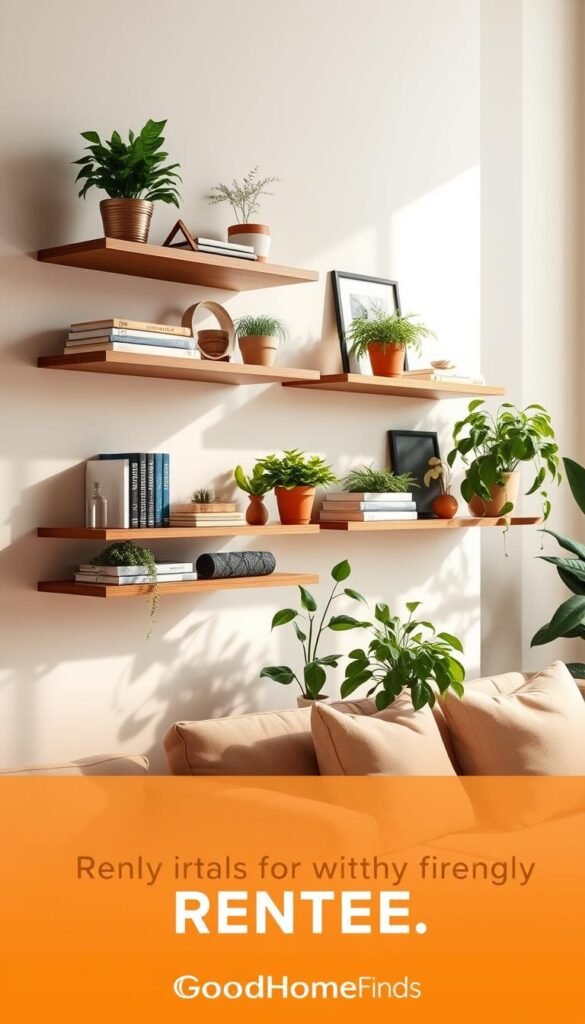
Options that avoid drilling include adhesive tape-backed units, suction mounts for tile or glass, magnetic racks for metal appliances, hanging systems that use closet rods or doors, tension poles, and freestanding shelving. Match the mount to the surface before you buy.
Weight limits, durability, and safety basics
Pick a shelf by the heaviest daily item you plan to store, not the lightest decor piece. Check manufacturer weight limits and choose sealed or moisture-resistant materials near sinks or showers.
- Surface checklist: painted drywall = tape or freestanding; tile = suction or adhesive rated for tile; metal = magnetic.
- Safety basics: avoid heavy items over beds, keep regular reach items lower, and use anti-tip kits on tall freestanding units.
Floating shelf vs bracket shelf
Floating options look minimal and save visual space. They suit tight rooms with low visual clutter. But they need precise placement and careful tape removal.
Bracket styles feel sturdier and are easier to level. For first-time installers, visible hardware makes aligning simpler. Both work as no-drill versions when you choose adhesive or tension-based models.
„Bracket shelves are easier for first-time installers because visible hardware makes leveling simpler; floating shelves save room but require more precision.“
Quick removal tip: follow the tape directions, pull slowly, and give yourself extra time at move-out so you don’t rush and risk damage. If you want a deeper comparison of budget vs premium storage fixes, check this storage guide.
Best renter friendly shelves under $25 and $50
Focus on affordable solutions that add real storage space where you need it.
Price framing: under $25 covers light-duty add-ons; under $50 buys taller or freestanding units that hold more and tip less.
Adhesive floating shelves for light display and bedside essentials
Use for: phone, glasses, a small plant, or a candle. Two-pack acrylic floating shelf kits run about $20 and hold ~7 lbs. Cord cutouts help with charging.
Pros: clean look, fast setup. Cons: low weight limit, surface-sensitive. Alternative: a slim freestanding nightstand for heavier bedside gear.
Suction bathroom shelves that fight clutter
Suction corner acrylic shelves keep shampoo and razors off ledges. They work best on smooth tile or glass and help items dry faster.
Safety notes: don’t overload, re-seat cups periodically, and avoid constant direct spray.
Magnetic shelves for refrigerator-side storage
When counter and cabinet space is tight, magnetic racks on the fridge side give quick reach for spices and condiments. Typical magnetic shelves hold around 7 lbs.
Who it’s for: small kitchens that need visible, grab-and-go spots.
Hanging closet shelves that add structure
Fabric and board hanging organizers can hold up to ~50 lbs total. They convert a rod-only closet into stacked storage fast.
Pros: cheap, modular. Cons: limited width and sag over time. Alternative: a portable clothing rack if you have floor space.
Stackable shelving and over-the-toilet units
Stackable cubes work well under sinks and in pantries. Measure depth so doors and drawers still open. Over-the-toilet freestanding units add vertical space; choose models with anti-tip kits and valve clearance.
Countertop tiered organizers
Five-tier spice racks boost visibility and cut duplicate buys. If counter space is near-zero, switch to a magnetic rack or a cabinet-door organizer for small studios.
| Product type | Typical cost | Load | Best use |
|---|---|---|---|
| Adhesive floating shelf (acrylic) | $15–$25 | ~7 lbs per shelf | Bedside, light display |
| Suction corner bathroom shelf | $10–$30 | ~5–10 lbs | Shampoo, skincare, razors |
| Magnetic fridge shelf | $12–$30 | ~7 lbs | Spices, vitamins, condiments |
| Hanging closet organizer | $15–$40 | Up to ~50 lbs total | Clothing, shoes, folded storage |
| Over-the-toilet freestanding unit | $35–$50 | Varies; anti-tip recommended | Vertical bathroom storage |
Room-by-Room Shelf Picks for Small-Space Storage
Look for the friction points in your apartment where things pile up. Those are the spots to add a small shelf or rack first. Focus on daily reach and where clutter lands.
Kitchen
Create a mini daily cooking zone. Use countertop tiers and a magnetic fridge-side shelf so seasonings and utensils stay visible.
Keep heavy pots low. Store light glass and spices higher for easy reach and safety.
Bathroom
Compare corner suction shelves, over-the-toilet units, and shower-safe caddies. Choose by airflow, splash zones, and cleaning habits.
Suction works on smooth tile or glass. Over-the-toilet units add vertical space but watch valve clearance and anti-tip needs.
Closet
Hanging organizers add instant structure to a rod-only closet. Stackable cubes fix folded-clothes piles.
If you have room, a small freestanding bookcase inside the closet holds shoes, bags, and books neatly.
Living & Entry
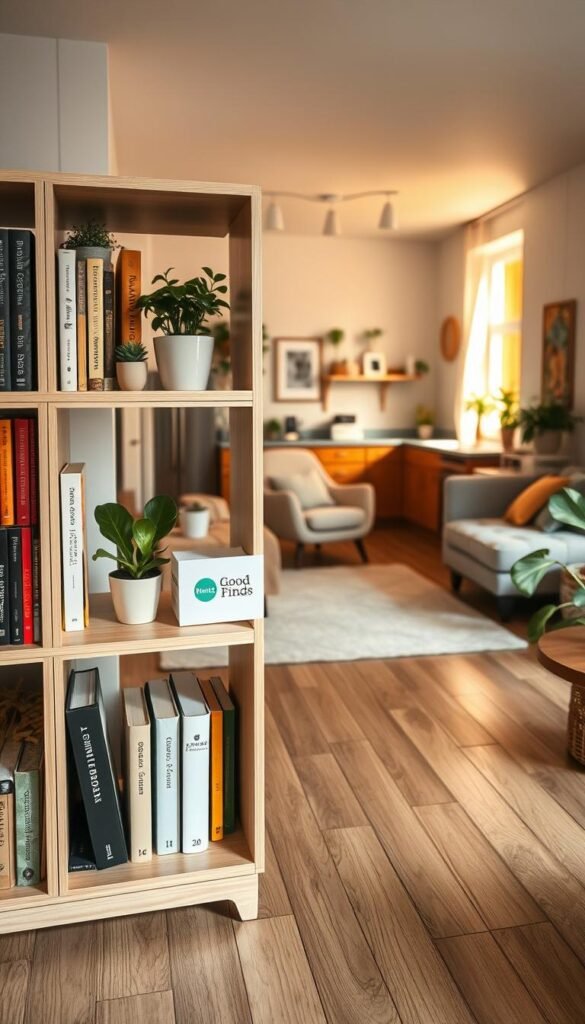
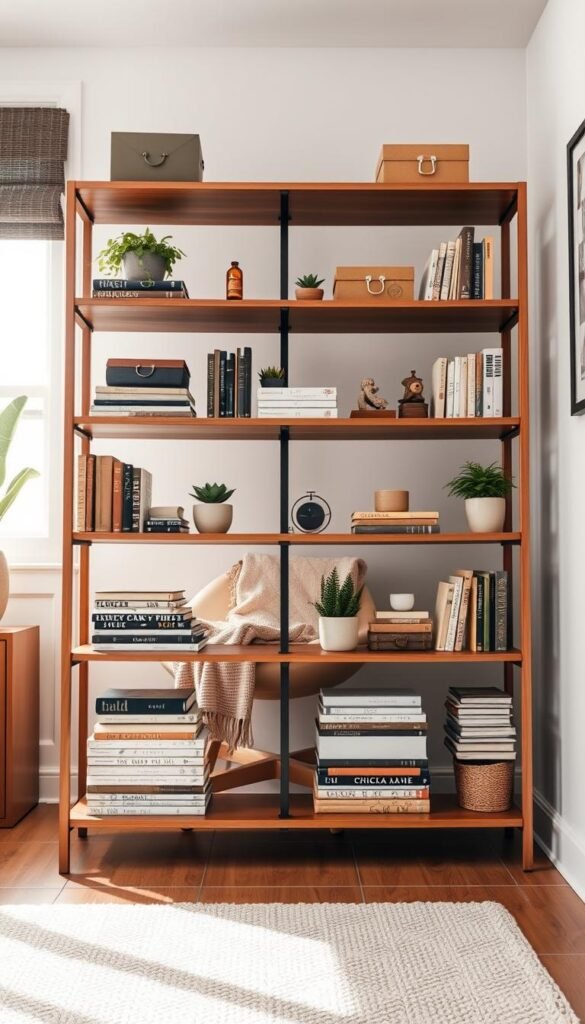
A slim bookcase functions as vertical storage for books and decor in studios. It stores items without drilling into a wall.
„Place a small shelf with hooks near the door to create a true drop zone for keys and wallets.“
Position the drop-zone shelf so it clears the door swing and keeps daily things in one reachable spot.
| Room | Best pick | Quick safety tip |
|---|---|---|
| Kitchen | Magnetic fridge shelf / tiered rack | Keep heavy items low; secure tiers |
| Bathroom | Corner suction or over-toilet unit | Use tile/glass for suction; anti-tip for tall units |
| Closet | Hanging organizer / stackable cubes | Distribute weight; avoid top-heavy stacks |
| Entry | Small shelf with hooks | Mount near but not blocking door swing |
Mini decision guide: if you live in a studio, prioritize vertical and door/rod options. If you have more room, choose freestanding units for capacity and easier move-out. For more closet fixes, see the best closet space solutions.
Setup, Daily Routines, and Easy Maintenance for Renter-Friendly Shelves
Plan placement before you stick anything to avoid regret and wasted time. Take measurements, imagine daily use, and mark spots with painter’s tape so you can step back and check the visual balance.
Placement, measuring, and leveling for a clean install
Measure twice and mark once. Use a measuring tape to set height by what you store most.
Level matters. A small bubble level keeps a shelf looking tidy. Re-check after you load items; weight can reveal a tilt.
Keep adhesive solutions away from high-steam zones unless rated for moisture. Suction works best on clean, smooth tile. Textured walls reduce grip.
Simple daily routines that keep small-space storage working
Adopt a 60-second nightly reset to return things to their spots. That small habit saves time later.
Wipe down bathroom units weekly and check suction seals. Follow a one-in-one-out rule when shelves get crowded.
Safety, maintenance, and quick alternatives
Safety checklist for freestanding units: use anti-tip hardware, keep heavier items low, and never block access paths.
Maintenance tips: clean mounting surfaces before reapplying, test adhesives periodically, and do not exceed weight limits even if it seems fine.
If humidity defeats adhesive, switch to a freestanding unit. If paint is delicate, choose hanging or magnetic options instead. For specific bathroom fixes, see bathroom space solutions.
| Action | Tool | Frequency | Why it matters |
|---|---|---|---|
| Mock placement | Measuring tape, painter’s tape | One time before install | Prevents poor sightlines and wasted time |
| Level check | Small bubble level | During install and after loading | Keeps the look clean and avoids slanting |
| Seal and clean check | Mild cleaner, cloth | Weekly for wet areas | Maintains grip and prevents failures |
| Nightly reset | Hands only | Daily (60 seconds) | Stops clutter from building |
Conclusion
End with a simple rule: pick storage that suits your space, your stuff, and your schedule. The best renter-friendly shelves match your surface, daily habits, and the real weight you plan to store.
For a quick pick: adhesive or a floating shelf works for light bedside items. Suction fits smooth-tile bathrooms. Magnetic racks free up fridge sides. Hanging organizers fix closet chaos. Freestanding shelving gives the most storage with the least wall risk.
Budget guide: under $25 solves small annoyances fast. Under $50 buys height, stability, and safer daily use. Respect weight limits, keep heavy things low, and use anti-tip fixes on tall units.
Studios gain most from vertical, multi-use shelving. Larger apartments can add a bookcase for books and overflow. Pick one clutter hot spot, test one solution for a week, and adjust.