Start simple: clear out expired food, wipe shelves, and remove clutter for a clean blank slate. This makes planning easier and helps you see real storage space.
Prioritize your „prime real estate“ shelves for items you use daily. Keep heavy jars and cans on low shelves for safety. Measure deep or narrow shelves before you buy organizers so nothing ends up wasted.
No-drill solutions are the focus. You’ll get renter-friendly upgrades that protect cabinets and doors. Expect budget picks under $25 for quick wins and under $50 for bigger impact.
This short guide promises practical product suggestions with clear pros and cons, plus best-for advice, durability notes, and easy setup tips. You’ll also find simple systems for categories, labels, and overflow zones beyond the kitchen to avoid crowding one spot.
Key Takeaways
- Begin by decluttering and checking expiration dates.
- Reserve prime shelves for daily items and store heavy goods low.
- Use no-drill, renter-friendly storage to protect cabinets.
- Look for budget options under $25 and under $50 for larger gains.
- Measure before you buy to ensure a good fit for tight space.
Tiny-kitchen pantry reality check: measure your storage space and pain points
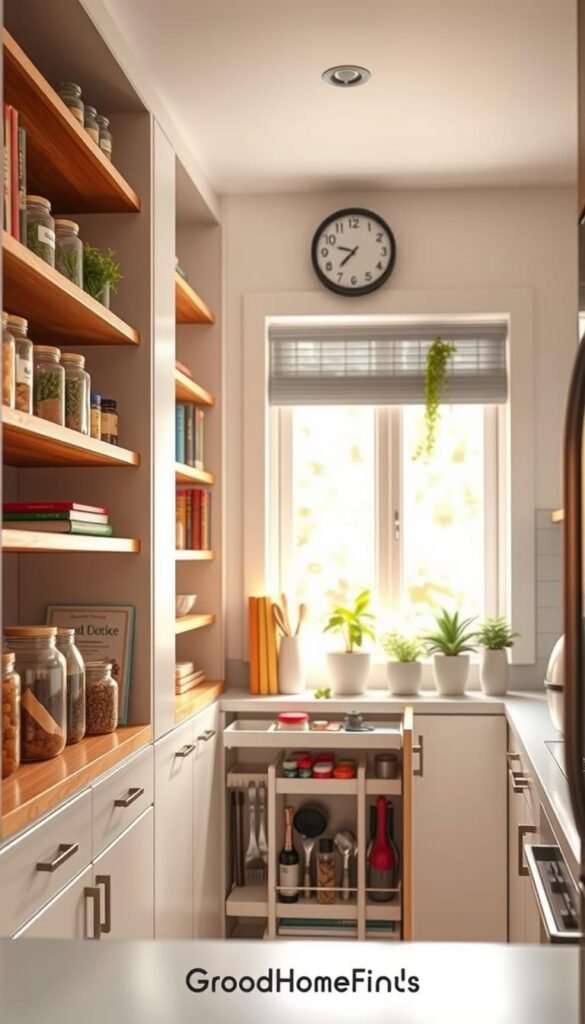
Measure widths, depths, and clearances first to avoid returns and wobble. This quick step makes the rest of your plan easy and renter-safe. A few minutes with a tape measure stops frustration and wasted purchases.
Quick measurements that prevent returns
Note three exact numbers before you buy: cabinet width, shelf depth, and door clearance. Write them down. Check hinge swing so an over-the-door rack won’t stop the door from closing.
Choose your easy access zone
Pick one shelf or area for daily staples. Keep bulk and overflow elsewhere so you don’t dig for dinner basics. Deep cabinets can hide small jars, so plan visibility-friendly bins or turntables.
- Check problem spots like deep shelves or narrow gaps beside the fridge for slim carts.
- Do a safety scan — heavy food low, light items higher or on the door only if clearance is safe.
- Plan one flexible zone for items that change weekly, like snacks or lunch supplies.
This simple reality check saves time, protects cabinets, and makes your kitchen setup actually work for daily use.
Reset before you organize: cleanout, expiration dates, and categories that stick
Start by emptying every shelf so you can see what truly belongs in your kitchen.
Pull everything out. Wipe shelves and corners. Toss any damaged or expired food. This makes every organizer work better and saves you from re-shelving junk.
Simple sorting system that works for roommates and kids
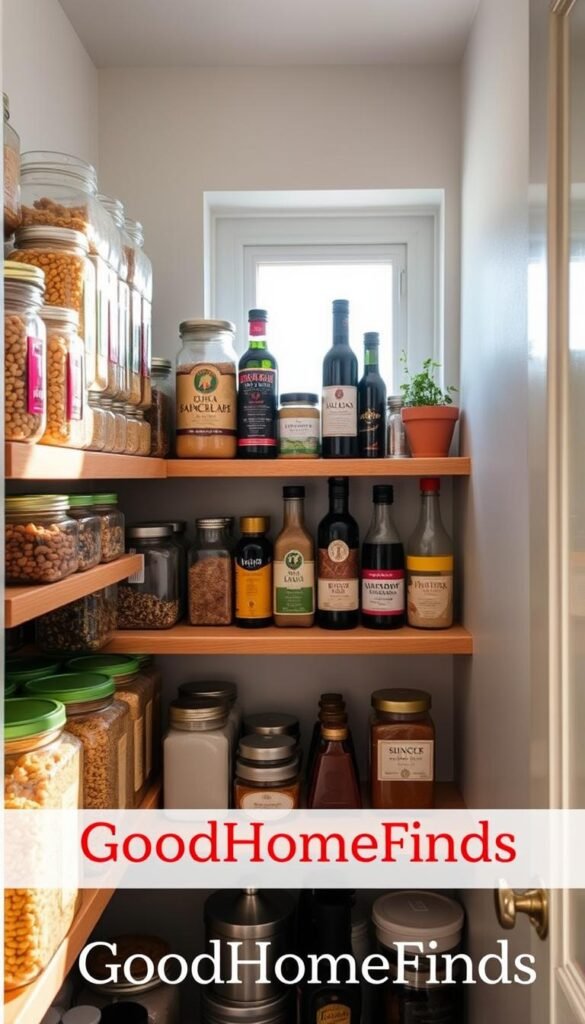
Choose a system that matches real life: by category (baking, canned goods, snacks) or by meal type (breakfast, lunch, dinner).
Set a home for each group. Use washable bins and clear labels so everyone can follow the same routine when they unload groceries.
Placement rules: prime real estate and safety
Keep frequently used pantry items at eye level. Store heavy items low to avoid accidents. Put rarely used items on the top shelf.
„A clean start makes a lasting system.“
- Keep one open slot for new purchases.
- Note duplicates you buy often to fix visibility problems later.
- Do a quick weekly check: front-face labels, wipe spots, and toss expired food.
| Category | Placement | Container |
|---|---|---|
| Baking & Grains | Middle shelf (eye level) | Clear, airtight canisters |
| Canned Goods | Lower shelf | Plastic bins or wire baskets |
| Snacks & Grab-and-go | Front of middle shelf | Washable bins with labels |
Renter pantry ideas that don’t require drilling or permanent changes
You can gain usable space fast by using tools that leave no marks and require no hardware. Start with removable solutions that protect finishes and fit tight corners.
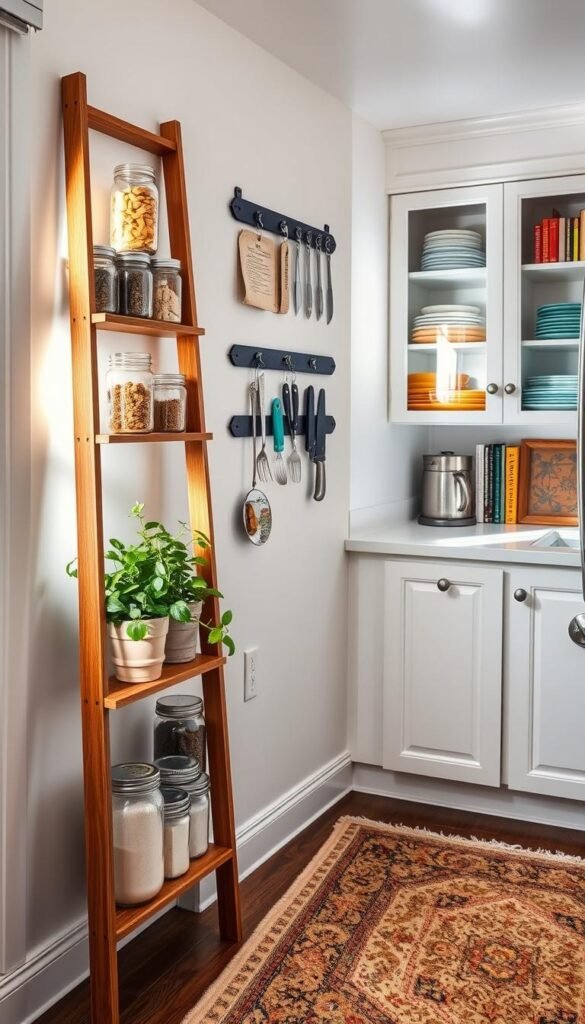
Tension rods make quick dividers under sinks or inside cabinets. Use them to hang lightweight bags, create a low shelf, or hold spray bottles. They are easy to adjust and remove.
Tension rods and other no-damage methods
Durability check: pick rods with rubber ends and metal cores. Avoid overloading—tension systems hold light items best.
Freestanding pieces that act like a pantry
Lean on a narrow shelving unit or rolling cart when you lack built-in storage. These move with you and create dedicated zones for bins and baskets.
How to avoid common mistakes: overload, wobble, and blocked doors
- Build stability first: heavy things go low, weight sits evenly on shelves and carts.
- Avoid hanging too many hooks on one door. Check clearance and hinge strain before loading.
- Choose washable bins and easy-clean surfaces to handle kitchen grease and spills.
„Small, removable upgrades protect your deposit and improve daily use.“
For more practical, renter-friendly upgrades, see small kitchen solutions.
Budget winners under $25: small upgrades with big payoff
A few under-$25 tools fix visibility, grouping, and faster grocery unload. These options solve deep-shelf loss, snack clutter, and inconsistent put-away without drilling or heavy lifts.
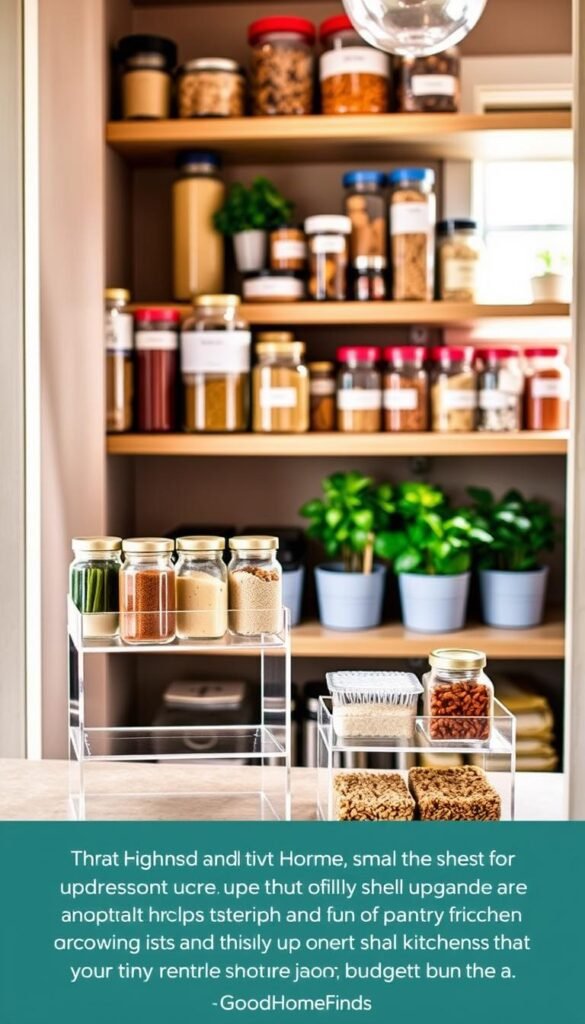
Shelf risers for cans, spices, and jars
Risers keep cans and small jars visible so nothing hides in the back. They use full shelf depth and reduce duplicate buys.
Best for: deep shelves and households with roommates or kids.
Clear bins and baskets to corral snacks, bags, and boxes
Clear bins show what needs restocking and wash easily. Baskets tame loose boxes and bags so you pull one container instead of toppling the whole shelf.
Best for: mixed snacks and shared kitchens.
Labels that keep everyone consistent
Simple, plain-language labels speed unloads. Label jars, boxes, and bins so every person knows where items belong and restocking stays reliable.
Hooks for reusable bags, aprons, and light tools
Behind-door hooks work well for bags and aprons. They keep counters clear and require no hardware. Safety note: avoid heavy bottles on hooks or overloading door-mounted organizers; hinge strain can cause problems.
- You’ll start with cheap tools that fix the biggest pain points fast.
- Use risers to stop items getting lost in the back of deep shelving.
- Choose clear bins for snack control and easy cleaning.
- Add labels and hooks to keep the system consistent and renter-friendly.
For a quick comparison of budget vs premium storage picks, see this useful storage cost guide.
Best pantry organizers under $50 for tiny kitchens
You can reclaim usable kitchen space with flexible organizers that move, hang, or stack. These picks are renter-friendly, budget-minded, and easy to set up.
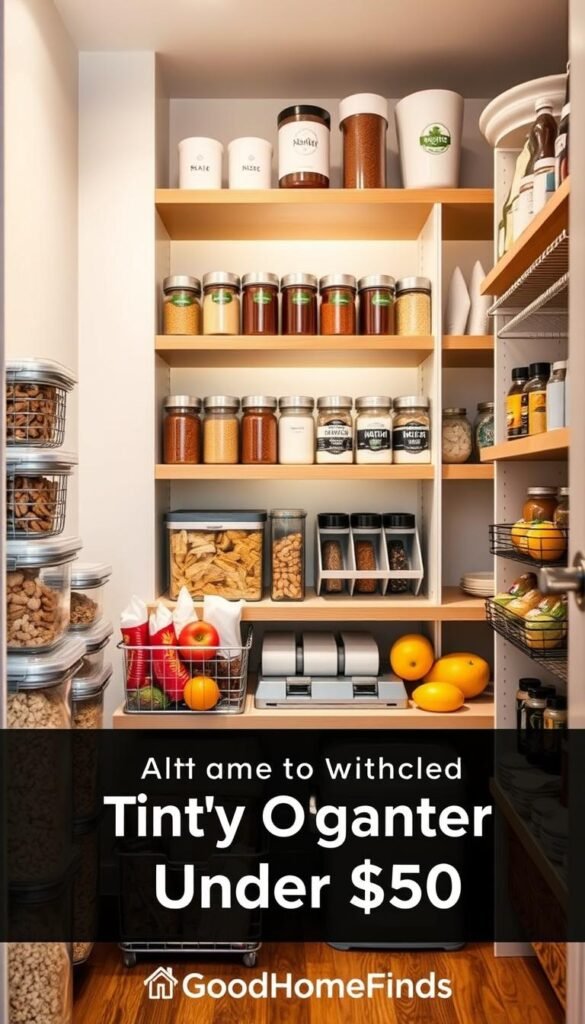
Rolling utility carts — flexible food storage and quick inventory checks
What to know: The IKEA Råskog has three 13×17 trays, sturdy casters, and a bottom shelf that fits bottles up to 11 inches. Assembly takes about 15 minutes.
Pros: portable, easy visibility, works as a mobile pantry. Cons: can roll if pushed, needs flat floor space.
Best for people who want a movable storage zone and fast inventory checks.
Over-the-door racks that add shelves without using wall space
What to know: These racks add multiple shelves without drilling. Check door clearance so the door still closes cleanly.
Pros: maximizes unused door area and adds quick-access shelves. Cons: limited weight capacity; avoid heavy bottles on top shelves.
Best for kitchens with tight floor space and available door clearance.
Produce baskets that free up counter space (hanging vs. stackable)
What to know: Hanging baskets use vertical room. Stackable baskets give a stable footprint and may include inserts to protect produce.
Pros: reduces counter space clutter and improves airflow for produce. Cons: hanging types need headroom; all need regular cleaning.
Best for households that want fresh fruit off the counter and visible at a glance.
- Quick safety rules: keep heavier bottles low on carts, avoid overloading door rack shelves, and don’t block walkways with hanging baskets.
- Choose the tool that matches your layout: mobile cart for flexible space, door rack when wall space is scarce, baskets to free counter space.
| Organizer | Capacity & fit | Quick pros | Best for |
|---|---|---|---|
| Rolling cart (IKEA Råskog) | 3 trays; bottles up to 11″ | Mobile, visible, easy setup | Small kitchens with floor room |
| Over-the-door rack | Multiple slim shelves | Uses door space; no drill | Rooms with tight floor area |
| Produce baskets (hanging/stackable) | Adjustable tiers or stackable units | Frees counter space; breathable | Households with fresh produce |
Cabinet shelf upgrades that double vertical space (no remodel needed)
Stretch upward inside each cabinet to earn back lost shelf inches without a single tool. This approach treats the cabinet like a mini pantry by adding safe, flat layers that keep items visible.
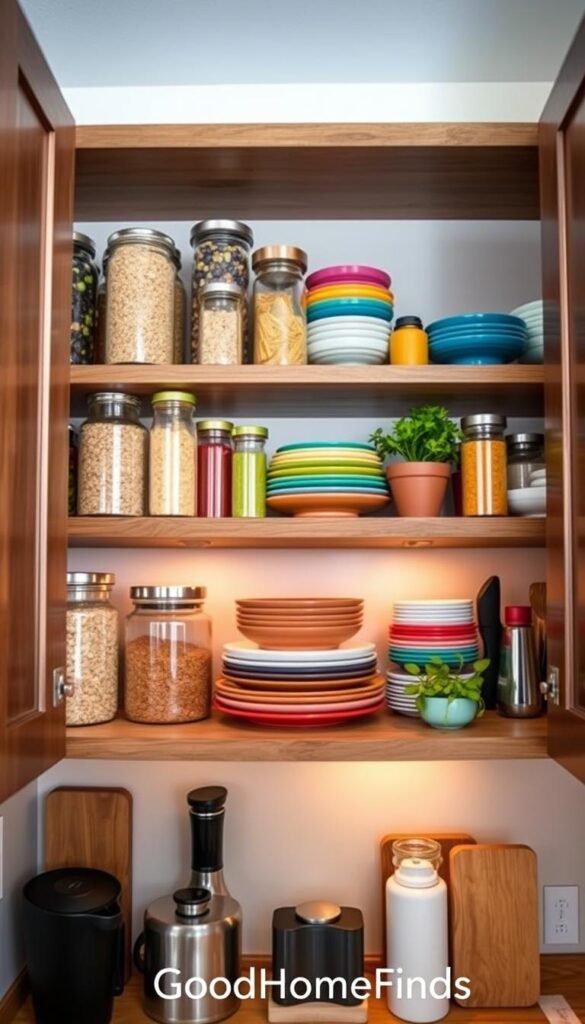
Stackable containers with flat lids create stable „floors.“ Use them to separate bags, chips, and baking mixes so the bottom items aren’t crushed. Clear containers help you spot what’s low at a glance.
Tiered racks and when they’re worth it
Tiered racks mimic tall shelving in miniature. They work best for cans, spices, and short jars. Deep cabinets benefit most because tiered shelving prevents small items from getting lost in the back.
When to skip racks: very shallow shelves often don’t need tiers and can feel crowded if you overdo layers.
Stability and cleaning checklist
- Place heavy items on the bottom shelf or base container.
- Avoid overhangs and keep lids fully supported.
- Don’t block the cabinet door or hinge swing.
- Choose wipeable plastic or metal so crumbs and grease clean easily.
„Add vertical layers that stay steady and visible — it saves space and shopping mistakes.“
| Upgrade | Best fit | Quick pros |
|---|---|---|
| Stackable containers (flat lids) | Deep or adjustable cabinets | Stable layers; clear view; keeps bags intact |
| Tiered rack (2–3 tiers) | Cans, spices, short jars | Doubles visible shelving; easy access |
| Small riser shelf | Middle shelves for jars | Simple install; increases front-row visibility |
Containers that actually help in small spaces: clear, stackable, airtight
Clear, stackable containers transform a cluttered shelf into a readable, usable zone. Choose simple shapes that stack safely and save shelf inches. This makes it easier to see what you have and to plan meals.
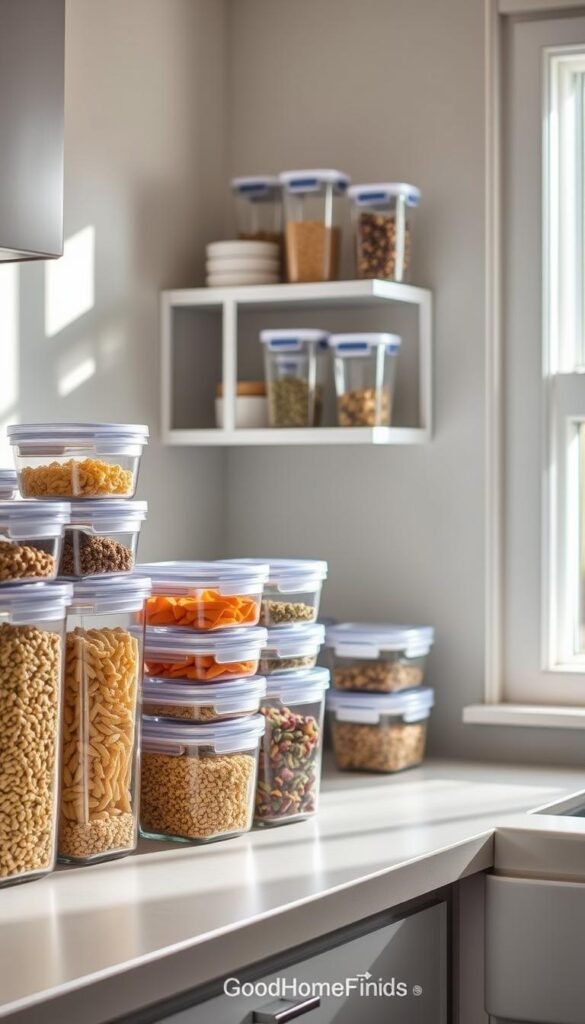
When decanting saves space and when to skip it
Decanting dry goods into uniform jars and boxes often removes bulky packaging and frees shelf depth. It cuts waste and prevents duplicates because you can see quantities at a glance.
Skip decanting for low-use items or things that need original labels for nutrition or allergy info. Decanting also adds cleaning and refill work, so weigh time vs. benefit.
Airtight storage for staples that spoil or attract pests
Prioritize airtight containers for flour, sugar, cereal, rice, and pasta. These keep staples fresher longer and block pantry pests.
Choose washable, food-safe plastic or glass with tight seals. Clear containers show levels, while stackable designs build stable layers on narrow shelves.
Labels you’ll actually use on weeknights
Keep labeling simple: item name, expiration date, and a short prep note (for example, „rice 1:2 water“). Use removable tape or writable lids so labels come off cleanly when you move.
- You’ll use containers when they genuinely save space: awkward boxes, half-empty bags, and bulky packaging are top candidates.
- You’ll skip decanting for rare items or when original packaging has needed directions.
- Choose clear, stackable storage and simple labels to keep the system practical and renter-friendly.
„Swap mismatched packages for clear, sealed containers and your shelves become a tool, not a mess.“
Risers, turntables, and “see everything” tools for deep shelves
A simple spin and a small riser can stop food from vanishing into the back of deep shelves.
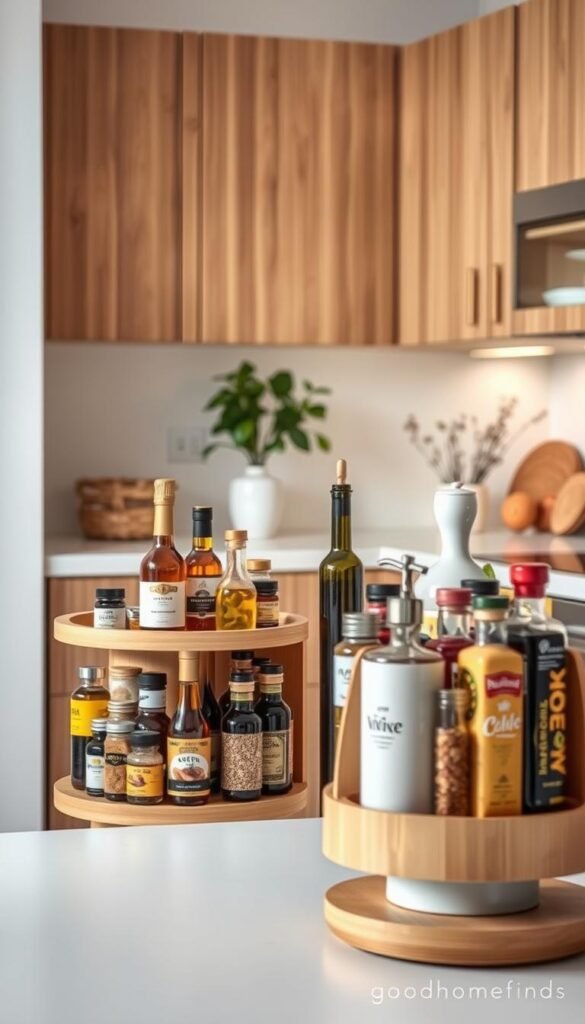
Lazy Susan turntables make oils, vinegar, condiments, and spices easy to grab. You spin to find what you need instead of pulling every item out. Look for models with non-slip grips like the OXO turntable, which comes in 11-inch and 16-inch sizes.
Risers lift cans and short jars so the back row stays visible. Use a shallow riser for one-row visibility or a tiered riser for multiple rows. This reduces duplicate buys and wasted food.
Placement trick that works
Put tall bottles in the center of a turntable and shorter items around the perimeter. That layout keeps everything readable at a glance and stabilizes tall bottles.
Easy setup and safety: choose a size that fits your shelf depth, test for wobble, and avoid overloading one tool. Keep heavy items low and steady.
„See everything once — you stop buying doubles.“
| Tool | Best for | Quick pro |
|---|---|---|
| Riser | Rows of cans and short jars | Keeps back items visible |
| Turntable | Mixed-height bottles and spices | Spin to grab without unloading |
| OXO turntable | Oils, vinegars, condiments | Non-slip grips; 11″ & 16″ sizes |
You’ll fix deep-shelf frustration by using these “see everything” tools instead of stacking items in front of each other. For more practical storage options, check a helpful roundup on small bathroom and kitchen space solutions at small space storage picks.
Door and inside-cabinet space: the hidden pantry you already have
Treat cabinet doors as mini storage zones and you’ll add usable space without touching walls. This is a low-cost, renter-friendly way to expand your kitchen storage.
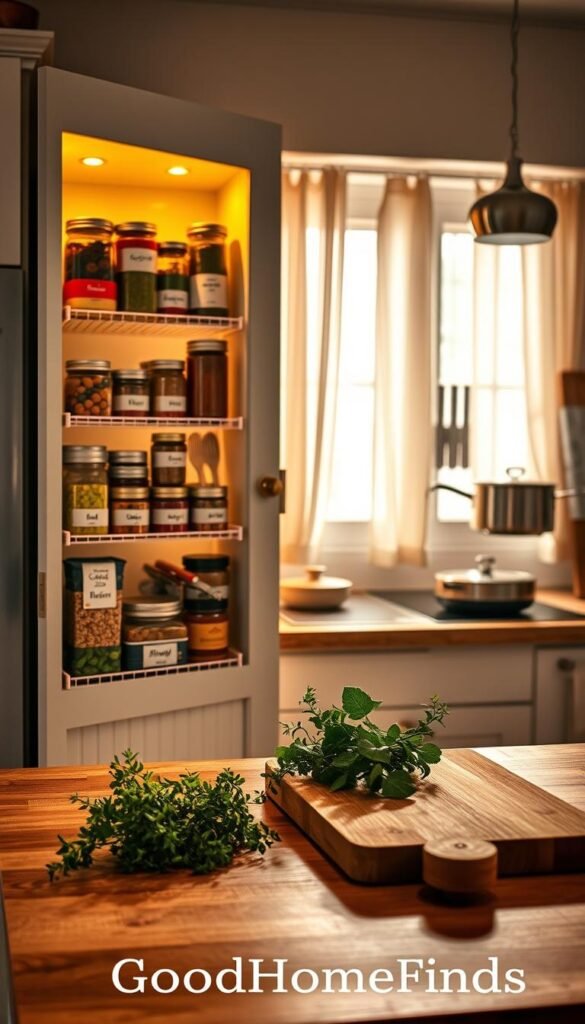
Over-the-door shelves for condiments and small boxes
Do: pick shallow racks that clear the hinge and the frame. Use them for light condiments, small boxes, and wrapped staples so counters stay free.
Don’t: load heavy glass jars or large bottles on the door. That stresses hinges and can warp doors over time.
Back-of-door hooks for bags and lightweight cleaning items
Install adhesive or hanging hooks to hold reusable bags, dishcloths, and spray bottles. Hooks keep daily items visible and speed up routines.
Keep weight low and spread items across multiple hooks to avoid strain.
Safety checks and what to avoid
Check clearance: open the door fully to ensure racks don’t scrape shelves or block appliance doors.
Confirm hinge load: avoid concentrating weight near the top hinge. Distribute items and keep heavy goods on low shelves inside cabinets.
„Shallow, removable door storage gains space without permanent changes.“
| Option | Best for | Weight limit & notes |
|---|---|---|
| Shallow over-the-door rack | Condiments, small boxes, snacks | Light items only; check door clearance |
| Adhesive hooks | Bags, aprons, lightweight tools | Use multiple hooks; remove cleanly |
| Hanging fabric organizer | Plastic containers, packets | Low weight; breathable; easy to wash |
- You’ll treat inside doors as bonus pantry space, but always confirm swing and clearance first.
- You’ll choose shallow racks and hooks for safe, removable storage.
- You’ll avoid heavy jars and bottles on doors to prevent hinge strain and damage.
For more renter-friendly door solutions and quick product picks, see a practical roundup at renter-friendly door solutions.
Counter space protection: keep prep room while adding storage
Keep your prep area free by choosing storage that stacks up, not across. This approach preserves counter space and gives you fast access to daily tools and supplies.
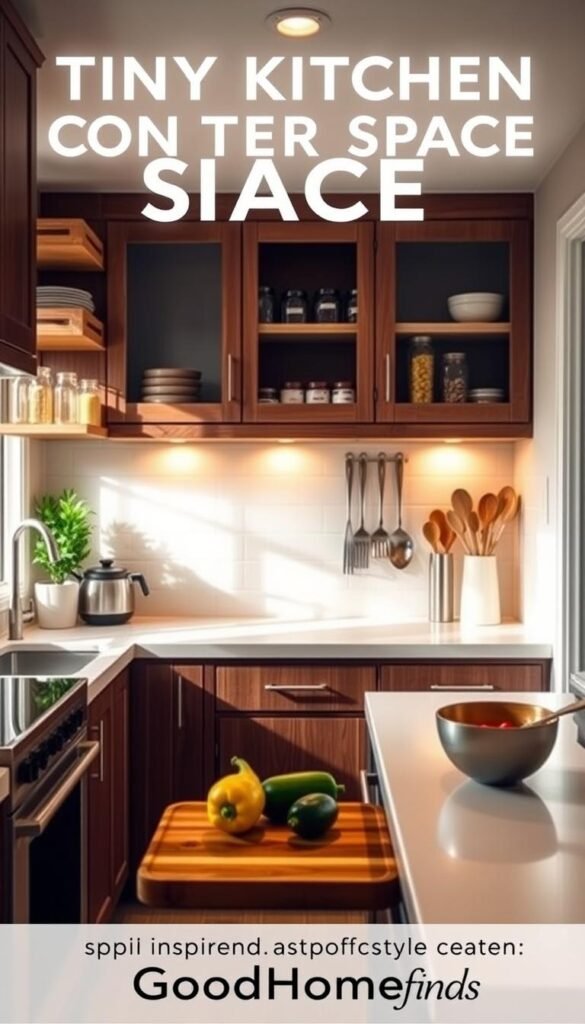
Countertop drawers and pull-out shelves for small tools
Countertop drawer unit (17¼x15½x5¼ in) with a pull-out tray (17½x10¾ in) stores utensils, small gadgets, and a temporary prep landing zone. Use the drawer for flat tools and the tray for cutting board staging.
Best for: small kitchens and coffee/tea micro-zones where you need quick access without clutter.
Sliding seasoning racks to hide bottles and reduce grease
The sliding seasoning rack (19¾x5x14½ in) keeps oils, vinegars, and spice bottles tucked away. It shields bottles from splatter and keeps labels cleaner over time.
Pros: reduces visible clutter and grease buildup. Cons: measure clearance above and behind before buying so sliding works smoothly.
Micro-zones for coffee and tea routines
Create a small, stacked station for mugs, pods, and a scale. This saves you time each morning and stops tools from spreading across the counter.
Keep sticky syrups or sugar in sealed containers and wipe the top weekly to avoid residue. That simple habit maintains the whole counter space and keeps the unit worth the footprint.
„Stacked storage protects prep room and speeds routines.“
- You’ll protect prep space by stacking storage upward instead of spreading sideways.
- You’ll use a countertop drawer + pull-out shelf to store small tools and create a temporary prep landing zone.
- You’ll hide oils and bottles inside a sliding seasoning rack to keep them cleaner.
- You’ll build a coffee/tea micro-zone so your morning routine is faster and less cluttered.
| Product | Dimensions | Best use | Quick pro / con |
|---|---|---|---|
| Countertop drawer unit | 17¼x15½x5¼; tray 17½x10¾ | Utensils, small tools, prep landing | Pro: tidy flat storage; Con: needs above clearance |
| Sliding seasoning rack | 19¾x5x14½ | Oils, vinegars, spice bottles | Pro: keeps bottles clean; Con: limited height for tall bottles |
| Coffee/tea micro-zone box | Compact stackable unit (varies) | Mugs, pods, syrups, spoons | Pro: speeds morning routine; Con: requires weekly wipe-down |
Spice and seasoning storage: easy access without taking over your cabinet
Smart, compact storage keeps spices visible without sacrificing shelf space. Use small tools that group jars and make labels readable from above.
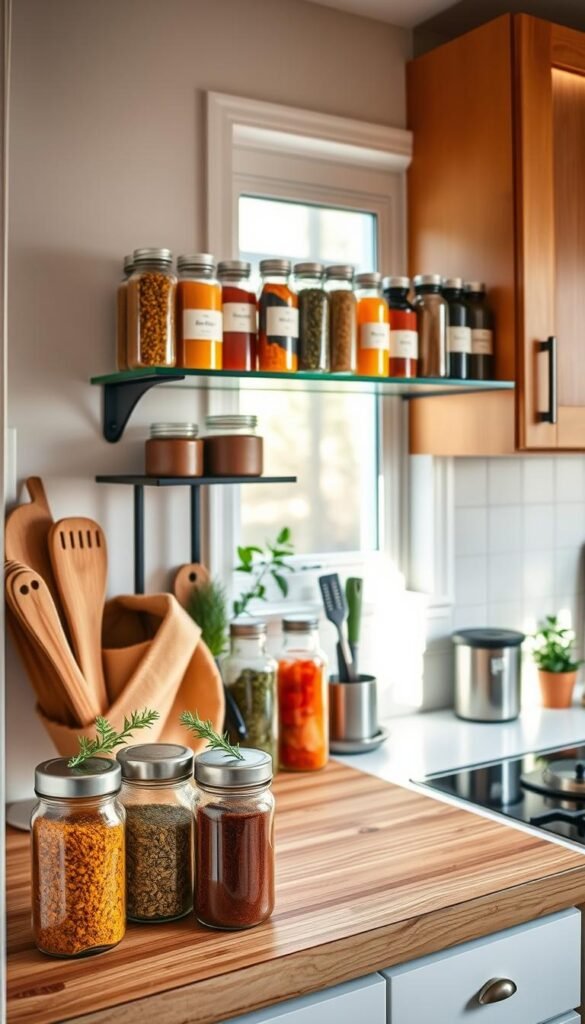
Best-for: anyone with tight cabinets or limited counter room who wants quick access while cooking.
Expandable shelf risers for tight cupboards
An expandable spice shelf stretches from 14–27 inches so it fits many cabinet widths. It creates tiers so jars sit at different heights and are easier to read.
Pros: adjustable fit, keeps labels forward. Cons: tiers can still hide labels in the back without a top-labeling fix.
Magnetic racks for fridge-side wall space (and non-magnetic fridges)
Magnetic spice shelves free up cabinet room by using the side of the fridge as wall space. Look for strong magnets and a perimeter lip to keep jars from sliding.
If your fridge isn’t magnetic, use adhesive magnetic sheets on the surface, then mount the magnetic rack. This is a nonpermanent, practical workaround.
Labeling workaround to read the back row at a glance
Label the top of each jar so you can read the back row from above. This classic tip saves time and cuts duplicate buys.
„Label the tops — you’ll spot what’s low without pulling every jar.“
- You’ll keep spices easy to grab without dedicating a full shelf to a messy pile.
- You’ll choose expandable risers for tight cupboards and magnetic racks to use fridge wall space.
- Top labels fix the back-row visibility problem with minimal effort.
| Solution | Fit / Size | Quick pros | Drawbacks |
|---|---|---|---|
| Expandable shelf riser | 14–27 in adjustable | Fits varied cabinet widths; tiered visibility | May still hide labels without top tags |
| Magnetic spice rack | Fridge side or metal wall | Saves shelf space; visible at eye level | Needs magnetic surface or adhesive sheet |
| Top-labeling | All jar types | Read jars from above; fast restock checks | Requires label upkeep |
Drawer-friendly pantry organization for snacks and small items
Turn shallow drawers into a dedicated grab-and-go zone so snacks stop crowding your shelves. Drawers give fast access and fewer falling boxes. They also hide clutter and keep counters clear.
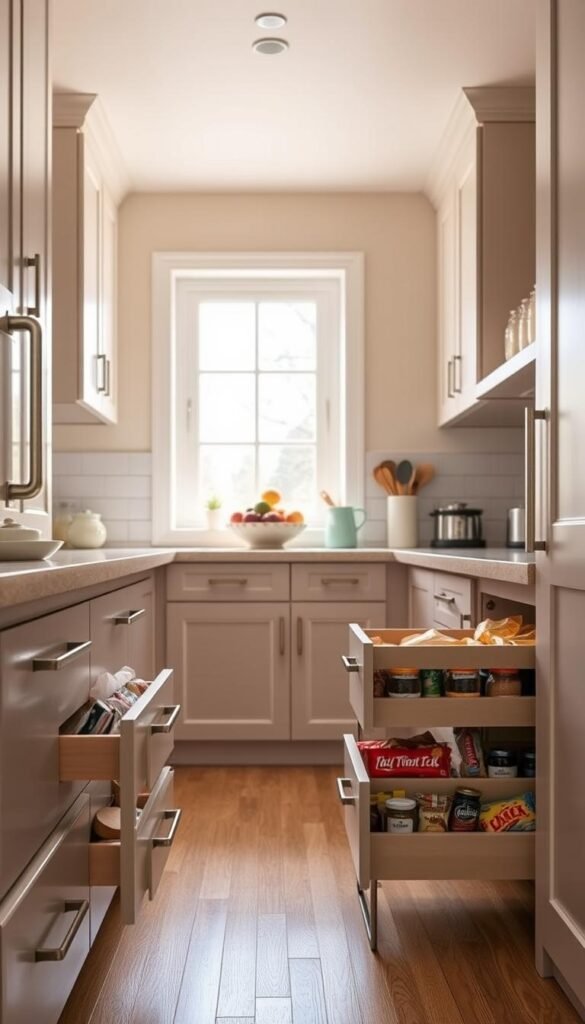
Extendable dividers for shallow drawers
Extendable dividers create neat lanes in drawers that are too shallow for deep bins. Slide them to match drawer width and make rows for bars, packets, and single-serve items.
Quick setup: measure width, press dividers into place, and group similar things together. One lane becomes a grab-and-go row for kids or roommates.
Best-for guidance: households with kids, roommates, or grab-and-go routines
This system is best for shared homes where quick access matters. Use one lane as backstock so you see what’s open versus extra.
- You’ll use drawers as a snack zone so shelves stay neat.
- Extendable dividers make lanes without adding permanent hardware.
- Limit categories to what you use weekly to keep maintenance easy.
„A simple drawer lane keeps snacks visible and cuts the daily scramble.“
| Solution | Best fit | Quick pro |
|---|---|---|
| Extendable dividers | Shallow drawers under 4″–6″ deep | Create lanes; no bins required |
| Small clear bins | Deeper drawers or wide pull-outs | Group loose packets; visible supply |
| Grab-and-go lane | Homes with kids or busy mornings | Stops pantry raids; speeds routines |
For more small-kitchen storage tips and closet solutions, see a helpful guide to closet storage options at closet space solutions.
Freestanding pantry alternatives for apartments of different sizes
Match your storage choice to the apartment size so the solution fits the room, not the other way around.
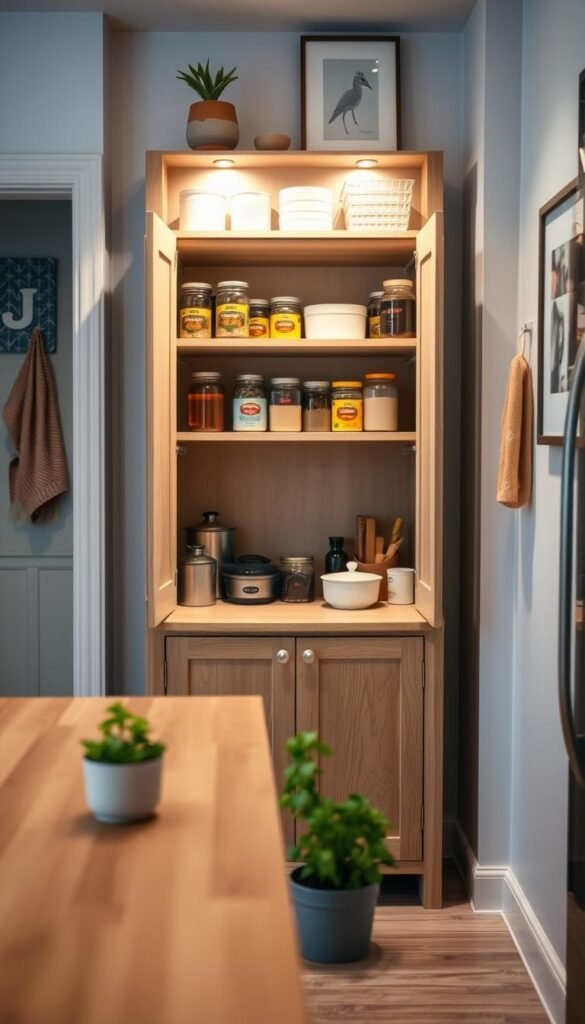
Studio and micro-kitchen
In tiny rooms, pick a narrow rolling cart plus door-mounted storage. The cart gives mobile shelving for daily items. Door racks keep snacks and small jars within reach.
Best for: very small kitchen footprints and studio layouts.
One-bedroom
Use a standalone cabinet as a hidden pantry. Add clear bins and category labels inside so unloading is fast and logical. This keeps counters tidy and creates a single zone for bulk items.
Best for: a single occupant who wants cabinet-style concealment and tidy shelves.
Two-bedroom and shared apartments
Create duplicate zones to avoid pileups. Two snack bins or two breakfast lanes stop conflicts and speed morning routines. Spread storage across rooms to reduce bottlenecks.
Best for: roommates and families who need parallel access to food and supplies.
„Choose freestanding pieces that match your flow and avoid top-heavy stacks in tight spaces.“
- Durability note: pick stable bases and low centers of gravity. Avoid tall, thin units that tip when loaded.
- Cleaning: open shelving shows goods faster but collects dust. Cabinets hide clutter and cut cleaning time.
- Flexibility: rolling carts move with you; cabinets offer more capacity; open shelving improves visibility.
| Option | Capacity | Cleaning Effort | Best for |
|---|---|---|---|
| Rolling cart | Low–medium; mobile trays | Low; easy to wipe | Studios, micro-kitchens; flexible space |
| Standalone cabinet | Medium–high; concealed bins | Medium; occasional shelf wipe | One-bedrooms; hidden storage and organization |
| Open shelving | Variable; visible display | High; dusting required | Design-forward spaces; quick access |
You’ll match the solution to your space and routine so you don’t buy storage that overwhelms the room. Choose stable pieces and keep heavy items low to make any setup safe and worth it.
Overflow zones beyond the kitchen: bathroom, closets, and entryways
When kitchen shelves run out of room, nearby closets and entryways make sensible overflow stations. Keep these zones close and simple so they support kitchen flow instead of becoming forgotten storage.
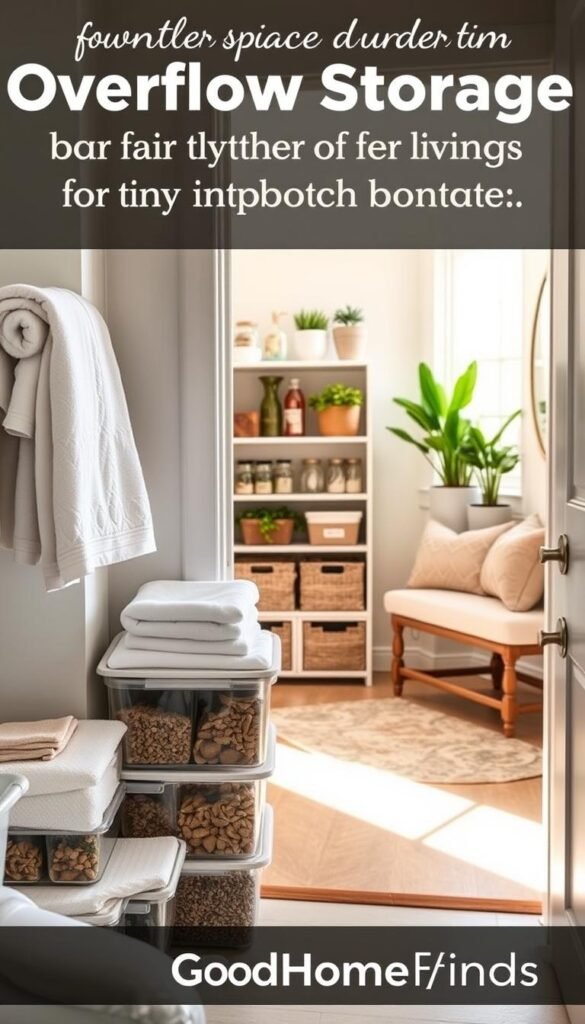
Closet backup for bulk buys
Create a closet shelf system for shelf-stable extras. Use clear bins, labels, and one category per shelf so restocking the kitchen is fast and painless.
Tip: pick a temperate closet with steady temperatures. Avoid basements that get damp or hot attics that shorten shelf life.
Entryway drop zone to protect counters
Set up a small table or cubby at the entry for grocery bags and boxes. Use stackable crates or a rolling bin so items stay off counters and are easier to sort later.
Label a crate „restock“ so you know what goes back to the kitchen each trip. This keeps counters clear for cooking and prep.
Bathroom and linen boundaries: safety first
Never store food near chemicals. Keep all food away from cleaning sprays, bleach, and scented products. Vapors and spills can taint items and create contamination risks.
Use the bathroom only for nonfood supplies. If a closet holds both toiletries and food, separate them on different shelves and keep food in sealed containers.
„Keep overflow labeled and limited so it supports your kitchen instead of becoming a forgotten stash.“
- You’ll create an overflow zone outside the kitchen when your storage space can’t handle bulk buys.
- You’ll organize a closet backup by category so restocking is quick.
- You’ll stop grocery bags and boxes from landing on counters with an entryway drop zone.
- You’ll never store food next to chemicals or heavy cleaning products.
- You’ll label overflow zones and follow a quick rule: if you won’t use it within a set timeframe, don’t buy it in bulk for a tiny space.
| Overflow place | Best use | Quick rule |
|---|---|---|
| Hall closet | Bulk dry goods, extra paper goods | Temperate spot; clear bins |
| Entryway crate | Groceries to sort; short-term boxes | Empty same day or move to kitchen |
| Bathroom/linen closet | Nonfood supplies only | Keep food and chemicals on separate shelves |
Maintenance and routines that keep a tiny pantry organized
Small, consistent habits make a big difference for kitchen storage and daily use. Pick a short routine you can actually keep up and build it into a habit. The goal is simple: reduce waste, keep shelves tidy, and make groceries easy to put away.
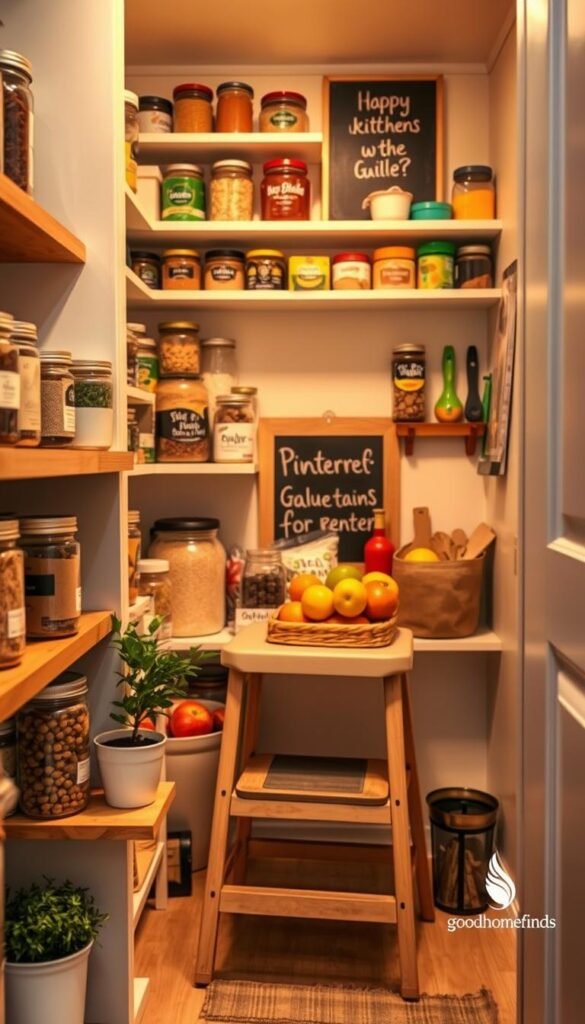
Weekly 5-minute reset
Do this once a week: front-face labels, wipe a shelf, and scan for duplicates. A quick wipe removes crumbs and sticky spots before they spread.
Why it works: five minutes is easy to fit into a weeknight. Front-facing labels make unloading consistent, so everyone in a shared household knows where items go.
Monthly quick audit
Once a month, check expiration dates and move items that are near their end toward the front. Look for crumbs, pest signs, or sticky spots and clean thoroughly.
One-in, one-out rule: when space is tight follow this rule for boxes, bags, and containers to avoid long-term overflow.
Restock routine
Always place newer items at the back and older items up front. This back-to-front method reduces food waste and makes use of what you already bought.
Consistency tip: limit the number of container styles and bins so sorting and cleanup stay fast. Agree on a few category labels with housemates to prevent undoing the system.
„Move items that expire soon to the front — you’ll reduce waste and save money.“
| Routine | Action | Time |
|---|---|---|
| Weekly reset | Front-face labels, quick wipe, check duplicates | 5 minutes |
| Monthly audit | Expiration check, deep wipe, one-in/one-out | 15–20 minutes |
| Restock | Place newer items in back; older ones in front | Per grocery trip |
Conclusion
Close the loop with a short, actionable plan you can use this weekend. Measure your cabinets and shelves, do a quick cleanout, and pick clear categories for daily items. Start small and test one visibility tool like a riser or turntable.
Budget note: grab quick wins under $25 (risers, bins, labels) and step up under $50 for carts or door racks. Use freestanding pieces and door-mounted storage to add usable space without remodeling.
Prioritize safety: heavy goods go low, avoid overloading hinges, and keep walkways clear. Keep the system tidy with a weekly reset and a monthly audit so your storage keeps working long term.
If you want more step-by-step fixes, check a compact guide to small-space fixes that match this list.