You can tame entryway mess without tools, big spend, or drama. If you are tired of piles at the door, lost pairs, or wet soles left on the floor, this guide gives a practical, renter-friendly approach. You’ll build a simple system that works in small spaces and stays put.
Start with a fast reset you can do in 10-15 minutes. That first pass clears trip hazards and saves you minutes every day. Then we add a home base zone and budget storage layers: floor, vertical, and hidden.
Safety and durability matter. You’ll get options under $25 and under $50, with pros and cons and who each choice suits best. This is about what helps people in the real world, not what looks perfect in photos.
If this is your first time organizing a space, expect visible progress in minutes and steady gains over a week. For more small-space solutions, see a short mix of ideas here.
Key Takeaways
- Clear a starter zone in 10-15 minutes to reduce trip hazards.
- Use renter-friendly, no-drill options that are safe and durable.
- Layer storage: floor, vertical, and hidden for best results.
- Budget paths: under $25 for basics, under $50 for upgrades.
- Expect quick wins for the first time and gradual improvement.
Why Shoe Clutter Gets Out of Hand in Apartments
When your apartment has no clear entry zone, pairs end up wherever you stop. Small entryways and narrow halls leave little space to land items. Shared closets or no dedicated shelf make the problem worse.
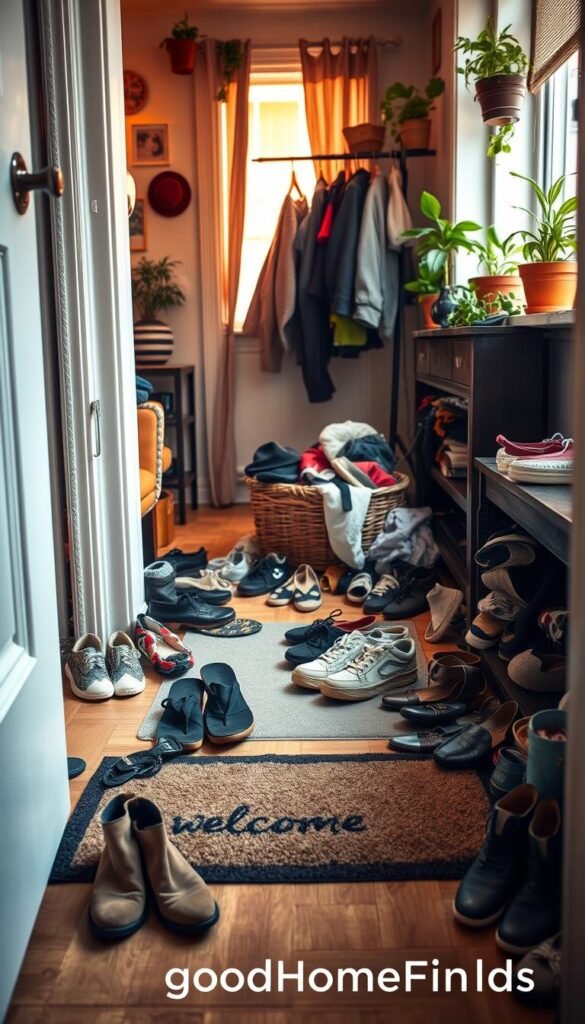
The routine effect is simple. Visual clutter taxes your brain and slows decisions. That lost focus steals minutes every morning and adds friction when you rush out.
Out of sight often fails because storage that is annoying, too low, or too far breaks the habit. If putting things away takes effort, the pile returns in minutes. Habit loops win over good intentions.
- Real-world triggers: roommates, guests, wet weather, deliveries, and hands full.
- Safety issues: pairs in walk paths create trip hazards and can block exits.
- Hygiene: grit and water track through kitchens and carpeted areas.
This is a solvable part of everyday life. The rest of the article shows renter-friendly steps to reduce friction and give every pair a clear home, starting with a quick reset and moving to low-cost storage options like the entryway options that work in real life.
Set Your Shoe Limits: The Fast Reset You Can Do in Minutes
Clear a small landing area in ten minutes to see what you actually use each week. This quick pass shows which pairs belong to your daily life and which just take space.
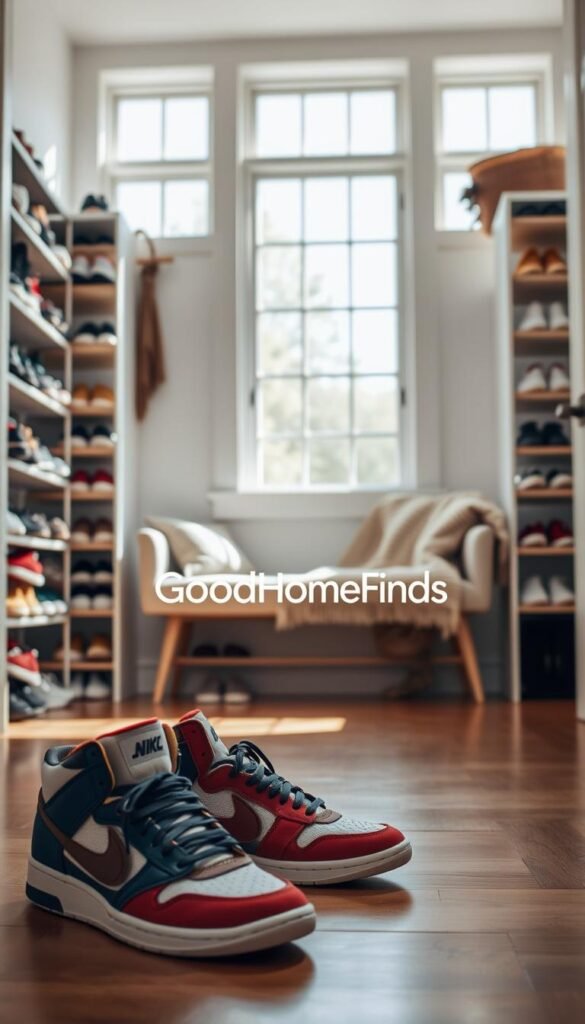
The “least one in, one out” rule
Commit to least one in, one out. When you bring a new pair home, remove at least one you no longer wear. This keeps your set stable and prevents slow accumulation.
Quick sort: simple categories
- Daily pairs — grab-and-go items you use most.
- Work pairs — keep nearby for routine dress or commuting.
- Weather pairs — rain or snow options you rotate by season.
- Maybe pairs — one box for undecided items you reassess in 30 days.
Decide: store, donate, or repair
Use this decision guide: store seasonal items, donate wearable extras, and repair what’s worth saving. A basic tape measure or phone measure app is a handy tool so you buy organizers that actually fit.
„Small, repeatable steps earn reward points in the form of time saved each morning.“
| Action | Time | Result |
|---|---|---|
| 10-minute sweep | 10 minutes | Clear floor, visible set |
| Apply least one rule | Ongoing | Stable collection |
| Store/Donate/Repair | 5–20 minutes per decision | Less clutter, better value |
For first time renters: aim for fewer piles and faster mornings, not perfection. Small rewards in time and calm will keep you consistent.
Shoe Chaos Fix: Build a No-Drill System That Stays Put
Designate one simple home base and stick with it to cut decision time at the door. Pick a clear line or mat and train everyone to use it. A single zone lowers daily decisions and makes a two-minute reset realistic.
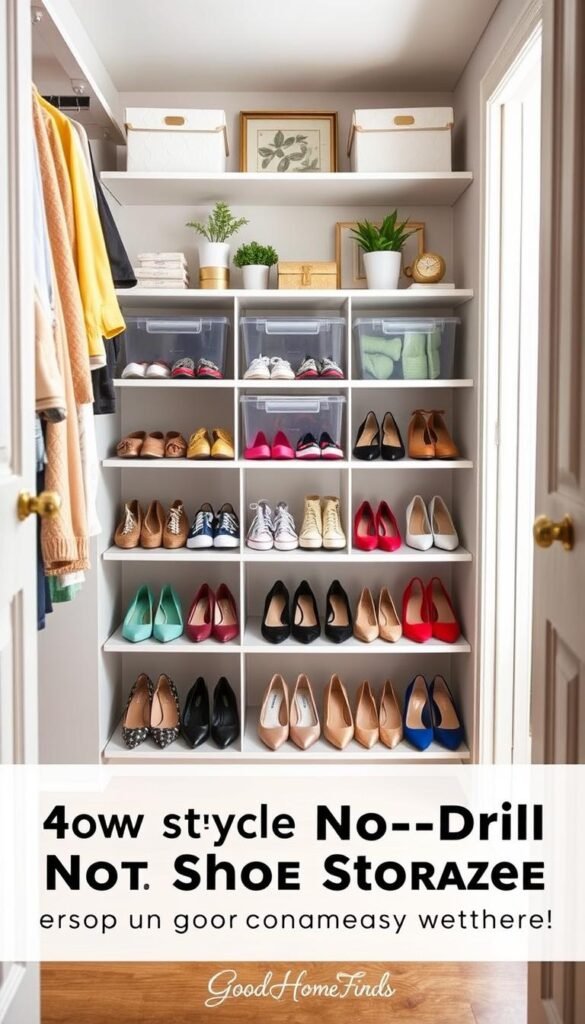
Choose one “home base” zone
Define a line. Use tape, a slim mat, or the edge of a runner to mark where pairs land. Even a short line along a wall becomes a daily cue.
Why one zone works: It creates a default choice and reduces friction. When there’s one obvious spot, the habit forms in minutes.
Layer storage without drilling
Think in three layers: floor for daily use, vertical for weekly rotation, hidden for seasonal items. Each layer keeps access clear and reduces clutter at the top of your list.
Materials for wet, salty, gritty conditions
Pick plastic trays, powder-coated metal, or sealed wood. These resist water and salt and clean easily. Avoid untreated particle board that swells in damp weather.
Stability and the level check
Use a small level when you add tall or narrow pieces. This simple tool prevents wobble and keeps the system safe in tight entryways.
Easy setup checklist
- Scissors — open packaging and trim tape or felt pads.
- Tape measure — confirm fit for racks and mats.
- Basic level — quick wobble test for vertical pieces.
| Step | Tool | Time | Benefit |
|---|---|---|---|
| Mark home base | Tape, mat | 5 minutes | Clear boundary, easier habit |
| Place floor layer | Measure | 10 minutes | Daily access, keeps floor neat |
| Add vertical or hidden | Level | 10–15 minutes | More capacity, safe storage |
Time expectation: Most renter-friendly systems take 15–30 minutes to set up. If it drags past that, simplify.
Small changes create the biggest effect in day-to-day routines. For extra entryway ideas and quick mixes, see this practical roundup: small-space setup ideas.
Best Under-$25 Organizers (Renter-Friendly Picks)
Set one buying rule: under-$25 organizers should solve a single problem — save space, show pairs, or contain wet mess — without adding footprint or hassle.
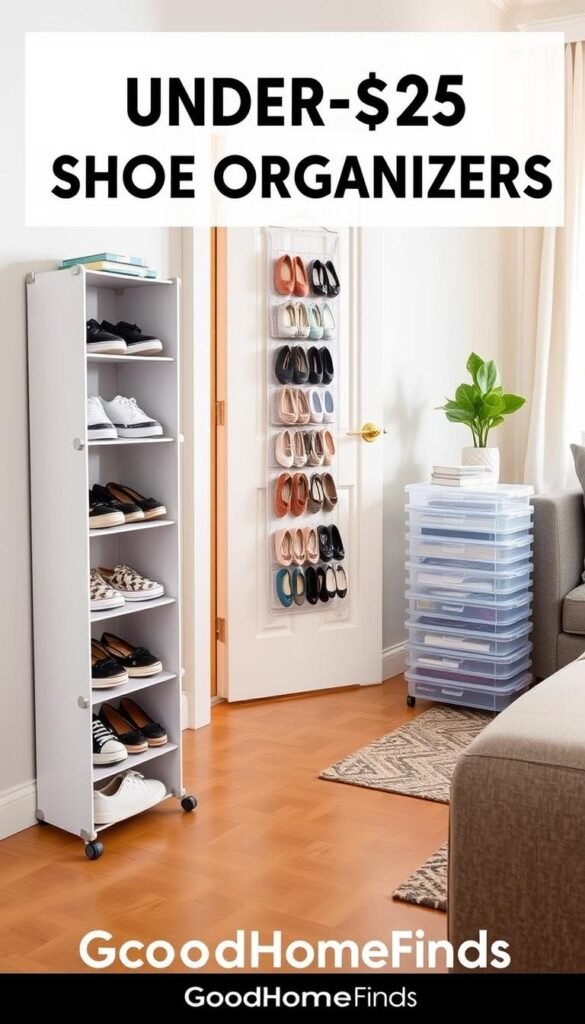
Slim or expandable rack for tight walls
Pros: fits narrow spots, sets up in minutes, easy to move for cleaning.
Cons: limited capacity and can wobble if overloaded.
Best for: daily pairs and small households that need quick access and low price. Quick tip: place anti-slip pads under feet to add stability.
Over-the-door pockets for flats and kids
Pros: uses vertical space, keeps floors clear, renter-friendly no-drill solution.
Cons: can swing or scuff doors and won’t hold heavy boots.
Best for: studios or closets where hidden storage is key. Hang away from door handles to reduce swing.
Stackable clear-front boxes
Pros: visibility speeds decisions and boxes keep dust out.
Cons: can trap odor if damp and adds visual bulk on shelves.
Best for: people who store extras on closet shelves and want quick visual sorting. Leave vents or a liner to avoid trapped moisture.
Boot trays and washable mats
Pros: contain water, mud, salt, and grit. Protect floors and reduce slip risk.
Cons: needs periodic cleaning but that only takes minutes.
Best for: wet-weather cities and anyone tracking grime in from the world outside.
„Prioritize pieces that wipe clean and resist damp soles — small choices pay daily rewards.“
| Item | Primary benefit | Setup time | Best for |
|---|---|---|---|
| Slim/Expandable rack | Space-saving access | 5–10 minutes | Small households, daily use |
| Over-the-door pockets | Hidden vertical storage | 2–5 minutes | Studios, closets, kids |
| Clear-front boxes | Fast visual selection | 5 minutes | Closet shelves, seasonal rotate |
| Boot tray / washable mat | Contain water and grit | 1–2 minutes placement | Wet climates, high-traffic doors |
Value points: choose items that wipe down, resist water, and won’t warp from damp soles. Studios often pair an over-the-door option with a mat. One-bedrooms add a slim rack. Shared homes benefit from labeled mats or a small tray per person.
For a quick comparison of cost and performance, see a deeper look at cheap vs. premium storage to decide what to store now and what to upgrade later.
Best Under-$50 Upgrades That Make a Bigger Effect
Small upgrades under $50 can cut daily friction and add real capacity. You pay for better stability, higher capacity, and parts that make your routine faster.
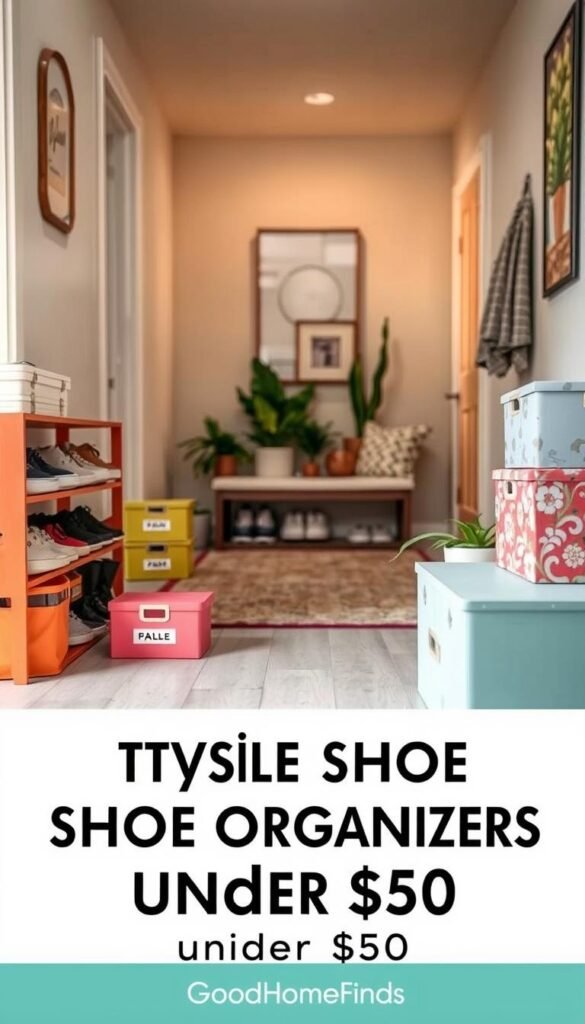
Vertical towers for narrow entryways
Pros: small footprint, uses height, big effect in tight halls.
Cons: needs a stable base and a quick level check to stop wobble.
Best for: renters with limited wall space who want more capacity without floor clutter.
Storage bench for a “sit + swap” routine
Pros: creates a repeatable habit — sit down, change, store — and cuts floor piles.
Cons: takes more floor area and has weight limits to check.
Best for: anyone who often leaves pairs half on/half off and wants a clear landing spot.
Under-bed rolling bins for seasonal rotation
Pros: great dust control, easy to pull out, saves closet space.
Cons: can become “out of sight” clutter if unlabeled; pick clear bins or labels.
Best for: studios and small closets with under-bed clearance. If you lack clearance, use a low bin at the closet bottom.
„Shaving 2–3 minutes each morning adds meaningful calm and time back over a week.“
| Upgrade | Primary benefit | Who it helps |
|---|---|---|
| Vertical tower | High capacity, small footprint | Narrow entryways, shared halls |
| Storage bench | Supports routine, hides pairs | People who sit to change, families |
| Under-bed bin | Seasonal rotation, dust control | Studios, seasonal storage |
Entryway Solutions for Real People (No Mudprints, No Piles)
Make an entryway that works every day with a few simple layout rules you can use in minutes. Keep the plan renter-friendly and simple so you actually use it when you’re tired.
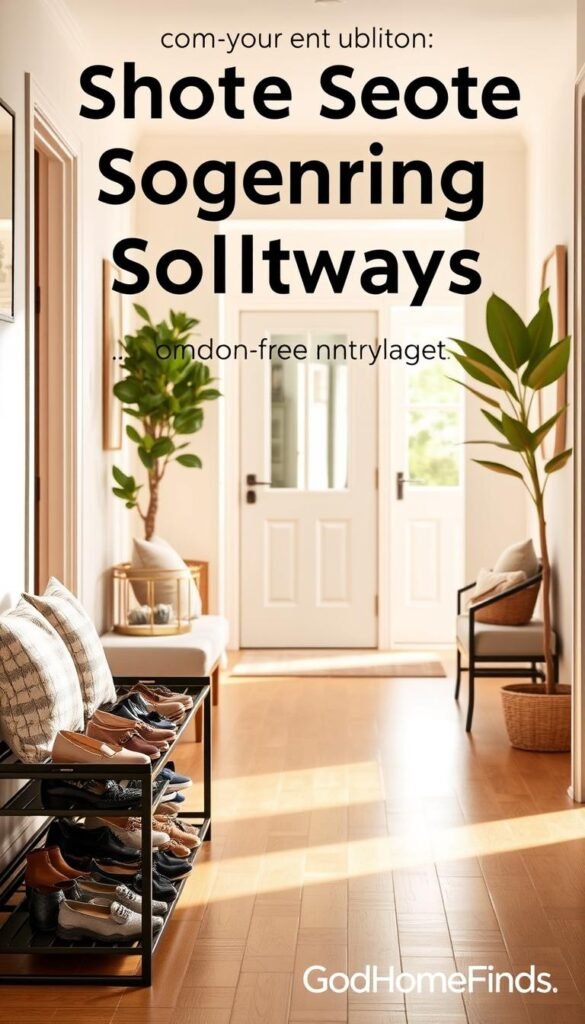
Small-space layout ideas
Corner rack + mat: place a slim rack in a corner with a washable tray to catch wet soles. This keeps the lane clear.
Behind-the-door pockets: use vertical space for flats and kids’ pairs without adding footprint.
One low rack along a wall: pick a single row to avoid stepping over things and keep a clear walking lane.
Pick the best spot
Choose the area closest to the door that does not block entry or force you to step around items. Safety and ease of use matter more than symmetry.
Daily two-minute reset
Pair pairs, put daily pairs on the rack, hang bags on one hook, and wipe damp soles on the mat before storing. Do this once in the evening or first thing in the morning.
Wet-weather habit
Keep boots on the tray until fully dry. Only move them to racks or closets after they are dry to avoid odor and floor damage.
Durability and stability tips
- Look for anti-slip feet and check weight limits.
- Do a quick wobble check weekly so the system stays safe.
- Use a small level or a phone level app as a tool to stabilize tall pieces on uneven floors.
„Make the routine easier than leaving things where they fall — consistency beats a perfect organizer.“
Closet Solutions That Don’t Steal Hanging Space
Maximize storage without losing the top part of your closet. A few renter-friendly moves will keep the floor tidy and preserve every inch of hanging room. These ideas double capacity and protect nicer pairs while staying simple to undo.
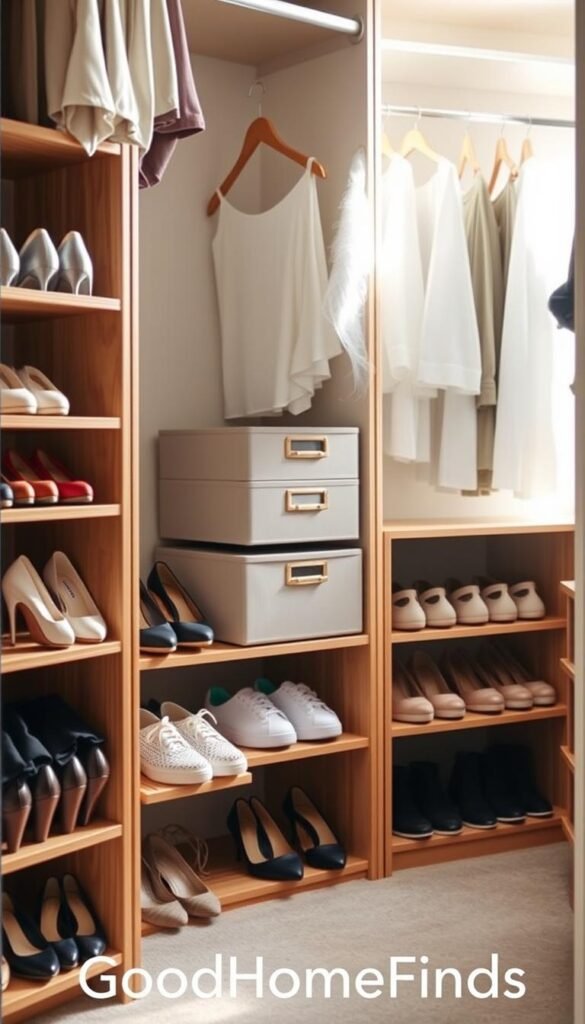
Floor-to-shelf stacking: creating a clean bottom row
Start with one clean bottom row. Keep daily pairs at the front so you grab and go. This stops items migrating under hanging clothes and into the walkway.
Use freestanding risers or stackers to add a second tier. You double capacity without adding width and keep heavier items on the lower level for stability.
Shoe slots and angled organizers to double capacity
Angled slots give better visibility and reduce crushing. They work best for sneakers and casual sets.
Pros: clear view, neat rows. Cons: can slide on smooth shelves; add a non-slip liner or light adhesive pads.
How to store “nice shoes” without crushing toes or scuffing leather
Treat leather like skin — it needs space and gentle care. Use soft dividers, individual boxes, or felt separators so toes keep shape and finishes stay unmarred.
Quick habit: spend two minutes once a week returning strays and wiping shelf dust. This small time investment keeps the system usable and extends the life of your nicer pairs.
„Proper spacing prevents creases and scuff marks over time.“
| Move | Benefit | Time |
|---|---|---|
| Clean bottom row | Clears walkway, easy access | 5–10 minutes |
| Stackers / risers | Double capacity, renter-friendly | 5 minutes |
| Soft dividers / boxes | Protects leather and shape | 10 minutes |
Bedroom and Under-Bed Storage for Studio Apartments
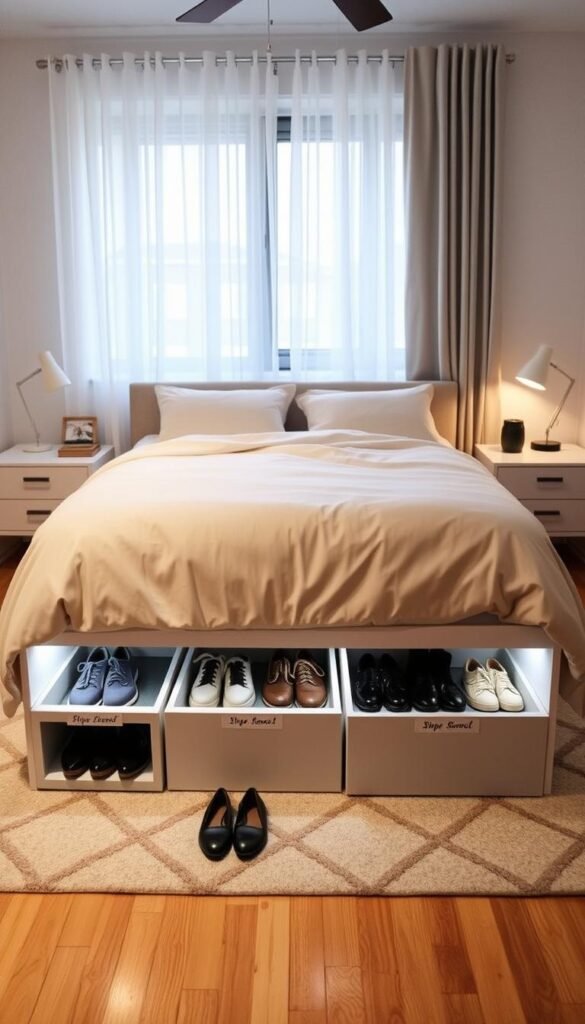
Hidden storage works only when you can find things fast. Under-bed bins win when you need high capacity without losing living area. This is ideal for studios and tight closets.
When under-bed wins (and when it becomes “purgatory”)
Use under-bed for seasonal or occasional pairs, not daily items. A clear rule: if you reach for something every morning, put it somewhere more visible.
Warning: unlabeled, hard-to-slide bins become purgatory. You’ll forget what you own and rebuy, which wastes time and space.
Labeling that actually works: colours, categories, and visibility
Pick three colours and assign categories like work, gym, and winter. Keep the label on the side you pull from so visibility is instant.
- Limit the set: store only seasonal or seldom-used pairs under the bed.
- Retrieval rule: if you can’t find a pair in 2 minutes, simplify categories or relabel.
- Real-world note: some items will live under the bed. Your goal is searchability, not perfection.
Best closet space solutions pair well with under-bed systems when you need extra visibility and quick access.
„Make under-bed storage searchable — small choices save minutes every week.“
Bathroom and Laundry-Area Tips for Wet Shoes (Without Damage)
A quick, consistent routine prevents water damage and lingering odor in small bathrooms and laundry areas. Make drying and storage a simple habit so the problem never grows.
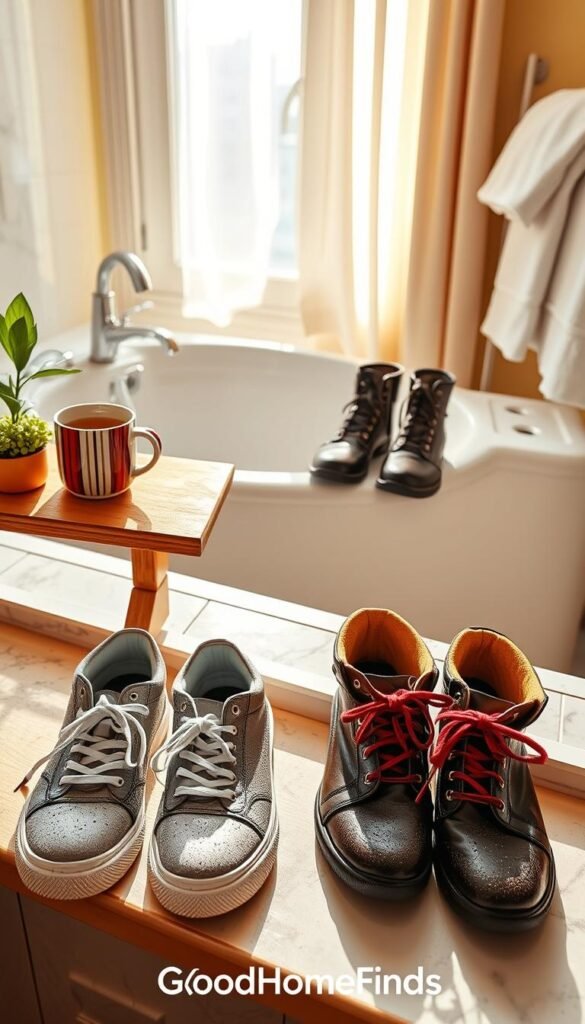
Drying safely: airflow over heat
Priority: airflow, not direct heat. High heat can weaken glue, warp foam, and stress skin-like leather finishes.
Do this: loosen laces, remove insoles if you can, and place pairs on a washable mat near a vent or fan. Let air move around each piece for several hours rather than blasting with a heater.
Odor control that’s low effort
Use washable liners or plastic bins with perforation for short-term storage. Rotate what you wear so each pair gets dry time between uses.
Keep a simple 2–3 minute routine when you come in wet: towel off excess water, set items to air, and stash damp insoles separately to dry overnight.
What to avoid in small, humid bathrooms
Avoid woven baskets that trap moisture and sealed boxes that lock in smell. Both encourage mold in tight, humid spaces.
Instead, pick materials that wipe clean and breathe. If space allows, use a small fan or an open window for a few minutes to speed drying and reduce odor spread.
„Simple airflow and regular rotation protect materials and save you time over the long run.“
- Priority: dry items quickly to protect materials and the rest of your place.
- Quick setup: washable mat + nearby airflow + removed insoles = minutes to better results.
- Avoid: mold-prone baskets and sealed containers in humid zones.
Kitchen-Adjacent Drop Zones (If Your Apartment Has No Entry)
If your layout launches into the kitchen, plan a hygiene-first station that catches dirt before it reaches counters.
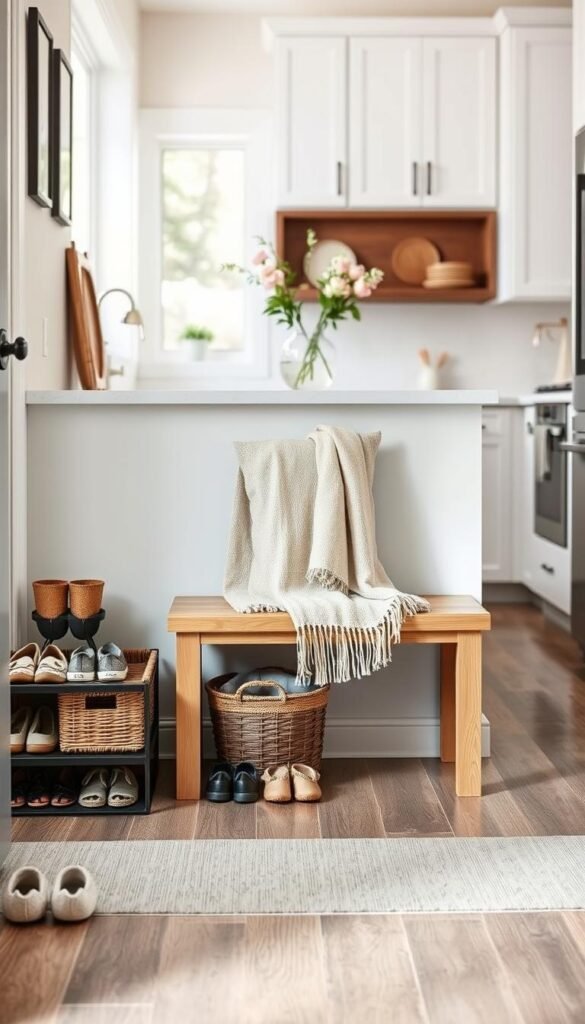
Boundary tactics work best when they are obvious and easy. Use a washable mat or a shallow tray plus a single shelf or slim rack to keep pairs off the floor near food prep.
Even a taped line on the floor defines the zone. The visual cue reduces trips across counters and keeps wet spots contained.
Place it where you pause
Set the drop zone where you naturally stop on your way in. That reduces the decision time and makes the system automatic for most people.
Wet weather tip: add a water-catching tray so drips stay put and don’t cross into cooking areas.
Make the spot easy for others. A clear line and a labeled shelf cut down on conflict and keep shared kitchens cleaner.
„Reward small wins: give yourself a mental point each time items land on the boundary without thinking.“
| Problem | Solution | Time |
|---|---|---|
| Tracking water into kitchen | Water tray + mat | 1–2 minutes setup |
| No obvious landing | Tape line + shelf | 5 minutes |
| Roommates ignore the zone | Visible cue + short habit reminder | Minutes per day |
Maintenance Mini-Fixes That Extend Shoe Life (Cheap, Fast, Worth It)
A few low-cost touch-ups can stretch the life of daily pairs and stop last-minute scrambles. These small steps take minutes and keep pairs presentable between deeper care sessions.
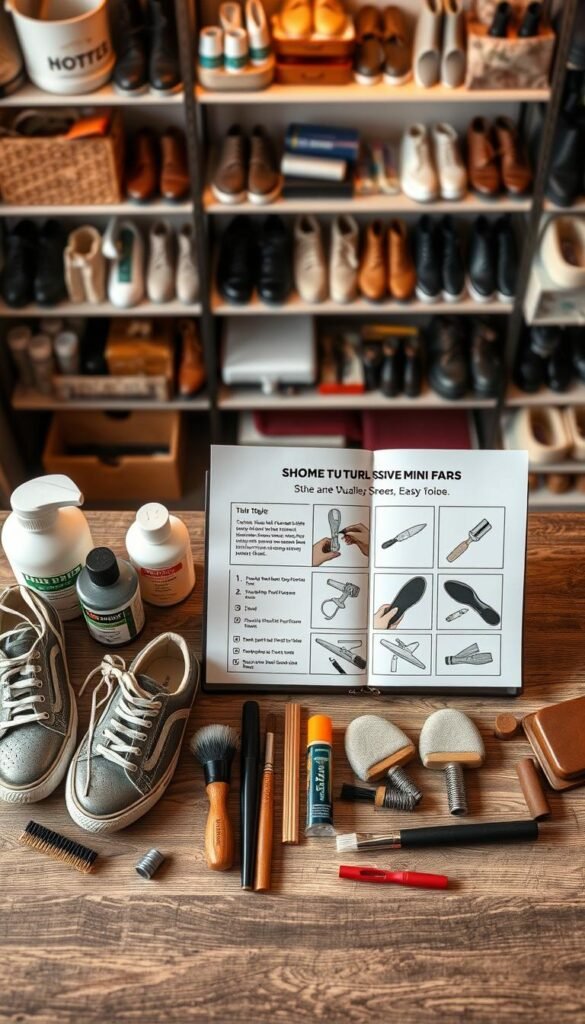
Banana peel leather touch-up (smooth leather only)
What to do: clean and dry the leather first with mild soap and water. Rub the inside of a ripe banana peel in small circles on a hidden test spot.
Let it sit 1–2 minutes, then buff with a soft cloth until the residue disappears. This gives a soft, natural shine. Do not use on suede, nubuck, or fabric.
Durable midsole refresh: one-layer acrylic concept
Use a flexible acrylic like SNEAKEM+ Midsole Paint 100ml (warcolours, code smp100) for scuffed midsoles. Apply a thin layer with a small brush and let it dry fully.
That single waterproof layer often restores visual uniformity and resists bending. Dilute slightly if needed for a smoother finish.
Pros and cons: quick cosmetic fixes vs long-term protection
- Pros: fast, cheap, and renter-friendly. You save time and avoid emergency replacements.
- Cons: these are cosmetic. They do not replace conditioning, waterproofing, or resoling when materials fail.
Best for
These steps suit commuters, interview days, and people in first time apartment routines who need presentable pairs in minutes. Keep a small kit: brush, paper towels, mild soap, and patience to dry fully before wearing.
„Small maintenance is part of the larger system — fewer ruined pairs means fewer piles and less panic.“
Comparison Tables: Pick the Right Setup for Your Apartment Size
A few compact tables help you narrow choices fast and pick a system that actually works. These side-by-side comparisons focus on real-world tradeoffs: price, capacity, setup time, and durability. Use the simple scoring at the end to choose without overthinking.
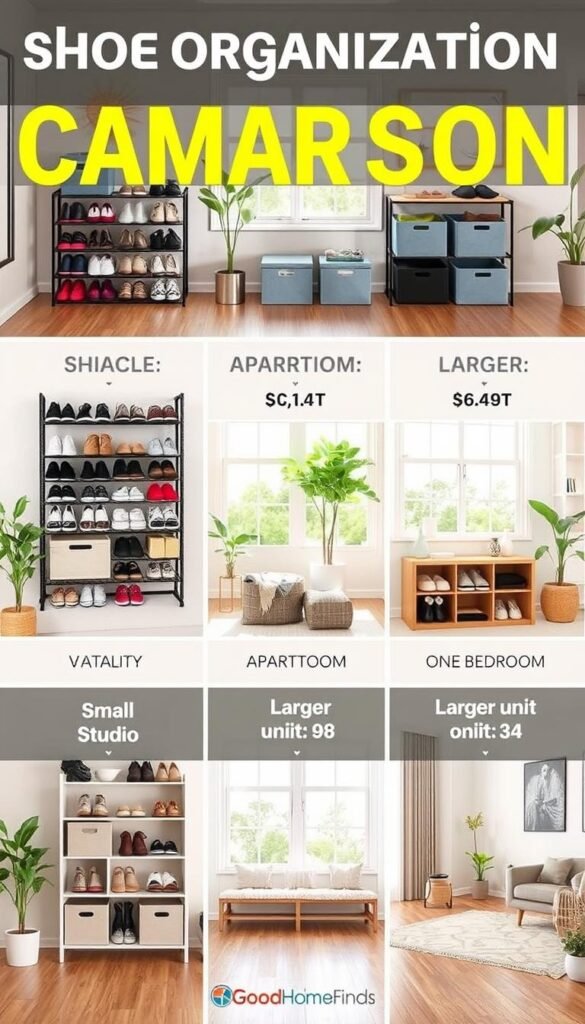
Under-$25 vs. Under-$50
| Range | Typical capacity (pairs) | Footprint (inches) | Setup time (minutes) | Durability / wet resistance |
|---|---|---|---|---|
| Under-$25 | 2–6 | 12–24 wide, shallow | 1–10 | Basic plastic or thin metal; moderate water resistance |
| Under-$50 | 6–12 | 18–36, taller options | 5–30 | Stronger materials, better coatings; higher wet resistance |
Who stays under $25: light collections, tight budgets, and people who need no-drill, fast solutions.
Who benefits from under $50: shared homes, heavier items, and those who want a bench or taller tower for routine comfort.
Studio vs. One-Bedroom vs. Shared Apartment
| Layout | Best zones | Best alternatives (if no entry) | Reality note |
|---|---|---|---|
| Studio | Behind door, under-bed, closet bottom row | Kitchen drop zone, wall shelf | People count matters: single person = simpler setup |
| One-bedroom | Entry wall, slim rack, bench | Closet bottom row, hallway corner | More space lets you add a sitting routine; level check for tall pieces |
| Shared | Labeled mats, dual trays, vertical towers | Assigned hooks, split zones per person | Traffic and people count drive durability and capacity needs |
Open Rack vs. Closed Boxes
| Option | Dust control | Visibility | Smell control | Cleaning time |
|---|---|---|---|---|
| Open rack | Low | High | Poor (airing helps) | Quick wipe, 1–5 minutes |
| Closed boxes | High | Low unless clear-front | Better if dry; can trap moisture | Occasional airing + wipe, 5–15 minutes |
„Score each option on three points: easy to use daily, keeps the walkway safe, and handles wet pairs. Add the points to choose quickly.“
Simple scoring idea: give 0–2 points for each category (daily use, safe walkway, wet handling). Higher totals point to the best match for your life and world of busy entry routines.
If you want ready-to-compare picks and renter-friendly products, see a curated list of the best entryway storage solutions here.
Conclusion
, Conclusion
Wrap up with a clear, repeatable plan you can use today. Start by setting limits, pick one home base, and layer floor, vertical, then hidden storage. Choose wet-safe materials and check level for stability. This simple sequence is the core of the shoe chaos fix.
Start under $25 to stop the floor pile. Upgrade under $50 if you need more capacity or a sit-and-swap bench. A two-minute nightly reset keeps the system working and saves you real time each morning.
Final step: measure your entry, pick one organizer or tool, set it up now, and do one quick reset to feel the effect in minutes of your life and world.