You can turn an underused outdoor space into a practical extension of your home. This guide shows a renter-friendly, no-drill approach that fits real apartment limits. Expect clear, useful product picks under $25 and upgrades under $50. I’ll also cover pros, cons, and low-effort maintenance routines.
Define the goal: create a setup you use daily. Keep the door clear, avoid junk, and make it resettable in two minutes. Real-life order looks like one main seat, a small table for drinks, and contained plant or storage zones.
We solve limited square footage, renter rules, weather exposure, and the storage overflow trap. I’ll walk you through measure, pick a purpose, declutter, build from the floor up, then add furniture, vertical storage, plants, lighting, and privacy.
Safety first: watch for non-slip surfaces, drainage, wind stability, and weight limits before adding heavy items. For renter tools and damage-free fixes, see practical picks at best home finds for renters.
Key Takeaways
- Make a clear path and one main seating spot for daily use.
- Choose damage-free hooks, bins, and rail planters for quick wins under $25.
- Consider folding tables or narrow side tables under $50 for function upgrades.
- Prioritize non-slip, drainage, and wind stability for safety.
- Apply the same “one drop zone + contained categories” system to other tight spots in your home.
Set realistic expectations for a small balcony space
A compact outdoor spot only works when you stop trying to fit every feature at once. Start by picking one main function. Add one secondary use at most. This keeps the area usable and renter-friendly.

Common mistakes that create clutter and block the door
You either cram in a table, chairs, a lounger, and plants and then can’t open the door. Or you ignore the area and waste usable living space.
„If you can’t step outside with a mug, turn, and sit—your setup needs to change.“
What “usable” looks like in 24–60 square feet
Use this quick test: step out with a drink, turn around, and sit without moving furniture. If you fail, you have too many pieces.
- Prioritize clear door swing, one surface for drinks, and one lidded bin for storage.
- A single anchor piece looks cleaner than many tiny legs and gaps.
- Avoid anything that requires drilling or permanent adhesives. That’s rarely worth the renter hassle.
| Outcome | Signs | Fix |
|---|---|---|
| Overcrowded | Blocked door, tripping hazards | Remove extras; keep one anchor |
| Unused | Dust, lost living space | Add one chair and a surface |
| Usable | Easy entry, one activity | Maintain weekly two-minute reset |
Measure, map, and choose your balcony’s main purpose
Plan before you buy. Take a clear photo of the whole area and mark measurements on it. This simple step saves returns and impulse buys.

- Measure depth, width, railing height, and door swing radius.
- Note AC units, drains, or odd corners that reduce usable space.
- Write these on your photo so you can sanity-check listings.
Pick one main purpose
Choose lounge, dining, greenery, or work-from-balcony as the primary use. Add a secondary feature only if it keeps traffic clear.
Plan traffic like an entryway
Keep a clear lane from the door to one standing spot. If you must step over furniture, the setup fails in real life.
Create micro-zones without crowding
Use one sit zone, one green zone, and one set-down zone. For narrow layouts, use a rail table and folding chairs. For square areas, try a corner bench.
Layout check: test with painter’s tape or cardboard footprints before you buy. This confirms fit and preserves your renter-friendly setup.
Declutter fast for small balcony order without losing what you love
Pull everything out and sort fast—this is how you get usable outdoor space in minutes.

The keep / store / donate test
Set a 20-minute timer. Make one pile with all your pieces. Then sort:
- Keep: items you use weekly (one chair, a side surface, a plant you water).
- Store: seasonal things like extra cushions or holiday lights.
- Donate/Recycle: broken pots, torn cushions, and items never used.
Quick rules for what stays outside
Containment wins. If something stays outdoors it needs a home: a lidded tote, a bin, or a shelf. This keeps the floor clear and traffic open.
„If it doesn’t have a spot, it becomes clutter.“
Bring inside textiles that mildew, paper goods, matches, and anything that rusts fast. Materials that can live outside year-round include sealed teak, cedar, synthetic wicker, and coated metals—especially with a water-repellent cover.
| Problem | Fast Fix | Budget Pick |
|---|---|---|
| Random piles on the floor | Contain in one lidded tote | Under $25 lidded tote |
| Seasonal cushions and gear | Store on a small shelf or bin | Under $50 weatherproof storage bin |
| Extra chairs and empty pots | Donate or stack on a shelf | Compact stackable shelf (budget option) |
Treat your balcony like an extension of your interior for a cohesive design
Make the outdoor area feel like an extra room by mirroring the tones and textures from inside. This keeps the view simple and the space usable. Pick two to three core finishes and repeat them across furniture, planters, and textiles.

Match tones, textures, and silhouettes
Borrow from your room: choose warm wood, black metal, or neutral textiles that already live in your interior. Use those outside to tie the two spaces together.
Silhouettes matter: go for low-profile seats and slim-leg tables. They keep sight lines open and make the area feel bigger.
Use repetition and a tight materials palette
Examples that work: black matte planters + a warm wood table + a neutral outdoor rug. Repeat the planter finish and one texture—woven or slatted wood—to create a curated look.
„A limited palette makes a small outdoor space feel calm and intentional.“
Renter-friendly cohesion upgrades and quick edits
- Matching cushion covers and a consistent planter color are low-effort upgrades.
- One repeating texture (woven or powder-coated metal) gives depth without clutter.
- Budget option: unify what you already own with a single rug or identical planters.
Pros/Cons
| Approach | Pros | Cons |
|---|---|---|
| Limited palette | Calmer look, feels larger, easy to maintain | Can feel bland without one accent |
| Mixed-everything | Playful, personal | Reads cluttered in tight spaces |
| Budget connector | Affordable, fast cohesion | Requires a good anchor piece (rug or planters) |
Edit rule: if you can’t describe the look in one sentence (for example, „neutral lounge with green plants“), you likely have too many competing pieces. Remove extras until the statement feels clear.
Start from the ground up with renter-friendly floor upgrades
Start by fixing the floor—it’s the fastest way to make the outdoor area feel like a real room. The right floor defines circulation and makes furniture choices feel intentional without adding clutter.

Outdoor rugs to instantly finish the space
Choose a low-pile, flatweave rug so the door clears easily. Look for quick-dry synthetic materials and finished edges to cut tripping risk.
Budget picks: under $25 for a runner or anti-slip pad; under $50 for a larger runner on sale.
Interlocking deck tiles that snap together
Tiles snap together with no glue. They lift comfort over concrete and remove cleanly when you move. Pick weatherproof composite or treated wood for longevity.
Safety checklist and weight awareness
- Drainage: keep drains clear and avoid covering them.
- Slip resistance: test surfaces when wet and choose textured finishes.
- Edges: keep tiles and rugs flush to prevent toe trips.
- Load: avoid heavy concrete planters or water features unless you confirm building limits; distribute weight and keep heavier items near the building wall.
When to splurge: invest in non-slip, durable materials if you use this outdoor space every day. Safety and longevity are worth the extra cost.
Choose balcony furniture that fits: fewer, smarter pieces
A compact setup works best when each piece earns its place. Aim for one main seat, one surface, and one storage or plant spot. This rule keeps traffic clear and makes daily use easy.

Low-profile and slim-leg picks
Why it works: low-profile pieces keep sight lines open and make your view the focal point. Slim legs reduce visual clutter and feel airier than blocky frames.
- Best-for: view-forward spaces and renters who want a light look.
- Example: a powder-coated metal chair with narrow legs — durable, lightweight, and budget-friendly.
Folding tables and collapsible chairs
Folding options add flexibility. Use a fold-flat table for coffee or work, then stash it in a closet or prop it vertically when you need floor space.
- Pros: versatile, cheap, easy to store.
- Cons: often less sturdy than fixed pieces.
When larger pieces beat many small ones
One compact loveseat or a modular chaise can look cleaner than four mismatched stools. Fewer legs and fewer gaps read calmer and simplify cleaning.
Compare common options
| Option | Pros | Best-for |
|---|---|---|
| Modular chaise | Reconfigures, comfy for lounging | Wider terraces; flexible seating |
| Bistro set | Compact dining, stylish | Morning coffee and two-person meals |
| Compact bench | Shared seating, simple footprint | Narrow porches and extra storage under |
Door-clearance check
Measure door swing and leave a 3–4 inch buffer. Cushions, chair backs, or a protruding table edge should never interfere. A quick tape test avoids a blocked doorway later.
„One main seat, one surface, and one storage spot usually beats many tiny pieces.“
Alternatives by size: micro balcony = rail shelf + one folding chair; narrow balcony = two folding chairs + slim table; wider balcony = corner bench or sectional + side table.
Choose renter-friendly furniture and prioritize function over filling the view. This is the easiest way to make the space usable and calm.
Add a drop zone near the door to stop clutter at the source
A simple drop zone by the door stops piles before they form. Give everyday things one visible home and you remove the „set it down for a minute“ habit that creates clutter.

Why it works: a landing spot keeps cups, phones, keys, and books from wandering. It also makes the area feel like a useful extension of your home and living routine.
Narrow side surface ideas for drinks, books, and keys
- Slim C-table — tucks next to a chair and slides under the seat when not used.
- Plant stand doubled as a side table — sturdy and visually light.
- Metal garden stool — weatherproof and easy to wipe down.
Weatherproof tote or lidded bin for grab-and-go items
Create one container for sunscreen, a lighter, a candle, small tools, and a microfiber cloth. A lidded bin hides visual clutter. An open basket is faster but needs upkeep.
| Item | Pros | Budget pick |
|---|---|---|
| Slim side table | Minimal footprint, easy access | Under $50 narrow metal table |
| Lidded tote/bin | Hides clutter, weatherproof options | Under $25 plastic lidded tote |
| Garden stool | Dual use as seat or table, durable | Under $25 metal stool |
Quick pros/cons: open baskets show what you have but can look messy. Lidded bins hide things but only help if you put items away.
„One visible landing spot beats scattered surfaces every time.“
Apartment-wide tip: copy this system in your entryway (keys/mail bin), bathroom (hair tools tote), and kitchen (coffee station tray) to stop piles in other areas of your home.
Go vertical with no-drill storage and styling
When floor space is tight, stacking up is the fastest way to gain function and style. Use the vertical plane for storage, seating alternatives, and greenery so the floor stays free for feet and a seat.

Hanging and railing planters
Best for: herbs and blooms that forgive quick care.
- Free up the floor by attaching planters to the railing or hanging brackets.
- Check railing width and secure brackets to prevent tipping in wind.
- Pros: saves space, creates a living rail garden; Cons: can drip water and need secure fittings.
Plant stands with mixed heights
Use tiered stands to build depth without scattering pots across the floor.
They suit people who want lush greenery but still need a clear path.
Balcony bar rail shelves
A rail-mounted shelf replaces a table for coffee, meals, or a laptop.
Add a slim cushion for comfort when using a chair. This is ideal when a table won’t fit.
Freestanding shelving and wall-leaning options
Choose wide bases and weatherproof materials to avoid tipping in strong gusts.
Wall-leaning ladders and tension rods offer renter-friendly shelving without drilling.
| Option | Pros | Cons | Best for |
|---|---|---|---|
| Hanging/railing planters | Floor saved, visual greenery | Needs secure brackets; water runoff | Herb gardens, flowers |
| Tiered plant stands | Depth without spread | May need stable base in wind | Lush look with walkway |
| Rail bar shelf | Table replacement, space-saving | Limited surface area | Coffee, quick meals, laptop use |
| Wall-leaning ladder / tension rod | No drilling, flexible | Less load capacity | Lanterns, potted plants, towels |
„Go up, not out“ keeps the area usable and reduces wind tipping risks.
Alternatives: if wind is a big issue, prefer individual potted plants with matching finishes to avoid a scattered look. For very narrow setups, prioritize a rail shelf and one tiered stand over freestanding shelving.
Create a plant plan that’s lush, orderly, and low-maintenance
Plan your plants like a mini landscape so each pot feels intentional. This keeps the view calm and the maintenance quick. Use repeat finishes on planters so the greenery stands out and the area reads as one cohesive room.

Use a “tall-back, mid, low” layout
Place tall plants at the back, mid-height at seating level, and low bowls on the ground. This layers height like furniture in a room. The result looks styled, not chaotic.
Pick by sun or shade exposure
Match species to your exposure. Sunny spots suit drought-tolerant garden herbs and succulents. Shady areas work for ferns and cast-iron plants. The right choice cuts dead leaves and cleanup time.
Herb railing boxes and vertical walls
Railing boxes make an easy herb garden for basil, mint, and thyme without using floor space. Vertical garden walls add privacy and soft greenery in narrow footprints. They feel lush while leaving circulation open.
- Water smart: water early, use saucers or self-watering inserts, and check drainage to avoid dripping on neighbors.
- Travel or windy sites: pick drought-tolerant species and secure lighter pots low to the floor.
Quick idea: one matching planter finish plus a rail box gives a polished look in little time and keeps your small balcony manageable.
Layer lighting for atmosphere without hardwiring
Layered lighting is the single upgrade that makes this space usable at night. Good fixtures extend evening use and set mood without electrical work. Aim for three layers: ambient, task, and accent. That combo covers dining, reading, and relaxing.

String lights placement that feels cozy, not tangled
Run a single string along one clean line. Try the railing top, under the handrail, or a perimeter run around the doorway.
Keep it tidy: anchor with removable clips every 2–3 feet to avoid sagging. One neat run reads calmer than multiple overlapping strands.
Solar and battery options when there are no outlets
Solar: low effort and no cords. Works best in sunny exposures and for accent lines. The downside is dimmer output on cloudy weeks.
Battery: reliable brightness and multi-mode functions. You’ll need a simple charging or battery routine so lights don’t die mid-week.
- Pros: renter-friendly, no wiring, easy install.
- Cons: solar needs sun; battery needs recharging or fresh cells.
Adjustable lighting levels for dining, reading, and relaxing
Choose dimmable or multi-mode lights so one strand serves several needs. Dimmable LED strands or battery lanterns with modes switch from bright to cozy without adding fixtures.
For reliable work or reading light, add a clip-on task lamp that clamps to a rail or table.
„Good light increases how often you actually use the space.“
Safety and practical notes: use outdoor-rated lights, secure cords with clips, and avoid routing power through puddled areas. If you want a plug-in option, pick an outdoor-rated extension and keep connections off the floor.
| Option | Pros | Cons |
|---|---|---|
| Solar railing lights | Zero wiring, easy install | Needs sun; lower night output |
| Battery LED strands | Bright, multi-mode, portable | Requires charging or new batteries |
| Outdoor-rated plug-in strand | Most consistent brightness | Needs outlet or safe extension |
Budget picks: under $25 battery fairy lights or a small lantern for accents. Under $50 gets longer outdoor-rated strands or a solar railing set that brightens dark corners.
For a renter-friendly lighting checklist and entryway-style setup tips, see this quick comparison of fast vs. full solutions at entryway lighting and setup ideas.
Add privacy and wind protection without permanent changes
A quick privacy screen can make your outdoor area feel intentional and usable. Pick the level of coverage you need: full screen for heavy foot-traffic views, a half-screen to keep airflow, or plant-based screening for a softer look.

Bamboo screens and fabric panels
What they do: tie-on bamboo or weatherproof fabric panels block sightlines while letting some breeze through.
Pros: affordable, renter-friendly, quick to install.
Cons: can flap in wind if not secured. Use zip ties and extra anchors to reduce noise and strain on the rail.
Outdoor curtains for filtered light
Outdoor curtains give a softer room-like feel and filter sun without building a solid wall. Mount them on a tension rod or freestanding frame to avoid drilling.
Best for: people who want a cozy decor update and adjustable light control.
Greenery as a privacy screen
Tall narrow plants, trellised vines, or a vertical planter wall create living privacy that breathes. This option adds greenery and helps with sound buffering.
Cons: plants need watering, pruning, and time to fill in. Secure pots to avoid tipping in strong gusts.
„For safety, prioritize secure fastenings and low profiles so wind won’t turn a screen into a hazard.“
| Option | Pros | Best-for |
|---|---|---|
| Bamboo/half-screen | Airflow + partial view | Rail-facing units, budget wins |
| Fabric curtains | Filtered light, soft style | Evening privacy, cozy decor |
| Plant wall / trellis | Natural look, living barrier | Narrow or tall setups |
Quick setup ideas by size: micro balcony = railing screen + two tall planters; narrow balcony = vertical garden panel; wider balcony = freestanding divider plus layered plants. Choose the option that balances privacy, wind safety, and daily use.
Build comfort with textiles and texture that won’t become a maintenance nightmare
Comfort is about strategy: pick fewer textiles that hold up to weather and stash quickly. Keep one clear palette so your color and style read intentional, not busy. A calm look makes a renter-friendly outdoor spot feel like a real room.
Weather-resistant cushions and a simple pillow plan
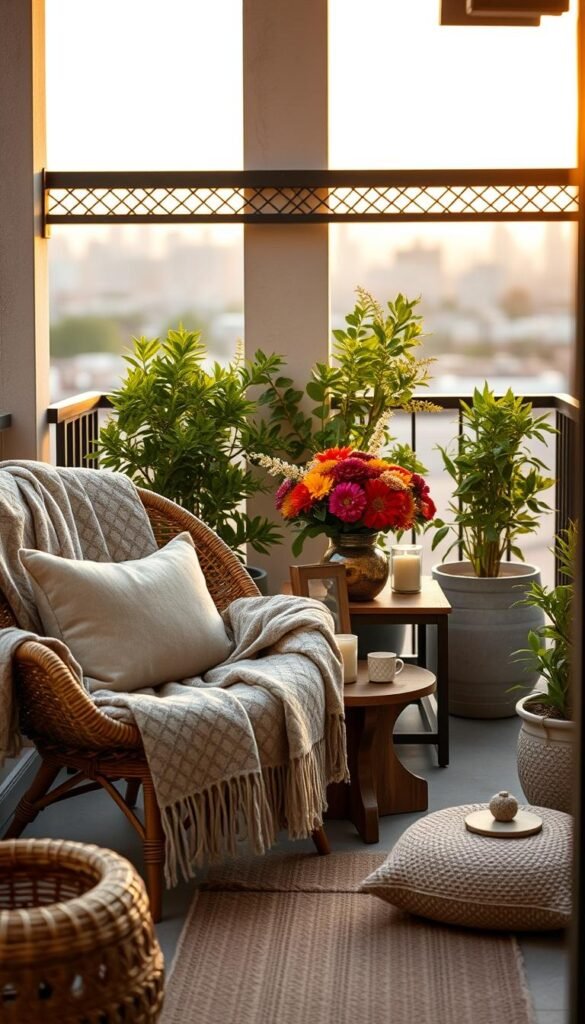
Limit pillows to two to four pieces. Choose removable, washable covers and quick-dry fills. That reduces mildew and the musty smell that ruins evenings.
Add one woven throw or one patterned cushion for texture. Stick to your palette so the decor feels curated.
Quick stash solutions for sudden rain
Have a lidded bin or compact deck box near the door. The goal: move soft things in 30 seconds. Use a waterproof tote for fast trips indoors.
„The best system is the one you can actually execute when clouds gather.“
| Item | Pros | Best-for |
|---|---|---|
| Outdoor pillow covers (<$25) | Washable, budget | Refresh without replacing |
| Waterproof tote (<$25) | Portable, quick stash | Daily use |
| Small deck box (<$50) | Locks, stores cushions | Under-bench storage |
Keep it safe, durable, and apartment-appropriate
Safety and longevity matter more than style when you want a balcony that lasts and stays renter-friendly. Choose proven materials, plan covers and storage, and add pet-safe fixes that protect your animals without turning the space into a cage. These steps reduce hazards and make the area usable over time.
Weatherproof materials that hold up over time
- Rot-resistant woods: teak, cedar, and redwood resist decay and stay stable on exposed floors.
- Synthetic wicker (polypropylene): keeps shape through moisture and temperature swings.
- Coated metals: powder-coated steel or aluminum resist rust and keep finishes neat.
- Avoid untreated soft woods and indoor textiles for outdoor use; they fail faster and add maintenance.
Furniture covers and storage timing for storms and winter
Keep water-repellent covers handy and use them when you’ll be away for a few days. Covers cut cleaning time and extend furniture life.
Bring cushions inside before freezing nights or long storms. Store anything that can crack in cold or warp in heat. A lightweight deck box or waterproof tote works well for seasonal rotation.
Pet-safe balconies using wire mesh without making it feel caged
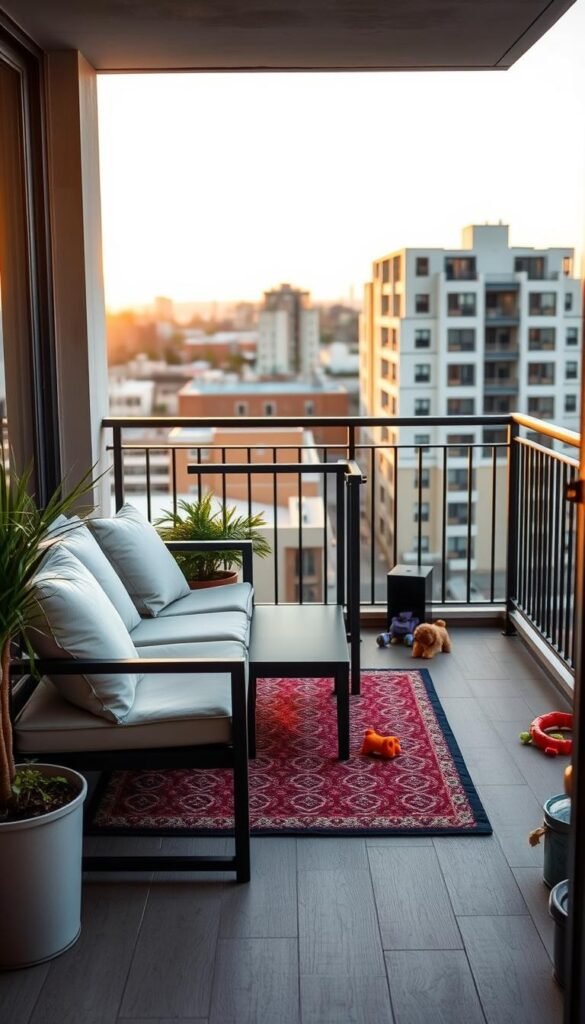
Choose a thin, sturdy wire mesh and attach it with no-drill ties to existing rail points. Check gaps for small pets and seal any squeeze-through spots.
Pair the mesh with a calm materials palette so it blends into the view. Use the mesh as a support for lightweight décor like hanging lanterns, not heavy planters.
Inspect fasteners after windy days and tighten as needed. This simple routine keeps pets safe and preserves the visual flow of the space.
| Concern | Practical fix | Budget tip |
|---|---|---|
| Rot and decay | Use teak/cedar/redwood or synthetic wicker | Pick a small teak side table rather than untreated wood |
| Storm damage | Keep water-repellent covers accessible; stash cushions indoors | Buy one high-quality cover to protect multiple pieces |
| Pet safety | Thin wire mesh secured with no-drill ties; gap checks | Use black or bronze mesh to blend with existing finishes |
| Floor protection | Use interlocking tiles or rubber feet under furniture | Anti-slip pads under legs to prevent scuffs |
Budget-friendly shopping list with quick setup
Start with a few targeted buys and you can fix clutter, add seating, and finish the view in an afternoon. The goal is practical upgrades that are renter-friendly and quick to install.

Under $25 upgrades that reduce clutter fast
- Lidded weatherproof tote — solves scattered items; pros: portable, hides mess; cons: can look utilitarian; best for: grab-and-go storage.
- Railing hooks — hang tools and lights; pros: frees floor; cons: check rail fit; best for: freeing walking space.
- Microfiber + outdoor-safe cleaner — quick resets; pros: fast maintenance; cons: needs regular use; best for: spills and dust.
- Plant saucers — drip control under pots; pros: protects floor; cons: limited capacity; best for: plant-heavy setups.
- Battery fairy lights — instant vibe without outlets; pros: no wiring; cons: replace batteries; best for: ambient light.
Under $50 upgrades that add function
- Folding side table — creates a set-down surface; pros: stores flat; cons: can wobble if cheap; best for: flexible layouts.
- Narrow side table — permanent surface with slim footprint; pros: steady; cons: uses floor space; best for: daily drinks and books.
- Two collapsible chairs — extra seating when needed; pros: portable; cons: less sturdy than fixed furniture; best for: occasional guests.
- Rail-mounted bar shelf — replaces a table without using the floor; pros: frees circulation; cons: limited surface; best for: narrow footprints.
- Outdoor runner rug on sale — defines the floor; pros: finishes the view; cons: cheaper rugs fade faster; best for: instant cohesion.
Where to splurge for safety and durability
Spend more on things that protect your investment. Prioritize non-slip floor solutions, stable seating that won’t tip, and weatherproof covers that fit. A bad cover or a wobbly chair costs time and creates hazards.
„Buy in this order to avoid overspending: floor/rug, seating, surface, vertical plants/storage, then lighting/privacy.“
| Item | What it solves | Pros | Best-for |
|---|---|---|---|
| Lidded tote (<$25) | Clutter containment | Portable, hides items | Daily grab-and-go |
| Folding table (<$50) | Set-down surface | Flexible, stores flat | Flexible seating plans |
| Non-slip floor (splurge) | Safety and comfort | Durable, stable | Daily use and rainy sites |
Comparison tables for small, smaller, and narrow balconies
Treat the footprint like a puzzle: choose pieces that lock together, not compete for space. Below are practical layout suggestions and direct comparisons to help you pick renter-friendly options.

Layout options by size and shape
| Size (sq ft) | Best layout | Door clearance risk | Storage plan |
|---|---|---|---|
| Micro (24–30) | Single chair + rail shelf | High — test with tape | Vertical hooks & lidded tote |
| Small (30–45) | Bistro set or corner bench | Medium — keep 3–4″ buffer | Under-bench box or narrow shelf |
| Workable (45–60) | Modular chaise or compact bench | Low — allows circulation | Small deck box + tiered stand |
Rugs vs. interlocking deck tiles
| Feature | Rug | Deck tiles |
|---|---|---|
| Cost | Lower | Higher |
| Comfort | Soft, warm | Firm, wood-like |
| Slip & drainage | May trap water | Better drainage if raised |
| Removal | Easy roll-up | Snap apart; clean removal |
Folding vs. modular seating
| Feature | Folding seating | Modular seating |
|---|---|---|
| Flexibility | High; store inside | Medium; reconfigure |
| Comfort | Variable | Usually higher |
| Wind stability | Less stable | More stable |
| Visual clutter | More legs, more clutter | Cleaner silhouette |
Planters vs. vertical garden
| Feature | Planters | Vertical garden |
|---|---|---|
| Maintenance | Medium; individual pots | Higher initially; organized care |
| Watering mess | More floor runoff risk | Containment easier with panels |
| Privacy impact | Moderate | High |
| Floor use | Takes floor area | Saves floor space |
Alternatives when a table or extra chairs won’t fit
- Rail bar shelf for drinks and laptop use.
- Clip-on cup holder that attaches to the chair or rail.
- Plant stand doubled as a side table.
- Single outdoor stool that tucks under a seat.
Best for movers: choose lighter, faster-to-remove options. Long-term renters can invest in tiles and durable seating.
Daily routines and easy maintenance to keep your balcony organized
Small habits save time and keep this outdoor space ready for use. Treat the area like a room you live in. A few simple rituals prevent mess from growing and make cleanup fast.
Two-minute reset after coffee or dinner
- Put drinkware inside and wipe the surface.
- Shake and stack cushions, then close the bin or tote.
- Return chairs and tables to the default layout so the space is ready for the next use.
Weekly wipe-down checklist for dust, pollen, and spills
- Quick sweep of leaves and dirt.
- Wipe rail shelf and side table with a damp cloth.
- Check for standing water and empty any planter saucers.
Seasonal refresh: rotate textiles, prune plants, inspect lights
- Swap heavy throws for lighter textiles in warm months.
- Deadhead and prune plants so leaves don’t become debris.
- Test string, battery, and solar lights; secure clips and replace batteries on a schedule.
Tie habits to other apartment areas
Use the same two-minute reset you apply at the entryway, kitchen, or bathroom sink. That way you build one routine that keeps several living zones tidy.
„A quick daily reset beats a long cleanup later.“
| Routine | What to do | Frequency |
|---|---|---|
| Two-minute reset | Put away drinkware, close bin, return furniture | Daily (after use) |
| Weekly wipe-down | Sweep, wipe surfaces, empty saucers | Weekly |
| Seasonal refresh | Rotate textiles, deep-clean rug/tiles, check lights | Every 3–4 months |

Keep it realistic: your aim is easy to maintain, not perfectly staged. When things have a set place, maintenance takes less time and the space stays useful.
Conclusion
, A practical wrap-up: measure first, pick one clear purpose, and plan traffic so the door always clears.
Keep this as an extension of your interior. Repeat finishes, limit competing pieces, and use vertical elements so the floor stays open. Choose renter-friendly, no-drill fixes like rail planters, tension rods, freestanding shelves, and snap-together tiles.
Quick checklist to copy: one seat, one surface, one drop zone, a layered plant plan, simple secured lighting (one neat string run), privacy as needed, and a waterproof bin for soft goods.
Budget note: containment and quick fixes under $25, function upgrades under $50, and save splurges for safety and durable materials. Do a two-minute reset after each use and this apartment outdoor space will feel practical, tidy, and worth it.