You can build a peaceful corner without drilling or big buys. This intro shows a renter-friendly plan you can start in 15–30 minutes. It focuses on daily routine, easy maintenance, safety, and durability.

In a 900-square-foot home, a tiny gap between a closet and a door became a relaxing nook. Posters were rotated instead of hung, a floor mat replaced a bulky chair, and items lived in a simple bucket. The feeling mattered more than the square footage.

✨ Smart Finds Picks
Shopping List
Quick picks that solve the problem fast — renter-friendly, budget-aware, and trend-led.
As an Amazon Associate I earn from qualifying purchases.

Expect practical guidance. You’ll get under-$25 fixes like adhesive hooks and clear bins, and under-$50 upgrades like a rolling cart or mirror. The guide previews three layers: a calming foundation, a flexible corner, and portable tools that store anywhere.

Safety note: keep walkways clear and avoid unstable stacks. For examples and a budget game plan, see this helpful mix at the Small Space Fix Mix.

Key Takeaways

  • Define what calm means for your room—less noise or easier mornings.
  • Start today with a 15–30 minute, no-drill plan.
  • Under-$25 buys solve quick clutter; under-$50 gives higher value upgrades.
  • Build three layers: foundation, flexible corner, portable tools.
  • Watch for trip hazards and choose durable, renter-friendly fixes.

Start With a Calming Foundation in Small Spaces

Start with a single, repeatable landing zone for items that travel through your room. A tidy drop zone prevents clutter from spreading and makes daily life easier.
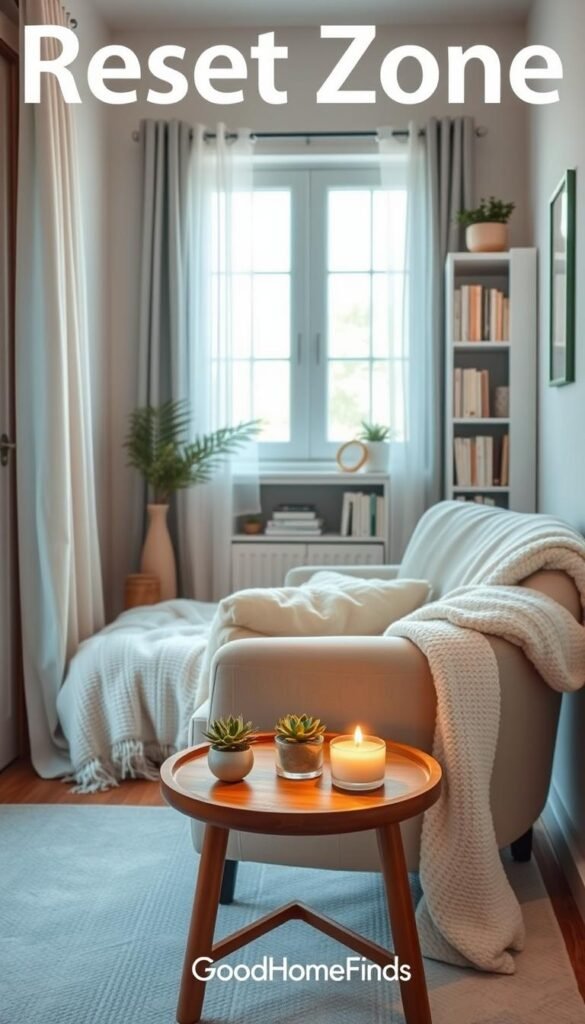
A serene reset zone in a small, tranquil room, featuring a cozy reading nook with a plush armchair and soft, inviting throw blankets. The foreground showcases a small wooden side table adorned with a minimalist succulent plant and a calming, unlit scented candle. In the middle, a large window with sheer curtains allows gentle natural light to filter through, creating a warm glow. Soft pastel colors dominate the decor, enhancing the peaceful ambiance. The background reveals a subtle bookshelf filled with neatly arranged books and decorative items, maintaining an organized yet welcoming vibe. The overall atmosphere conveys relaxation and harmony, perfect for unwinding. Capture this lifestyle setting in a Pinterest-style image, branded "GoodHomeFinds", focusing on realistic details and inviting warmth.

Declutter with quick reset zones

Create a tray or set of matching open bins for keys, mail, chargers, and shoes. Under $25: a tray, adhesive cord clips, and washable throw cover. Under $50: a slim rolling cart or lidded hamper to hide laundry.

Zones for real life activities

Define a sleep area, a work spot, and a decompress nook using rugs, lighting, and storage—not walls. Use a low-pile rug and consistent textiles to unify the room.

Nature, lighting, and durable details

Add easy plants like pothos or snake plant and a wood bowl or woven basket. Choose warm bulbs, a plug-in dimmer where allowed, and a reed diffuser away from pets.

  • Daily 2-minute reset: clear one surface, return items to the drop zone, and do a quick wipe-down.
  • Safety: keep one clear walking path, avoid blocking doors, and choose non-slip bases.

Build a Small Space Calm Corner Without Needing a Corner

Find a usable nook where furniture meets a doorway and turn it into a purposeful retreat. This method uses what you already have and keeps changes renter-friendly.
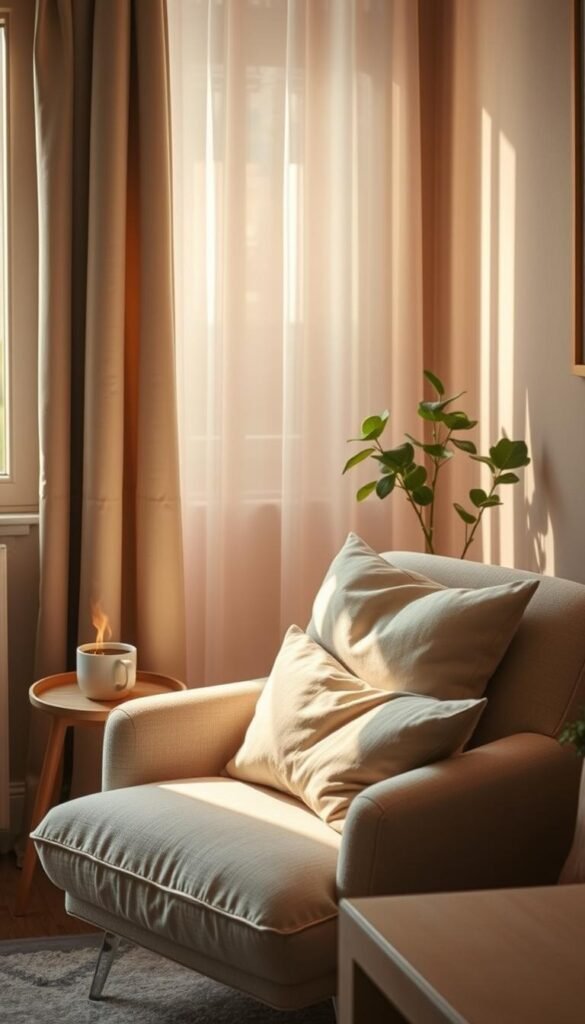
A serene, small corner designed for relaxation within a cozy living space. In the foreground, a plush armchair adorned with soft, muted cushions invites comfort, positioned near a small wooden side table holding a steaming cup of herbal tea. The middle ground features a vibrant indoor plant, adding a touch of greenery, beside a whispering, light-filtering curtain that gently sways with a soft breeze. The background showcases a warm, ambient-lit room with soothing pastel colors on the walls, creating a tranquil atmosphere. Natural light streams in through a window, casting delicate shadows. The scene is captured with a 35mm lens at a slightly elevated angle to emphasize the calmness and simplicity of the space. The overall mood is peaceful and inviting, ideal for unwinding. GoodHomeFinds.

Pick a tiny spot that already exists

Measure an 18–24 inch gap by a closet, the side of a bed, or the end of a sofa. Check door swing, maintain a 24-inch walkway, and keep exits clear.

Renter-friendly wall options

Use removable hooks, poster rails hung from existing hardware, or lightweight frames you can rotate. Swap visuals weekly or monthly to keep the wall fresh.

Floor-first comfort and stocking

Choose a foldable mat or washable rug instead of a chair. Store a couple of books, a coloring pad, crayons, and a feelings chart in a small basket for quick clean-up.

  • Under $25: foldable mat + small bin.
  • Under $50: soft plug lamp or lidded basket to hide clutter.
Type Best spot Quick buy
Studio Side of bed Foldable mat, bin
Shared room Portable kit stored in closet Small lidded basket
Family home Near busy areas Sturdier basket, lamp

Safety check: avoid tip-over storage, keep the floor clear, and test durability before daily use. For adaptable ideas across rooms, see best small kitchen solutions. 🙂

Portable Calming Tools That Store Anywhere (No Drilling, Easy Setup)

Moveable organizers let you bring stress-busting items to the exact place you need them.
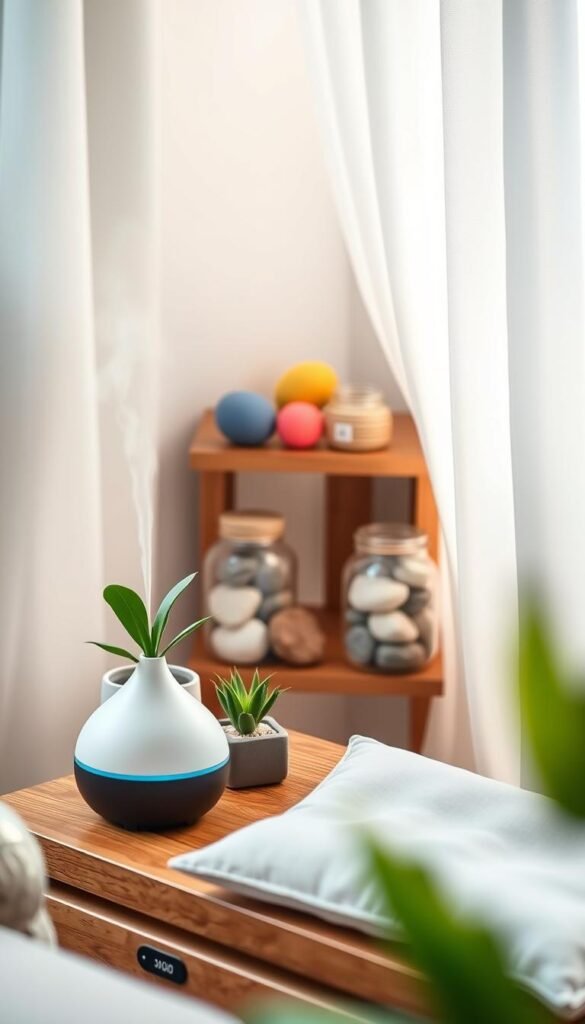
A cozy, inviting scene featuring portable calming tools neatly arranged on a stylish wooden shelf in a small living space. In the foreground, display a serene essential oil diffuser emitting a gentle mist, beside a compact meditation cushion and a sleek, minimalist plant. In the middle, a small shelf holds a collection of colorful stress balls and calming jars filled with natural stones. The background showcases a cozy corner with soft, natural light filtering through sheer white curtains, creating a warm, tranquil atmosphere. Use a soft focus lens to emphasize the calming aesthetic, capturing a Pinterest-style lifestyle vibe, suitable for an article by GoodHomeFinds.

Why portable tools work: they cut setup time, stop clutter from spreading, and let you use relief where it matters most—kitchen, entry, or bedtime.

The calm-down caddy for shared use

This is a handle-ready bin for a living room or hall. Fill it with fidget toys, a stress ball, breathing cards, and a mini hourglass. Best for families or shared rooms.

The pencil-case kit for on-the-go routines

Use a durable pencil case for studios or travel. Pack a tiny hourglass, mini fidgets, and sensory strips. It fits in a bag and stays private.

Hanging pocket organizers for visible, sorted storage

These keep items off the floor and in plain view. They are not mobile but make choices fast and organized.

Packing list (value + durability): washable case, sturdy handle caddy, a few fidgets, stress-relief putty, breathing cards on a ring, and a shatter-resistant timer.

Option Best for Budget build
Calm-down caddy Shared room, moving between rooms Under $25: basic bin + printed cards
Pencil-case kit Studio, travel, co-parenting Under $25: pencil case + mini fidgets
Hanging pockets One consistent place, visible choices Under $50: sturdier organizer with labeled pockets

Safety and maintenance: pick non-choking sizes for kids, avoid fragile items, seal scented items in bags, and do a weekly 5-minute restock and wipe. Make a simple rule: tools return to the caddy before screen time or bedtime.

For gear comparisons and longer-term storage options, see a helpful storage options comparison.

Room-by-Room Ways to Create Small Space Calm at Home

Use targeted fixes by room to convert frequent messes into routine habits. This keeps daily decisions simple and makes each room feel more usable.
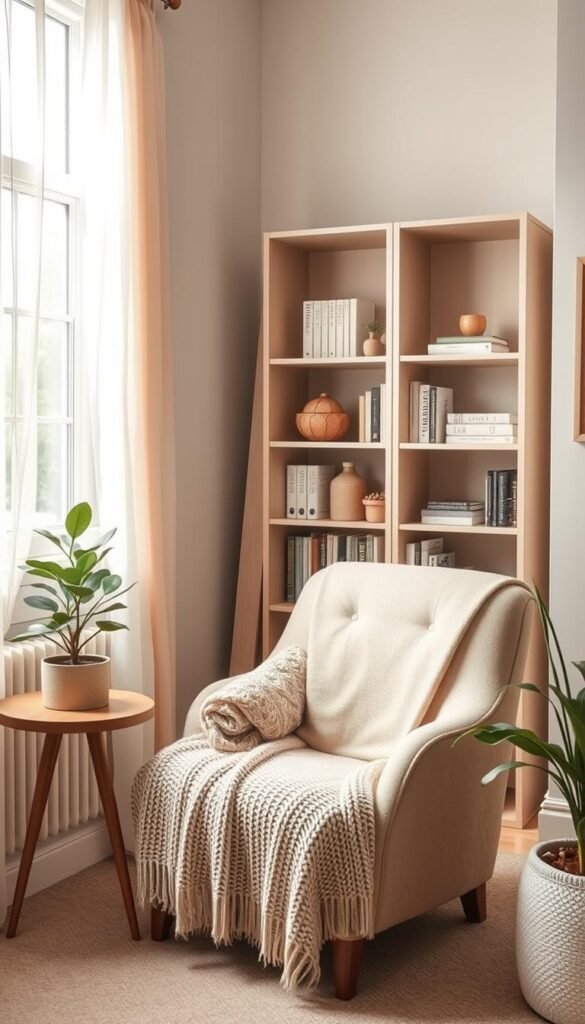
A serene, well-organized small room designed for tranquility, featuring soft, neutral-toned walls and natural light flooding in through a large window. In the foreground, a cozy reading nook with a plush armchair, a knitted throw blanket draped over it, and a small side table adorned with a calming indoor plant. The middle ground showcases a minimalist bookshelf, filled with carefully curated books and decorative items, conveying a sense of simplicity. In the background, delicate curtains flutter slightly in the breeze, adding a gentle movement to the space. Soft, diffused lighting enhances the overall warm atmosphere, capturing the essence of calmness. The scene is styled in a Pinterest-inspired aesthetic, embodying the brand GoodHomeFinds.

Kitchen quick-win

Keep counters cleared by letting only daily-use items stay out. Use wipe-clean bins, shelf risers, and a narrow oil/spice organizer under $25.

Under $50, add a tension-rod divider or a roll-out tray for deep cabinets. For grouped fixes and product ideas see the kitchen problem mix.

Bathroom and safety

Go vertical: over-the-door hooks and moisture-safe containers keep toiletries off wet surfaces.

Prioritize non-slip mats and closed bins for chemicals. Do a daily quick wipe and a weekly deeper clean to prevent buildup.

Closets, entry, and living

Create a capsule zone with slim hangers, hanging shelves, and labeled pouches. For studios, use hanging shelves; for shared closets, label by person.

At the entry, use over-door racks and a narrow shoe tray to stop mail and keys from spreading into the home.

In the living room or bedroom, add a vacuum-friendly rug, washable throws, and warm lamps to improve lighting and atmosphere. Keep one book stack or a small tray to avoid visual clutter.

Room Under $25 Under $50 / Setup Time / Renter-Friendly
Kitchen Wipe-clean bins, shelf riser Tension rod or roll-out tray / 20–40 min / no drill
Bathroom Over-door hooks, moisture-safe bins Non-slip mat + closed caddy / 10–30 min / removable
Closet Slim hangers, labeled pouches Hanging shelf unit / 15–30 min / needs low effort
Entry / Living Narrow shoe tray, small drop-zone tray Slim cart or narrow rack / 10–60 min / usually no drill

Durability & daily routine: check non-slip feet and door clearance. Return items to their home before night. Small, consistent steps keep each room usable every day.

Conclusion

A few intentional choices can turn a tight corner into a lasting place of rest.

Start now: pick one place to reset, clear one surface, add a handle-ready kit, and make a clear walking path. Do this in 30 minutes and you’ll feel the change.

Budget wisely: under $25 gets function—bins, hooks, a mat. Under $50 adds comfort—a plug lamp, sturdier basket, or mirror. Choose by how you live and what fits your renter-friendly rules.

Keep it livable with a 2-minute daily reset, a 10-minute weekly restock, and a monthly donate-or-store check. Watch for trip hazards and test non-slip pads before daily use.

Rotate a couple of books, swap one calming activity, and keep the kit stocked. For quick flow and anchor ideas, see this entryway planning guide.
FAQ

How do I create a calming foundation in a small space without buying new furniture?

Start by decluttering visible surfaces and creating quick “reset zones” for daily items. Define clear-use areas for activities like work, rest, and eating. Swap bold patterns for neutral, light colors and reduce competing textures. Rearrange existing furniture to open floor paths and use foldable or multiuse pieces. Add a plant or two and a soft lamp to shift the atmosphere without a big spend.

What’s an easy renter-friendly way to hang calming decor?

Use no-drill solutions: command hooks, adhesive picture strips, and tension rods. Rotate posters or prints on lightweight frames or clipboards to change mood without wall repair. Keep framed pieces small and grouped to avoid heavy anchors. This keeps your space calm and reversible when you move.

How can I build a calming corner if I don’t have an actual corner?

Pick a tiny spot between doors, a gap beside furniture, or an unused stretch of wall. Lay down a foldable mat or small rug for floor-first comfort. Add a low basket for books and a compact caddy with calming tools. Keep visuals minimal and focus on texture and lighting to make the spot feel intentional and safe.

What should I put in a portable calm kit for quick stress relief?

Pack lightweight, durable items: a fidget, stress-relief putty, a small timer, breathing prompt cards, and a notepad with a pen. Add a compact scent roller or a noise-reduction earbud set if helpful. Use a pencil-case or small caddy so the kit stores easily in a drawer or bag.

Are hanging pocket organizers a good option for limited floor space?

Yes. Hanging pockets keep calming tools visible, off the floor, and organized. Choose moisture-safe materials for bathrooms and breathable fabric for closets. They’re renter-friendly and work well on doors or the side of shelving units, reducing clutter while keeping essentials accessible.

How do I make the kitchen feel calmer without major changes?

Clear counters using under- bins and shelf risers. Group like items and keep daily-use tools within reach. Add wipe-clean organizers and use roll-out trays for easier access. Small, consistent changes reduce visual stress and make the kitchen easier to use.

What affordable upgrades help bathroom calm and safety?

Use vertical storage and over-the-door hooks to free counter space. Choose moisture-safe containers and non-slip mats for safety. Keep chemicals in closed storage and simplify routines with labeled bins for daily essentials. These are low-cost, renter-friendly fixes that lower stress.

How can I organize a closet to support a calmer routine?

Create a capsule zone with slim hangers, hanging shelves, and labeled pouches. Group outfits by use to speed decisions. For tiny closets, prioritize vertical storage and rotate seasonal items. Clear, consistent zones mean less decision fatigue each day.

Should I choose mobile kits or wall storage for calming tools?

Choose mobile kits if you need flexibility across rooms or on the go. They’re ideal for shared spaces and quick access. Choose wall storage to keep items visible and fixed in one calming spot. Consider your routine, household traffic, and storage space when deciding.

What low-cost entryway solutions reduce daily stress?

Use over-door racks or narrow shoe storage to create a drop zone without drilling. Add a small tray for keys and a slim hook for bags. Check for trip hazards and keep high-traffic paths clear. These simple changes make comings and goings smoother.

How do I pick lighting and texture to improve atmosphere without clutter?

Use warm, layered lighting: a table lamp, a soft overhead bulb, and task lights where needed. Add a textural throw or rug to anchor the area. Choose items that serve a function and add comfort so you avoid unnecessary decor that creates visual noise.

What are budget vs premium options for calming upgrades?

Budget options include adhesive hooks, under- bins, foldable mats, and small plants. Premium choices are higher-quality rugs, ergonomic loungers, and designer storage systems. Prioritize daily-use items first; they deliver the most practical benefit per dollar.

How can I make these strategies child-friendly or adult-friendly?

Focus on the feel over exact items. For children, include accessible sensory toys, soft lighting, and low storage baskets. For adults, choose neutral containers, calming books, and a discrete caddy. In both cases, keep the area safe, labeled, and easy to reset.

What quick routines help maintain a calmer room day to day?

Build short habits: five-minute evening resets, morning spot checks, and weekly quick declutters. Use labeled bins and clear zones so reset tasks take seconds. Consistent small actions prevent clutter from building and keep the room functional.

Schreibe einen Kommentar

Deine E-Mail-Adresse wird nicht veröffentlicht. Erforderliche Felder sind mit * markiert