
This is a practical checklist of low-cost upgrades to make your home work better without a remodel. You’ll get honest pros and cons, quick real-life examples, and easy safety and quality checks up front.
Budget first: most items aim to be under $25, with a few worth-it alternatives under $50. I focus on daily usefulness: storage, lighting, and organization that remove friction and save time.
Quick safety note: check mounting limits, keep heat clearance near ovens and outlets, and avoid flimsy plastics near water. I prioritize Amazon availability and fast delivery so you can fix annoying problems fast. For a broader set of practical picks, see this handy roundup at home problem solver mix.
Key Takeaways
- Practical, renter-friendly upgrades that mostly cost under $25.
- Each pick shows why it helps, who it’s for, and what to avoid.
- Focus areas: storage, lighting, entryway order, and quick cleanup.
- Safety checks first: mounting limits, heat clearance, and durable materials.
- Amazon availability and fast delivery are prioritized for quick fixes.
How We Picked These Small Space Finds for Fast, Affordable Wins
Our filter was simple: would this actually make daily life easier without a fuss?
We put budget first. Most picks stay under $25. If a product costs more, it must replace multiple tools or solve a common pain point. Value means it saves time, clears a surface, or makes storage reachable without adding clutter.
Practical rules:
- Price: majority under $25; premium only when it replaces several items.
- Durability: pay $3–$10 more for steel, better adhesive, or rust-proof finishes.
- Delivery: prioritize in-stock items with Prime or fast returns for sizing issues.
Measure first. Check door thickness, cabinet depth, wall type, and clearance. These checks match advice from Better Homes & Gardens and renter-friendly tips from The Strategist.

| Feature | Cheaper option | Sturdier option |
|---|---|---|
| Mounting | Adhesive hooks (low cost) | Anchored screws (higher hold) |
| Material | Coated plastic | Stainless steel (rust-proof) |
| Kitchen safety | Basic bins (check BPA) | BPA-free labeled organizers |
Safety checks matter. Look for weight limits, rounded edges, and food-safe claims. We skip gimmicks and focus on basics that work across apartments, studios, and other compact homes. This is the clearest way to meet real needs.
Small space finds that use vertical space without remodeling
Vertical storage converts wall inches into real daily wins. These renter-friendly fixes install fast, cost little, and keep the floor clear.
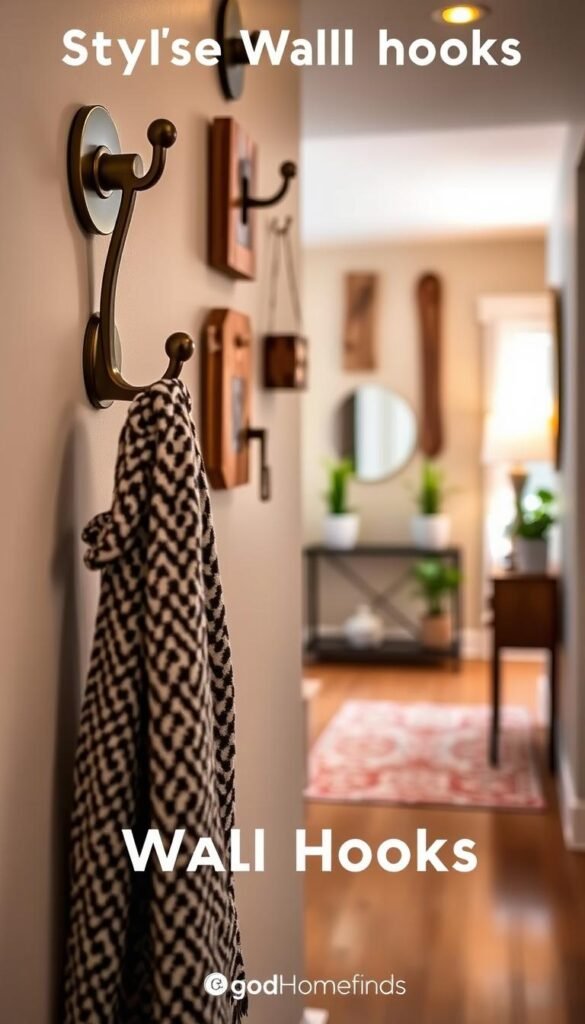
Adhesive wall hooks — entryway and kitchen
Why use them: hang keys, bags, and oven mitts to stop counter clutter and lost items.
Best spots: by the door, inside pantry doors, or next to the stove for mitts.
Who it’s for: renters and busy households that need quick, no-tool hooks.
Over-the-toilet shelf for bathrooms
These narrow shelves lift towels and toilet paper off the floor and free up cabinet space. They work well in tight bathrooms where every inch counts.
Pro tip: choose a model with adjustable feet or light anchoring for stability.
Cabinet-door rack for lids and sprays
Mount a slim rack inside a cabinet door to hold pan lids, cutting boards, or spray bottles. One cabinet door can return an entire shelf to daily use.
What to avoid with wall-mounted storage
- Textured walls or flaky paint — adhesives fail here.
- Overloading hooks beyond weight ratings.
- Placing racks where doors can’t close or steam will weaken glue.
| Product | Typical cost | Key caution |
|---|---|---|
| Adhesive multi-hook pack | $8–$20 | Check weight limit; clean surface before applying |
| Over-toilet shelving | $20–$45 | Watch height clearance and ceiling fit |
| Cabinet-door rack | $10–$25 | Confirm door clearance and hinge type |
Quick safety notes: always check weight ratings, wipe surfaces before mounting, and avoid high-heat or humid spots. For more kitchen vertical tricks, see best small kitchen solutions.
Over-the-door organizers that add storage in one minute
An over-the-door organizer turns a bare door into instant storage in under sixty seconds. It ranks high on effort-to-storage because you get usable space with no tools and no permanent changes.
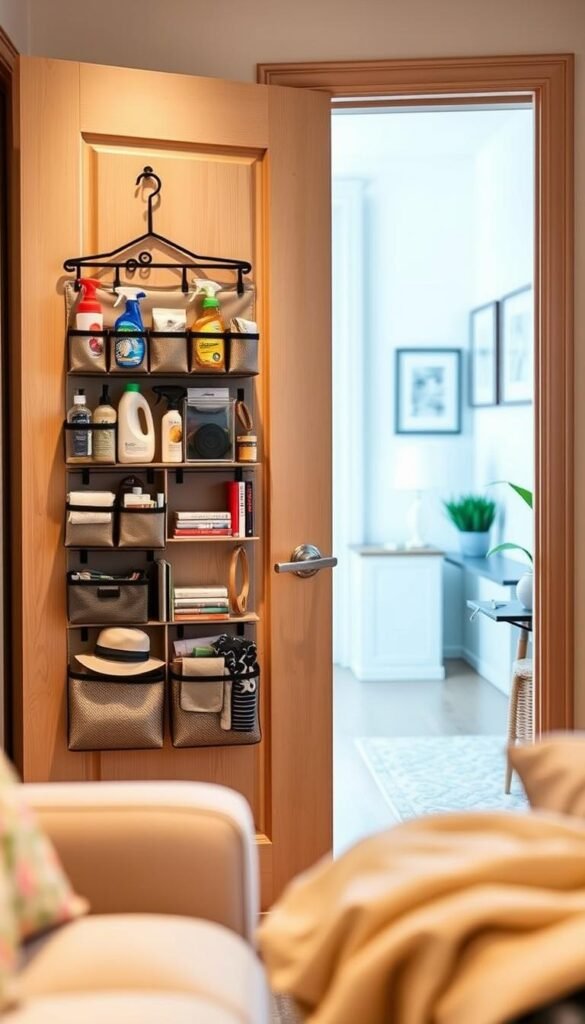
Over-the-door pocket organizer for pantry snacks or cleaning supplies
Use it as a snack zone in your pantry. Fill pockets with granola bars, small boxes, and pouches so counters stay clear.
It also works as a cleaning kit holder. Keep sprays, wipes, and sponges handy instead of digging under cabinets.
Over-the-door hooks for coats, towels, and robes (renter-friendly)
Hooks are low-cost and renter-friendly. Hang coats, towels, robes, or a “tomorrow outfit” in a bedroom.
They free up hooks on entry racks and reduce morning clutter.
„Over-the-door racks are easy to remove and often the best renter-friendly option for seasonal storage.“
Cheaper options vs. sturdier options
Budget versions work well for light items and quick needs. They cost less and are fine for socks, scarves, and snacks.
Sturdier metal frames are worth a few extra dollars when you store heavy bottles, bulk items, or laundry detergents on the door.
- Pros: instant storage, no drilling, good for apartments and dorms.
- Cons: can scratch a door, may stop a door from closing fully, and some hooks rattle.
- What to avoid: overloading pockets, ignoring door thickness, and placing organizers behind damp bathroom doors.
| Type | Typical cost | Best use |
|---|---|---|
| Pocket organizer | $10–$25 | Pantry snacks, small cleaning supplies |
| Over-the-door hooks | $5–$20 | Coats, towels, robes, outfit staging |
| Metal frame rack | $25–$50 | Heavy bottles, bulk pantry items, laundry detergent |
Alternatives: adhesive hooks for lighter loads or slim bins on a shelf if door clearance is tight. Measure door thickness and test fit before you buy.
Kitchen small space finds that clean up counters fast
Clear counters speed meal prep and calm a busy kitchen. Set that as your goal: more usable worktop, faster cooking, less clutter when you make coffee or dinner.
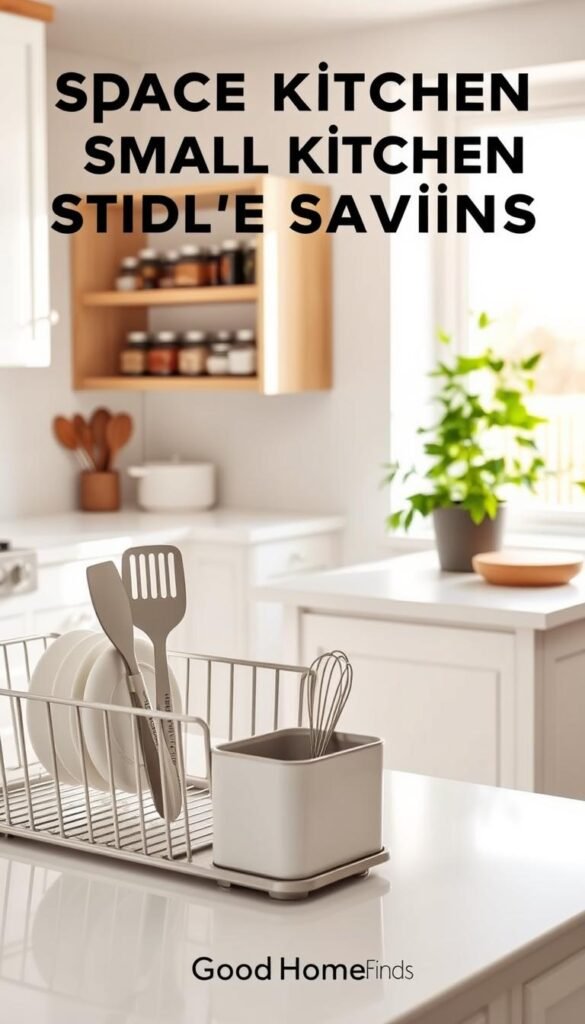
Magnetic spice rack for the fridge or side of a cabinet
Why it helps: it moves frequently used jars off a shelf and keeps garlic powder, chili flakes, and salt visible. Check magnet strength and container weight before you buy.
Under-shelf hanging basket for mugs or wraps
Real life: store sandwich wraps and foil in a hanging basket so a whole drawer frees up for utensils and gadgets. Measure shelf thickness before ordering to avoid fit problems.
Collapsible dish-drying mat
Use it to dry plates and mugs after dinner. Then fold it flat and tuck it into a drawer. This keeps the counter clear where you make coffee each morning.
Stackable clear bins for a mini pantry zone
Create a grab-and-go breakfast bin with clear plastic boxes. You see what runs low at a glance. Prioritize BPA-free or food-safe labels and quick Amazon delivery for fast replacement.
What to avoid in the kitchen
Avoid bulky single-use gadgets. Skip oversized organizers that waste vertical area. Watch for cheap plastics that crack, magnets that slide, and baskets that snag on shelf lips.
- Who this is for: studio apartments, cramped kitchens, anyone avoiding extra furniture or a bigger table.
- Pros: quick organization, better workflow, less counter clutter.
- Cons: low-quality materials, weak magnets, and ill-fitting baskets.
| Product | Typical cost | Best tip |
|---|---|---|
| Magnetic spice rack | $12–$30 | Confirm magnet pull and jar weight |
| Under-shelf hanging basket | $10–$25 | Measure shelf lip and thickness |
| Collapsible drying mat | $8–$20 | Choose silicone, heat- and food-safe |
| Stackable clear bins | $10–$40 | Pick BPA-free, labeled fronts |
Drawer and cabinet organizers that stop the daily “where is it?” search
You lose minutes every day when kitchen drawers and cabinets don’t have clear zones. That daily search adds friction to simple tasks like making coffee or setting the table.
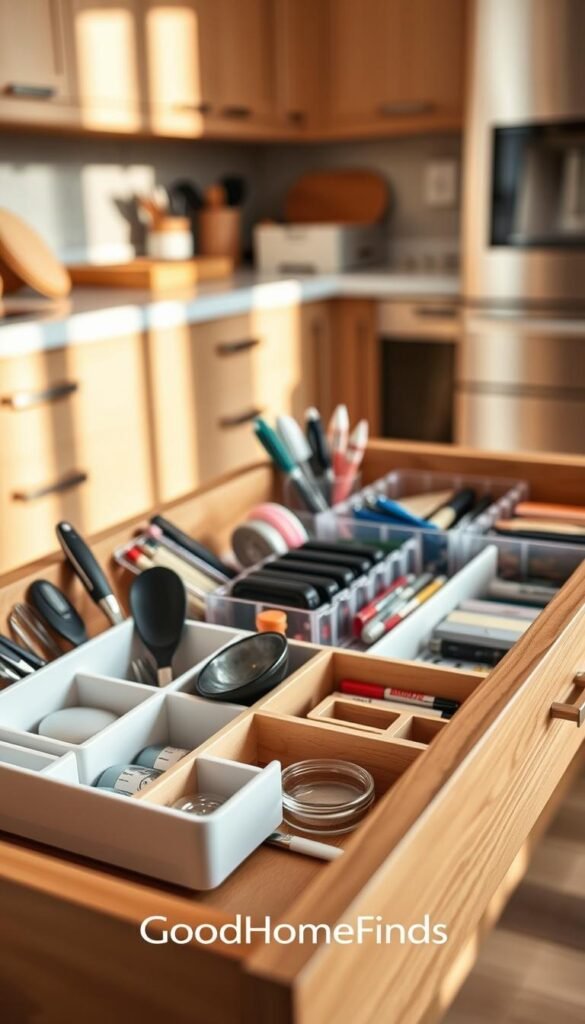
Adjustable drawer dividers create simple zones for forks, spatulas, and odd tools. Set one long slot for cooking utensils, a narrow row for flatware, and a shallow section for measuring spoons. You grab what you need without dumping the drawer.
Pull-out cabinet basket
Why it helps: a pull-out basket turns deep cabinets into usable storage. Instead of crawling into a low cabinet, you slide the basket toward you and see every item.
Pro tip: measure cabinet depth and height before buying. House Beautiful recommends pull-out corner organizers for oddly shaped lower cabinets.
Pantry labels and marker set
Use labels to stop duplicate buys. Label jars and canisters so everyone in the household knows what’s inside. That simple step speeds cooking and keeps pantry stock accurate.
- Pros: big time savings, fewer duplicates, faster meal prep.
- Cons: dividers can slide if loose, baskets may snag, and cheap labels peel.
- Who it’s for: anyone with deep lower cabinets, shared kitchens, or cluttered drawers.
| Product | Typical cost | Key caution |
|---|---|---|
| Adjustable drawer dividers | $8–$25 | Confirm drawer depth and material |
| Pull-out cabinet basket | $20–$45 | Measure clearance and slider weight rating |
| Pantry labels + marker | $6–$18 | Use permanent marker or smear-proof pens |
Safety & quality: avoid placing plastic organizers next to ovens, toasters, or hot outlets. Leave ventilation gaps and do not block shutoff valves or outlets when you rearrange cabinets.
For a broader set of organization picks that pair well with drawer systems, see best organization finds.
Small space finds for corners, awkward nooks, and “dead zones”
Dead zones are the corners and narrow gaps that silently waste usable square footage in an apartment. You can convert them into helpful storage with low-cost pieces that fit tight widths and stay renter-friendly.
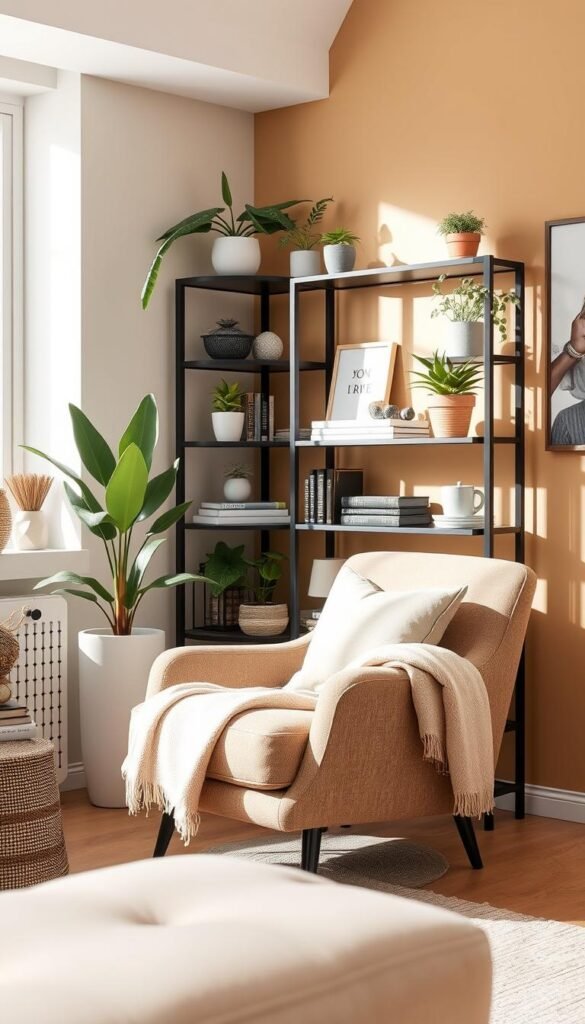
Freestanding corner shelf
Why it works: a freestanding corner shelf tucks into corners without drilling. Use it in a bathroom for rolled towels and toiletries or in a bedroom for books and a lamp.
Sizing tip: measure corner depth and ceiling height. Choose wider legs for stability and no-tip designs if kids or pets are around.
Lazy Susan turntable for deep cabinets
Place a turntable in a deep cabinet to store oils, sauces, and bottles. One spin reveals what you need and stops duplicate buys.
Value note: a basic plastic turntable is cheap. Upgrade to a higher-lip or non-slip model for glass bottles.
Compact rolling cart alternative
When shelves don’t fit, a slim rolling cart slides into narrow niches—between the washer and wall or beside the fridge. It keeps cleaning supplies upright and reachable.
Watch for: weak casters, wobble, and carts taller than the niche depth. Pick a cart with firm wheels and an anti-tip option.
- Pros: converts awkward corners into usable spots, renter-friendly, budget options are available.
- Cons: cheap carts wobble; tall narrow shelves can tip if top-heavy.
- Who it’s for: renters, studio dwellers, and anyone with deep cabinets or tight gaps.
| Product | Typical cost | Best sizing tip |
|---|---|---|
| Freestanding corner shelf | $20–$45 | Measure corner depth and ceiling height; pick wider base |
| Lazy Susan turntable | $8–$25 | Match diameter to cabinet depth; choose non-slip surface |
| Slim rolling cart | $15–$40 | Measure gap width and clearance for wheels |
What to avoid: tall units without anti-tip hardware, turntables too small for your bottles, and carts with brittle plastic casters.
For a wider roundup of renter-friendly solutions that work in tight corners and other odd nooks, see this best small space finds.
Shelves that keep the room feeling lighter (open, glass-look, and slim profiles)
Swap a bulky bookcase for low-profile wall shelves and the room will breathe more easily.
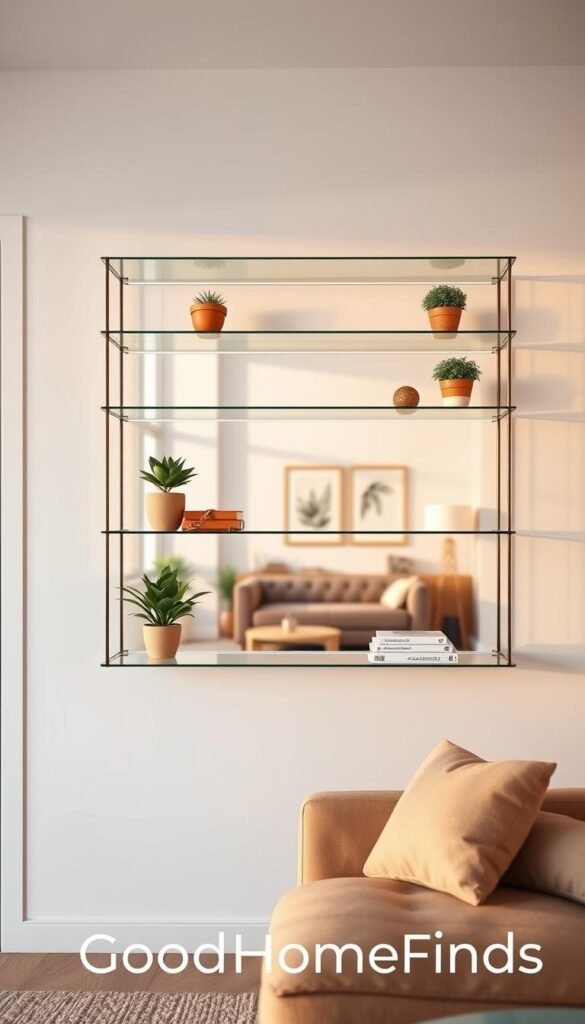
Visual space means the eye sees fewer solid masses. In a living room, slim or glass-look shelving reads airy. That makes the room feel larger and lets more light pass through.
Floating shelves for living room storage
Why use them: float books and a few decor items without a heavy unit on the floor.
Mount over a sofa or console to get storage without crowding the room. Find studs or use rated anchors for safety if you store books.
Clear acrylic shelves for “visual space”
Clear acrylic works well near a kitchen or bathroom nook. Use it for spices or skincare so items are visible but the shelf hardly reads as weight.
What to avoid with open shelving
- Dust builds up faster—plan quick wipes.
- Avoid overloading brackets or mixing too many accessories.
- Don’t place low shelves where you’ll bump your head.
Pros: airy look, flexible placement, more light. Cons: visible clutter, more tidying, lower weight limits for acrylic.
Who it’s for: renters using removable mounts, minimalists, and anyone aiming to keep a living room light and uncluttered.
Styling rule: leave 20–30% of each shelf empty so the wall and light still show through.
For more renter-friendly tips that pair with slim shelving, see this quick roundup.
| Type | Typical cost | Best tip |
|---|---|---|
| Floating wood shelf | $15–$40 | Use heavy-duty brackets for books |
| Clear acrylic shelf | $20–$50 | Limit weight; avoid hot, bright sun |
| Glass-look bracketed shelf | $25–$60 | Pick corrosion-resistant brackets for bathrooms |
Small space finds that make a room feel bigger with light and reflection
Light and reflection change perception more than paint or paint colors. They help a room feel bigger even when the footprint can’t change. A few inexpensive tweaks bounce daylight and lamp light around a wall and give instant depth.
Peel-and-stick mirror tiles for dark hallways or tiny bathrooms
Why they work: tiles reflect light and create a repeated depth effect that tricks the eye into thinking the room is larger.
Place tiles opposite a window or above a narrow console in a hallway. In a bathroom, mount them on a blank wall to bounce the vanity light. Align edges carefully; cheap tiles can distort reflections if they aren’t flat.
Plug-in puck lights for cabinets and closets
Real-life example: install puck lights inside a closet so you find outfits faster and avoid pulling down the bed linens to check color. Under-cabinet pucks remove shadows and speed meal prep in a studio apartment kitchen.
Installation tips: use rated plugs, avoid running cords where doors pinch, and pick warm color temps for flattering light.
Upgrade alternative: a full-length mirror
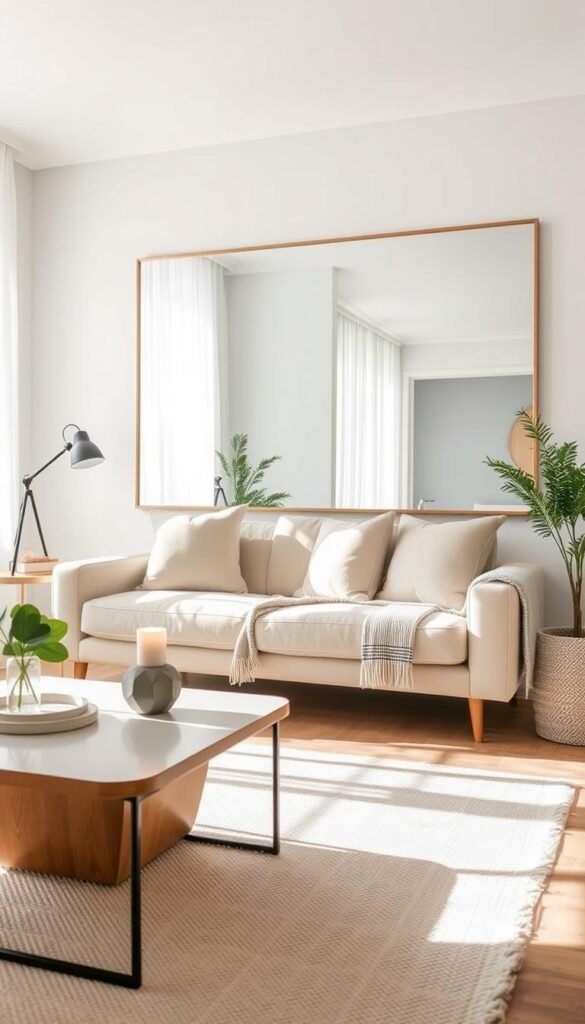
When budget allows: a large wall mirror delivers the biggest impact. It reflects more of the room, doubles natural light, and gives a consistent view without tile seams.
Expect to spend more than the $25 budget for a durable full-length model. The investment often pays off in perceived room size and renter-friendly style. The Strategist and Better Homes & Gardens both note large mirrors create depth and reflect light well.
- Pros: quick brightness boost, better visibility, renter-friendly installs.
- Cons: adhesives can fail in steam, cheap tiles distort, and cords must be managed safely.
- Who it’s for: anyone in an apartment, studio, or rental with dark closets or a windowless bathroom.
| Item | Typical cost | Key caution |
|---|---|---|
| Peel-and-stick mirror tiles | $10–$40 | Avoid flaky paint; align seams; keep from direct steam |
| Plug-in puck lights | $12–$35 | Pick rated units; manage cords; avoid near water |
| Full-length wall mirror | $50–$200+ | Use anchors or a sturdy lean; don’t rely on low-adhesion strips |
Multipurpose basics that replace single-use furniture in small spaces
Make every piece earn its place: if it doesn’t multitask, skip it. The rule is simple. One item should do at least two jobs for everyday living.
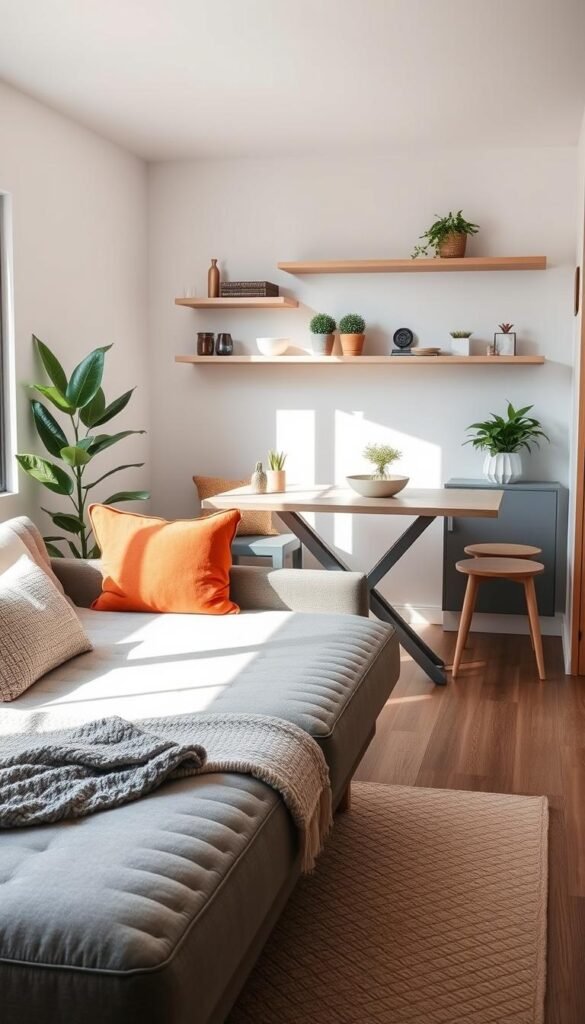
Storage ottoman + tray-top hack
A storage ottoman doubles as a coffee table and hidden bin for blankets, chargers, or kids’ toys. Add a removable tray and you get a stable table surface for drinks.
Worth it check: confirm hinge quality and weight rating if you plan to sit on it.
Foldable step stool that doubles as a seat
Use it to reach high shelves, then fold it flat into a closet. It also works as an extra seat when guests arrive.
Bedside caddy for studio living
Attach a fabric caddy to the bedframe and keep phone, glasses, remote, and a charger within reach. It keeps the bed from becoming clutter central.
- Pros: fewer pieces of furniture, faster cleanup, more floor room.
- Cons: cheap ottomans wobble; stools can pinch fingers when folding; glossy trays may slide.
- Who it’s for: studios, tight living setups, and anyone avoiding another table or nightstand.
| Item | Tip | What to avoid |
|---|---|---|
| Storage ottoman | Check hinge and weight rating | Bulky designs that dominate a room |
| Foldable stool | Non-slip feet and sturdy hinges | Stools without locks or rubber feet |
| Bedside caddy | Reinforced stitching for heavier items | Thin fabric that tears easily |
House Beautiful and Better Homes & Gardens recommend multifunctional pieces for maximum value. For a wider roundup of tested options, see this best multifunctional furniture.
Bedroom small space finds that buy back closet space
A crowded closet steals minutes from your morning and makes the whole room feel chaotic.
Make closet edits that work for daily life: swap bulky hangers, use under‑bed bins, and add simple drawer organizers. These moves free up rod inches and clear floor clutter without a remodel.
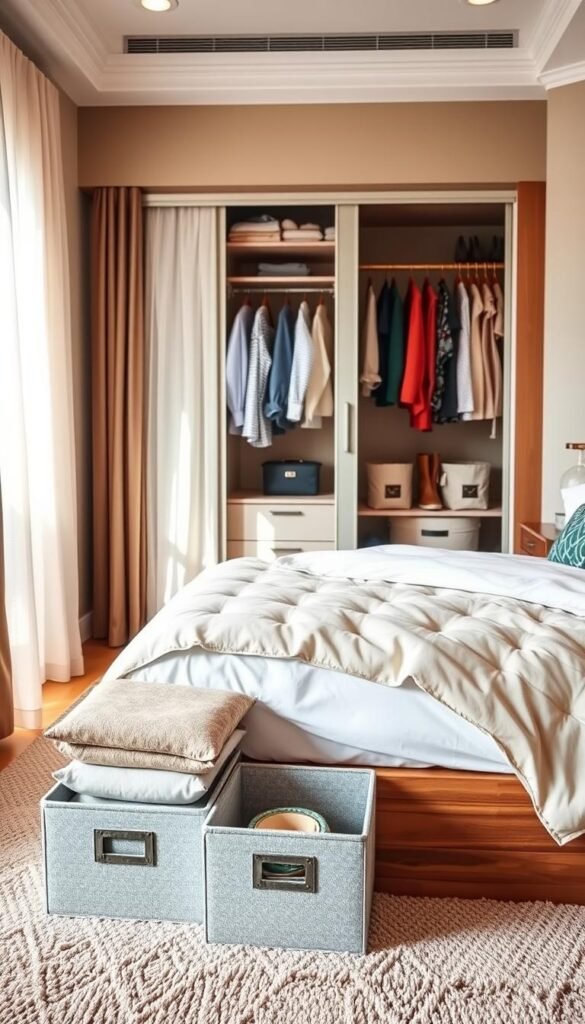
Slim velvet hangers
Why it pays off: flocked hangers are thin and grippy. You often gain one extra row on the rod and slippery tops stay put.
Real-life note: cheaper packs can shed flocking—buy a tested brand if you want longevity.
Under-bed storage bags with clear window
Use clear-window bags for seasonal swaps. Slide winter sweaters under the bed and pull summer tees up when the season changes.
Pro tip: labeled windows stop blind digging and speed morning outfit choices.
Drawer organizer boxes for socks and accessories
Divide one drawer into zones: socks, workout gear, and small accessories. You stop creating piles on chairs and find items faster.
- Pros: cheap, effective, and renter-friendly.
- Cons: bags can tear, zippers fail, and dividers may not fit deep drawers.
- Who it’s for: anyone with a shared closet, tight bedroom, or a desire for faster mornings.
| Item | Typical cost | Key caution |
|---|---|---|
| Slim velvet hangers | $8–$20 | Some flocking peels—choose a trusted pack |
| Under-bed storage bag (clear window) | $10–$25 | Avoid non-sealed fabric in damp areas; pick breathable materials |
| Drawer organizer boxes | $6–$20 | Measure drawer depth before buying |
What to avoid under the bed: damp bags, open fabrics that trap odors, and non-sealed containers that invite pests. The Strategist notes built-in bed storage is a premium alternative; Better Homes & Gardens recommends hidden storage to reduce clutter.
Safety & quality: pick breathable fabrics, confirm clearance so bags don’t scrape the floor or catch on slats, and seal items if pests are a concern. Small investments in the right pieces keep your bedroom calmer and your routine faster.
Bathroom small space finds that reduce clutter and drying time
Wet countertops and crowded tubs turn a tiny bathroom into a daily hassle. You want durable, renter-friendly items that clear surfaces and speed drying. Below are practical picks that make the room easier to clean and use.
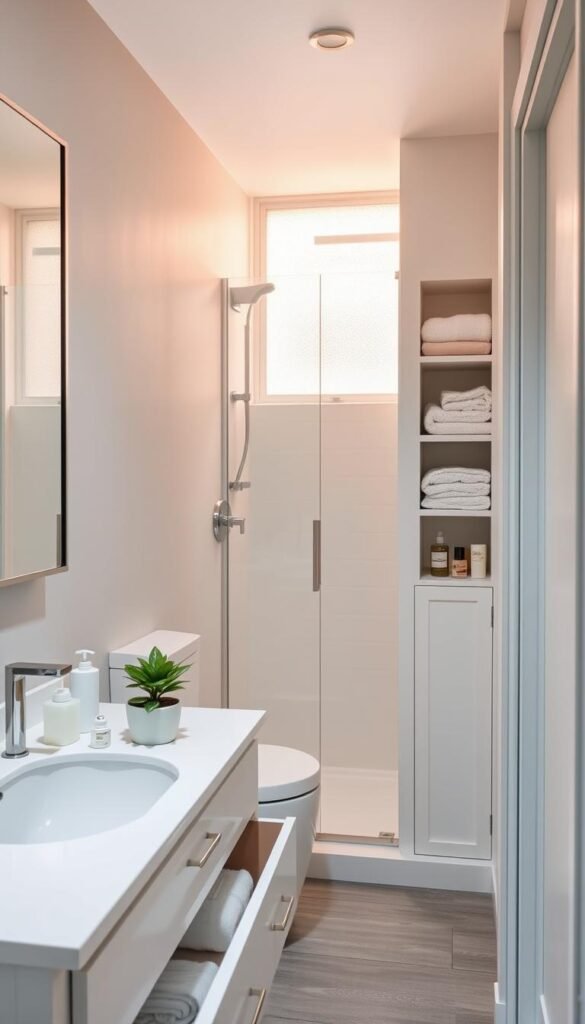
Adhesive shower caddy — rust-proof pick for tiny tubs
Why: frees the tub ledge so you can wipe down surfaces fast and avoid water rings.
What to look for: stainless steel or aluminum with drainage holes and high-rated adhesive strips. In real life, moving shampoo off the tub edge cut my wipe-down time in half.
Toothbrush and razor holder to clear the sink
Mount a compact holder on the wall or mirror to keep the sink edge empty. This makes daily cleaning faster and reduces the cluttered look.
Choose: rounded edges, easy-clean trays, and holders that fit thick electric toothbrush handles.
Quick-dry towel alternative — a space-saving upgrade idea
Microfiber or thin-weave towels dry faster and fold smaller than terry. Some premium quick-dry models cost over $25 but save hanging room and reduce mildew risk.
If budget matters, pick a basic thin-weave set that still speeds drying and packs flat.
- Pros: cleaner surfaces, faster drying, and better vertical use of the wall.
- Cons: adhesives can fail in steam, cheap metal may rust, and some holders won’t fit oversized brushes.
Who this is for: renters, shared bathrooms, and anyone with limited vanity storage.
What to avoid: mounting on dusty tile, overloading one adhesive strip, and buying metal with poor coating that rusts quickly. Remove items before re-mounting to protect tile.
| Item | Recommended feature | Key caution |
|---|---|---|
| Adhesive shower caddy | Rust-proof metal, drainage holes | Avoid flaky grout or painted tile for adhesion |
| Toothbrush/razor holder | Rounded edges, wide slots | Check handle diameter before buying |
| Quick-dry towel | Microfiber or thin weave | Premium items may cost more than $25 |
For practical layouts and more bathroom organization ideas, see this short guide.
Laundry and utility small space finds that keep supplies contained
A messy utility closet tends to escalate; one knocked broom can topple a row of supplies.
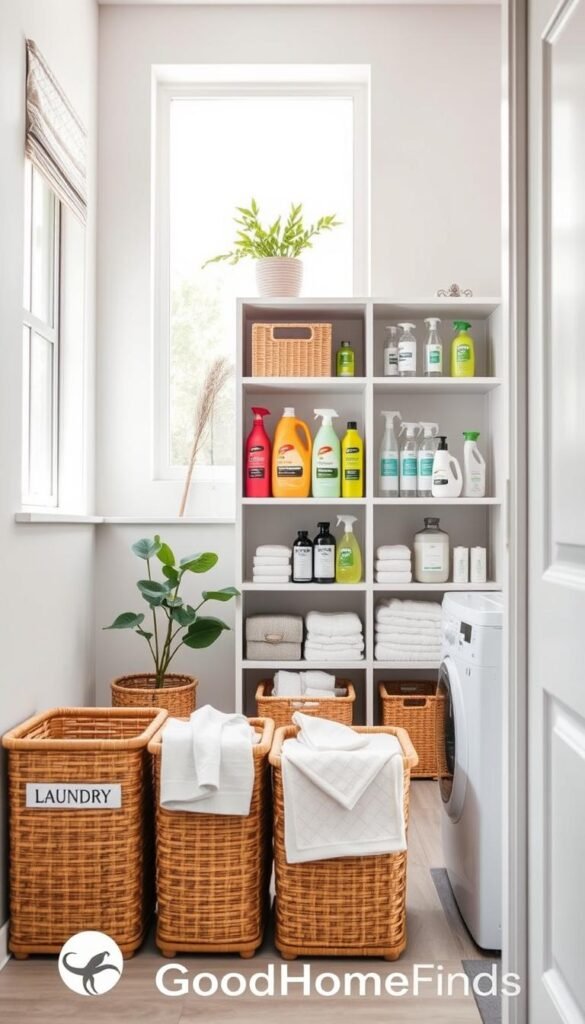
Containment saves time. When items live off the floor you avoid re-sorting and you start tasks faster. Better Homes & Gardens shows tidy utility zones speed chores. The Strategist recommends slim, renter-friendly solutions for shared laundry areas.
Wall-mounted broom and mop holder
Why it helps: no more falling handles. You grab a broom without moving a pile first.
Mounting options: adhesive holders work on clean painted drywall; screw-in mounts hold more weight. Check weight ratings and avoid peeling paint.
Mesh wash bags for socks and delicates
Socks stay together, delicates avoid snags, and sorting time drops. Buy stronger zippers if you wash weekly. Don’t overstuff — crowded bags don’t clean well.
Collapsible laundry basket
Pop it open when you use it and store it flat behind a door when not in use. Avoid storing damp baskets where airflow is blocked.
„Containment in laundry zones turns chaotic piles into quick, repeatable routines.“
- Pros: cleaner utility area, faster chores.
- Cons: cheap clips warp; adhesives fail on dusty walls.
- Who it’s for: apartments with laundry closets and shared laundry rooms.
| Item | Typical cost | Best tip |
|---|---|---|
| Wall-mounted holder | $10–$25 | Choose screw anchors for heavy brooms; clean surface for adhesives |
| Mesh wash bags | $6–$18 | Get heavy-duty zippers if used weekly; avoid overfilling |
| Collapsible basket | $12–$30 | Store flat dry; keep airflow to avoid mildew |
For more utility-room organization ideas, see this utility room storage guide or this roundup of best laundry room solutions.
What to avoid when buying small-space items online
Trust dimensions, not marketing copy, when you shop for an area with limited square footage. Pictures can mislead. A label that says “apartment-size” does not mean it will fit your door, closet, or niche.
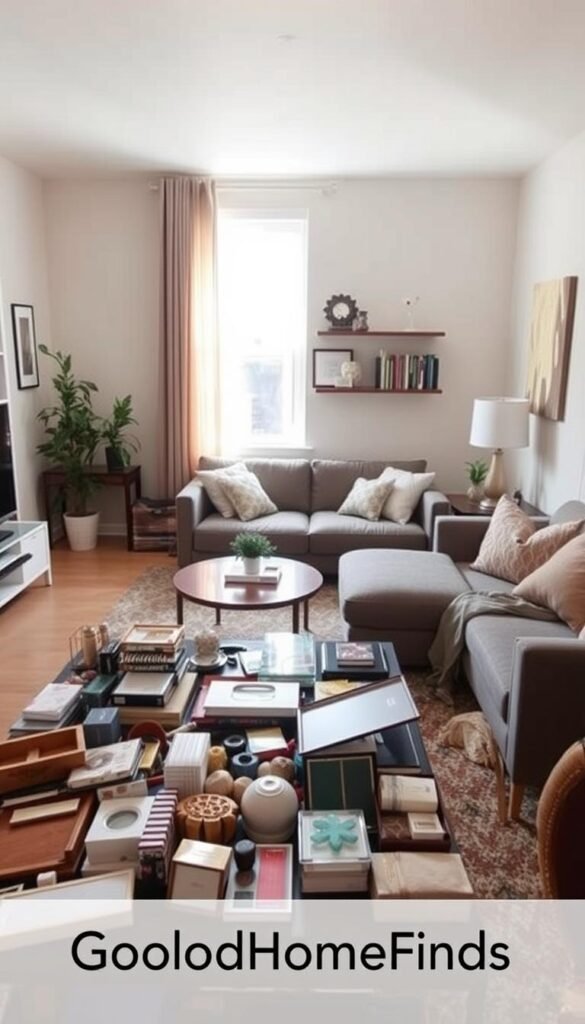
- Measure door width, behind-door clearance, cabinet depth, under-sink plumbing, and wall surface type before you click buy.
- Favor closed storage in high-mess zones and reserve open shelves for items you use daily and can keep neat.
- Read recent reviews for breakage, warping, or missing parts and confirm the return window on Amazon or the seller.
Quality red flags
Watch for thin plastics that flex, sharp metal edges, wobbling racks, and listings with no clear weight rating.
Avoid adhesive claims on textured paint or flaky tile. Cheap strips can fail and damage walls.
How open storage can backfire
Open shelves expose clutter. If you can’t keep items tidy, the room will feel smaller even with more storage.
Design rule: fewer, better-fitting pieces beat more stuff every time. Measure, prioritize, and keep returns in mind.
| Checklist | Red flag | Smart Amazon tip |
|---|---|---|
| Door, clearance, cabinet, plumbing | Thin plastic, unclear weight rating | Read recent photos and confirm return window |
| Wall type, stud location, hinge clearance | Sharp edges, unstable racks | Search reviews for warping or rust |
| Measure twice, order once | Overstated „apartment“ sizing | Look for dimension photos in listings |
For common decor mistakes that shrink a living room, see this guide from Good Housekeeping.
Conclusion
Targeted changes deliver the biggest daily wins for your home and routine.
Pick two or three problem areas—kitchen drawer, entry table, or bedside—and fix the main annoyance first. Buy only items that stop a daily hassle, are durable, and have easy returns.
Think value over hype: a slightly sturdier piece of furniture or a better hook saves time and replacements. Check weight ratings, avoid heat near ovens and outlets, and don’t overload wall systems.
Who benefits most? Renters, studio dwellers, and anyone who wants better living with less stuff. Measure before you buy, keep a short return-friendly list, and aim for fewer, better-fitting pieces that truly solve your needs.