
Renters who want practical upgrades will find a clear, no-drill path here. This guide presents a tested small space fix mix of products, flexible furniture and easy routines that improve function without eating floor area.
Recommendations target typical U.S. apartments and stay renter-friendly: no drilling, low risk of wall damage, and fast setup. The list previews budget tiers under $25 and under $50 and offers quick setup tips, simple maintenance, and safety checks like weight limits and stability.
Readers will get product suggestions and who each idea suits best—studio, one-bedroom, or shared living. Proven tactics include multifunctional furniture, bench seating by windows, and keeping storage up high to free the floor.
How to use this list: pick two to three fixes per problem area to avoid overfilling the room. The article will also show pros, cons, and alternatives when a lease or layout limits choices.
Key Takeaways
- Every recommendation is renter-friendly with no-drill options and easy removal.
- Budget-friendly tiers under $25 and under $50 make upgrades affordable.
- Focus on vertical storage, multifunctional furniture, and window benches.
- Pick 2–3 ideas per problem area to keep the room calm and usable.
- Each fix includes pros, cons, and safety basics like weight limits.
- Guidance shows who benefits most: studio, one-bedroom, or shared living.
What a “Small Space Fix Mix” Means for Apartment Living Today
The right set of renter-safe upgrades makes a room work harder and look calmer. This approach blends a few targeted changes that add storage and function while leaving white breathing room on the floor.
The goal: more function without losing floor space
Define the concept as a combination of small upgrades that add function and keep circulation clear. Emphasize making a room multipurpose and using multifunctional furniture to earn every foot of floor space.
Renter-friendly rules: no drilling, no damage, quick setup
- Reversible choices: tension rods, over-door racks, leaning shelves, and removable hooks.
- No damage checklist: avoid drilling, read the lease, protect surfaces, and use removable hardware correctly.
„Choose solutions that remove cleanly and hold routine weight—reversibility is the renter’s best insurance.“
How to pick fixes for studios, one-bedrooms, and shared homes
Studios need fewer pieces that do more. One-bedrooms benefit from simple zoning with rugs and lamps. Shared homes should set clear personal storage boundaries to avoid clutter.
| Layout | Best approach | Common target |
|---|---|---|
| Studio | Multifunction furniture, vertical racks | Work/dine combo |
| One-bedroom | Zone by rug and light, add slim storage | Defined living and sleep areas |
| Shared apartment | Personal bins, clear entry drop zone | Prevent communal clutter |
Pick fixes based on daily friction—keys, shoes, towels, or prep space—rather than decor first. Less is more: reclaim usable areas, reduce clutter, and make homes easier to live in.
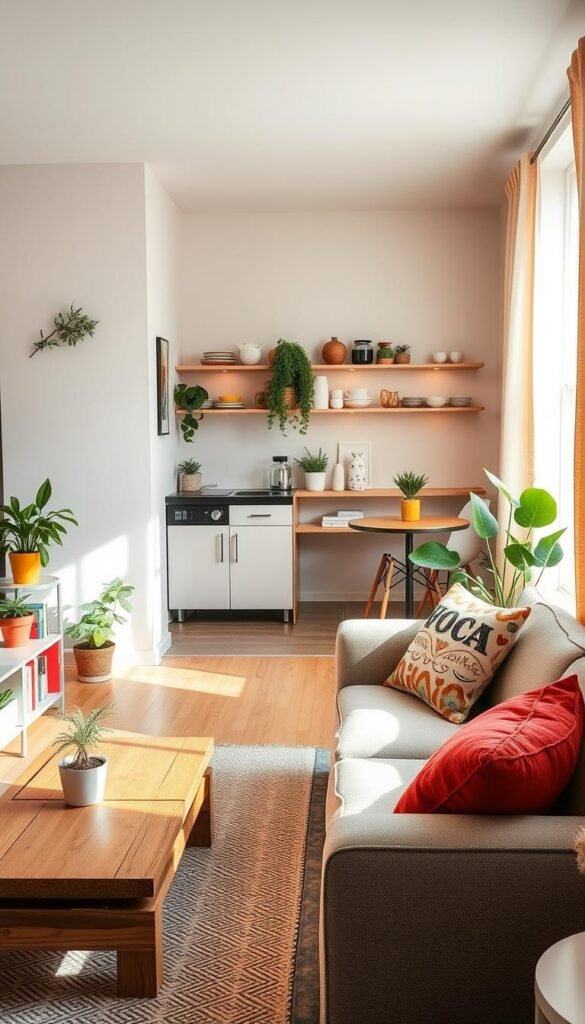
How to Choose Small-Space Solutions That Actually Fit Your Room
Start by measuring the room so purchases match the actual layout and circulation. Accurate dimensions prevent bulky choices and keep daily routines smooth.
Measure first: a quick checklist
- Wall width and height — note baseboards and trim.
- Walkway clearance — aim for at least 24–30 inches on main paths.
- Door swing and window placement — avoid blocking openings.
- Drawer and appliance pull-out distance.
- Outlet locations for lamps and charging.

Keep circulation clear
Prioritize main paths — entry to kitchen, bed to closet, sofa to bathroom. Open routes make a room feel larger and safer.
Low-profile vs. tall storage and moving pieces
Choose low-profile units to keep sightlines open in living areas. Use tall storage when floor footage is limited but wall height is free.
Portable and lightweight furniture lets roommates reconfigure quickly for guests or chores.
„Measure first; buy second. Good scale beats trendy pieces every time.“
- Common mistakes: oversized seating, too many small organizers, blocking windows, buying storage before editing belongings.
Budget Game Plan for Small Spaces Under $25 and Under $50
Begin with low-cost tools that reduce daily friction, then add one or two bigger helpers. This order saves money and keeps renters from buying duplicate organizers that don’t fit.
Under-$25 essentials
Start here: adhesive hooks (used on clean paint), over-door hooks, tension rods, clear bins, label clips, shelf risers, and under-sink organizers. These items cut clutter fast and improve drawer and cabinet function.
Under-$50 upgrades
Next, add one or two space-makers. Choose a rolling cart for kitchen or bath, a freestanding over-toilet shelving unit, a large mirror to reflect light, or folding stools and ottomans. Better Homes & Gardens notes rolling carts and big mirrors as high-value buys.
When to spend more
Spend extra only for pieces that replace two items. Examples: a lift-top coffee table, a storage bench, or a solid rolling island. These multipurpose items justify higher cost when used daily.
„Buy entryway organizers first, then tackle one room at a time to avoid unnecessary duplicates.“
| Budget Tier | Top Picks | Value Check |
|---|---|---|
| Under $25 | Adhesive/over-door hooks, shelf risers, clear bins | Lightweight, removable, label-friendly |
| Under $50 | Rolling cart, over-toilet shelving, large mirror, folding ottoman | Stable, rated weight, portable |
| Spend More If Needed | Lift-top coffee table, storage bench, solid island | Multifunction, durable, moves with renter |
Value checklist: stability, weight rating, wipe-clean surfaces, and portability for moves. Buy by priority—entryway, then kitchen—so purchased items become useful tools, not wasted clutter.
Go Vertical Without Drilling: Wall-Friendly Storage That Saves Floor Space
Use wall-friendly options to add function without drilling or permanent changes. This keeps renters flexible and rooms uncluttered.

Why vertical storage works: It frees floor space and reduces the cluttered look around ankles and walkways. That multiplier effect makes rooms feel larger and easier to navigate.
Over-the-door hooks and racks
Choose padded or slim hooks for coats, bags, and brooms. Place them high enough to avoid door scraping and reduce noise.
Tension rods and tension shelves
Use tension rods under sinks for spray bottles and inside cabinets for lids. In the bathroom, tension caddies work well in shower niches without permanent hardware.
Leaning ladder and high-hung hooks
A leaning ladder holds towels, throws, and magazines—add S-hooks to increase hanging capacity. High-hung removable hooks create an entryway vertical drop zone for keys, hats, and leashes.
| Type | Pros | Cons |
|---|---|---|
| Adhesive | Fast, flexible | Surface prep matters; strict weight limits |
| Tension | Strong, removable | Needs two stable surfaces; careful leveling |
| Leaning | No hardware; aesthetic | Needs stable footprint; use anti-slip pads |
„Follow weight ratings and avoid steam-heavy areas for adhesives unless rated for humidity.“
Safety tips: place units away from high-traffic pinch points and follow durability ratings for kitchen and bathroom items.
Open and Glass Shelves to Lighten the Look (and Reduce Visual Clutter)
Glass and low-profile shelving keep sightlines clear and let light move through a room. Open and glass shelves cut the visual block of heavy cabinets. That change makes a room feel brighter and less crowded.
When it works: open shelving suits households that can do quick resets, use matching containers, and want to show useful items as decor. House Beautiful and Better Homes & Gardens note that glass surfaces and low-profile units help maintain a light, airy design.
When it backfires
Open shelves can highlight clutter. They are not ideal if packaging is mismatched or dirt and grease collect often. In those cases, closed storage keeps a room calmer.
Renter-friendly shelf options
- Freestanding étagères and leaning shelves for easy removal.
- Countertop shelf risers to double vertical surface without hardware.
- Tension shelf inserts and over-the-toilet units for rental-safe installs.
Styling and a simple maintenance routine
Limit containers to two or three matching styles. Keep everyday items within reach and store extras out of sight. For maintenance, do a 2-minute nightly “shelf reset” to return stray items and wipe one surface.
Weekly care: spend 10 minutes wiping glass and dust-prone areas to prevent buildup and preserve the clean room feel.
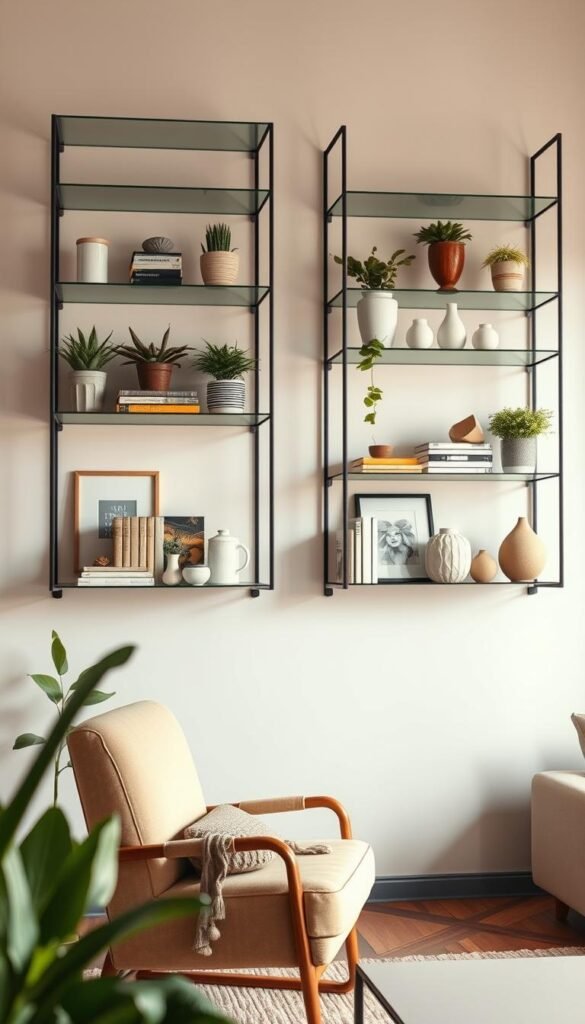
„Choose open shelving when tidiness is realistic—its clarity is only as good as daily habits.“
Multifunctional Furniture That Earns Its Square Footage
Choose furniture that does double duty so each item earns its footprint.
The „earn its square footage“ test: one piece should solve two daily problems. Examples include surface + storage, seating + storage, or dining + work. This approach reduces clutter and makes a room more useful without buying extra items.
Lift-top coffee tables for dining and work
Lift-top coffee tables raise to a comfortable eating or working height. They hide chargers, papers, and remote controls in a covered compartment.
They often replace a desk in a studio and reduce the need for another table for meals.
Ottoman swaps: table, seat, and storage
A firm, tray-friendly ottoman acts as a coffee table, footrest, or extra seat. Choose stain-resistant upholstery and a solid frame for durability.
Tip: pick one with internal storage to tuck away blankets or board games and keep surfaces clear.

Dresser-as-media-console
A dresser provides concealed storage for cables, games, and linens. Use drawer stops and an anti-tip kit, then place the TV on a stable surface to anchor the living room.
- Pros: saves floor area, conceals clutter, adds a long surface for a controlled drop zone.
- Cons: multifunctional pieces can be heavier and pricier than single-use options.
| Choice | Benefit | Consideration |
|---|---|---|
| Lift-top coffee table | Work/dining surface + hidden storage | Check lift hardware and weight rating |
| Tray-friendly ottoman | Seating, table surface, storage | Choose durable fabric and firm cushion |
| Dresser as console | Concealed storage + TV anchor | Use anti-tip kit; measure TV base |
Who benefits most: studios and open-plan rooms gain the most from these pieces. Roommates should prioritize units that store shared items neatly.
„One well-chosen item should replace two and keep daily clutter out of sight.“
Benches and Stools for Flexible Seating When Guests Come Over
Benches and stools offer fast, flexible seating that adapts when guests arrive. They clear sightlines and keep a dining area feeling uncluttered.

Why benches read cleaner than chairs
Benches reduce visual bulk: no chair backs interrupt the room’s line of sight. That makes a dining area feel airier and easier to navigate.
Tip: match bench length to the table or choose one slightly shorter to keep walkways clear.
Stool ottomans that tuck away
Low-profile stool ottomans slide under a console or table. Pull them out for guests, then tuck them away to reclaim the area.
Best for and alternatives
- Best for: entertainers, roommates, and open-plan living rooms that need movable pieces.
- Studio alternative: nesting stools that store compactly.
- One-bedroom: a slim settee for defined dining or work spots.
- Shared apartments: identical stools to reduce visual noise.
Storage benches add hidden room for linens, games, or small appliances. They cut clutter and earn their footprint.
Maintenance: pick wipeable or washable fabrics. Add felt pads to protect floors and reduce scraping.
| Type | Benefit | When to choose |
|---|---|---|
| Bench | Cleaner look, fits more people | Dining table or entry drop zone |
| Stool ottoman | Tucks away under consoles, portable | Living room or multipurpose table |
| Storage bench | Seating + hidden storage | Entryways, dining, or foot of bed |
Fold-Away and Stowaway Surfaces for Dining and Work
A retractable surface turns a corner or hallway into a usable area, then disappears when not needed. This approach keeps the daily footprint low and adds a dedicated surface only when required.
Core benefit: fold-away surfaces add function on demand, so the living room stays open and calm when the table is not in use.

Murphy-style tables for tiny kitchen corners
Murphy-style tables fold flat and work well in kitchen corners for quick meals or prep. Renters should choose freestanding models or confirm mounting meets lease rules.
Setup tip: position near outlets for chargers and use a non-slip mat under the base for extra stability.
Secretary desks for hallways and living areas
Secretary desks open to create an office surface and close to hide papers and cords. They are ideal for foyers or narrow walls that would otherwise be unused.
Daily routine: close and stash supplies each evening to keep the room tidy.
Portable, lightweight pieces you can move when needed
Folding bistro tables, laptop stands, and slim rolling carts act as mobile desks. Move them to the sunniest nook or out of the way for guests.
Best-for: remote workers in apartments, households without a formal dining area, and roommates who need quick resets.
- End-of-day “close the loop”: file papers, charge devices, wipe surface, fold or close.
- Safety note: confirm folding mechanisms lock and surfaces are stable before placing hot drinks or heavier items.
Use Windows to Add Seating, Storage, and a Bigger Space Feel
A well-planned window zone adds seating and storage while keeping the room bright and uncluttered. Renters can create this with freestanding pieces—no drilling or permanent changes needed.
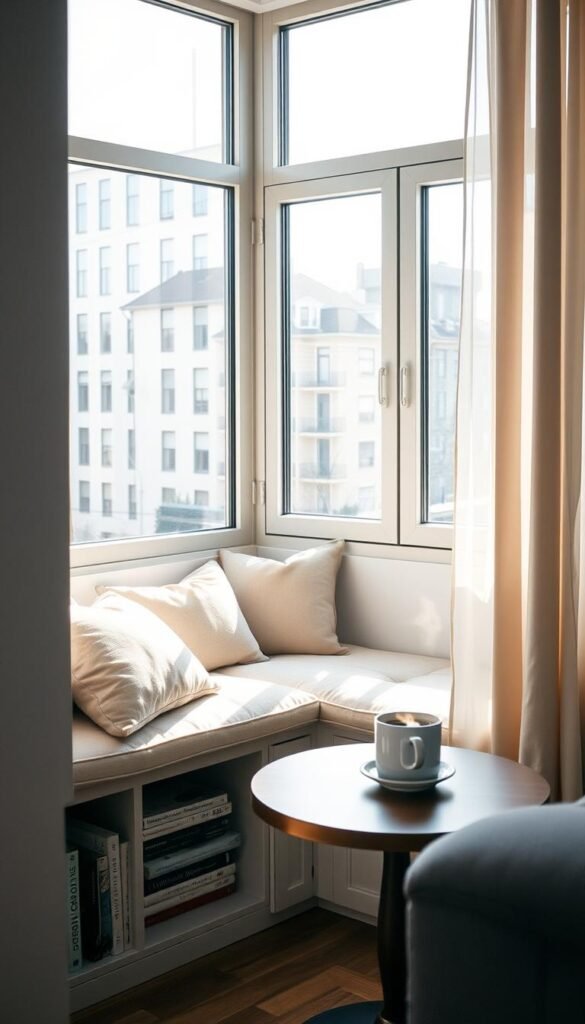
Window seating that doubles as a landing zone
Use a freestanding bench or a storage ottoman beneath the window to gain extra seating and a clean drop spot for bags or books. In studios, choose a compact bench and a narrow shelf. One-bedrooms can add a reading chair nearby.
Keep windows visually open to expand the room feel
Favor light-filtering treatments so natural light fills the area. Low-profile shelves and clear sightlines help the eye travel outward and improve the overall space feel.
Simple privacy solutions that don’t block light
- Roller shades or top-down/bottom-up shades for daytime privacy without losing light.
- Thin blinds that lift fully during the day to keep the view and brightness.
- Neutral treatments in shared apartments to keep the area communal and calm.
Maintenance: keep the window seat a one-touch surface—put items away the same day to avoid pileups. Safety: secure cords and avoid tall stacks near edges if children or pets are present.
„Treat the window zone as bonus square footage: bright, tidy, and renter-friendly.“
Carve Out Nooks and Awkward Niches for Purposeful Zones
Turn awkward wall breaks into useful zones by matching furniture to the exact opening and adding intentional styling. A defined nook stops clutter from spreading across the whole room.

Turn an unused alcove into a compact office nook
Pick a narrow desk or a secretary desk that fits the alcove width. Add a wall-friendly task light and a small rolling file cart that tucks under the surface.
Built-in look without construction
Choose furniture that nearly matches the niche width and finish with a rug, art, or a single shelf to make the piece feel intentional. Use cohesive colors to read like a built-in.
Best-for by apartment layout
For studios use one anchor—an area rug or bookshelf—to separate sleep from work without blocking light.
In separate-room layouts keep each niche single-purpose: a mail station, a coffee bar, or a work corner to protect circulation paths.
Renter-friendly cable tips: use adhesive cord clips on furniture and mount one power strip under the desk with removable fasteners.
„A daily 60-second ’nook closeout’—clear the surface, plug devices in, toss trash—keeps the zone functional and tidy.“
| Problem | Recommended Item | Why it Works |
|---|---|---|
| Too-wide alcove | Double floating shelf + narrow desk | Looks built-in, keeps floor open |
| Narrow recess | Secretary desk or slim console | Provides surface and hidden storage |
| Shared rooms | Rolling file cart + task light | Portable, keeps items contained |
Kitchen Fix Mix: Countertop Relief and Smarter Cabinet Storage
Crowded counters and deep, disorganized cabinets make cooking harder than it needs to be. This section offers renter-safe, no-remodel solutions that add prep surface and tame storage in a practical way.
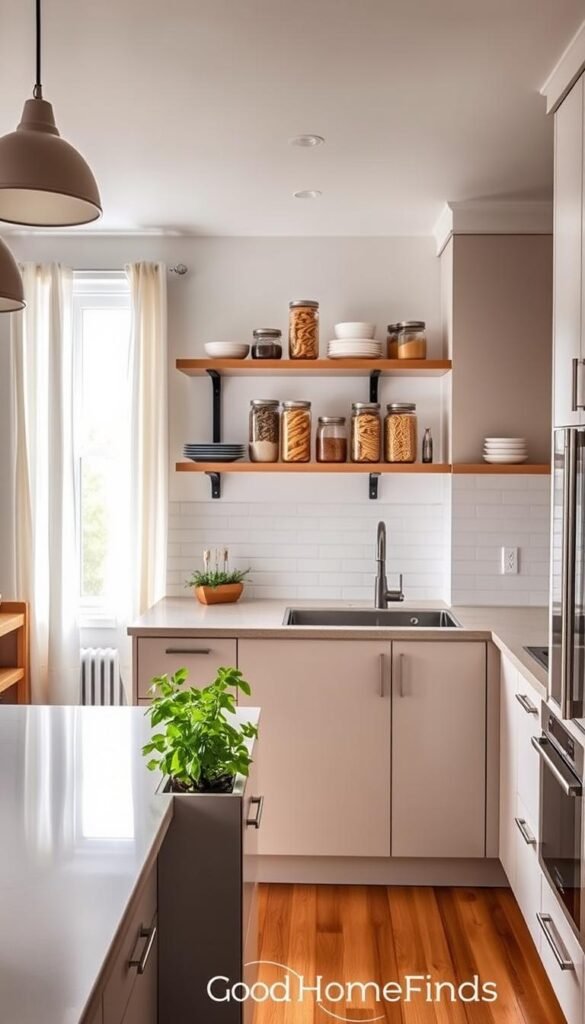
Rolling carts and freestanding prep stations
Try: a slim rolling cart with locking wheels for extra prep, a dedicated coffee cart, or a butcher-block trolley for small appliances. Measure aisle clearance so the cart can roll without blocking doors or drawers.
Drawer and cabinet organization
Use peg-style dividers in drawers to store pans and lids upright. Add tiered shelf risers for plates and clear under-shelf baskets for wraps, towels, and foil. These choices keep frequently used items visible and accessible.
Corner cabinet solutions
Install renter-safe pull-out corner organizers or a rotating lazy Susan to reach deep corners easily. These systems reduce the need to unload adjacent cabinets to find one item.
Open shelf and countertop add-ons
A small countertop shelf riser keeps coffee gear and daily cooking tools off the main work area. Open shelves or a shallow wall rack can hold mugs and spice jars within arm’s reach.
Nightly and weekly maintenance routines
- Nightly: 5-minute counter reset—put away appliances, wipe one wet zone, and stage tomorrow’s essentials.
- Weekly: purge expired food, consolidate duplicates, and return “homeless” items to their proper storage so systems keep working.
„Choose sturdy, locking carts and respect weight ratings on inserts to avoid surprises.“
| Solution | Best for | Notes |
|---|---|---|
| Slim rolling cart | Temporary prep space, coffee station | Locking wheels; measure clearance |
| Peg dividers & tiered risers | Organizing drawers and cabinets | Keep pans upright; check material for wipe-clean |
| Pull-out corner organizer | Deep corner cabinets | Improves access; renter-safe install options |
| Countertop shelf riser | Daily coffee and cooking essentials | Raises items off counter; reduces clutter |
Safety and durability: favor metal frames or high-density plastic for carts, verify weight limits on shelf inserts, and avoid overloading drawers. These steps keep the kitchen functional and renter-friendly.
Bathroom Fix Mix: Vertical Storage and Tiny-Room Flow
Bathrooms with tight footprints demand vertical thinking to keep the floor clear and cleaning fast.

Over-toilet shelves and tall, slim cabinets
Choose freestanding over-toilet units with adjustable shelves for towels and toiletries. Check tank clearance and base stability before buying.
Pick a narrow cabinet or open étagère to sit beside the vanity without blocking drawers or doors. Keep heavy items on lower shelves.
Corner-friendly options
Use corner shelves, corner caddies, or a tall narrow hamper to reclaim tricky corners. These options fit odd angles without remodeling.
Daily wipe-down routine
Identify three zones: sink rim, faucet handles, and the shower ledge. Keep a cloth or disposable wipes nearby for a 60-second reset each evening.
Humidity and safety tips: choose rust-resistant metal or coated frames for damp rooms. Avoid adhesives not rated for steam.
Verify anti-tip straps on tall units and store heavier items low. Avoid glass containers in tight walkways.
| Option | Best for | Notes |
|---|---|---|
| Over-toilet shelving | Extra towels, daily toiletries | Adjustable shelves; check tank clearance |
| Tall slim cabinet | Concealed items, meds | Use anti-tip strap; keep heavy items low |
| Corner caddy | Shower products, narrow baths | Freestanding or tension pole; choose rust-resistant finish |
| Nightly wipe routine | All small rooms | 60-second reset prevents buildup and keeps floor clear |
„Vertical storage and a short nightly routine make even a tight bathroom feel calmer and more usable.“
Closet Fix Mix: Systems and Hacks That Don’t Require Permanent Changes
Many renter closets arrive with a single rod and one high shelf. That layout leaves dead vertical volume above shoes and under hanging clothes. The result is clutter spilling into the bedroom and lost usable room.

Modular add-ons to reclaim every inch
Choose tension-based second rods, hanging shelf organizers, and freestanding closet towers to create clear zones for folded items, accessories, and outerwear. Brands like Elfa and IKEA (ELVARLI, ALGOT, PAX) offer modular systems that replace the single shelf-and-rod setup without drilling.
Drawers and shoe solutions
Place narrow drawer cabinets or modular cubes under hanging clothes to capture wasted vertical volume. Use over-the-door shoe pockets, stackable shoe boxes, or low shoe racks sized to the closet depth to keep pairs tidy and off the bedroom floor.
Options when there is no closet
In a no-closet bedroom, pair a wardrobe rack with a closed drawer unit to hide daily items. This combo mimics closet function while keeping the room visually calm.
Easy routines and safety
Adopt a seasonal swap bin and a weekly 5-minute “rehang and reset” to prevent piles. Avoid overloaded hanging organizers, keep heavy stacks low, and pick stable freestanding pieces that don’t wobble on uneven floors.
„Modular, renter-safe systems turn one shelf and a rod into a purposeful storage solution.“
Entryway Fix Mix: Keep Storage Up High and the Walkway Clear
An entry that works starts by keeping daily drop items off the floor and out of the traffic path.
High storage strategies to prevent pile-ups at the door
Entryways fail when there is no defined landing zone. Mail, keys, and bags become instant clutter and shrink the feeling of the area.
Use removable, high-hung hooks or an over-the-door rack on the wall to lift coats and bags above the walkway. These renter-friendly options keep the floor open and sightlines clear.
Narrow console tables as drop zones without eating floor space
A slim-depth console table creates a consistent spot for keys, a tray for loose change, and a charger station. Better Homes & Gardens recommends narrow tables to mark an entry without crowding circulation.
Under-console baskets and bins for shoes and grab-and-go items
Use two baskets under the table: one for shoes and one for grab-and-go gear like umbrellas, leashes, and reusable bags. This two-bin logic prevents piles and keeps the floor tidy.
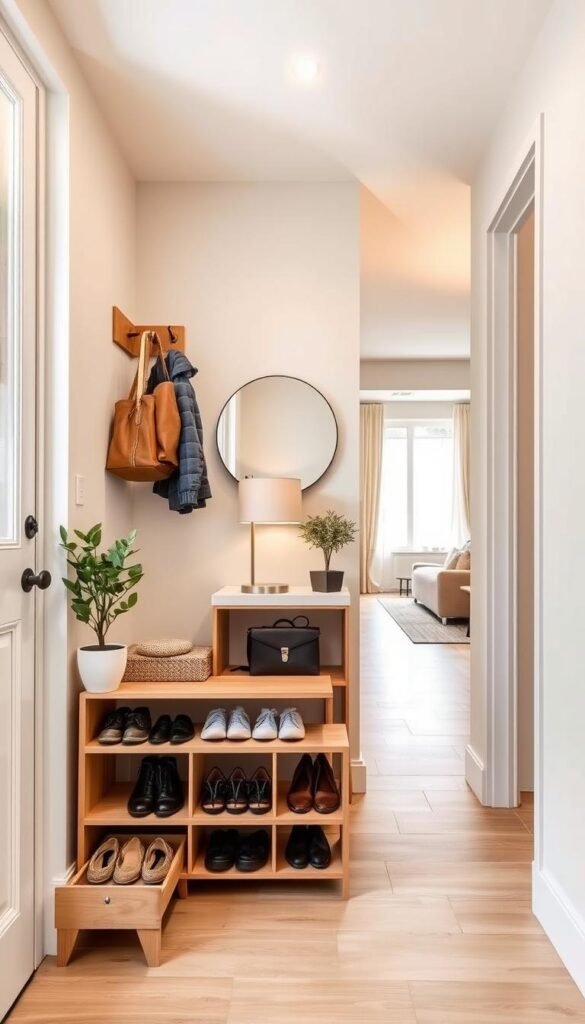
- Daily routine: a 90-second “door reset” — hang coats, empty pockets into a tray, and drop shoes in the bin.
- Alternatives: use the back of the door, a wall-adjacent shoe cabinet, or a narrow shelf by an outlet if there’s no formal entry.
- Safety: avoid heavy loads on weak adhesives, keep egress clear, and use non-slip mats where wet shoes land.
„Lift items off the floor and define a landing area to stop clutter from spreading through the home.“
Design Tweaks That Make Small Rooms Feel Bigger (Fast, Low-Cost, Rent-Safe)
Simple visual adjustments can make rooms feel wider, brighter, and more intentional overnight.
Use area rugs to define zones in multi-use rooms
Area rugs create clear function without adding walls. Anchor a living/work/dining spot with a rug that fits at least the front legs of key pieces. This defines each zone and helps circulation feel deliberate.
Mirrors to reflect light and add depth
Place a large mirror to face a window or an open walkway. Propped or leaning mirrors work well when hanging is limited and they increase perceived depth and light.

Light colors and cohesive palettes to reduce visual noise
Pick a short palette of two to three colors so the room reads as one continuous field. Light tones and matching accents improve the overall space feel and reduce competing elements.
Furniture on legs and low-profile silhouettes for an airy look
Choose leggy pieces so more floor and wall remain visible. Seeing the floor under furniture makes rooms feel less heavy and keeps sightlines open.
Editing decor: fewer, bigger statements
Favor two or three larger decor pieces instead of many small objects that read as clutter. Keep surfaces partly clear so daily life stays tidy.
„Weekly surface edit: remove extras, return only what supports function or intentional style.“
- Zone with rugs, not barriers.
- Use one large mirror to boost depth and light.
- Edit decor weekly to maintain a calm room feel.
Safety, Durability, and Setup Checks for Apartment Products
Before buying a solution for any renter-friendly upgrade, prioritize safety and durability. A short pre-buy check saves time and prevents accidents. Treat every product as part of the room’s system—how it sits, what it holds, and how it affects daily flow.

Weight limits and stability: preventing tip-overs in tight rooms
Pre-buy checklist: verify the product’s weight rating, measure base width, confirm anti-slip feet, and check if it stays stable on slightly uneven apartment floors.
Tip-over prevention: put heavier items low, avoid overloading top shelves, and use anti-tip straps when allowed by the lease. In rooms with kids or pets, expect extra movement and plan accordingly.
Adhesive and tension hardware: where it’s safe (and where it isn’t)
Adhesive hardware: clean and dry the wall surface, follow cure time on instructions, and avoid using adhesives on peeling or textured paint. Heat and steam weaken many adhesives—skip them near showers and stoves unless rated for humidity.
Tension hardware: requires two solid surfaces and proper end caps. Do not rely on tension rods on weak tile edges or slick trims. Test stability before loading items.
Kid and pet considerations: sharp corners, cords, and breakables
Route cords along furniture legs and use cord clips to reduce trip hazards in tight circulation paths. Choose rounded corners or add corner guards where people move a lot.
Secure breakables and avoid tall unstable stacks near windowsills or climbing routes. Use anti-tip devices on tall storage and keep daily items within safe reach.
| Check | Why it matters | Action |
|---|---|---|
| Weight rating | Prevents collapse or bending | Match intended items; leave safety margin |
| Base width & anti-slip feet | Improves balance on uneven floors | Prefer wide bases; add rubber pads |
| Adhesive suitability | Ensures bond on walls and finishes | Clean surface; follow cure time; avoid steam |
| Tension hardware surface | Stability depends on solid contact points | Use on flat, solid surfaces only; test load |
| Kid/pet proofing | Reduces injury and breakage | Use straps, corner guards, and secure cords |
Durability guidance: favor metal frames, reinforced joints, and wipe-clean finishes for kitchen or bathroom items. These materials resist moisture, spills, and daily wear in a rented house or apartment.
„A quick safety check before purchase keeps storage reliable and rooms safer for everyone.“
Conclusion</H2:
Choose solutions that solve a daily annoyance first, then add only what supports that change. This approach creates a clear plan for a small space and keeps purchases useful.
Start with one problem zone—entryway, kitchen counter, bathroom towel clutter, or closet overflow—and pick an under-$25 basic to test the idea. If it helps, add one under-$50 item that adds real function.
Maintain results with quick nightly resets and a weekly wipe-down. These habits keep a room tidy and reduce rework.
Decision rule: if a product doesn’t fit the room, improve circulation, or reduce clutter, skip it for now. Good small home style is calm, cohesive, and renter-friendly. Apply these steps and the apartment will feel more useful and livable.
15 Comments