
What this list is: practical, renter-friendly solutions you can buy fast on Amazon to cut daily friction in an apartment or home.
Winners are not photo props. They are simple tools you can install and use the same day to fix entry clutter, pantry overflow, cabinet dead zones, drawer chaos, and gaps beside appliances.
You’ll get five clear winners—hooks, an over-the-door organizer, an under-shelf basket, a drawer peg system, and a slim rolling cart—and five alternatives when something won’t fit your layout.
Most items land under $25. When a sturdier version costs more, I’ll explain why it may be worth the upgrade. I’ll call out weight ratings, sharp wire, weak wheels, and chemical odor so you avoid junk.
How I tested claims: recommendations lean on real-load checks and durability tests. Expect quick real-apartment examples, who each pick helps, what to avoid, and simple buying tips like measure first and read reviews for durability.
Key Takeaways
- These picks aim for daily use, not Instagram styling.
- Most options are under $25; some upgrades cost more but add durability.
- Focus on renter-friendly, non-permanent installs.
- Look for weight ratings and solid reviews before you buy.
- Each winner includes a real-life example and alternatives for tight layouts.
What makes these small space picks “winners” in real apartments
Winners pass a simple test: they save you time, cut floor clutter, and work today without a toolkit. If an item shaves two minutes off your morning routine and removes a pile from the floor, it qualifies.
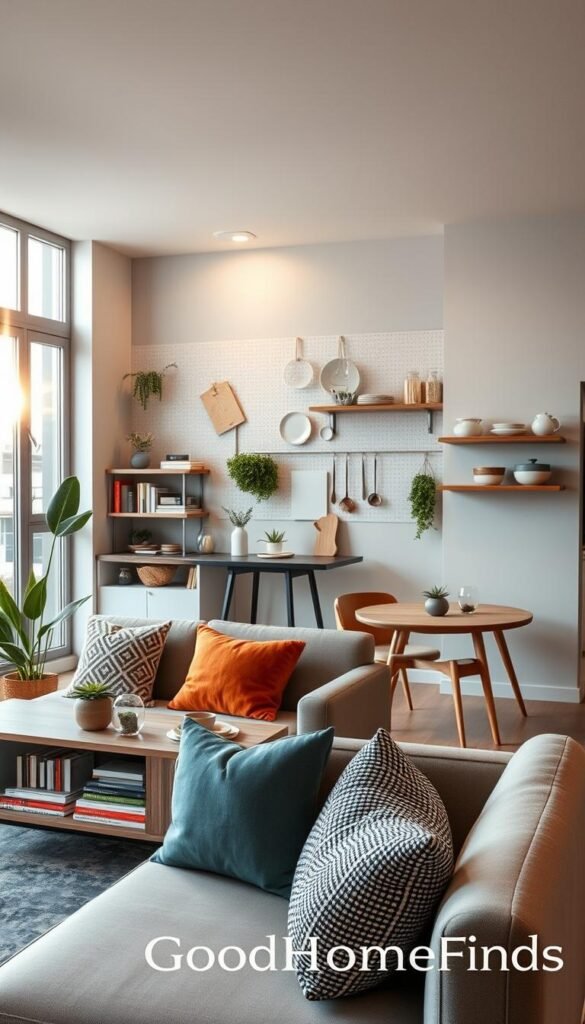
Selection rules. I favored practical daily usefulness, mostly under $25, minimal features, and renter-friendly installs. That means thick metal or solid plastic over fragile gimmicks. It also means things that are easy to remove when you move.
Why these rules matter
- Under $25 reality: the best budget winners are simple materials done well — better coating, sturdier fittings, not extra compartments you won’t use.
- Everyday usefulness: items you touch daily—coats, bags, snacks, utensils—get priority because they cut repeated friction.
- Vertical first: hooks, shelves, and over-the-door options free the floor so a room reads bigger and calmer.
- Renter-friendly & multifunctional: favor drop-in or hook-on solutions that solve more than one problem, like a cart that serves pantry and laundry duties.
No extra features: avoid clever designs that add steps, break easily, or are hard to clean. Size matters more than novelty; the right fit beats the fanciest organizer.
Each winner ahead will include a real-life use case, value check, pros and cons, what to avoid, and alternatives. Measure first. Pick durable pieces. The goal is a calmer daily routine, not more things to manage.
Winner: Heavy-duty wall hooks that keep entryways clear
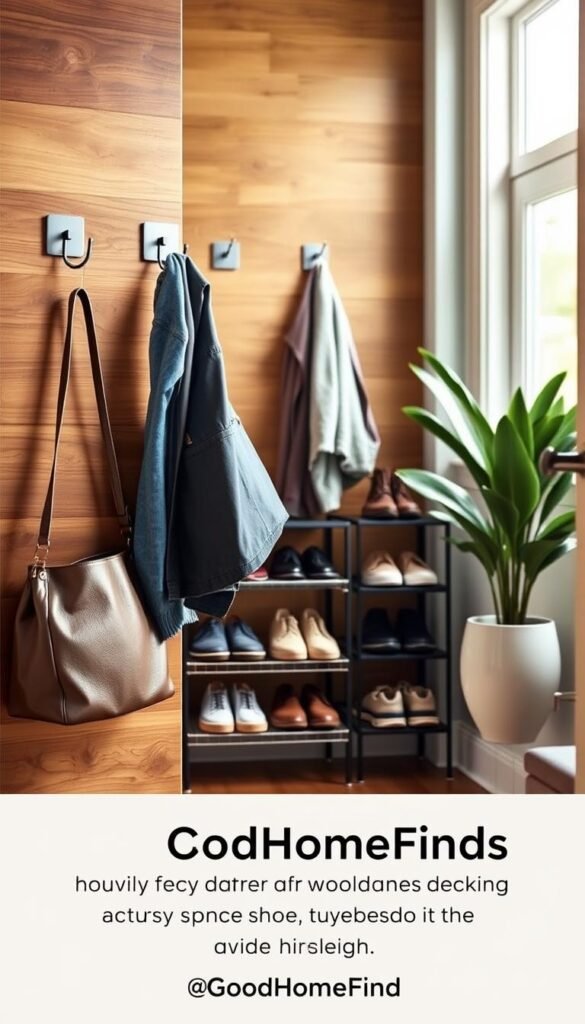
A simple row of sturdy hooks changes an entry from chaotic to organized in one quick install. Hooks move coats and bags off the floor and stop the „chair pile“ from forming. They work fast and cost little.
Why it’s useful
High-mounted metal hooks free sightlines and keep the landing usable. They hold backpacks, leashes, umbrellas, and daily coats so your living area feels calmer.
Real-life example
In a narrow apartment entryway, a row of four hooks cleared a 3-foot walkway. Backpacks and dog gear moved up the wall. The door area became a usable place instead of a pile.
Price-value checklist ($10–$25)
- Solid metal finish with smooth edges.
- Included screws and clear measurements.
- Real weight rating, not vague „heavy duty.“
Pros and cons
- Pros: instant vertical storage, cheap, easy to install, reduces daily clutter.
- Cons: needs proper mounting, can damage walls if done wrong, looks messy when overloaded.
Who it’s for
Useful for renters (choose minimal holes or removable options), families that grab items daily, and anyone without a closet by the door.
What to avoid & alternatives
Avoid adhesive-only hooks for heavy coats and mismatched drywall anchors. Alternatives include over-the-door hooks for zero drilling and Command-style hooks for light items. Add a small basket under the hooks for shoes if you have a tight landing.
Safety and quality checks
Confirm the weight rating per hook, match anchors to your wall type, and test with lighter loads first. On Amazon, favor listings with review photos, included hardware, and exact dimensions.
Winner: Over-the-door organizer for pantry, closet, or laundry
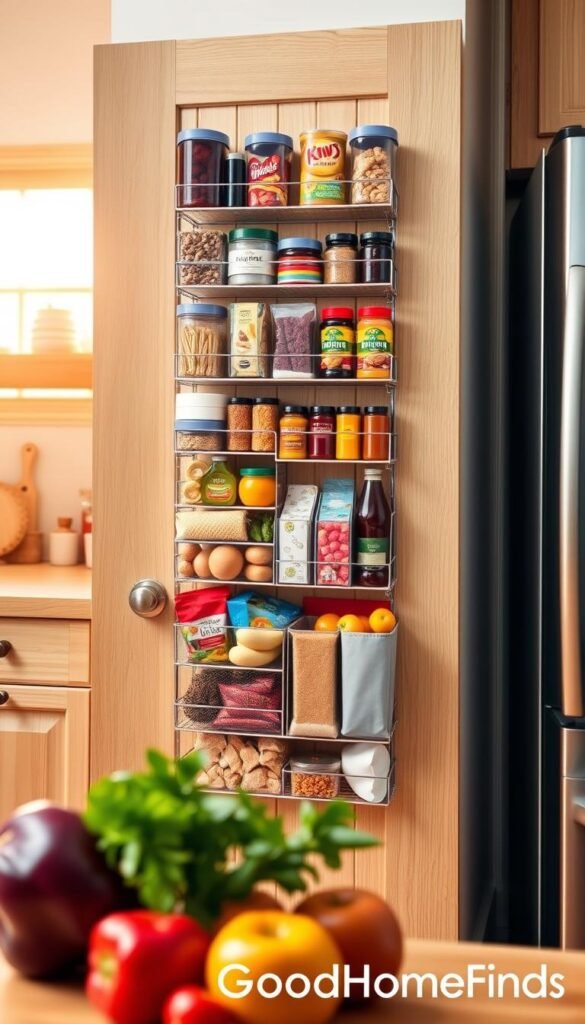
An over-the-door organizer turns the back of a door into instant, usable storage for pantry, closet, or laundry needs. It uses vertical room you already have and frees counters and shelves.
Why it’s useful
The back of a door is free storage that doesn’t reduce floor area. A well-made basket keeps bottles upright and small items visible.
Real-life example
In a tight laundry nook, detergent, spray bottles, and stain sticks crowded the washer top. An over-the-door rack moved those items to eye level and cleared the work surface.
Price-value evaluation
Under $25 look for sturdy hooks, a basket depth that fits spray bottles (about 3–4 inches), and a frame that doesn’t flex when the door moves. Prioritize listings that state door-thickness compatibility.
Pros and cons
- Pros: fast install, renter-friendly, reduces cabinet crowding, fits pantry, closet, or laundry doors.
- Cons: can rattle, scuff the door, or stop closing if racks are too deep.
Who it’s for
Good for renters, tight kitchens with limited cabinets, and anyone who needs zones for cleaning, snacks, or pet supplies.
What to avoid, alternatives, and safety
Avoid flimsy top hooks, sharp metal burrs, and baskets so deep they hit the frame. Keep heavy chemicals low and out of reach of kids and pets.
- Alternatives: single-pocket fabric organizers for light items or extra shelf baskets that sit on pantry shelves.
- Safety checks: confirm door thickness, check for metal burrs, and test for wobble before loading.
Winner: Under-shelf basket to double cabinet and pantry space
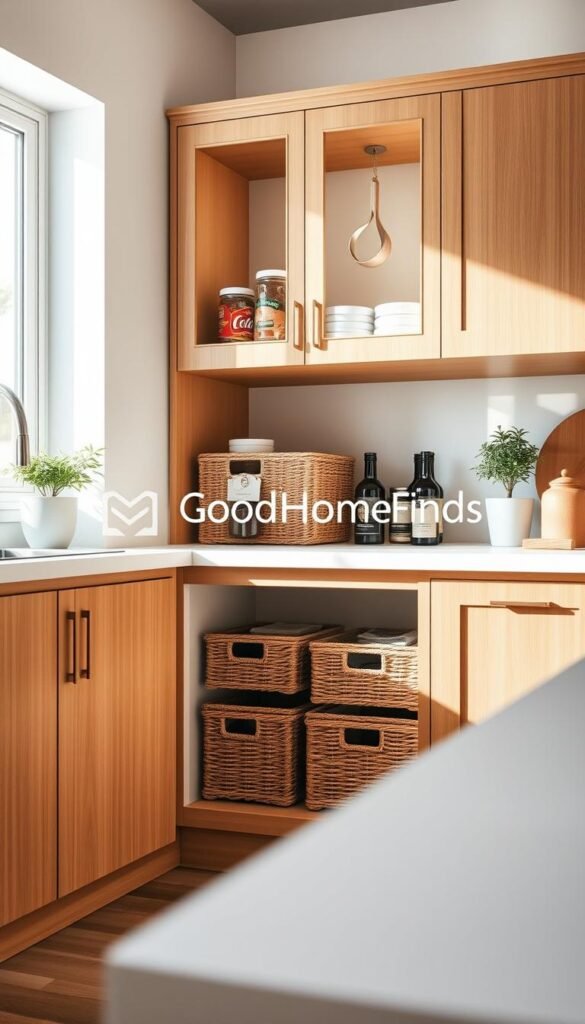
A slide-in basket can add a whole second layer inside a cabinet without tools or new shelves. It turns otherwise wasted vertical air into a tidy zone for wraps, snacks, and baggies. You get instant organization and no drilling.
Why it’s useful
An under-shelf basket creates a second shelf inside a cabinet so items don’t stack into a mess. It frees the visible shelf for plates while keeping wraps and snacks easy to grab.
Real-life example
In a cramped kitchen cabinet, foil, plastic wrap, and snack bags piled on one shelf. Adding an under-shelf basket created a dedicated zone for those items and cleared the main shelf for dishes. The door closed fine and morning prep sped up.
Price-value evaluation
Look for thicker wire and a smooth coating to resist rust and snagging. A slide-in fit that matches your shelf thickness is crucial so the basket won’t wobble. Cheap wire that flexes will bend under a load.
Pros and cons
- Pros: cheap, instant extra storage, no tools, renter-friendly.
- Cons: reduces headroom below, can slide if overloaded, thin wire may sag.
Who it’s for
Ideal for renters, anyone with tall cabinet gaps, and those who want more pantry organization without remodeling. It works well in kitchens and utility cabinets alike.
What to avoid & alternatives
Avoid rust-prone finishes, flimsy wire that sags, and baskets that don’t match shelf thickness. Cheaper alternatives include stackable bins, dollar-store dish pans, or decanting snacks into uniform containers for better visibility.
Fit tip: measure shelf thickness and depth. On Amazon, read reviews that say „fits my shelf“ or „doesn’t sag“ and check user photos for real loads.
Winner: Drawer peg system for utensils and “junk drawer” control
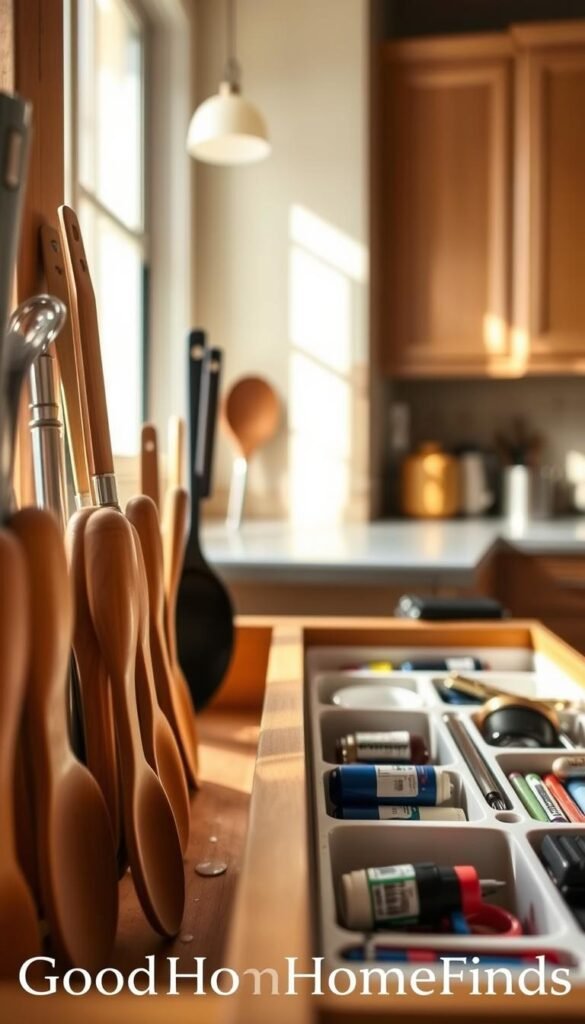
Peg organizers let you carve out stable zones in a drawer so utensils and odd tools stop migrating. They work by holding items upright and separated. That means less digging and faster mornings.
Why it’s useful
Pegs create flexible zones that keep forks, spatulas, scissors, and batteries where you expect them. The layout adapts to new items without swapping every divider.
Real-life example
In a shared kitchen drawer, spatulas, measuring spoons, and a pair of scissors used to tangle. A peg base with removable posts kept each tool in its lane. Everyone stopped rummaging.
Price-value evaluation
Under $25 usually covers a solid base and pegs that stay put. Adjustable systems beat fixed dividers when you have odd-shaped items.
„Peg systems are a proven kitchen move for dense drawers.“
| Feature | Budget | When to upgrade |
|---|---|---|
| Base grip | Good under $25 | Non-slip or thicker plastic |
| Pegs | Varied sizes included | Extra tall pegs for bulky utensils |
| Cleanability | Easy-wipe plastics | Dishwasher-safe parts |
Pros and cons
- Pros: customizable, trims daily frustration, one drawer can handle more tasks.
- Cons: crumbs can collect under the base; some shallow drawers won’t fit.
Who it’s for
Good for roommates, families, and any kitchen where a single drawer must hold many items.
What to avoid & alternatives
Avoid slippery pegs, materials that stain, and kits with only one peg size. Cheaper options: cut-to-fit drawer liner plus a few small bins or simple fixed dividers.
Safety and quality checks
Choose food-safe plastics for utensil contact, smooth edges, and a base that resists cracking. On Amazon, confirm internal drawer measurements and look for reviews that say „stays put“ and „easy to wash.“
Winner: Slim rolling cart for “dead space” between appliances or beside the bed
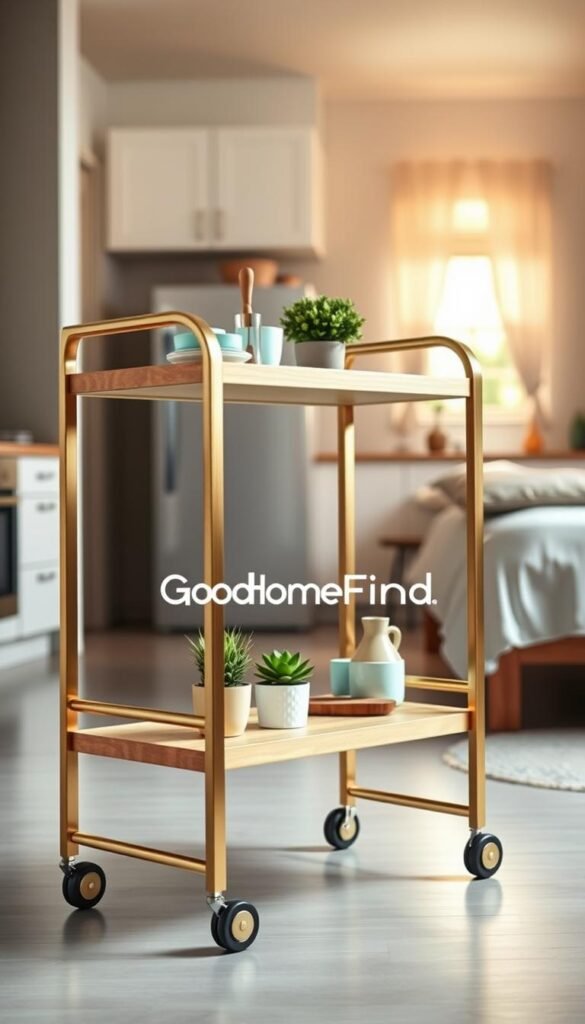
A narrow rolling cart turns an unusable gap into tidy, reachable storage you can pull out in seconds. It’s renter-friendly and moves with you when layouts change.
Why it’s useful
A slim cart uses inches you already have. It stores oils and snacks in a studio kitchen without stealing counter room.
It also works beside a bed as a compact nightstand for chargers, books, and a water bottle in a tight bedroom.
Price-value and when under-$25 is worth it
Cheap carts are fine if the frame is rigid and wheels roll smoothly. If it wobbles out of the box, return it.
Pros and cons
- Pros: reclaims dead gaps, portable, multiroom use.
- Cons: tippy designs, jammed casters, metal that can rust in humid areas.
Who it’s for, what to avoid, and alternatives
This is ideal for renters and anyone in a studio or small apartment who needs flexible furniture without permanent installs.
Avoid tall narrow carts with no wheel locks and carts placed next to oven sides or heaters.
Alternatives: stackable bins, narrow trash-can caddies, or a simple floor bin if rolling isn’t needed.
Safety and buying checks
- Check load limits and wheel locks for kids or pets.
- Verify exact width including wheel clearance on Amazon and look for reviews that say “doesn’t wobble” and “rolls smoothly.”
Alternatives that work when the “winner” doesn’t fit your space
Not every solution fits every floorplan; here are affordable swaps that actually work.
Goal: find renter-friendly options when a door won’t close or a wall can’t take hooks. These choices save steps and clear visual clutter without permanent work.
Open or glass-look shelving for lighter visual weight
If you keep things tidy, open shelves look less heavy than closed cabinets. They make a kitchen feel airier and keep frequently used items in reach.
Why it works: fewer visual barriers, faster access, and easy installs with brackets or floating mounts.
Corner-friendly organizers
Corners are often wasted. A lazy susan, tiered corner caddy, or pull-out corner unit turns that awkward gap into usable storage.
Use them in a bathroom, pantry, or cabinet to reclaim hidden inches without new furniture.
Benches instead of bulky chairs
A bench tucks under a table and frees floor areas when not in use. In a dining nook, it holds guests and clears walking lines better than separate chairs.
Window-area ledges for extra storage
A narrow shelf by a window holds plants, mugs, or books. It lifts clutter off counters and doesn’t block traffic paths.
Keep it shallow so the window still functions and light comes through.
Multipurpose swaps: folding and nesting
Choose a folding table or nesting tables instead of multiple pieces. They serve as work surfaces or a coffee table and stow away when you don’t need them.
Decision rule: pick the option that reduces steps and visual clutter, not one that just adds more bins.
| Problem | Alternative | Why it works |
|---|---|---|
| Door won’t close | Open shelf or narrow ledge | Uses vertical face without adding depth |
| Awkward corner | Corner caddy or pull-out | Makes hidden space reachable |
| Bulky seating | Bench | Tucks under table to free floor |
| Too much furniture | Folding table / nesting tables | Reduces pieces while keeping function |
Budget and renter note: many of these are affordable on Amazon. Look for items that don’t need drilling or that use removable mounts.
Safety: anchor tall shelves if kids or pets are present and avoid glass in high-traffic zones.
Small bedroom space-savers that don’t require new furniture
You don’t need a new bed to get more usable storage. Use the hidden volume under the frame and the top of your closet rod. These moves are cheap, renter-friendly, and fast to implement.
Under-bed bags and low-profile bins
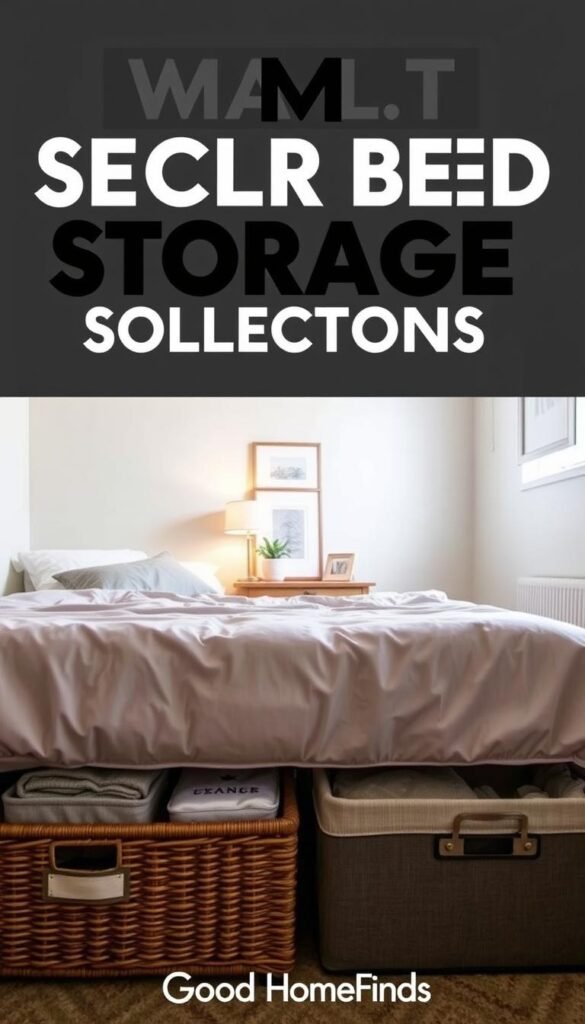
What to buy: low-profile fabric bags or shallow plastic bins with sturdy zippers and handles. Under $25 covers most decent fabric options.
Real-life example: one renter stored off-season coats and extra linens under the bed and freed two shelves in a packed bedroom closet.
What to avoid: overstuffing (zippers fail), ultra-thin plastic that cracks, and floppy bags that collapse when you slide them.
Closet hacks that add vertical capacity
Swap bulky hangers for slim, non-slip versions to fit more clothes. Add hanging shelves for sweaters and use the top-shelf zone for rarely used items.
Quick rule: keep daily items at eye level, occasional things up high, and bulky seasonal items under the bed.
| Item | Typical cost | Key quality check |
|---|---|---|
| Under-bed fabric bag | $15–$25 | Reinforced zipper, handles |
| Low-profile plastic bin | $10–$25 | Rigid sides, no chemical smell |
| Slim hangers / hanging shelf | $8–$20 | Non-slip coating, rated weight |
Buy tip: measure under-bed clearance and closet rod height before ordering on Amazon to avoid returns. Keeping each thing a clear home saves minutes every day.
Small living room ideas that feel bigger without buying a new sofa
Swap visual weight for open lines. You don’t need a new couch to make a living room feel larger. Remove bulky silhouettes and choose pieces that show more floor to give the room breathing room.

Appropriately sized pieces and lighter visual footprint
Pick a low coffee table with open legs. A lighter table lets you see more floor and increases perceived floor space. Low-to-the-ground coffee tables read less heavy and keep traffic clear.
Real-life example: swapping a heavy storage ottoman for a slim wood table cut visual clutter. The footprint stayed similar but the room felt calmer and more usable.
Wall-mounted lighting to free table space
Use plug-in sconces to free side tables from lamps. They reduce cord mess and are renter-friendly because no hardwiring is required. Confirm wattage and bulb type before buying.
Stick-on lights work for accent or closet lighting. They are not ideal for primary reading light or long-term use.
Decor, safety, and practical tips
Choose fewer, larger decor pieces for cleaner surfaces. Keep one end table clear so you can set down a drink and charge a phone without moving clutter.
- Measure where the end table sits and mount lighting to match actual use.
- Manage cords to prevent trips and check sconce ratings.
- Budget note: good plug-in lights often cost more than $25; focus on function first.
Kitchen storage priorities for tight rooms (where clutter stacks fastest)
Kitchens get messy fast because many daily items compete for a few deep spots and open countertops.
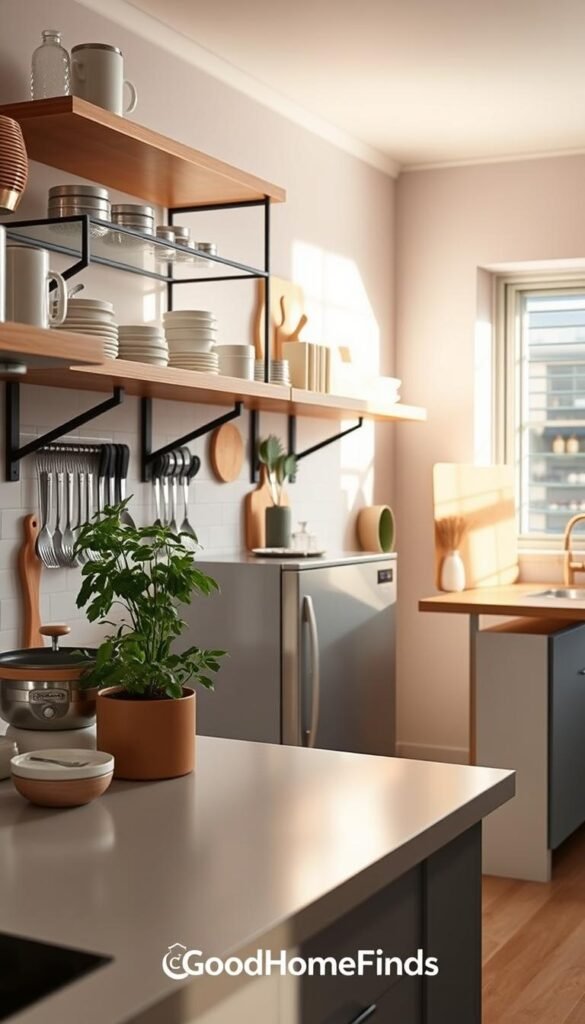
Cabinets: stack, add under-shelf, keep reachability
Stack by category: group breakfast, baking, and snacks so items are predictable and easier to grab.
Under-shelf add-ons double vertical capacity without drilling. They catch wraps, lids, and small cans and free the main shelf.
Reachability rule: keep daily dishes and pans in the „grab zone“ at eye-to-waist height. Move rarely used appliances up high or under-bed if needed.
Drawers: dividers and peg zones that hold
Use adjustable dividers or a peg layout to create lanes for utensils and tools. That keeps things upright and reduces digging.
Choose systems that resist sliding and are easy to wipe clean.
Countertops: when a rack helps—and when it becomes another pile
If a rack corrals dish soap, sponge, and a cutting board it helps. If it becomes a parking lot for mail and chargers, it hurts.
| Problem | Affordable fix | Why it works |
|---|---|---|
| Overfull cabinet | Under-shelf basket | Adds a second layer without tools |
| Tangled utensils | Drawer pegs/dividers | Creates stable zones; adapts to odd items |
| Counter appliance crowd | Top shelf or under-bed storage | Frees prep area and clears visual clutter |
What to avoid: oversized countertop organizers that steal prep room, deep corner bins you can’t reach, and flimsy add-ons that sag under load.
Budget tip: low-cost add-ons under $25 often beat one expensive system. On Amazon, prioritize exact dimensions, load limits, and reviews that mention stability and easy cleaning.
Amazon-first buying tips for fast delivery and fewer returns
A quick Amazon-first checklist helps you buy fast, avoid returns, and get the right fit the first time.

How to measure correctly
Grab a tape measure and check four things in two minutes: door thickness, shelf depth, interior drawer height, and the actual clearance where the product will live.
Write down numbers and add a half-inch for wiggle room. That small extra avoids a return.
What to look for in reviews
Scan reviews for real-load tests and photos showing daily use. Trust pictures of coats on hooks or bottles in racks more than staged studio shots.
Filter for mentions of bending, warping, and rust. Note how the seller handled returns when things failed.
Quality and safety red flags
Avoid: sharp wire ends, strong chemical smell, and vague or fake „weight ratings“ with no hardware guidance.
Watch for tippy carts without wheel locks and organizers that place cleaning chemicals at child height. Simpler design often lasts longer and is easier to clean.
Shipping tip: prefer items that arrive assembled or with minimal parts. Measure twice, buy once—especially where a half-inch changes the whole fit.
What to avoid in small-space products (common money-wasters)
A well-chosen organizer simplifies your routine; the wrong one creates work. Buy for daily use, not for novelty. If a product adds steps, you won’t keep using it.
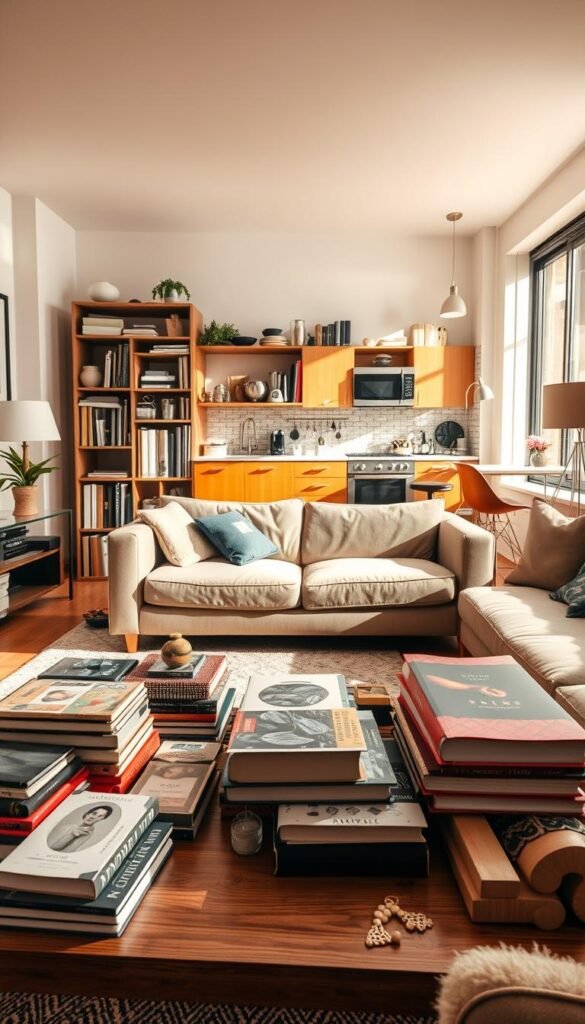
Overly clever gadgets
Gadgets with many moving parts look smart. In real life they add steps. If you must open lids, snap panels, or reconfigure to store one item, you’ll stop. Choose simple actions: grab, drop, hang.
Adhesive-only solutions
When they work: light keys, small hooks, and temporary trims. When they fail: heavy coats, glass bottles, or anything that bends the adhesive or rips drywall.
Oversized organizers and bulky furniture pieces
Big bins or chunky furniture pieces can steal the floor and block paths. I once saw a huge rolling cart that “fit everything” and turned a kitchen into an obstacle course. It stored gear but ruined workflow.
- Buying rule: choose the smallest pieces that solve the problem and match the actual gap you measured.
- Safety note: avoid tipping towers, falling adhesive hooks, and sharp wire edges.
- Quick reset: return duds fast. Don’t let mistakes become permanent clutter.
Practical mindset: the best systems are boring, stable, and easy to maintain. That’s worth more than clever features that fail in real life.
Conclusion
, Start with one practical change and watch your apartment become calmer and more useful.
Focus on vertical fixes first: hooks and over-the-door racks free floor real estate. Then add an under-shelf basket, a peg drawer, or a slim cart where they match your actual measurements.
Choose by room limits: check wall type, door clearance, shelf thickness, and drawer height before you buy. Prioritize renter-friendly items and believable weight ratings.
Budget rule: begin with a single under-$25 solution that removes your biggest daily pain. Order from Amazon with clear reviews and photos, set it up the day it arrives, and test load limits.
Result: better storage, fewer searches, and a home that works for you. If a winner won’t fit, revisit the alternatives for workable ideas.