
Build a practical smart budget mix of small tools that earn their keep in daily life. You’re not hunting for flashy gadgets. You want items that cut waste, speed prep, and help you save money on groceries.
Each pick is easy to find on Amazon and fits routines in the home and kitchen. Think steady portions, airtight storage, and gear that keeps leftovers lunch-ready. Many choices cost under $25 and repay themselves by preventing spoiled produce and fewer takeout nights.
I’ll show why each item matters, who it’s for, what to avoid, and realistic alternatives. Expect clear price-value checks and an honest take on when a cheap fix works just fine—like freezer bags for bulk meals.
Key Takeaways
- These picks focus on daily value: less waste, faster prep, and fewer takeout meals.
- Most items are under $25 and available with fast Amazon delivery.
- Each product entry includes pros/cons, who it fits, and alternatives.
- Practical choices work for soups, grains, pasta, and stretch meals.
- Honest advice: use cheaper options when they truly solve the problem.
What a “smart budget mix” means for U.S. homes right now
The right handful of low-cost tools turns pantry staples into reliable weeknight meals. You get less food waste and fewer last-minute takeout runs. That saves time and preserves groceries you already bought.

How small, practical tools reduce weekly costs and cooking time
Define it: a handful of low-cost items that make staples easier to prep, store, and actually eat before they spoil.
When you’re tired, tiny friction points—no scale, a jammy can opener, a sliding board—push you toward expensive options. Fix those and you cook more, waste less, and stretch meals across the week.
What “under $25” should cover (and what it shouldn’t)
- Worth it: durable basics, easy-to-clean tools, renter-friendly sizes that fit in a drawer.
- Avoid: items that need proprietary refills, frequent replacements, or add hidden costs that eat your savings.
Think practical. Prioritize tools that save you time, limit waste, and give clear money-back value over a few months.
How we chose these budget kitchen and home items
Selections were driven by practical wins: less waste, quicker prep, and reliable results that create real savings in weekly grocery bills.
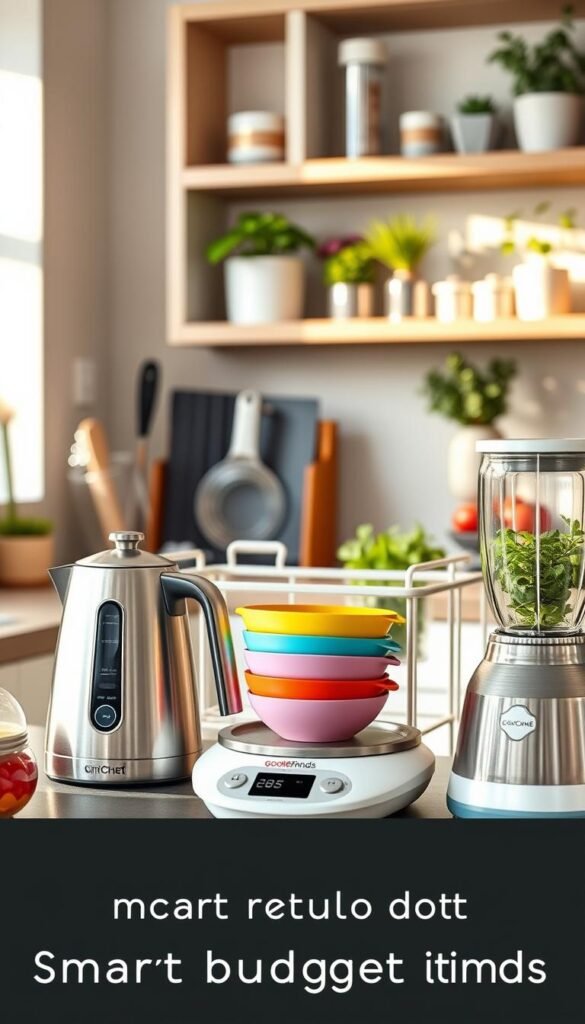
Everyday usefulness over gimmicks
If a tool didn’t save time, reduce waste, or make staples easier, it didn’t make the cut. You want items that earn daily use.
Price-per-use and time-saved as the real value test
We rate each product by price and frequency of use. A $15 item you use five times a week wins over a flashy $15 gadget used once a month.
We also score time saved. Faster prep reduces takeout temptation and keeps meal plans on track.
Amazon availability and fast delivery as a deciding factor
We favored widely available, well-reviewed items with fast shipping. Easy returns and local replacement options matter for real-life shopping.
Safety and quality checks we won’t skip
Must-haves: food-grade materials, BPA-free plastics, strong seals, rust-resistant metals, and clear material listings.
Avoid deal-breakers like thin seals, brittle plastic, and vague listings that lead to buying twice.
| Selection rule | What we test | Buyer note |
|---|---|---|
| Daily usefulness | Frequency and ease of use | Choose items you will reach for often |
| Price-per-use | Cost divided by expected weekly uses | Low cost + high use = fast payback |
| Availability | Amazon reviews and shipping times | Easy returns protect your savings |
| Safety | Materials, seals, rust resistance | Look for clear labels and certifications |
These criteria let you shop with confidence. Use these tips when choosing tools so your purchases last and truly cut costs.
Smart budget mix staples that help you plan cheaper week meals
Start with a clear grocery list and you’ll avoid impulse buys that bust the week’s meals. The 5-4-3-2-1 method gives structure: five fruits, four vegetables, three proteins, two grains, and one fun pick.
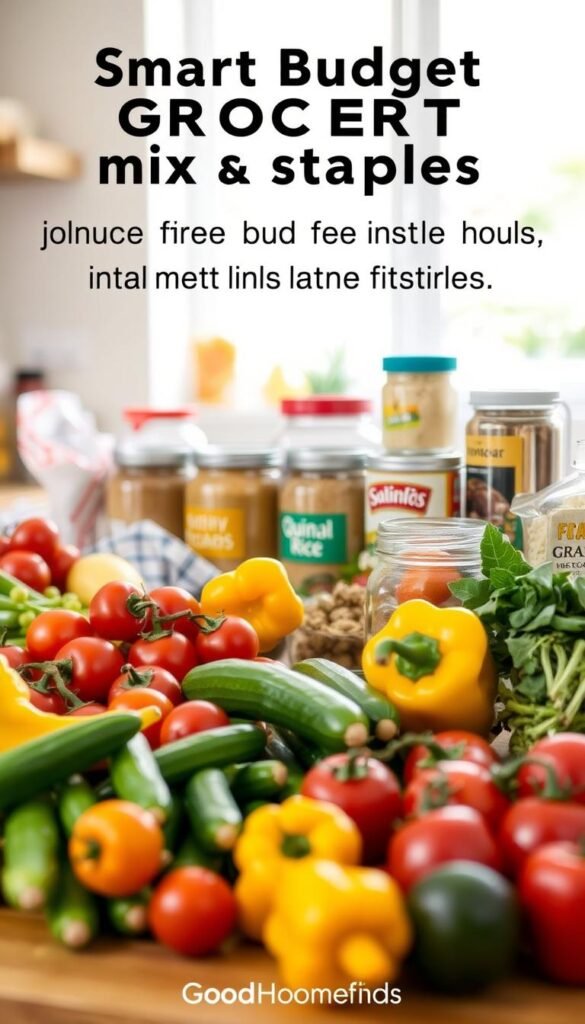
Using the 5-4-3-2-1 grocery method to avoid impulse buys
Write the list before you leave. Pick items that combine easily.
- Pick versatile fruits and vegetables that pair with proteins.
- Choose 2 grains like rice and pasta to rotate through the week.
- Allow one treat so you don’t overdo impulse snacking.
Building “stretch meals” so you cook once and eat twice
Cook a big pot of soup, beans in tomato sauce, or a pasta bake. Eat it for dinner and pack lunches. Leftovers can be refreshed with fresh herbs or a squeeze of lemon so flavors feel new.
Why pantry bases like rice, beans, pasta, and grains keep costs steady
Pantry staples store well and stretch small amounts of protein across many servings. A family can turn one roast into sandwiches, soup, and a grain bowl.
Weekly plan: 2 stretch meals + 2 leftover nights + 1 quick pantry night + 1 breakfast-for-dinner night. The right tools for storage, portioning, and freezing make this routine easy and worth it.
Reusable silicone food storage bags for fridge, freezer, and leftovers
Swap single-use bags for silicone pouches to keep leftovers fresher and make meal prep easier. They work in the fridge and freezer, and they cut food waste when plans change.
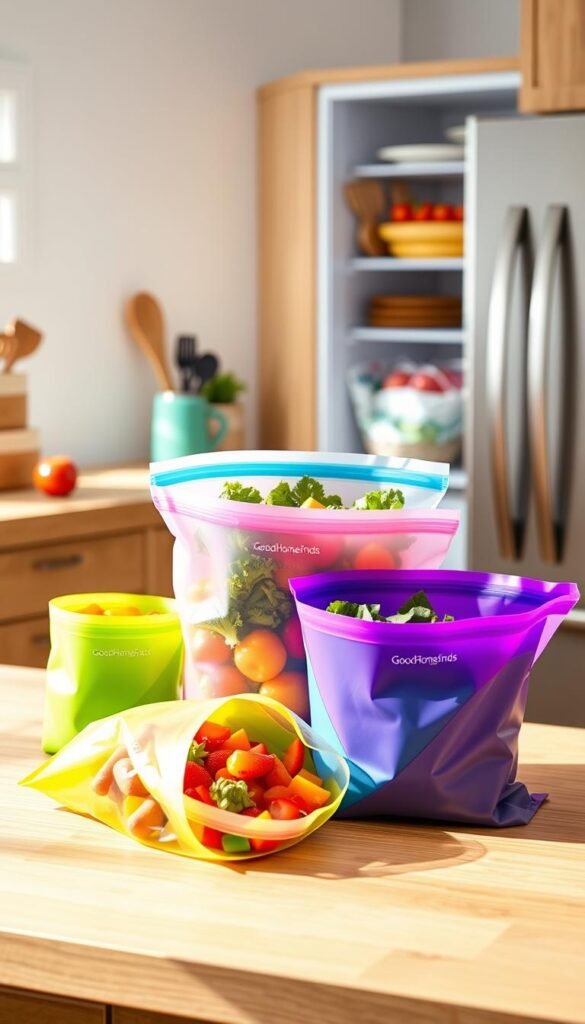
Quick real-life example
Cook a large pot of soup or batch-cook rice. Portion flat into silicone pouches and freeze. In a few minutes you can thaw a single lunch-sized bag for work or school instead of buying out.
Pros, cons, and buying tips
- Pros: reusable, leak-resistant, stackable in small kitchens, and often sold in multipacks under $25 on Amazon.
- Cons: some silicone traps stains and smells; certain shapes have hard-to-clean corners.
- Buy: look for food-grade silicone, strong seals, and simple wide openings for easier washing.
Who it fits and alternatives
These are worth it if you batch-cook, pack daily lunch, or juggle family meals. For very light use, freezer-grade zip bags reused carefully offer a cheaper option and are widely available.
| Feature | When to pick | Note |
|---|---|---|
| Multipack silicone | Weekly batch-cooking, frequent leftovers | Best value under $25; long-term savings vs disposables |
| Single silicone pouch | Light users or renters | Lower upfront cost; replace as needed |
| Freezer zip bags | Cheapest short-term fix | Label and remove air; not as durable or eco-friendly |
Ice cube trays for freezing herbs, broth, and flavor boosters
Portioning flavor into cubes is an easy trick that saves ingredients and time. It turns fresh herbs and small amounts of stock into ready-to-use boosters. You get better taste in plain meals without extra prep.
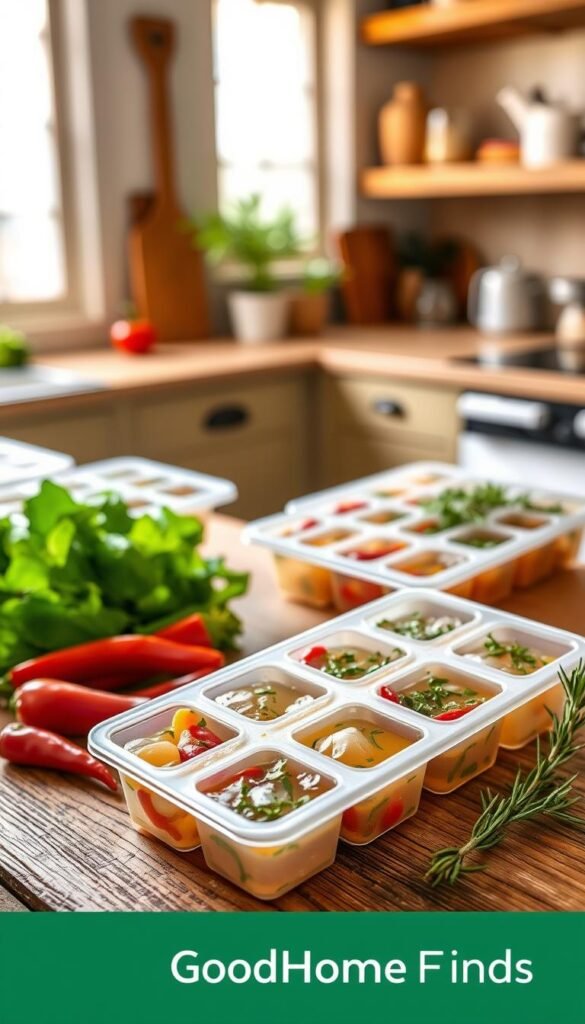
Why it helps
Use these cubes to upgrade beans, grains, and quick soups. Freeze chopped herbs with olive oil or small amounts of broth in trays. Drop a cube into a pot and the dish gains instant flavor while it cooks in a few minutes.
Real-life uses, pros, and cons
- Practical cubes: herb+oil, broth, tomato paste, citrus juice, or leftover coffee for iced drinks.
- Pros: portioned boosts, less food waste, quick weeknight upgrades.
- Cons: freezer odor transfer if uncovered; avoid rigid trays that crack when you twist.
Who it fits and alternatives
This method suits anyone who wants stronger taste from pantry foods without buying sauces. For a low-clutter option, use a mini muffin pan with a reusable cover instead of specialty trays.
„Freeze small amounts now and save hours of flavor prep later.“
| Feature | Best for | Buyer tip |
|---|---|---|
| Silicone ice trays | Easy release, frequent use | Food-grade silicone, BPA-free |
| Rigid plastic trays | Occasional use | Avoid brittle types that crack |
| Mini muffin pan + cover | Households with few needs | Reusable cover prevents odor transfer |
Digital kitchen scale for budget portions and consistent recipes
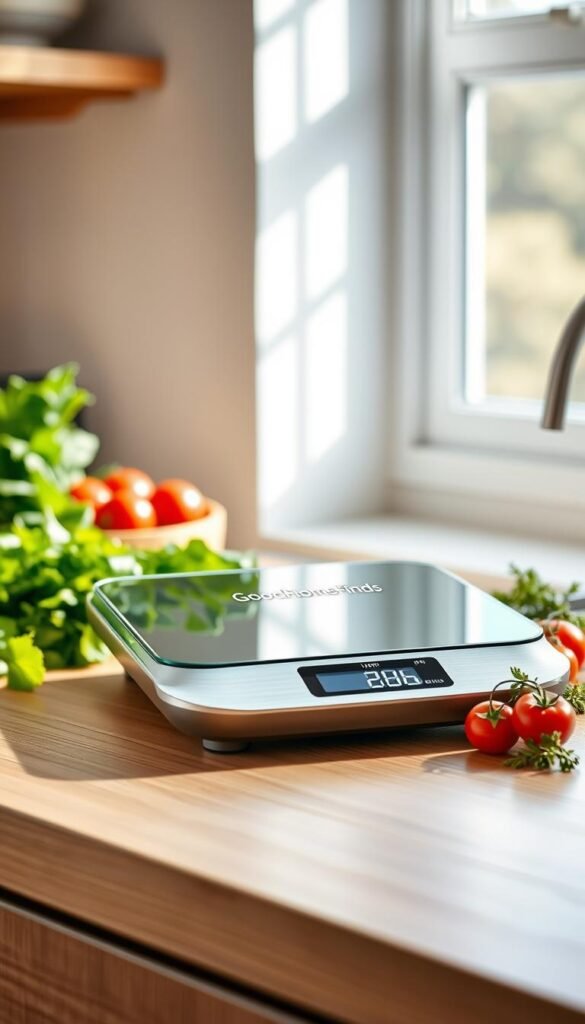
A compact kitchen scale brings consistent portions and clearer grocery math to busy weeks.
Why it helps: You stop overcooking and tossing extra servings. Weighing rice, pasta, and beans means you cook what you need. That reduces food waste and lowers your weekly cost.
Real-life example
One budget cook I know started weighing rice and beans. She avoided two extra dinners lost to overcooking. The savings covered the scale within a month.
Price-value and who it fits
Price-value: A basic scale under $25 often pays for itself after one or two prevented food-waste moments.
Who it’s for: families, bakers, and anyone tracking grocery spending or portion sizes each week.
Pros, cons, and what to avoid
- Pros: consistent recipes, accurate portions, and simple price-per-ounce checks for grocery buys.
- Cons: needs batteries and some models have small platforms that struggle with large bowls.
- Avoid: scales without tare, hard-to-read displays, no auto-off, or models with wildly inconsistent reviews.
“A tiny scale turned vague scoops into repeatable meals and cut waste in half.”
| Feature | Note | Buyer tip |
|---|---|---|
| Accuracy | Crucial for portions and baking | Look for 1 g or 0.1 oz resolution |
| Platform size | Small = limit with big bowls | Choose slightly larger platform if you use big containers |
| Power | Batteries or USB | Prefer replaceable batteries for quick swaps |
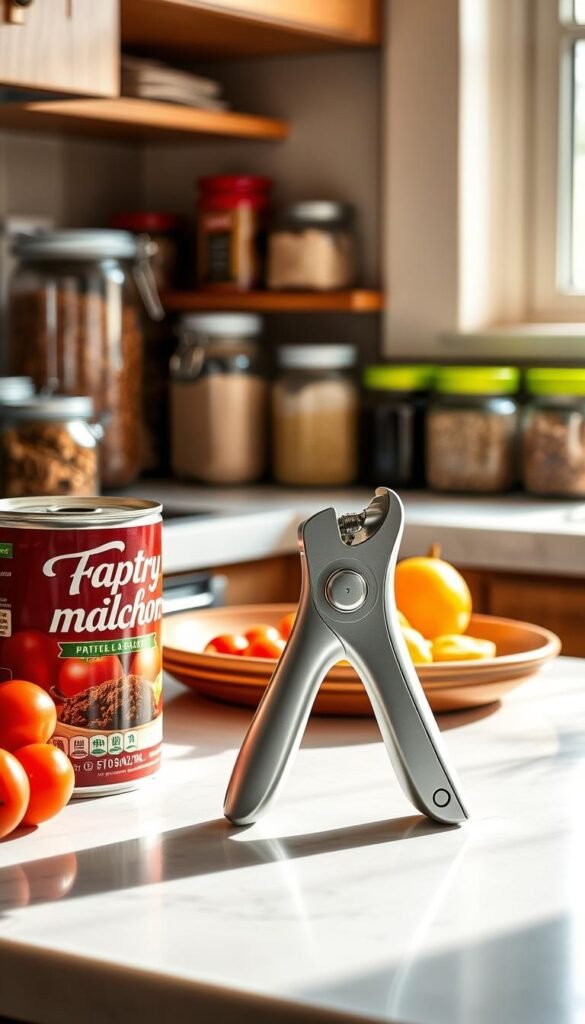
Manual can opener that won’t jam (for pantry staples)
A reliable manual can opener keeps your pantry accessible when weeknight plans change. It makes canned vegetables, beans, and tomatoes easy to use. That keeps you cooking at home instead of ordering out.
Why it matters
Convenience: If an opener jams, pantry cooking stops being convenient. A good opener restores the quick path from can to plate.
Real-life example
Open canned beans and tomatoes fast for a quick chili or a bean-and-tomato skillet on a weeknight. Leftovers become tomorrow’s lunch with almost no extra time.
Pros and cons
- Pros: reliable, small, drawer-friendly, and one of the easiest ways to make pantry ingredients useful again. Often under $25 and widely available on Amazon.
- Cons: manual openers can need hand strength. Cheap models fail when the wheel dulls or the handle flexes.
Who this fits and what to avoid
This is for pantry-first cooks, renters, and anyone who keeps canned staples to stretch meals. Avoid dull cutting wheels, flimsy handles, rust-prone metal, and designs that leave sharp lid edges.
„If your can opener jams, pantry cooking loses its edge — pick one that still works after a year.“
| Feature | Why it matters | Buyer tip |
|---|---|---|
| Stainless cutting wheel | Resists rust and stays sharp | Look for food-grade stainless listings |
| Sturdy handles | Less flex, easier grip for repeated use | Prefer ergonomic or long-handle designs |
| Smooth-cut design | Reduces jagged edges and safety risk | Check reviews for „no sharp lid“ notes |
| Positive long-term reviews | Shows durability beyond the first month | On Amazon, favor „still works after a year“ comments |
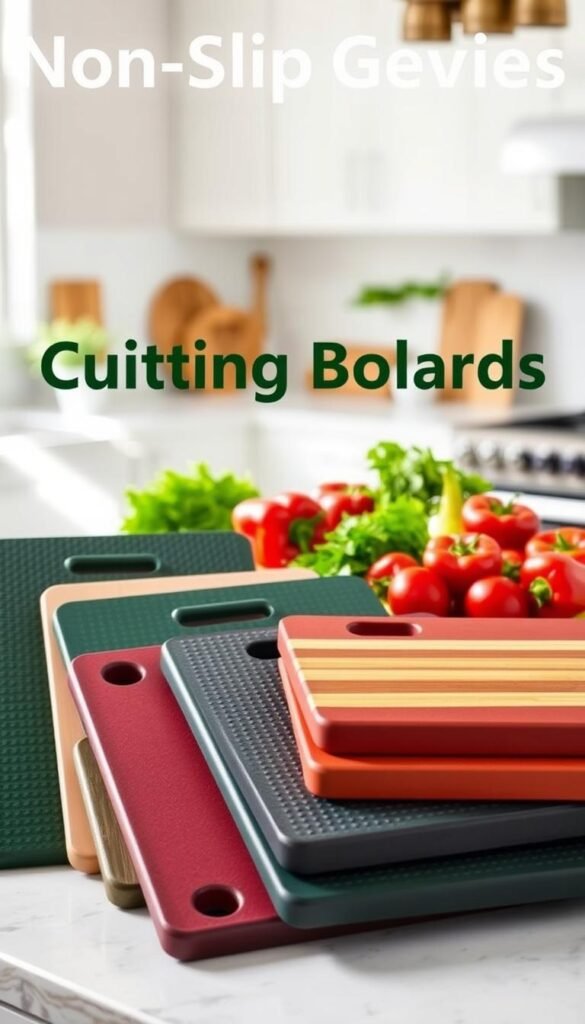
Non-slip cutting board set for faster prep and safer chopping
When boards don’t move, chopping vegetables becomes a few quick, safe steps.
Why it helps
Faster prep means you cook at home more and order out less. A stable board cuts down the time spent adjusting ingredients and reduces small accidents that slow you down.
Real-life example
In a single session you can chop onions, carrots, and cabbage in minutes for a hearty soup or stew. That pot stretches into several dinners and lunches for your family.
Safety and quality checks
Look for: non-slip edges, a flat stable base, and dishwasher-safe materials. These features prevent slips and make cleanup quick.
Pros and cons
- Pros: faster workflow, separate boards for produce and meat, less mess in small kitchens.
- Cons: thin boards may warp over time, especially with heat or frequent dishwasher use.
Who this fits and what to avoid
This is ideal for busy weeknight cooks and any family prepping fresh produce regularly. Avoid boards that slide, have deep grooves that trap odors, or soft surfaces that scar easily.
Alternatives
If you prefer a single durable piece, pick one thick HDPE board. It costs less over time and holds up to heavy use better than thin sets.
| Feature | Why it matters | Buyer tip |
|---|---|---|
| Non-slip edge | Prevents sliding and injuries | Test on a wet counter before buying |
| Dishwasher-safe material | Easy cleanup saves time | Check manufacturer heat limits to avoid warping |
| Thickness | Durability and resistance to warping | Thicker HDPE lasts longer for heavy use |
| Set vs single board | Separate boards speed workflow; single saves space | Choose a set if you prep many items at once; pick one thick board for long life |
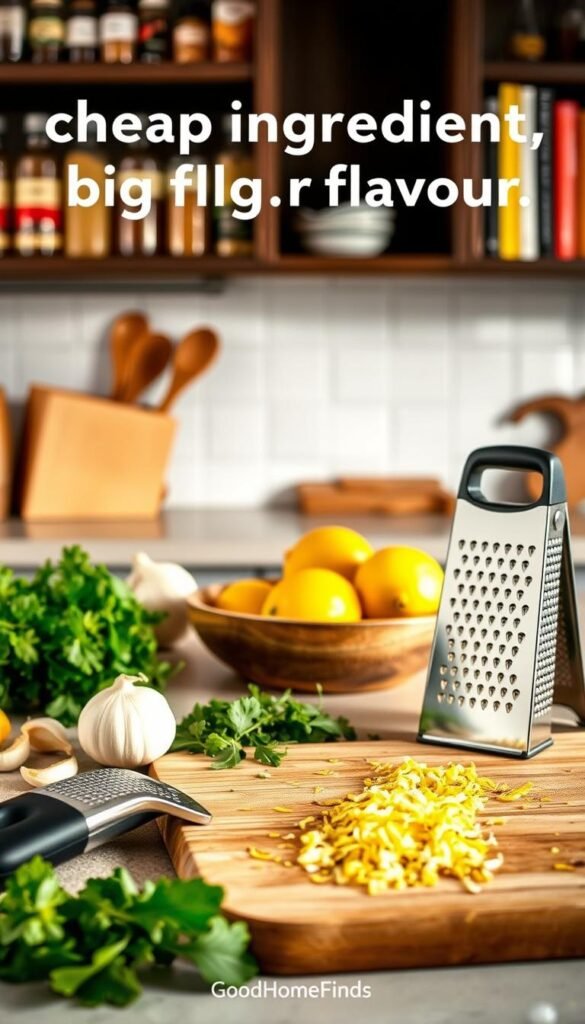
Microplane-style grater for “cheap ingredient, big flavor” cooking
A Microplane-style grater turns tiny, cheap ingredients into noticeable flavor lifts for ordinary dinners. It lets you use citrus zest, garlic, ginger, and hard cheese to finish a dish without buying expensive jars or sauces.
Why it helps
Practical gain: grated aromatics brighten pasta, soup, or beans in seconds. A small tool delivers big returns because the ingredients are cheap and potent.
Real-life example
Zest one lemon over a bowl of pasta and grate a clove of garlic straight into the sauce. The meal tastes fresher and more complete in under a minute.
Price-value and who it’s for
This grater is low-cost, durable, and often under $25 on Amazon. If you cook from pantry staples and want better-tasting meals, it’s worth keeping in a drawer.
Pros and cons
- Pros: fine texture, quick use, no ongoing refills.
- Cons: awkward storage in small kitchens and finger safety when you grate close to the end.
What to avoid
Avoid dull blades, flimsy frames, and designs that trap food. For Amazon picks, favor stainless steel, a protective cover, and reviews noting it stays sharp over time.
| Feature | Why it matters | Buyer tip |
|---|---|---|
| Stainless blade | Stays sharp and resists rust | Choose food-grade listings |
| Protective cover | Safer storage | Keeps blade from dulling |
| Easy-clean design | Prevents trapped food | Rinse immediately after use |
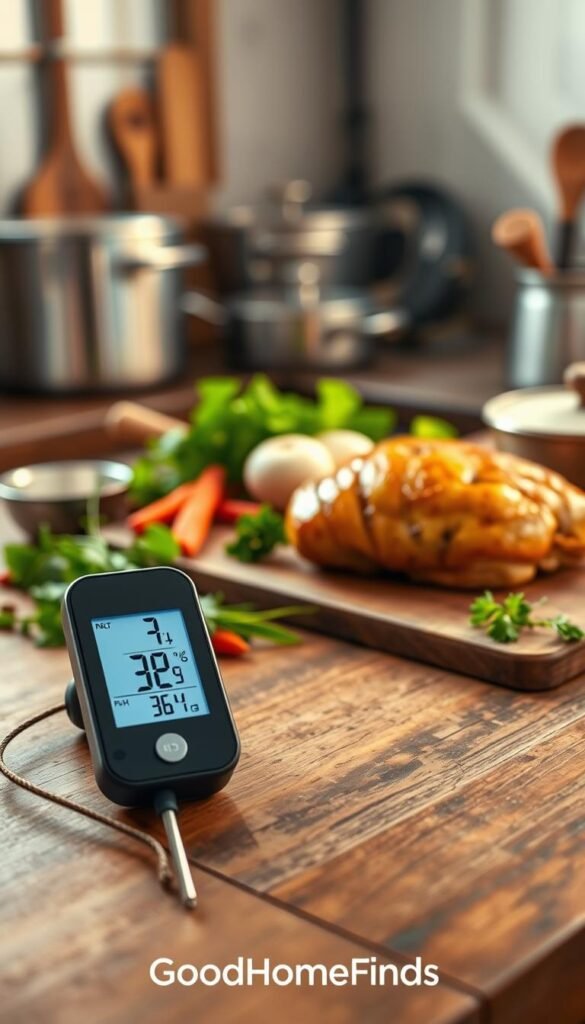
Instant-read food thermometer for safer, less-wasted chicken and leftovers
An instant-read thermometer stops guesswork and keeps poultry juicy and safe.
Why it helps
You stop guessing doneness. That prevents dry chicken and avoids undercooked meat that risks safety issues.
Quick reads save you time at the stove and protect money you spent on groceries.
Real-life example and storage note
Cook budget thighs to the correct temp so they stay moist for dinner. Slice leftovers for sandwiches and wraps the next day for an easy lunch.
When food is cooked right and cooled per the foodsafety.gov cold-storage guidance, you are likelier to keep and eat those leftovers instead of tossing them.
Pros, cons, who it fits
- Pros: fast reads, consistent results, fewer overcooked meals.
- Cons: needs battery changes and occasional calibration; cheap models can read slowly.
- Who it’s for: families, batch cooks, and anyone uneasy about cooking chicken.
What to avoid and buying tip
Avoid slow-read probes, dim displays, and flimsy probe hinges. On Amazon, pick a simple model under $25 with strong speed and accuracy reviews.
| Feature | Why it matters | Buyer tip |
|---|---|---|
| Fast read time | Less guesswork, quicker plating | Look for ≤3 sec read claims and reviewer confirmation |
| Clear display | Easy temperature checks under pressure | Choose large numbers and backlight if you cook at night |
| Durable probe hinge | Lasts through regular use | Favor stainless probe and solid pivot comments |
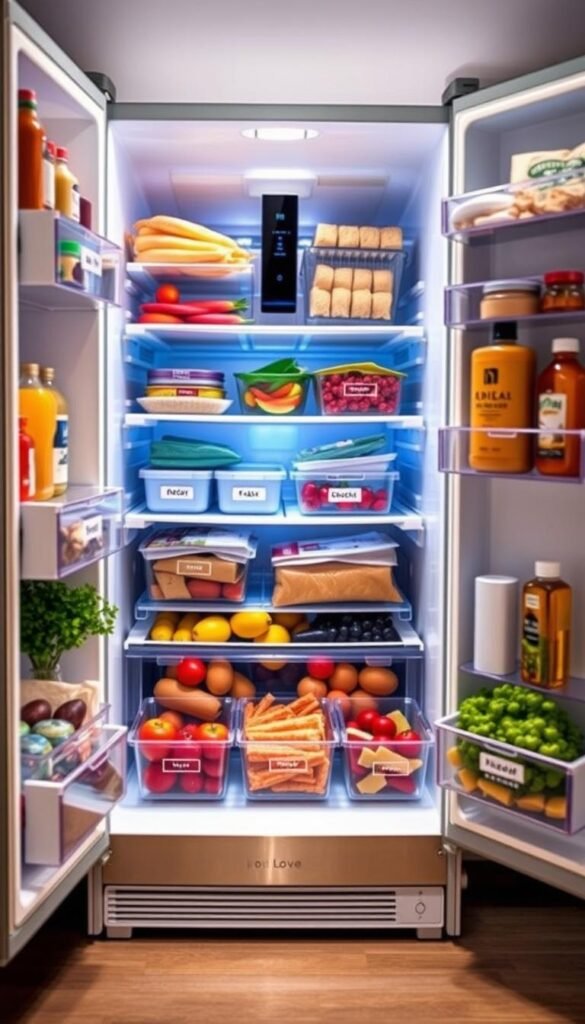
Fridge organizer bins to stop “out of sight, out of budget” waste
Clear bins in your fridge make the difference between a tossed carrot and tonight’s dinner.
Why it helps
Visibility is everything. When fresh produce sits front and center, you grab it for meals instead of letting it spoil.
Real-life example
Create a labeled “use first” bin for vegetables that need cooking tonight. Pull that bin when you plan dinner and turn those items into soup, stir-fry, or a sheet-pan meal instead of ordering out.
Price-value and who it fits
Start with two or three clear bins rather than a full set. A couple of well-sized pieces under $25 each often beats buying a matching collection. This works for a family or any busy household that loses groceries in the back of shelves.
Pros, cons, and what to avoid
- Pros: less waste, fewer duplicate buys, faster meal decisions.
- Cons: takes shelf space; too many bins add clutter.
- Avoid: brittle plastic, hard-to-clean seams, and slippery handles or ill-fitting sizes.
Alternatives
If you want the cheapest option, use labeled paper bags or recycled clear containers while you test the system. Many good bins are available on Amazon and meet food-safety listings; pick food-safe plastic and easy-clean designs to keep this small change lasting and worth it.
„Make what you already bought obvious — it saves money and makes dinner simpler.“
| Feature | When to pick | Buyer tip |
|---|---|---|
| Clear, stackable bins | Small kitchens, frequent produce use | Measure shelf height before buying |
| Ventilated inserts | Fresh produce storage | Helps reduce moisture buildup |
| Single “use first” bin | Try the system without clutter | Start with one; add only if it helps |
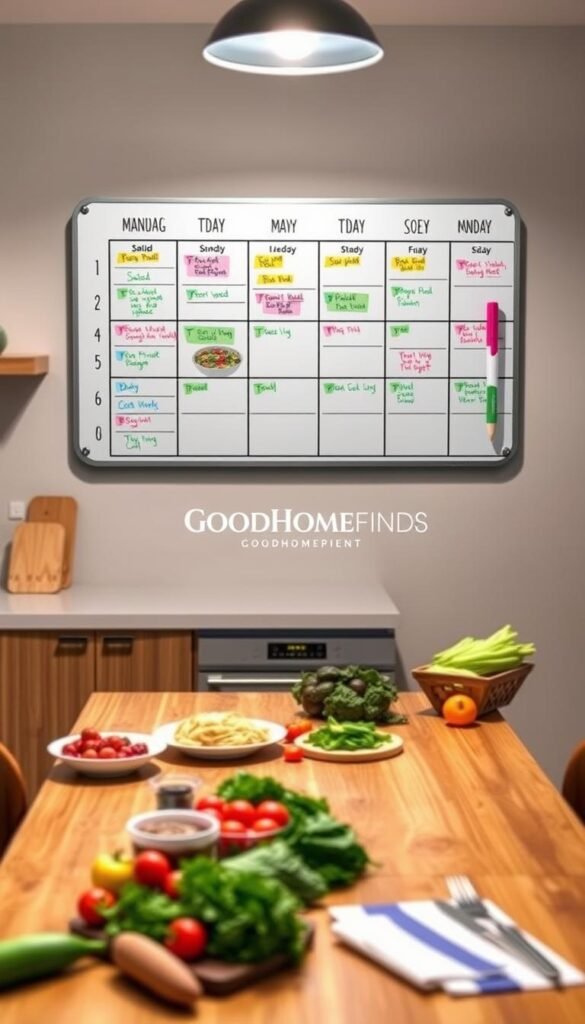
Magnetic dry-erase meal planning board for the week
A visible meal board helps you plan dinners ahead and keeps the whole household on the same page.
Why it’s useful
Deciding dinner earlier reduces last-minute spending and panic buys. Write dinners, list “use first” produce, and mark one freezer pull. This small step will often save money and reduce wasted food.
Real-life example
Map two stretch meals and two leftover nights. Cook twice, eat four times. You spend less time cooking overall and have ready lunches without extra effort.
Pros and cons
- Pros: constant visibility, shared expectations, fewer “what’s for dinner?” fights.
- Cons: markers dry out, boards can smudge, and cheap surfaces may stain after a month.
Who it’s for
This tool fits households juggling work, school, and tight schedules that need a simple visual system for meals.
What to avoid and alternatives
Avoid weak magnets and tiny boards that don’t fit real dinners. If you prefer cheaper options, use a printable weekly planner page on the fridge instead. Small adjustments like this are practical tips that keep families organized.
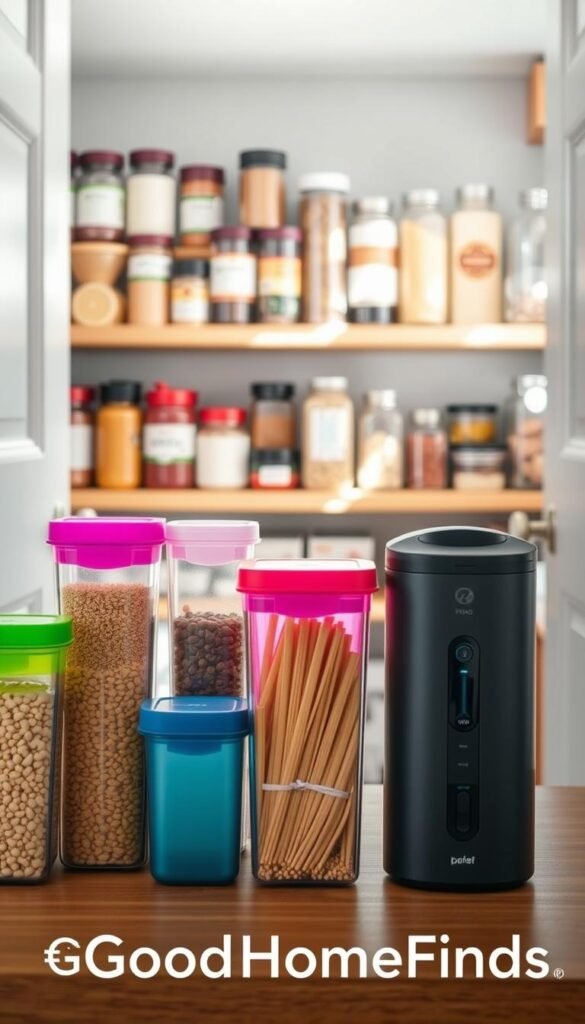
Vacuum storage containers or handheld pump bags for pantry ingredients
If you buy in bulk, proper vacuum storage turns larger sacks into real savings.
Why it helps
Vacuum sealing keeps dry staples fresher longer. That prevents staling and keeps pests away. When rice and other grains stay fresh, your per-serving price stays low.
Real-life example
Buy a 25-lb bag of rice and portion into vacuum jars. You avoid half-used bags going stale and you keep the real cost per meal down. Bulk buys only save money if storage protects the goods.
Safety and quality
Choose food-safe plastics and clear material listings. Look for reliable seals and lids that don’t warp. Avoid vague Amazon listings that skip certifications.
Pros and cons
Pros: less staling, neater shelves, fewer “mystery” bugs, and clear long-term savings.
Cons: refills add a step, and cheap seals fail after weeks. Hand pumps work but need occasional resealing checks.
Who it’s for
This works for bulk buyers, families, and anyone protecting pantry ingredients from pests. It’s renter-friendly and often available under $25 on Amazon.
What to avoid
Avoid lids that warp, seals that slip, and systems that demand proprietary refills. Those hidden costs erase the initial price advantage.
Alternatives
If vacuum feels fussy, use airtight canisters with silica packs. They drop moisture and still protect flour, grains, and even bulk milk powder from spoilage.
| System | Best for | Buyer tip |
|---|---|---|
| Vacuum jars | Long-term bulk storage | Pick food-safe listings and test seals |
| Hand pump bags | Small-space, flexible use | Check pump durability and valve quality |
| Airtight canisters | Simple refill routine | Add silica packs to reduce moisture |
How to use your freezer to save money (without ruining food)
Freezing well is less about hoarding and more about making food you’ll actually eat later. Freeze what you won’t use in time, but do it so the result is ready-to-eat and appealing.
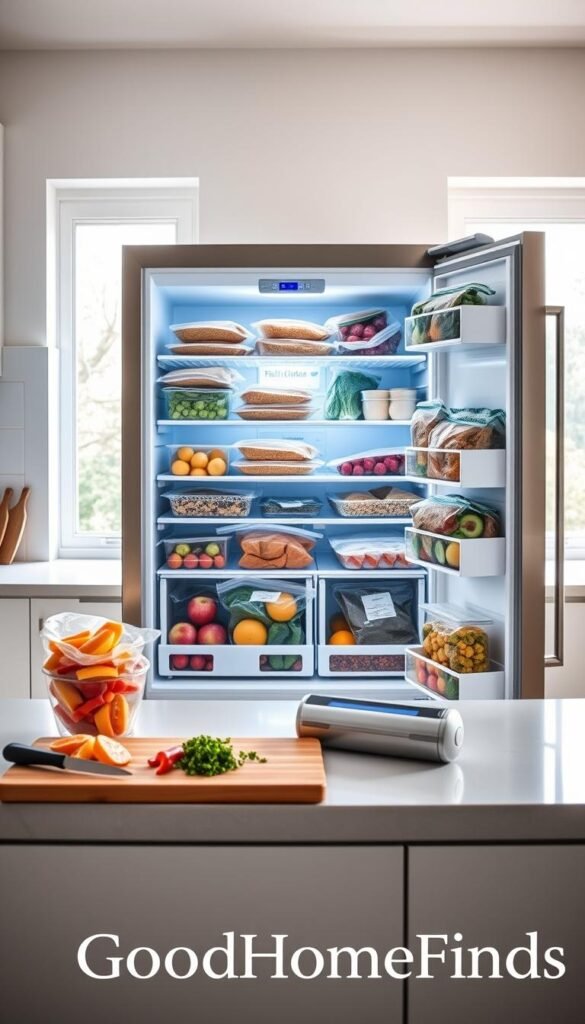
What to freeze and why it matters
High-impact items: bread, butter, soup, cooked grains, and broth. These keep meals flexible and stop midweek takeout when plans change.
Milk-freezing basics
Leave headspace in containers for expansion. Label with the date and use within a practical window — quality is usually fine up to six months.
Food safety and storage time
Follow official guidance from foodsafety.gov for how long items stay safe in the freezer. Safety beats guesswork.
How to prevent freezer burn
- Cool food before freezing.
- Wrap tightly, remove air, and seal portions so you thaw only what you need.
- Label contents and dates to avoid a forgotten frozen graveyard.
Simple workflow that saves real money
Portion soup into lunch-sized containers. Freeze cooked rice flat in bags. Pull one portion to thaw the night before. This routine prevents waste and saves you money over months.
„Freeze with intent: label, portion, and rotate to keep the freezer a friend, not a graveyard.“
| Item | Tip | Use window |
|---|---|---|
| Bread | Slice then freeze | 3 months |
| Milk | Leave headspace, thaw in fridge | Up to 6 months |
| Soup / Broth | Portion for quick meals | 2–3 months |
Budget meal shortcuts that don’t require extra gadgets
Little planning steps turn a single cooked item into three ready-to-eat meals across the week. These moves cost nothing and rely on portioning, freezing, and basic cooking sense.
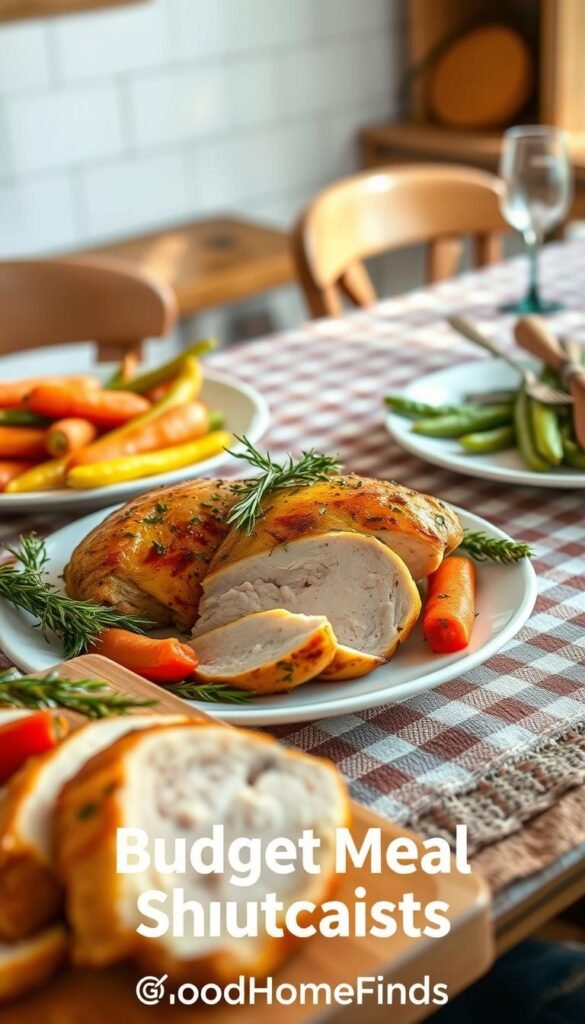
Rotisserie chicken math: why a $4.99 bird can beat raw pricing
A typical 3‑pound rotisserie chicken for $4.99 averages about $1.66 per cooked pound. Once you factor in trimming and time saved, that often undercuts raw price-per-pound at the store.
Using bones for broth to stretch the week’s meals
After you pull meat, simmer the carcass with onion, carrot, and celery for a simple broth. Freeze portions in jars or ice trays. Use the broth to make soups, rice, or sauces that feel richer for very little cost.
Warehouse-store caution: avoiding “savings” that turn into impulse spending
Warehouse trips can add unplanned items fast. A single deal turns into lost savings when you buy extras you didn’t need.
- Shop with a list and stick to it.
- Avoid browsing aisles to limit impulse buys.
- Set a hard cap on non-food extras before checkout.
| Shortcut | Action | Result |
|---|---|---|
| Rotisserie chicken | Split into dinner, sandwiches, frozen portions | 3 quick meals + fridge-ready lunches |
| Bones to broth | Simmer, strain, freeze | Flavor boost for soups and grains |
| Warehouse guardrail | List + cap on extras | True shopping money savings |
„Good tools help, but habits like portioning and planning deliver the biggest wins.“
Community and surplus options that stretch your grocery budget further
Community food channels can add real savings to your grocery runs without extra planning. These options make fresh, usable items available when you need them.
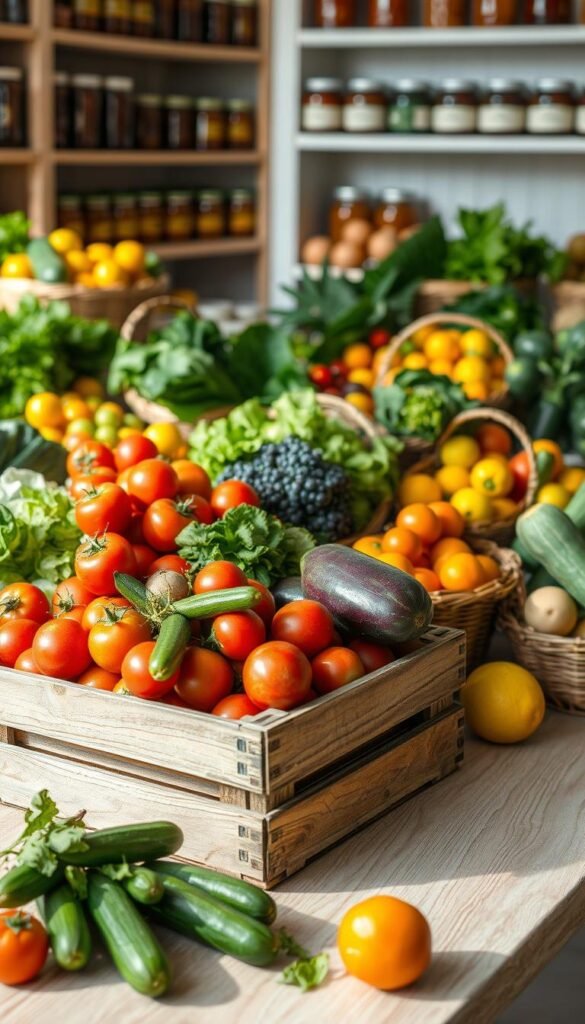
Surplus and “food waste” grocery stores: a quick safety checklist
- Check dates and inspect packaging before you buy.
- Buy what you will use within days; freeze the rest promptly.
- Avoid dented cans or swollen packages.
- Use your freezer strategy to turn deals into reliable meals.
Gleaning and work-share programs
Gleaning trades time for produce. You help harvest and often take home a share. The Society of St. Andrew has saved over 1 billion pounds of produce since 1979, and volunteers commonly bring home some of the harvest.
| Option | Best use | Tip |
|---|---|---|
| Surplus stores | Quick buys for immediate meals | Shop weekly for produce you will use or freeze |
| Gleaning/work-share | Seasonal fresh produce | One volunteer day per season is often enough |
| Freezer strategy | Lock in savings long-term | Portion and label before freezing |
„You don’t need to do everything — one surplus trip per month or one volunteer day per season can help a family save.“
This approach reduces waste, lowers your weekly grocery cost, and helps your family eat more fresh produce without heavy planning.
What to avoid when buying cheap “smart” home and kitchen products
A low sticker price can mask replacement parts, refill costs, and weak guarantees. You should shop with a clear eye for ongoing costs. This keeps small purchases from becoming recurring bills.

Hidden costs: replacement parts, proprietary refills, and poor warranties
Some items look cheap until you need a filter, blade, or refill that only the brand sells. Those add up faster than you expect.
Rule: if a part is required, check replacement price and availability before you buy.
Safety red flags on Amazon listings
Watch for vague language like “premium material” without specifics. Missing certifications, inconsistent photos, or reviews that mention breakage or odd smells are red flags.
When a cheaper alternative is actually the smarter buy
A plain manual tool that lasts ten years beats a trendy gadget that dies in six months. Buy fewer, better basics you will use weekly.
| Red flag | Why it matters | Quick check |
|---|---|---|
| Vague materials | May not be food-safe | Look for food-grade or BPA-free labels |
| No warranty info | Hard to return if it fails | Check seller return policy and reviews |
| Proprietary refills | Adds ongoing costs | Search replacement part price before buying |
„If it touches food, prioritize clear labels and strong seals.“
These practical tips keep your shopping focused on value and safety. Buy tools that reduce real costs and last in real life.
Conclusion
Start with one problem: pick what trips you up most—wasted produce, messy leftovers, or inconsistent portions—and fix that first. Small fixes cut friction so you cook at home more, waste less, and spend less money.
Plan a realistic week. Build two stretch meals, use leftovers on purpose, and keep pantry staples ready for backup dinners. This keeps meals predictable and saves both time and stress.
When you buy, check materials, seals, and long-term reviews on Amazon. For tight wallets, consider this order: a scale, a non-slip cutting board, and storage bags or clear bins. Add flavor tools like a grater or ice trays next.
No hype: a few reliable tools plus steady habits deliver real savings and steadier meal routines in your kitchen.


3 Comments