This guide shows how to get practical results in a small rental without drilling or a full remodel.
You face narrow landlord-style cabinets, a sink that won’t fit a dinner plate, and an oven that runs about 50°F cool. That is real life. You can still make eggs, rice, pasta, and one-pan meals reliably.
Plan first: pick clear goals, then buy only tools that earn their footprint. I’ll recommend renter-friendly picks in two price tiers: under $25 quick wins and under $50 upgrades that add real cooking power.
Safety matters most in tight setups. Watch heat, cords, airflow, and stable surfaces. I’ll also cover daily routines and simple resets that keep a small space working, not chaotic.
Key Takeaways
- Work with limits: storage and layout shape choices.
- No-drill, renter-friendly fixes are the priority.
- Two budgets guide picks: under $25 and under $50.
- Safety and durability beat looks in daily use.
- Routines matter as much as gear for consistent results.
Why tiny kitchens feel harder than they should
Small rental layouts turn simple tasks into tight choreography where every inch matters. You plan to cook, but every task fights for the same short run of counter. The sink can be too shallow to hold a dinner plate, and cabinets are often the wrong size for standard pans.
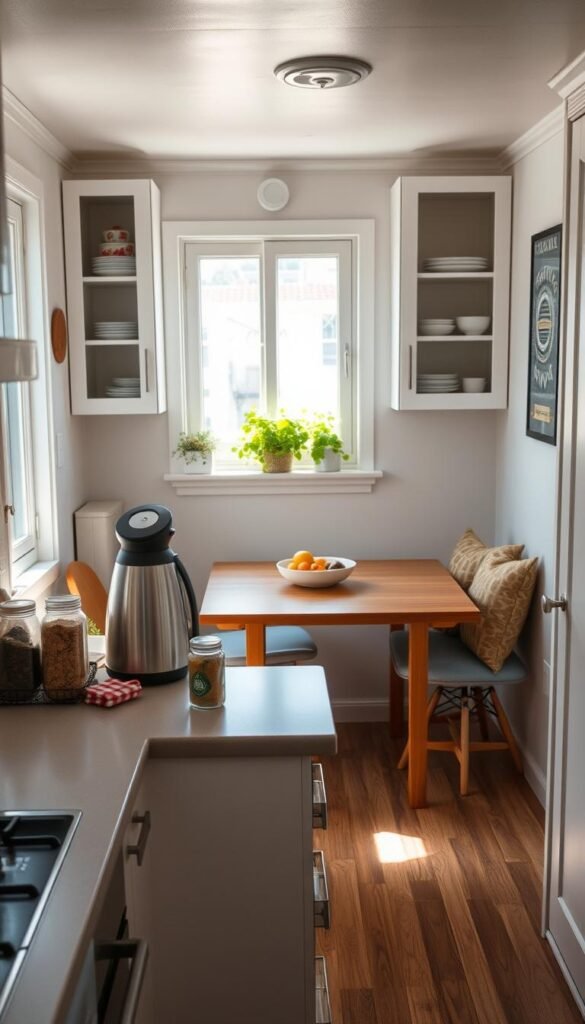
Real-life renter constraints
Landlord-chic means narrow cabinets, awkward corners, and cheap finishes you can’t change. Those limits force you to work around storage and surface problems instead of fixing them.
When the oven runs hot or cold
An oven that runs about 50°F off wastes time and burns food. Use an oven thermometer, move racks to test hot spots, and add or subtract cooking time until you learn the appliance.
| Problem | No-drill fix | Why it helps |
|---|---|---|
| Undersized sink | Collapsible wash basin / rinse board | Creates a usable wash zone and keeps dishes from piling up |
| Narrow cabinets | Vertical pan storage & slim racks | Matches pot size to cabinet size and frees counter space |
| Oven temp variance | Thermometer + rack testing | Predictable results without replacing the oven |
Mindset reset: you might would love a designer layout, but you would really gain more by reducing friction with small, repeatable fixes that keep you safe and efficient.
Set your tiny kitchen cooking goals before you buy anything
Before you spend a dollar, list the exact meals you cook each week and build simple rules around them. This prevents overbuying and keeps your space usable.
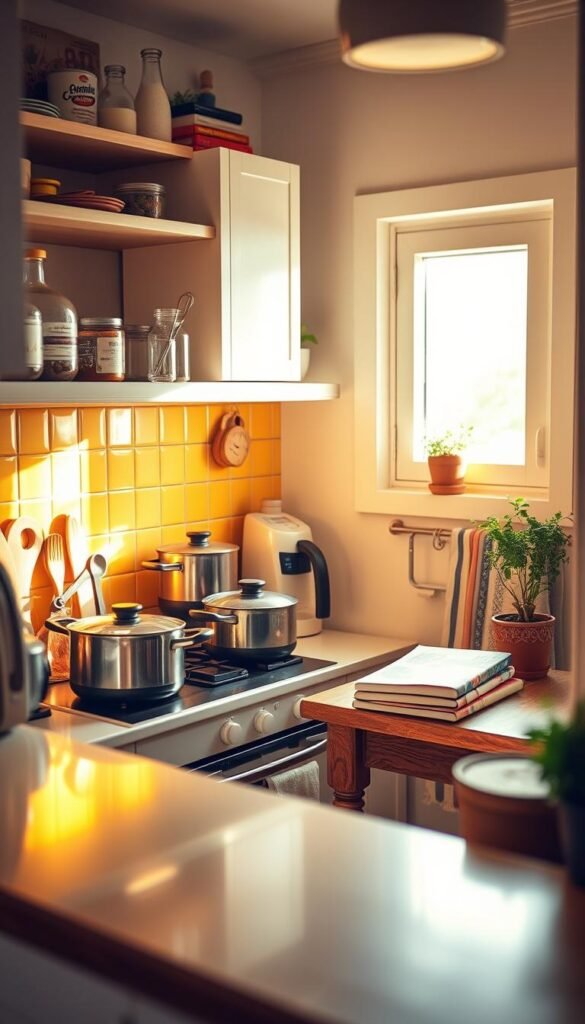
Choose your core foods
Pick 3–5 staples you actually eat. Common picks are eggs, rice, pasta, sheet-pan meals, and quick one-pan dinners.
Define a no-clutter rule
Make a clear storage rule. Example: everything must fit on one cabinet shelf or one drawer for tools and one shelf for pots.
Set time targets
Decide weeknight versus weekend. Fast meals win on weeknights. Save complex recipes for free time.
| Staple | Minimum gear | Why this helps |
|---|---|---|
| Eggs | Small nonstick skillet | Fast breakfasts, one-pan use |
| Rice | Medium pot with lid | Reliable sides and batch meals |
| Pasta | Collapsible colander + pot | Simple dinners, easy cleanup |
Real-life test: if you can’t put it away in under 30 seconds, it fails the rule. Once goals are clear, you’ll build zones and pick renter-friendly upgrades under $25 and $50 that match your way of cooking.
Create a no-drill, renter-friendly layout that actually flows
You can get a smooth daily flow by dedicating one short strip of counter to each task. Start with a simple plan: a prep strip, a cook strip, a wash strip, and a storage strip. Keep each zone focused so your workflow doesn’t collapse mid-recipe.
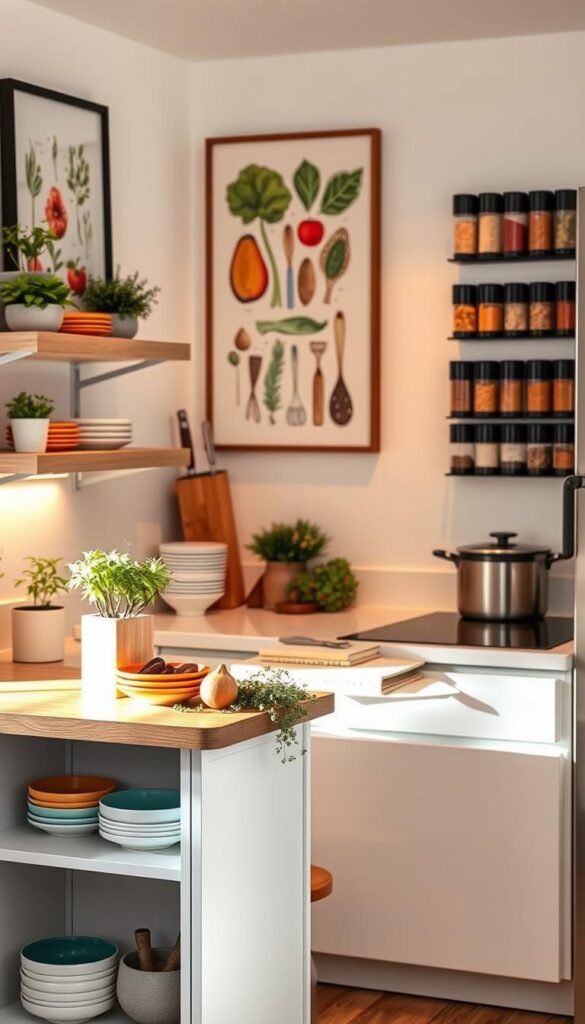
Zone your area
Prep holds knives, cutting board, and small tools. Keep these items within arm’s reach of the stove.
Cook stores potholders and the pan you use most. Place them near the stove or oven for quick access.
Wash keeps soap, a scrub brush, and a drying mat next to the sink.
Temporary counter expansion
Use an over-sink board or bridge to add a flat work surface that stores away. Foldable silicone mats and a narrow rolling cart also expand counter space and tuck out of the way when not in use.
Wall-free vertical storage
Tension poles, over-cabinet hooks, and fridge-mounted magnetic racks give vertical storage without drilling. These renter-safe options free counter space and hold often-used equipment low and stable.
Safety spacing and stability
Make sure cords stay clear of burners and flames. Maintain airflow around the oven and avoid blocking vents with carts.
- Use non-slip feet on racks and mats.
- Respect weight limits on over-cabinet racks.
- Keep heavy equipment low to prevent tipping.
One-hour setup: clear one counter strip, place your most-used tools, then add one expansion accessory. Small, renter-safe moves reduce daily friction more than buying flashy gadgets.
For more renter-friendly ideas, see best small kitchen solutions.
Under-$25 upgrades that make a big difference
A few well-chosen, budget pieces will speed up your routine without changing the space. These renter-friendly buys cut clutter and help you focus on reliable cooking and quick cleanups.
Heat-safe utensil crock + drawer dividers
Why: Faster access to tools and fewer piles on the counter. Best for renters with one junk drawer.
Pros: Speeds prep, keeps spatula and tongs handy. Cons: Forces you to limit tools; pick durable pieces.
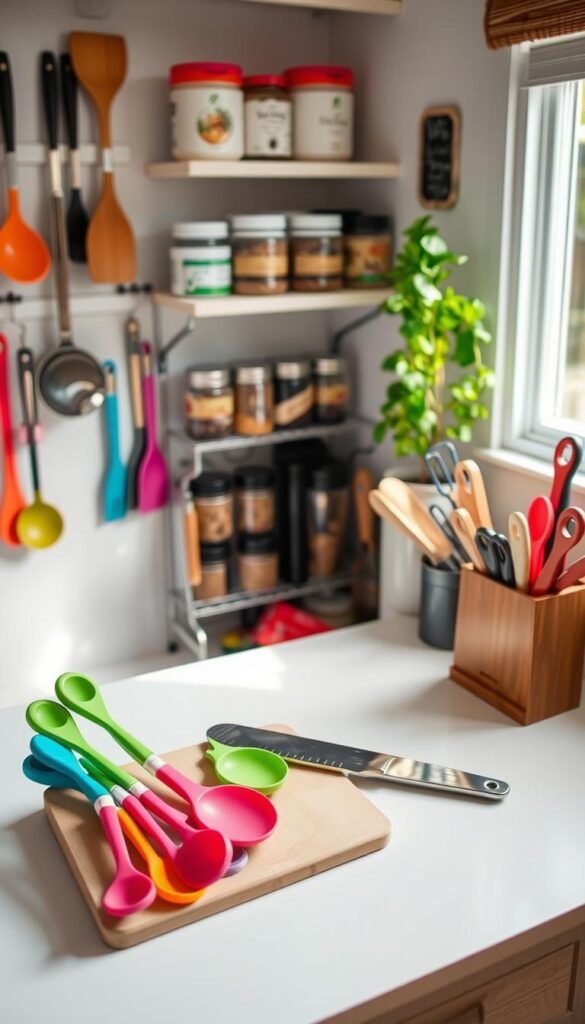
Non-slip cutting board mat
Best for micro-prep zones. Pros: safer chopping on small counters. Cons: rinse and dry fast to avoid mildew.
Collapsible colander & nesting bowls
Great for pasta nights and small sinks. Pros: stores flat, saves cabinet space. Cons: cheap models can warp with heat.
Over-cabinet towel bar/hooks
Clear counters and let towels dry. Pros: no drilling, easy install. Cons: some doors won’t close with thick hooks.
Silicone splatter screen
Pro: cuts grease mess in tight spaces. Con: can trap steam and slow browning—use a lid when you need faster finishing.
| Item | Best for | Pros | Cons |
|---|---|---|---|
| Utensil crock + dividers | One-drawer renters | Quick access, fewer countertop piles | Must limit tool collection |
| Non-slip mat | Micro-prep zones | Safer chopping on small counters | Needs quick dry to avoid mildew |
| Collapsible colander | Pasta & small sinks | Saves cabinet space, nests with bowls | May warp with high heat |
| Over-cabinet hooks | Counter clearance | No-drill, hides towels | May block door closure |
What to skip: Avoid single-use gadgets unless they replace multiple tools. One good multitool beats a lot of odd pieces.
Example workflow: keep spatula and tongs in the crock, store the cutting mat flat, hang the colander on a hook, and wipe the splatter screen right after use.
For more curated budget finds that work in rentals, see best kitchen finds.
Under-$50 upgrades for small-space cooking power
An affordable upgrade should do one hard job well: add heat, improve fit, or simplify cleanup. This tier buys capacity, not toys. You want an extra burner, bakeware that fits your oven, or a drying setup that frees counter space.
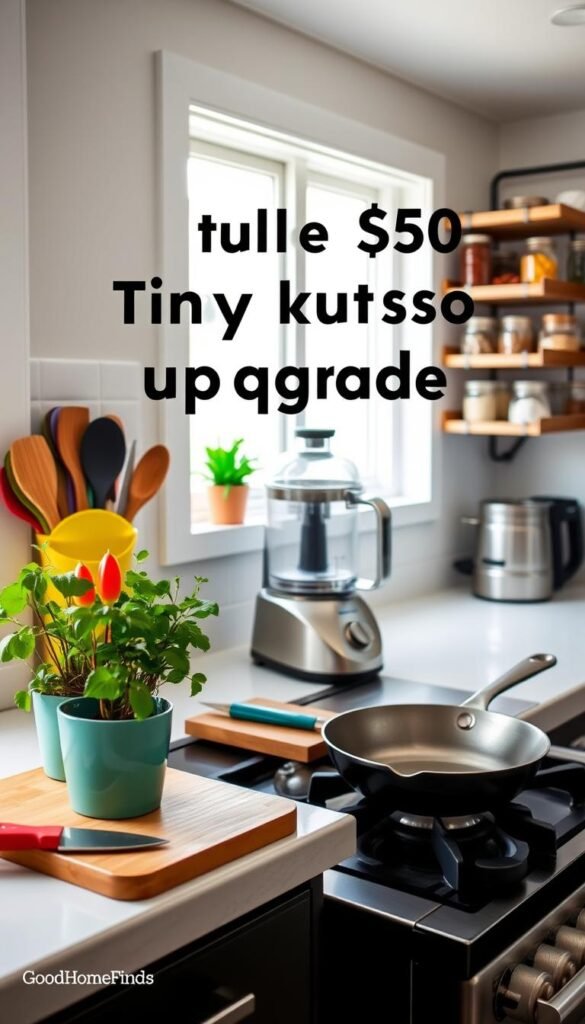
Portable induction or electric hot plate
Best for: one-burner stoves, roommates with opposite schedules, or weak burners that struggle with a full pot.
Setup: place on a stable surface, leave 3–6 inches clearance, and use a dedicated outlet.
Safety: route the cord away from edges, never set a towel under the unit, and keep vents clear. Induction runs cooler around the pan and is quieter; if your pots aren’t magnetic, choose an electric hot plate instead and allow extra ventilation.
Compact sheet pans and stackable bakeware
Best for: ovens that are cramped or run hot/cold.
Pick half-sheet pans and stackable tins that fit your oven depth. They reduce spills and bake more evenly in small ovens. The trade-off: you may need to halve batch sizes.
Sturdy, space-smart skillet choices
Cast iron: durable and great for searing, but heavy.
Carbon steel: lighter, fast-heating, and seasons like a pro tool. It needs upkeep.
Nonstick: easiest for eggs and low-fat work, but coatings wear over time.
Countertop dish-drying rack alternatives
Roll-up rack over sink: best if counter space is precious. It drains directly into the basin and stores flat.
Foldable rack: better for larger sinks or if you often dry pans. It’s bulkier to store but more stable for heavy pots.
| Item | Best for | Quick note |
|---|---|---|
| Portable induction | Fast, safe heat | Needs magnetic pot; runs cooler around pan |
| Electric hot plate | Universal pots | Allow ventilation; can be hotter nearby |
| Half-sheet / stackable bakeware | Small ovens | Fit and storage wins; halve recipes if needed |
Quick tip: if your stove is crowded, use the portable burner for boiling while the main burner sautés to cook without stress.
Choosing cookware that stacks, stores, and lasts
Pick durable pieces that match your burners and you will replace gear far less often. That is the key point for practical, renter-friendly cooking.
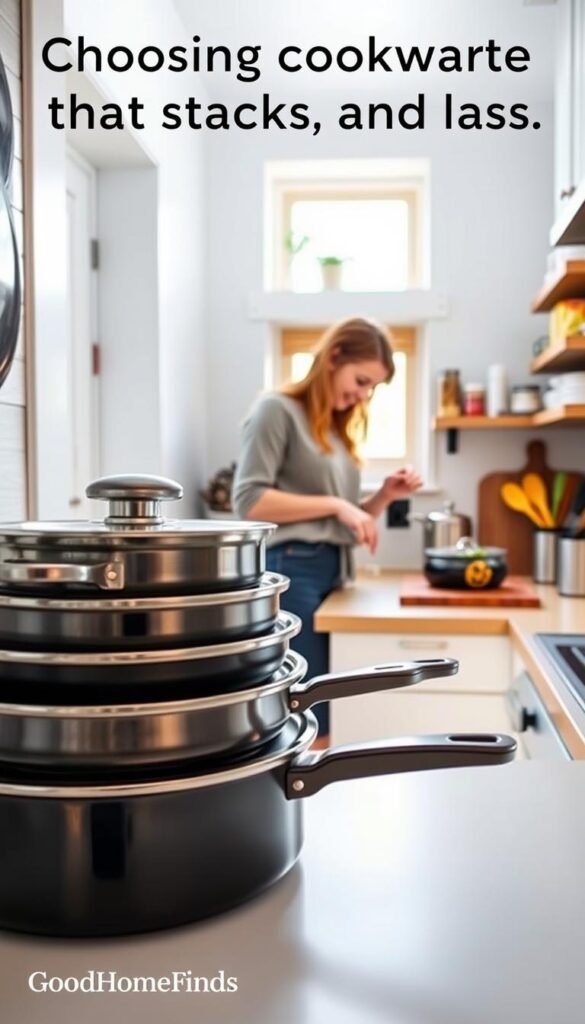
One-pan strategy: aim for a daily-driver pan about 10–12 inches. It should fry eggs without sticking, reheat cooked rice, and sauté small batches of vegetables and protein. A slightly curved lip and a flat base make flipping and serving easier.
Pot sizing for small burners
Match the pot base to the burner. If the base is much larger than the burner you waste heat and add time. If it is too small the pot feels unstable.
Simple rule: pick a pot whose base is within one inch of the burner diameter. For tiny stoves, a 2- to 3-quart pot and a 10-inch skillet cover most meals.
Care routines that keep gear working
Wipe and dry cast iron after each use. Re-season lightly when it looks dull. Use wooden or silicone tools on nonstick pans to avoid scratches.
Avoid plunging hot pans into cold water to stop warping. Store heavy pieces low. Keep handles turned in to prevent accidents.
Pros and cons comparison
| Material | Best for | Storage & weight | Maintenance |
|---|---|---|---|
| Cast iron | High-heat sear, one-pan meals | Heavy; stacks with care | Hand wash, dry, oil to prevent rust |
| Stainless | Boiling, acidic ingredients, durability | Moderate weight; nests well | Dishwasher-safe; avoid high-heat warping |
| Nonstick | Eggs and low-fat sauté work | Lightweight; easy to store | Gentle tools; replace when coating fails |
| Enamel | Simmering, visual serving piece | Medium weight; stackable with padding | Hand wash recommended; avoid chips |
Point: durability saves space. One well-made pan or pot replaces multiple cheap ones and reduces storage needs.
- Keep heavy pans low and handles out of walkways for safety.
- For very small apartments, one 10–12″ skillet + one 2–3 qt pot covers most weeknight meals.
Meal prep in a tiny kitchen without losing your mind
Micro-batching means prepping small amounts more often so your fridge and counters never feel full. Do two- or three-day portions instead of one large amount that crowds everything.
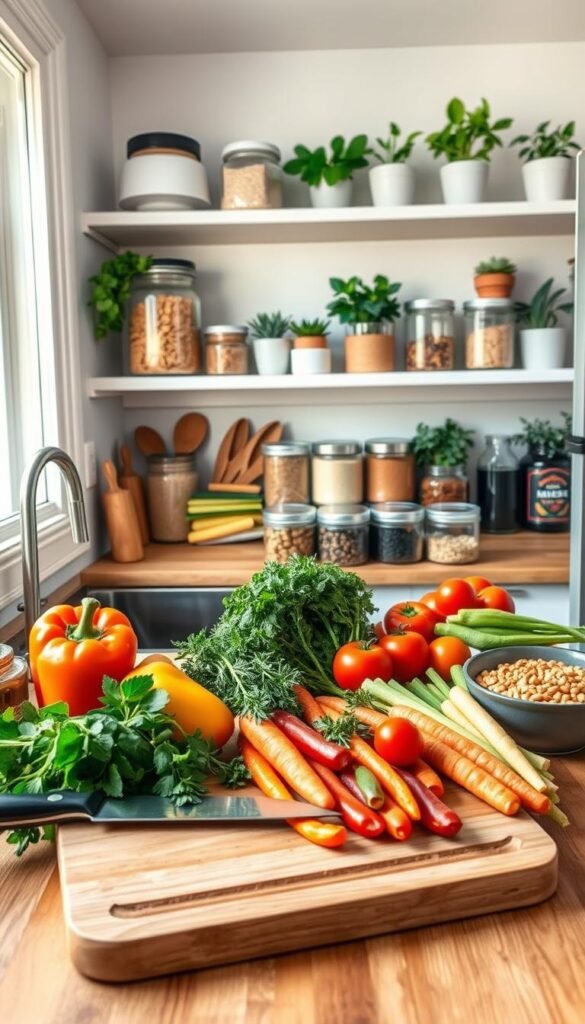
Micro-batch examples that actually stick
Slice one onion for two nights. Wash and spin greens into a small bundle for salads two days in a row. Cook one container of grains to use across recipes.
Tools that earn their space
Before a mini food processor, try a hand chopper, a sharp chef’s knife, a compact box grater, and a microplane. These tools save space and cover most prep tasks.
Clean-as-you-go routine
Wash one pan while something simmers. Keep a small soapy bin for quick rinses. Wipe counters in 30-second passes so dishes never pile.
A realistic target: finish cooking with the sink at least half empty so you don’t dread cleanup.
Roommate tip: label shared containers and set a weekly fridge reset day. For more renter-friendly fixes, see kitchen problem mix.
Make your stove and oven work better in a small space
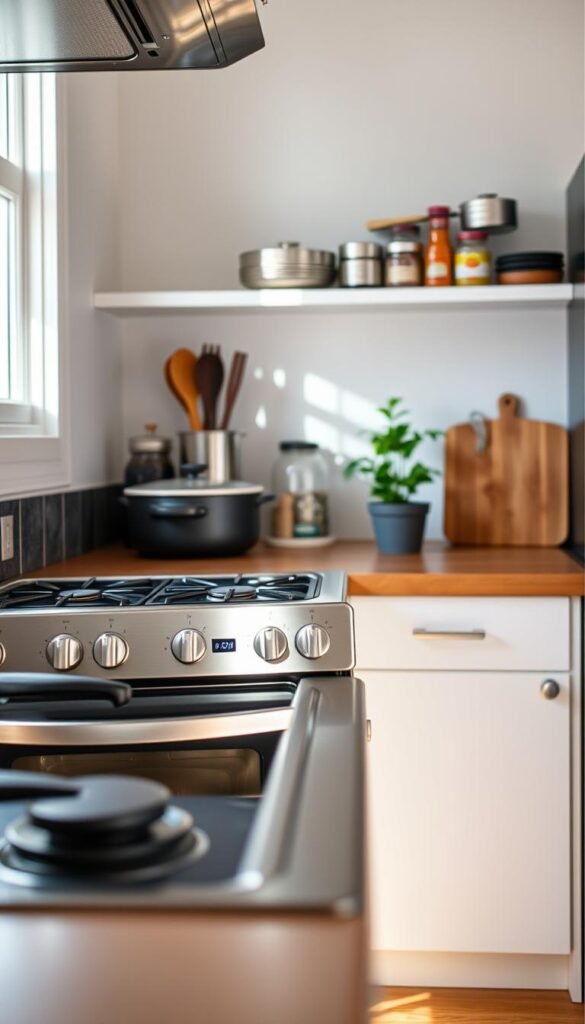
A quick stove workflow and a tiny set of oven tests will turn guesswork into repeatable results. Start by measuring performance, then set simple rules for how you use burners, pans, and the oven.
Stove-top order, pan rotation, and steam control
Assign each burner a task: front-left for sauté, back-left for simmer/boil, right for warming. Keep handles turned in to prevent knocks.
Rotate pans between burners mid-cook to even heat. Vent lids briefly to reduce condensation and avoid soggy finishes. Don’t crowd pans; blocked flames and stacked heat reduce control.
Oven hacks for uneven temps
Use an oven thermometer to map hot spots. Move rack position up or down to control browning. Add a 5–10 minute timing buffer if your oven runs cool or hot by about 50°F.
When to skip the oven and safe countertop options
If the oven is unpredictable for single-serve meals, choose stovetop or a portable burner. Set portable units with 3–6 inches clearance, route cords away from edges, and keep vents clear of cabinets.
Measure first, adjust technique next, then decide on an upgrade.
Space optimization beyond the kitchen: entryway, closets, and overflow storage
Good apartment storage starts before you ever open a cabinet. Incoming clutter—bags, mail, and packages—often eats your only clear counter space. A few renter-friendly moves stop that flow and keep daily food prep areas free.
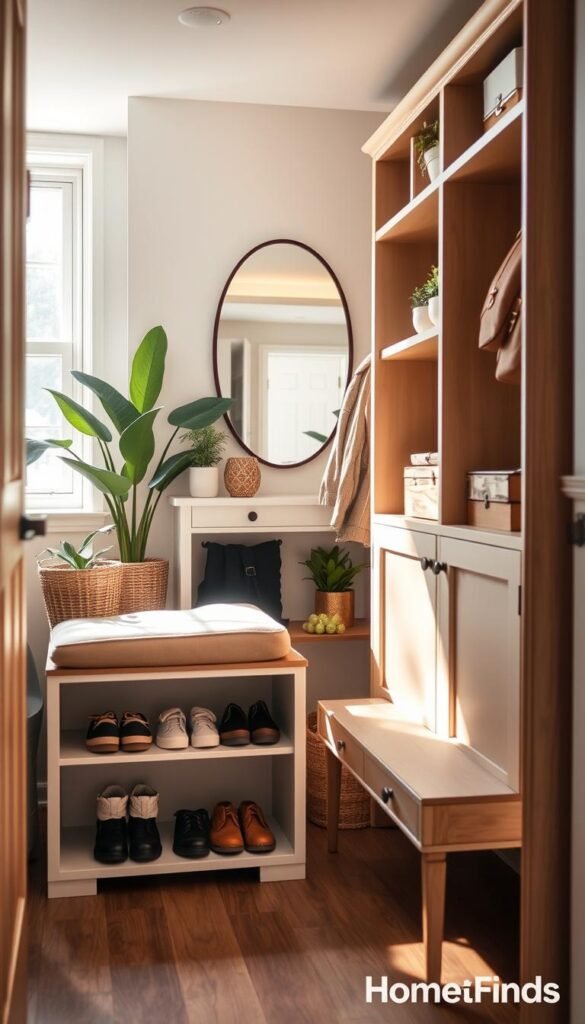
Entryway landing zone to stop kitchen clutter before it starts
Set a small tray or basket near your door. Use it for keys, grocery bags, and mail. When you come home, everything that would get dumped on the counter goes in one place instead.
This simple habit keeps counters clear and makes sure you don’t misplace important items.
Closet backstock: labeled bins for paper goods and rarely used equipment
Create labeled bins for paper goods, bulk food, and spare equipment. Keep only daily-use items in your kitchen and move overflow to closet bins.
Rule for bulk buys: store overflow outside the kitchen unless you will use it within the week. This frees cabinets for pots and everyday plates.
Pros and cons: pots on top of cabinets vs. under-bed bins
| Storage | Pros | Cons |
|---|---|---|
| Top of cabinets | Easy access; visible | Dust/grease, lifting risk for heavy pots |
| Under-bed bins | Cleaner; protects items | Less convenient; extra bending to reach |
| Slim rolling cart | Portable; parks outside the kitchen | Takes hallway or closet space |
Safety note: do not store heavy pots up high if you must reach over a stove or use a stool. Store heavy things low and lift with care.
Roommate angle: label shared zones and set a max shelf per person. Clear roles cut disputes and keep equipment and items tidy.
For more smart apartment storage ideas, see best small space finds.
Bathroom-adjacent and sink-area solutions for cleaning and maintenance
A small basin does not have to ruin your dish routine; you can wash large plates one step at a time.
Wash smart when a plate won’t fit flat. Fill a collapsible tub or basin inside the sink and soak one side. Wash, flip, and rinse with a steady, low-flow stream to avoid splashing counters.
Use a compact scrub brush and a microfiber dish cloth. These pieces save space and scrub well without needing a full sink load.
Drying, sanitizing, and mildew prevention
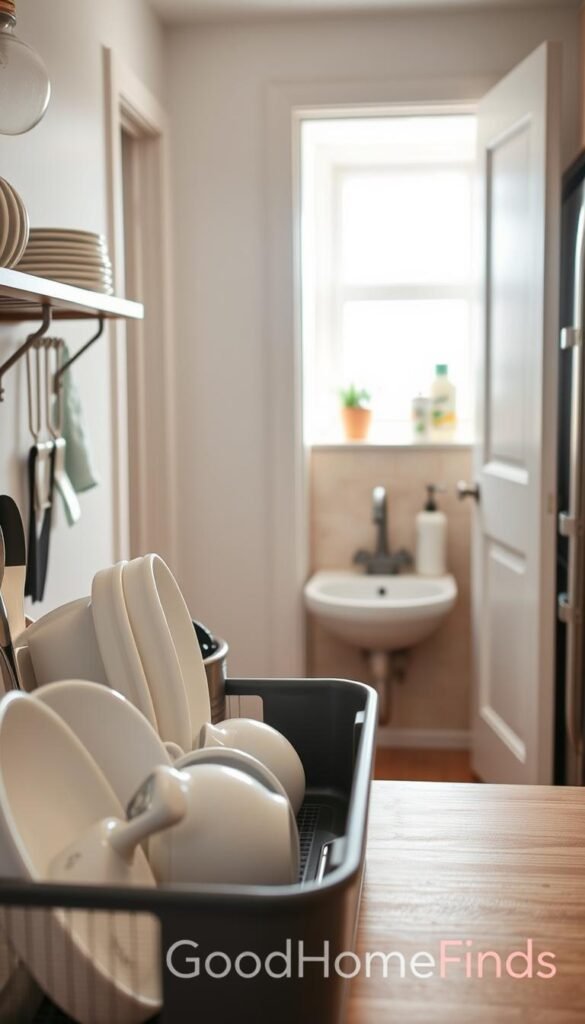
Airflow matters. Use a roll-up rack over the basin or a microfiber drying mat. Wring excess water from towels and leave space for air to circulate.
Standing water breeds mildew. Empty and dry the mat daily. Replace sponges often and store wet tools in an over-sink stand or a suction caddy if it holds.
Daily reset checklist (5–10 minutes)
- Clear counters of any dish amount greater than one plate.
- Quick wipe of stove and immediate crumbs off the counter.
- Empty the drying area into the cabinet or towel it dry.
- Rinse and set the sponge in a draining stand; let brushes air dry.
- Hang a towel on an over-cabinet hook to keep it off surfaces.
You won’t eliminate dishes, but a few compact tools and a short reset routine will keep the counter clear most of the time.
| Problem | No-drill fix | Why it helps |
|---|---|---|
| Plate too wide for basin | Collapsible tub / soak method | Wash one side at a time; prevents splashes |
| Counter flooded by drip | Roll-up rack or microfiber mat | Drains into sink; stores flat |
| Wet brush storage | Over-sink stand or suction caddy | Keeps tools off counters and drains |
Comparison tables: best setups by apartment size and cooking style
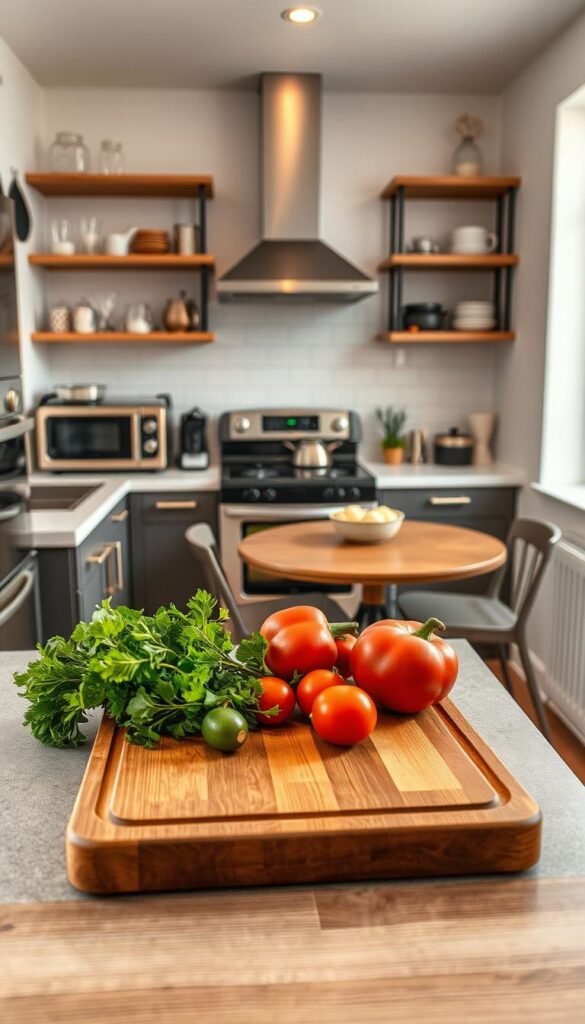
A clear, size-based setup saves you decision time and keeps dishes from piling up. Below are compact, renter-friendly setups that match how you live and what you actually make.
Micro-studio essentials
| Item | Best for | Skip if |
|---|---|---|
| 10–12″ skillet + 2–3 qt pot | One-pan & one-pot recipes | You have full cabinets |
| Collapsible colander & roll-up rack | Small sink drying | Large counter to spare |
| Heat-safe utensil crock | Quick access, less clutter | You own many single-use gadgets |
Key point: this setup saves time and limits dish piles by covering most meals with two pieces.
Small apartment add-ons
| Item | Best for | Skip if |
|---|---|---|
| Half-sheet pan & stackable tins | Baking and batch recipes | Never use the oven |
| Meal-prep containers | Two-day batches | Cook fresh daily |
| Compact drying solution (over-sink) | Frees counter space | Large counter equals no need |
Key point: adds capacity for hosting and meal prep while keeping counters clear.
Roommate setup
| Rule / Pick | Why | What to avoid |
|---|---|---|
| Labeled zones & shelf limits | Keeps shared tools organized | Unlabeled, mixed storage |
| Durable, dishwasher-safe cookware | Survives heavy use | Fragile specialty pieces |
| Shared drying station | Cut conflicts over counter space | One-person hogs the rack |
Key point: rules beat carts—clear roles reduce arguments and wasted time.
Budget priorities: under $25 vs under $50
| Under $25 (friction reducers) | Under $50 (capacity builders) | Quick note |
|---|---|---|
| Utensil crock, non-slip mat, collapsible colander | Portable induction / hot plate, half-sheet pan, roll-up rack | Buy the $25 items first; $50 items add real capacity. |
For curated, renter-friendly picks see kitchen essentials mix.
Inspiration vs. real life: what “tiny kitchen” culture gets right
Short intro: Social feeds made “mini” food a genre because the process is neat, rhythmic, and fast to watch. That appeal can teach useful habits for small apartments if you strip away gimmicks and focus on workflow.
Why these videos are so watchable
The charm comes from tight routines and clear steps. Few ingredients. Small portions. Every motion is precise. That feels calming and shows a repeatable method you can copy.
Reality check: what actually transfers to daily life
What works: mise en place, micro-batching, and a clean-as-you-go rhythm. These habits reduce mess and speed meals in any small space.
What doesn’t: novelty mini tools and tiny appliances often add parts, storage needs, and extra washing. They look cute but rarely solve real constraints like a shallow sink or cramped cabinets.
Point: adopt the disciplined workflow, not the gadgets.
Two realistic apartment examples
- Portion ingredients into small containers before you start. It saves time and prevents counter chaos.
- Set a single prep zone: knife, cutting board, and one bowl. Finish mise en place, then move to the stove. This keeps surfaces clear and limits spills.
Use these ideas as inspiration, not a shopping list. The goal is to reduce friction and make your setup work for daily meals and fast cleanup.
Conclusion
Wrap up with a short plan you can test this week to free up counter space and calm meals. Set goals, zone your work area, add under-$25 friction reducers, then pick one under-$50 upgrade that increases capacity.
Prioritize safety: stable surfaces, tidy cords, and clear airflow around heat sources matter more when space is tight. Keep one clear prep strip and give your most-used tools a home you can reach in seconds.
Next step: clear one counter zone today and stash or donate items that don’t earn their space. Revisit the setup after two weeks and remove anything that fails the test.
For renter-friendly picks and a suggested starter list, see the renter finds mix. Small daily resets beat occasional deep cleans every time.