You want tools that earn their space. This short guide focuses on renter-friendly picks that work in small apartments. I test for usefulness over flash, so each item must save you steps, space, or scrub time.
Expect clear who-it’s-for notes, pros and cons, and at least one tiny-space alternative per pick. You’ll see budget tiers: under $25 essentials, under $50 upgrades, and a few splurges that truly cut hassle long term. Safety and durability are non-negotiable for heat, blades, and countertop stability.
These picks avoid permanent installs so renters can organize without drilling. I also include quick routines and space tips that translate beyond the kitchen to bathrooms, closets, and entryways. For a compact shopping order and deeper buying notes, see a practical roundup at kitchen essentials.
Key Takeaways
- Prioritize usefulness, storage footprint, and easy cleanup.
- Budget guardrails: under $25, under $50, and splurge-but-worth-it picks.
- Renter-friendly means no drilling and removable organizers.
- Safety, material quality, and clear heat ratings matter most.
- Each recommendation includes who it’s best for and a tiny-space alternative.
What makes a kitchen helper worth the space in a small apartment
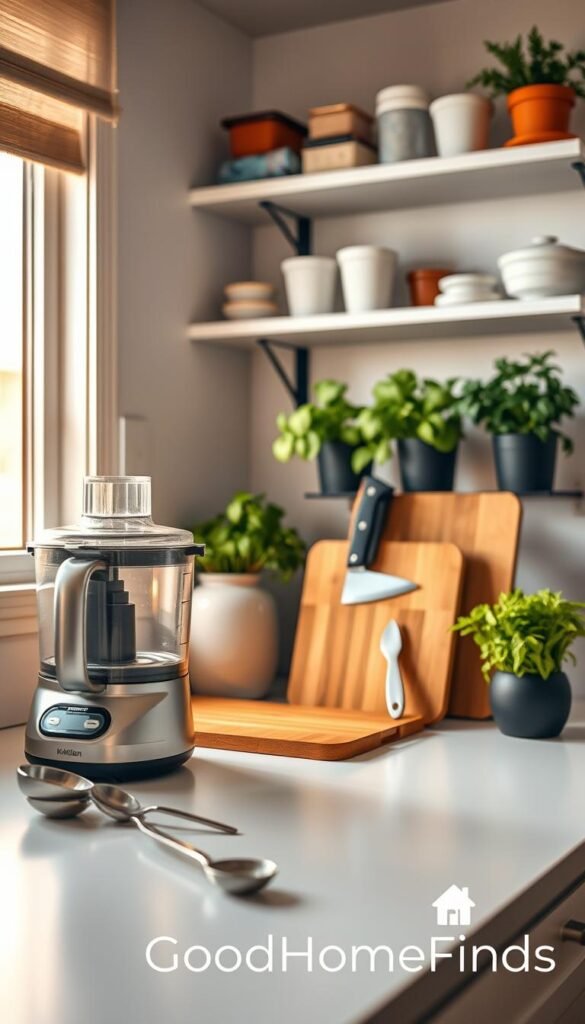
In small apartments, every gadget must pull its weight before it earns shelf space. Decide fast by asking whether the item saves time, cuts mess, and fits where you already store things.
Unitasker vs. multitasker: choosing tools that earn their footprint
Multitaskers shine when they replace several awkward items and live inside a drawer or hang on a rail. They reduce clutter and make daily routines smoother.
Unitaskers can still be worth it when they solve a repeated pain point. If a single tool saves a weekly step and performs reliably, keep it.
Renter-friendly setup and storage
Pick items that require no drilling and avoid adhesives that peel paint. Favor lightweight devices you can stash vertically or nest with other gear.
Real-life rule: if it must live on the counter, you should use it at least three times a week.
Safety, materials, and cleanup reality check
Choose materials that last. Look for stainless steel for strength, silicone for heat-safe flexibility, and smooth plastic where appropriate.
Safety basics matter: stable bases, non-slip grips, covered blades, and auto shutoff features where applicable. Also check if parts are dishwasher-safe and free of tight crevices.
- Worth the space = saves time, reduces mess, and does not create new storage problems.
- Store vertically, nest tools, and avoid odd shapes you can’t fit in a drawer.
- Apply the same rules to bathroom and entryway items — renter-friendly design prevents damage and speeds moves.
Quick comparison table: price, counter space, cleanup, and best use
Favor gear that earns daily use and disappears into storage when you’re done. Below is a fast-scan layout to help you decide by price, footprint, and cleanup effort. Use this to match tools to your routine and storage limits.
| Tool | Typical price range | Counter/cabinet footprint | Cleanup effort / Best use |
|---|---|---|---|
| Digital kitchen scale | $15–$30 | Small; drawer | Low; baking accuracy and portioning |
| Immersion blender | $25–$45 | Medium; narrow tall cabinet | Medium; soups and small batches, tested performance |
| Handheld can opener | $10–$30 | Very small; utensil drawer | Low; fast, safer lid removal |
| Instant-read thermometer | $20–$80 | Tiny; drawer or hook | Very low; essential for safe cooking and reliable results |
Under $25 picks for everyday prep and storage
Practical picks include a scale, sturdy bench scraper, or handheld can opener. These items cost little but cut routine time and mess.
Apartment reality: if it can’t be cleaned fast or stored easily, it will stop getting used. Pick compact models that fit your usual drawers.
Under $50 upgrades that save time all week
Move to devices that handle repeated tasks without adding clutter. An immersion blender or a reliable digital scale is a solid weekly win.
Food & Wine and Serious Eats testing language supports that mid-range tools can outperform cheap options in tested performance. Look for models with easy-to-remove parts.
Splurge guidance: when paying more actually reduces hassle
Worth it means fewer failures, safer results, and less second-guessing. Thermometers and well-built immersion blenders can save you time and money over years.
Use reviews to judge reliability and cleaning feedback rather than features. In shared apartments, roommates often value durability and speed. Solo cooks may prioritize compact size and portion control.
top 10 kitchen helpers that save time, reduce mess, and fit small kitchens
Every pick had to prove real value. I chose items that save you time, cut cleanup, and tuck away without drilling or fuss.
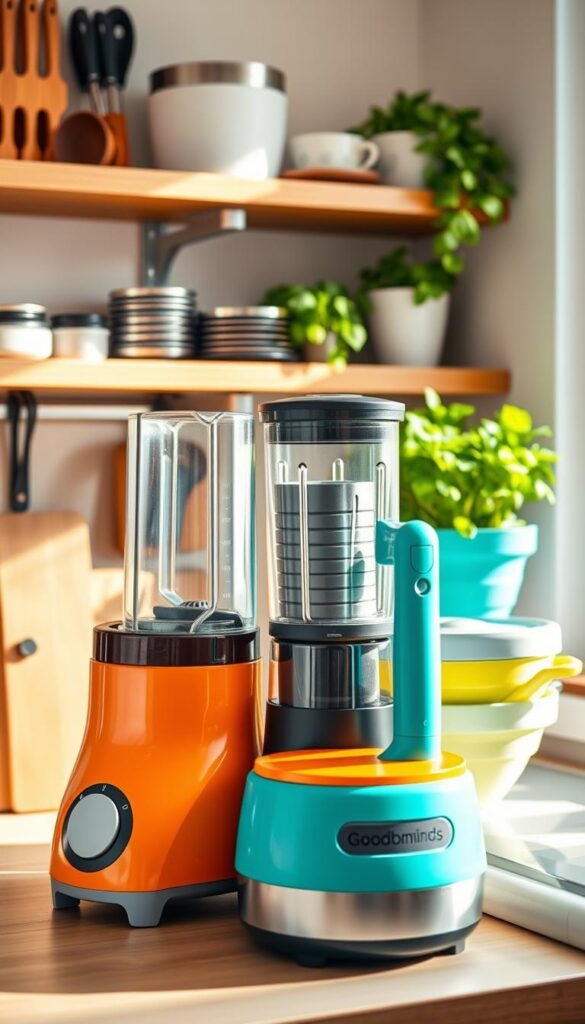
Selection filters: small-space footprint, daily usefulness, easy setup, and cleanup that won’t ruin weeknights. Each tool was checked for tested performance—meaning it works consistently, not just once.
What we look for in quality and reliability
- Sturdy materials and good seals or hinges.
- Stable bases and designs that don’t trap food.
- Parts that come apart for fast washing and dishwasher-safe where possible.
Best fits by household
Roommates need durable, shared-friendly gear. Couples benefit from mid-size models that handle two people. Solo cooks do well with small-batch items and portioning tools.
Practical note: You don’t need more gadgets. You need fewer, better helpers that make cooking at home simpler, safer, and faster.
Instant-read thermometer for safer cooking and better results
A compact thermometer turns uncertainty into a clear number, not a guess. This low-footprint tool fits a drawer but raises the quality of many meals.
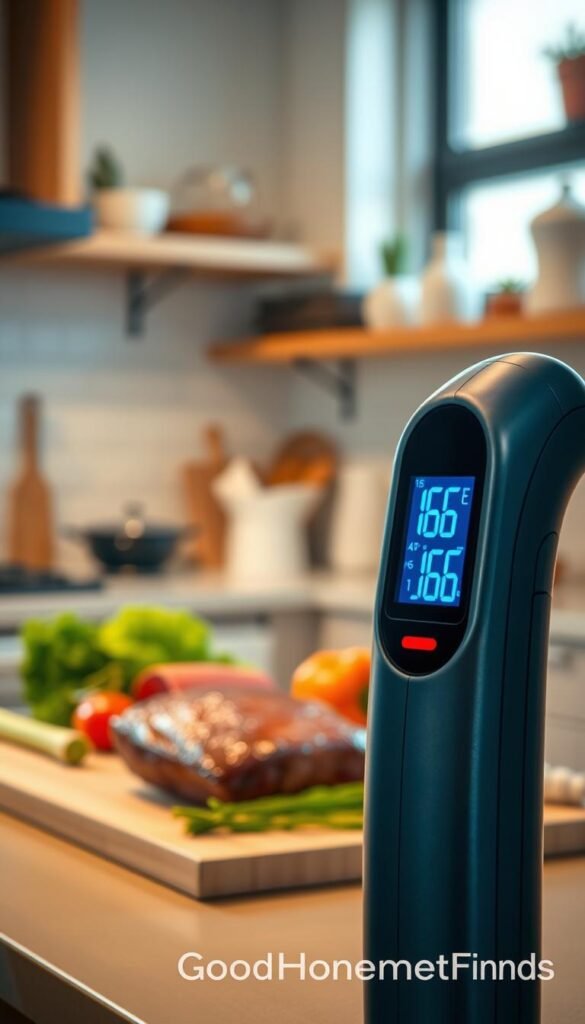
Best for: meat, baked goods, frying oil, and reheating leftovers safely
- Check chicken and steak doneness without cutting the meat.
- Confirm bread is fully baked by testing internal heat.
- Monitor frying oil temperature for crisp results and safer frying.
- Verify reheated meals reach a safe temperature for leftovers.
Pros and cons in small spaces (tiny storage, big impact)
- Pros: fast reads, more consistent doneness, improved food safety, fewer ruined meals.
- Cons: needs batteries; budget models read slower or are less accurate and may hold the probe in longer.
- Real-life win: you stop cutting into food „just to check“ and avoid drying meat.
Budget alternative: basic digital thermometer under $25
A simple digital probe under $25 still does the job of removing uncertainty. Expect slower response times and a less premium build than a Thermapen ONE, which reads in 1–2 seconds within ~2°F according to Food & Wine.
Small-kitchen tip: store the probe in a slim utensil cup or drawer organizer so it doesn’t vanish. Wipe the probe right after use and keep a small alcohol wipe or soapy sponge nearby to make cleaning automatic for daily use.
Immersion blender for soups, sauces, and small-batch smoothies
When counter space is tight, an immersion blender lets you finish soups and sauces without hauling out a bulky base. It blends right in the cooking vessel, so you save time and avoid extra dishes.
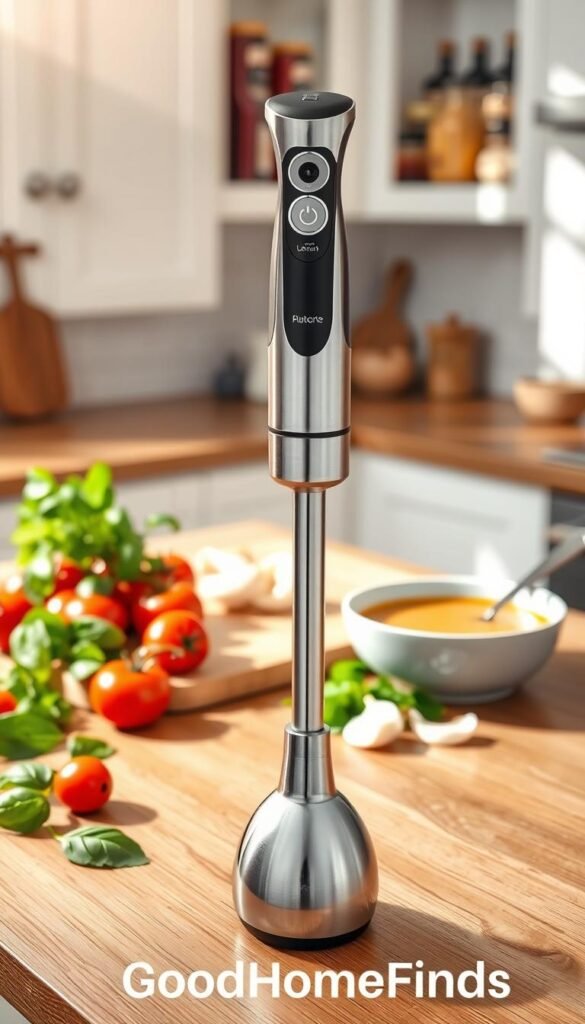
Why it beats a full blender when space is tight
Small-space advantage: you blend directly in a pot or tall cup. No large pitcher, no extra transfer of hot liquids, and no heavy base taking counter or cabinet room.
Pros and cons: splatter control, pot-friendly blending, and cleanup
- Pros: less transferring, faster cleanup, stores in a drawer or slim bin. Stainless steel models reach deeper into pots and last longer (Food & Wine tested).
- Cons: lift while running and you may get splatter; not ideal for very large batches or lots of ice unless you buy a powerful model.
Small-apartment tips and quick routines
Pot safety tip: keep the blade fully submerged before you power on to reduce splashing. For sauces and smoothies, blend in a tall cup or measuring jug to contain any mess.
Cleanup routine: rinse immediately, then run the head in warm soapy water for about 10 seconds, rinse, and dry. If you have cabinet room and make daily smoothies, a compact full blender can still make sense.
Mini food processor for fast prep without a bulky appliance
A small food processor turns tedious chopping into a five-minute step before dinner. This compact tool trims the time you spend on onions and herbs. It keeps counters cleaner and reduces the number of items to wash.
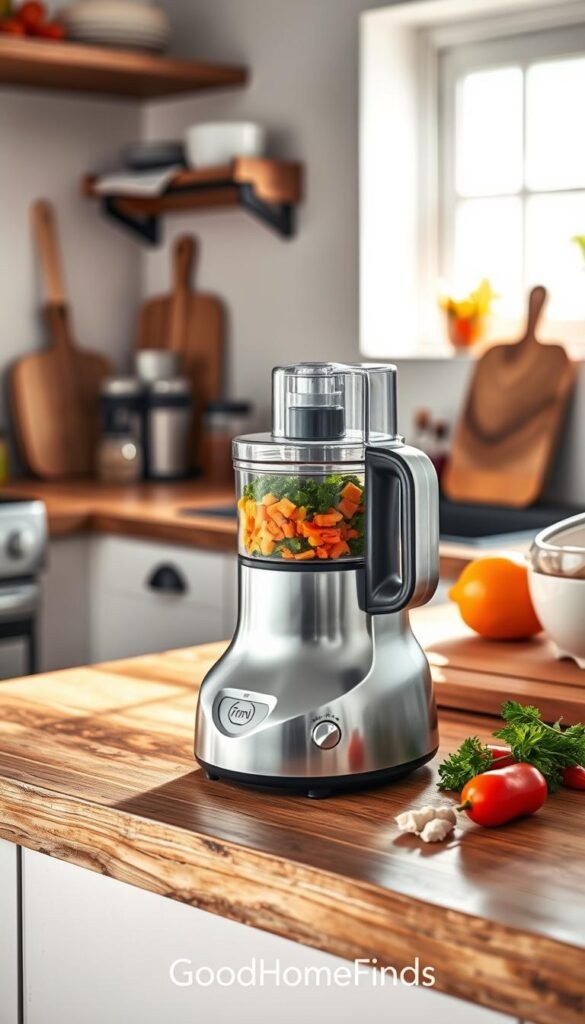
Best for quick weeknight tasks
- Onions and garlic without tears.
- Quick pesto, salsa, and small sauce batches.
- Any tiny chopping job that would otherwise dirty a board and knife.
Pros and cons
- Pros: faster prep, more consistent chop, and less mess in a shared apartment.
- Cons: limited capacity may require multiple batches. Expect a few extra parts to wash versus a single knife.
Size tradeoffs and alternatives
Serious Eats notes a ~4-cup capacity is enough for most sauces and one onion. That size hits a sweet spot for small households.
For micro-kitchens, choose a manual hand chopper that stores flat and needs no outlet. If you batch cook weekly and have cabinet room, a full-size processor makes more sense.
Care and storage tips
Rinse right away so onion and garlic aromas don’t cling. Pick bowls and lids with smooth edges to avoid trapped bits.
Store blades nested inside the bowl in a dedicated bin so parts stay together and you can use the processor without hunting for pieces.
Position this as the weeknight shortcut when chopping feels like the longest part of a meal. For compact shopping options, see compact food processor picks at compact food processor picks.
Bench scraper for faster prep, cleaner counters, and easier transfers
A simple bench scraper speeds routine prep by turning messy transfers into one clean motion.
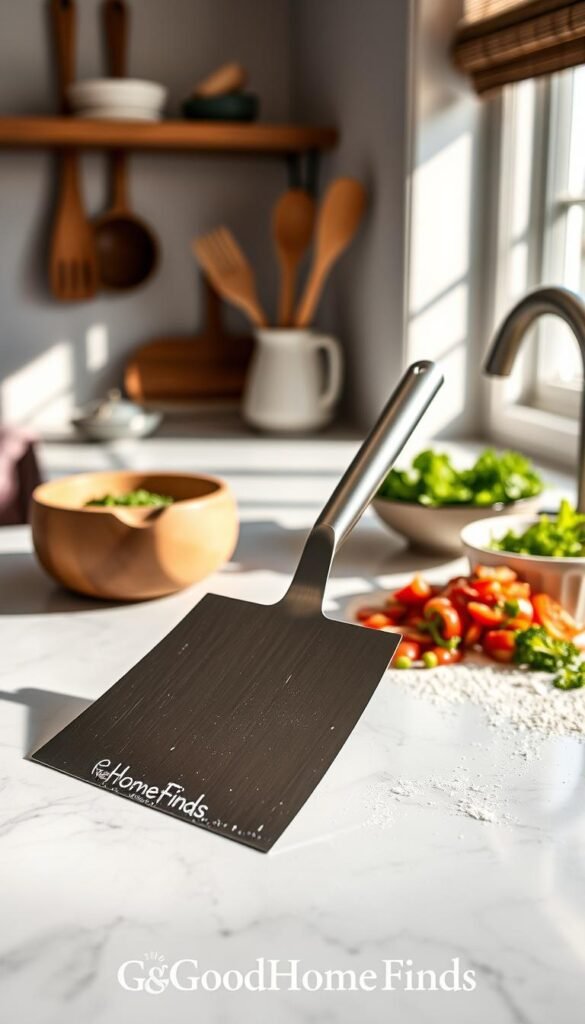
„Versatile for shaping and dividing dough, scraping messes, and transferring chopped ingredients.“
Why it’s underrated and where it helps most
The bench scraper makes your knife work faster. After cutting, you can scoop and move piles in one motion. That saves time and limits spills.
Best for: moving chopped vegetables to a pan, portioning dough, scraping flour and sticky bits off counters, and quick cleanup.
Safety, durability, and cleaning
Use it to keep fingers away from the knife edge when transferring food. That reduces nicks and accidents.
Choose a solid stainless steel blade and a non-slip handle for durability. Avoid ultra-thin models that bend.
Cleaning reality: many models are dishwasher-safe, but a fast hand wash also takes seconds because the surface is flat and smooth.
Pros, cons, and small-space storage
- Pros: tiny footprint, low cost, faster prep flow, and fewer paper towels.
- Cons: one more item to store; cheap thin blades can flex.
- Storage tip: slide it upright next to cutting boards or hang on a renter-friendly hook inside a cabinet door.
Digital kitchen scale for consistent baking and meal prep
A small digital scale removes guesswork and makes both baking and daily meal prep consistent. You get repeatable results and fewer dirty measuring cups.
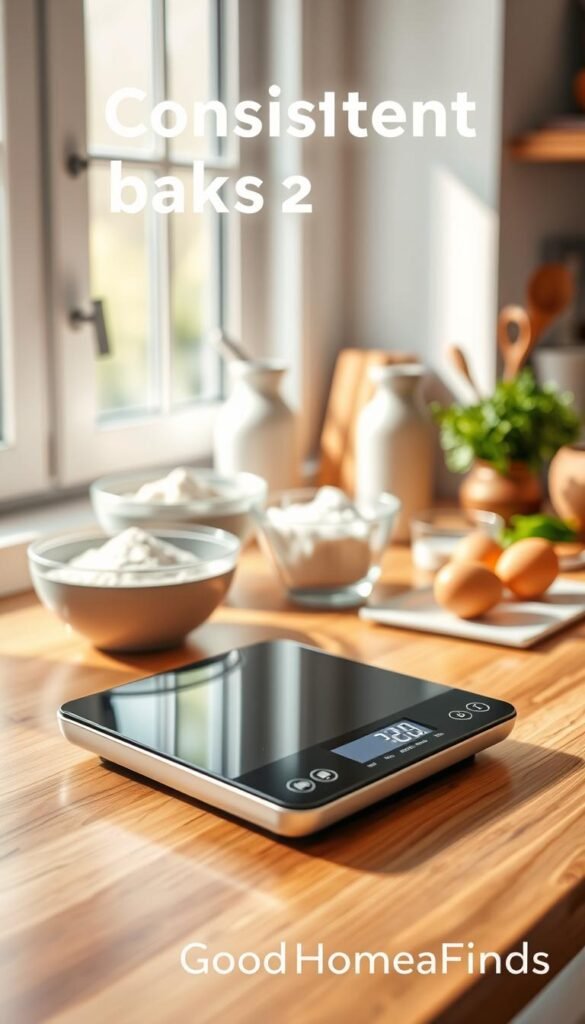
Why „cups“ vary and how weight helps
Measuring cups compress or fluff ingredients. A cup of flour from one jar can differ from another. That variance skews baking outcomes and leaves recipes inconsistent.
Weighing ingredients fixes that. Recipes convert cleanly to grams or ounces, so you get the same result every time.
Pros and cons: speed, precision, and upkeep
- Pros: precise measurements, faster prep, repeatability, and simpler cleanup since you can weigh into one bowl.
- Cons: needs batteries and you may misplace it if you don’t store it in a dedicated spot.
Practical design and budget notes
Pick a flat-top scale with a smooth surface and minimal seams. Lightweight plastic models can be fine if the build is sturdy and easy to wipe.
Quality options like Escali are accurate, lightweight, and often under $30, so the price makes this a high-value upgrade for baking and food prep.
Routine tip: keep a spare battery in a drawer so the scale never dies when you need it.
Easy-to-clean garlic press for weeknight flavor with less mess
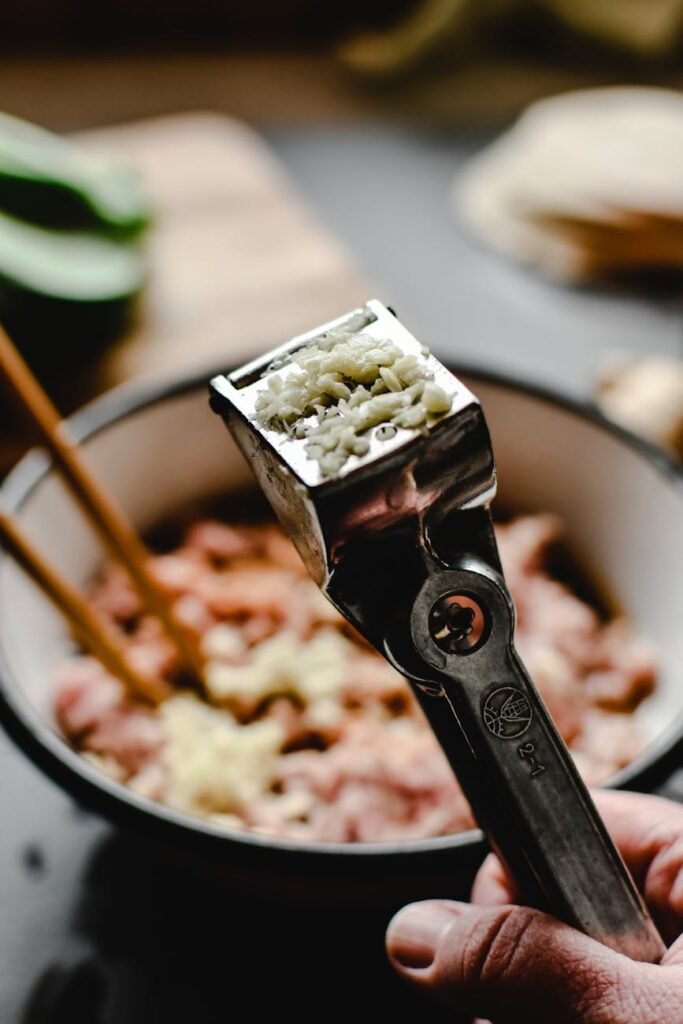
You can get real garlic flavor fast without sticky boards or smelly hands by using a good press. It turns cloves into a fine paste in seconds so you spend less time prepping and more time cooking.
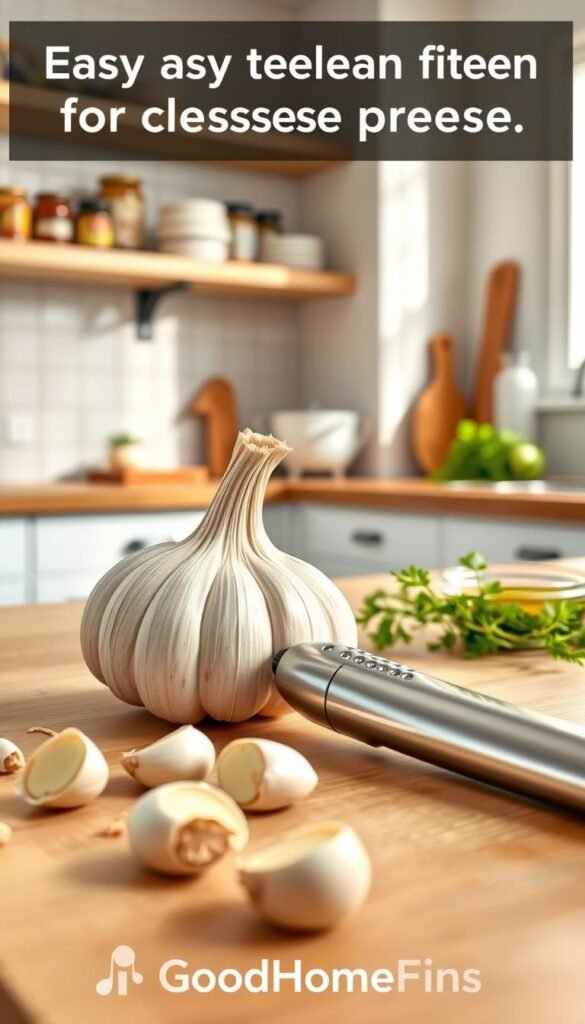
Best for quick weeknight uses
Best for: sauces, marinades, stir-fries, and roasted vegetables when you don’t want to chop. A well-made press even handles unpeeled cloves, which keeps your prep faster.
Pros and cons
- Pros: speed, consistent mince, less mess, and fewer garlic skins on the counter.
- Cons: it is another item to wash. Cheap models clog, flex, or have weak handles and frustrate use.
What to look for and cleaning routine
Choose a press with a sturdy build, a comfortable handle grip, and holes that resist clogging. Grippy handles make squeezing easier and reduce strain.
Cleaning: rinse right away and use a small brush for trapped bits. Dishwasher-safe parts save time if your model allows it.
Alternatives for tiny spaces
A microplane grater gives similar paste with less bulk, but you still touch the garlic. Pre-minced jars remove prep entirely but cost more and often taste less fresh.
| Feature | Garlic press | Microplane | Pre-minced |
|---|---|---|---|
| Speed | High | Medium | Highest |
| Mess | Low | Medium | Low |
| Cleaning | Easy if rinsed; some dishwasher-safe | Quick rinse | No cleaning |
| Price & quality | Low–mid; choose sturdy metal for long life | Low; long-lasting blade | Higher ongoing price; variable quality |
Compact electric can opener for hands-off opening in tight spaces
A handheld electric can opener gives you hands-off can opening and a much smaller footprint.
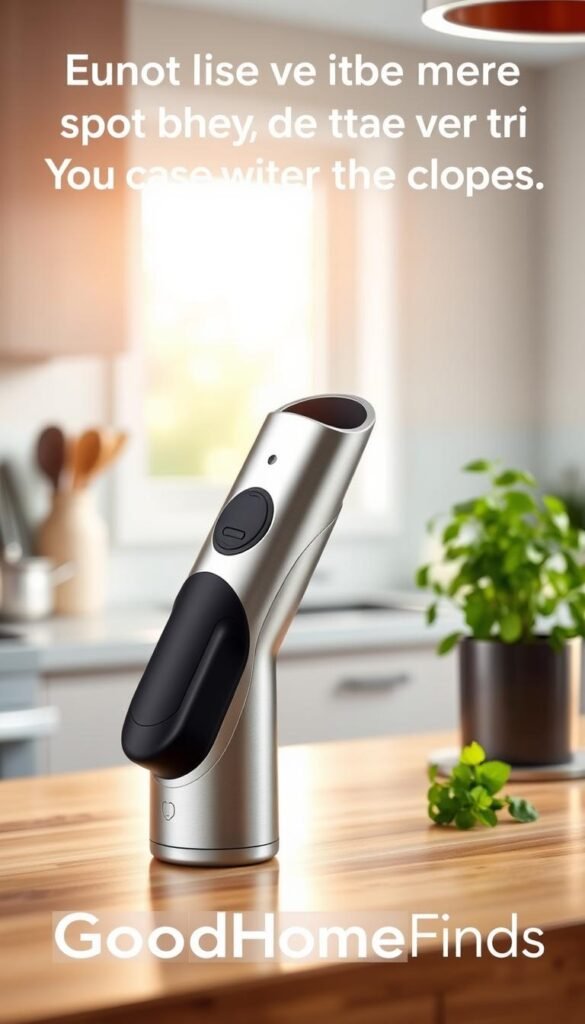
Why this earns shelf space: petite electric openers perform as well or better than bulky stand-up models in tests like Serious Eats. They open standard pantry cans reliably while taking far less room.
Why petite handheld models beat stand-up units for storage
The small design fits in a drawer or a narrow bin. That saves counter real estate and keeps your prep area clear.
Safety and comfort
Cleaner lids: many electric models cut lids so edges are less sharp. Some include a magnet that lifts the lid so you never touch a messy edge.
Less strain: the hands-off operation helps when you have wrist pain or limited grip strength. Look for models with an ergonomic handle for easier one-handed use.
| Feature | Petite electric | Stand-up electric | Manual safety |
|---|---|---|---|
| Footprint | Drawer-sized | Counter-sized | Tiny; drawer |
| Safety (lid edges) | Good; magnetic lift on some | Good | Very good; scores depend on model |
| Ease of use | Very easy; push-button | Easy; stable base | Requires manual turning |
| Maintenance | Wipe cutting area after use | Occasional wipe | Rinse and dry |
Pros: convenience, accessibility, and consistent performance compared with manual openers.
Cons: needs batteries or charging; not necessary if you rarely open cans.
Routine tip: wipe the cutting area after each use to prevent sticky buildup and keep the opener ready for daily use.
Air fryer for crispy food with easier cleanup than deep frying
An air fryer gives you crisp results without the dread of a greasy sink or giant pot to clean. It delivers the texture of fried food while using far less oil, which matters when your sink and counter space are limited.
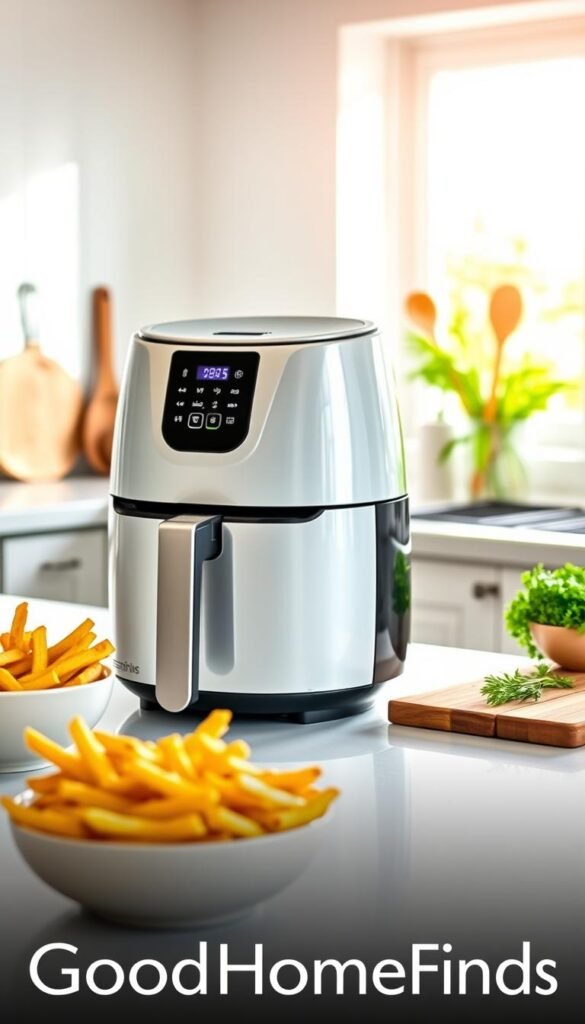
Best for
Small-batch cooking, quick reheats that stay crisp, and weeknight meals when you want a simple set-it-and-check-it routine.
Pros and cons
- Pros: faster cooking for many frozen or prepped foods, less oil, and contained mess compared to deep frying.
- Cons: it takes counter space, can be noisy, and batch size limits mean you may cook in rounds for roommates.
Apartment-size guidance
Choose a compact basket for solo cooks or couples. A 6-quart model suits 2–4 people and is a good balance of capacity and size, according to Food & Wine.
If you routinely feed more than three people, step up to a larger unit only if you have the counter or storage space.
Maintenance and cleanup
Let the basket cool, then wash gently with a non-abrasive sponge. Avoid metal tools to protect the nonstick coating.
Dishwasher safe parts save time, but confirm which components are rated for the dishwasher—hand washing often extends basket life.
| Option | Best for | Footprint | Cleanup |
|---|---|---|---|
| 2-person basket | Solo cooks, couples | Small; fits in narrow counter or cabinet | Quick hand wash; some parts dishwasher-safe |
| 6‑quart model | 2–4 people; weekly meals | Moderate; balanced size | Often dishwasher-safe; hand wash advised for longevity |
| Toaster oven w/ air-fry | Micro-kitchens that need baking space | Larger but multifunctional | Trays wipe clean; some parts dishwasher-safe |
Value note: an air fryer is worth it when it saves you cooking time and cleanup time over repeated use. If you want multi-use design, consider a toaster oven with an air-fry setting or a compact model that tucks into a cabinet.
More compact appliance ideas can help you decide which size fits your routine.
Rice cooker or multicooker for set-it-and-forget-it staples
Set-and-forget cookers let you start dinner, walk away, and finish a task while grains steam quietly. They are about reliable basics that free up your evening and reduce hands-on prep.
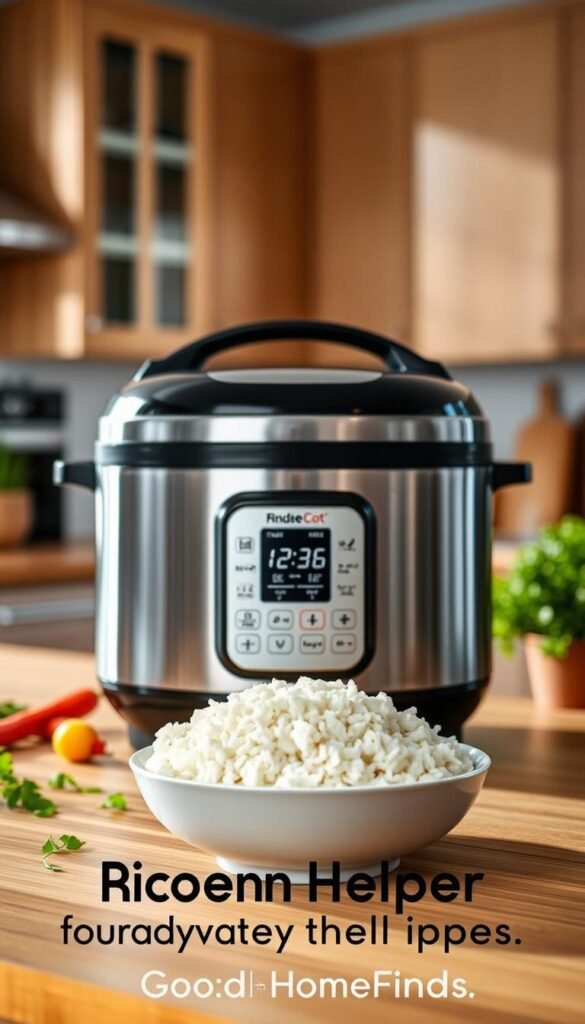
Best for: rice, quinoa, oats, and simple one-pot meals when you want steady results and fewer steps. If you eat grains often, a cooker saves you real time each week.
Rice cooker vs. multicooker: which fits your routine
Rice cookers are simpler and usually smaller. A 3-cup model can fit snugly in a cabinet and cooks rice faster than some stovetop methods, per Serious Eats. They excel at one job and keep food warm for hours.
Multicookers do more. They can sear, pressure-cook, and simmer. Food & Wine notes they are worth it when they sear well and offer safer steam release. But they take more cabinet room and a short learning curve.
Pros and cons: speed, keep-warm, and storage
- Pros: consistent results, fewer boil-overs, and keep-warm modes that hold rice while you finish the rest of the meal.
- Cons: another appliance to store; inner pots need care; bulky models can dominate a cabinet or pot shelf.
- Small-space tip: choose the smallest capacity that matches how many people you feed to avoid appliance sprawl.
- Safety: prefer units with cooler handles and controlled steam release if you plan to pressure cook.
- Long-term value: a reliable cooker of good quality can last for years and repay its space by saving you time every week.
Choose by routine, not features: pick a simple rice cooker if you want minimal fuss. Choose a multicooker if you need one compact pot that handles several methods and you have the cabinet size to store it.
Fridge undershelf drawer to add space without remodeling
An easy clip-on drawer turns wasted shelf height into usable spots for small items. In small fridges, shelves leave vertical room unused and tiny items disappear behind jars. A slim undershelf drawer fixes that without tools.
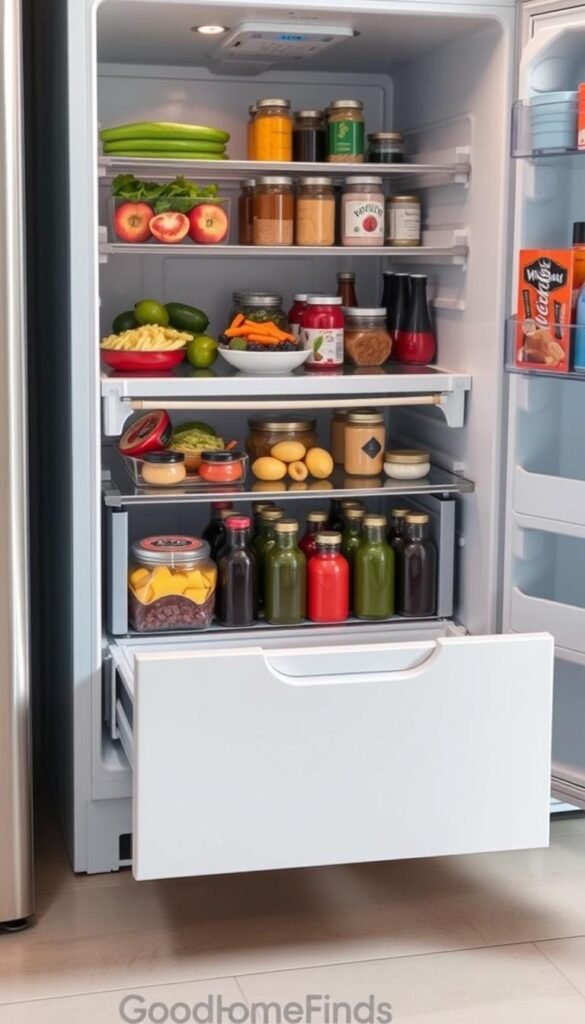
The drawer clips under an existing shelf in seconds. No drilling, no damage. It creates a new layer for slim containers and loose items so you don’t lose food at the back.
Best for and quick setup
- Best for: cheese, deli packs, snack packs, meal prep containers, and small ingredients like tubes and mini jars.
- Setup: slide the clip arms under a shelf, snap in place, then slide the drawer out to load.
Pros, cons, and daily routine tips
- Pros: instant organization, better visibility, no remodeling, and less waste.
- Cons: it lowers the height under that shelf, so taller bottles may need moving.
- Daily tip: make it your “use first” zone to speed lunches and cut food waste.
- Cleaning: pick a model that slides out fully so you can wipe spills quickly.
Design note: the same clip-on approach works in bathroom cabinets and closets. Think renter-friendly solutions that add storage without permanent changes.
Under-sink pull-out organizers that work around pipes
Under-sink areas often hide useful items behind a tangle of pipes and boxes. That makes the cabinet a dark pile you avoid. A pull-out organizer fixes that by bringing what you need forward.
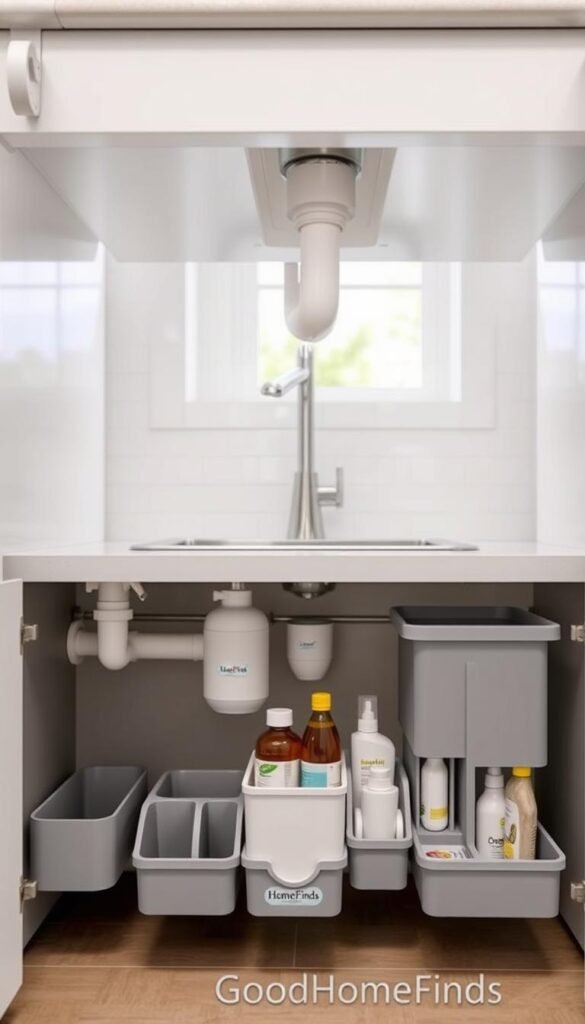
Best for: cleaning supplies, sponges, and backstock pantry items
Practical use: these units create layers so sprays, dish pods, and trash bags are easy to reach. You stop unloading the whole cabinet just to find one bottle.
Renter-friendly setup
Most models assemble without tools. Slide them in, pull out, and remove when you move. No drilling, no damage, and no stress.
Alternatives for awkward layouts
- Stackable bins fit pedestal sinks and save floor depth.
- Ultra-narrow rolling bins work in tight cabinets.
- Tension rods plus hanging caddies free floor space for tall bottles.
Design note: pick a pull-out with a wide base and compact top so it clears pipes and pulls smoothly, a layout EatingWell highlights for reliable performance and long-term quality.
Oil sprayer for controlled cooking and less waste
An oil sprayer turns a heavy pour into a fine mist so you use less and get crispier results. It’s a small change that reduces waste and gives you more control when you roast, air fry, or dress ingredients.
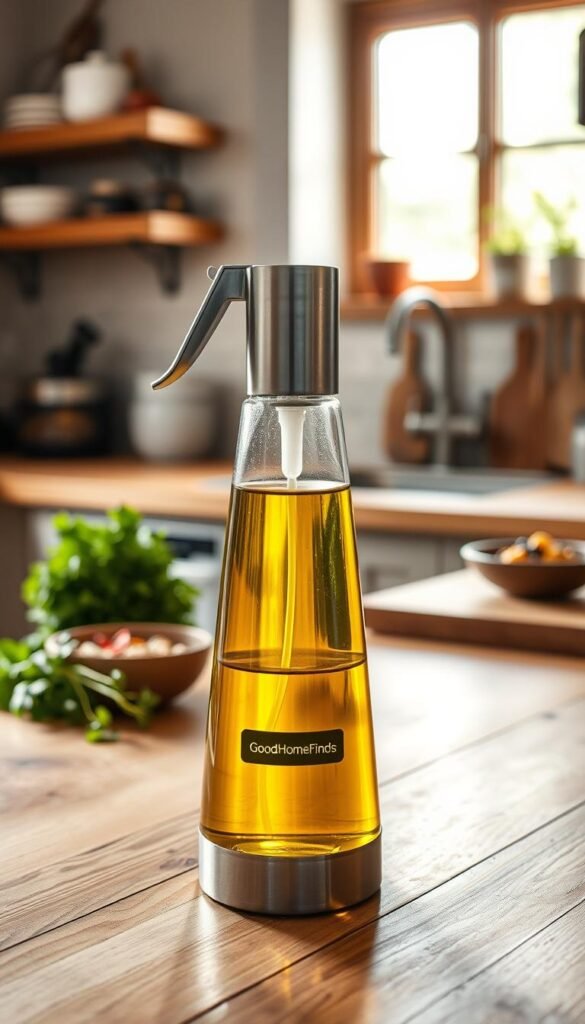
Best for: roasting, air frying, and evenly coating ingredients
Use it to mist roasting vegetables, coat an air-fryer basket, or lightly oil a pan. The even coverage helps food brown without soggy spots.
Pros and cons
- Pros: refillable, lets you customize oils, and gives more consistent coverage than pouring.
- Cons: nozzles can clog with thick oils or infusions; plan periodic cleaning.
Materials, maintenance, and small-space tips
Material note: choose a tinted glass body to cut lingering odors and feel sturdy. Avoid flimsy plastic parts that crack over time.
Maintenance routine: rinse the nozzle, spray warm water through the head occasionally, and wipe the outside so it stays non-slip. If the nozzle clogs, soak it briefly in warm soapy water and pump until clear.
Store the sprayer on a small tray near your cooking zone to catch drips. That keeps counters tidy and keeps the sprayer within reach for daily use.
Alternative
If you dislike nozzle upkeep, a small squeeze bottle gives similar control with fewer moving parts. It’s a good renter-friendly fallback that still reduces oil waste.
Freezer portion tray for soups, sauces, and batch-cooking in small kitchens
Portion trays make batch cooking usable in small freezers by creating flat, stackable blocks you can grab fast. They turn large pots into measured servings that thaw quickly and cut waste.
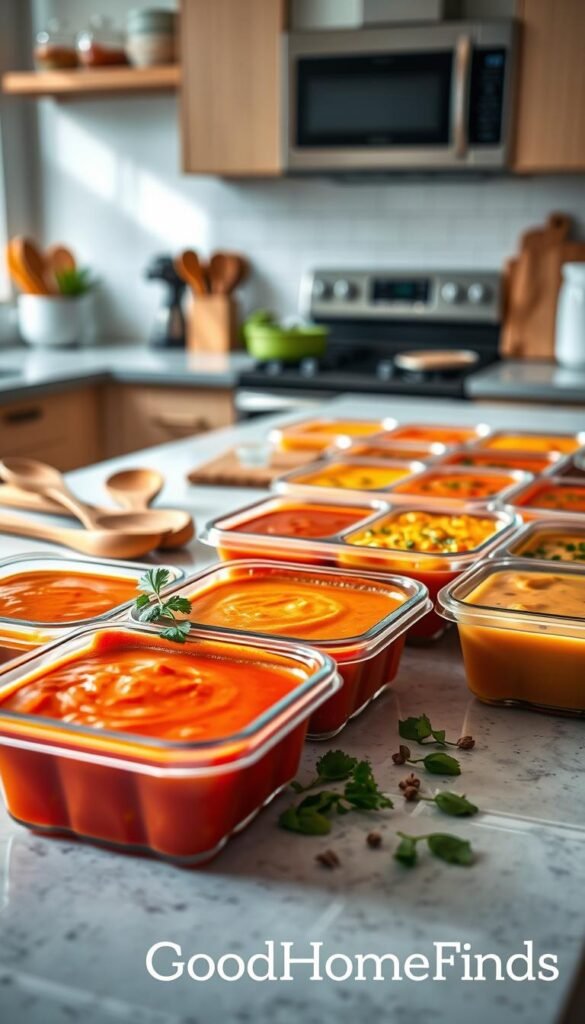
Best for: freezing soups, sauces, chili, broth, and cooked grains so you have quick weeknight meals ready.
Space optimization: stackable portions vs. bulky containers
Souper Cubes–style silicone trays with lids let you stack uniform portions. That uses vertical space and keeps mismatched containers from wasting freezer room.
Daily routine tip
Label each portion with date and contents. That makes dinners truly grab-and-go and saves you time deciding what to thaw.
| Benefit | How it helps | Quick action |
|---|---|---|
| Portion control | Reduces leftovers and food waste | Freeze single portions or double portions |
| Faster thawing | Smaller blocks defrost quicker than large containers | Defrost in microwave or fridge overnight |
| Stackable storage | Flatter trays fit tight freezers and free up shelf space | Use lids or transfer to labeled bags after freeze |
- Pros: consistent portions, less waste, quick prep and reheating.
- Cons: you must freeze trays flat first; silicone can hold odors if not cleaned well.
- Cleanup tip: wash soon after unmolding and check lids and seams for residue.
- Alternative: lay zip bags flat, freeze, then store upright like files if your freezer is tiny.
Reusable storage helpers that cut clutter and keep food fresh
Standardizing containers and lids saves shelf space and removes the daily hunt for matches.
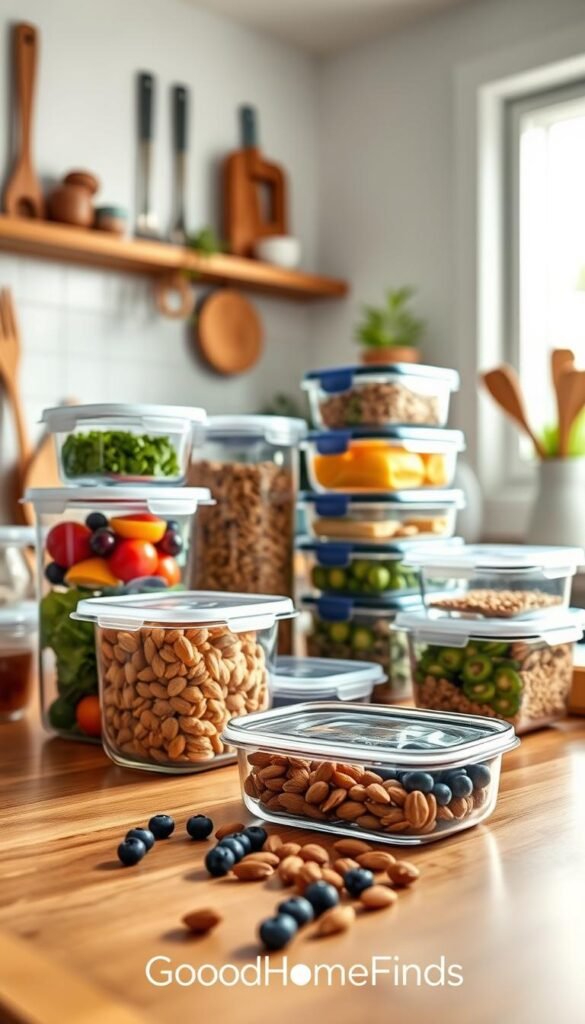
Glass containers for stain resistance and dishwasher-ready cleanup
Why glass: it resists stains and odors better than many plastic options. Glass mixing bowls with lids go from fridge to table, which cuts extra dishes and servingware.
Practical note: pick models with flat lids that stack. Look for brands like Pyrex that are dishwasher-safe and hold up to tomato sauces and curries without odor transfer.
Beeswax wraps as a flexible plastic alternative
Beeswax wraps work well for covering bowls, wrapping sandwiches, and sealing cut produce.
They are reusable and cut single-use plastic. Clean them in cool water with mild soap and air dry. Avoid heat or hot food to keep the wrap intact.
Best-for guidance and safety
Skip wraps for raw meat or any high-heat storage. Use sealed containers for those uses to avoid contamination and leaks.
Budget options and a small mixing strategy
Start with one wrap pack (~$24) or a small glass container set to test what you use daily.
Under $50, add a second size or a set of lidded bowls to cover most leftovers. Choose square or rectangular shapes for tighter fridge and cabinet packing.
| Item | Why it helps | Cleaning | Price example |
|---|---|---|---|
| Glass containers | Stackable, stain-resistant, fridge-to-table | Dishwasher-safe; lids should be hand-checked for seals | Mid-$20s for a small set |
| Glass bowls with lids | Mix, serve, and store in one piece | Dishwasher-safe; easy to dry | Single bowl under $25 |
| Beeswax wraps | Reusable cover, cuts single-use plastic | Cool water and mild soap; air dry | Pack around $24 |
Conclusion
Wrap up by choosing gear that solves one real cooking problem this month.
Start small. Measure one drawer or cabinet, then pick one under-$25 item and one under-$50 upgrade that match your actual routine. Focus on tools that save time, cut mess, and store neatly.
Renter-friendly rule: avoid anything that needs drilling or permanent changes. Choose stable designs, easy-to-clean surfaces, and trusted materials like stainless steel so the pieces last years.
Keep a short maintenance checklist: rinse right away, avoid abrasive scrubbers on nonstick parts, dry metal to prevent rust, and store components together. Use a “1 in, 1 out” habit to stop clutter.
Want more picks and practical notes? See the best everyday kitchen finds roundup for tested, renter-friendly recommendations.