This review guides you to smart, renter-friendly products that actually save time and energy. You’ll get clear pros and cons, real use cases, and setup difficulty so you can buy with confidence.
I define „kitchen tech“ in 2026 as tools that cut waste, lower power draw, and do one job well. Flashy features don’t make the cut. If it is bulky, hard to clean, or needs a special outlet, it fails our small US kitchen filter.
We’ll cover temperature tools, countertop cooking, coffee and ice, plus smart basics that actually help without a login headache. Expect renter-friendly picks and budget vs premium notes.
How to use this roundup: pick 1–3 daily drivers first. Then add small gadgets that earn their space. Each entry lists noise, footprint, and maintenance so you don’t buy regret.
Key Takeaways
- Practical picks focus on energy saving, safety, and easy cleaning.
- Small-footprint items are prioritized for US renters and apartments.
- Every product shows real use cases and honest pros/cons.
- Smart features are called out only when they truly help.
- Compare power draw, noise, and budget vs premium before buying.
What “Kitchen Tech” Actually Helps With in a Small US Kitchen
Small, renter-friendly appliances solve daily friction in tiny cooking spaces by focusing on function over flash. You want gear that saves minutes, fits your outlets, and leaves room for the things you actually use.
Time savers you’ll notice daily (without extra clutter)
Good tools cut repeat steps. Think instant temp checks, fast countertop cooking, and a compact prep device that chops in seconds. These items reduce hands-on time and don’t demand permanent counter real estate.
Safety wins that matter in apartments and rentals
Alerts, controlled steam release, and reliable temp limits matter more when a single smoke alarm can flush an evening. Safer devices reduce false alarms and lower the chance you’ll need a landlord call.
„Simple, predictable safety features keep apartment cooking low-stress and low-risk.“
Energy use basics: when countertop appliances beat the big oven
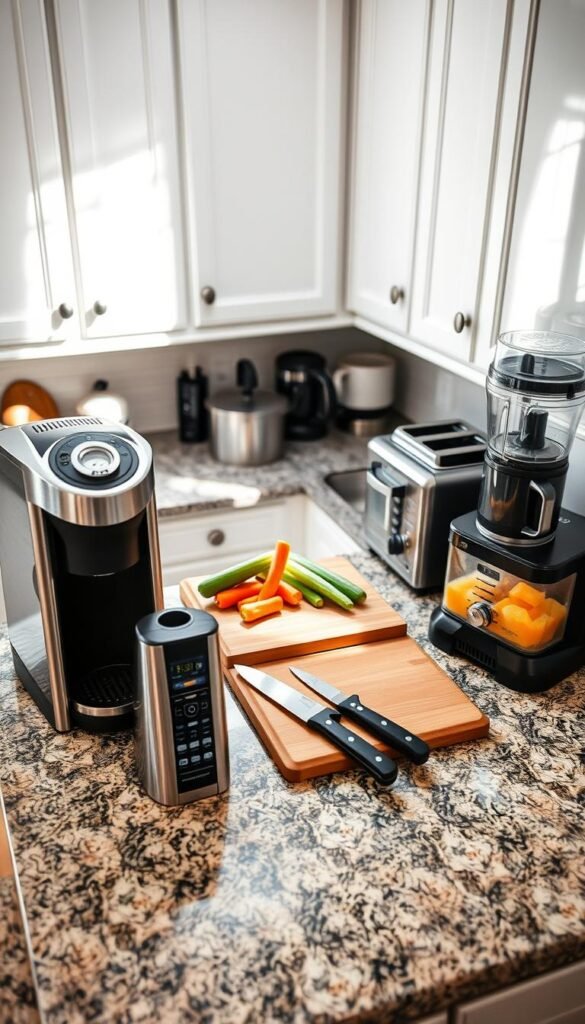
For small portions, a countertop unit uses less power and throws off less heat. This is one practical way to cut wasted heat and lower power consumption in a small space.
| Comparison | Full-size oven | Countertop unit | Impact in apartments |
|---|---|---|---|
| Energy per small meal | High | Low | Less wasted heat with countertop |
| Heat output | Large | Moderate | Better for limited ventilation |
| Outlet / circuit draw | May need dedicated circuit | Fits standard outlet | Avoid running multiple high-draw units |
| Counter footprint | Fixed, often larger | Smaller, storable | Matches small size kitchens |
Later sections will show noise, smoke, and footprint for each major pick so you can match choices to your space and daily routine.
Real benefits you can expect from the right gadgets
The right small appliances turn uncertain meals into repeatable results. You get fewer „is it done?“ moments and more dinners that finish at the expected time.
More consistent results
Better temperature control means fewer dry chicken breasts, fewer undercooked leftovers, and less guesswork during the cooking process. You pull food at the right doneness more often. That makes weeknight cooking feel predictable and less stressful.
Less cleanup and less food waste
Nonstick baskets and one-pan designs cut the number of dishes you wash. Less oil splatter means quicker wipe-downs in a rented space. When meals turn out reliably, you throw away fewer burned or overcooked portions and order takeout less.
Air quality and odors — realistic wins
Air fryers and countertop ovens often produce less grease smoke than heavy pan-frying, but they still smoke with very fatty foods. Better ventilation and correct temperature settings usually reduce lingering odors more than any app feature can.
- Maintenance note: filters, descaling, and regular wipe-downs matter. That’s where real-life ownership takes time.
- Small-batch tools save energy in small spaces because they match the amount you actually cook.
Who needs this (and who can skip it)
This guide helps you decide what gear actually earns counter space in a small home.
Renters and small-apartment cooks: Favor compact, portable tools that use standard outlets and store easily. Choose items that fit a high shelf or closet so you can take them when you move.
Busy households that meal-prep or reheat often: Consistent heating tools plus airtight storage protect food in the fridge and freezer. They cut waste and make weekday meals predictable.

Coffee fans and casual bar hosts
Coffee lovers: If you buy coffee every day, a burr grinder and one solid brewer usually pay for themselves in taste and cost per cup. A good mug and routine matter more than a flashy machine.
At-home bar setups: For small gatherings, ice solutions and reliable storage beat novelty gadgets. Focus on what frees up time and space while you host.
Simple smart-home users
If pairing Wi‑Fi sounds like a chore, pick devices that work perfectly by hand first. Smart features are a bonus, not a requirement. We flag ongoing costs like pods, bags, and replacement parts so you won’t be surprised later.
„If you rarely cook, a few small safety and prep tools may be enough — the rest is just counter clutter.“
| Who | Worth buying | Skip or delay |
|---|---|---|
| Renter | Portable, standard-outlet appliances | Built-in, heavy units |
| Meal-prepper | Even-heat devices, airtight bags | Single-use novelty gadgets |
| Coffee drinker | Burr grinder + reliable brewer | High-maintenance espresso with long learning curve |
| Light smart-home user | Manual-first devices with optional Wi‑Fi | App-only controls that require constant pairing |
For more curated, renter-friendly finds, see our daily life finds collection.
How we chose the top 10 kitchen tech for 2026
We tested how each product lives in a small apartment: storage, noise, and running cost. The goal was simple. Pick items that improve daily cooking without stealing counter real estate or causing surprises.
Space requirements: footprint, clearance, and storage
Small-space friendly means a clear footprint number and sensible vertical clearance. We measured width and depth and noted how much room you need to open lids or baskets.
- Footprint in inches and whether it stores upright.
- Clearance needed to open doors or pull baskets.
- If it fits on a high shelf or in a cabinet when not in use.

Power consumption: reading the label
Look at watts. Higher wattage cooks faster but can trip a circuit if you run multiple devices on one outlet. We flagged items by typical apartment circuits and noted real draw during common settings.
Noise levels
Blenders and some fryers are loud. Grinders vary. We timed runs and scored machines by how disruptive they are during morning use.
Maintenance and cleaning
We split upkeep into quick daily wipe-downs and deeper tasks like filter changes, descaling, or gasket care. Know the real chores before you buy.
Compatibility and smart features
Standard outlets are a must. We prefer reliable app control and list when voice assistants add real value. Our bias: choose tools that improve results and safety even if you never open the app.
| Priority | What we checked | Why it matters |
|---|---|---|
| Space | Footprint, clearance, storage | Fits small homes and stores easily |
| Performance | Wattage, settings, real run draw | Energy use and circuit safety |
| Everyday use | Noise, cleaning, app stability | Low hassle and reliable control |
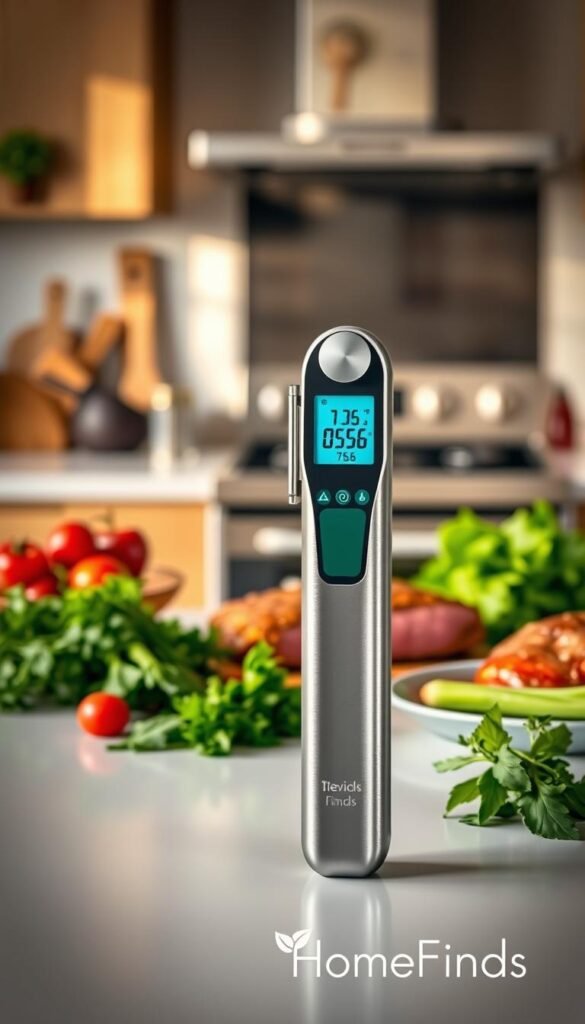
Instant-read thermometer for safer cooking with less guesswork
A quick probe read cuts guesswork and keeps food safe without adding counter clutter. This small tool is a sensible first buy for most renters. It saves meals and reduces food-safety risk while stashing easily in a drawer.
Real use cases beyond meat
Check chicken and steak doneness in seconds. Test bread internal doneness so loaves are perfect, not gummy. Confirm frying oil temperature before breading to avoid greasy results. Verify leftovers hit safe reheating temperature before serving.
Pros and cons
- Pros: very fast reads, high accuracy, prevents overcooking and wasted food.
- Cons: you must open oven or pan to probe, and premium models can be pricier than they look.
Setup time and maintenance
Setup is minimal. Insert a battery if required, learn one or two buttons, and you’re ready that night. Wipe the probe after use. Do not soak the electronics. Store where you’ll grab it daily.
„Editors use instant-read probes for bread and deep-fryer oil as often as for meat.“
| Why buy | Everyday use | Maintenance | Value note |
|---|---|---|---|
| Saves meals and improves safety | Meat, bread, oil temp, leftovers | Wipe probe, avoid soaking, change battery | Budget units work; premium = speed and durability |
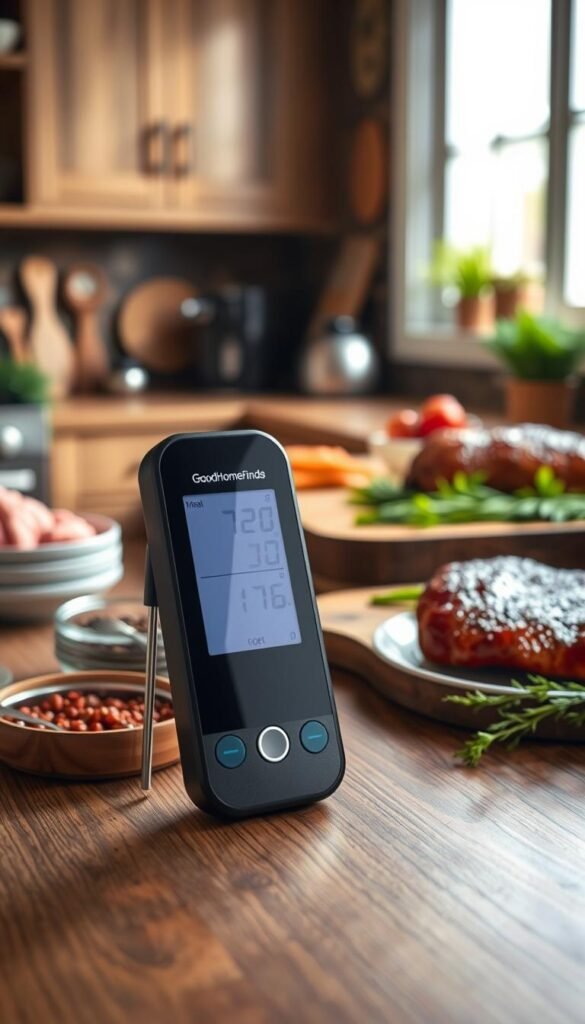
Smart wireless meat thermometer for hands-off oven control
Set a target, step away, and let a smart probe monitor the roast until your phone pings. This model is built for oven use: you insert the probe, set a finish temp, and get alerts and estimated cook time so dinner doesn’t go from perfect to dry.
Why wireless helps — and where it struggles
Best-case scenario: place the probe, pick a finish temp, and the app warns you before overcooking. The Meater family adds ambient tracking and time-to-target estimates so you can plan sides and timing.
Wireless matters in a small home. You can step away, answer a door, or prep plates without hovering over the oven. Alerts reduce the chance you’ll forget food while handling other tasks.
Where it struggles: stovetop use and direct-contact pans are less reliable. Signal and placement affect accuracy, and thick oven doors or heavy cookware can block a receiver.
Pros and cons
- Pros: estimated cook time helps planning; app alerts cut stress; adds smart-feel without a smart oven.
- Cons: pricier than basic probes; the app or Bluetooth can be finicky; you still need correct probe placement for true readings.
„You get hands-off control and clearer timing, especially for roasts and overnight cooks.“
| Use case | Works well | Limitations |
|---|---|---|
| Oven roasting | Reliable ambient + internal temps | Minimal |
| Stovetop sear | Not ideal | Signal and placement issues |
| Voice alerts | Alexa compatible for hands-free notices | Don’t buy just for voice |
Compatibility note: if you use Alexa, voice notices are convenient. But don’t choose this solely for voice. Keep your phone nearby and avoid blocking the receiver with thick doors or heavy pans for best results.
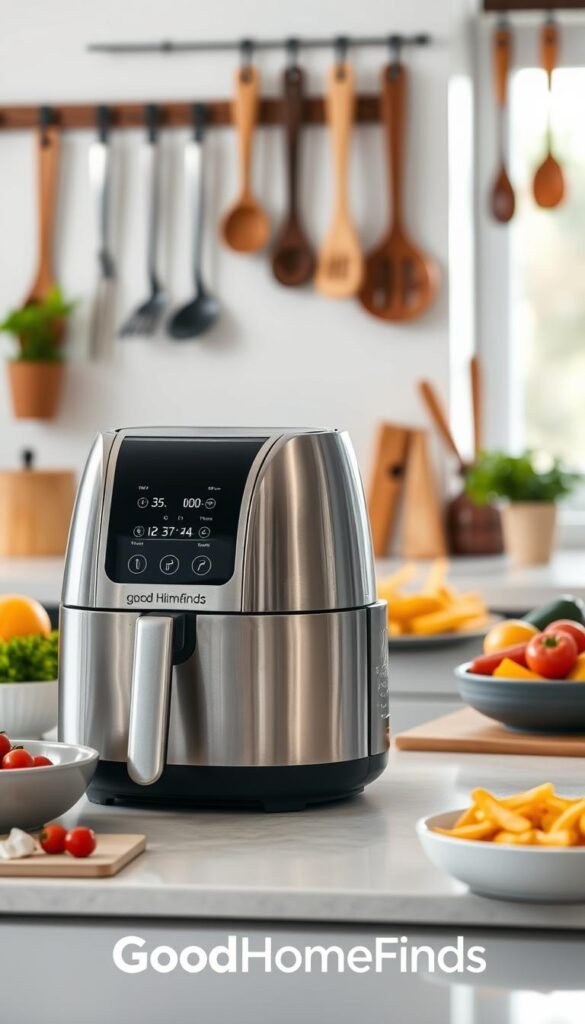
Air fryer or combi fryer for fast meals with less oil
For quick, crisp meals in a small space, a compact fryer does most of the heavy lifting. In plain terms, an air fryer is a small, fast convection cooker that can replace the full-size oven for one or two servings. It browns food by moving hot air instead of deep oil baths.
Budget pick: quick crisping with simple presets
If you want simple, go with a basic model like the Instant Vortex. It offers intuitive controls and even browning for frozen foods, chicken, and veg. You get fast heat, easy cleanup, and presets that remove guesswork.
Premium pick: combi with steam and probe
For more control, a combi maker such as the Dreo ChefMaker adds steam and a built-in probe. That combo keeps meat juicy while still delivering a crisp finish. Expect a modest learning curve for multi-mode settings.
Power, smoke, and ventilation realities in apartments
Smoky results happen with fatty wings or bacon-style items. Keep the basket clean and place the unit near a hood or open window. Smaller cavities usually waste less heat, but peak power consumption is high while running.
Space and noise: what to expect on your counter
Square baskets save space, but bulky models like the Cosori can crowd a counter. Fan noise is normal; premium designs sound smoother but are not silent. Leave clearance to pull the basket out safely.
- Maintenance: wash baskets, wipe the heating area, and check for grease buildup to reduce odor and smoke.
- Who it’s for: renters who want faster weeknight meals and less mess than deep frying.
„A good combi fryer gives roast-level results without heating the whole apartment.“
| Feature | Budget | Premium |
|---|---|---|
| Example maker | Instant Vortex | Dreo ChefMaker |
| Best use | Frozen foods, quick crisping | Crisp + steam, probe-guided roasts |
| Trade-offs | Simple, less versatile | More features, larger footprint |
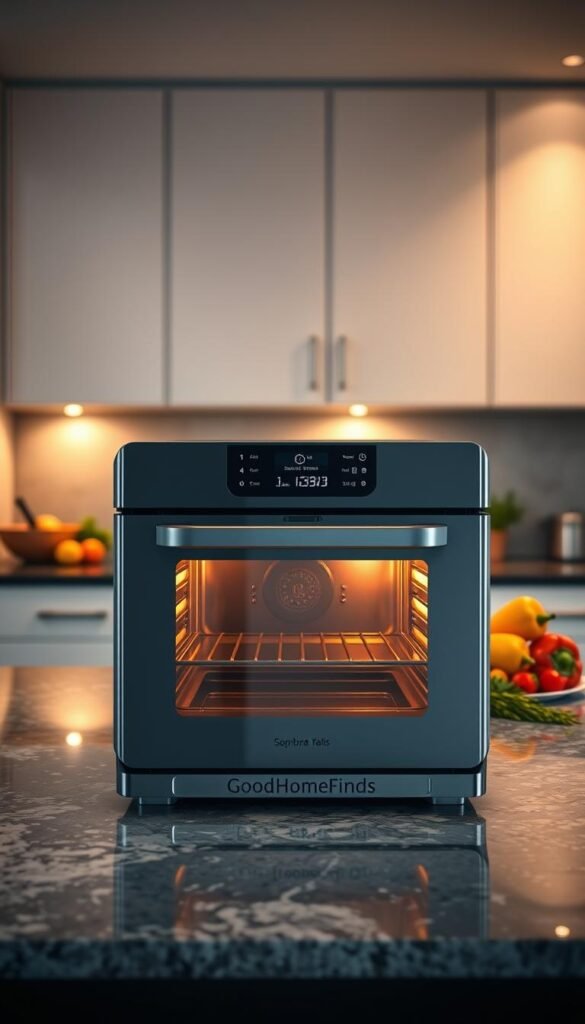
Smart oven for “set it and forget it” countertop cooking
If you hate babysitting timers, a countertop smart oven can quietly finish dinner while you handle sides.
Real use cases
You can roast a small chicken or vegetables without constant checks. Reheating leftovers comes out crisp instead of soggy.
It handles frozen dinners and many grocery items with less guesswork than a full oven. Some boxes scan to a suggested cook setting to match a recipe.
Pros and cons
- Pros: multi-mode cooking reduces the number of single-use gadgets. Scan-to-cook makes tired weeknights easier.
- Cons: size limits matter. Many models, including the popular Tovala, won’t fit a 12-inch frozen pizza. Grocery scan databases can be limited.
Setup, space, and maintenance
Pairing the app can take longer than you expect. Scanning works only when your items are in the database.
Leave clearance for airflow and avoid tucking the unit under a low cabinet. Clean crumb trays and wipe the interior to prevent lingering smells.
„A smart countertop oven can be the most useful single appliance if you cook often but dislike standing by the stove.“
| Factor | What to check | Why it matters |
|---|---|---|
| Size | Pan and pizza fit | Don’t assume it replaces a full oven |
| Connectivity | App pairing & scan support | Controls ease and scan accuracy |
| Maintenance | Crumb tray, interior wipe | Smell and smoke control |
Pressure cooker/multicooker for one-pot dinners and energy savings
A pressure cooker can replace multiple pans and cut long simmer times into a single, efficient process.
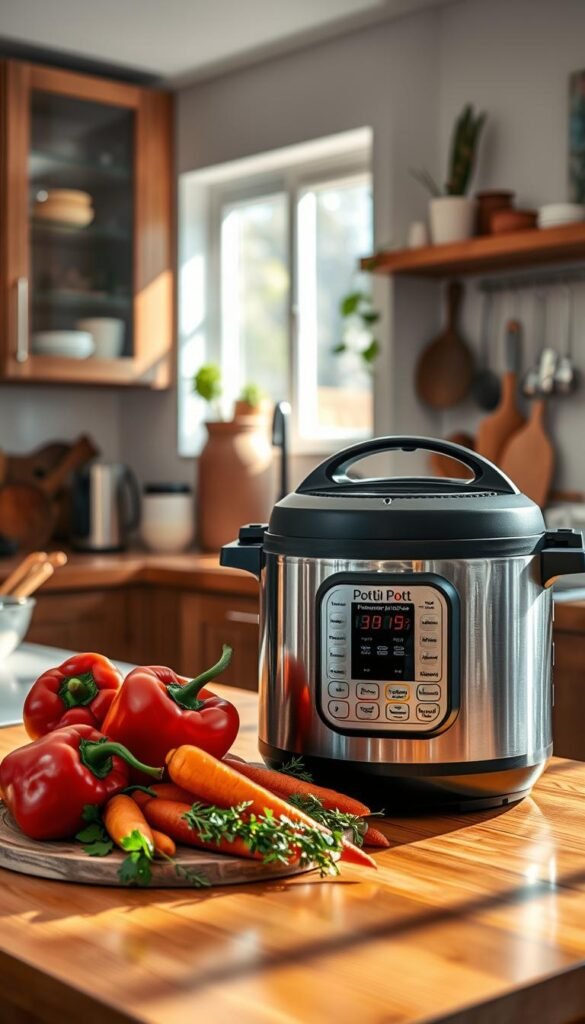
Why a multicooker wins in small homes: you sauté, pressure-cook, and keep food warm in one pot. That reduces dishes and uses less energy than hours of stovetop simmering.
Why a good sear matters for flavor
Searing locks in flavor and creates browning you want in stews and roasts.
A stable inner pot makes searing practical. Serious Eats praises the Instant Pot Pro for a steady inner pot and a safer steam-release switch that helps sear without juggling pans.
Smart vs standard models
Be blunt: the built-in app rarely unlocks essential features. PCMag notes the Instant Pot Pro Plus app adds little for the higher price. If the manual controls are clear, you already have the real value.
Safety and maintenance notes
- Check proper sealing and never overfill.
- Aim steam release away from cabinets and smoke alarms.
- Wait for pressure to drop before opening the lid.
- Clean and inspect the gasket and lid to avoid odors and performance loss.
| Feature | Standard model | Smart model | Apartment reality |
|---|---|---|---|
| Energy use | Short cook times, low waste | Same pressure savings | Less heat and lower bills vs long simmer |
| Searing | Works if inner pot stable | Same, sometimes guided timers | Fewer pans to wash |
| Controls | Manual buttons, reliable | App adds scheduling, remote alerts | App optional; don’t pay extra if unused |
| Upkeep | Gasket and lid cleaning | Same + firmware updates | Simple checks avoid odors and safety issues |
Sous vide immersion circulator for precise doneness without stress
A small immersion circulator gives you predictable doneness with very little babysitting.
Sous vide means you seal food and cook it in a temperature-controlled bath so results are repeatable.
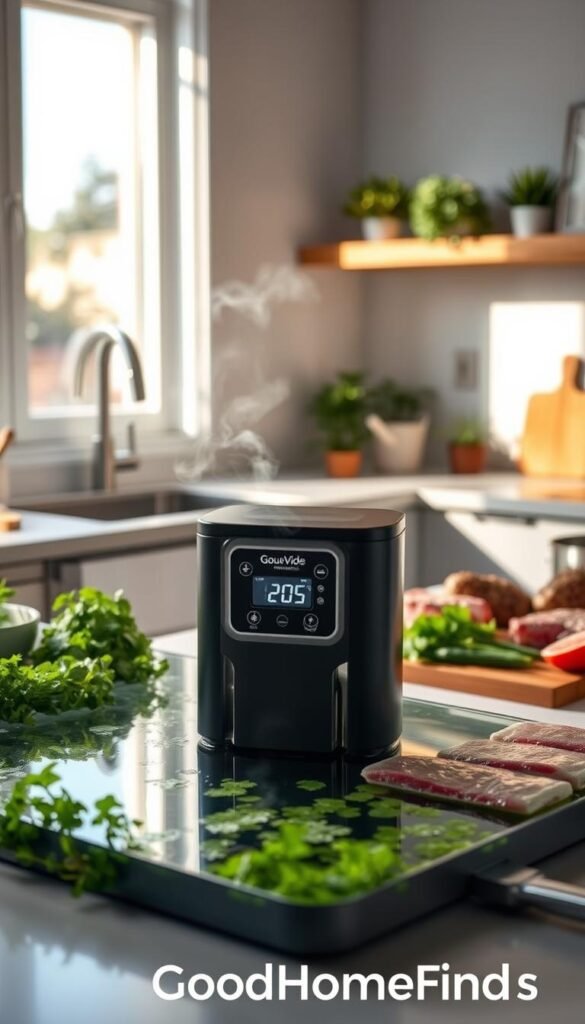
What you’ll actually cook and why it works
Steak that’s evenly cooked edge-to-edge. Chicken that stays juicy and safe. Eggs with the same soft or jammy texture every time.
You’ll notice the difference on day one because the machine holds a steady temperature rather than relying on guesswork.
Pros and cons
Pros: consistent results and mostly hands-off cooking once the water is up to temp. Serious Eats found the Joule Turbo keeps temperature steady and heats a gallon of cold water quickly.
Cons: longer total cook times and you usually finish with a quick sear for color and flavor. The extra step adds a minute or two but rewards you with a crisp exterior.
Setup difficulty, app notes, and maintenance
Setup is simple: a container, a way to hold water, and a stable spot on the counter or floor. Plan where the water drains after use. You need a little space for the pot and clamps.
The app can be handy for remote monitoring, but PCMag warns that Wi‑Fi pairing can be finicky. Don’t depend on the app for basic use; manual control should be enough.
Maintenance: descale periodically and wipe the unit after runs, especially if you have hard water.
„Sous vide makes doneness predictable; it trades time for control.“
Want deeper reading on sous vide methods and pros in pro kitchens? See this practical guide to sous vide techniques: sous vide basics and use cases.
Vacuum sealer for meal prep, freezer organization, and sous vide
A vacuum sealer quietly turns loose containers into neat, stackable packs that save space and time. It’s a small, renter-friendly solution that reduces freezer clutter and protects food from burn.
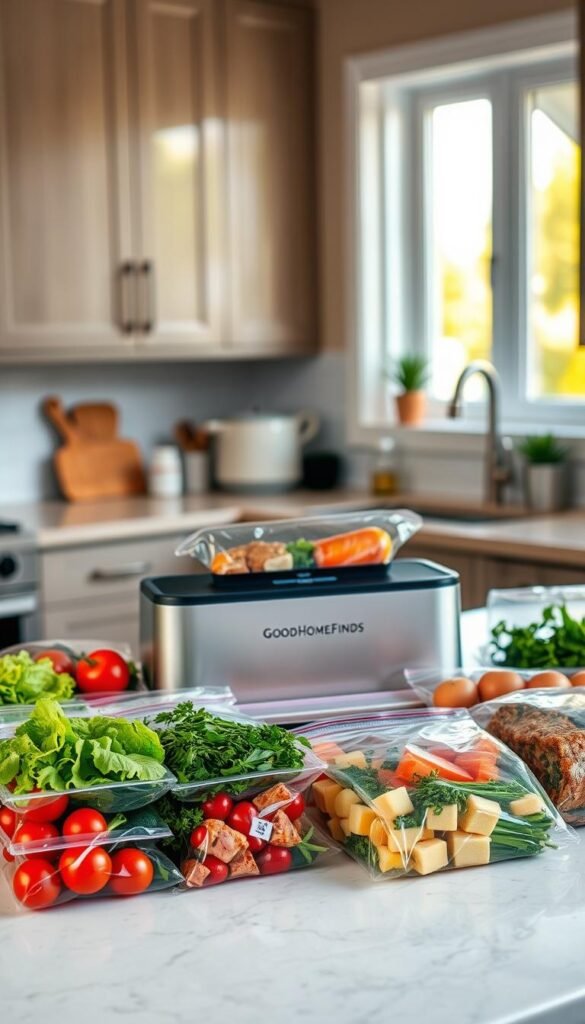
Real benefits and faster marinades
Airtight packing keeps leftovers fresher and extends freezer life. It also makes sous vide safer by removing air pockets that cause leaks.
Serious Eats notes that vacuum sealing speeds marinade infusion, so you get deeper flavor in hours instead of overnight.
Budget vs premium
Basic sealers give you strong seals and low cost per bag. They are a practical first buy for regular meal prep.
Premium models from makers like Anova add built-in bag storage and a cutter. That convenience saves time but raises the initial price.
Maintenance, ongoing costs, and small-space planning
Keep the sealing strip clean and avoid crumbs or liquid in the seal area. Wipe the channel after each use to prevent failed seals.
- Ongoing costs: bags add up — estimate monthly spend by how often you prep and freeze meals.
- Storage: measure drawer or cabinet space; boxy units can be harder to tuck away than you expect.
„A vacuum sealer is a quiet hero for small homes: flat, labeled packs stack neatly and save fridge and freezer real estate.“
| Why buy | Everyday value | Consider |
|---|---|---|
| Prevent freezer burn | Longer-lasting meals | Bag cost and space for the unit |
| Sous vide prep | Leak-free cooking | Choose a reliable seal for wet foods |
| Faster marinating | Better flavor in less time | Premium makers add cutters/storage |
Blender for smoothies, sauces, and small-batch kitchen prep
Smooth texture and short cleanup time are the two factors that decide if a blender becomes daily gear.
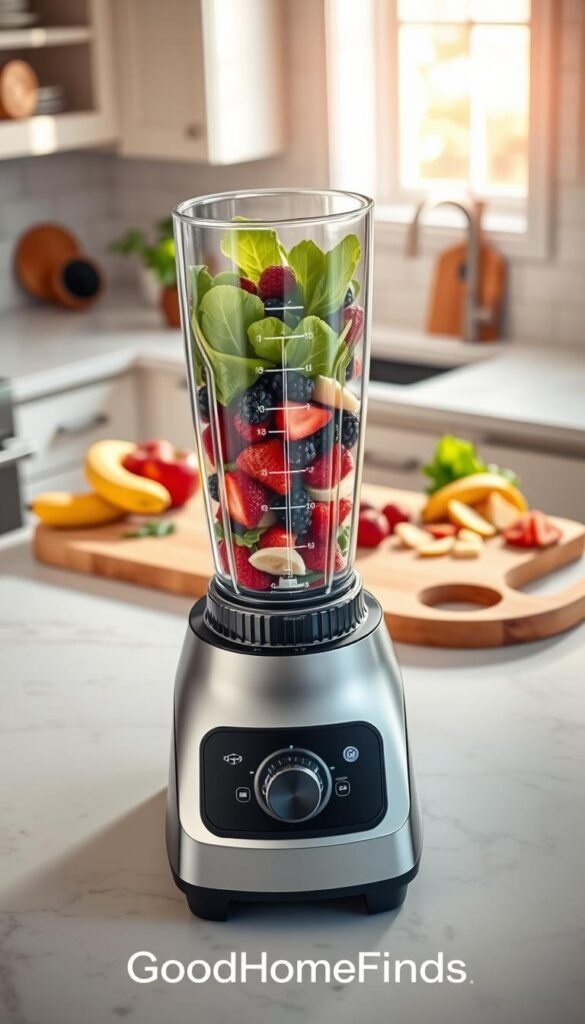
Premium power: when a high-speed motor is worth the space
High-speed units like the Vitamix 5200 earn their counter spot if you make smoothies, nut butters, or silky sauces every week. They crush ice and seeds without stopping to scrape.
Serious Eats notes that higher power gives smoother blends and longer life under heavy use. That translates to fewer chunks and less fuss when you serve.
Budget-friendly alternatives: what you give up (and what you don’t)
Lower-cost blenders handle shakes and simple sauces well. Expect coarser texture and slower blends for nut-based mixes.
For occasional use, a smaller jar or personal blender often covers breakfast and light prep without the footprint or price of a pro unit.
Noise levels: how loud it gets and how to minimize it
Powerful motors are loud. If noise bothers you, blend during the day and start on low speed.
- Put a towel or silicone mat under the base.
- Pulse to break solids before full-speed runs.
- Run blends in short bursts rather than long continuous cycles.
„If you don’t use it weekly, a blender usually ends up tucked away rather than on active duty.“
Practical tips: rinse the jar right away to avoid stuck-on residue. Deep clean around the blade and seal occasionally to prevent odors.
| Decision point | Premium | Budget / Personal |
|---|---|---|
| Best for | Silky smoothies, nut butters, hot soups | Single-serve shakes, simple sauces |
| Trade-offs | More power, larger size, higher price | Less torque, coarser texture, cheaper |
| Power reality | Higher wattage but short run times; low long-term power consumption | Lower wattage and quieter, but may struggle with hard ingredients |
| Storage | Measure shelf height; consider assembled jar fit | Often compact and easy to store |
For a deeper look at tested models and picks, see this practical review: best blender guide.
Coffee upgrades that pay off every morning
A few practical swaps deliver better flavor, less fuss, and fewer wasted beans each morning.
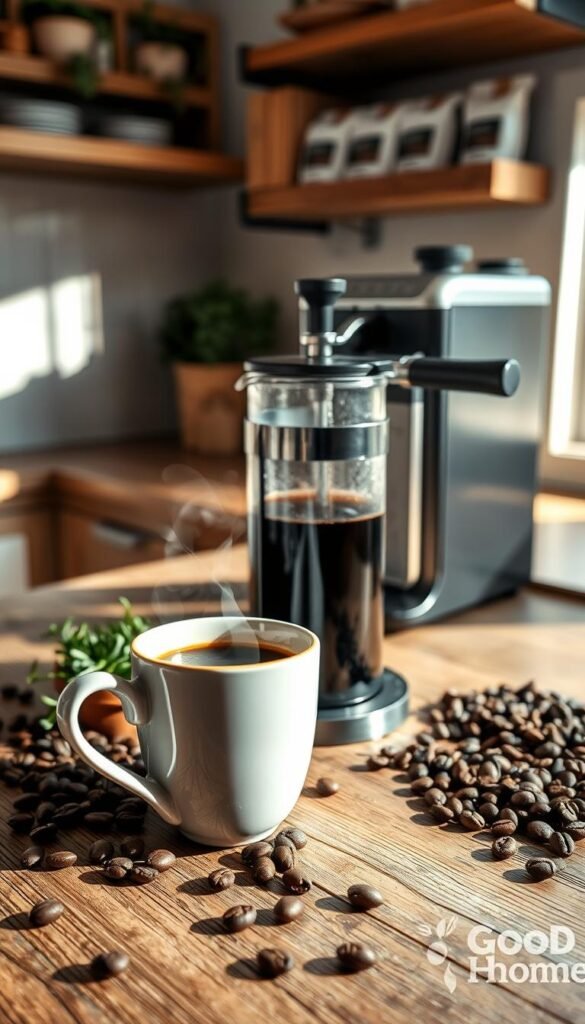
Burr grinder: the simplest, highest-impact upgrade
Fresh, even grounds improve extraction more than most brewers. Start with an OXO burr grinder for reliable, one-button ease. Move up to the Breville Smart Grinder Pro if you want precise settings and repeatable dialing in.
Setup: simple. Load beans, set grind, plug in. Maintenance: brush grounds and check burrs periodically.
Drip maker: one-button reliability vs premium payoff
For busy mornings, a Ratio Six-style drip maker with a thermal carafe gives consistent hot cups with minimal fuss. If you want better extraction and a warmer travel-ready pot, a premium maker can be worth the price.
Descale on the schedule your manual recommends and use clean water to avoid off flavors.
Espresso: renter-friendly fast-heat options and the learning curve
Choose a fast-heat machine like the Breville Bambino Plus if you need near-instant shots without a long warm-up. They save prep time but still require tamping skill and routine cleaning.
Milk frother and temperature-control mug: essential versus nice-to-have
An Instant Magic Milk Frother is worth it if you drink lattes or use plant milks often. Otherwise a manual whisk works fine.
The Ember Mug 2 or Ember Travel Mug keeps your drink hot for hours. It’s handy, but adds charging and cost you must accept.
„Good maintenance — descaling and fresh water — keeps flavor consistent and extends gear life.“
| Upgrade | Budget | Premium |
|---|---|---|
| Burr grinder | OXO — easy, reliable | Breville Smart Grinder Pro — precise control |
| Drip maker | Basic one-button with thermal carafe | Ratio Six — better extraction, steady temps |
| Espresso setup | Manual steam wand or pod | Breville Bambino Plus — fast heat, higher skill |
For practical gadget suggestions and daily picks, see this coffee gear roundup and our daily life finds collection.
Countertop ice makers and ice solutions for apartments
If your fridge’s ice takes forever or tastes off, a countertop solution can fix daily drinks fast.
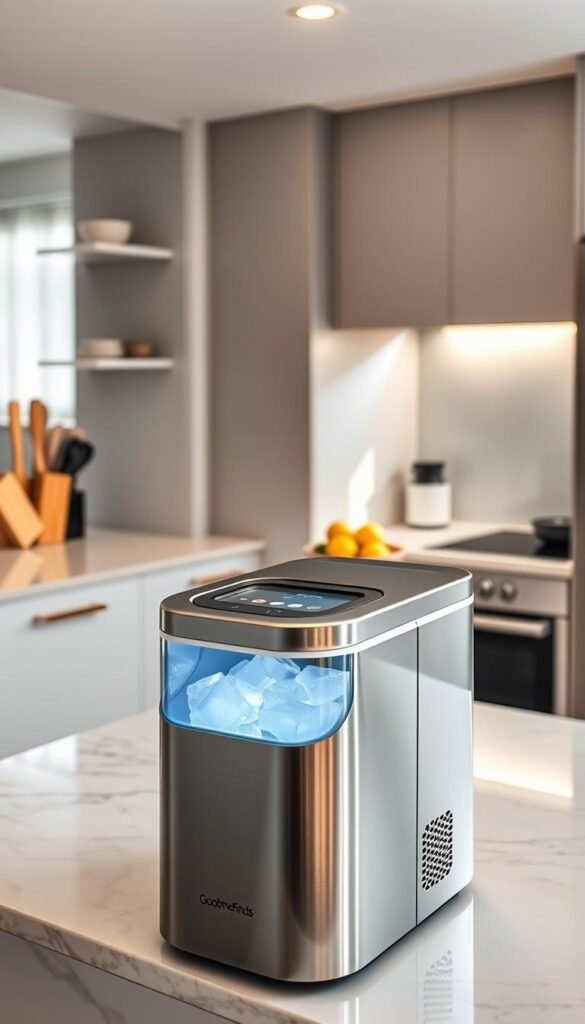
Smart nugget ice — compact and quieter than you expect
Who this is for: you without an ice dispenser, or with slow fridge ice. A nugget unit gives chewable, cafe-style ice quickly and fits on a small counter.
PCMag calls the Ecozy Smart Nugget Ice Maker compact, quick, and quiet. It cycles fast, alerts when the water is low, and can run self-cleaning. That makes it renter-friendly because no hard plumbing is required.
Maintenance: keep the water tank clean and run the clean cycle. Skip this and ice will pick up odors.
Tray, ice box, and molds — simple low-power options
Budget alternative: try tray-based bins like the Lekue Ice Box. Good Housekeeping highlights it as a low-cost, low-power solution that stores made ice in a small bin inside your freezer.
Trays use minimal energy and no counter space. They are often “good enough” if you have freezer room and low daily demand.
Space, water access, and drainage realities
You need easy access to the water tank and room for airflow behind the unit. Most countertop makers are tank-based, not plumbed, so plan for emptying and occasional spills.
If your counter is tiny, molds may be the smarter play. Remember: countertop makers are still an appliance and take space and power while running.
„For many renters, a smart nugget unit offers cafe-style ice without plumbing, but only if you commit to basic cleaning and a small counter footprint.“
| Option | Pros | Cons |
|---|---|---|
| Smart nugget ice maker | Fast cycles, quiet, alerts, self-clean | Counter footprint, regular tank cleaning |
| Tray / ice box | Low-cost, low-power, stores in freezer | Manual filling, slower supply |
| Portable molded trays | Zero plumbing, minimal space | Limited daily yield, manual handling |
Want a direct comparison of portable units and real-world tests? See this portable ice maker review for detailed picks and performance notes.
Small prep gadgets that earn their drawer space
Drawer space is valuable; the small tools you keep there should earn their place every week. Every pick below pays off in real use, not hype.
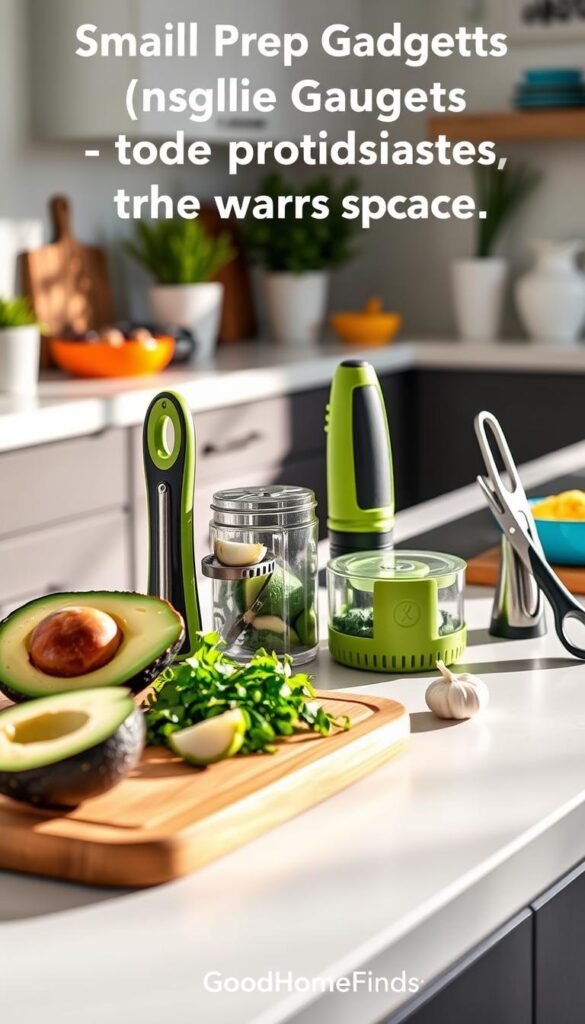
Mini food processor
A mini food processor is the right-size maker for sauces, chopped onions, and small dips. Serious Eats recommends one for quick batches so you don’t pull out a full processor for two cloves of garlic.
Use: salsa, pesto, and quick chopping for one or two servings. Clean by running water and a drop of soap, then air dry. Slim bowls store flat in a drawer.
Handheld electric can opener
Handheld models beat bulky stand-up units for small counters. They fit a drawer, work one-handed, and often include a magnet to lift the lid cleanly.
Why it wins: saves space and reduces sharp-lid handling. Wipe the cutter after use to avoid gunk near the lid edge.
Garlic press, jar opener, and oil sprayer
A good garlic press speeds prep and keeps garlic smell off your hand. Pick one with easy-clean internals.
An OXO-style jar opener helps when grip strength is limited or a lid is truly stuck. It’s a comfort and safety tool.
An Evo oil sprayer gives an even mist so you use less oil and get better browning in an air fryer. Rinse the nozzle after each use to avoid clogging.
„Make space decisions by asking: will I use this every week?“
| Item | Everyday value | Storage tip |
|---|---|---|
| Mini processor | Sauces, small prep | Stackable bowl |
| Hand can opener | One-handed lid removal | Drawer or utensil cup |
| Garlic press / jar opener | Faster prep, safety | Slim drawer slot |
For more renter-friendly picks and practical ways to save space and money, see our smart budget mix.
Setup time: what it really takes from unboxing to first use
Some devices work in a minute; others demand patience and a learning curve. Plan the first hour so you don’t abandon a new appliance or waste counter space.
No-setup tools
These items are instantly useful. Unbox, insert a battery if needed, rinse or wipe, and put it in a drawer.
Examples: instant thermometers, garlic presses, and jar openers. They require almost zero process and are renter-friendly.
Quick setup appliances
Expect 10–30 minutes for these. Wash baskets or pots, find a safe counter spot, and run a first-use heat cycle if the manual suggests it.
Air fryers, pressure cookers, and blenders fit here. You’ll adjust basic settings and learn simple routines.
Longer setup and learning curve
Smart ovens, sous vide units, and espresso machines take more effort. You may need 30–90 minutes for initial setup and a few tries to get repeatable results.
Be honest: plan several trial runs before relying on them for dinner.
Smart features in plain English
Pairing means connecting the device to Wi‑Fi and the app. PCMag notes Wi‑Fi can be finicky on some models (Anova, for example).
Use a 2.4GHz network if required. Voice control is handy for status checks but not necessary for great cooking control.
- Set expectations: some tools work in 30 seconds; others need an hour and patience.
- Plan where a device lives before you set it up to avoid cord and clearance headaches.
- For renter-friendly, pick manual-first devices with optional app features.
Want small, reliable picks you can use right away? See our cool gadget picks for low-fuss options.
Common mistakes that waste money, energy, and counter space
Buying without measuring or reading labels is the #1 way to waste money and space. Measure counter depth and clearance before you click buy. If a lid or drawer can’t open, the unit becomes a stored box, not a daily tool.
Overpaying for smart features you won’t use
Many models add an app and call it premium. If you’ll stop using the app after week two, prioritize performance, safety, and cleanability first.
Not planning for noise, smoke, or odors
Consider how loud a blender or grinder runs during morning routines. Air fryers and high-heat pans can create smoke that trips alarms.
Odors build from old grease, dirty gaskets, and clogged crumb trays more than from short cooks. Regular cleaning prevents lingering smells.
Skipping maintenance basics
Descaling, changing filters, and running self-clean modes keep units safe and efficient. Neglect shortens life and raises real costs.
Forgetting ongoing costs
Count vacuum sealer bags, coffee pods, and available replacement parts before you buy. Those add up and change the value proposition fast.
„Measure twice, read the manual once, and pick the simplest gadget that solves your daily problem.“
| Mistake | Why it wastes money/energy | Quick fix |
|---|---|---|
| Buying too large | Unused or stored unit; wasted counter space | Measure clearance; test fit with cardboard |
| Overpaying for connectivity | Paid features you don’t use; possible flaky app | Choose manual-first controls |
| Ignored maintenance | Poor performance, higher power consumption, bad smells | Set a calendar for descaling and filter swaps |
| Hidden ongoing costs | Monthly spend on bags, pods, or parts | Estimate annual consumable cost before buying |
Budget vs premium comparisons: where to save and where to splurge
A simple spending rule: splurge on items you use every day and save on single-task helpers that either work or don’t. This keeps counters clear and results reliable.
Best places to save
Save on small, simple tools and single-use gadgets. Basic thermometers, jar openers, garlic presses, and manual can openers do the job without motors or apps.
These items rarely benefit from a higher price. Pick accurate, sturdy models and skip flashy features that add cost without value.
Best places to splurge
Spend more on daily drivers that shape results: reliable air fryers you’ll run repeatedly, grinders that touch every cup, and heavy-use blenders or multicookers.
Why splurge? Better units give stronger performance, safer design, easier cleaning, quieter operation, and warranties you can actually use.
How to read “Pro” and premium labels
Call out pro naming honestly. A “pro” label is worth it when it improves safety, searing quality, or long-term durability.
Don’t pay extra for an app that only adds remote control. PCMag-style notes show premium smart features sometimes fail to justify higher cost.
Value checklist: performance, safety, energy use, warranty
- Performance on real food: Does it handle what you cook every week?
- Safety you’ll actually use: Built-in guards, stable seals, clear release paths.
- Energy fit: Match wattage to your habits and apartment circuits.
- Warranty and support: Easy repairs and a visible policy matter more than marketing claims.
„One great multi-use appliance beats three mediocre gadgets that crowd your counter.“
If you want practical, budget-friendly upgrade plans, see our guide on updating a small home on a budget: kitchen update on a budget. For curated renter-friendly picks, check this daily life solutions collection.
| Where to buy | Save | Splurge |
|---|---|---|
| Single-use | Basic manual tools | — |
| Daily drivers | Reliable midrange | High-quality pro-grade units |
| Consumables / app features | Estimate costs first | Only if it adds real value |
Conclusion
A smart buy starts with measuring your space and matching a device to how you actually cook. Pick items that save time, cut waste, and fit the outlets and shelves in your home. Prioritize energy use, safety, and easy cleaning over flashy app-only features.
Real wins you’ll notice: steadier temperature control, less cleanup, and fewer wasted meals in the fridge. Countertop cooking can save power for small portions, but respect ventilation and circuit load when you run high-watt machines.
Make a simple plan: choose one daily driver, one safety tool, and one prep helper. Reassess after two weeks of real use, and avoid impulse buys that crowd your counter.
Practical tip: for curated model picks and measured comparisons, see our best kitchen appliances review.
Thanks for using this roundup as a living checklist. If it’s easy to wipe and easy to store, you’ll actually use it—and that’s what makes upgrades worth it.