
You’re getting ten genuinely useful items that solve everyday clutter and function in tight apartments, tiny kitchens, and compact bedrooms.
This list focuses on practical, renter-friendly buys that usually cost under $25. I’ll show price-to-value notes so you know when a $10 pick beats a $25 option. Expect honest, no-hype advice and clear pros and cons.
The picks emphasize vertical storage and multifunctional solutions. You’ll see real-life examples like over-door hooks, tension rods, mirrors, and collapsible hampers. I prioritize Amazon availability for fast delivery and easy returns.
Each item entry explains why it helps, a user example, pros/cons, who it’s for, what to avoid, and cheaper alternatives. I also note safety and quality points — anchors, weight limits, and renter-safe fixes — so you avoid damage.
Realistic promise: these items won’t double your square footage, but they will cut daily clutter and boost functionality fast. For a deeper mix of fixes and extras, check this guide at small-space fix mix.
Key Takeaways
- Practical, renter-friendly items mostly under $25.
- Focus on vertical storage and multifunctional pieces.
- Each pick includes real use, pros/cons, and alternatives.
- Amazon-first approach for fast delivery and easy returns.
- Safety notes cover anchors, weight limits, and rental fixes.
- Honest expectations: not magic, but effective clutter reduction.
What to Expect From These Small Space Finds (Under $25, Actually Useful)
You’ll find budget-friendly, renter-safe buys that actually free up usable surfaces in an apartment.
These picks focus on making counters, chairs, and the floor feel less cluttered. That means the room looks calmer and cleaning takes less time.
How these picks save room in apartments, kitchens, and shared rooms
Hooks add hanging options in tiny entryways. Cable organizers clear cords from nightstands and floors. Over-the-sink cutting boards give extra prep area in a cramped kitchen.
Mirrors bounce light to make rooms seem larger. Each item ties to a location so you can fix your biggest bottleneck: kitchen, bedroom, entryway, or living room.

Amazon-first availability and delivery realities
Rule: prioritize listings with size charts, many recent reviews, and fast shipping windows.
Remember delivery is fast, but some fixes need setup. Adhesives may need curing and anchors require tools. Factor a little time for installation.
Safety and quality checks before you buy
Quick checklist: measure first; confirm weight limits; check mounting type; pick BPA-free food-contact materials; avoid sharp edges and flimsy seams.
For rentals, favor removable adhesives or over-the-door hardware. Test an adhesive on a hidden spot before committing.
| Use Case | Common Fix | Quick Quality Check |
|---|---|---|
| Entryway | Adhesive or over-door hooks | Weight limit, paint-safe adhesive |
| Kitchen | Over-sink board / compact rack | BPA-free, slip resistance, fit for sink |
| Living room / bedroom | Cable organizers, mirrors | Secure mounting, shatter resistance |
How We Chose the Top 10 Small Space Picks for Real Homes
Practical wins over gimmicks: only products that earn their place in daily routines made the cut.

Our main filter was simple. If an item doesn’t solve a daily problem in under five minutes of use, it doesn’t qualify. That keeps picks useful, not decorative.
Everyday problem-solving over hype
We tested each piece in actual rentals and ordinary apartments. That means simple tools, basic hardware, and no new furniture required.
Focus: clear walking paths and balanced layouts. Anything that ate a path or shrank usable counters got downgraded.
Price-to-value scoring: when a $10 item beats a $25 one
Price-to-value measures durability, safe materials, and fit — not extra parts you never use. A $10 pack of hooks often creates more usable hanging room than a $25 decorative shelf that can’t hold weight.
- Durability over bells: choose reliable materials and tested weight limits.
- Time savings: pantry risers, cable clips, and hidden bins speed daily resets.
- Style is secondary: neutral, renter-friendly finishes that don’t visually crowd living areas.
The next section lists the overall picks and where each works best. If you want the broader roundup now, check this best small space finds.
Top 10 small space essentials that make small rooms feel bigger
Practical picks win over pretty ones. Start with simple, renter-friendly tools that free up surfaces and give you usable room without new furniture.
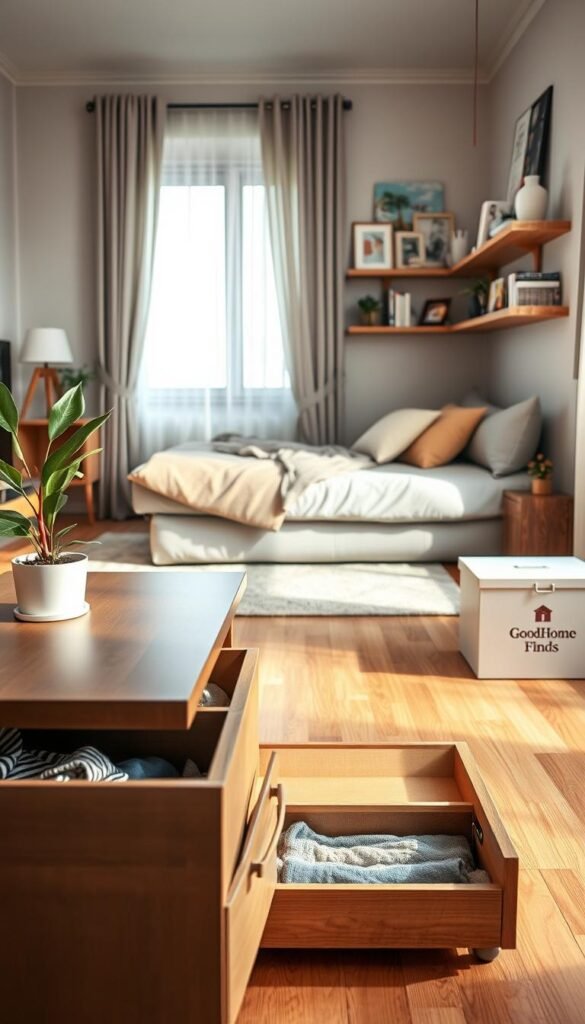
- Vertical wall shelves — living room, kitchen
- Over-the-door hooks — entryway, bedroom
- Cable organizers — living room, bedroom
- Collapsible laundry hamper — bedroom, bathroom
- Pantry & cabinet organizers — kitchen
- Over-the-sink cutting board — kitchen
- Slim hangers & closet add-ons — bedroom
- Under-sofa bins / storage ottoman covers — living room
- Storage coffee table helpers (trays, caddies) — living room
- Mirrors to bounce light — living room, bedroom
Why these help: less visual clutter, fewer piles, and clear surfaces make any room read as larger. Vertical units use wall and door areas without crowding floor paths. Hidden storage tucks items away so the room looks tidy fast.
Core rule: go vertical first (walls and doors), then hidden (under-bed, under-sofa), and only then buy new furniture. Small items ship fast, cost less, and are easier to return if they don’t fit.
Practical tips: measure width, depth, and clearance for shelves, sink boards, and under-sofa bins before you buy. Start here: pick one kitchen fix and one entryway or bedroom fix for the quickest daily impact.
Design matters: choose lighter visual weight and tidy surfaces over extra decor. The next sections dig into each item with pros/cons, who it’s for, what to avoid, and cheaper alternatives.
Vertical wall shelves that use “dead space” above windows and doors
Turn the gap above a window into a tidy shelf and free up counter and floor room fast. A short ledge or bracketed shelf uses wall area you rarely touch. That makes the room feel less cluttered while keeping items handy.
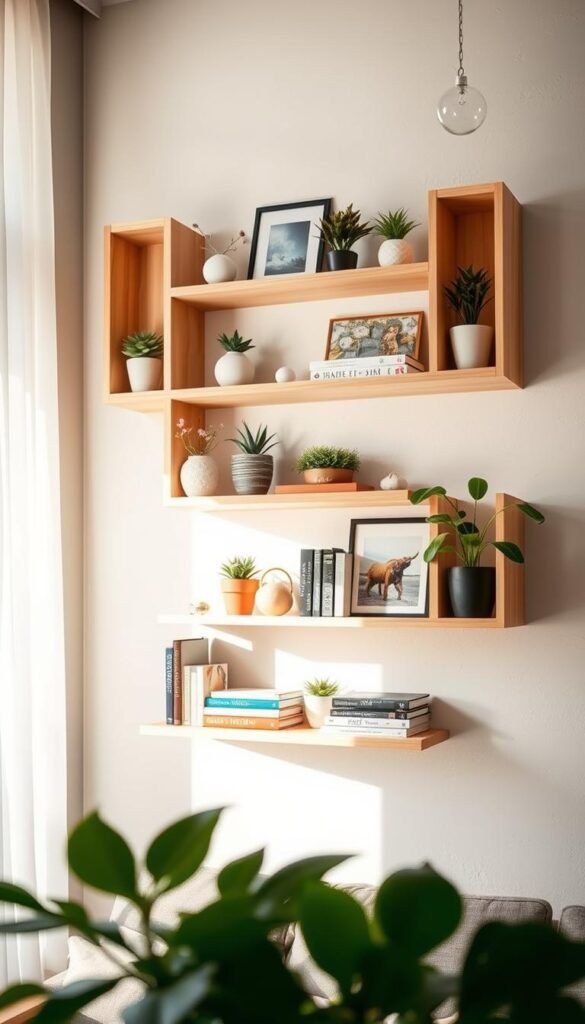
Why it’s useful
Use dead space for storage. Mounting shelving above windows and doors keeps frequently used items off tables and counters. It also keeps walking paths clear and makes the room read as larger.
Real-life example
Install a narrow shelf above a kitchen window to hold cookbooks or a row of paperback novels. You can reach them easily without sacrificing countertop prep area or adding bulky furniture.
Pros and cons
- Pros: adds storage without new furniture; keeps things visible and accessible; renter-friendly if you use removable brackets or permissioned anchors.
- Cons: needs careful measuring; cheap floating kits can wobble; overfilled shelves create visual clutter and weight risks.
Who it’s for
This works well for renters who can drill or get landlord OK. It also fits people with limited cabinet room and anyone who wants to display a few items without losing floor area.
What to avoid
Don’t skip weight limits or ignore studs and anchors. Avoid mounting too close to curtains or overloading thin floating shelves. If you must go no-drill, pick adhesive mini shelves only for very light items.
Safety and alternatives
Safety checks: verify included anchors, check the stated load rating, and use a stud finder when possible.
„A properly anchored ledge above a window gives you storage without crowding the room.“
For budget options, choose short bracketed ledges or single-shelf kits under $25. No-drill choices include adhesive mini shelves, over-the-door racks, or a tension rod with hanging baskets. For kitchen-specific ideas, see our best kitchen shelf ideas.
Command-style hooks and door hooks for instant hanging space
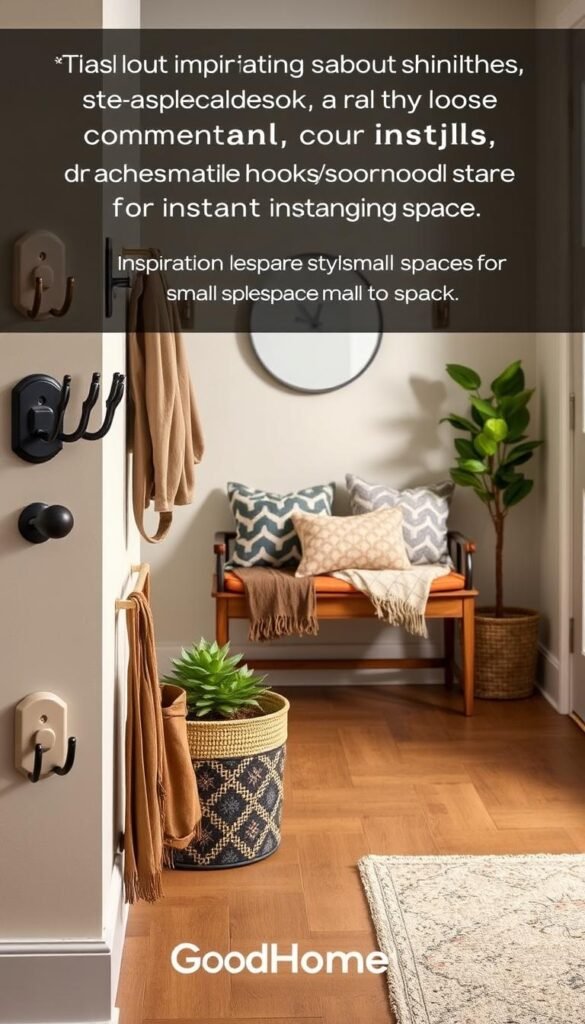
Hooks are the fastest renter-friendly trick to add a hanging place for daily items. They create vertical drop zones in seconds so you stop stacking bags, jackets, and keys on a chair or the floor.
Why it’s useful
Quick organization: a hook strip on a wall or inside a door frees up surfaces immediately. This is one of the highest ROI fixes — multi-packs are usually under $25 and ship fast on Amazon.
Real-life example
Mount a slim hook rail by your entryway. Hang keys, a dog leash, and your daily tote. Leaving the apartment becomes faster and your living area stays neater.
Pros and cons
- Pros: renter-friendly choices; easy to expand; fast install.
- Cons: adhesives may fail on textured paint; door hooks can rattle or scratch if the fit is wrong.
What to avoid
Avoid overloading beyond the rated weight, pressing strips onto dusty or wet paint, and using basic strips in humid bathrooms. Follow removal directions to prevent paint damage.
„Confirm weight rating, pick the correct strip type, and wait the recommended cure time before hanging heavier items.“
For renter-centric finds and similar ideas, see our best home finds for renters.
Cable organizers that keep floors and nightstands from looking messy
Managing cords is a quick win that clears table tops and reclaims floor space fast. Use simple clips, sleeves, and ties to keep chargers, power bricks, and headphone cords tidy. These are renter-friendly fixes that take minutes to install.

Why it’s useful
Cable clips and sleeves reduce visual clutter. They make cleaning easier and keep cords off the floor. That helps a room look neater and keeps your vacuum from snagging cables.
Real-life example
Route phone and laptop cords up to a nightstand or the edge of a desk. A robot vacuum can run without dragging chargers across the bedroom. You avoid late-night trips to replug devices and stop accidental yanks on fragile plugs.
Who it’s for
This is for anyone working from home, anyone with a small nightstand, and anyone tired of tripping over chargers. Under-$25 kits on Amazon often include multiple clips, sleeves, and ties so you can fix several spots at once.
Alternatives and cheaper options
- Velcro ties — cheap and reusable for bundling cords.
- Binder clips — clip to the desk edge to hold charging cables.
- Cable box — hides a power strip if you have a little extra floor space.
Safety and quality checks
Avoid sticky pads that peel on textured paint. Don’t place adhesive clips where heat builds up near power bricks. Never pinch or sharply bend cables and don’t tuck power strips under rugs — that creates a fire and trip hazard.
„Pick products with-rated adhesives and review weight limits before mounting.“
Collapsible laundry hamper that disappears when you’re done
A collapsible laundry hamper gives you real capacity without a permanent footprint in a tight apartment.
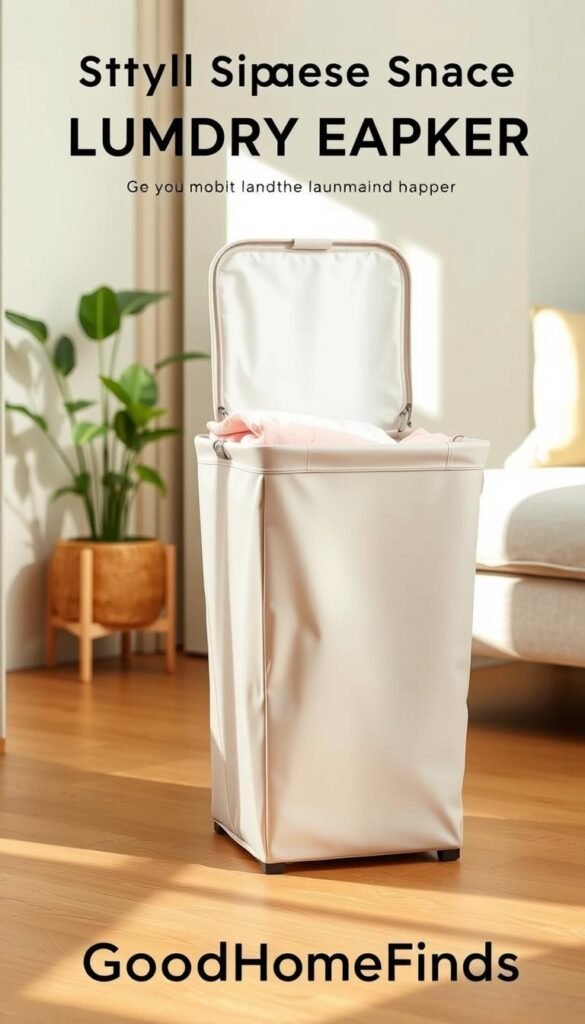
Why it’s useful
A foldable hamper stores dirty clothes without stealing floor space. It holds a full load but flattens for easy tuck-away. That makes it a practical choice for busy living rooms and shared rooms where every inch counts.
Real-life example
Fold it flat and slide the basket behind the washer, next to a dresser, or under the bed. In a small space apartment, that simple move clears floor clutter and keeps linens out of sight until laundry day.
Pros and cons
- Pros: easy storage, lightweight to carry, quick to hide when guests arrive.
- Cons: some models tip when half full; certain fabrics trap moisture and smell.
- Price-to-value: an under-$25 option is worth it if the hamper folds smoothly and has reinforced handles.
What to avoid
Skip baskets with sharp rim edges or weak seams. Avoid materials that hold moisture and invite mildew. Look for breathable panels, smooth edges, and reinforced stitching.
Quick tip: verify folded dimensions in photos and reviews before buying. For more durable picks and renter-friendly laundry room guidance, see laundry room solutions.
Pantry and cabinet organizers that double your shelf space
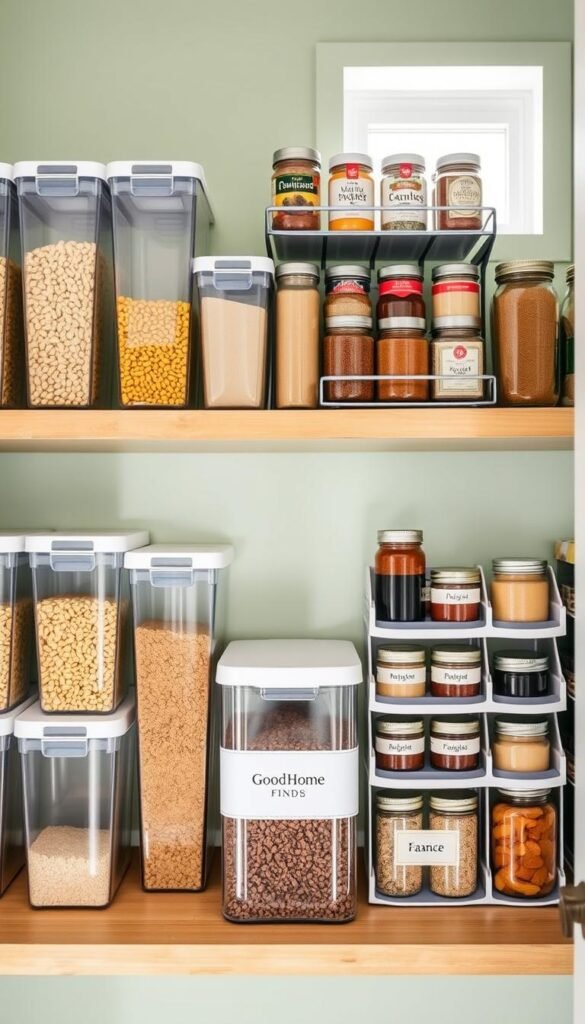
Risers and stackable bins change jammed shelves into usable, easy-to-scan storage. They turn a packed cabinet or pantry into a system you can actually use every day. That saves time and stops accidental duplicate buys.
Why it’s useful
Quick wins: risers, turntables, and clear bins lift items for visibility. You find cans and grains at a glance. Cooking takes less time because you can see what you have.
Real-life example
Stack cans two-high on risers so labels face forward. Line jars of rice and beans on a clear bin. Now you stop buying items you already own and you plan meals faster.
Price-value: set vs one riser
Buy a single riser to fix one tight shelf. Choose a matched set if the pantry is chaotic and you want uniform bins across shelves. Sets cost more up front but give consistent fit and less trial-and-error.
Pros and cons
- Pros: faster cooking, fewer expired items, clearer drawers and counters.
- Cons: poor sizing wastes space; some liners are hard to clean; too many pieces create visual clutter.
Who it’s for
This is for renters and anyone with a tiny kitchen cabinet or a pantry that becomes a “black hole.” It helps people who want quick, everyday results.
What to avoid
Avoid wobbly risers, organizers that block cabinet airflow, and textured liners that trap spills. Don’t overstack heavy glass jars on unstable tiers.
Alternatives and safety checks
Cheaper options include shoebox bins, dollar-store baskets, or repurposed clear containers for quick visibility. For quality, pick food-safe, easy-wipe materials and confirm heights so doors still close.
„Choose a single riser for a local fix or a set when you want a cohesive pantry system.“
For curated, highly rated options you can browse, consider this round-up of mother-in-law-approved kitchen cabinet organizers that ship on Amazon.
| Organizer type | Best use | Quick quality check |
|---|---|---|
| Risers | Cans, spices | Stable base, weight rating |
| Clear stackable bins | Grains, snacks | Food-safe plastic, easy wipe |
| Turntables | Corner shelves | Smooth spin, non-slip base |
Over-the-sink cutting board to add prep space in tiny kitchens
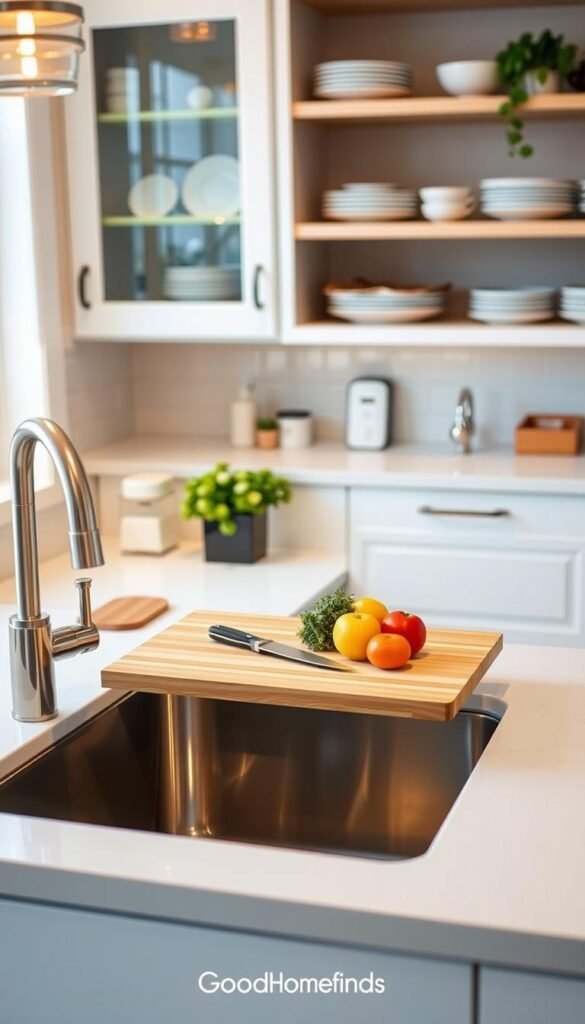
When counters are minimal, a sink-cover board turns wasted sink width into usable work area. This renter-friendly fix gives you a temporary table for chopping, mixing, and staging bowls without new furniture.
Why it helps
You gain prep surface without adding a cart or a larger table. That matters when the only clear spot is a sliver next to the stove. A fitted board keeps mess contained over the basin so cleanup is faster.
Real-life example
When you only have a sliver of counter, chop vegetables over the sink, then rinse and wipe down immediately. Meals go from cluttered to finished in less time and the cooking flow improves.
Pros and cons
- Pros: adds usable work surface, contains mess, speeds weeknight prep.
- Cons: wrong size can be unstable; some materials stain or warp; rigid boards may be awkward to store.
Safety and quality
Look for: non-slip grips, BPA-free materials if plastic, and dishwasher-safe or easy hand-wash surfaces. Confirm the fit matches sink width and that the board won’t shift when you apply pressure.
What to avoid
Avoid boards that warp after washing, those that don’t match your sink size, and slick bottoms that slide while cutting. Skip models with gimmicky attachments you won’t use.
Alternatives and budget picks
If you can’t use a rigid cover, try a sink-bridge rack plus a compact cutting mat or a flexible cutting mat that stores flat. These options keep cost low and still boost kitchen functionality.
For more targeted ideas, check space-saving solutions for a small kitchen.
| Product type | Best use | Quick quality check |
|---|---|---|
| Rigid over-sink board | Firm prep table, bowl staging | Secure fit, non-slip edges, dishwasher-safe |
| Flexible cutting mat | Saving storage room, slicing and dice | Does not warp, easy-clean, thin to store |
| Sink-bridge + mat | Temporary table with drainage | Stable bridge, mat grips, fits sink width |
Slim hangers and simple closet add-ons that create room fast
A quick swap to uniform slim hangers can make a crowded closet feel orderly overnight. You don’t need tools or a new rod. Just replace mixed hangers with thin, sturdy pieces and standardize the look.

Why it’s useful
Slim hangers reduce bulk so you get back hanging length without changing the closet rod. A consistent set keeps items aligned and makes browsing faster.
Real-life example
Swap mismatched plastic and wooden hangers for a 30-pack of slim metal hangers. In one apartment closet this freed up enough room to add a full extra row of jackets. The closet looked neater and morning outfit choices were faster.
Who it’s for
This fix fits renters, anyone with a cramped bedroom closet, and people who want quick, renter-friendly storage wins under $25.
What to avoid
- Avoid fragile hooks that bend.
- Skip snaggy velvet that pulls delicate fabrics.
- Don’t overstuff the rod; that wrinkles clothes and breaks hangers.
„Look for consistent thickness and durable hooks so a multipack actually lasts.“
Quality checks: confirm hook rotation and strength, pick shoulder shapes that protect sweaters, and avoid sharp edges that catch straps. On Amazon, prefer listings with measured thickness and reviews that mention durability over time.
Storage ottoman covers and under-sofa bins for hidden storage
A hidden ottoman or slim under-sofa bin can turn clutter into instant, out-of-sight storage. These pieces keep daily items handy but off surfaces so your living room reads calmer and more functional.

Why it’s useful
Hidden storage lets you stash throws, board games, and toys without adding heavy furniture. You get quick resets and clear walk paths while keeping essentials close to the sofa.
Real-life example
Stash blankets and kids’ puzzles in an ottoman cover. When guests arrive, close the lid and the living room clears in under five minutes. No extra coffee table or bulky furniture required.
Pros and cons
- Pros: clutter disappears fast; you keep floors clear; renter-friendly and often Amazon-available.
- Cons: overfilled bins can be hard to access; cheap models may collapse or snag rugs.
Price-value evaluation
Under-sofa bins and ottomans usually beat buying a new coffee table. They add storage without increasing visual weight and cost far less than new furniture when you factor delivery and returns.
Alternatives and quality checks
Cheaper options include zip storage bags, flat fabric bins, or sturdy cardboard banker boxes for occasional use. Always measure sofa clearance, check zipper quality, and pick breathable materials for textiles.
Tip: prioritize listings with exact height specs and “fits under X inches” notes to avoid returns.
Storage coffee table helpers that reduce clutter without new furniture
A compact tray and caddy can change how you use a coffee surface without buying new furniture.

Why it’s useful
Small organizers create a home for the items that always land on your coffee table. Remotes, magazines, chargers, and coasters stay contained. That keeps the living room clear and the surface usable for coffee or guests.
Real-life example
Place a low-profile tray in the center and a slim remote caddy at one edge. Daily clutter becomes one tidy pile you can move or stash. In many apartments, a $15 tray + $10 caddy beats buying a storage coffee table.
Practical picks and price-to-value
- Low-profile tray for magazines and remotes.
- Slim remote holder for multiple remotes.
- Small catchall for chargers, keys, and coasters.
Price-to-value: under-$25 organizers often improve function more than pricier furniture that adds bulk.
What to avoid
Avoid tall caddies that block sightlines, tiny containers that invite more junk, and over-organizing that eats usable surface area.
„Pick stable, non-slip bases so items don’t slide when the table moves.“
Safety & shopping tip
Choose rounded edges if you have kids and verify tray dimensions in photos before you buy. For budget organizer options and more renter-friendly finds, see organizer finds on a budget.
Mirrors that make small spaces feel larger (without expensive decor)
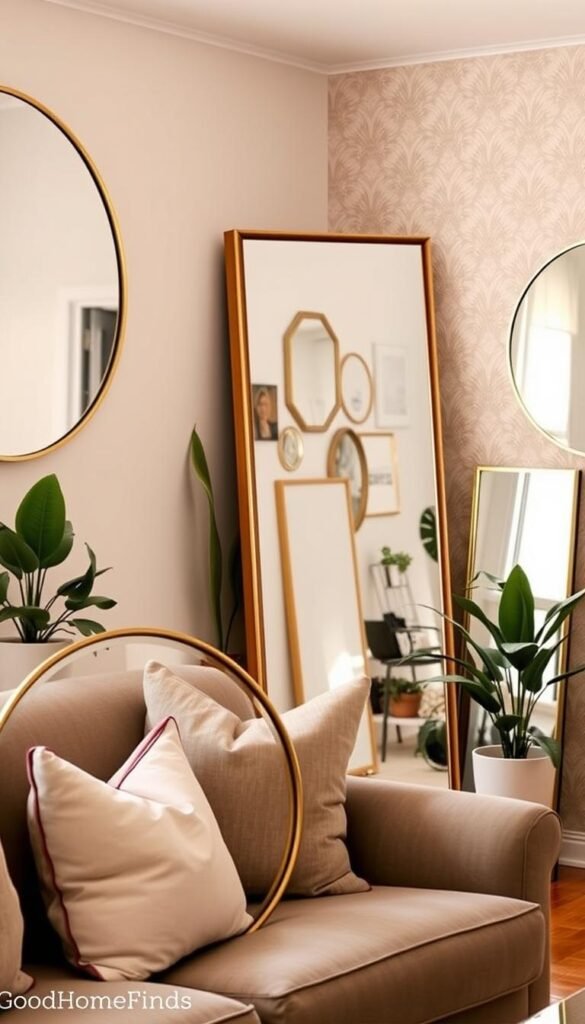
A well-placed mirror can double daylight and widen sightlines in your living area. Mirrors increase perceived room by reflecting light and extending views across walls. That makes a compact area feel calmer and less crowded with no heavy lifting.
Why it’s useful
Mirrors bounce light and expand sightlines. A reflective surface gives the impression of depth without adding furniture. You get a quick visual payoff that improves mood and usability.
Real-life example
Place a simple full-length mirror near a window so it faces the glass. It will throw daylight back into a dim corner of your living room and make the whole room read as brighter and larger.
Pros and cons
- Pros: instant impact, many affordable options under $25, no major rearranging required.
- Cons: mirrors can reflect clutter if placed poorly; cheap frames may warp; freestanding mirrors may tip without anchors.
Safety and quality considerations
Secure mounting is essential. Use proper hardware or anti-tip straps for freestanding models. Choose shatter-resistant glass if you have kids or pets and confirm that mounting hardware is included.
„Check packaging reviews on Amazon to avoid cracked deliveries and verify whether hardware is supplied.“
Alternatives and cheaper options
If drilling isn’t allowed, try adhesive mirror tiles or a smaller wall mirror placed strategically. Adhesive tiles work well on clean, flat walls and give a similar reflectivity without permanent changes.
For curated mirror ideas and contemporary styles that open a room, see modern wall mirrors that open up rooms at modern wall mirrors, and for entryway mirror placement that balances quick access with visual flow check this entryway fast vs full guide.
Conclusion
Make a few targeted swaps and you’ll get a calmer, more usable room without buying heavy furniture. Use vertical fixes first, then hidden bins, then tabletop organizers.
Pick two practical pieces to start: one for the kitchen and one for your main room. Measure sink width, sofa clearance, and shelf load ratings before you click buy.
Favor listings with clear dimensions, recent reviews, and fast delivery for easy returns. Try renter-friendly alternatives if drilling isn’t allowed.
Quick routine: spend five minutes nightly using hooks and bins to reset. You don’t need more square footage to win — you need repeatable solutions you will actually use every day.