
You want a tidy living room that still works for kids. The challenge is clear: the same space must support relaxing, hosting, and fast cleanups. You need solutions that match your furniture and feel calm.
This guide shows practical, renter-friendly options. Expect quick-assemble pieces, mobile units, closed-door options, and open shelves with decor-style baskets. Most picks avoid drilling and stay move-friendly for a future rental.
I’ll focus on systems that work in small space settings. You’ll get ideas under $25 and under $50, plus a few worth-it upgrades where durability matters. I’ll also call out safety basics like tip-over risk and rounded edges.
Think in zones and real furniture. The goal is calm visual lines, less bright plastic on display, and setups your kids can use for a 60-second reset.
Key Takeaways
- Choose pieces that match your home and create tidy zones.
- Renter-friendly fixes avoid drilling and use mobile or freestanding units.
- Look for kid-accessible options that allow a quick reset in under a minute.
- Budget picks under $25 and $50 will be listed, plus durable upgrades.
- Prioritize safety: anchor tall units, pick rounded edges, and avoid pinch points.
What “Adult-Looking” Toy Storage Means in Real Homes
An adult-looking approach starts with pieces that belong in a living room. Choose media consoles, armoires, or closed cabinets that match your other furniture and read as part of the room’s design.
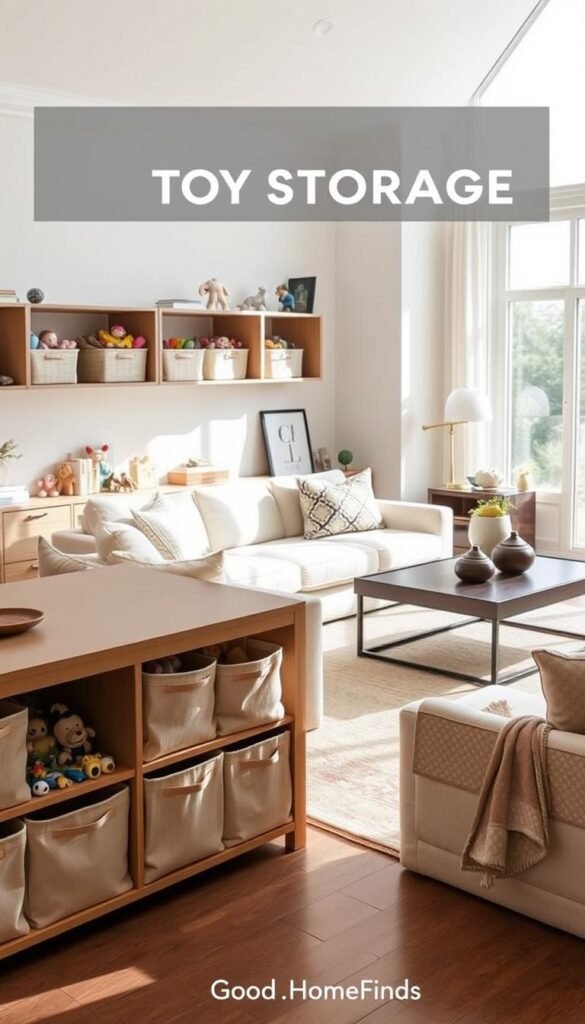
Focus on how things look closed. The trick is to pick units that look tidy when doors are shut. That makes quick resets predictable and fast.
Quick reset: how it should look in 60 seconds
Set a 60-second standard: scoop loose items into a bin, shut doors, and smooth cushions. This makes the room guest-ready without extra effort.
Kid-accessible without visual chaos
Keep low shelves, light bins, and simple categories. Let kids reach their things. Use fewer colors and consistent bins to lower visual noise.
- Define adult-looking: blends with furniture, not a separate play set.
- Visual rules: fewer materials, matching bin tones, and larger categories.
- Trade-off: more concealment means less granular sorting.
| Feature | Why it works | Best for |
|---|---|---|
| Closed cabinets | Hides clutter quickly | Living rooms used for play + hosting |
| Low open shelf with bins | Kid access, tidy look when organized | Preschoolers and early school age |
| Matching baskets on bookshelf | Decor-forward, easy reset | Families wanting style and function |
Renter-Friendly Rules: No Drilling, No Damage, Easy Setup
Start with no-drill options so you can tidy up quickly and keep your deposit. Choose pieces you can move and reuse. That makes upgrades and room swaps painless.
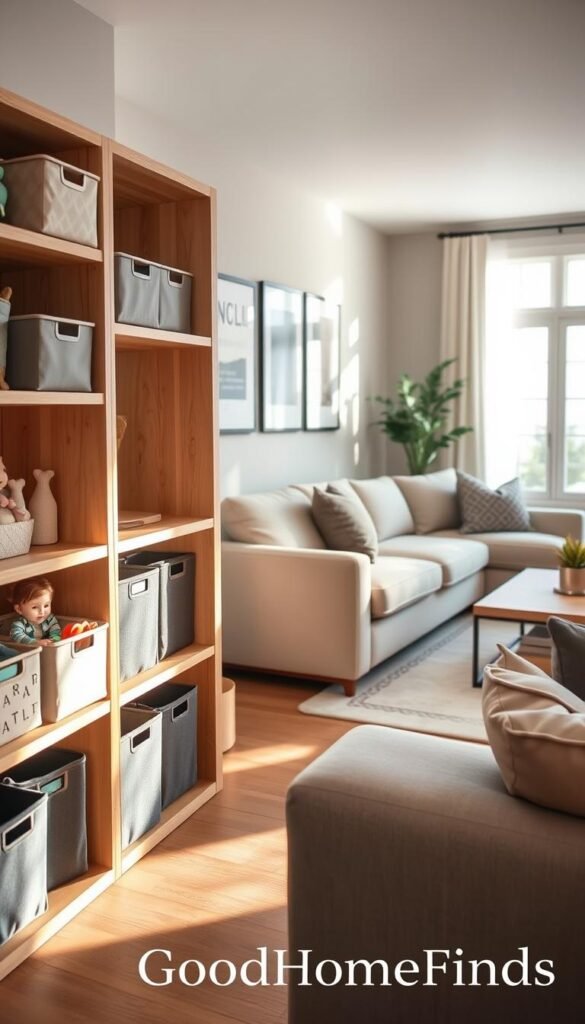
Go freestanding, rolling, or over-the-door
Prioritize freestanding cabinets, rolling carts, and over-the-door organizers. These ones avoid patching walls and work in short-term rentals.
Leaning ladder shelves and freestanding book ledges are good if you can’t mount anything. Place ledges on low furniture for safety.
Weight limits, tip-over prevention, and rounded edges
Pick a stable unit with a wide base and low center of gravity. Keep heavy board games and bulky trucks on the lowest shelf or drawer.
Use non-drill tip-over straps when possible. If a piece is tall, note that manufacturer anchors are the safest choice when allowed.
Kids prefer easy-open bins. Avoid airtight lids that frustrate small hands. Rounded edges and soft-close drawers are worth it in tight apartments.
- Renter rules: freestanding first, rolling second, over-the-door third.
- Stability tips: wide base, short height, non-slamming doors.
- Weight check: heavy items low; light items higher.
| Concern | Renter-Friendly Fix | When to use |
|---|---|---|
| Tip-over | Non-drill straps or weighted base | Freestanding tall units |
| Wall rules | Over-the-door organizers | No-peg or no-screw leases |
| Kid access | Open bins with easy lids | Daily play and cleanup |
Start With Zones So Toys Don’t Take Over the Room
Start by carving the room into clear zones so play stays contained and the living area feels calm.
Decide where play belongs and where you relax. Float the sofa or shift seating to make a straight wall available for low shelves or a bench. That wall becomes the place for bins and quick concealment.
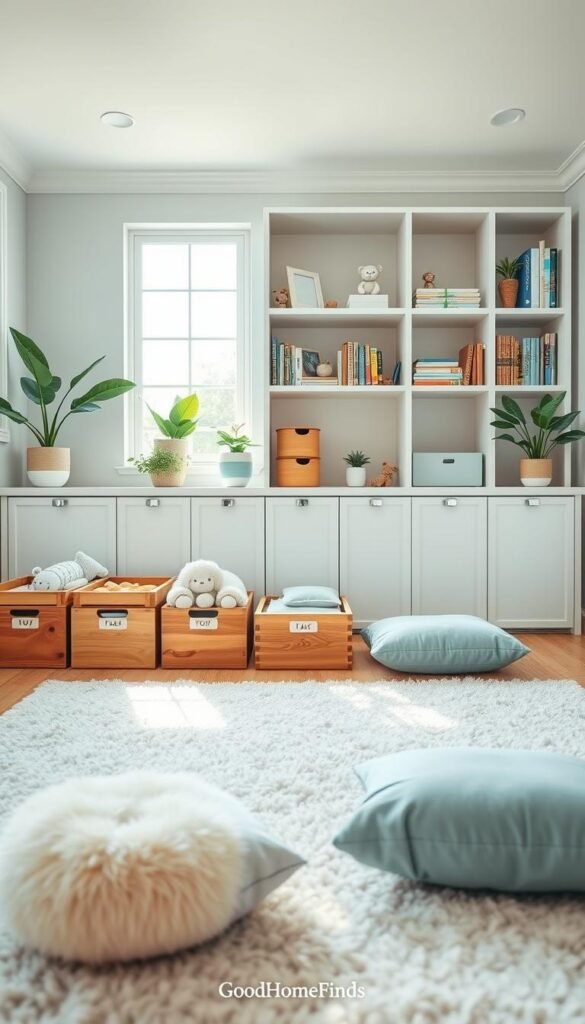
Define active and quiet areas
Use a small rug or a low shelf to mark the play strip. This simple boundary keeps pieces off traffic paths and signals where cleanup happens.
Use corners and blank walls as containment
Push storage into a corner or bump-out so clutter feels contained. In tight apartments, a narrow bookcase against a blank wall works well without blocking flow.
Keep the coffee table useful for puzzles and games
Pick a hard, wipeable top for board games and building. Keep one active play bin near the table and rotate its contents. That way the table stays usable for adults and cleanup takes seconds.
| Move | Why it works | When to use |
|---|---|---|
| Float sofa | Creates a play wall and clear traffic line | Open-plan living rooms |
| Small rug or low shelf | Defines play boundary without permanent change | Studios and rentals |
| Hard coffee table | Supports puzzles, games, and wipeable mess | Frequent tabletop play and hosting |
For a deeper plan, see this compact mix of renter-friendly fixes at small-space fixes. Zoning is the quickest way to cut cleanup time and keep your living room functional for both play and hosting.
Closed-Door Storage That Hides Toys Fast
Closed-door cabinets are the fastest way to hide clutter and restore a calm living area. They read as furniture, not play gear, and work well when your living room doubles as a family hangout.
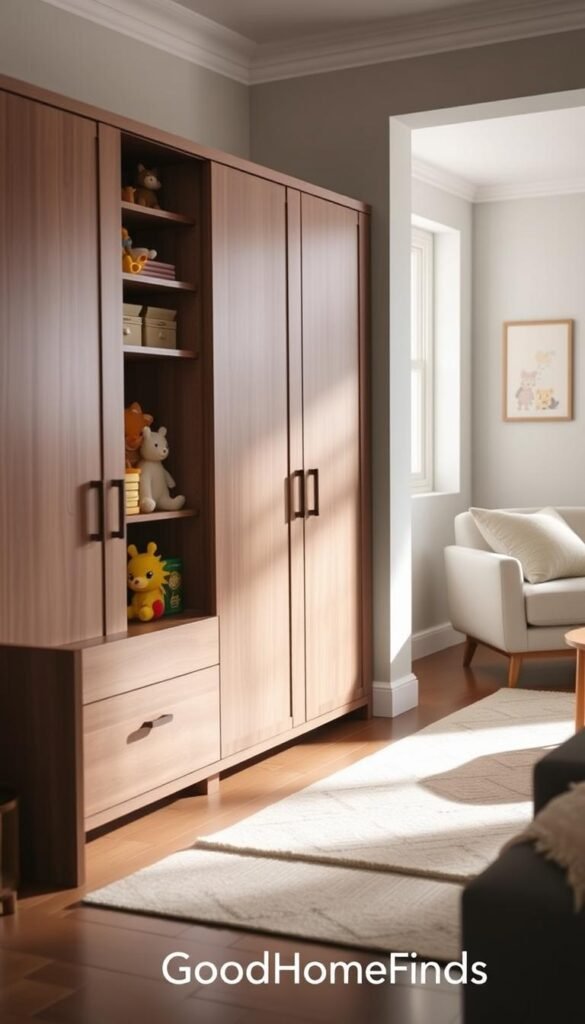
Practical pieces to consider
- Media console with doors — fits under a TV and hides bins neatly.
- Wardrobe or armoire — tall option for bulkier items and rotation bins.
- Buffet cabinet or storage credenza — looks like dining or office furniture.
What to measure before you buy
Measure door swing clearance and aisle width. Check interior shelf height so bins fit. Make sure the piece won’t block vents or walkways.
Pros, cons, and safety
Pros: fastest visual reset, excellent for hosting, keeps bright items out of sight.
Cons: kids often dump inside and small pieces can get lost unless you use inner bins. Doors without soft-close can pinch fingers.
Safety: heavier cabinets should be anchored. If you must avoid anchors as a renter, pick a wider, lower piece and store heavy items on the bottom shelf.
„Choose pieces that look like ordinary furniture so the room reads calm even during play.“
Best for: families whose living room is also the family room and must look normal most of the day. If closed-door units fill up, move messy categories like slime or sand to a closet zone.
For a quick comparison of budget vs upgraded options, see this cheap vs premium storage guide.
Open Shelving That Still Looks Grown-Up (With Baskets That Read as Decor)
Open shelving can look grown-up when you treat it like a curated display, not a catchall. Keep the look calm by repeating one basket style and sticking to a limited color family.
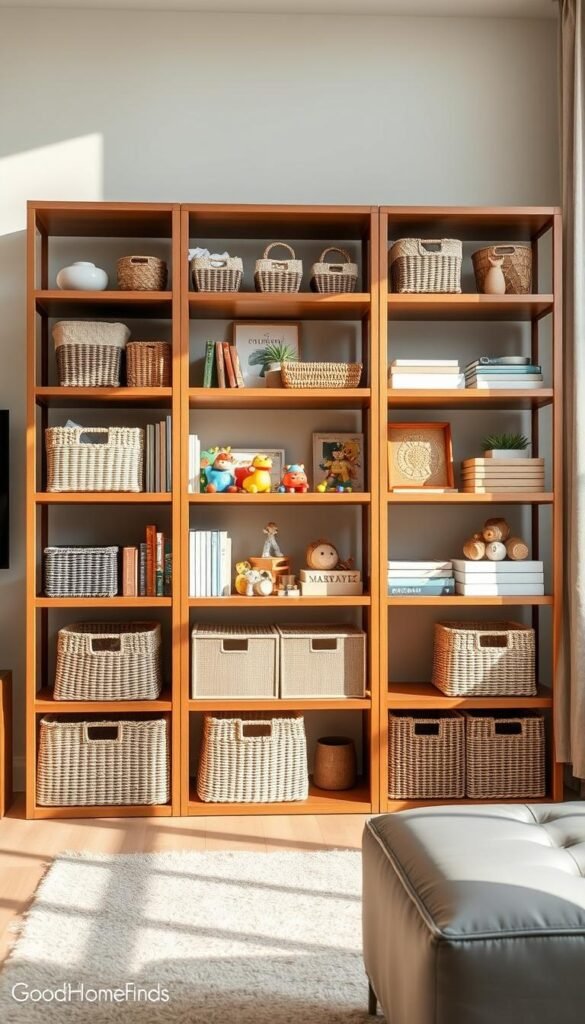
Why fabric and woven baskets work: they soften shapes, hide messy edges, and read like decor on a shelf. Choose neutral textures so the shelving blends with furniture.
Simple system: one basket per category—blocks, dolls, cars—so kids grab and go. Put labels on the inside edge if you want hidden prompts rather than visible tags.
- Best for: families who want quick access without opening doors.
- Maintenance: use removable liners for wiping, shake baskets outside now and then, and pick baskets with handles for fast carry-out.
- Honest con: open shelving needs restraint. Keep overflow in a closet or rotation bin so the shelf doesn’t become a pile.
Small-space alternative: pair one open shelf with a closed cabinet for a pretty display plus a true hideaway.
For more renter-friendly ideas and picks, see the best organization finds to complement open setups.
Budget Under $25: Small, Stylish Fixes That Make a Big Difference
You don’t need big furniture to make a meaningful tidy-up—small wins work. Pick a couple of budget items and you’ll cut visible mess fast.
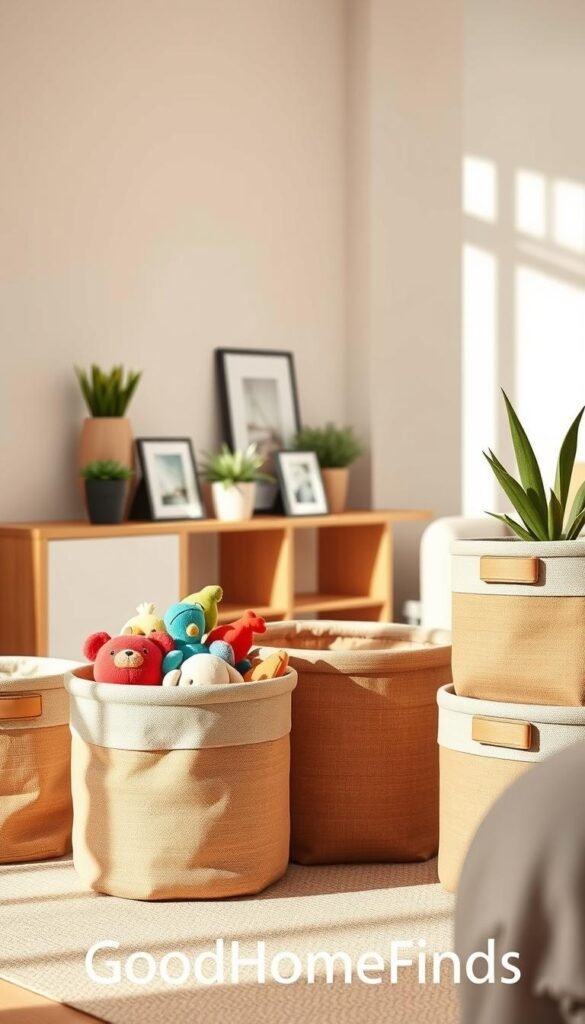
- Recycled stacking crates — foldable, stackable, and HAY-style looks. Use them for trains, bath toys, or weekend craft supplies.
- Zipper pouches & pencil cases — keep tiny pieces and mini-sets together so you stop hunting on the floor.
- Labels — picture + word labels help kids match and put things away without constant prompting.
How to use them: put related zipper pouches inside one larger storage bins. This „bags inside bins“ method keeps sets together and speeds up clean-up.
Pros/cons
- Pros: flexible, renter-friendly, easy to move around the house.
- Cons: open crates can look busy if overfilled—cap each crate to one category.
| Toy type | Best under-$25 container | Best room placement |
|---|---|---|
| LEGO | Zipper pouches inside a recycled crate | Under console or closet shelf |
| Bath toys | Recycled stacking crate | Bathroom shelf or tub caddy |
| Crafts | Pencil cases + small crate | Art corner or rolling cart shelf |
| Dolls & small sets | Zipper pouch bundle | Bedroom bin or under-side table |
Budget Under $50: Upgrades That Create Instant Order
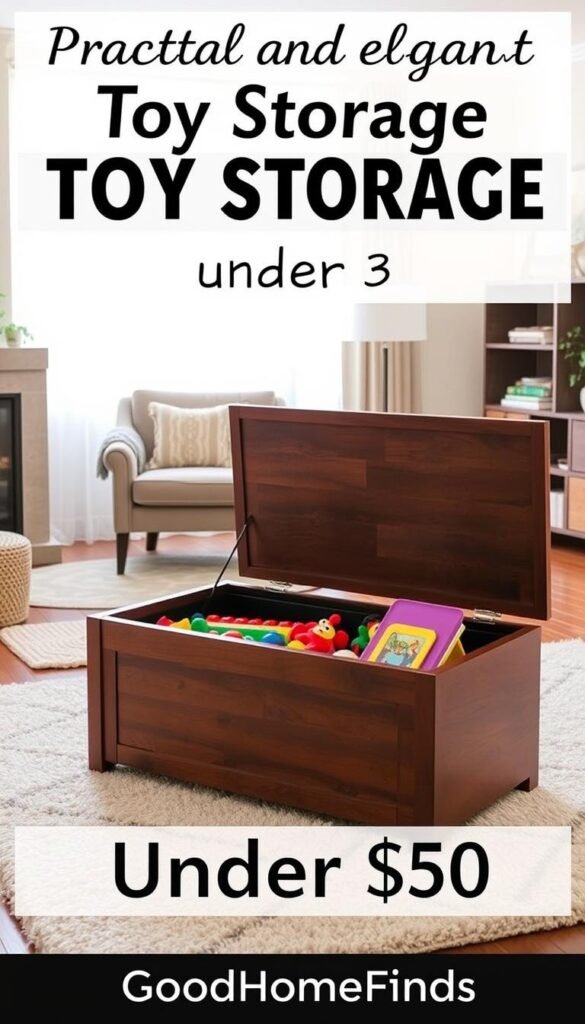
Small upgrades under $50 can make a room feel organized instantly. These picks create a repeatable daily system, not just a place to dump stuff.
Rolling cart for art and homework
Why it works: a 3-tier rolling cart (~$40) moves between the kitchen, living room, and bedroom. It keeps supplies handy and cuts scatter across the room.
Tip: use cups and dividers and adopt a „top-tray only“ rule to limit visual clutter.
Wall and ledge shelving for tight corners
Front-facing book ledges (~$35) make reading corners tidy and reduce floor piles. If you can’t drill, use freestanding picture ledges or place a ledge on a low dresser.
Visibility vs. clutter
Open ledges look neat with books, but mixed categories attract mess fast. Keep like items together and rotate overflow to a closed bin.
Quick comparison by apartment size
| Apartment | Best under-$50 move | Why |
|---|---|---|
| Studio | Rolling cart + collapsible bins | Portable system fits compact space and doubles as a surface |
| 1‑bed | Cart + one closed bin | Mobile supplies + a hideaway for overflow |
| 2‑bed | Cart + dedicated book ledge per kid | Zones kept separate; easy bedtime routines |
Safety note: pick carts with stable wheels and store heavier items on the bottom tier to reduce tipping.
Quick Clean-Up Wins for Tiny Pieces
Tiny pieces are the nightly defeat for many parents; a simple system can regain minutes and sanity.
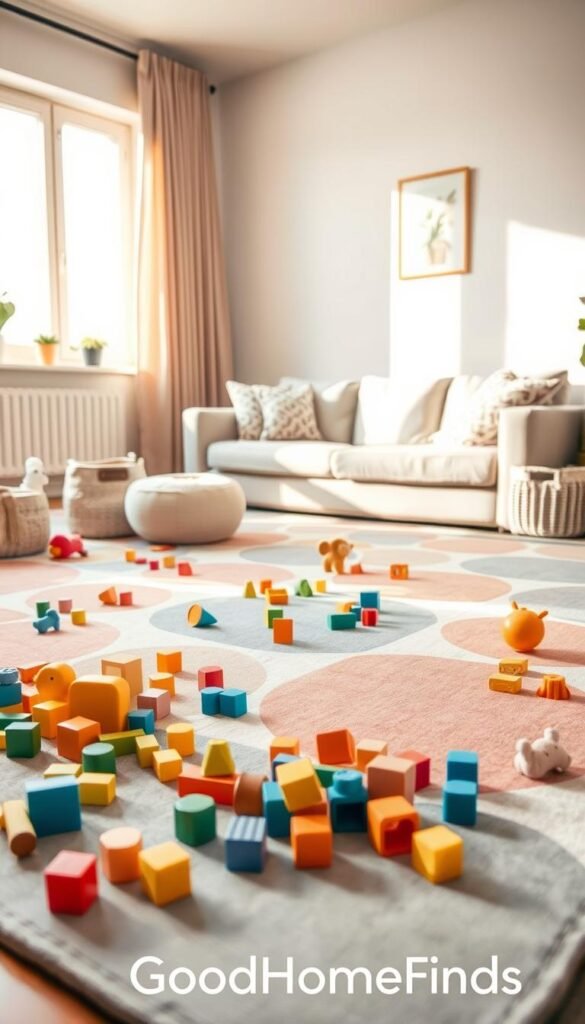
Small parts multiply, hide in corners, and hurt when stepped on. That makes tidy-up feel impossible. A focused routine solves this in under a minute.
Drawstring play-mat bags for blocks and sets
How it works: spread the mat, play on the surface, then pull the cord to make a grab-and-go bag. It doubles as a play board and a transport bag.
- Pros: fast reset, easy to carry, creates a defined play boundary that keeps pieces from traveling.
- Cons: not great for keeping sets separated; better for households that focus on one build at a time.
- Best for: families who hate sorting but love building and want the living room usable during the week.
Alternative: shallow bins for dump-and-go
If you prefer no mat, use shallow cafeteria-style tubs on a coffee table. Kids can pull pieces up and then slide the tub under the table when done.
Safety note: keep tiny-piece systems out of reach of babies and toddlers. Store the whole bag or bin up high when not supervised.
Quick tip: this is a daily-use method meant to save a few minutes each night. It preserves order, not perfection, and works well with a simple rotation or occasional sorting session.
Under-Bed and Low-Profile Storage for Small Bedrooms
Under-bed solutions reclaim hidden square footage and keep a small room feeling uncluttered. They free floor space and cut visual clutter without adding bulk. For renter-friendly setups, pick units that slide out cleanly and need no bed modification.
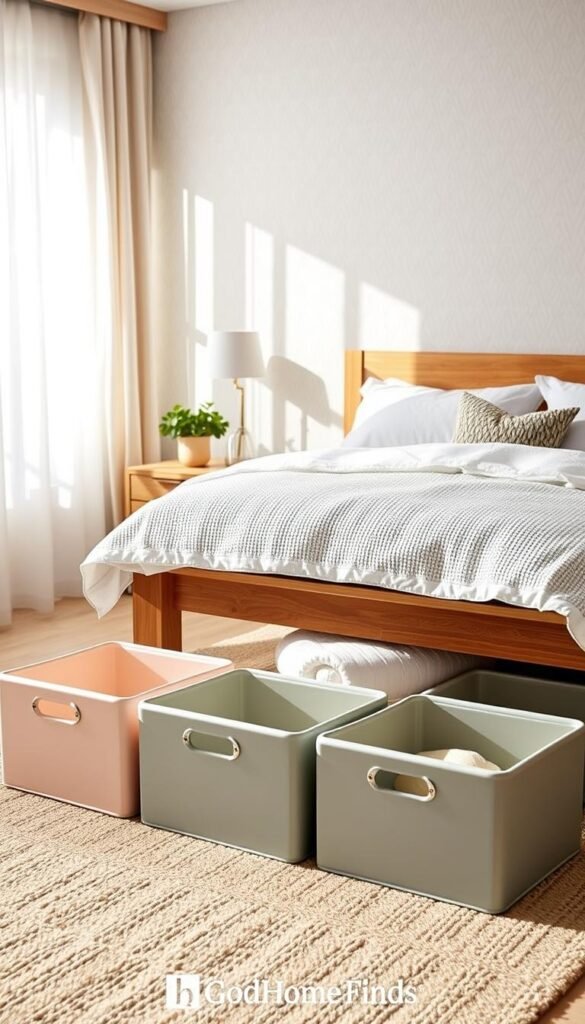
Rolling drawers that handle bulky items and board games
Low-profile rolling drawers work well for bulky items and board games. A steel drawer option is durable and protects boxes and puzzles better than fabric bins. Wheels make access simple for adults.
Pros and cons: durability vs easy access
- Pros: strong frames protect contents, clear floor space, smooth pull-out access.
- Cons: durable units can be heavy; some kids need help pulling them out. Cheap wheels may snag on rugs.
Kid-access tip: use two lighter drawers instead of one deep unit. Keep the frequent-use drawer nearest the bed edge.
Renter-friendly guide: measure clearance including slats and supports. Choose freestanding drawers that won’t require screws or permanent changes.
Safety reminder: spread heavy items evenly so a drawer won’t tip if a child yanks it open.
If space is very tight, use flat zipper bags for costumes or plush and keep one rigid bin for games to avoid crushing pieces.
| Type | Best for | Pros | Cons |
|---|---|---|---|
| Steel rolling drawer | Board games, puzzles | Durable; protects boxes; smooth pull | Heavier; pricier |
| Plastic low-profile drawer | Bulky toys, craft bins | Lightweight; easy to clean | Less durable; wheels can snag |
| Fabric zipper bag + rigid bin | Plush, costumes; one games bin | Super flat; affordable; fits tight room | Soft items can compress; less protective |
Board Games, Puzzles, and “Table Toys” That Need a Home
Small, table-sized play items need a predictable home near where you actually use them.
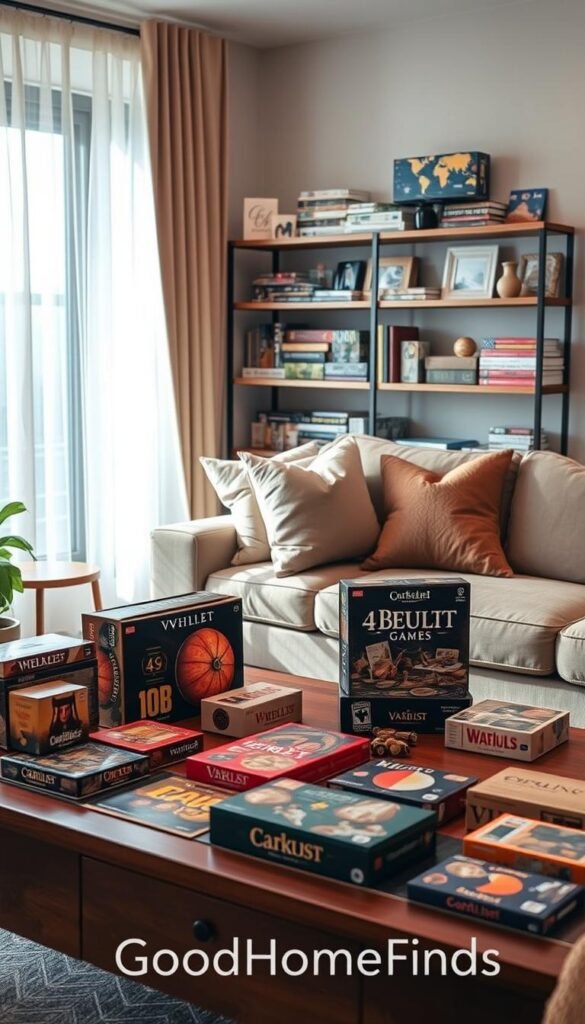
What counts as table toys: puzzles, card sets, small board games, and compact building kits. These items belong close to the seating area so they stay contained and get used.
Where to keep games so adults can still host
Store current favorites in a closed media console or cabinet next to the sofa. Closed furniture hides stacks and keeps the room guest-ready.
Practical rule: keep only 5–10 favorites in the living room. Move the rest to a closet rotation bin to avoid overflow.
How a hard coffee table supports play
A sturdy coffee table holds pieces at adult height and reduces floor sprawl. It makes pausing and resetting faster.
Hosting tip: use one shallow „game night tray“ you can carry out and tuck away so the surface clears quickly.
- Pros: nearby access encourages play and quick cleanups.
- Cons: proximity can invite clutter unless categories are limited; closed units need inner bins to sort small parts.
- Renter-friendly alternative: a lidded basket under a side table works if a console won’t fit.
| Item | Best placement | Why |
|---|---|---|
| Card games & small sets | Console or lidded basket | Hidden but handy for guests |
| Puzzles | Coffee table top / tray | Flat work surface; less floor scatter |
| Rotation bin | Closet | Prevents living room overflow |
Small Toy Organization That Actually Stays Organized
A simple category system keeps small pieces from taking over and saves you cleanup time.
Start by choosing one consistent bin size for the room. When bins match, you can swap categories without rebuying. Fewer sizes means fewer awkward fits and faster resets.
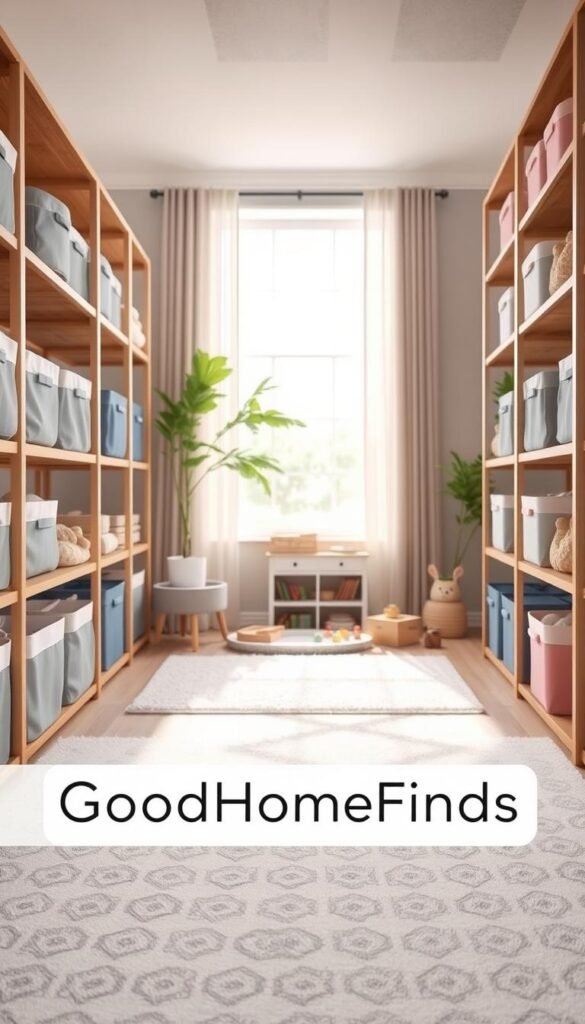
Keep sets together with bags inside bins
Place mini-sets and tiny parts in zipper pouches or pencil cases. Then drop those pouches into the larger bin. This „bags inside bins“ method prevents mystery pieces and speeds sorting.
Shoebox bins for low-use categories
Reserve shoebox-sized bins for felt pieces, accessories, and fidgets. They sit well on high shelves or in closets and free prime bins for daily favorites.
Monthly tiny-toy purge
Spend 10 minutes once a month to reunite sets, toss broken bits, and reset labels. This small habit stops overflow and saves the long weekend clean.
„Consistency beats perfection—pick sizes and routines you will actually keep.“
| Method | Best for | Quick win |
|---|---|---|
| Consistent bins | Shared rooms | Quick swap and tidy look |
| Bags inside bins | Mini-sets and accessories | Keeps sets intact |
| Shoebox bins | Low-use pieces | Containment without prime space |
| Monthly purge | All households | Prevents big cleanups |
Pros: categories speed cleanup and reduce time spent hunting. Cons: they need limits—when a bin fills, rotate, purge, or upgrade; don’t add „just one more.“ For budget-friendly organizer picks that pair well with this system see organizer finds under budget.
Unexpected Adult-Looking Storage: Filing Cabinets and Drawer Units
Consider a slim drawer unit as an unexpected living-room ally for quick cleanups. These pieces read like furniture, not play gear. They fit tight footprints and pair well with neutral decor.
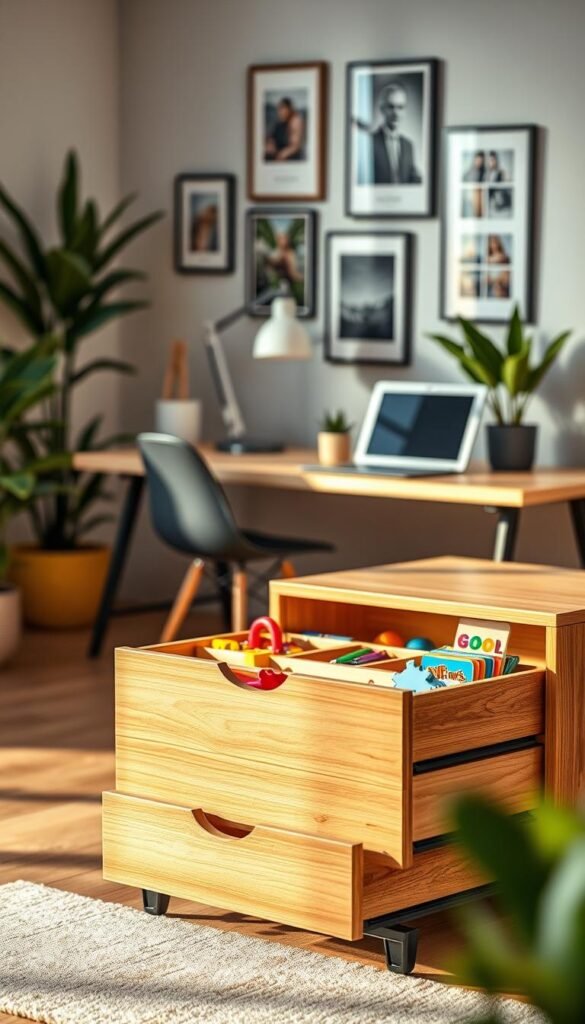
Why deep drawers beat digging through stacked bins
Deep drawers let you see contents from above so you don’t dump one bin over to find a missing piece. Full-extension slides pull the drawer fully out, making access fast and neat.
Benefit: less visual clutter and a flatter profile that improves room design.
Suggested drawer assignments by age
- Baby: teethers, rattles, soft cloth books in a shallow top drawer for quick reach.
- Toddler: chunky vehicles, board puzzles, and simple manipulatives in middle drawers for independent play.
- Preschool: fine-motor kits, dramatic-play sets, and craft pouches in lower drawers so kids can access them safely.
- Shared family drawer: keep one drawer near the sofa for quiet-time items like small games and travel sets.
Pros, cons, and safety notes
Pros: clean exterior, fast reset, and easy to repurpose later for office use. Many units fit narrow spaces better than closed cabinets.
Cons: less visibility without dividers. Drawers can pinch fingers if they lack soft-close hardware. Some metal filing units feel industrial; choose a dresser-style piece if you want softer looks.
Safety guidance: use smooth slides, child-safe stops, and place heavier categories in lower drawers to lower tip-over risk. Anchor taller pieces when possible.
| Feature | Why it works | Best for |
|---|---|---|
| Filing cabinet | Deep drawers, narrow footprint | Small rooms needing hidden bins |
| Dresser-style unit | Softer design, child-safe stops | Living rooms where decor matters |
| Drawer dividers | Improve visibility and sorting | Loose parts and craft supplies |
When It’s Better to Store Toys Somewhere Else
You can keep the living area tidy by moving messy or loud gear elsewhere. That honest choice makes the room guest-ready and calm while still keeping play accessible.
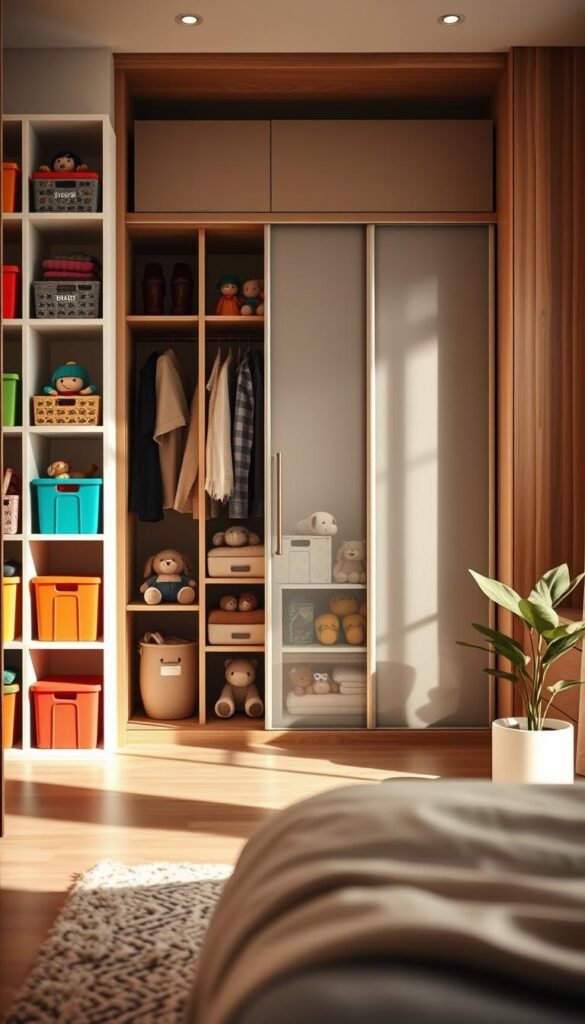
Closets work best for dress-up, noisy items, and messy projects that need supervision. These categories are easier to contain behind a door. Use bedroom closets for costumes and a hallway closet for supervised sets.
How to split without losing track
Use a simple rule: the living room holds „daily use, easy cleanup“ items. The closet keeps „special projects and chaos.“
Track locations with a one-page category list on your phone. Or label bins with the location: „Living Room“ vs „Closet.“ That prevents hunting and keeps rotation tidy.
Renter-friendly closet setup
- Freestanding shelving for folded bins.
- Stacking clear bins or neutral baskets so you can see contents.
- Over-the-door pockets for dress-up accessories and small parts.
Rotation strategy: store about half the collection out of sight and swap monthly. This reduces overwhelm and keeps the visible set fresh.
„Put messy, loud, or supervised items behind doors so your main room stays calm and usable.“
| What to Move | Where | Why |
|---|---|---|
| Dress-up costumes | Bedroom closet | Easy containment and quick access for supervised play |
| Messy projects (sand, beads) | Hall closet with bins | Safer cleanup and keeps surfaces clean |
| Loud or bulky sets | Under-bed or closet shelves | Reduces noise and frees living area for hosting |
Best-for note: This approach is worth it when you host often or work from your house and need fast visual calm. For renter-friendly entry ideas, check a practical entryway solution guide.
Room-by-Room Overflow Strategies for Apartments
A room-by-room plan keeps stray items from taking over your whole apartment. Define each space so things have a predictable home and cleanup is a quick habit.
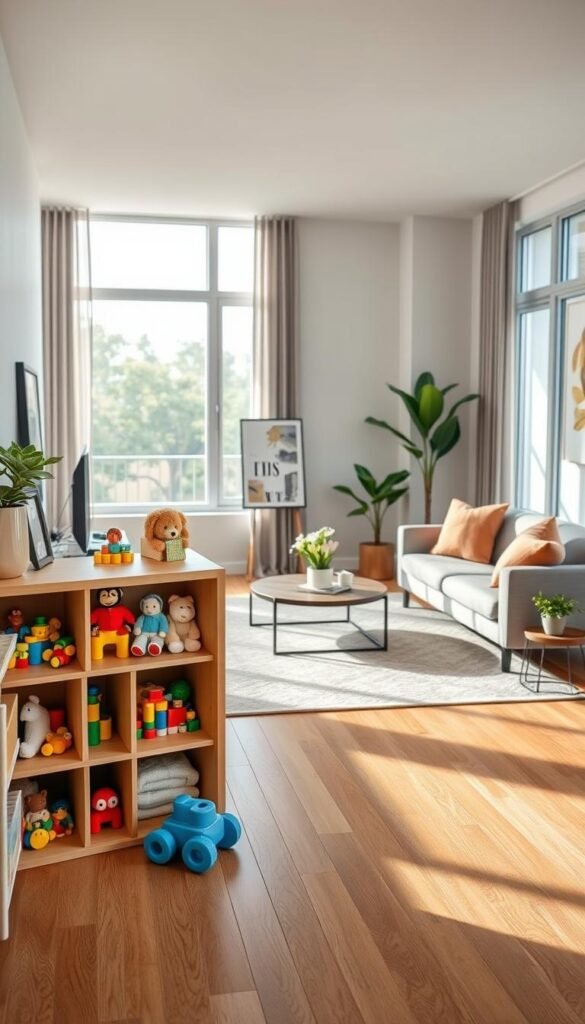
Entryway: a neutral drop zone
Use one neutral basket by the door for the small things that always land there—books, headphones, and a grab-and-go game. Make a nightly rule: empty it into its proper bin before bed.
Closets: vertical zones for rotation
Stack by height. Top shelves hold rotation boxes. Middle shelves store daily categories. Bottom holds bulky items. Vertical zoning uses the whole wall and frees floor space.
Bathrooms: contained drying without hooks
Pick a freestanding mesh crate or a handled plastic tub. Let bath pieces drain inside, then lift to the sink to empty. No drilling or hooks needed—renter-friendly and quick to move.
Kitchens: keep craft kits away from food
Keep art supplies in a rolling cart or a lidded box on a pantry shelf. Label the cart and set a clear boundary so craft mess never mixes with dishes.
Maintenance notes: use wipeable liners under craft areas, shake out baskets weekly, and do a five-minute end-of-day sweep into the correct room. When every room has rules, cleanup stops being a scavenger hunt and becomes a simple routine for your family and house.
Pros/Cons and Best-For Guide: Pick the Right Setup for Your Space
Focus on solutions that fit your daily routine and apartment footprint. Below is a simple decision guide to match practical storage ideas to studios, one-bed, and two-bed units. Use renter-friendly pieces and aim for one main system plus one backup.
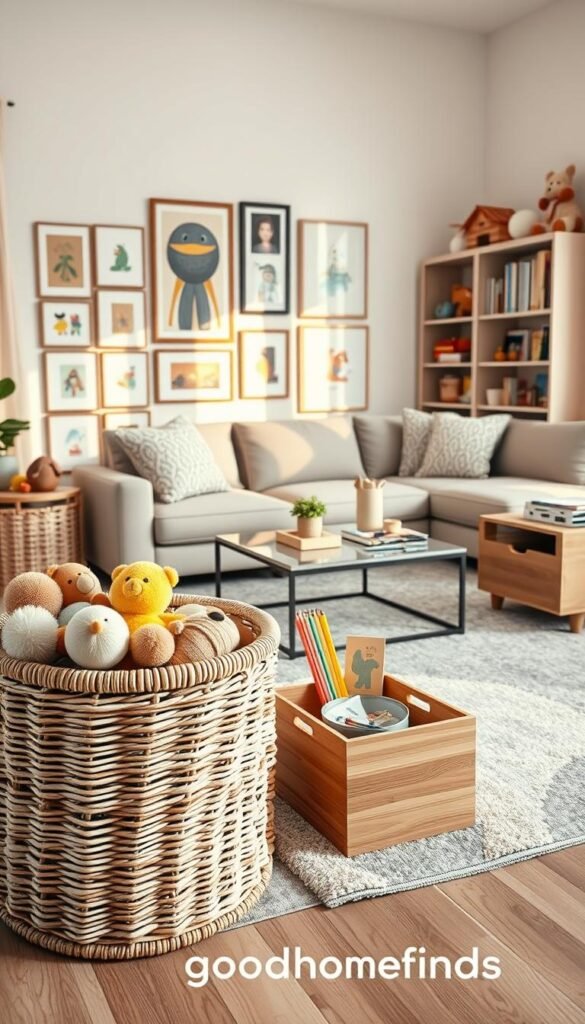
Best for studios
What to pick: mobile carts, collapsible bins, and under-bed drawers.
Why: everything shares one living field so fast resets win. Under-bed keeps bulk hidden without adding visual weight.
Best for one‑bed apartments
What to pick: a concealed cabinet in the main room plus a rolling cart for art and homework.
Why: a closed piece keeps the living area guest-ready while a cart offers flexible work surface and kid access.
Best for two‑bed apartments
What to pick: clear zones, consistent category bins, and a rotation closet.
Why: more bedrooms mean more items; zoning and rotation prevent overflow in shared spaces.
Quick pros & cons
- Closed-door: best look, slower access, great visual calm.
- Open shelving: fast access, can look busy, needs restraint.
- Mobile units: flexible and renter-friendly, require rules to avoid drift.
- Under-bed: hidden and out-of-sight, can be heavy or hard for kids to use.
| Type | Best for | Setup | Kid independence | Visual calm | Maintenance |
|---|---|---|---|---|---|
| Closed-door | Shared living areas | Cabinet + inner bins | Moderate | High | Low (if labeled) |
| Open shelving | Quick access zones | Shelf + matching bins | High | Moderate | Medium (regular editing) |
| Mobile | Small space flexibility | Cart or rolling drawers | High | Variable | Medium (wheel checks) |
| Under-bed | Hidden overflow | Low-profile drawers | Low–Moderate | High | Low (periodic pull-out) |
Practical tip: pick one primary system that matches your daily routine and one support system for overflow. Too many methods become their own clutter problem.
Toy storage real life: Daily Routines That Keep It Looking Adult
Short, repeatable actions are the secret to keeping a shared room calm. You don’t need a long overhaul — you need a nightly habit that takes under ten minutes.
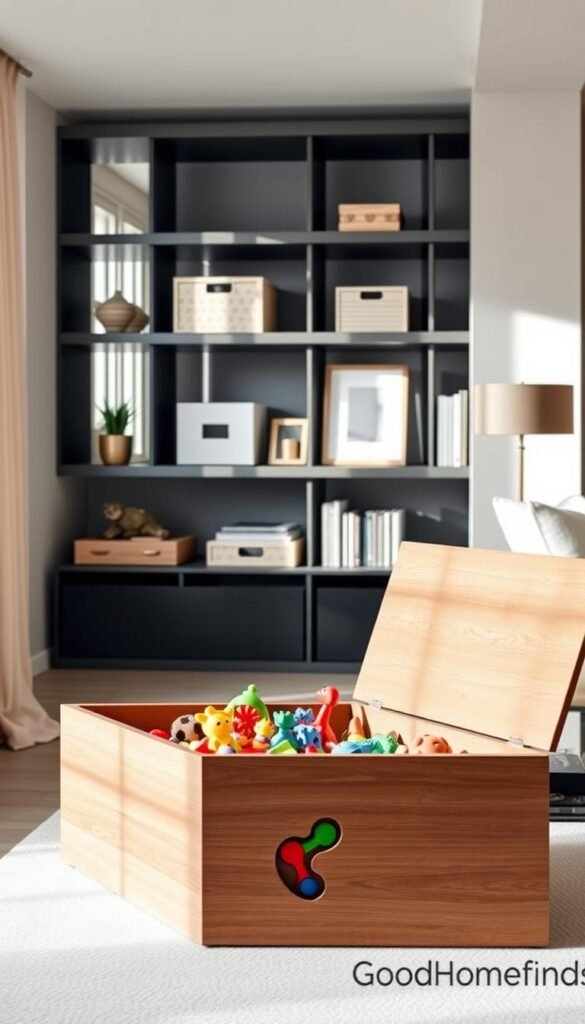
The nightly 10-minute reset (and what to do when you skip it)
Set a 10-minute target each night. Scoop loose pieces into their bins, close cabinet doors, and smooth cushions. Use a timer so the task feels finite.
If you skip the reset, do a 2-minute safety sweep first. Check for tiny parts and anything that could cause a fall. Then schedule a single 20–30 minute catch-up the next day using one category at a time.
One-bin-at-a-time rule for kids
Teach kids to empty and return only one basket before starting another. This rule prevents the whole room from becoming a spread of open containers.
Use simple commands that everyone can follow: “close the doors,” “return baskets to the shelf,” “pouches back in the bin.” Short phrases reduce decision time and speed up cooperation.
Easy maintenance that actually happens
Pick renter-friendly, low-effort tasks you will do. Wipeable liners in craft bins catch spills and wipe clean in seconds. Shake baskets outside once a month. Refresh labels when categories shift so kids keep finding the right place.
- Daily: 10-minute reset, close doors, return baskets.
- Weekly: quick wipe of craft trays and cart tops.
- Monthly: basket shake-out and label check.
„Your standard: calm enough to relax and fast enough to host — not perfection 24/7.“
Practical note: simpler categories and clear labels increase kid independence. The easier the rules, the more likely everyone will stick with them.
Conclusion
Finish by picking one small change you can test this week and build from there. Start with the single problem that bugs you most—coffee table clutter, tiny pieces, or bath kits—and solve that first.
Adult-looking toy storage comes from choosing real furniture, defining zones, and a short reset routine. Favor freestanding consoles, rolling units, and drawers you can move with a lease. Match cubbies and bins in a consistent color or material for a calmer design.
Keep it flexible: systems will evolve as kids grow. Use labels you can update, and choose pieces that convert to other uses in your home.
Safety note: anchor tall units when allowed, keep heavy items low, and clear walkways to cut tripping hazards in the living room and playroom.