Practical, renter-friendly solutions to reclaim space in a small room without drilling or permanent changes.
You’ll learn how to pick containers that protect clothing and linens from dust and mildew. Pro organizers say plan before you buy and keep only items you don’t need daily. This lowers daily hassle and keeps routines simple.
We’ll compare budget tiers: options under $25 and under $50, and show what improves as you spend a bit more—zippers, handles, clearer tops, sturdier sides, and wheels.
Practical goals: reduce closet crowding, keep shoe piles contained, and build a repeatable swap-store-retrieve routine that fits renter life.
Expect clear product-type recommendations—clear snap-lid bins, structured fabric bags, divider organizers, wheeled bins, and kids’ half-open boxes—and advice on when each is worth it. You’ll also find tips to avoid dust, tight clearance, blocked rails, tearing fabric, and floor scratches.
Later there’s a quick comparison table to match container type to your mattress size and items, plus a short checklist to decide fast. For more on budget vs. premium trade-offs, see this short comparison at cheap vs premium storage options.
Key Takeaways
- Choose covered containers to protect linens from dust and odors.
- Plan what you’ll store; keep only items you access a few times a month.
- Renter-friendly options need no drilling and move easily when you relocate.
- Budget tiers: under $25 for basic solutions; under $50 for better build and features.
- Watch for tight clearance, bed supports, and floor protection when buying.
- Use clear or labeled containers to speed retrieval and maintenance.
Planning Your Under-Bed Storage Space Before You Buy
Start by mapping what you actually use and what you can store away for long stretches. This saves time and prevents wasted buys. Think of planning as a short project you finish in one session.

Frequency first: Put low-access items in containers so daily routines stay fast. Seasonal clothes, backup linens, and seldom-used gear belong here. Keep daily items in your closet or entryway for easy access.
Store low-access items first to avoid daily hassle
Pull everything out. Group like items: shoes, linens, extra clothes, hobby gear. Purge duplicates so you don’t pay to keep things you don’t want.
Sort, group, and purge to match containers to categories
Category-based containers beat one oversized box. They cut rummaging time and stop avalanche moments when you rush.
Measure twice, buy once: clearance from floor to side rail
- Measure floor-to-side-rail clearance, not mattress height.
- Check center supports and bed legs that block long bins.
- Do a fit test with a shoebox or cardboard cutout at the planned height.
„Store things you don’t need every day because accessing them from below is inconvenient.“
Quick tip: If you rotate extra clothes each season, label one container per season. Swaps become minutes, not hours.
For comparison shopping and practical picks, see a short list of solutions at best laundry room solutions.
Choosing the Right Under-Bed Storage Containers for Apartment Living
Pick container types that match your routine and the room’s clearances.

Bins vs. bags: when durable plastic beats flexible fabric
Bins give shape, seal better, and resist warping. They are best for long-term protection and heavy items.
Bags and fabric boxes flex to fit awkward piles. They work well for bulky sweaters and soft goods. Fabric can fray after heavy use.
Covered containers for dust, odors, and mildew protection
Sealed lids cut dust and reduce mildew risk in humid rooms. If you store linens, sealing is worth it.
„A lid is often the difference between fresh linens and musty fabric.“
Easy access features that matter
Choose snap lids, smooth zippers, or half-open tops based on access needs. Snap lids are fast. Half-open tops let you grab without fully pulling the container out.
| Feature | Pro | Best for |
|---|---|---|
| Durable plastic bin | Structure, seal, long life | Heavy items, long-term keep |
| Fabric bag/box | Flexible fit, lighter | Bulky clothes, short-term use |
| Wheeled bin | Easy move, protects floor | Frequent access, heavy loads |
Handles, wheels, and size constraints
Wide handles protect floors. Wheels save work for frequent moves. Measure clearance and center supports before you buy a box or bin.
Quick rule: If you move often, pick handles and wheels. If you leave items for months, prioritize a sealed, durable container.
For comparison picks and practical shopping help, see a short list at best closet space solutions.
Under bed storage guide to the best options by need and budget
Choose the right box or bag by thinking about how you reach items day to day.

Best overall under-bed box
Clear plastic snap-lid bin (approx. 27.13 x 16 x 6.25 inches, polypropylene). The rigid sides keep shape and the lid snaps closed for a secure seal.
Pros: fast visibility, sturdy for repeated sliding. Cons: not flexible for bulky items; measure low frames first.
Best overall storage bag
Structured-side storage bag (approx. 33 x 17 x 6 inches) has a clear top and smooth zipper. The flexible top lets you fit sweaters and blankets without bulking up.
Pros: expands for bulky items, handles help pull it out. Cons: can snag if overstuffed and may hit center supports.
Shoe storage that keeps pairs tidy
A divider-based organizer (about 30 x 24 x 6 inches) fits roughly eight pairs and adjusts for boots, flats, or sneakers.
Pros: keeps pairs together, reduces scuffs. Cons: fabric can fray and zippers may snag when packed tight. Air shoes first to avoid odors.
Best for kids’ clothes and linens
Soft fabric bins with a half-open hinge (24.75 x 12.75 x 6.5 inches) cut sharp-edge risks and let you pull out partway to grab items.
Best for heavy items
Durable plastic bins with wheels protect floors and make moving heavy loads easier in rentals. Use for tools, bulk toiletries, or pantry overflow.
Budget picks under $25
Expect simple fabric cases, starter plastic boxes, and multi-packs like Amazon Basics bags or IKEA SKUBB-style cases. Good for seasonal swaps but check zippers and handles.
Budget upgrades under $50
Spend up to $50 to get thicker plastic, smoother zippers, clearer tops, and stronger handles. Worth it if you access items often or move frequently.
„Pick the container that matches how often you pull it out. That decision saves time later.“
For entryway and closet options that pair well with these picks, see this short list at best entryway storage solutions.
| Container type | Best for | Clearance needed | Pros | Cons |
|---|---|---|---|---|
| Clear bin (snap lid) | Visible items, linens | Low to medium | See contents, rigid, secure lid | Not flexible for bulky shapes |
| Structured storage bag | Bulky clothes, blankets | Medium | Flexible top, handles | Zipper can fail if overpacked |
| Divider shoe organizer | Shoes, mixed pairs | Medium-wide | Keeps pairs, reduces scuffs | Fabric may fray; odors transfer |
| Wheeled plastic bin | Heavy items | Medium-high | Easy roll, protects floors | Bulkier footprint |
| Half-open kids fabric bin | Kids’ clothes and linens | Low | Soft corners, partial access | Less rigid; may sag when full |
What to Store Under the Bed in Small Homes and Rentals
Use a simple swap schedule so extra clothes and linens don’t pile up in your room. This keeps closets for daily items and makes seasonal rotation quick.
Clothes and seasonal rotation
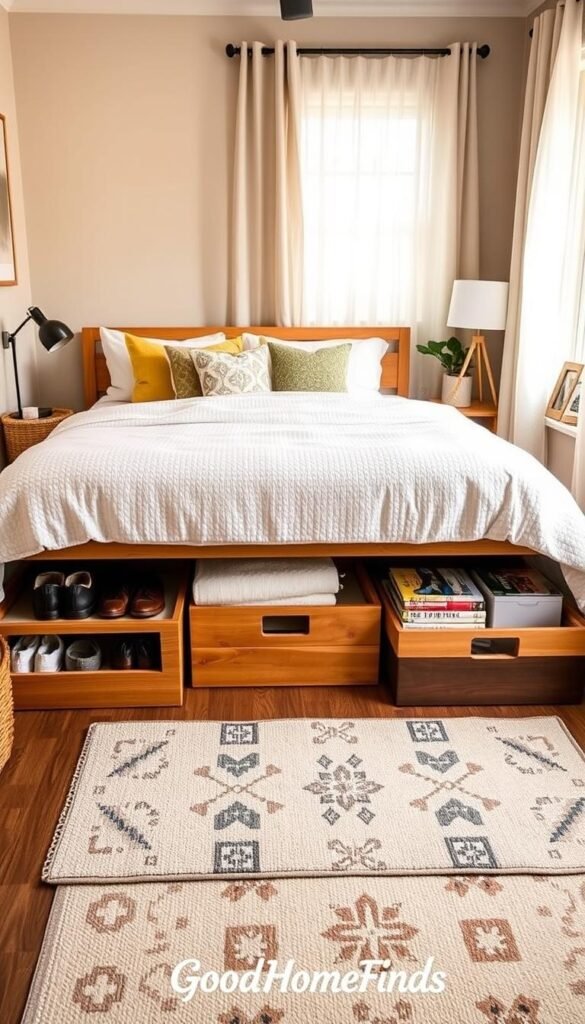
Seasonal rotation works best. Pack off-season clothes in labeled containers. Keep only current-season clothing in your closet.
Set one swap day each season. Swap is fast when items are folded the same way and labeled by category.
Shoes and shoe storage rules
Store shoes in pairs. Use divider bins or small boxes to keep pairs together.
Always clean and fully dry shoes before packing. This reduces odor transfer and scuffing.
Tip: Keep delicate materials separate and avoid sealing damp footwear in airtight containers.
Linens and bedding
Keep sheet sets together so you pull a matched set in seconds. Use lidded or sealed containers to protect linens from dust and mildew.
For guest bedding, label by size and season. That prevents scrambling when visitors arrive.
Small-apartment overflow: room-by-room ideas
Entryway: rotate seasonal accessories like scarves and hats so the front door stays clear.
Bathroom: stash backup toilet paper, extra towels, and bulk soap in lidded bins if you lack a linen closet.
Kitchen: store rarely used party trays or spare paper goods only if containers are sealed and pest-proof. Prioritize pantry shelves first.
Studio vs. 2BR: in a studio pick slim, slide-out bins with clear tops. In a 2BR, dedicate one side for guest linens and the other for seasonal clothes.
- Seasonal rotation: label and swap quarterly.
- Prevent damage: fold consistently and don’t overstuff bags.
- Odor control: air items before packing; use breathable organizers for shoes when needed.
| Items | Best container | Quick rule |
|---|---|---|
| Extra clothes / clothing | Sealed lidded bin or structured bag | Label by season; fold uniformly |
| Shoes / pairs | Divider boxes or small clear bins | Clean & dry first; store in pairs |
| Linens and bedding | Lidded plastic bin | Keep sets together; label by size |
| Entryway and bathroom overflow | Snap-lid bins | Use for seasonal accessories and backups |
For quick product ideas and renter-friendly picks, check this short selection at small space fix mix.
Setup, Safety, and Easy Maintenance for Under-Bed Storage
Practical setup and simple routines keep your containers useful and your room safe. Follow a renter-friendly checklist, then add quick cleaning and labeling habits to save time each season.
Fast, no-drill setup checklist for renters
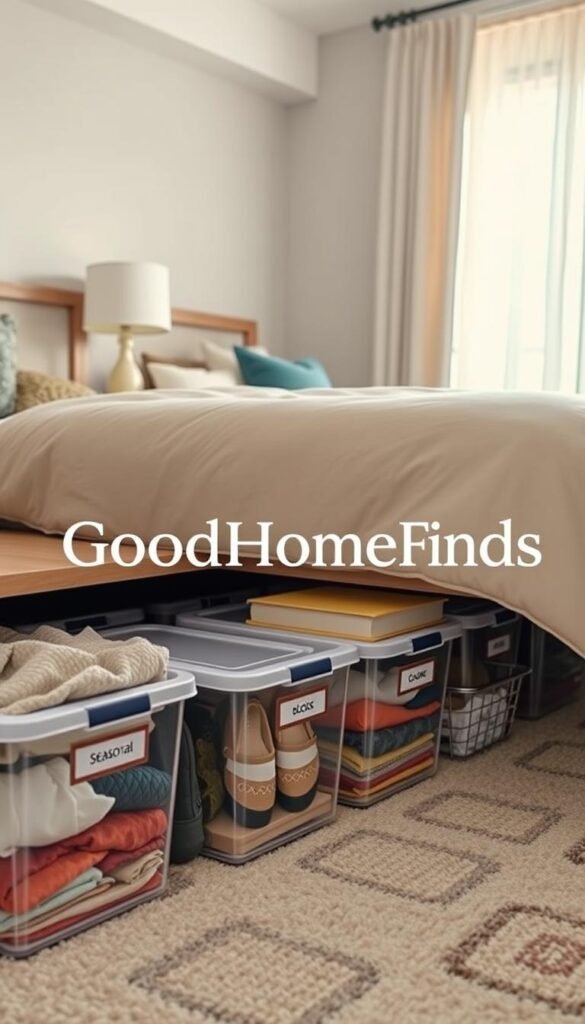
- Measure clearance: floor-to-side-rail and center supports before you buy a container.
- Pick container height: choose low-profile bins or slim fabric bags to match that size.
- Confirm bed supports: test for center rails that block long boxes.
- Protect floors: add felt pads under wheeled bins or choose plastic with wide feet.
- Place for access: keep the most-used container on the easiest-to-reach side of the bed.
Preventing dust buildup and fabric wear: simple cleaning routines
Vacuum under the bed monthly and wipe plastic lids to prevent grime. Spot-clean fabric bags and air items before packing to avoid trapped odors.
Avoid overstuffing and control shape/warp
Don’t force a jammed zipper. Leave a little give and split items into two containers if needed.
Bins: avoid stacking heavy loads on thin plastic. Choose thicker plastic to reduce bowing and keep weight centered.
Fabric: pull by handles; don’t drag on rough floors to prevent wear and seams from tearing.
Labeling and visibility for faster access
Clear lids give instant visual ID and save time. Window panels work well for fabric options and keep a softer look.
„Big, simple labels beat tiny handwriting when you need an item fast.“
Dorm and Twin XL tips
Use risers to gain extra clearance and slim bins sized for Twin XL frames. Wheels help moving heavy loads but lock them to prevent accidental rolling.
| Need | Best pick | Why |
|---|---|---|
| Frequent access | Wheeled bin with handle | Easy access and move; lock wheels for safety |
| Low-frequency items | Sealed clear lid bin | Protects fabric and speeds visual ID |
| Tight clearance (Twin XL) | Slim fabric bag with window | Fits narrow frames; lighter to pull out |
Conclusion
End with a short decision path: plan categories → measure floor-to-side-rail clearance → pick bin vs bag vs organizer → choose a budget tier based on how often you’ll access items.
Keep it renter-friendly. Pick options that need no drilling, protect floors, and move easily when you relocate. Prioritize covered pieces and features like sturdy handles and smooth zippers for daily ease.
Budget note: choose picks under $25 for occasional use and starter sets. Spend up to $50 when you want smoother access and fewer failures.
Start small: buy one or two, test the fit and glide, then expand. Do a quick monthly wipe and air items before packing to keep things fresh. For more compact solutions, see our best small-space finds.