This article helps you choose renter-friendly, no-drill upgrades that improve prep space, cut clutter, and smooth daily routines.
You’ll see what “fast fixes” versus “full setups” look like in real life. Fast fixes are quick swaps you can do in minutes. Full setups are freestanding or adhesive plans you can assemble without tools.
I’ll preview five quick picks under $25 and more complete upgrades under $50. I explain safety, durability, tip-over risk, and setup time. I’ll list pros and cons and note which layouts benefit most — U-shape work triangles, galley flow, multi-station plans for two cooks, and open layouts for gathering.
Expect clear criteria and practical alternatives that also work in entryways, closets, or bathrooms. Use the quick map below to jump to the exact fix you need now.
Key Takeaways
- Choose your level: quick fixes for minutes, setups for a fuller change.
- Budget guide: smart picks under $25 and under $50.
- Focus on safety, durability, and daily use.
- Match the upgrade to how you live and cook.
- Solutions are renter-friendly and no-drill.
Quick rules for renter-friendly kitchen upgrades that don’t damage walls
Before you buy, run a simple check to make sure upgrades won’t harm your walls. This one-step habit saves time and avoids patching paint later.
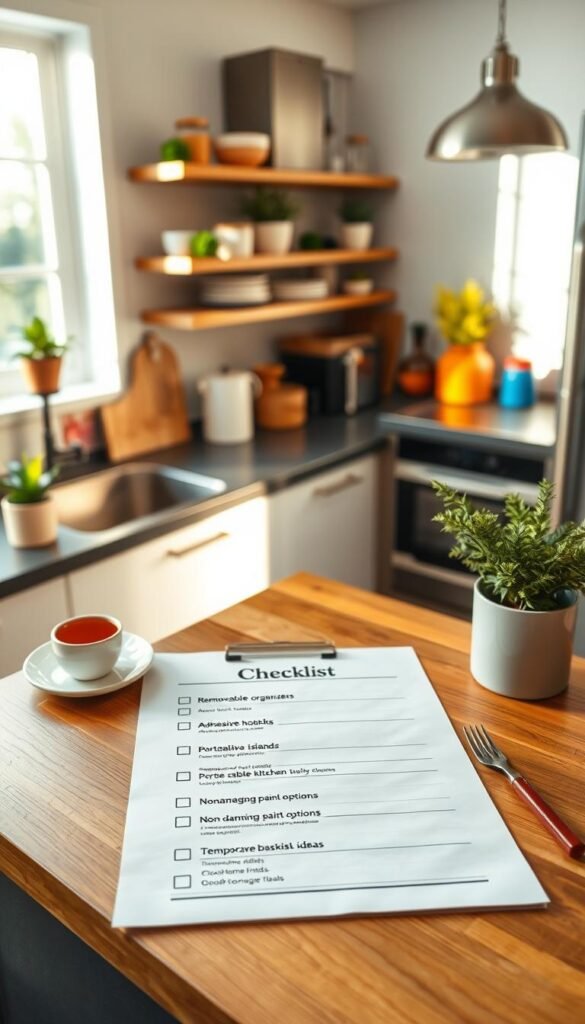
No-drill setup checklist: note surface type (painted drywall, tile, laminate), check adhesive weight ratings, and test removal on a hidden spot. If the surface flakes or the tape strips paint, stop and choose a freestanding option.
- Adhesive limits: keep a 30–50% safety margin under listed weight. That reduces risk of a late-night break and a damaged wall.
- When to avoid adhesives: steamy backsplashes, textured paint, or crumbly drywall—use tension rods, over-door racks, or free units instead.
- Safety basics: keep storage away from burners, avoid plastic near heat, and don’t block ventilation.
- Stability checks: place heavy items low on carts and test for wobble before daily use.
Choose by flow and daily movement
Map where you naturally pivot between fridge, sink, and stove. Pick upgrades that reduce walking and let you move around without bumping handles. If a piece adds visual clutter or blocks a path, it will break your routine more than help it.
For cross-room use, the same adhesive rules apply to bathrooms and closets. If you want a quick reference, see this practical guide for common problems and fixes: renter-safe solutions.
At-a-glance comparison table for quick fixes vs setups (under $25 and under $50)
Here’s a clear, scannable comparison to help you choose a no-drill plan by budget and minutes needed. Use this table to match an upgrade to your routine and space. For extra context, see a related side-by-side comparison.

| Tier & Category | Setup time & tools | Best for / Maintenance | Space impact / Durability note |
|---|---|---|---|
| Under $25 — 5 quick fixes | 10–20 minutes; scissors, cloth, tape measure | Clutter control, instant prep space; wipe weekly, empty daily | Adds surface or uses vertical space; watch for adhesive fatigue |
| Under $25 — 5 full setups | 15–30 minutes; measuring tape, simple assembly | Small cart or shelf for flow; set and forget, light cleaning | Uses floor space; casters may wear, keep away from heat |
| Under $50 — 5 quick fixes | 15–30 minutes; scissors, cleaning cloth | Better prep surface, improved work zones; re-stick monthly | Adds durable surface; adhesive fatigue is main failure |
| Under $50 — 5 full setups | 20–45 minutes; light assembly, no power tools | Two-cook flow, entertaining; empty daily, wipe weekly | Uses floor + vertical space; watch for warping near heat or rust if wet |
| Quick facts: number of items in each category = 5 quick fixes and 5 setups. This gives you predictable choices by cost, time, and work needed. | |||
Fast fixes for clutter and lack of prep space (small-space wins in minutes)
Start with simple, no-drill items that transform how you use a tight layout. These picks cost under $25 and add real usable surface or storage in a minute of setup.

Over-the-sink drying rack or roll-up mat
Why start: creates instant work surface over the sink. Example: a steel roll-up mat or bamboo rack fits most sinks.
Pros: frees counter space; keeps water off counters. Cons: measure so it doesn’t block the faucet or slide.
Best for: tiny layouts with no prep area. Setup: place and test for wobble — done in a minute.
Peel-and-stick hooks and rails
Use adhesive hooks for towels, mitts, and small tools. Place inside cabinet doors, on a smooth tile backsplash, or the side of a fridge if magnetic options exist.
Warning: avoid near open flames or heavy steam. Best for: renters who need a no-drill wall solution.
Under-shelf baskets, drawer organizers, and slim floor caddies
Under-shelf baskets double cabinet storage without adding a new unit. Measure shelf thickness before buying to avoid scraping.
Non-slip drawer organizers separate daily things like measuring spoons and bag clips. This stops a junk drawer from expanding.
Collapsible bins and slim caddies reclaim tight floor corners. Safety note: keep walkways clear to avoid trip hazards.
Apartment alternatives: for studios pick vertical and collapsible items; for standard rentals add one basket per cabinet; for larger units consider a small freestanding prep cart if stable.
Fast fixes for cleaning and maintenance that fit into a short daily routine
Use a brief, timed session each evening to keep surfaces clear and stress low. Time-boxing makes a messy counter feel solvable.

The 10–15 minute reset session: a time-based plan to break the mess cycle
Set a timer for a 10–15 minute session and treat it like a short project. Start with the highest-impact actions: clear the sink, wipe the main work zone, and put tools away. Stop when the timer ends.
Sink-to-stove “work zone” wipe-down kit
What to keep: microfiber cloths, a gentle all-purpose spray, a small scrub brush, and one tray or tote to hold them. Store the kit near the sink so it’s easy to grab.
Pros: simple, quick, and repeatable. Cons: cloths need washing weekly or they smell and attract pests.
Trash, recycling, and compost mini-station ideas for apartments
Pick a slim lidded bin for waste, a collapsible bag holder for recycling, and a small countertop compost pail with a tight lid. Empty compost nightly if you cook often.
- Safety: use tight lids to control odor and keep bins off the floor if pets can tip them.
- Attention cue: keep the kit visible but tidy so it reminds you to start the session without becoming clutter.
Full setups for households tight on space: galley kitchen organization that actually works
A smart galley plan uses movable units to make a narrow layout feel organized and calm.

Cart-based pantry zone
Concept: use a rolling utility cart as a movable cabinet. Top shelves hold daily items, middle shelves store snacks, and the bottom holds heavy goods to lower tip risk.
Pros: adds storage with zero drilling and you can move the unit where you need it. Cons: it uses floor space, so measure your walkway before you buy.
Vertical storage without drilling
Use tension rods for spray bottles and cloths. Add over-door racks for wraps and lids. Freestanding shelves hold appliances you use often.
Tip: choose open units so air circulates and nothing traps heat near the stove.
Where to place items in a narrow line kitchen
Keep the center path clear so you can move around without bumping into gear. Place prep tools near the main counter and cleaning supplies by the sink.
Store oils and spices close to the stove but not directly over heat. This reduces steps and keeps your work flow steady.
- Break-prevention checklist: lock cart wheels when in use, turn handles inward, and avoid overloading the top shelf.
- Best for: micro units—use a narrow 3-tier cart; standard apartments—wider cart plus one freestanding shelf; shared homes—modular shelves split between people.
For more small-unit ideas and specific product picks, see this best small kitchen solutions guide.
Full setups for one-cook homes: U-shape work triangle upgrades without remodeling
A few small changes make a U-shape layout far easier when you cook alone. Focus on predictable landing zones so each action has a clear place. This cuts steps and keeps counters usable.
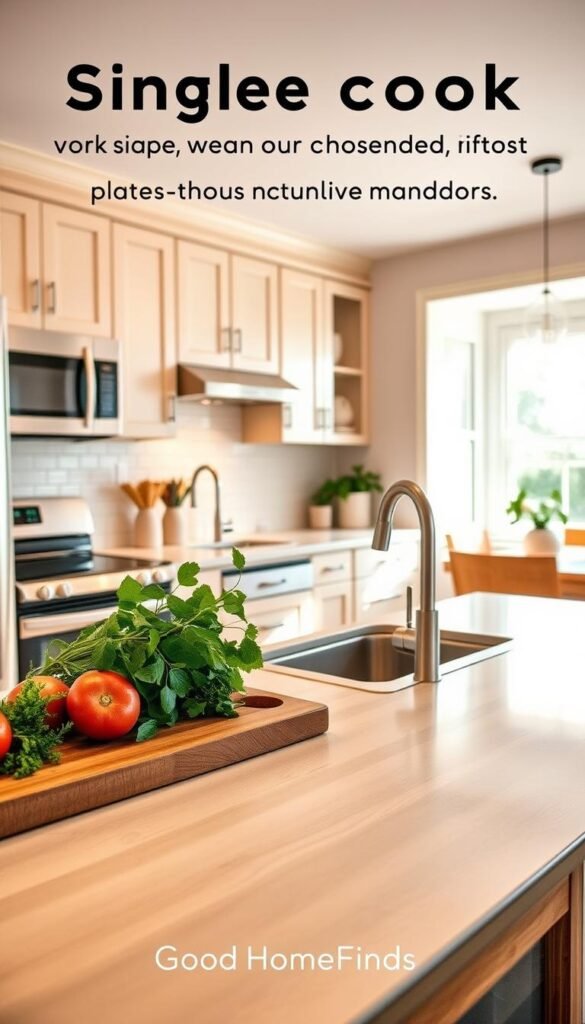
Countertop landing zones and simple rules
What to do: clear 12–18 inches at the fridge, sink, and stove. Add a tray, heat-safe mat, or small cutting board at each point.
One best improvement is a consistent landing spot. If you touch an item twice while cooking, move it closer to its place of use.
- Pros: predictable flow, less walking, faster prep.
- Cons: limits on counter storage; keep zones clear daily.
- Safety head-check: keep a safe passage so you don’t squeeze past a hot pan.
Freestanding island alternatives
Use a foldable table or slim prep station that tucks to the wall when not in use. It adds work surface without drilling.
| Option | Best for | Pros | Cons |
|---|---|---|---|
| Foldable table | Small U-shape where extra surface is occasional | Adds prep space, stores flat | Must not block drawers or the main walkway |
| Slim prep station | Narrow homes needing a permanent small island | Stable surface, shelves below | Uses floor space; measure passage width first |
| Rolling cart | One-cook who moves tools around | Mobile storage, locks in place | Top-heavy risk; lock wheels during use |
Example: keep the foldable surface against a wall and open it only during prep. That way the plan supports your goal of fast, repeatable work and keeps the home renter-friendly.
Full setups for two-cook households: creating two stations to avoid traffic jams
A two-station plan turns a cramped room into a coordinated team workspace. You’ll split tasks so two people can work without bumping into each other.

Split zones for steady work and flow
Assign one side as the prep point and the other as the stove/plating point. One person handles knives and chopping. The other manages heat and finishing actions.
Duplicate essentials, define a shared boundary
Keep two of a few items: cutting boards, tongs, and a small prep caddy. Mark the shared boundary with a tray or a cart shelf so tools don’t migrate and create a daily challenge.
When a second surface beats a second appliance
A foldable table or slim cart often helps more than another bulky device. It adds usable surface, reduces cords, and costs less in time and space.
- Pros: fewer collisions, faster prep for your team.
- Cons: needs clear ownership and a short reset routine each night.
- Safety note: keep handles, cords, and cart corners out of the main path to avoid a break or trip.
Full setups for entertaining and active families: open movement, attention to flow, and flexible seating
Entertaining at home works best when movement feels natural and seating is flexible. Plan so guests can chat without crowding the cook. Keep sightlines open between the prep area and the rest of the room.
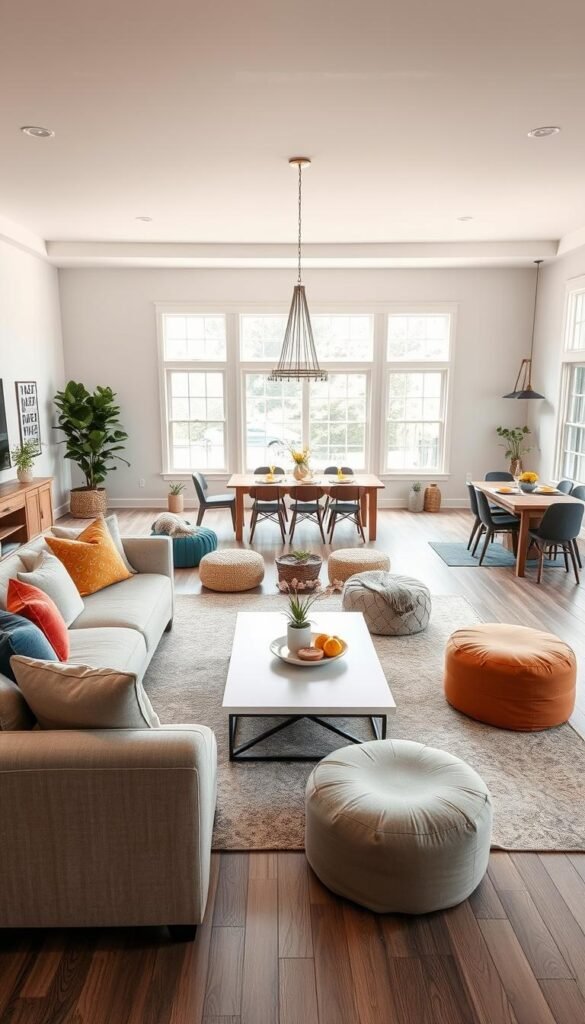
Gathering options without moving a wall
Practical choices: a rolling cart that becomes a serving station, a freestanding peninsula table, or a bar-height table that doubles as prep and seating. These add places to sit and serve while staying renter-friendly.
Safe pathways for busy sessions
Keep a clear route from fridge to sink to stove. Avoid placing stools where people naturally turn or pass.
- Rule: leave at least 30–36 inches of open floor for main paths.
- Action: park carts to the side during heavy cooking and lock their wheels.
Window and light tricks to enlarge the room
Maximize natural light by keeping windows visually clear. Use light curtains or shades that lift fully during the day.
Avoid tall shelves that block the view. Bright, even light keeps attention on people rather than obstacles.
| Setup | Best for | Pros | Cons / Safety |
|---|---|---|---|
| Rolling serving cart | Small homes, flexible serving | Mobile, stores supplies, doubles as bar | Uses floor space; lock wheels during prep |
| Freestanding peninsula table | Open layouts needing extra seating | Stable surface, defined boundary for guests | Consumes floor; measure clearances first |
| Bar-height table | Casual entertaining, extra prep surface | Seating + prep; visual separation without a wall | May block view if tall stools placed poorly |
Quick routine: do a 5–10 minute reset before guests arrive and a short tidy after. This keeps the room usable for events and for daily family life.
Practical note: prioritize stable surfaces and safe walkways over setups that only photograph well for social media. For related entryway ideas that also help flow, see entryway options.
How to choose: pros/cons, best-for scenarios, and alternatives by apartment size
Picking the right upgrade starts with one question: what daily problem do you want solved? Focus on the single change that removes your biggest bottleneck — prep space, clutter, or cleaning — and build from there.
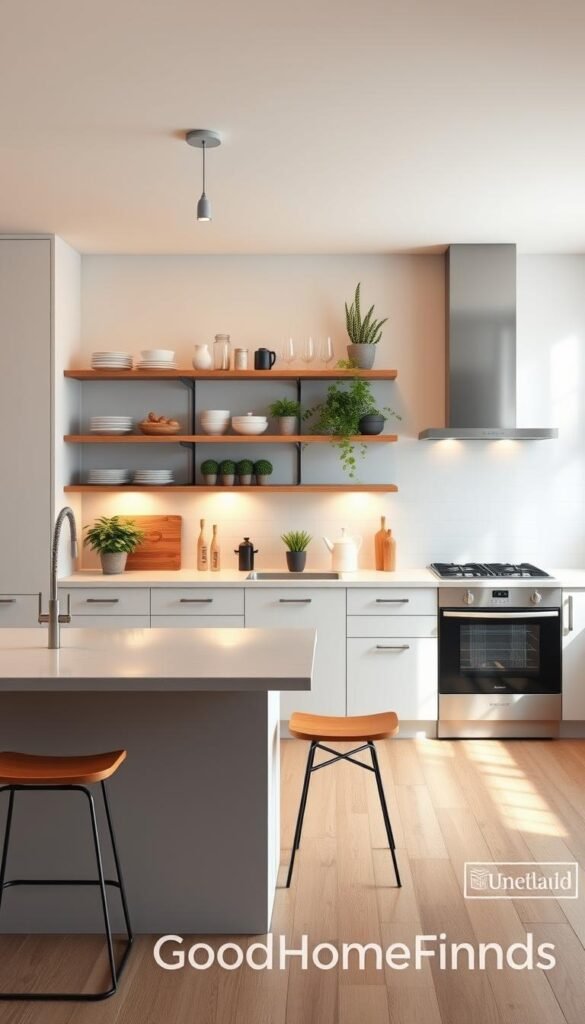
Best for studios and micro-kitchens
Choose vertical, collapsible, and lightweight units. Tension rods, over-door racks, and under-shelf baskets win because they save floor space and are renter-friendly.
Avoid bulky units that block walkways or peel paint. If adhesives aren’t an option, use freestanding racks or a slim cart instead.
Best for standard apartments
Balance one added prep surface with one added storage unit. A slim rolling cart plus an under-shelf organizer gives work space and a place for things without crowding the floor.
Best for larger rentals or shared homes
Scale with modular shelving and multiple carts. Assign zones to reduce traffic. Use freestanding islands or a larger prep table if clearances allow.
Pros/cons framework
| Factor | Pros | Cons |
|---|---|---|
| Cost | Budget-friendly options under $50; many useful units cost little | Cheap items may wear faster; plan for replacement |
| Setup time | Minutes for peel-and-stick; 15–45 minutes for freestanding assembly | Adhesive prep takes testing; assembly needs measuring |
| Durability | Metal carts and solid shelving last longer | Adhesives can fail on textured wall or near steam |
| Daily maintenance | Simple wipe-downs and an evening reset keep things usable | More pieces mean more small chores; limit to essentials |
Quick alternatives: if you can’t use adhesives, try tension rods, over-door organizers, or freestanding racks. These protect the wall and keep your plan renter-safe.
Decision checklist: measure, map your flow, pick one plan that fixes your biggest challenge, and commit to a short maintenance habit each night. For more small-space ideas, see this small-space guide.
Conclusion
Name one zone and commit to a simple, repeatable action. Pick one quick change you can do today and one small plan to build this week.
Start under $25 for an instant win, then add an under-$50 upgrade that meaningfully cuts daily work. Measure first and safety-check adhesives and carts to avoid a break or tip-over.
Think in two halves: the first half is setup, the second half is a short reset habit that keeps gains. Example: label prep, cook, clean, and pantry so shared minds stay calm and decisions are faster.
Millions of small moments add up. Make one choice now that helps the heart of your home. For product ideas and tested picks, see best kitchen finds.