Quick, renter-friendly steps to make your space feel ready for tomorrow in about 3–7 minutes.
This reset is practical and low-cost. It focuses on habits and lightweight tools you can store in a small caddy. No drilling. No permanent changes. No harsh methods that risk deposits.
Start with airflow, clear the sink and counter, wipe the mirror, touch up the toilet, squeegee the shower, pick up hair from the floor, sweep clutter, and check trash and odors. These moves cut grime and shrink weekend scrubs.
You’ll see budget picks under $25 and under $50, and pros/cons for disposable vs reusable products. Safety shows up in every tip: ventilate, match cleaners to surfaces, and avoid risky installs. The same quick reset method also works for your kitchen counters, closet floors, and entryway drop zone.
Key Takeaways
- A reset is a 3–7 minute loop to restore surfaces for tomorrow.
- Focus on habits and small tools; avoid permanent changes if you rent.
- Use a portable caddy and compact supplies to save time and space.
- Expect less grime and fewer surprise deep cleans on weekends.
- Learn budget options and safety tips for smart, fast upkeep.
- Apply the same reset mindset to kitchen and entryway zones.
- Find budget tool ideas and routines at budget-friendly picks.
Why a daily reset keeps your bathroom cleaner with less time
Moisture makes this room a breeding ground for microbes, so quick care cuts health and maintenance risks.

Health basics in a moist environment
Warm, wet air plus skin cells and limited airflow helps germs and bacteria spread faster than you think.
Mold can appear in 24–48 hours after a leak or high humidity. Early signs include dark dots in grout, a musty smell, or a slimy film.
„Mold can grow within 24–48 hours if humidity or leaks go unchecked.“
The consistency advantage
Small actions stop buildup and stains before they set. Squeegeeing cuts soap scum. Wiping taps limits mineral marks. A quick toilet check prevents rings.
Less scrubbing means fewer repairs and less renter stress from damage or lost deposits.
Set a realistic schedule
Quick touch-ups take minutes each session. Add one weekly clean to sanitize surfaces and do a deeper shower pass.
- If short on time: prioritize the sink, toilet touch points, and shower glass.
- Run the fan or crack a window for ~30 minutes after showers to reduce mold risk over the week.
| Task | Minutes | When |
|---|---|---|
| Quick wipe (sink, taps) | 2 | Every use or morning |
| Toilet touch check | 1 | As needed |
| Squeegee shower | 1–2 | After shower |
| Weekly deep clean | 20–30 | Once a week |
Your bathroom daily reset routine you can finish in minutes
Open a window or run the fan first, then follow a short loop of sink, mirror, and shower checks. This sequence moves moisture out and makes every other step faster.

Start with airflow
Turn on the exhaust or crack a window for about five minutes. Moisture is the main trigger for mildew and spots. Moving air reduces risk before you touch anything.
Reset the sink and counter
Wipe toothpaste splatter, soap residue, and water marks with a damp cloth. Use a small spray cleaner for stubborn bits, then dry with a microfiber cloth.
Mirror quick-pass
Grab a microfiber cloth and swipe the mirror. You remove splashes and fingerprints fast without polish or elbow grease.
Toilet fast-clean
Do a quick bowl scrub and wipe the seat and handle with a disinfectant wipe or lightly sprayed cloth. This keeps the clean toilet feeling fresh without heavy chemicals.
Shower reset
Squeegee walls and glass or run a towel over chrome. This lowers soap scum and hard-water spots between deeper cleans.
Floor refresh and clutter sweep
Pick up hair and small debris with a handheld vacuum or dustpan. Put away items and hang towels to dry so surfaces look tidy instantly.
Trash and odor control
Empty the can when needed. Pre-load extra bags in your caddy so trash changes are one quick step.
- Set a 3-minute timer for essentials; 7 minutes if you have time.
- Keep a small caddy with cloths, a brush, disinfectant, and a squeegee.
- Use „clean as you go“ habits to prevent buildup in shared areas.
| Task | Time | Tool |
|---|---|---|
| Airflow | 1–2 min | Fan or open window |
| Sink & counter | 1–2 min | Microfiber cloth, spray cleaner |
| Toilet touch | 1–2 min | Brush, disinfectant wipe |
| Squeegee shower | 1 min | Squeegee or towel |
For budget tool ideas and quick picks that fit a small caddy, see this best cleaning finds.
Target the shower and tub to prevent mold, mildew, and soap scum
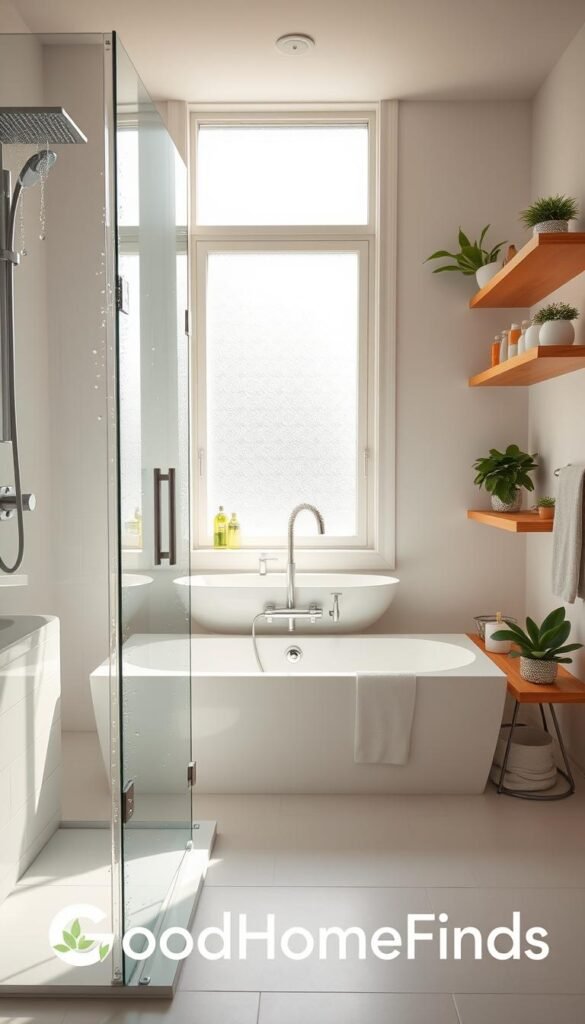
Focus on the tub and shower zone first—it’s where water, warmth, and tight corners invite trouble. This area dries slowly and shows buildup fast. Short, consistent habits prevent stains and larger repairs.
Daily moisture control
Make squeegeeing part of your exit routine. Swipe glass and tile walls once. Then do a quick wipe on ledges where water pools.
Grout and corners
Check bottom corners, behind bottles, and along caulk lines for early signs of mold mildew. A 10-second scan after each use helps you catch trouble before it spreads.
Ventilation rules that work
Keep the fan on for ~30 minutes after a shower or crack the door to move humidity out. Proper ventilation cut the chance that mold appears within 24–48 hours.
Leak and humidity checks
Look for slow drips at the showerhead, tub spout, and under-sink pipes. Stopping leaks is faster and cheaper than removing established mold.
Low-effort weekly boost
Once a week, spray a set-it-and-rinse bathroom cleaner and let it sit for the recommended dwell time. Wipe or rinse—no harsh scrubbing needed. This keeps grout and tile from developing heavy soap scum and buildup.
„Two minutes in the shower area each time you leave can save you a weekend of scrubbing.“
- Renter-safe ladder: daily dry-down → weekly cleaner → targeted grout attention → stronger methods only if needed.
- Worth it: small time investments prevent big repairs and keep surfaces renter-friendly.
Budget-friendly cleaning products and tools that are easy to set up and store
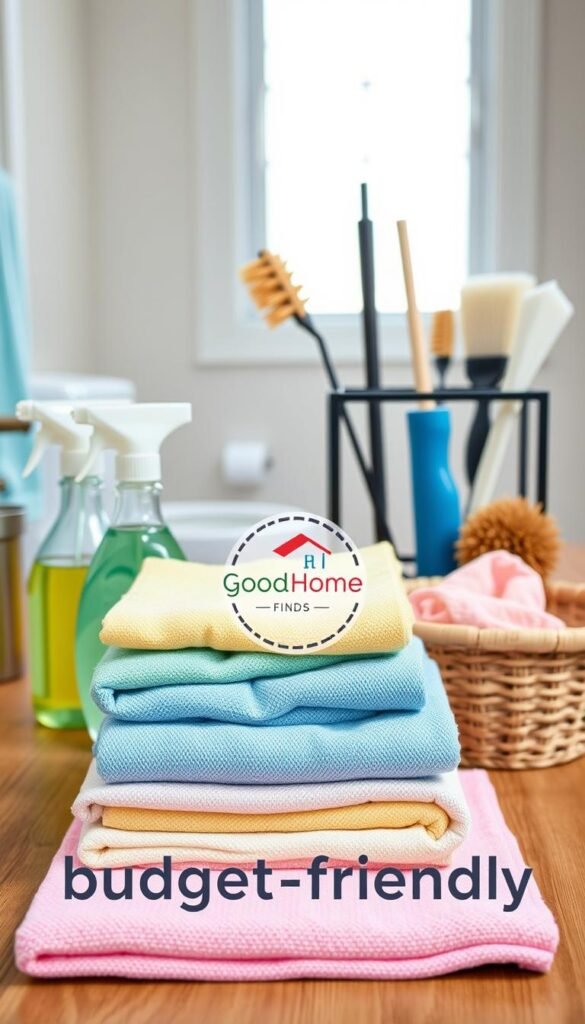
A compact set of tools saves steps and keeps your sink and surfaces tidy fast. Build a small kit you can grab in one hand. Store it under the sink or in a portable caddy so upkeep does not crowd counters.
Under $25 essentials
- Microfiber cloths — Best for wiping taps, mirrors, and counters. They trap dirt without chemicals.
- Squeegee — Stops soap film on glass and tile after showers.
- Disinfecting wipes — Fast touch-ups on seat, handle, and other high-touch spots.
- Compact brush — Fits a drawer and handles quick toilet scrubs and grout touch-ups.
Under $50 upgrades
- Handheld or stick vacuum — Best for hair and dust in small spaces; HEPA options reduce airborne particles.
- Lidded trash can — Controls odor and keeps liners tidy.
- Humidity helpers — A small hygrometer or compact dehumidifier if the fan is weak.
Disposable vs reusable: pros and cons
Disposable wipes give quick hygiene but raise ongoing cost and waste. They suit shared or high-use sinks.
Reusable cloths and brushes cut waste and save money long term. They need washing and dry storage to avoid odors.
Chemicals and safety
Use a disinfectant when you need germ kill. Check label contact time and match chemicals to surfaces to avoid damage on stone or coated fixtures.
Always run the fan or crack a window when you spray. Ventilation reduces fumes and protects the environment in small spaces.
Renter-friendly storage
Keep everything in a portable caddy. It saves steps and prevents clutter. Tuck the caddy under the sink or in a closet.
| Kit | Best for | Key items |
|---|---|---|
| Small-space kit | Solo renter or studio | Microfiber cloths, squeegee, compact brush, disinfectant wipes |
| Shared kit | Couples or multiple users | Extra wipes, spare towels, second squeegee, lidded trash can |
| Upgrade kit | High humidity or heavy use | Handheld vac, small dehumidifier, hygrometer |
For a concise guide to practical cleaning products and setups that work when time is short, see best cleaning solutions for busy homes.
Small-space organization that makes daily bathroom cleaning easier
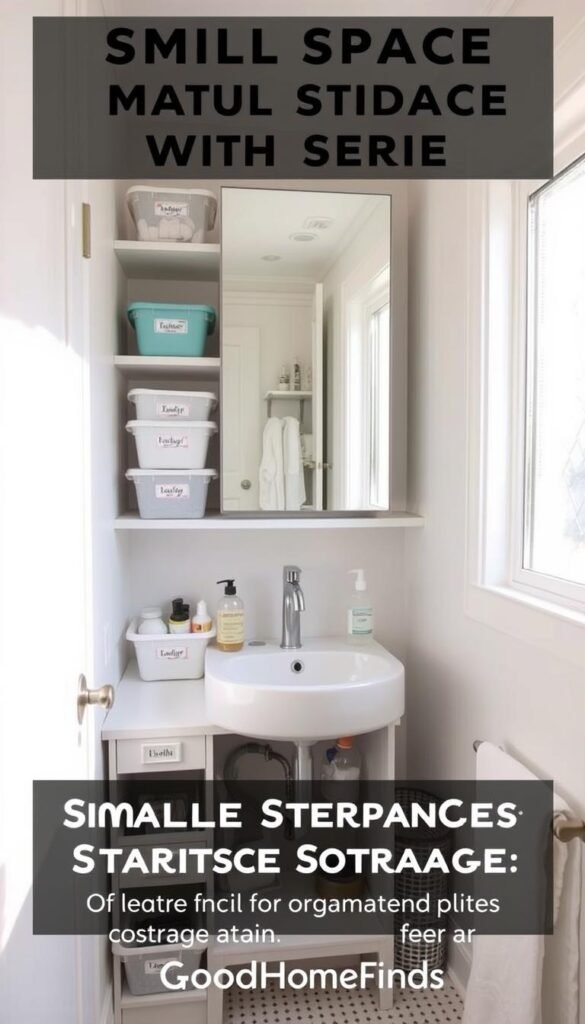
A tidy setup cuts cleaning time: fewer bottles and clear surfaces mean faster wipe-downs. Use renter-safe gear so you can organize without holes or damage.
No-drill, apartment-safe setup
Over-the-door hooks hold towels and robes. Tension rods create spots for hanging spray bottles. Stick-on caddies keep small products off counters.
Countertop control
Only keep daily-use items out. Put everything else in a bin or drawer. A tray makes it easy to lift and wipe the whole surface in one move.
Towel and hamper system
Hang towels so they dry fully. Use a slim hamper near the door to stop damp piles on the floor. This reduces bacteria and mold buildup.
Cabinet and drawer resets
Group products into small bins: skin, hair, dental, first aid. Do a quick monthly check for expired items to avoid pileups.
„A single tray and a hook can halve the time you spend wiping counters.“
| Space | Smart fix | Why it helps |
|---|---|---|
| Studio | Vertical shelves, slim caddy | Saves floor space and keeps a minimal kit ready |
| Shared | Labeled bins, extra hooks | Prevents product pileups and confusion |
| Whole apartment | Reset routine for kitchen/entry | Same habit spreads clutter control to other areas |
For platform-specific fixes and a quick kitchen crossover idea, see this kitchen problem mix. Pair resets with habits you already do—after brushing teeth, after showering, or before bed—to make them stick.
Conclusion
A short, repeatable routine prevents small messes from turning into big jobs.
Keep one simple loop: airflow, quick sink wipe, mirror pass, toilet touch points, shower squeegee, pick up hair, return clutter, and check trash. This small sequence keeps a clean bathroom feeling fresh and trims weekend work.
On hard days, do a minimum viable reset: wipe the sink and the toilet. That two-step habit still protects hygiene and appearance while you regroup.
Anchor your week with one deeper session. Pick renter-friendly, budget tools that fit your comfort—reusable cloths or disposable wipes—then adjust after two weeks. Set your caddy tonight and hang the squeegee so you can start tomorrow.
Practical tip: explore a compact kit in the home problem solver mix to match tools to your space and routine.