
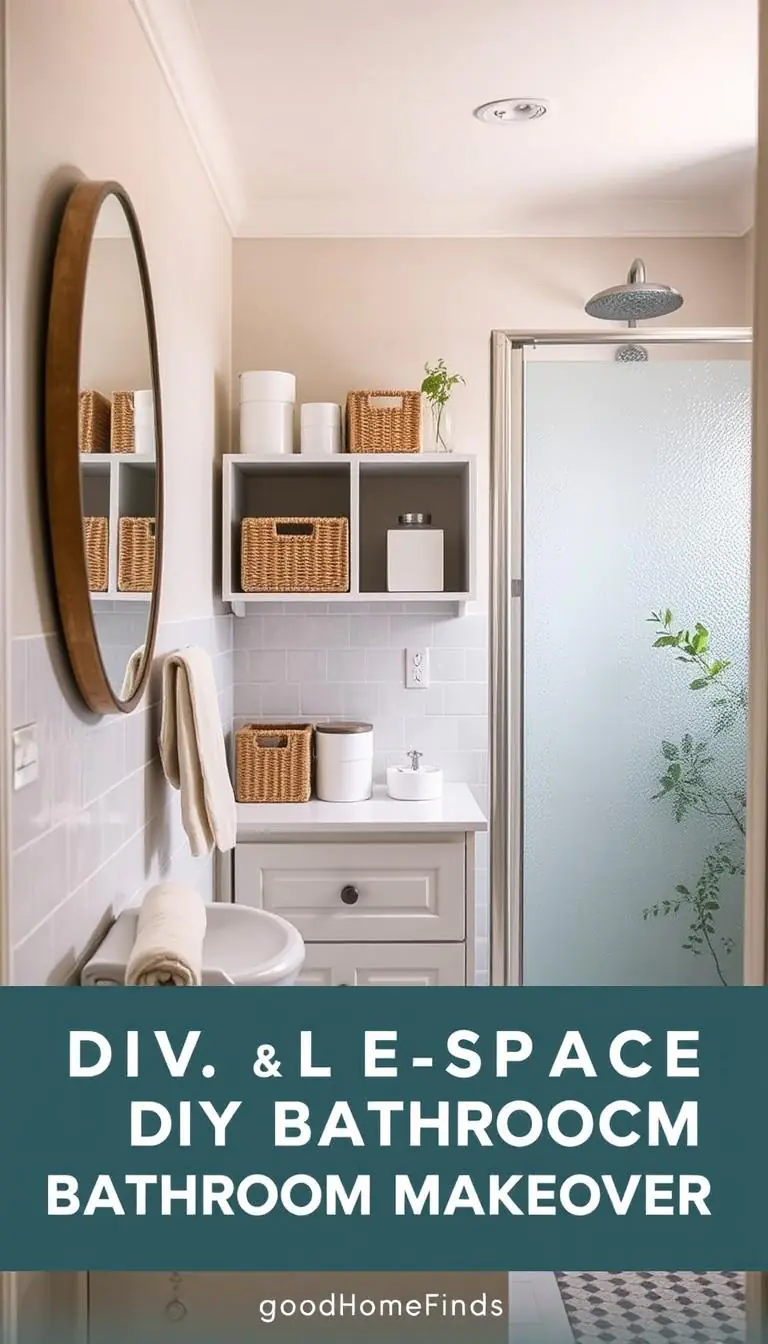
This short guide shows renter-friendly, small-space updates that improve daily use without drilling or permanent changes. It frames a practical bathroom fix budget approach: solve grime, clutter, splashes, and poor light first, then chase style.
Readers get two clear tiers: five fixes under $25 and five upgrades under $50. Each pick is chosen for easy setup, low rental risk, and durability in humidity-prone rooms. Suggestions focus on product types — liners, bins, bulbs, grout pens — not brand hype.
The guide defines small spaces as studio sinks, narrow alcoves, and pedestal layouts, and it explains how priorities shift by layout. The simple success metric: the space should feel cleaner, safer, and easier to use and maintain each week.
Recommendations include quick product pros/cons, „best for“ notes, and simple care routines. The article ends with decision tools that compare solutions by problem, cost tier, and room size so readers can plan without overcommitting.
Key Takeaways
- Start by fixing daily problems before updating the aesthetic.
- Two tiers make planning concrete: under $25 fixes and under $50 upgrades.
- All recommendations are renter-safe, low-risk, and humidity-friendly.
- Focus on liners, bins, bulbs, grout pens and soft goods for big impact.
- Measure success by ease of use, cleanliness, and weekly maintenance.
- Same organizing rules can be applied to kitchens and closets later.
Quick bathroom reset: assess the space, set a budget, and avoid renter mistakes
Start with a 10-minute walkthrough. Check for musty smells, peeling caulk, and recurring mildew first. These signs mean moisture control must come before any cosmetic update.
Look for clutter choke points: sink edge, toilet tank, shower ledge, and the floor near the vanity. Finding the true problem shows the simplest way to reduce daily friction.
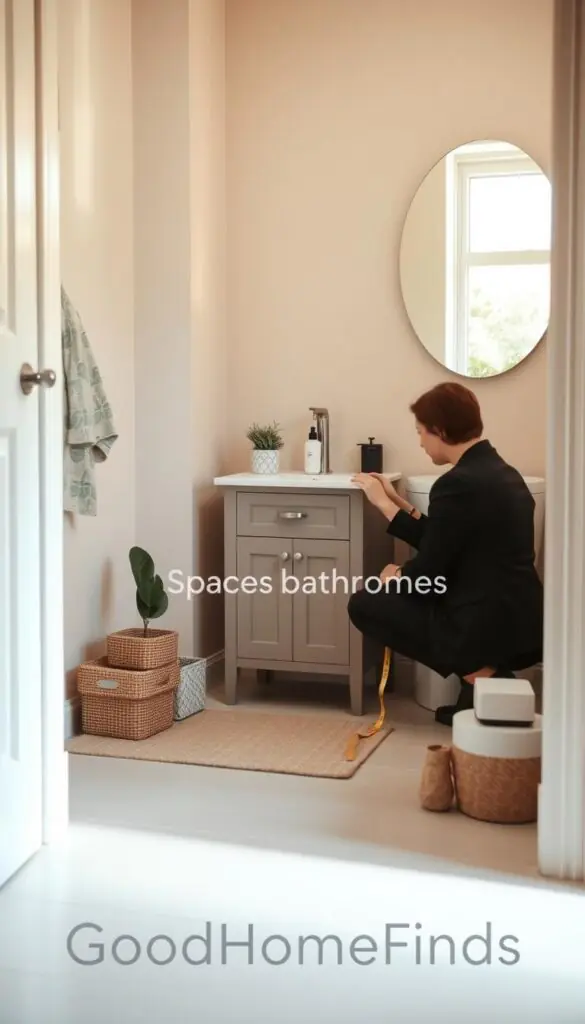
Permission ladder and lease-safe rules
Reversible items come first: bins, non-damaging hooks, tension rods. Next, low-risk swaps: a new showerhead or curtain rod. Last, ask-first changes: paint or peel-and-stick wallpaper.
Adhesives hold best on smooth tile and sealed paint. They often fail on textured walls or inside wet zones. Keep this in mind when placing hooks or decals.
Two-tier plan and quick weekend DIY
- Under $25 — functional, cleaning-focused items: grout pen (about $15–$30 and 3–8 hours work), liners, small bins, and microfiber mats.
- Under $50 — visible updates for comfort: better lighting, higher-quality shower curtain, or a handheld sprayer.
One-bag weekend DIY: buy supplies Friday, prep Saturday morning, install Saturday afternoon, and start a Sunday maintenance routine. Only buy items that remove daily friction from getting ready, showering, or cleaning.
Use the same assessment method in kitchens (sink clutter), closets (overflow), and entryways (drop zone) for consistent, renter-friendly results.
Safety, durability, and easy setup basics for bathrooms
Safety and long-term wear matter most in tight rooms where slips, rust, and peeling happen fast. A short plan helps prioritize anti-slip measures, humidity-proof materials, and renter-friendly installs that finish within a weekend.
Slip-risk hotspots: stepping out of the shower, reaching for towels, and pivoting near the toilet. Use quick-dry mats with a non-slip backing and avoid thick rugs that trap water. Peel-and-stick vinyl flooring is walkable and cleans easily; choose options with a textured, non-slip surface.

Humidity-proof material guide
Pick stainless or rust-resistant metals for hooks and racks. Use plastics labeled UV- and yellow-resistant so they stay bright over time. Select adhesives rated for moist rooms and apply them on smooth tiles or sealed paint for best adhesion.
Minimal renter-friendly tool kit
Keep a small bin with a tape measure, level, utility knife, screwdriver set, adjustable wrench, painter’s tape, and microfiber cloths. These tools cover most installs and undoing them before move-out.
| Task | Suggested Material | Estimated time |
|---|---|---|
| Anti-slip mat install | Quick-dry mat with non-slip backing | 10–20 minutes |
| Peel-and-stick flooring (small area) | Vinyl-like plank or tile | 1–3 hours |
| Adhesive hook placement | Rust-resistant hook, adhesive rated for moisture | 5–15 minutes |
| Light swap | Soft white bulb (warm) | 5–10 minutes |
When to call a pro: stop and phone a technician for persistent leaks, visible mold behind surfaces, or any electrical wiring work. These are safety-critical and out of scope for weekend installs.
Durability filter: prioritize items that wipe clean weekly and do not trap moisture behind storage. This approach saves time and prevents common wear in small rental spaces.
Bathroom fix budget: high-impact fixes under $25 that work in rentals
Small, focused purchases can change daily use fast. With one thoughtful item, a renter can reduce grime, stop splashes, or tame clutter without drilling or permanent changes.
Starter cart under $25: target the room’s biggest pain point.
- Grime control — grout pen or concentrated grout cleaner (select mildew-resistant formulas).
- Water control — a clear PEVA liner or a weighted hem liner that hangs straight.
- Clutter control — one medium freestanding bin or a countertop corral tray.
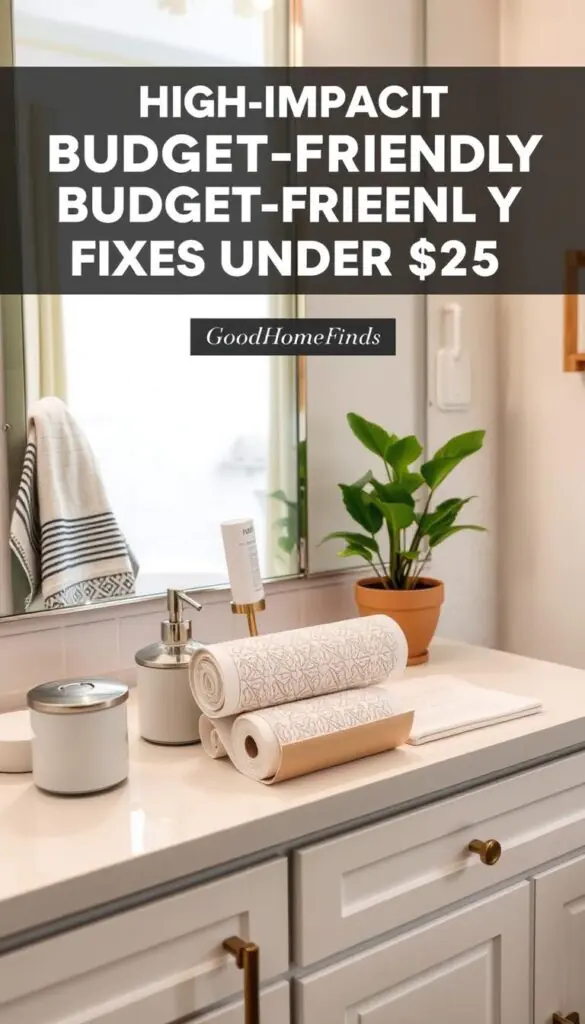
How to choose one high-impact item
Pick the single change that meets how the space feels. If surfaces look dingy, start with grout or caulk cleaning. If counters overflow, buy a sturdy bin or tray. If splashes bother you, upgrade the liner or switch to a tension rod setup.
Under $50 priorities
When you can spend up to $50, pair one functional upgrade with one comfort upgrade.
- Functional: tension-rod shower setup or quick-dry floor mat (non-slip).
- Comfort: thicker, washable soft goods—towels or a plush, quick-dry rug.
Renter rules: favor tension rods, over-the-door hooks, adhesive mounts only on smooth paint or tile, and freestanding organizers that remove cleanly at move-out.
| Problem | Under $25 | Under $50 |
|---|---|---|
| Grimy look | Grout pen / concentrated cleaner | Deep-clean kit + grout sealant |
| Chaotic counters | Countertop corral tray | Stackable freestanding drawer |
| Constant wetness | Weighted liner | Tension rod + quick-dry mat |
Maintenance tips: wipe hard surfaces weekly, launder soft goods every 1–2 weeks, and air liners to prevent mildew smells. This approach works for entryways and closets too — a $25 one-bin fix can tame any small zone.
Fix the “grimy” look fast: grout refresh and deep-clean shortcuts
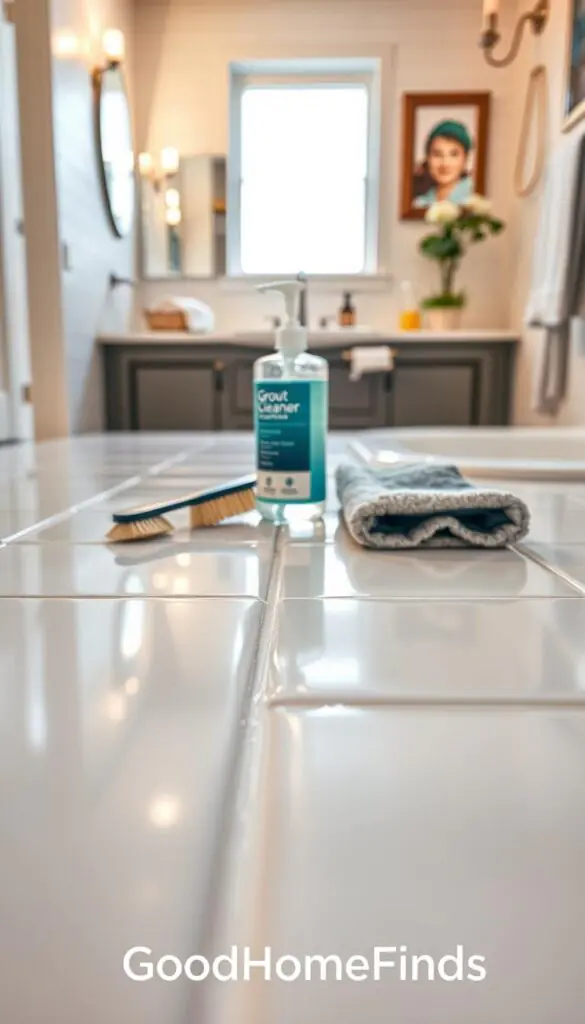
Bright, even grout lines make older tile look newer without changing fixtures or layout. A targeted grout refresh can transform small showers and tile runs in shared apartments or studio units. Typical refreshes take about 3–8 hours and cost roughly $15–$30 depending on area size.
Grout pen vs grout stain — when to choose each
- Grout pen: best for quick touch-ups and narrow areas. Use a pen for masked corrections, color-matching, or to cover discoloration on otherwise sound grout.
- Grout stain (liquid): better for larger sections or full color changes. Stains cover more evenly and hold up longer when grout is intact but ugly.
Step-by-step, renter-safe workflow
- Ventilate the room and open windows or run the fan.
- Pre-clean with a grout-safe cleaner (no strong acids). Scrub with a soft brush and rinse thoroughly.
- Allow the grout to dry completely — this can take several hours.
- Apply the pen or stain in small sections; wipe excess from tile quickly to avoid haze.
- When cured, apply a water-resistant grout sealer where appropriate for added durability in humid zones.
Weekly maintenance routine
After the refresh, spend 60 seconds after showers squeegeeing tile lines and run the fan for 10–15 minutes. Once a week, wipe tile edges with a damp microfiber cloth to prevent surface buildup.
| Approach | Cost & time | Best for |
|---|---|---|
| Grout pen | $15–$25, 1–3 hours | Targeted touch-ups, visible discoloration |
| Grout stain | $20–$30, 3–8 hours | Large areas or color changes when grout is sound |
| Regrouting | $50+, multi-hour, skilled work | Failing grout, cracking, or missing joints |
Pros/cons summary
- Refresh (pen or stain): faster, cheaper, renter-friendly, and good for humid rooms when sealed.
- Regrouting: longer-lasting if grout is failing but messier and skill-dependent.
- Renter caution: avoid harsh acids or metal tools that can chip tile glaze; always spot-test first.
Stop water messes: shower curtain upgrades that prevent leaks
The easiest splash control pairs style with function. A washable fabric panel outside plus a clear plastic liner inside looks designer and keeps water where it belongs. Most floor puddles trace to liner length, missing weighted hems, poor rod placement, or rings that snag.
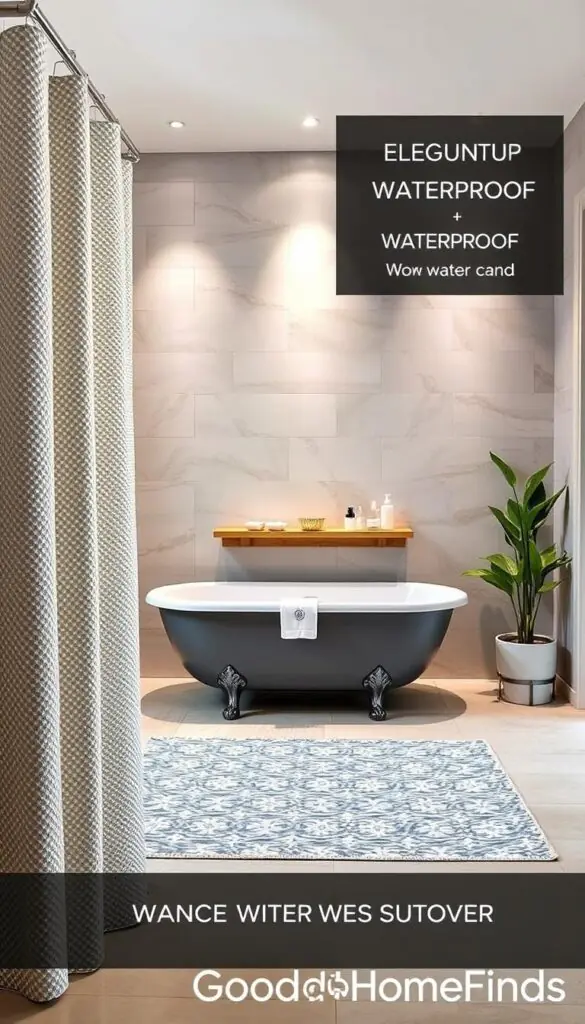
Fabric + clear liner: simple standard
Recommendation: set the fabric curtain outside the tub and the clear liner inside. Choose a liner with a weighted hem and mildew-resistant material so it hangs straight and stays inside the tub without bunching.
Renter-friendly hardware and rings
Tension rods install in minutes and avoid drilling. Curved tension rods add elbow room where clearance allows. Use end caps that grip tile to stop slipping. Pick smooth-glide rings or low-friction hooks so the curtain closes easily.
Best-for scenarios and maintenance
For tubs that drip, use a longer, weighted liner plus a quick-dry mat to catch stray drops. Tiny showers need a curved rod or a slim-profile liner that won’t cling.
| Issue | Quick solution | Best for |
|---|---|---|
| Floor puddles | Weighted liner + tension rod | Dripping tub |
| Clingy liner | Curved rod or anti-cling liner | Tight shower stalls |
| No door option | Install splash guard strip | Renters with fixed doors |
Maintenance: wipe liners weekly, launder fabric curtains monthly, and run the fan after showers to prevent mildew and puddles.
Declutter the vanity zone with no-drill storage that actually holds up
Decluttering the vanity starts with grouping daily essentials so counters feel calm and work better.
Countertop corrals keep the routine compact. Use one shallow tray for daily items and a labeled, wipeable canister for small goods like cotton rounds and hair ties. Labels reduce decision fatigue in shared spaces and make morning runs faster.
Labeled canisters should be plastic or coated metal to resist moisture. Avoid cardboard jars; they degrade near leaks.
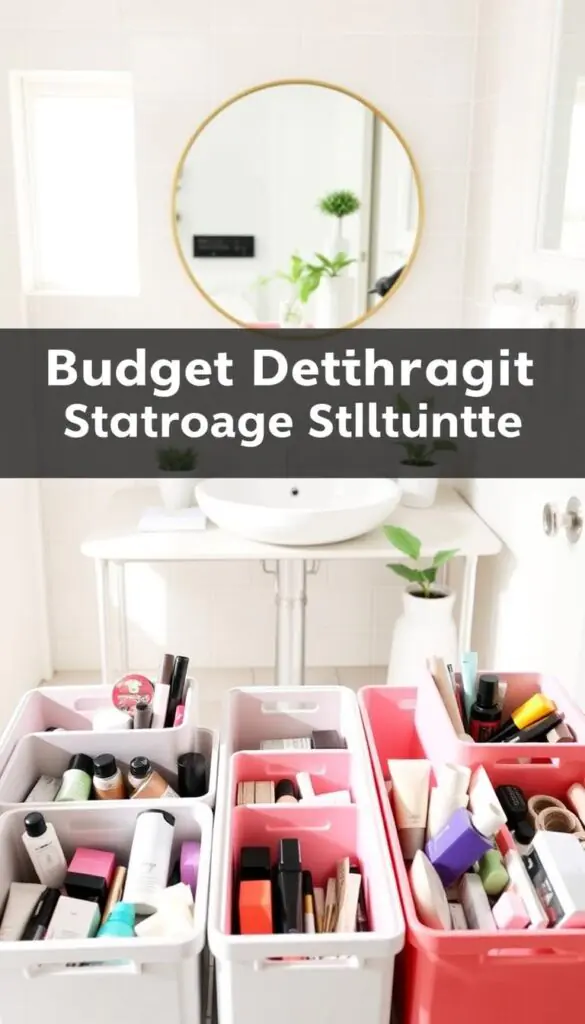
Under-sink solutions without drilling
Install a tension rod to hang spray bottles. Add stackable drawers shaped around the pipe and a pullout bin for backups. Pullout shelves help keep deep cabinet space visible and prevent overbuying.
Open vs closed organizers
Open bins are fast for daily grabs but collect dust and moisture. Closed boxes look tidy but need occasional airing to avoid stale odors.
„Keep products off the cabinet floor and choose coated materials to protect against leaks and humidity.“
Alternatives for pedestal sinks and no-storage vanities
Use a sink skirt with a basket underneath, a narrow rolling cart, or over-toilet shelving to add storage without drilling. Studios benefit from fewer categories; shared bathrooms need labeled zones by person.
| Problem | No-drill solution | Durability note |
|---|---|---|
| Scattered daily items | Single tray + labeled canister | Plastic or coated metal resists moisture |
| Under-sink chaos | Tension rod + stackable drawers | Keep items off floor to avoid leak damage |
| No cabinet or pedestal sink | Sink skirt, rolling cart, over-toilet unit | Choose water-resistant materials; test stability |
Transferable mini-system: one tray for daily items, one bin for backups, and one return-home drop zone. This way the same method works in kitchens and entryways and keeps the small space orderly.
Make towels and toilet paper easier: hooks, holders, and over-the-door solutions
A few smart hooks and a compact paper holder make routines smoother in tight rooms. Most updates take under 30 minutes and need no tools.
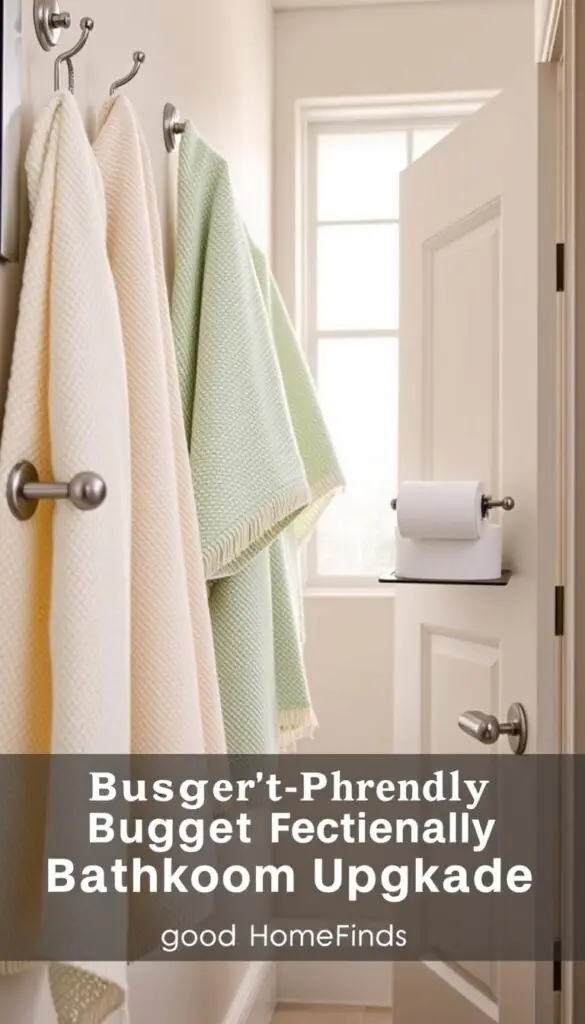
Everyday friction solved: wet towels on counters, extra rolls on the floor, and crowded bars in shared spaces.
Command-style hooks and adhesive mounts
Rules of thumb: apply to smooth, clean surfaces only. Let adhesive cure the recommended time. Do not hang very heavy, saturated towels — follow weight limits on the pack.
Failure points include textured paint, dusty walls, and constant steam. These make hooks drop. Replace adhesives seasonally if exposed to steam often.
Over-the-door and over-the-tank options
Over-the-door hooks work when wall mounting is risky. Add thin felt pads to stops rattling. Over-the-tank shelves give easy toilet paper storage without blocking flush or cleaning access.
„Use a two-roll rule: one active roll on the holder and one backup in a named spot; store bulk elsewhere.“
| Problem | Solution | Best for |
|---|---|---|
| Too few hang spots | Multiple hooks at staggered heights | Shared rooms |
| Risky walls | Over-the-door hooks | Renters, thin walls |
| Cluttered floor | Over-tank shelf for paper | Small toilets |
Maintenance: wipe hooks and holders weekly. Make toilet-area storage easy to remove for deep cleans. These small swaps improve daily flow and last through a lease term.
Upgrade the vibe instantly: rugs, towels, and soft goods that don’t trap odors
Soft goods are the fastest way to refresh a small room without changing a single fixture. New rugs, quick-dry mats, and swapped towels refresh the look and improve daily use in one afternoon.
Washable, quick-dry mats for safety and easy cleaning
Why quick-dry textiles matter: they cut mildew smells, dry faster after use, and lower slip risk. Choose machine-washable fiber blends that release water quickly.
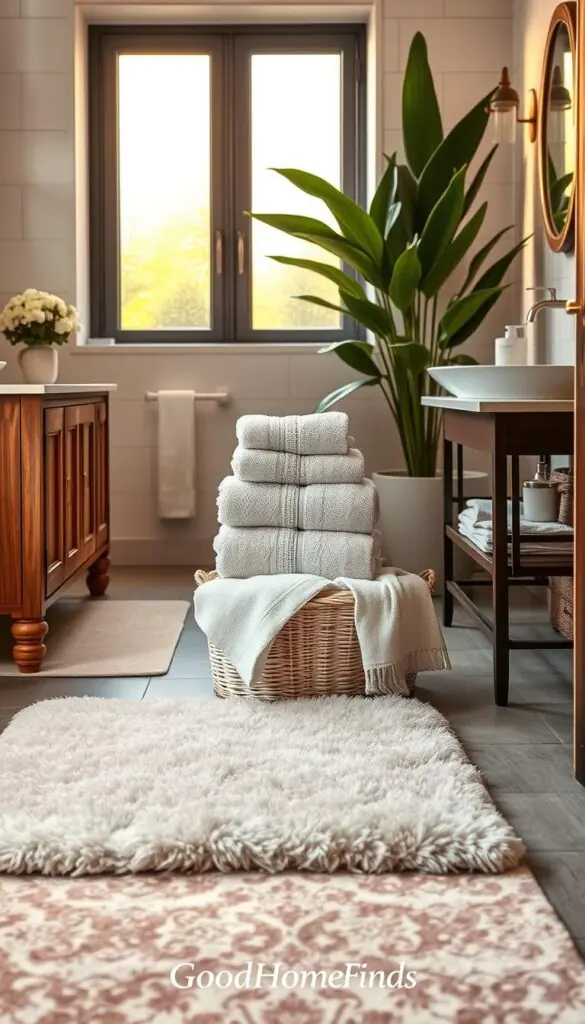
How to pick a bath mat
- Machine-washable fibers (microfiber, quick-dry cotton blends).
- Non-slip backing rated for wet zones.
- Size that sits inside the doorway and won’t catch on the door jamb.
Styling: matching sets vs mix-and-match
For an intentional look, pick one main color family and repeat it in two or three places. Matching sets create instant cohesion. Mix-and-match works when colors are limited and textures align.
Best for shared, high-traffic rooms
Use darker or patterned mats to hide wear. Keep two mats so one can dry between uses. Wash mats weekly and hang towels fully open to air.
„Soft goods move with the tenant and deliver the biggest visual change for the least effort.“
Transferable tip: apply the same rule in entryways—use washable runners and a dedicated wet-zone mat to trap moisture and cut odors.
Paint changes that look like a remodel without remodeling
A targeted color update delivers a remodeled look with little disruption. A fresh coat alters contrast and brightness. This makes the space read cleaner and newer without swapping fixtures.
Two-tone technique and accent placement
Measure and mark the height for a lower band, using a level and pencil. Apply painter’s tape along the line and roll a durable coat paint on the lower section. Keep the top light to make the room feel taller.
Humidity-friendly paint choices
Choose satin or semi-gloss finishes for areas near sinks and towel zones. These finishes resist scuffs and wipe down well. Use a mildew-resistant formulation when available.
Painting walls vs painting cabinets
Walls are quicker and more forgiving. Cabinets need sanding, deglossing, filler, primer, and a durable top coat. Cabinets take more prep but change dated storage dramatically.
Renter-aware tips and maintenance
- Get written permission if lease requires it. Keep original color documented.
- Save leftover paint for touch-ups at move-out.
- Ventilate to cut peeling risk; clean gently with a damp cloth when needed.
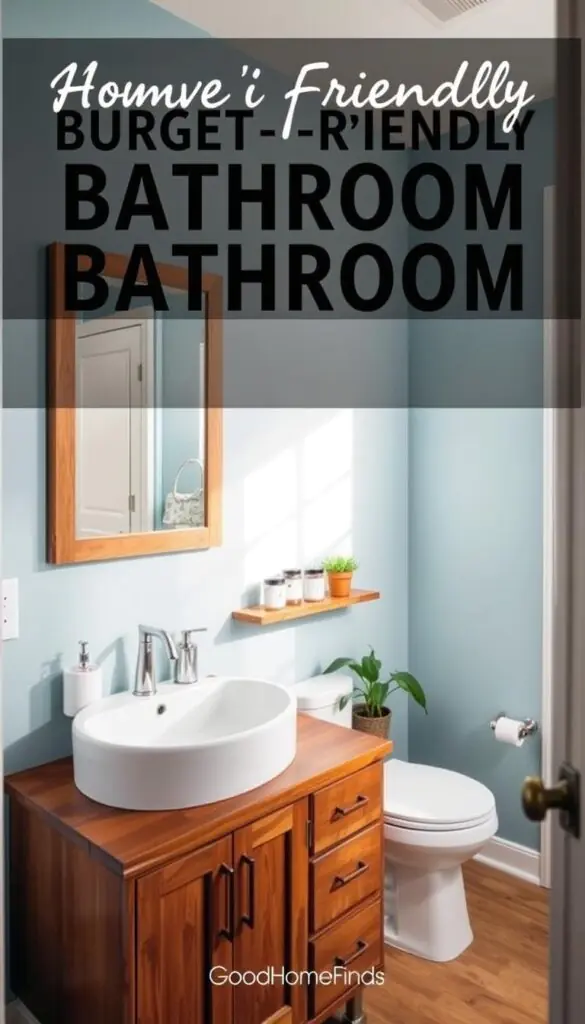
| Project | Time & prep | Durability & ease |
|---|---|---|
| Paint walls | 1–2 days; light prep | Fast impact; easy to reverse |
| Paint cabinets | 2–4 days; sanding & primer | Longer-lasting update; more effort |
| Two-tone band | 3–5 hours; precise taping | High visual upgrade; minimal furniture change |
Wall upgrades for renters: peel-and-stick wallpaper, decals, and beadboard-style looks
A single accent wall or a beadboard strip can add depth and value without heavy work. These renter-safe choices let an ordinary room read as intentional while staying reversible.
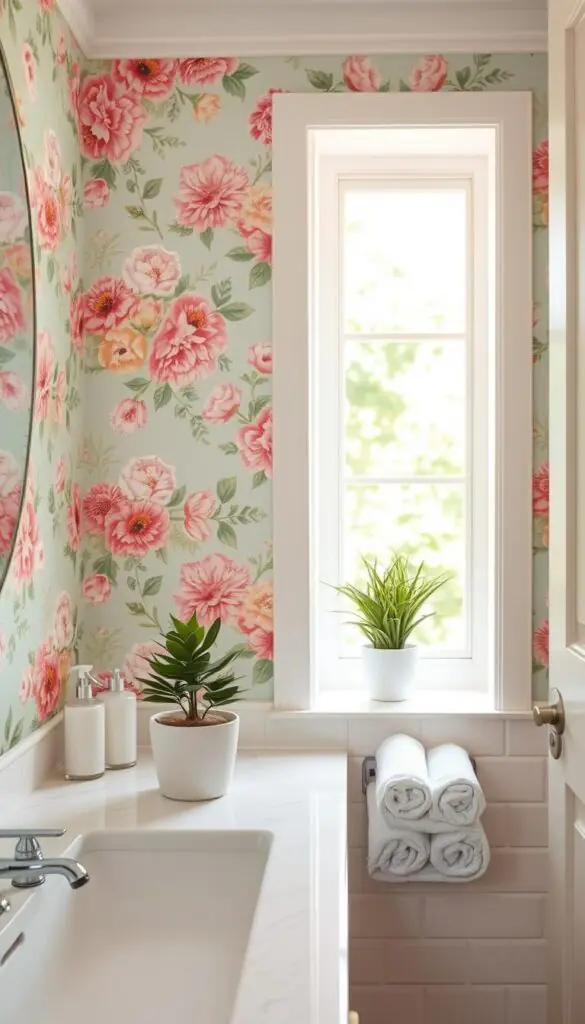
What to know about humidity
Peel-and-stick wallpaper is fast to install and removes cleanly on smooth paint. It performs best in powder rooms and low-steam spaces. In steamy full baths with poor ventilation, lightweight stick papers may lift at seams.
Traditional pasted wallpaper holds up better in humid zones if applied correctly, but it is less renter-friendly unless the lease allows it.
Removable accent ideas that look upscale
- Paper one wall only; repeat a color from the pattern in towels or accessories for cohesion.
- Use large framed removable panels or decals placed away from direct steam.
- Create a backsplash-style strip behind the vanity for impact with minimal material.
Beadboard panels and practical notes
Beadboard-style panels come in lightweight 4×8 sheets (~$20) and add architectural interest quickly. Panels install faster than individual slats but may need basic tools and landlord approval.
| Option | Pros | Cons |
|---|---|---|
| Peel-and-stick wallpaper | Fast, removable, many patterns | Humidity-sensitive in steamy zones |
| Decals / framed panels | Lowest risk; easy to reposition | Can look cheap if overused |
| Beadboard panels | Durable, architectural look | More involved install; may need approval |
„Pick one wall, keep patterns intentional, and run the fan after showers to protect stick products.“
Best for: powder rooms handle bolder wallpaper; steamy full rooms should favor backsplash strips, beadboard, or decals in dry zones.
Floor and tile look upgrades: peel-and-stick flooring and tile stickers
Floor and tile stickers offer a reversible way to lift a tired surface with low risk. Peel-and-stick products are often vinyl-like, designed to be walked on and wiped clean. When installed correctly they can outlast expectations in moist rooms.

Why peel-and-stick can hold up
Good adhesion needs a clean, flat substrate. Press firmly, roll seams, and avoid trapping water at edges. Do not install over crumbling grout or loose tiles.
Where to use tile stickers for impact
Use stickers in small doses: a vanity toe-kick, a backsplash band, or a single accent strip. This gives a big visual update with minimal material and less risk of lifting.
Compare options
| Method | Pros | Cons |
|---|---|---|
| Peel-and-stick flooring | Fast install, reversible, easy to clean | Needs flat base, seams sensitive to standing water |
| Tile paint / stencils | Lower cost, custom designs | Requires solid prep and sealing; longer cure time |
Small-space pattern rule & maintenance
Go bold once—floor OR wall. Keep the rest neutral so tiles and patterns don’t fight. Prioritize slip resistance and use quick-dry mats near wet zones.
Maintenance: wipe with gentle cleaners, avoid soaking seams, and towel up puddles quickly. For studios, focus on the visible floor strip; in larger rooms, use pattern to define zones without clutter.
Vanity refresh without replacement: paint, knobs, and simple tops
Targeted changes to hardware and tops deliver big visual returns with low disruption. When the base is solid, a cosmetic refresh beats a full replacement for cost and time.
Decide refresh vs replace: if the vanity has good storage and no rot, refresh it. If doors are swollen, drawers stick, or the substrate crumbles, replacement is wiser.
Swap hardware for a cohesive look in under an hour
Sixty-minute plan: measure existing hole spacing, buy matching knobs or pulls, and use the original screws if they fit. Replace one set at a time to keep alignment.
Choose a single finish across knobs, faucet, and other small fixtures to tie the look together. Pack original hardware in a labeled bag for move-out.
Budget countertop ideas: laminate options and remnant-style approaches
Preformed laminate tops are affordable, wipeable, and easy to install. For a higher-end look, search local suppliers for remnant stone slabs; these often fit small sinks without full custom work.
When changing a top, consider updating the faucet. Turn off the shutoffs, check for leaks, and let sealant cure fully before using the sink.
Best for: sturdy vanities vs vanities that are falling apart
Best for: dated-but-sturdy vanities that need style not structure. Use light sanding, deglossing, filler, primer, and one durable top coat of paint on cabinets for lasting results.
Not for: vanities with water damage or rotten parts; paint will hide flaws briefly but won’t stop decay.
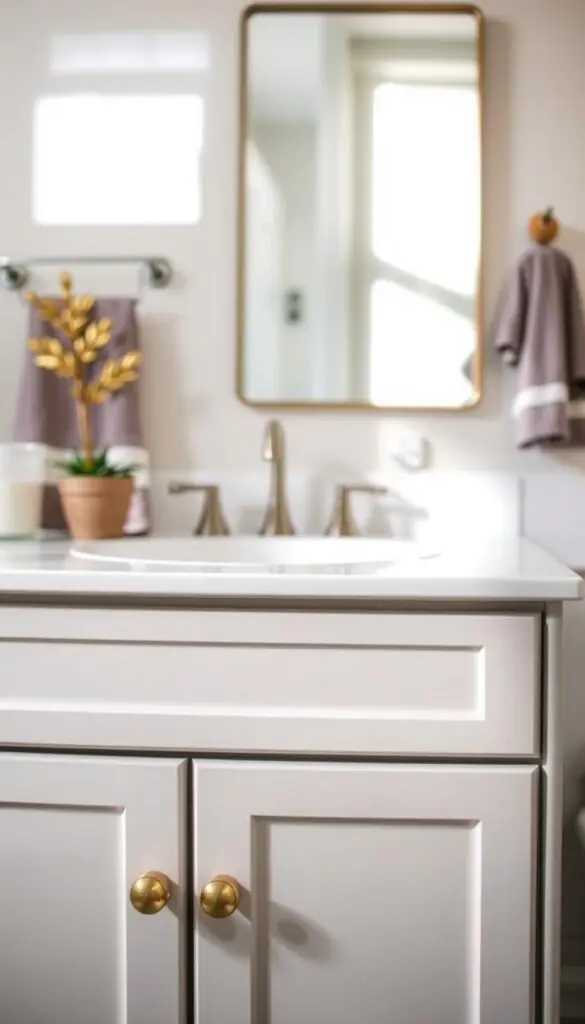
„Swap the hardware first; it sets the tone and is the least invasive high-impact change.“
| Project | Time | Best for |
|---|---|---|
| Hardware swap | 30–60 minutes | Quick style update |
| Preformed laminate top | 1–2 hours | Affordable, easy-clean surface |
| Remnant stone slab | 2–4 hours (install) | Higher-end look, small runs |
Mirror and medicine cabinet upgrades that add light and storage
A well-placed mirror can double perceived space and lift dim corners without changing fixtures.
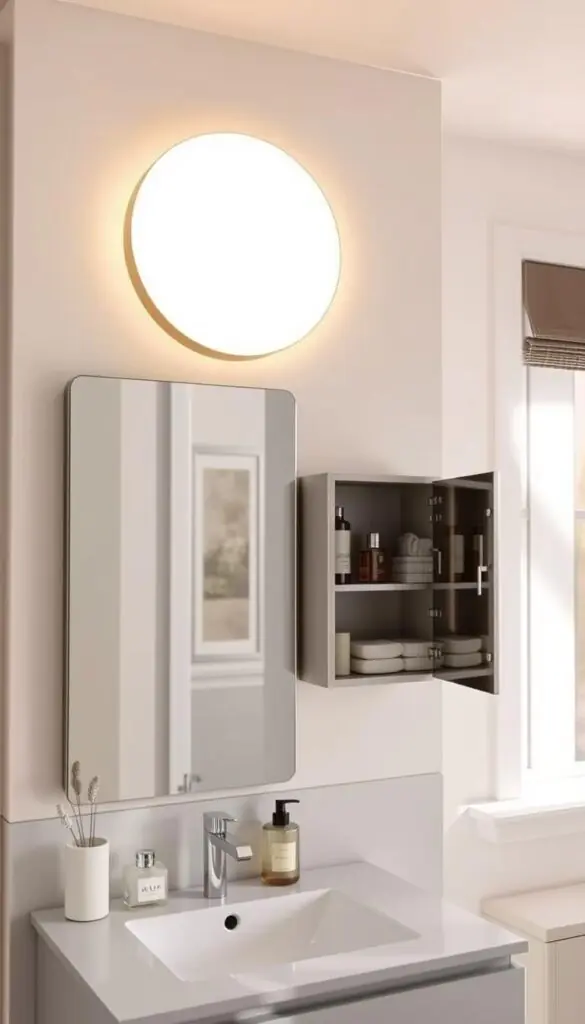
Why change the mirror: a larger or better-placed mirror bounces more light and makes a small room feel open. It also reduces counter clutter when paired with storage.
Shape and style tradeoffs
- Round mirrors soften angles and suit pedestal sinks or narrow vanities.
- Rectangular mirrors maximize reflection area for grooming and mirror more surface light.
DIY framing and renter-friendly mounts
A basic mirror can be upgraded with lightweight molding or reclaimed-wood trim. Seal the wood with a water-resistant finish first.
Mount frames and mirrors using heavy-duty removable strips or surface-mount brackets when studs aren’t available. Respect the strips’ weight limits and follow cure-time instructions.
Medicine cabinet options for renters
Surface-mount medicine cabinets add shallow storage without cutting walls. Choose a model with an interior mirror to brighten the cabinet’s contents.
| Option | Pros | Cons |
|---|---|---|
| Large mirror | More reflected light; cleaner look | Less hidden storage |
| Surface-mount medicine cabinet | Adds storage; reversible if mounted correctly | Can appear bulky if oversized |
| DIY framed mirror | Custom look; lightweight | Frame edges need regular drying and care |
„Place heavier cabinets on studs when possible and test removable anchors for their rated load in moist areas.“
Best for: pedestal sinks and tiny vanities benefit most from mirrored storage. Shared rooms often gain more from closed cabinets to hide supplies and cut visual clutter.
Maintenance tip: wipe mirror edges and frames weekly to prevent spotting and moisture damage.
Lighting improvements that flatter and function better
Good lighting is one of the easiest ways to make a small room feel cleaner and more functional. It’s a “hidden” remodel lever: better light makes surfaces look brighter and helps with shaving, skincare, and makeup tasks.
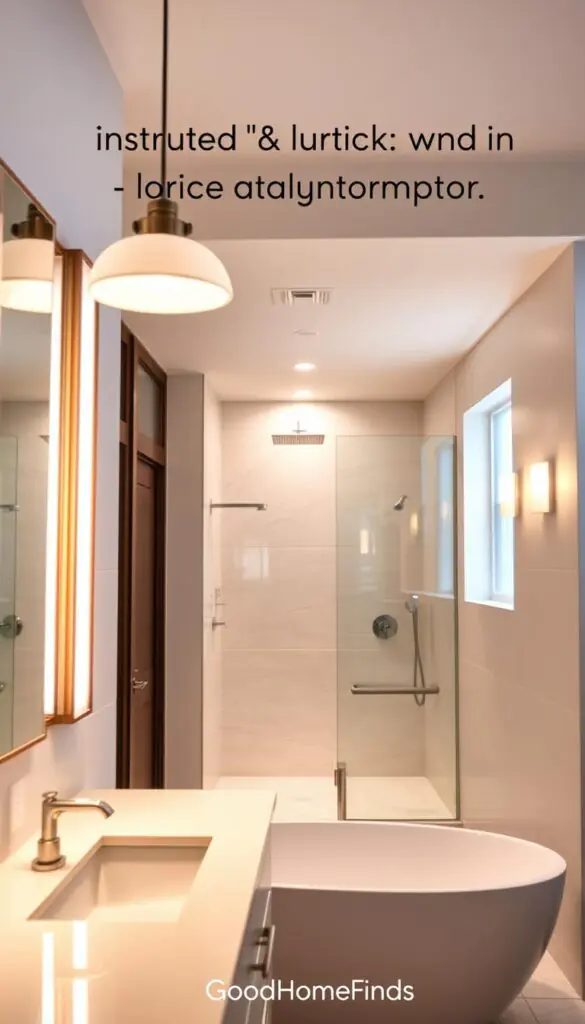
Easy swaps: shades, bulbs, and warmer light for a cleaner look
Simple swaps renters can do: change bulbs to soft white (2700–3000K), replace worn shades with diffusing covers, and clean fixtures to restore output. These moves improve color and reduce glare without installing new wiring.
Selection tips: choose bulbs with CRI ≥ 80, moderate lumen output for small spaces, and shades made of rust-resistant materials for damp zones.
Safety notes for damp locations and when to call a pro
Use fixtures rated for damp locations where steam is present. Flickering, hot sockets, exposed wiring, or no grounding are signs to stop and call an electrician.
„If moisture reaches the box, or if the fixture needs hardwiring, hire a licensed pro rather than installing new parts yourself.“
Routine tip: keep a microfiber cloth nearby and wipe dust from bulbs and shades monthly to maintain brightness. The same bulb choices and care improve entryways and closets too.
Fixture refresh: showerheads, faucets, and small swaps with big payoff
Small plumbing changes often pay off in function and comfort faster than bigger cosmetic moves. Upgrading a few key fixtures can improve water delivery, make cleaning easier, and reduce daily friction.
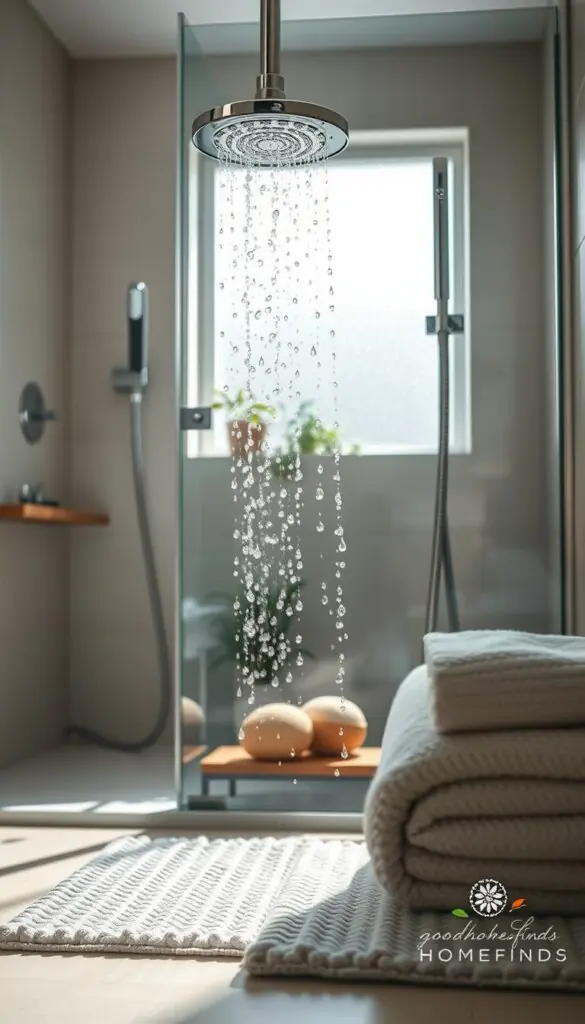
Handheld sprayers for easier tub cleaning and daily convenience
Why choose a handheld sprayer: it helps rinse hair, wash pets, and speed tub cleaning. Many models thread onto the existing shower arm and install in minutes.
Best for: older apartments with weak spray patterns and shared spaces where quick rinses matter.
Faucet replacement basics: time, difficulty, and leak-prevention checks
Replacing a sink faucet typically takes about 1–2 hours for someone comfortable with basic tools. Turn off shutoff valves, lay out towels, and have a bucket ready for residual water.
Protect finishes with a soft cloth under tools. Use plumber’s (thread seal) tape on threaded joints and tighten parts carefully to avoid stripping threads. Test thoroughly and check for slow drips after 24 hours.
Pros and cons: upgrading hardware only vs upgrading fixtures
- Hardware-only: quick, cosmetic, low time and risk. Good when function is fine.
- Fixture swaps: change how the space works but need compatibility checks and leak testing.
- Durability note: choose chrome or brushed finishes that resist spotting and simple shapes with fewer crevices for easier cleaning.
Renter-friendly install checklist: confirm thread size, protect surfaces, carry thread seal tape, follow cure or torque guidance on connectors, and run a multi-point leak test.
| Swap | Estimated time | Best for |
|---|---|---|
| Replace showerhead (thread-on) | 10–30 minutes | Faster flow or new spray patterns |
| Add handheld sprayer | 15–45 minutes | Tub cleaning, pets, hair rinse |
| Replace sink faucet | 1–2 hours | Leaking spout or worn handles |
Maintenance routine: descale every 1–3 months depending on water hardness and check supply connections monthly for slow drips. This keeps fixtures reliable and reduces emergency repairs over the lease.
„Small, tested swaps deliver the biggest everyday payoff—faster rinses, easier cleaning, and fewer drips.“
Comparison tables: best fixes and upgrades by problem, budget, and bathroom size
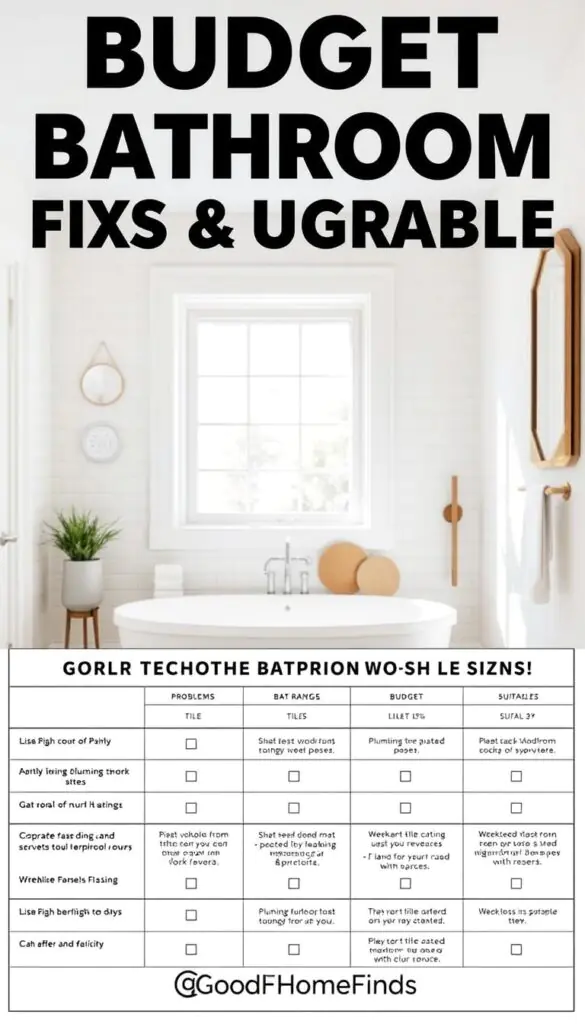
A clear matrix of choices makes it easier to match problems to renter-safe solutions quickly.
Under $25: fastest wins for clutter, grime, and water mess
| Problem | Quick solution | Setup time | Maintenance | Risk |
|---|---|---|---|---|
| Grimy tile lines | Grout pen | 1–3 hours | Wipe weekly; re-seal annually | Low |
| Counter clutter | Counter tray + labeled canister | 10–20 minutes | Wipe weekly; launder cloths | Low |
| Floor puddles | Weighted liner or quick-dry mat | 10–30 minutes | Air between uses; launder weekly | Low |
| Poor light | Soft white bulb + shade | 5–15 minutes | Clean monthly; replace bulbs yearly | Low |
Under $50: upgrades that change the whole look
| Upgrade | What it does | Best for | Risk |
|---|---|---|---|
| Mirror framing or larger mirror | More reflected light; style boost | One-bedrooms, studios | Low |
| Tension-rod shower setup | Improves splash control and space | Shared baths, tubs | Low |
| Improved storage system (freestanding) | Reduces visual clutter | Studios, shared rooms | Low |
| Better fixture bulbs & shades | Warmer, truer light for tasks | All sizes | Low/Medium (if hardwired) |
| Option | Pros | Cons | Alternative |
|---|---|---|---|
| Peel-and-stick flooring | Fast, cleanable, reversible | Needs flat base; seams dislike standing water | Area rug + quick-dry mat |
| Peel-and-stick wallpaper | High visual impact | May lift in steamy zones | Removable framed panels |
| Grout refresh | Big visual change for low cost | Temporary if grout is failing | Targeted deep clean + sealer |
Priorities by apartment size:
- Studios: reduce visible clutter, improve lighting, and pick quick-dry textiles.
- One-bedrooms: add a style element (mirror framing or two-tone paint) plus storage.
- Shared apartments: label zones, add extra hooks, and choose washable soft goods.
„Best way to combine: one cleanliness item + one water-control product + one storage change. That trio compounds benefits without crowding the space.“
Quick checklist to screenshot: pick one under-$25 change today, schedule one under-$50 upgrade next month, and adopt one weekly maintenance habit to prevent backsliding.
Conclusion
Conclusion
Small, targeted swaps can deliver a weekend transformation without a full remodel. Start by solving the functional problems: stop leaks, refresh grout, and add storage. Then pick one visual update—lighting, a mirror, or soft goods—that makes the space read finished.
Simple next steps: choose one under-$25 change today, schedule one under-$50 upgrade next weekend, and set a 10‑minute weekly reset routine.
Keep originals, document any changes, and store hardware for move-out. Use daily ventilation, a weekly wipe-down, a monthly declutter, and seasonal soft-good swaps to protect results.
These renter-safe, durable updates prove a full bathroom remodel is not required to get big, lasting gains.
FAQ
What are five low-cost fixes and five upgrades that make the biggest difference?
Low-cost fixes under include deep-cleaning grout, swapping a shower curtain and liner, adding command hooks, installing a new toilet paper holder, and updating towels and a bath mat. Upgrades under that change the look include new hardware (knobs and faucet handles), a framed mirror or DIY frame, peel-and-stick backsplash or tile stickers, a fabric curtain plus clear liner, and a better lightbulb and shade swap. These moves boost function and appearance with minimal time and no permanent changes.
What should renters check first before making changes?
Check for moisture and ventilation, test walls for flaking paint or mildew, and read the lease for allowed modifications. Look for exhaust fans, window treatments rules, and any ban on drilling. When in doubt, use removable options like Command hooks, peel-and-stick wallpaper, or over-the-door storage to stay compliant.
How can someone prevent slips and falls in a small space?
Use washable, quick-dry bath mats with non-slip backing, apply anti-slip tape in tubs, and choose a curved or tension shower rod to increase usable space. Keep frequently used items within reach using countertop corrals or no-drill shelves. Good lighting and clear floor space reduce trip risks.
Which materials resist humidity and won’t peel or rust?
Look for humidity-proof paint, PVC or vinyl peel-and-stick tile, stainless or powder-coated hardware, and moisture-resistant adhesives for decals. Avoid thin wallpaper or low-grade laminate in steam-heavy rooms. For cabinets and vanities, sealed wood or painted MDF with a topcoat performs better than raw finishes.
What basic tools are needed for weekend DIY updates?
A small toolkit of a screwdriver set, drill with a single masonry bit (if allowed), level, measuring tape, utility knife, caulk gun, and a putty knife covers most projects. Add adhesive hooks and peel-and-stick supplies for renter-friendly installs. Many upgrades require only simple hand tools and 1–2 hours.
If I only have , what should I buy first?
Prioritize a clear fabric curtain plus liner or a sturdy vinyl liner, a grout pen for quick grout refresh, a non-slip bath mat, a set of Command hooks for towels, and a quality scrub or grout cleaner. Those items improve safety, cleanliness, and the overall look immediately.
What should be prioritized with to spend?
With , swap cabinet hardware, add a framed mirror or DIY frame kit, install peel-and-stick backsplash tiles, upgrade showerhead to a handheld sprayer, or pick a layered lighting bulb and shade combo. These create a noticeable style shift while keeping costs low.
Grout pen or grout stain: which is better?
Use a grout pen for small touch-ups and fast cosmetic refreshes; it’s quick and renter-friendly. Choose grout stain when discoloration is widespread or there’s deep-set staining—stain penetrates deeper and lasts longer but takes more prep time.
How do you clean and seal grout for easier maintenance?
Scrub with a brush and an oxygen-based cleaner, rinse well, let dry fully, then apply a penetrating grout sealer per product instructions. Sealing reduces staining and makes weekly wipe-downs effective. Allow full cure time before heavy use.
Are fabric curtains better than vinyl for preventing leaks?
A fabric curtain paired with a clear vinyl liner offers the best balance: the fabric improves appearance and dries faster, while the liner controls splash. Use weighted liners or magnets at the hem to reduce billowing in small showers.
What renter-friendly curtain rods work in minutes?
Tension rods, curved tension rods, and spring-loaded rods require no drilling and install in minutes. For added support, use non-slip end caps and check weight limits before adding heavy curtains or rings.
How to organize a vanity without drilling? Which no-drill options hold up?
Countertop trays, stacked clear bins, adhesive-mounted mirrored cabinets, tension rods for hanging spray bottles under the sink, and stackable drawers provide durable storage. Choose brands with good reviews for adhesive strength and humidity resistance.
What works best under-sink when space is limited?
Tension rods for hanging spray bottles, pullout-style bins, stackable drawers, and slim pull-out caddies maximize vertical space. Labelled canisters keep small items organized and reduce clutter on the countertop.
Hooks vs over-the-door vs over-the-tank storage—what’s best for towels and toilet paper?
Command-style hooks are best for lightweight towels and robes; choose high-weight versions for thicker items. Over-the-door racks add multi-hook capacity without drilling. Over-the-tank shelves are compact for extra toilet paper or small baskets. Pick solutions that match weight needs and moisture exposure.
Which rugs and towels avoid trapping odors?
Microfiber or quick-dry cotton mats with open-weave backing and antimicrobial treatments dry faster and resist odors. For towels, choose combed cotton or performance quick-dry options and rotate sets to allow full drying between uses.
How can two-tone paint make a small room look remodeled?
Use a darker color on the lower third or on a single accent wall to add depth while keeping the rest light. Apply durable, bathroom-friendly paint on high-touch areas and a semi-gloss for easier wipe-downs. Keep transitions clean with painter’s tape for a polished look.
Is painting cabinets a good alternative to replacement?
Painting cabinets saves money when the structure is solid. Sand, prime with a bonding primer, and use a moisture-resistant topcoat. Swap hardware for a cohesive update. If cabinets warp or the substrate is failing, replacement may be more cost-effective.
When does peel-and-stick wallpaper fail in humid spaces?
Thin or low-quality peel-and-stick papers can lift near showers or without good ventilation. Use high-grade removable wallpaper, avoid direct spray areas, and prep surfaces by cleaning and ensuring they’re dry before application.
Where does peel-and-stick flooring work best?
Use peel-and-stick flooring on flat, clean subfloors in powder rooms, entry areas, or low-moisture bathrooms. Avoid direct, constant water exposure; protect seams with silicone where necessary. High-quality vinyl planks can be durable enough for many bathroom uses.
What quick hardware swaps give the biggest visual payoff?
Changing vanity knobs, faucet handles, towel bars, and showerhead finishes coordinates the look and feels like a designer update. Matte black, brushed nickel, and brass are popular finishes that pair well with many palettes.
Should someone add a framed mirror or a medicine cabinet for light and storage?
A framed mirror upgrades style and can brighten the space. A shallow surface-mounted medicine cabinet adds concealed storage without cutting into the wall—best for renters. Choose based on whether storage or visual impact is the priority.
Which lighting swaps are safe and effective for a quick refresh?
Replace bulbs with warmer, daylight-balanced LEDs for flattering light. Swap shades for a softer look and ensure fixtures are rated for damp locations. For rewiring or hardwired fixture changes, consult a licensed electrician.
How much time and effort is replacing a faucet or showerhead?
A single-handle sink faucet swap typically takes 45–90 minutes with basic tools. Showerhead changes take 10–20 minutes. Check supply line connections and use plumber’s tape to prevent leaks. Call a pro if older plumbing or corroded fittings are present.
What are quick wins under for clutter, grime, and water mess?
Grout pen, heavy-duty scrub, non-slip bath mat, clear shower liner, and Command hooks are top picks. They tackle cleanliness, storage, and splash control with low cost and fast results.
For shared or studio spaces, what should be prioritized?
Prioritize durable, washable textiles, multiple towel hooks, quick-dry mats, and easy-to-clean surfaces. Maximize vertical storage with no-drill solutions and choose bold-but-simple patterns to avoid visual clutter in tight spaces.

[…] Quick checklist: width at the side wall, depth around the P-trap, and the open space you can reach. If drilling is not allowed, prefer direct-connect or use an accessory hole. For renter-friendly tips and small-budget fixes, see budget fixes. […]
[…] quick budget fixes and renter-safe solutions, check this practical list before […]
[…] Practical promise: consistency beats intensity. A “good enough” reset reduces stress and makes Monday feel manageable. For budget bathroom fixes and renter-safe options, see a helpful resource here. […]
[…] budget bathroom and humidity fixes, see budget bathroom fixes for renter-friendly products and setup […]