Quick, practical gear gets your new space working without drama. This short guide shows the true essentials you touch every day. Think of items that solve real problems, not decor you’ll regret.
Start with basics: shower setup, towels, a non-slip mat, soap dispenser, toothbrush holder, hooks, and simple storage. Most picks are under $25 and easy to buy on Amazon for fast delivery and returns.
You’ll get tips on durability, safety, and what to avoid. For example, choose rust-resistant materials and washable fabrics to cut replacement costs. Skip flimsy metal that flakes in humid rooms.
Use this small-space picks approach: buy in priority order, cover daily-use items first, then upgrade only if needed. The goal is a clean, low-stress home routine that prevents puddles, mildew, and last-minute store runs.
Key Takeaways
- Focus on daily-use essentials that save time and reduce mess.
- Most good options cost under $25; pay for rust resistance and non-slip backing.
- Prioritize Amazon-available items for speed and easy returns.
- Choose safe, ventilated designs and avoid harsh cleaner mixes.
- Buy in order: sink basics, shower setup, towels, then storage and cleaning tools.
- Look for renter-friendly mounting and simple under-sink organizers.
How to choose bathroom essentials that actually get used
Buy for use first, style second: that keeps costs low and routines smooth. Set a cap (for example, $75–$150) and spend most on daily-touch items: liner, mat, towels, and a soap dispenser.
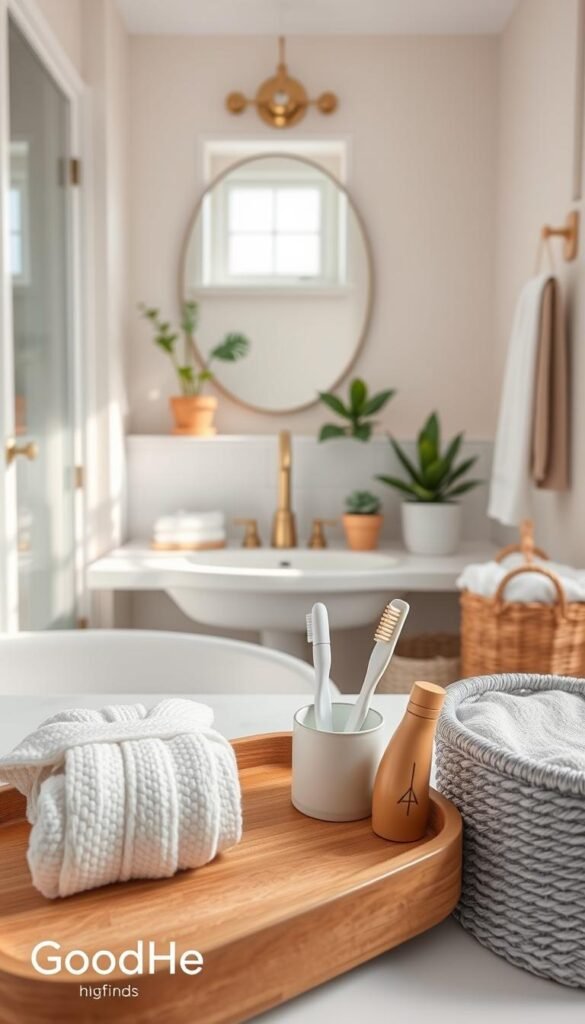
Shopping priorities
Start with what you touch every day—hands, shower, and toilet. Add storage and extras after the first week when you know what you really use.
Materials checklist
- Rust-resistant metal: stainless hooks and rings.
- Plastics: clear material descriptions, non-yellowing.
- Fabrics: machine-washable, quick-dry towels and mats.
Amazon filtering tips & returns prevention
Filter for Prime, 4.3+ rating, and many reviews. Read recent comments for durability notes. Avoid vague sizing and „one-size“ claims. Photos of grommets, hems, and backing cut return risk.
| Priority | Why it matters | Quick spec |
|---|---|---|
| Liner | Prevents floor water and mildew | Exact size, wipe-clean or machine-wash |
| Mat | Reduces slips and puddles | Non-slip backing, quick-dry fabric |
| Towels | Daily use, cuts laundry stress | Cotton, solid hems, fast-dry |
Safety note: Choose non-slip backing, ventilated holders, and avoid unstable freestanding stands to reduce hazards and odors.
Bathroom starter finds for a clean, low-stress setup
Pick a short list of practical gear that fixes the messy, urgent problems first.
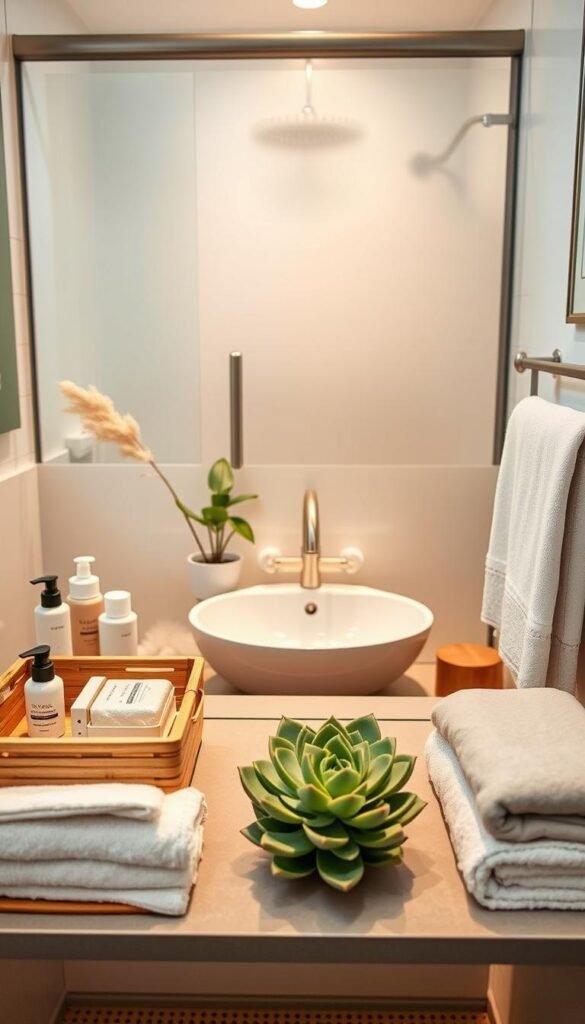
What to buy first for the biggest day-one impact
- Shower curtain + liner with rings
- Two towels + washcloths
- Non-skid bath mat
- Hand soap and toilet paper + simple holder
- Toilet brush, flange plunger, all-purpose cleaner, microfiber cloths
Immediate payoff: these items stop water on the floor, reduce clutter, and prevent awkward “we’re out” moments.
What to skip if you’re trying to stay under $25
Pass on matching accessory sets, fancy dispensers, scented gadgets, and decorative trays at first. They look nice but don’t solve core problems.
| Buy first | Why it matters | Cheaper alternative |
|---|---|---|
| Liner | Blocks water and mildew | Clear plastic liner, $10 |
| Non-skid mat | Prevents slips on tile | Small quick-dry towel with rubber backing |
| Toilet brush & plunger | Handles messes fast | Basic plunger + drip tray |
| Towels | Daily use, reduces laundry stress | Buy two now, add more later |
For more problem-solving picks that are renter-friendly and worth it, see this quick home kit.
Shower curtain, liner, and rings that prevent puddles and mildew
Solve wet floors fast with a properly sized curtain, liner, and sturdy rings. A good set keeps water off the floor, protects your outer curtain, and cuts mildew cleanup time.
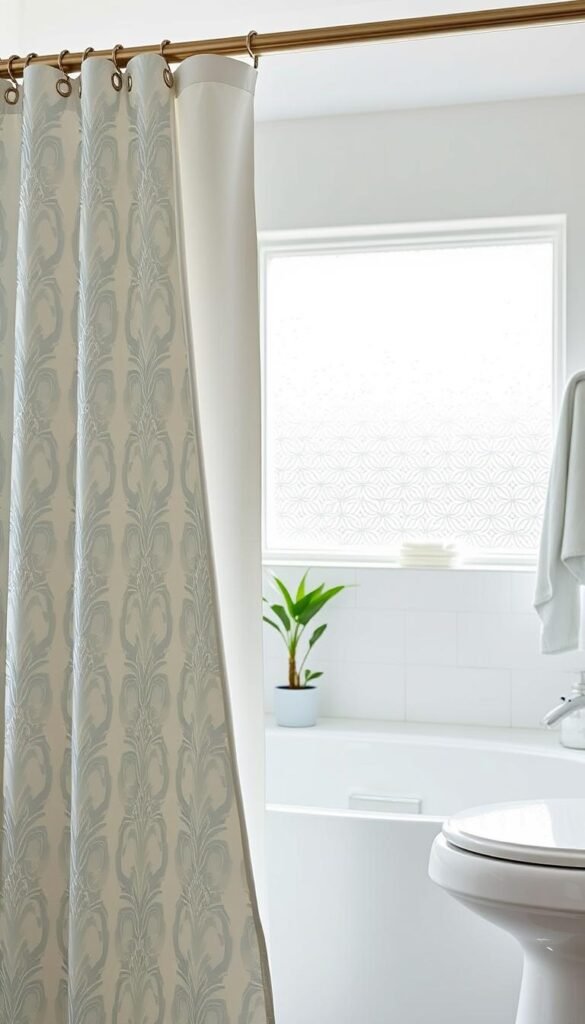
Why it helps
Stops puddles: the liner blocks water and the weighted hem or magnets keep it tucked inside the tub. That prevents soggy socks and wet rugs after every shower.
What to look for
- Measure length and width—standard 72×72 doesn’t always fit.
- Choose PEVA/EVA for wipe-clean plastic or polyester fabric that is machine washable.
- Rust-resistant grommets, smooth-glide rings, and a weighted hem or magnets.
Price, pros, cons, and who it’s for
A $10–$20 curtain/liner/ring bundle often beats an expensive outer curtain that still needs a liner. Plastic liners are cheap and wipe-clean but may yellow. Fabric liners wash well and look nicer but can trap moisture longer.
This approach works for renters, dorms, and shared showers. To save money, replace only the liner every few months rather than buying a whole set.
Towels and washcloths that dry fast without feeling scratchy
Choose towels that balance absorbency and quick drying for small-space living. A good towel set keeps laundry low and your routine simple.
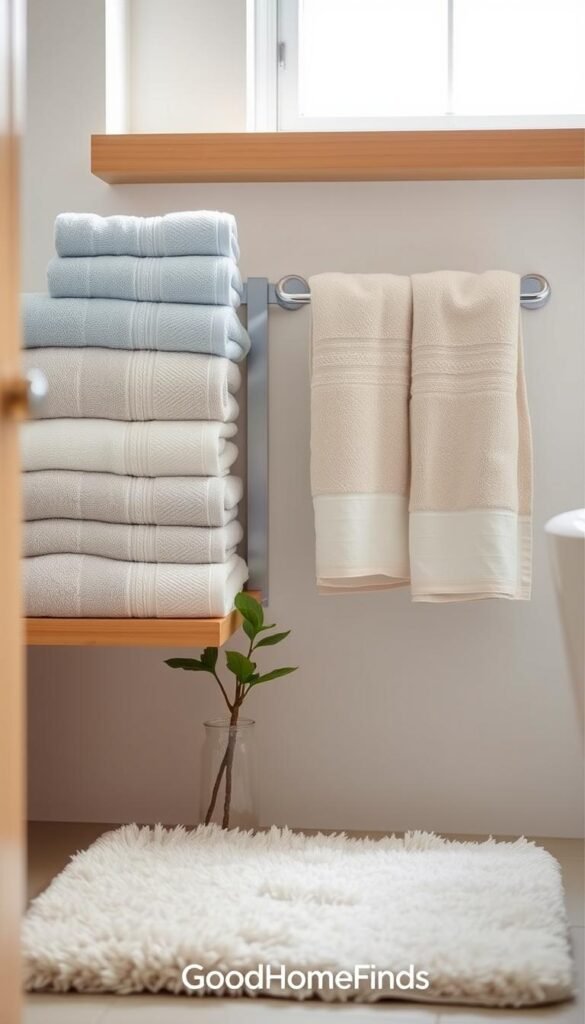
Why it helps
Having a basic group of towels stops constant washing. You can use one set while the other is in the laundry. That reduces stress and keeps things guest-ready.
What to look for
- Material: 100% cotton or cotton-rich blends for absorbency and softness.
- Finish: solid hems and good stitching to avoid fraying and extra lint.
- Size & weight: a mid-weight option dries between showers in small spaces.
Real-life tip, price, and alternatives
Keep extra washcloths for quick face rinses so you don’t soak a bath towel. Starter bundles often cost less than buying pieces one-by-one, but check reviews for lint and seam quality.
Pros, cons, and who it’s for
Thicker towels feel cozy but can stay damp and smell musty. Quick-dry options trade spa feel for fast turnover. This approach works well for first apartments, dorms, and guest bathroom restocks.
What to avoid
Avoid towels that shed lint, have rough seams, or are so plush they never dry. Wash before first use and skip heavy fabric softener to keep absorbency high.
Non-skid bath mat and tub mat choices for safer footing
Small, grippy mats make stepping out of a tub less risky and keep floors dry. A real non-skid mat is a low-cost safety upgrade, especially on tile or smooth vinyl floor surfaces.
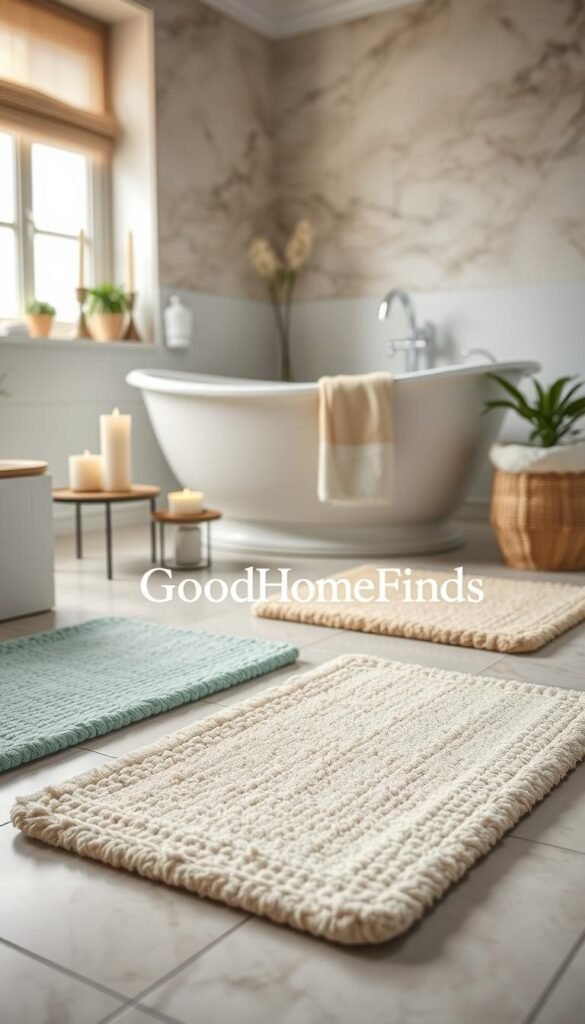
Why it helps
Prevents slips: a quality bath mat reduces slipping when water meets smooth floors. It also soaks up tracked water so rugs and surfaces stay dry.
Quick real-life example
When kids or roommates dash out of the shower, one mat outside the tub cuts how much water reaches the hallway. That simple change avoids puddles and extra cleanup.
What to look for
- Grippy backing: rubber or silicone to hold the mat in place.
- Quick-dry top: machine-washable fabric or drainable tub mats.
- Size choice: tub mat goes inside; bath mat sits outside the tub or shower.
Who it’s for and what to avoid
This is worth it for families, older adults, and anyone with slick flooring or small spaces. Avoid mats that curl, trap moisture underneath, or slide when wet—those lead to smells and mildew.
Budget tip: you can pair a small non-slip mat with a quick-dry towel for tight spaces. For more low-cost upgrades that protect floors and reduce damage, see this budget bathroom fix guide.
Sink and counter basics that cut clutter fast
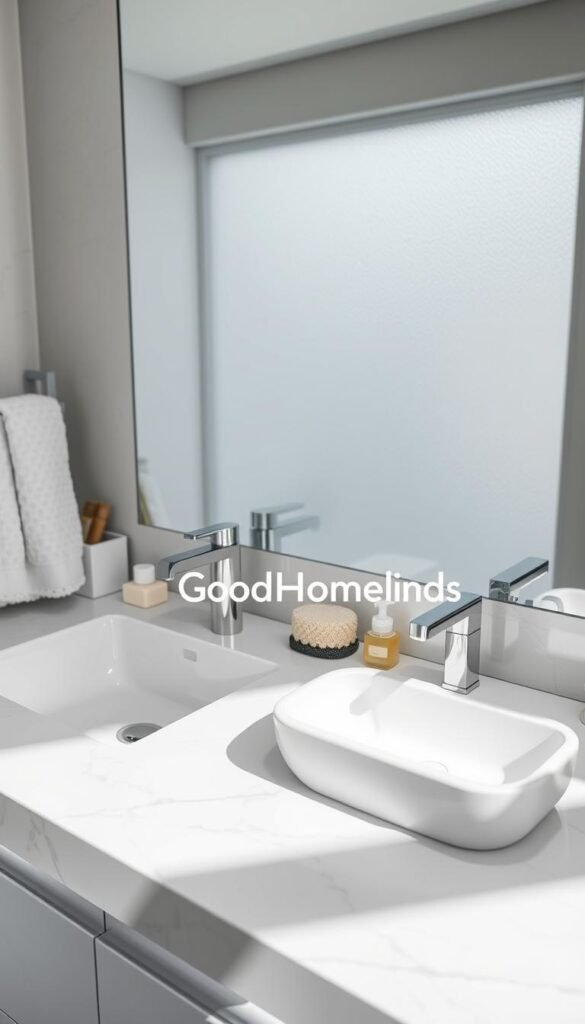
Hand soap dispenser vs. the bottle
For tight budgets a store-bottle is fine. It gets the job done and you can place it on the sink quickly.
When to upgrade: choose a refillable dispenser with an easy pump. Puracy recommends one with a smooth mechanism to avoid clogs and drips. It keeps the counter neater and looks friendlier for guests.
Toothbrush holder features that actually improve hygiene
Pick a holder with ventilation holes, a removable base, and spaced slots so brushes don’t touch. Puracy notes these features make cleaning simple and reduce standing water.
Real-life example
One small tray, a refillable soap dispenser, and a ventilated holder stop items from slipping behind the sink during rushed mornings. You wipe the counter in seconds and avoid lost supplies down the cabinet gap.
Budget note: you can buy both items on Amazon for about $10–$15 in plastic or stainless. Avoid porous holders that trap moisture or cheap pumps that leak.
Toilet-area essentials: toilet paper holder, storage, and backups
A tidy toilet area removes awkward moments and protects rolls from steam and splashes.
Give your paper a proper home. A dedicated holder plus a small stash saves you from soggy rolls and last-minute texts from guests.
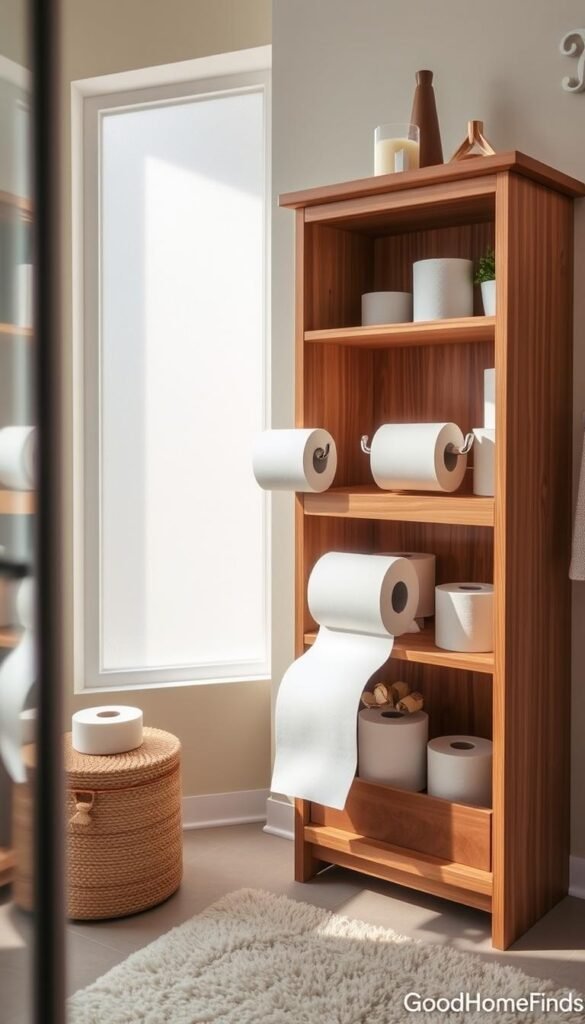
Holder options and quick buying tips
- Freestanding: renter-friendly, no tools, pick one with a wide base and non-slip feet.
- Wall-mounted: saves floor space and is more stable for busy homes.
- Over-tank: best for the tiniest spaces where floor or wall options won’t fit.
Storage ideas for small space
Use slim racks, lidded bins, or wicker baskets to keep extra toilet paper off damp floors.
Repurposing a small bin or kitchen basket works fine. Just keep it raised and ventilated.
| Option | Why it works | Typical price |
|---|---|---|
| Freestanding rack | Easy set-up, holds backups | $10–$20 |
| Wall-mounted holder | Saves floor space, stable | $12–$25 |
| Lidded bin or basket | Neat look, dust protection | $8–$20 |
Real-life tip: keep two extra rolls visible so guests don’t have to text you mid-visit.
For design-forward storage and expert picks, see these best toilet-paper storage ideas.
Unsexy but necessary: toilet brush, plunger, and a discreet place to keep them
A compact flange plunger and a stiff-bristled brush are practical, low-cost items that stop small problems before they grow.

Why this matters
Handle messes fast: having the right tools lets you fix a clog or scrub under the rim in minutes. That avoids late-night store runs and awkward guest moments.
Choosing a toilet brush
Pick one with firm bristles and a head shaped to reach under the rim. Puracy recommends rim reach to remove buildup and cut odors.
Choosing a plunger
Know the difference: cup plungers work on flat surfaces like sinks. Flange plungers seal better on a toilet drain and clear clogs faster. For a toilet, choose a flange model.
Real-life example and who it’s for
In real life, a flange plunger clears a simple clog in minutes. New renters find this especially worth it. Every household benefits from these basic tools.
What to avoid and safety
- Avoid plungers that can’t form a seal and brush holders that trap dirty water.
- Use a ventilated holder or a small drip tray. Rinse the brush and wash hands after use.
Budget tip: a basic plunger plus a separate drip tray does the job and is cheaper than decorative sets. For more problem-solving gear, see the quick home kit.
Cleaning supplies that make bathroom upkeep faster
A compact cleaning kit saves you time and keeps surfaces guest-ready with minimal fuss. Keep three cleaners and the right tools. That covers most daily messes and prevents long-term stains.
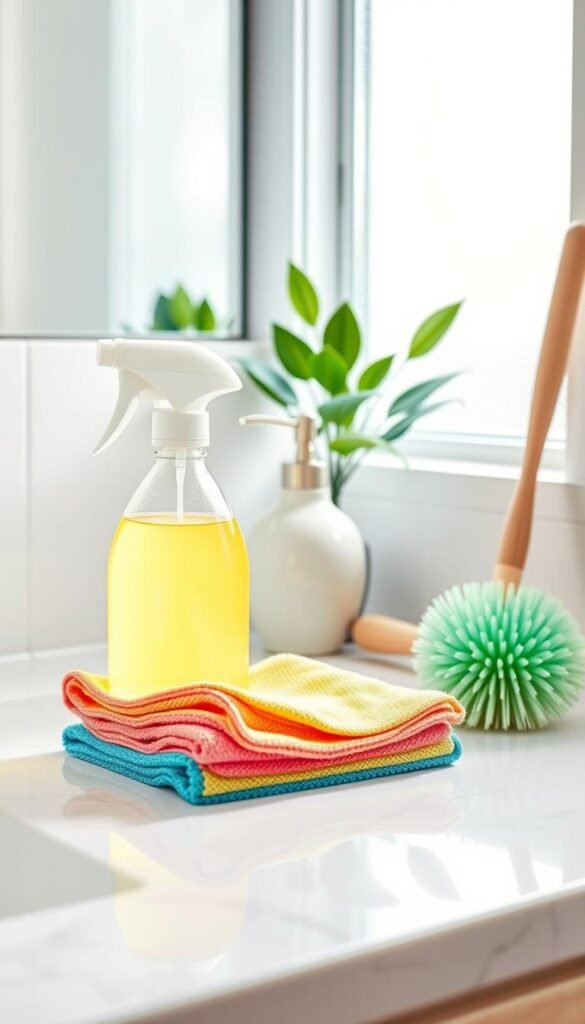
Must-haves for a starter kit
- All-purpose cleaner for counters and sink areas.
- Streak-free glass cleaner for mirrors.
- Toilet-bowl cleaner for the bowl and rings.
- Disinfectant wipes or spray for quick touch-ups.
Time-saving tools
Microfiber cloths cut streaks and speed wiping. A scrub brush reaches grout and corners. Rubber gloves save time and make cleaning less unpleasant.
Squeegee habit
Run a squeegee over wet walls and doors after each shower. One pass cuts hard-water marks and slows mildew growth.
Safety and smart choices
Choose non-toxic, low-fume options when you can. Ventilate the room and read labels for surface compatibility—avoid harsh acids on marble or wood.
| Item | Use | Budget tip |
|---|---|---|
| All-purpose cleaner | Counters, sink splashes | Buy refill pouches |
| Glass cleaner | Mirrors, chrome | Look for „streak-free“ reviews |
| Toilet-bowl cleaner | Toilet rings and stains | One bottle lasts months |
Real-life tip and what to avoid
Keep a microfiber cloth under the sink. Mirror touch-ups take 30 seconds and reduce hard-water marks over time.
Avoid mixing chemicals (never bleach + ammonia) and skip abrasive pads on delicate surfaces. Harsh fumes harm air quality in small spaces.
Starter kit bundles often save money. If you prefer to mix-and-match, check labels and consider refill options. For fast cleaning routines and product picks, see a practical guide on quick cleaning steps and a list of efficient options: fast cleaning steps and best cleaning solutions.
Storage and hooks that keep the floor and counters clear
A few renter-friendly storage moves free up floor space and speed daily tidy-ups. The goal is simple: clear counters, clear floors, and faster cleaning so the room feels bigger.
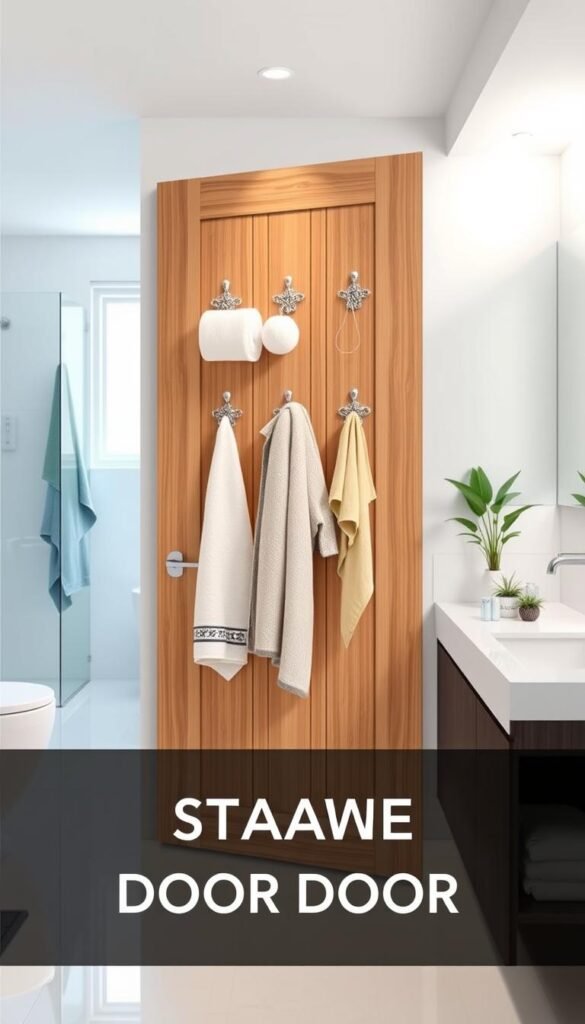
Over-the-door hooks for towels and robes
Over-the-door hooks are fast to install and renter-friendly. They let each person have a spot for towels and robes so items dry faster.
Pick stainless steel or sturdy plastic to avoid rust and scratches. Don’t overload the door or use hooks with sharp edges that snag fabric.
Shower caddy basics for shampoo and body wash
Choose a caddy with separate compartments for shampoo, conditioner, and body wash. A stable hanging design and rust-resistant finish keep things tidy in daily moisture.
If you need a low-cost option, a simple plastic basket on a hook works fine. For curated ideas, see practical storage ideas.
Under-sink bins for clean vs dirty towels and supplies
Use labeled, wipe-clean bins to separate clean towels from dirty ones and to stash cleaners. That prevents leaks from spreading and keeps counters clear.
Choose stackable or slide-out bins to maximize space. Command-style hooks or adhesive baskets are good alternatives if drilling isn’t allowed.
Who this helps and what to avoid
Who it’s for: roommates, small spaces, and families sharing one tub. These approaches reduce clutter conflict and speed morning routines.
Avoid: rusting hooks, suction organizers that drop when wet, and sharp edges that snag towels. Prioritize moisture-resistant materials and Amazon-available options for fast replacements.
| Item | Why it helps | Material | Budget tip |
|---|---|---|---|
| Over-the-door hook rack | Saves wall space; individual towel spots | Stainless steel/plastic | Buy a 5-hook rack on Amazon |
| Hanging shower caddy | Organizes shampoo & body wash; reduces tub clutter | Aluminum or plastic, rust-resistant | Choose two-tier caddy with drainage holes |
| Under-sink bins | Separates clean vs dirty and contains spills | Wipe-clean plastic | Use labeled stackable bins to save space |
Guest-ready touches that cost little and prevent awkward asks
A few thoughtful little touches make hosting feel effortless and cut awkward questions in half. Keep a short, visible kit so guests quickly find what they need. These items are cheap, renter-friendly, and low-maintenance.
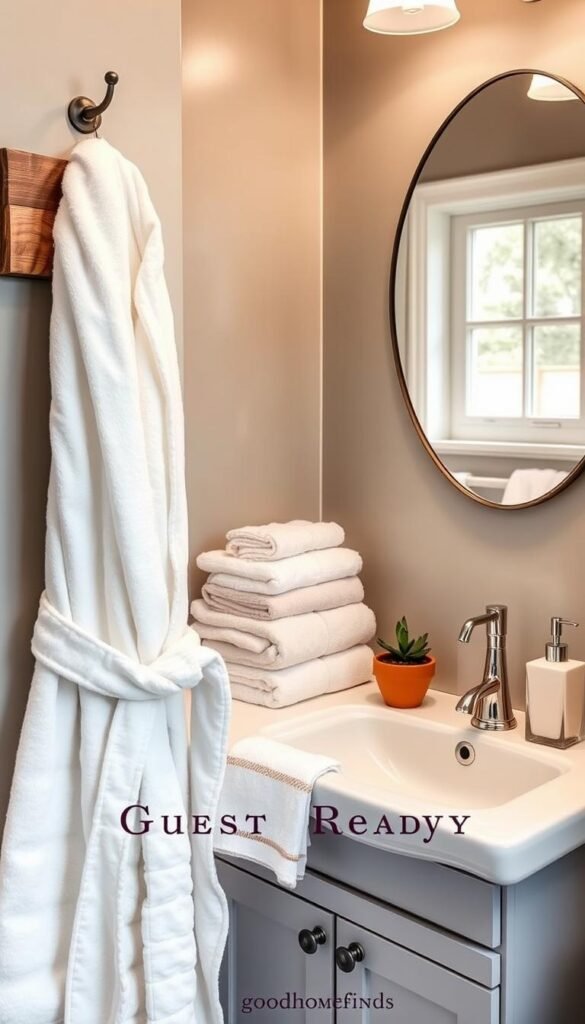
Extra towels and washcloths: how many is “enough”
Rule of thumb: keep at least one clean set per guest beyond what you use daily. That means one towel and one washcloth ready per expected guest.
Store these folded on a shelf or in a labeled bin so they are easy to grab. This simple step cuts laundry stress and avoids last-minute borrowing.
Travel-size toiletries basket for visitors
Assemble a small basket with travel shampoo, conditioner, body wash, toothpaste, and a spare toothbrush or razor.
Keep items sealed and rotate them when opened. Use a tray or small plastic bin for neat storage and quick restock between stays.
Mini first-aid kit placement that makes sense
Put a basic first-aid kit—bandages, antiseptic wipes, and pain relievers—high and dry. Avoid under-sink spots prone to leaks.
Tip: label the kit and keep it visible on a shelf or inside a linen closet so guests don’t have to ask.
Real-life example
„A labeled basket on the shelf meant our friends grabbed what they needed and never texted for toothpaste. It saved time and felt thoughtful.“
What to avoid and smart alternatives
- Avoid strong fragrances that irritate sensitive guests.
- Remove expired meds and never offer loose, unsealed shared items.
- Alternative: repurpose a small kitchen bin as a guest kit and restock travel sizes from hotel samples.
Who this helps: hosts, renters, and anyone who welcomes overnight visitors. Check expiration dates twice a year and keep hazardous items out of reach of children.
For a practical guide to stocking a guest bathroom and smart laundry solutions, see those quick references for easy restock habits and storage ideas.
Conclusion
Finish by buying the few things that stop repeat problems and save time every day.
Focus on essentials that get daily use: shower curtain/liner, towels and mats, toilet paper/holder plus brush and plunger, then cleaning supplies and storage. These products prevent mess and cut headaches without a big budget.
Make sure you measure for fit, choose rust-resistant, washable materials, and prefer non-slip mats for safety. Many high-value items run under $25 and solve recurring problems like puddles and clutter.
Plan a simple upgrade path: replace liners more often, add towels over time, and buy decor only after the setup works. When shopping on Amazon, filter for fast delivery, recent reviews, and clear material and sizing details to reduce returns.
Practical tip: pack an open-first tote for move-in night and keep a spare roll and basic cleaner handy. If something doesn’t make your routine easier, skip it and keep your home simple. For a focused list of essentials for a first apartment, see this first-apartment essentials guide.