
You’re not buying a Pinterest-perfect setup. You want a few smart tools that cut daily friction. These are practical, mostly under $25 picks on Amazon that help you find things faster and put things away quicker.
Think drawer organizers, pantry bins, OXO-style food containers, a bag wrangler like SpaceAid, and an Umilife lid holder. Use clear shelf dividers, slim non-slip hangers, and under-sink slide-outs to make small wins every day.
Measure first. A cheap bin that does not fit is wasted money. Skip fragile plastic, sketchy adhesives, and overspecialized gadgets that look clever but fail in real life.
How to start: fix the one spot that wastes your time each morning. Add one product at a time. Expect honest pros and cons, renter-friendly options, and fast Amazon delivery or easy returns.
Key Takeaways
- Choose practical, affordable picks that save time in daily life.
- Measure drawers and shelves before you buy any product.
- Prioritize durable, easy-to-clean items and simple installs.
- Start with one problem area, then add one organizer at a time.
- Look for Amazon-available options for fast delivery and easy returns.
How We Chose These Organization Products for Real Life
We favored items that earn their place by being used weekly, not by looking stylish for a photo.
Price-value ruled. You’ll see mostly items under $25 because small, low-risk buys often give the biggest daily payoff. If it won’t be used each week, it doesn’t make the cut.
Amazon-first means Prime shipping when possible, easy returns, and ratings that show long-term use rather than day-one appeal. Fast delivery and clear return terms lower the risk of a bad fit.

Safety, quality, and measuring
Safety checks: choose BPA-free or food-grade plastics for anything touching food. Look for smooth edges, sturdy joints, and rust-resistant coatings for bathroom or under-sink pieces.
Adhesive anchors work—if you respect weight limits and surface rules. Avoid hanging heavy items on paint that peels or textured walls that won’t hold.
- Measure internal drawer width and depth.
- Measure cabinet openings, shelf height, and door clearance.
- Under-sink: map pipes and shutoff valves so organizers don’t block access or trap moisture.
| Selection Rule | What to check | Why it matters | Typical target |
|---|---|---|---|
| Price-value | Cost under $25 | Low risk; quick time savings | Simple trays, bins, hooks |
| Amazon-first | Fast shipping + easy returns | Try, return, replace quickly | Prime-eligible items |
| Safety & quality | BPA-free, rust-resistant metal | Durability and food safety | Food containers, under-sink racks |
| Measure first | Drawers, shelves, cabinets, door gaps | Prevents wrong sizes and new clutter | Measure twice, buy once |
Two minutes of measuring prevents a random bin pile and saves time later. That small step keeps these practical picks truly worth it in real life.
Best organization finds for busy homes that want less daily friction
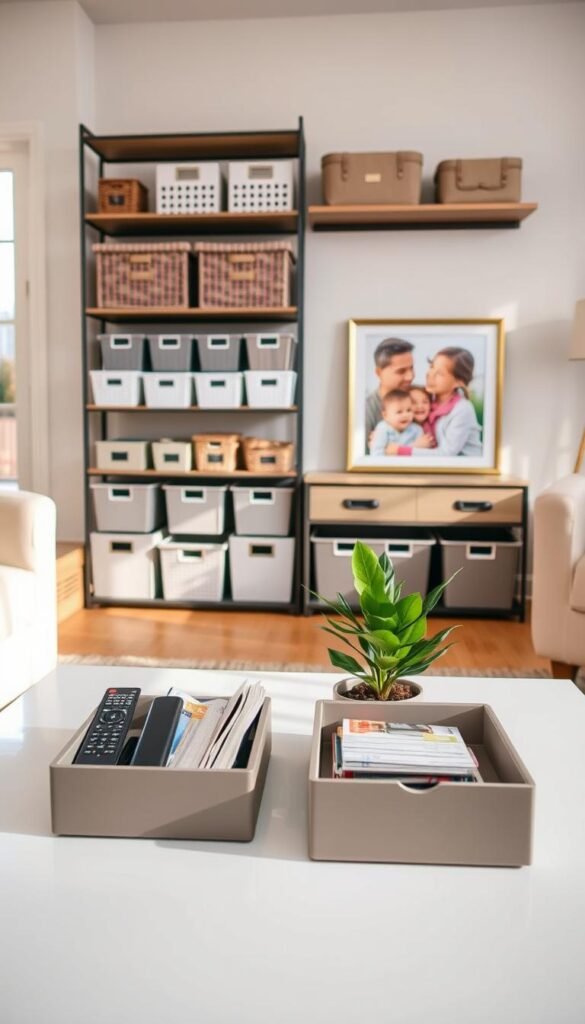
Choose simple tools that make the same three actions easy: grab, drop, and find.
The goal is fewer daily decisions, not a perfect label font. Prioritize a designated spot for items you touch every day. That reduces the „where is it?“ problem and cuts small stresses.
Small upgrades that save the most time (grab, drop, find)
Start with the one spot that slows your morning: a silverware drawer, snack shelf, or entryway. Fixing that single place often pays back minutes each day.
Why small organizers beat big overhauls: a $15–$25 insert or tray stops a 10-minute search. Cheap, targeted swaps change behavior more than a full remodel.
What to avoid: overspecialized gadgets and mismatched “random bin” buying
Don’t buy a tool that fits only one odd item. Measure first. Buying mismatched bins creates new clutter and wasted space.
- Category first: group similar items, then buy a match for the space.
- Real-life win: one family used hooks and a tray to make a drop zone for keys, mail, and bags—surfaces stayed clear.
- Budget options: shoeboxes, dollar-store bins, and repurposed containers work if they fit and stack safely.
| Problem Area | Small Fix | Time Saved |
|---|---|---|
| Entryway clutter | Hooks + small tray | 5–10 minutes/day |
| Kitchen junk drawer | Modular tray insert | 3–8 minutes/day |
| Under-sink chaos | Slide-out basket | 2–6 minutes/day |
Keep maintenance simple. If it’s annoying to put items away, it won’t stick. Choose open-top bins and easy-slide systems to help you save space and fight clutter in real life.
Drawer Organizers That End the Daily “Where Is It?” Search
A single well-planned drawer can shave minutes off your morning routine. Pick one drawer, measure it, and commit to a simple layout. The right tray or set gives each item a clear home and cuts daily clutter.

Expandable bamboo kitchen drawer organizer
Why it’s useful: expands to fit utensil drawers and looks tidy on the counter.
Who it’s for: people who cook weekly and dislike digging for tools.
What to avoid: rough edges, poor finish that can stain, and soaking bamboo which can swell.
Modular drawer organizer set
Why it’s useful: a flexible set of compartments that adapts to junk drawers and bathroom drawers.
Who it’s for: anyone who needs small items grouped so they stop migrating.
What to avoid: odd-sized pieces that leave gaps and create more clutter.
Stackable utensil organizer for shallow drawers
Why it’s useful: adds vertical separation when depth is limited without remodeling.
Who it’s for: small kitchens and apartments with shallow drawers.
What to avoid: stacking too high so the drawer no longer closes smoothly.
Real-life reset: one problem drawer
You reset the coffee-and-lunch drawer. Napkin packets, scoops, and a small scoop fit in labeled compartments. Mornings stop stalling because everything is in the same place every day.
Pros, cons, and cheaper options
| Type | Pros | Cons | Cheaper alternatives |
|---|---|---|---|
| Bamboo expandable | Durable look, custom fit | Costs more, can swell if wet | Cutlery tray from dollar stores |
| Modular set (set) | Flexible layout, multiple compartments | May leave gaps if not measured | Repurposed food containers |
| Plastic stackable | Lightweight, easy to wipe, usually BPA-free | Can slide or tip if loose | Shoe-box style bins cut to fit |
Safety & quality: choose BPA-free plastic for anything that touches utensils. Avoid splinters, sharp edges, and flimsy joints. Check that expandable rails don’t pinch fingers.
Buying tip: measure internal width and depth before you order so the new organizer reduces clutter instead of creating it.
Kitchen Lid Organizer Solutions That Stop the Avalanche in Cabinets
A simple lid rack can stop nightly cabinet chaos and speed up putting away leftovers.
Why it helps: An adjustable cabinet lid organizer (the Umilife model is about $23 on Amazon) separates lids by size so you stop rummaging. Sections let you match containers quickly and shorten cleanup time.

Who this is for and what to avoid
This is for anyone who stores food containers in cabinets and hates lid piles. Choose adjustable separators, not fixed slots that won’t fit mixed lid sizes.
Pros, cons, and quick alternatives
- Pros: adjustable separators create lanes for small, medium, and large lids; faster matching; Amazon delivery and easy returns make testing low-risk.
- Cons: uses cabinet footprint; overstuffing can bow lids or jam drawers.
- Alternatives: file sorter, tension rods, or keep containers stacked with lids on if you have space.
| Feature | Why it matters | Tip |
|---|---|---|
| Stability | Prevents an avalanche when you pull one lid | Avoid tall, narrow dividers that tip |
| Adjustability | Fits mixed lid sizes | Look for removable separators |
| Cabinet fit | Prevents scraping shelf above | Measure shelf height before buying |
Real-life win: one household stopped the nightly „find the matching lid“ scramble after adding lanes for silicone, plastic, and glass lids. Meal clean-up became noticeably faster.
Pantry Bins and Shelf Baskets That Keep Food Visible (and Stop Overbuying)
A tidy set of pantry bins makes it easy to see what you have at a glance and stops repeat buys. Start by measuring shelf depth and vertical clearance before you buy. A little prep prevents toppled stacks and blocked cabinet doors.

Stackable tall and short bins
Why it’s useful: Stackable bins create clear categories for snacks, packets, and baking supplies so nothing hides at the back.
Who it’s for: Busy households that restock weekly.
What to avoid: bins that are too deep to reach or lids you won’t open. Look at mDesign-style plastic options under $25.
Wire bins for produce
Why it’s useful: Wire baskets allow airflow for onions and potatoes and keep them in a cool, dark spot off counters.
What to avoid: placing wire bins in hot or damp areas or leaving sharp wire ends exposed.
Open-front wood baskets
Why it’s useful: Open-front wood bins give grab-and-go access for daily items like bars or coffee pods.
What to avoid: unfinished wood that can splinter or snag packaging. KNAGGLIG-style makes a sturdy renter-friendly option.
Price-value note: A simple $12–$20 bin that stacks and wipes clean usually beats a pretty basket that stains or collapses.
- Safety/quality: choose BPA-free plastic for food-adjacent storage and smooth corners that don’t trap crumbs.
- Alternatives: dollar-store bins, shoebox bins, or repurposed containers can work if they fit your shelves and you label them.
Airtight Food Containers and Jars That Reduce Clutter and Waste
Swap half-open bags for clear, snap-seal containers to see what you have and stop stale food. Small canisters make inventory obvious and cut down on wasted ingredients.

OXO POP-style containers
Why it’s useful: you can see cereal, flour, and sugar at a glance. The POP lid clicks to create a tight seal and keeps items fresher.
Who it’s for: people who restock often and hate half-open bags. Most POP-style options are under $25 for single sizes.
What to avoid: cheap lids that claim airtight but have weak gaskets.
Simple glass jars for weekly staples
Why it’s useful: glass is durable, odor-resistant, and shows contents clearly. Weck-style or wide-mouth jars work well for rice, oats, and beans.
Who it’s for: anyone who uses dry food weekly and wants low-maintenance storage.
What to avoid: heavy jars on high shelves where drops can happen.
Safety and quality checklist
- Choose food-grade plastic where plastic is used.
- Check gaskets and lid snaps—replace if cracked.
- Tape an expiration date to the bottom so you can rotate stock.
Real-life example, pros, cons, and alternatives
One household consolidated three open snack bags into one container. The pantry freed up shelf space and spills stopped when kids grabbed snacks.
| Pros | Cons | Alternatives |
|---|---|---|
| Less visual clutter; fewer stale items; faster meal prep | Upfront cost; awkward shapes like chip bags don’t decant well | Binder clips + roll-up bags, reusable silicone bags, or keep originals in labeled bins |
Practical tip: don’t buy a full matching set until you measure shelves and try one or two sizes first. One well-chosen jar or container often gives the most useful test of fit and function.
Spice Organization That Saves Dinner Prep Time
If dinner prep drags, a small spice reset can cut minutes off every meal. A clear system makes it simple to grab the right jar, season, and move on.

Expandable spice drawer organizer
Why it helps: labels face up so you scan, not sort. You find spices fast and avoid duplicate buys.
Who it’s for: weeknight cooks who want speed in the kitchen.
What to avoid: cheap trays that slide in the drawer or units that don’t expand to your drawer width.
Tiered shelf riser alternative
Why it helps: risers show bottles in rows, saving a cabinet from becoming a hidden jungle.
Who it’s for: homes with no spare drawer space or renters who prefer a non-permanent fix.
What to avoid: risers taller than your cabinet clearance; they can block doors or topple.
Pros: drawer spice organizers look tidy and cut searching time. Cabinet risers are cheaper and flexible but can get messy if overstuffed.
Real-life example: one family stopped buying a second garlic powder after they organized 15 staples in a drawer. Seeing what they had ended repeat purchases.
| Option | Cost | Key benefit |
|---|---|---|
| Expandable drawer organizer | $15–$30 (Amazon) | Labels face up; fastest access |
| Tiered shelf riser | $8–$20 | Uses vertical shelf space; renter-friendly |
| Aesthetic decanting systems | $30+ | Looks clean but needs refilling and upkeep |
Safety & quality: avoid brittle plastic that cracks under bottle weight. Choose grippy feet or rails. Budget tip: start with your most-used 15–20 spices rather than the whole collection.
Bag Organizer and Wrap Dispenser Options for a Cleaner Kitchen Drawer
A neat bag station turns messy cardboard boxes into grab-and-go access for lunches and snacks.

Bamboo bag organizer for sandwich, snack, and freezer bags
Why it helps: a bamboo bag organizer replaces bulky boxes and keeps bag sizes separated so you can pull one without unwrapping a crushed stack.
Who it’s for: you pack lunches or prep snacks daily and want quick access in a drawer or on the counter.
What to avoid: units that need proprietary refills or don’t fit your drawer depth. Measure before you buy.
Real-life packing example and quick alternatives
One household swapped boxes for a SpaceAid-style unit (~$26). Packing sandwiches went from a minute of wrestling to a one-handed pull.
Alternatives: keep original boxes inside a shallow bin, use binder clips to compress opened boxes, or decant just the most-used size into a small caddy.
Pros and cons: in-drawer vs countertop
| Style | Pros | Cons |
|---|---|---|
| In-drawer | Hidden, tidy, saves counter space | Must measure; uses drawer space |
| Countertop | Fastest access; easy refill | Adds visual clutter; uses workspace |
| Simple bin (boxes inside) | Budget; no special purchase | Still bulky; less pull-friendly |
Price-value note: many units run $20–$30. If you use bags daily and hate box chaos, the small cost is worth it for daily time savings.
Under-Sink Organizers That Work Around Plumbing (Bathroom or Kitchen)
You can reclaim under-sink space with slide-out shelves and slim baskets that avoid the pipes. These solutions are practical, renter-friendly, and simple to measure before buying.

Two-tier slide-out shelves
Why it helps: pull forward cleaning supplies and toiletries so nothing hides in the back.
Who it’s for: anyone who stores bottles and sprays under a sink and wants fast access.
What to avoid: cheap slides that stick under load. Measure pipe location and door hinge clearance before you order a slide-out unit from Amazon.
Cabinet storage baskets for narrow spaces
Why it helps: slim baskets fit around plumbing where full-width shelves won’t. They keep towels, rags, and smaller bottles visible.
Who it’s for: tight under-sink cabinets and shallow vanities.
What to avoid: wire baskets with sharp ends that snag fabric. Choose smooth edges and rust-resistant coatings.
Safety and leak notes
- Weight limits: check the load rating on shelves and baskets so slides don’t sag.
- Rust resistance: pick anti-rust finishes for humid bathroom areas.
- Leak awareness: use a shallow tray or raised shelf—don’t store paper goods directly on the cabinet floor.
Alternatives: tension rods to hang spray bottles, a lazy Susan for small bottles, or a single handled caddy for grab-and-go cleaning. In real life you’ll save time and stop buying duplicate sponges and sprays because you can see what’s already under the sink.
| Option | Good for | Key caution |
|---|---|---|
| Two-tier slide-out | Multiple bottles; quick access | Measure pipes; choose smooth slides |
| Slim cabinet baskets | Narrow spaces around pipes | Avoid sharp wire edges; check rust coating |
| Single caddy / tension rod | Portable cleaning kit; hang sprays | Less storage density; suitable for small kits |
Shower and Countertop Storage That Clears Your Bathroom Surfaces
Clear bathroom counters fast by moving daily items into smart, renter-friendly shelves and racks.

No-drill shower shelves
Why it helps: gets bottles off the tub edge and reduces falls.
Who it’s for: renters and small showers where drilling is not an option.
What to avoid: overloading adhesive mounts or sticking to textured tile. Check weight ratings and don’t exceed them.
Two-tier countertop shelf
Why it helps: doubles vertical space so daily skincare stays visible and reachable.
Who it’s for: tiny vanities and shared sinks where surface space is limited.
What to avoid: cheap metal that rusts near water. Choose sealed finishes or waterproof plastics.
Hot tools organizer
Why it helps: prevents cord tangles and reduces heat-contact risks for irons and dryers.
Who it’s for: if you use hot tools weekly and need a safer landing spot than a towel pile.
What to avoid: storing tools while still hot or mounting holders near flammable textiles.
Safety & quality notes: verify adhesive weight limits, prefer rust-resistant finishes, and choose materials that wipe clean so soap scum won’t defeat the system.
Real-life result: your morning routine speeds up when essentials are visible and not piled on the counter.
| Product | Good for | Key caution |
|---|---|---|
| No-drill shower shelf | Renters, small showers | Avoid textured tile; follow adhesive weight limit |
| Two-tier countertop shelf | Tiny vanities, skincare | Pick rust-resistant finish; check height under mirror |
| Hot tools bamboo rack | Hair dryers, straighteners | Store cooled tools; keep away from towels |
- Alternatives: tension shower pole, simple draining caddy, or a small under-sink bin for backups.
- Maintenance tip: choose shelves that wipe clean so soap scum doesn’t make you abandon the system.
Closet Shelf Dividers and Hangers That Make Clothes Easy to See
A few simple closet tweaks make it far easier to see and reach the clothes you actually wear. Clear shelf dividers and slim non-slip hangers are low-effort upgrades that cut daily decision time.

Clear shelf dividers for stacked sweaters, jeans, and bags
Why it’s useful: dividers stop stacks from toppling and keep categories separated so you can scan items fast.
Who it’s for: people with open closet shelving or limited drawer space.
What to avoid: brittle acrylic that cracks, clamps that don’t fit your shelf thickness, or dividers made for one specific sizes only.
Slim non-slip hangers to fit more clothes without sliding
Why it’s useful: thin hangers free up rod space and non-slip coating keeps shirts and skirts from sliding off.
Who it’s for: small closets and anyone with too many tops competing for rod space.
What to avoid: ultra-cheap hangers that warp, snag fabric, or have weak hooks that bend under weight.
- Pros: dividers are a fast, renter-friendly win with no installation; slim hangers create a uniform look and save space.
- Cons: dividers don’t help an overstuffed shelf; slim hangers may not support heavy coats or large rack items.
Quality checks: look for smooth edges, strong hooks, and a non-slip coating that won’t flake. Choose dividers sized for your shelf depth and a hanger design that fits your rod.
Real-life result: when sweaters and jeans live in clear lanes you can see what you own and stop repeating the same outfit. Alternatives include vertical folding in bins, a tension rod divider, or shelf baskets for flexible categories.
Linen Closet Wins: Sheet Organizers and Blanket Storage Bags
„A small switch—one labeled pouch per set—turns a messy closet into a grab-and-go system.“
Foldable sheet organizers keep each sheet set together and make the closet easy to scan.
They usually include a peek-a-boo window and a label pocket so you spot sizes and colors at a glance.
Choose multi-packs like SpaceAid-style organizers if you want matching pouches for several beds.
Who it’s for: linen closets that turn into mixed piles and anyone who hosts guests occasionally.
What to avoid: weak zippers, no handle, or unclear labeling that defeats the purpose.

Expandable blanket storage bags
These compress bulky comforters and seasonal bedding so you use less shelf or underbed space.
IKEA large bags are a budget-friendly option for big items.
What to avoid: cheap seams that rip when you lift a full bag. Check zippers and reinforced handles before you buy.
Real-life example
One host kept three labeled organizers for guest beds.
When visitors arrived they pulled one pouch with a full set—sheets, pillowcases, and a folded duvet cover.
No hunting. No mismatched pillowcases.
Pros, cons, and alternatives
- Fabric bags: flexible and affordable but can slump when stacked.
- Structured bins: stack neatly but need rigid shelf space.
- Underbed boxes: great if you have clearance; otherwise they sit unused.
Budget tip: multi-packs sometimes exceed $25. Start with two or three organizers for the beds you change most.
Quality checklist: strong zippers, reinforced handles, breathable fabric to reduce mustiness, and a clear window or label pocket so each set is obvious at a glance.
Over-the-Door and Wall Hook Organizers for Instant Vertical Space
Use the back of a door or a spare wall to add useful storage without drills or big installs. These renter-friendly fixes give you visible spots for the items you grab most, so you stop searching when you leave the house.

Over-the-door rack for grab-and-go items
Why it’s useful: an over-the-door rack turns unused door space into a tidy lane for sunscreen, dog leashes, kids’ hats, and quick-access snacks. It keeps essentials at eye level and ready to grab.
Who it’s for: busy households, small entry closets, and anyone who wants to save space in a tight room.
What to avoid: racks that scrape trim, block the door from closing, or shift when loaded. Measure door thickness and clearance before you buy.
Adhesive wall hooks for brooms, bags, and small tools
Why it’s useful: adhesive hooks create vertical storage for brooms, reusable bags, dusters, and small tools without screws. They free floor space and make sweep-and-go chores faster.
Who it’s for: renters or anyone avoiding permanent holes in walls.
What to avoid: placing hooks on dusty, textured, or porous surfaces or exceeding the adhesive weight limit. Follow surface prep instructions for a durable hold.
Safety, quality, and cheaper choices
Safety & quality: let adhesives cure the recommended time, confirm paint-safe removal, and test door clearance so the rack won’t chip trim. Check weight limits and swap hooks if they show strain.
Cheaper options: single hooks work when you only need a spot for a leash or broom. Full pocket organizers make sense when you want compartments for categories. Command-strip rail systems and magnetic hooks for metal doors are simple alternatives.
Maintenance tip: keep only leaving-the-house essentials on the door or wall. Otherwise this vertical space becomes a clutter collector instead of a time saver.
Shoe and Entryway Organization That Keeps Floors Clear
Start by making a clear landing spot so shoes don’t become a permanent floor pile.

Why it matters: a tidy entry keeps the floor walkable and cuts daily trips spent hunting for one pair.
Slim shoe cabinet for hiding everyday pairs in small spaces
Why it’s useful: a slim cabinet hides visual clutter and keeps common pairs out of the way. Some Amazon models hold up to ~12 pairs depending on shoe height and whether you turn bulkier shoes sideways.
Budget note: many slim cabinets cost more than $25. A premium flat-pack cabinet runs around $129.99. Treat this as a stretch pick if floor clutter costs you time every day.
Quality notes: check hinges, stability, and adjustable panels. Avoid thin particle board and weak hardware that sags or squeaks.
Stackable clear drawers for shoes and multipurpose storage
Why it’s useful: Vtopmart-style clear drawers let you stack vertical shoe storage and expand as needed. They work well in closets, mudrooms, or even bathrooms for multipurpose storage.
What to avoid: flimsy plastic drawers that bow or pop off tracks. Look for reinforced edges and snug sliders.
Who it’s for, pros/cons, and cheaper alternatives
Who it’s for: families, apartment dwellers, and drop-zone homes that need a designated spot for daily pairs.
Pros: cabinets look cleaner and hide clutter. Clear drawers are modular and flexible.
Cons: cabinets cost more and need assembly. Clear drawers show the contents, so they suit closets better than entry floors.
- Cheaper alternatives: sturdy open rack, boot tray, or one large basket for kids’ shoes with a simple rule to limit pairs.
| Option | Good for | Capacity / note | Key caution |
|---|---|---|---|
| Slim shoe cabinet | Entryway; hides pairs | Up to ~12 pairs; depends on shoe size | Check hinges and stability |
| Stackable clear drawers | Closets, bathrooms, renters | Expandable; one pair per drawer common | Avoid thin plastic that bows |
| Open rack / boot tray | Budget, quick setup | Holds multiple pairs; visible | Can look messy if overloaded |
Real-life tip: create a simple drop zone with one cabinet or a stack of drawers. When each person has a designated spot, shoes stop migrating and the floor stays clear.
Garage and Utility Organization That Frees Up Floor Space
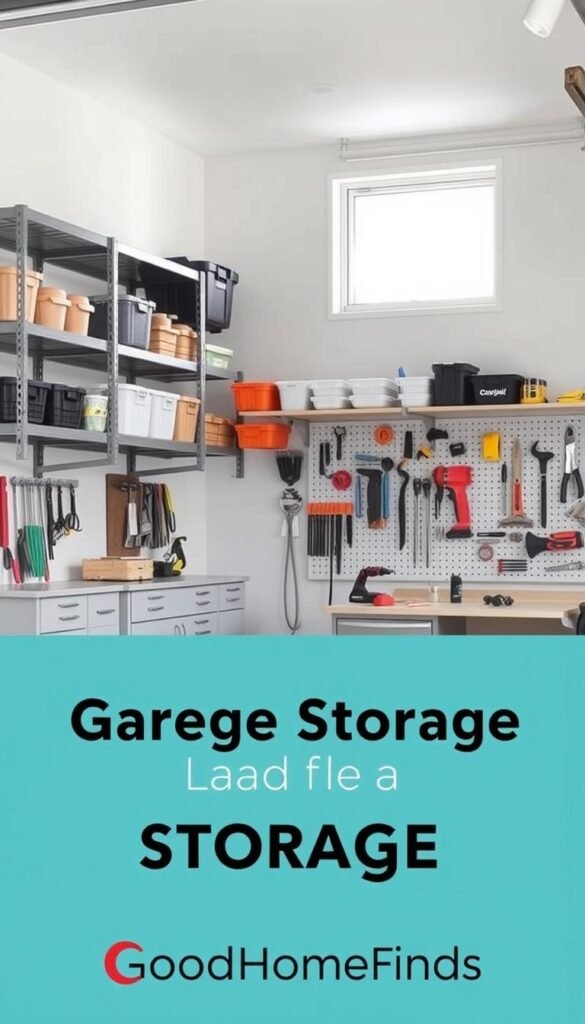
Turn wasted vertical space into practical storage so you stop tripping over tools and boxes. A few focused upgrades clear the floor and make weekend jobs faster.
Wall-mounted tool organizers that use vertical space efficiently
Why it helps: wall rails and racks move tools off the floor and into visible lanes. You get instant access and more usable space.
Who it’s for: DIYers and anyone who keeps stepping on hand tools. What to avoid: mounting into drywall without finding studs or ignoring load ratings.
Heavy-duty latching totes for seasonal and holiday storage
Why it helps: stackable, secure totes protect decor and compress items. Color-coding by holiday makes grabbing the right set fast.
What to avoid: flimsy lids that pop off or mixing fragile ornaments with heavy items in one box.
Battery organizer box to stop dead-battery scavenger hunts
A simple wall-mounted box keeps new and used batteries separate and labeled. You’ll fix small things in under a minute instead of searching for AA or AAA.
„Now I find the right battery and screwdriver in under a minute—no 30-minute searches.“
- Safety notes: mount racks into studs, check load ratings, and store chemicals locked or up high.
- Alternatives: pegboard, labeled shelves, or one project caddy per category if you won’t mount hardware yet.
| Product | Good for | Key caution |
|---|---|---|
| Wall rail set | Tools; frees floor | Mount to studs; check weight |
| Latching totes (color) | Holiday decor | Airtight lids; avoid overloading |
| Battery box | Batteries & small parts | Label new vs used; dry area |
Paper and Desk Organization for Bills, School Forms, and Home Office Clutter
A single portable box can replace a cabinet when you need to carry important papers from room to room.
Portable file box with lid for grab-and-go documents
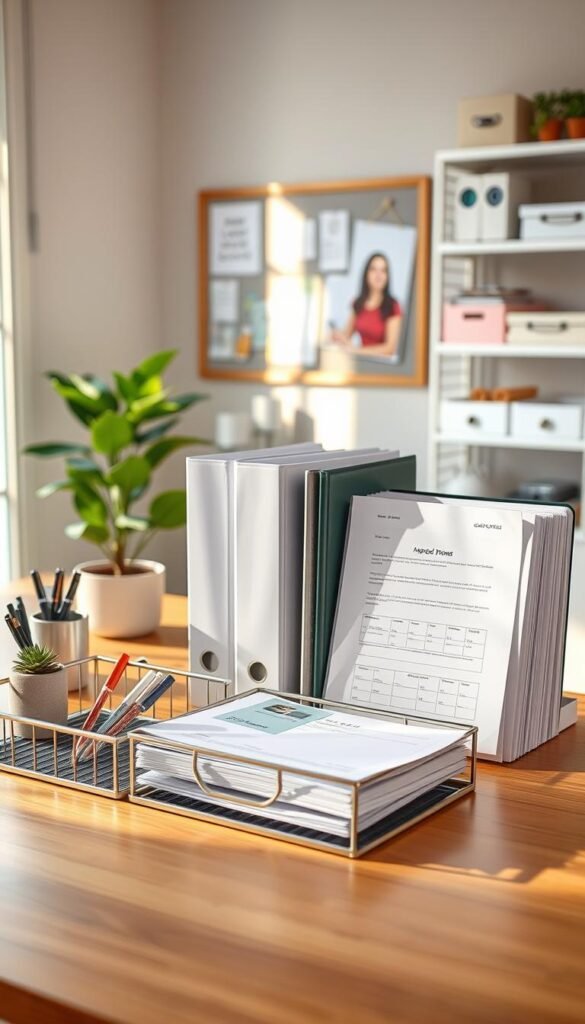
The portable file box gives you one contained spot for taxes, warranties, and medical paperwork. It works when you don’t have space for a filing cabinet and lets you move files from the kitchen table to the office room in seconds.
Who it’s for: a renter or parent who needs secure, mobile storage and quick access.
What to avoid: flimsy handles, lids that won’t latch, or boxes that fold under weight.
Drawer tray sets for supplies so they don’t migrate
A small tray set keeps pens, chargers, and loose cords in place so your desk drawer stays usable. Choose a modular set you can rearrange to match the drawer width.
Real-life example and quick pros/cons
One household kept taxes, warranties, and vaccine records in one file box. When a deadline came they carried the box to a printer and finished the task without a frantic search.
| Option | Pros | Cons |
|---|---|---|
| Portable file box | Mobile, holds lots | Can get overstuffed |
| Drawer tray set | Keeps small items tidy | Needs a quick reset habit |
| Accordion folder / binder | Compact, low-cost | Less durable for heavy use |
- Alternatives: accordion folder, labeled binder, or one inbox tray and a weekly 10-minute sort.
- Quality & safety: avoid sharp corners, choose sturdy plastic or reinforced cardboard, and keep sensitive documents out of reach of kids.
- Maintenance tip: label broad categories only—Taxes, Medical, House, School—so you actually keep up with it.
Conclusion
Start by tackling a single pain point—one drawer or shelf—and you’ll see minutes added back to your day.
Purge first. Remove what you don’t use. Measure second. Then buy one practical product that fits the space and your routine.
High-impact spots are simple: the kitchen junk drawer, a lid cabinet, pantry bins, an under-sink slide, and an entryway shoe zone. Fixing one of these usually saves time fast.
Mix Amazon finds with cheaper swaps like repurposed containers or shoebox bins when it makes sense. Check food-safe materials, rust resistance, adhesive limits, and weight ratings before you install anything.
Small, honest choices help you feel like you have more control without turning organizing into a second job. Pick one space this week, order only what you measured for, and return anything that doesn’t fit—fast delivery and easy returns are part of the plan.

9 Comments