7 Clutter Hot Spots and Fixes
"Tackle clutter hot spots with our top 7 fixes for a more organized home. Discover practical, renter-friendly solutions for small spaces under $25 and $50."
 backvervedesigns@gmail.com
·Januar 16, 2026
·13 min read
backvervedesigns@gmail.com
·Januar 16, 2026
·13 min read
Ad · Affiliate links: this guide may contain tagged links. If you buy through one, we may earn a small commission — at no extra cost to you and with no influence on our verdicts. Researched from real reviews.
This quick intro shows what „clutter hot spots“ look like and how to fix them without drilling or stress.
Clutter hot spots are the surfaces and hidden zones where things pile up fast because they are easy to use, not because they work long term.
These areas act as small dumping grounds that slow a home down and add daily friction.
Data shows many people see disorganization as a big problem. That makes small wins useful and motivating.
You’ll get seven practical, renter-friendly fixes that fit small spaces and real life.
What to expect: no-drill setups, quick wins under $25, and sturdier options under $50.
I prioritize usefulness first, then durability, then setup time, then renter-safety like adhesives or over-the-door hardware.
Safety note: under-sink chemicals and blocked walkways are tackled first with clear, low-cost steps.
Start with the single spot that stresses you most and build momentum with short resets you can repeat.
Key Takeaways
- Identify the one area that causes daily friction and start there.
- Find renter-safe fixes: adhesive hooks, freestanding bins, door risers.
- Quick relief options cost under $25; stronger solutions stay under $50.
- Prioritize safety: clear pathways and secure chemical storage first.
- Choose products for usefulness, then durability, then ease of setup.
Why clutter builds up in small homes (and why it’s worth fixing now)
In tight spaces, a single full drawer can ripple into chaos across the whole home. Small houses give you less buffer. That means one overflowing cupboard or closet often spills into visible areas.
The real costs are easy to feel. You lose time searching for things. You buy duplicates because you think an item is missing. That adds low-level stress to your mind every day.
Closed-door storage makes the problem worse. When you can shut a drawer or closet, you stop seeing the buildup. People use those areas as quick drop zones and the mess grows unseen.
A realistic game plan for today
Work in 10–20 minute blocks. Focus on one area at a time. Reduce the number of drop zones in your house.
- Sort with four piles: keep / donate / recycle / trash. Add a small relocate bin for items that belong elsewhere.
- Use renter-friendly, low-effort systems that last. Choose durable bins, adhesive hooks, and freestanding organizers.
- Do a 2–5 minute nightly reset to return daily-use items to their place. Small habits save you time later.
Be realistic: this is a system, not a one-day overhaul. Stick to short routines and durable solutions and you’ll protect your time and mind.
For quick, budget-friendly product ideas that work in rentals, check curated organization picks at best organization finds.
Clutter hot spots to target first (the seven areas that collect the most stuff)
Every home has a few zones where things pile up without you noticing. Start by scanning the obvious surfaces and the hidden drawers that never slide easily.
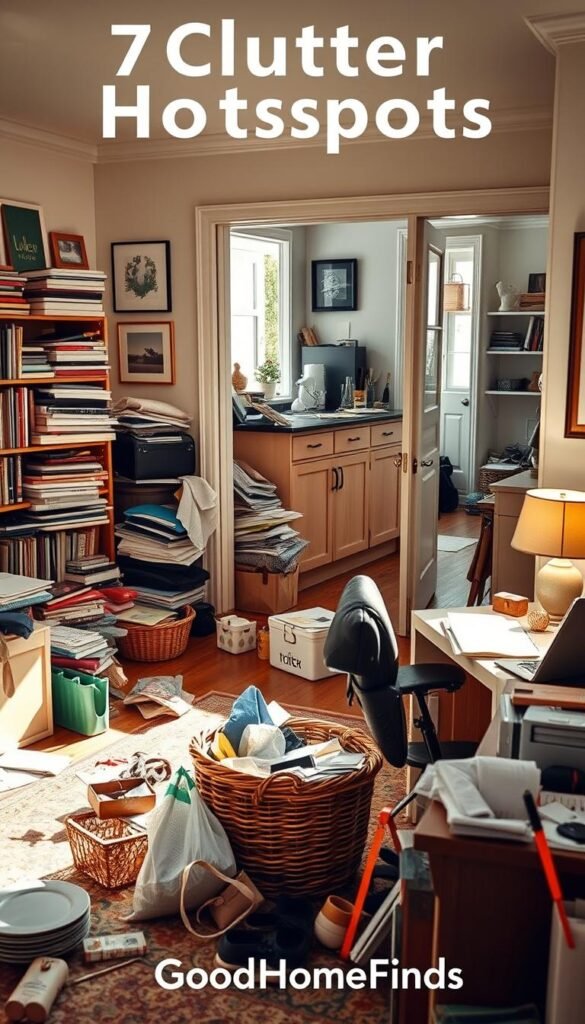
Spot-the-hotspot checklist: look for repeated piles, jammed drawers, surfaces you clear daily, and places you use as a temporary drop zone.
Entryway
Your entryway gets shoes, bags, keys, pet gear, and mail because it’s the first place you touch when you walk in. That makes it the top daily magnet for stuff.
Kitchen counters and cabinets
Counters turn into temporary storage and cabinets become „keep-just-in-case“ zones. Food and gadgets hide at the back and expire or get forgotten.
For renter-friendly options to tame this area, see best small kitchen solutions.
Under the sink
This area stacks cleaners and supplies. It’s not just a storage problem; crowded bottles raise spill and mixing risks.
Bathroom, closets, bedroom, and desk
Bathroom vanities collect half-used bottles and expired items. Closets in tight spaces get overstuffed and make it hard to see what you own.
Nightstands and dressers act as tiny tables for coins, chargers, and skincare. Desks fill with paper and cables and reduce focus.
Priority tip: start with the area that creates the most daily friction (often the entryway or kitchen), then move to hidden zones like closets and drawers.
Entryway + everyday drop zones: no-drill fixes for shoes, bags, keys, and mail
A simple landing area at the door cuts minutes from your daily routine. Make one small, defined place for the things you carry in. That prevents a growing mess and saves you time each day.
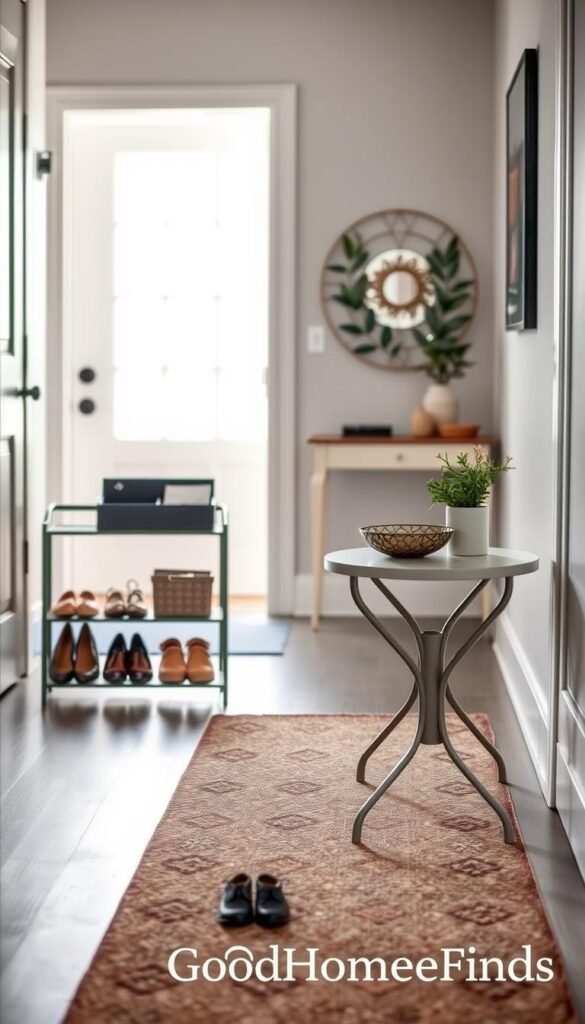
Quick reset routine: the “two-minute landing strip”
Do this once daily. Hang bags, empty pockets into one tray, toss junk mail, and return shoes to one spot. It takes two minutes and stops pileups.
Best renter-friendly products under $25
Choose adhesive hooks for keys and leashes, over-the-door racks for extra hanging, and slim vertical shoe organizers for tight space. These products install fast and leave walls intact.
Best upgrades under $50
Consider a narrow shoe cabinet, a freestanding coat rack with a weighted base, or stackable cubbies. They add capacity without drilling and keep the entryway tidy.
Pros and cons & who it’s best for
- Adhesive: quick and renter-safe; weight limits apply.
- Over-the-door: saves wall space; may shift on light doors.
- Freestanding: sturdy; uses floor space.
Great for roommates who need assigned spots, families with backpacks, and pet owners who want a leash station by the door.
Alternatives by apartment size
Studio: use a corner with a slim rack and one vertical organizer to preserve floor space.
Larger unit: build a mini mudroom with cubbies and a bench-style shoe solution. Clean surfaces before adhesives and respect cure times for long-lasting results. For a quick product comparison on budget vs premium storage, see storage comparison.
Kitchen clutter control: cabinets, pantry overflow, and the under-sink problem
A few targeted swaps can turn crowded cabinets into an easy, usable cooking zone. Start by pulling items out, grouping like with like, and keeping daily-use pieces at eye level so you save time every day.
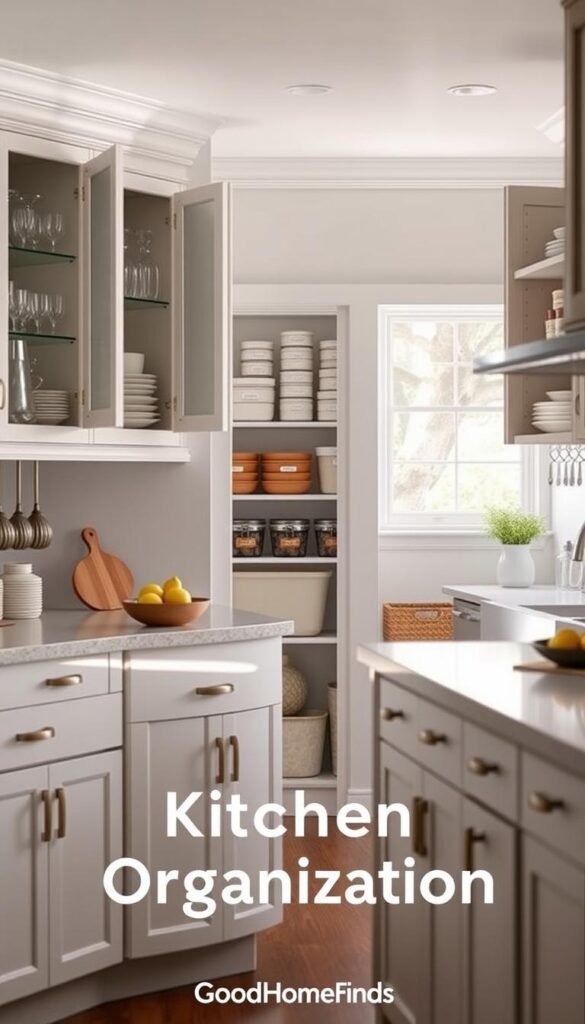
Cabinets and cupboards
Reset fast: group coffee/tea, meal prep, and baking items. Remove duplicates and return only what fits a single shelf.
Fix the lid mess: keep one bin for lids and one for containers. Match-and-store reduces mismatched plastic and wasted search time.
Pantry and food storage
Do a quick expiration scan and use the front-to-back method so older food gets used first.
Spice tip: ground spices lose flavor around three years; whole spices last near four years. Toss anything that’s been aging longer than that.
Tote bags and reusable bags
Decide a realistic number you actually use. Fold extras into one bag; donate the rest so cupboards stay functional.
Under-sink safety
Pull everything out, check for leaks, wipe the area, and sort cleaners by room. Never store chemicals where they can mix.
Do not pour unwanted cleaners down the drain. Use local hazardous waste services or follow product disposal guidance.
Budget picks under $25
- Shelf risers for mugs
- Drawer organizers and turntables for sauces
- Tension rods for spray bottles and labeled bins for categories
Best upgrades under $50
- Stackable pull-out bins for under-sink access
- Freestanding pantry rack for overflow
- Lidded clear containers to reduce pests and visual mess
| Area | Footprint | Setup time | Cleaning effort |
|---|---|---|---|
| Cabinets | Low | 10–20 min | Low |
| Pantry | Medium | 15–30 min | Medium |
| Under-sink | Small | 10–25 min | Medium (watch leaks) |
Maintenance: do a weekly „expired/empty sweep“ and keep a quick photo inventory of pantry and cleaners. A photo saves you from buying extra items.
For curated, budget-friendly organizer picks that work well in rentals, see budget organizer picks.
Bathroom, closet, bedroom, and desk: small-space storage that’s easy to maintain
A few simple swaps make daily routines smoother in the bathroom, closet, bedroom, and at your desk. Start with a quick purge. Toss expired meds and makeup. Combine duplicate products and keep only daily-use items in the most reachable spot.
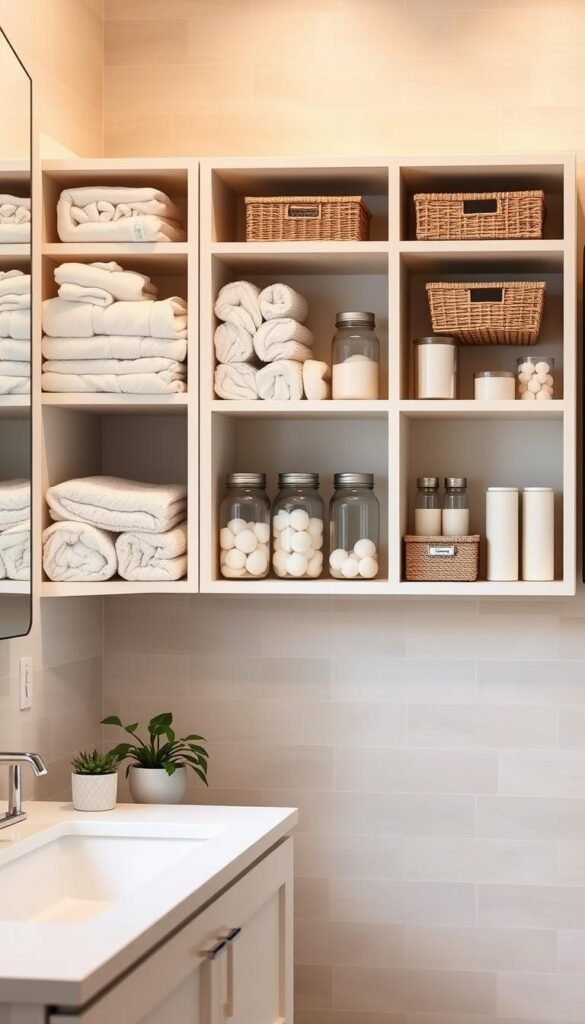
Budget picks under $25 include stick-on shelves, over-shower caddies, drawer dividers, and small bins that won’t damage walls. For closets, use slim hangers, hanging shelves, and clear bins so you can see items without digging.
Follow the yearly “worn in the last year” edit tied to seasonal laundry swaps. It works: many people wear a small portion of their clothes most of the time, so a yearly check keeps your closet usable.
Quick desk and bedroom habits
- Keep nightstands to 3–5 essential items and use one tray for loose things.
- Under-bed: clear lidded bins or soft zip bags, label them, vacuum first. Add wheels if you need frequent access.
- Desk: go paper-light, keep one “to file” folder, and tame cords with reusable ties or a sleeve.
| Room | Best-for | Price | Setup time |
|---|---|---|---|
| Bathroom | daily items & meds | under $25 | 10–20 min |
| Closet | clothing & accessories | under $50 | 15–30 min |
| Bedroom/Bed | nightstand & under-bed | under $50 | 10–20 min |
| Desk | paper & cables | under $25 | 10–15 min |
Pros/cons: clear plastic bins give visibility and wipe clean easily but can scuff. Fabric bins look softer but trap dust and may collapse if overfilled. Choose by how often you access items and how tidy the room stays day to day.
For renter-safe closet solutions, see closet solutions. Two overflow signals to watch for: a growing laundry pile means you need a better hamper and folding spot. Car or garage drift usually means items need a labeled tote until you can sort them.
Conclusion
Short routines and smart limits protect your home without a big makeover.
You don’t fix clutter by buying more things. Reduce dumping grounds and give daily-use items one clear place. That single swap saves time and frustration.
Start small. Pick one problem area this week. Set a 15-minute timer and return the first five items to where they belong. Do a two-minute nightly reset and one weekly sweep of your busiest area.
Before you shop, measure, check your photo inventory, and pause. Look for renter-friendly, durable choices that are easy to install and maintain.
Need practical kitchen maintenance tips? See kitchen maintenance tips for safe, budget-friendly fixes.
FAQ
Why does clutter build up so quickly in small homes?
Small homes have limited storage and more daily use zones per square foot. Items like bags, reusable totes, shoes, and mail get dropped in the nearest space. Without simple systems—short time blocks for tidying, designated landing spots, and regular sorting—things stack up. Fixing it now saves time, reduces repeat purchases, and lowers daily stress.
What are the most common areas that collect the most stuff?
The seven areas to target first are entryways, kitchen counters and cabinets, under-sink areas, bathroom vanities and drawers, closets, bedroom nightstands and dressers, and work-from-home desks. These places get the most traffic and are natural dumping grounds for keys, gadgets, food, mail, chargers, and small personal items.
How can I handle entryway piles without drilling into walls?
Use renter-friendly options like adhesive hooks, over-the-door racks, slim shoe storage, and narrow freestanding cubbies. Create a two-minute landing strip routine: hang coats, stash mail in a labeled bin, and place daily shoes in a dedicated spot. These low-cost fixes reduce daily mess and keep surfaces clear.
What quick steps stop kitchen counters from filling up with appliances and food packages?
Start with a 10-minute sweep: clear counter surfaces, return seldom-used gadgets to cabinets, and group daily items in a tray. Use shelf risers, turntables, and labeled bins for cabinets and pantry to cut duplicate buys. Keep a small photo inventory on your phone so you don’t repurchase staples.
How do I safely sort the under-sink cleaners and avoid chemical risks?
Empty everything out, group cleaners by type and room, and discard expired products properly. Use a tension rod to hang spray bottles and a lidded plastic bin for hazardous items. Never store incompatible chemicals together and label bins for quick identification.
What’s a realistic daily or weekly routine to maintain these areas?
Use short, consistent sessions. Daily: a two-minute reset at the entryway and a five-minute kitchen and desk tidy. Weekly: a 15–30 minute sweep to clear expired pantry items, clean the bathroom vanity, and reassess closet overflow. The key is small, repeatable habits rather than marathon decluttering days.
Which products are worth buying on a budget for entryway and closet organization?
Under choose adhesive hooks, slim shoe racks, drawer dividers, and clear labeled bins. Under upgrade to narrow shoe cabinets, freestanding coat racks, stackable pull-out bins, and lidded clear containers. Prioritize durable basics that suit your space—small-space solutions are often worth the modest cost.
How do I decide between clear plastic bins and fabric storage?
Clear plastic bins score on visibility and easy cleaning. Fabric bins are lightweight and reduce noise; they’re better if you won’t need to see contents every day. For items you use often, pick clear; for seasonal or low-use items, fabric works well. Consider dust, durability, and how easy each is to move.
What are renter-friendly closet fixes that don’t require drilling?
Use slim hangers, hanging fabric shelves, tension rods, and clear stackable bins. Over-the-door shoe organizers work for accessories. Adopt the “worn in the last year” check during seasonal edits to keep racks from overstuffing and to free up space for daily-use items.
How can I reduce desk and paper clutter when working from home?
Move toward a paper-light system. Keep one simple inbox, scan important receipts to cloud storage, and use a small file box for active projects. Manage cables with ties and a sleeve, and set a five-minute end-of-day routine to clear the surface so the next morning starts fresh.
How many reusable tote bags or grocery bags should I realistically keep? Where should I store them?
Keep three to five reusable bags for regular use. Store them flat in a dedicated bin by the door, hung on a hook, or folded in a kitchen drawer. Limiting the number avoids bulk while keeping a ready supply for shopping and travel.
What’s the best approach to avoid buying duplicates of pantry staples?
Maintain a simple photo inventory of shelves and the pantry. Do a weekly “expired/empty sweep” and label containers with dates. Use clear lidded containers for frequently used dry goods so you can see quantities at a glance and stop unnecessary repeat purchases.
How do I clear nightstand and dresser tops without losing essentials?
Define essentials (lamp, phone, one book, glasses) and use a small tray to corral daily items. Store extras in a drawer or a small lidded bin under the bed. This keeps surfaces tidy while keeping important things within reach.
What are simple under-bed storage options that won’t damage floors or bed frames?
Choose clear lidded plastic bins or soft zip storage bags with low-profile wheels. They’re easy to slide out and don’t require drilling. Label bins and store seasonal clothes, extra linens, or infrequently used items to maximize closet space.
How often should I do a full edit of my medicine cabinet and bathroom vanity?
Do a quick check every three months and a deeper edit every six months. Discard expired medicines and cosmetics safely. Keep daily-use products in a small tray or divider and store backups in labeled bins to prevent overflow.
Founder of GoodHomeFinds. Reads the specs, tracks the prices, researches the products from real reviews.