Living in a small apartment can feel cluttered fast. This intro outlines renter-friendly options that add function without anchors or holes in walls. The focus is simple: protect floor area, build upward, and give daily items a clear home so quick tidy-ups replace long cleanups.
Products were tested in real use. Shelves and shoe racks were jiggle-tested. Hooks held heavy totes and jackets. Drawers and under-bed bins were packed with thick towels and jeans to check real durability.
This guide lists practical picks by room and need — vertical solutions, door organizers, kitchen and bath helpers, closet fixes, and studio-friendly options. Readers get clear criteria: stability, realistic load testing, and wear resistance.
Budget guardrails are set up front: quick wins under $25 and higher-value options under $50. Advice targets renters, roommates, and anyone who wants fast setup, low visual clutter, and safe, stable units.
Key Takeaways
- Focus on vertical and door-mounted options to save floor space.
- Pick items that pass a jiggle and load test for real-life use.
- Expect easy setup with no drilling and clear weight limits.
- Find quick wins under $25 and solid value choices under $50.
- Recommendations vary by layout: micro-studio, studio, and one-bedroom.
What to look for in apartment storage solutions
Prioritize units that install quickly, keep walls intact, and improve daily flow. Renters need options that protect painted surfaces while adding usable space and preserving walkways.
No-drill rules
- Adhesive strips: light loads and quick reversibility.
- Tension systems: compression-fit poles ideal near ceilings.
- Over-the-door hardware: fast, removable, and hard to miss.
- Freestanding units: no wall contact and easy relocation.
Safety, durability, and quick checks
Do a weight-limit reality check: use about 70–80% of a product’s rated max for repeated daily use. Look for anti-tip basics: wider bases, lower profiles, or heavier bottom loading if anchoring isn’t allowed.
Try the „jiggle-test“: lightly shift shelves or hooks after loading. If wobble grows with normal movement, pick a sturdier unit or move it away from high-traffic zones.
Space math and upkeep
Measure depth and door swing. Prioritize vertical space to protect valuable floor space used for walking and cleaning. Keep daily items at eye/hand height, weekly items higher, and rare items in underbed or upper zones.
Choose wipeable surfaces in kitchens and open wire shelves in humid areas. Bins should lift out in one trip to speed maintenance and reduce clutter.
Best storage for tiny apartments that maximize vertical space without drilling
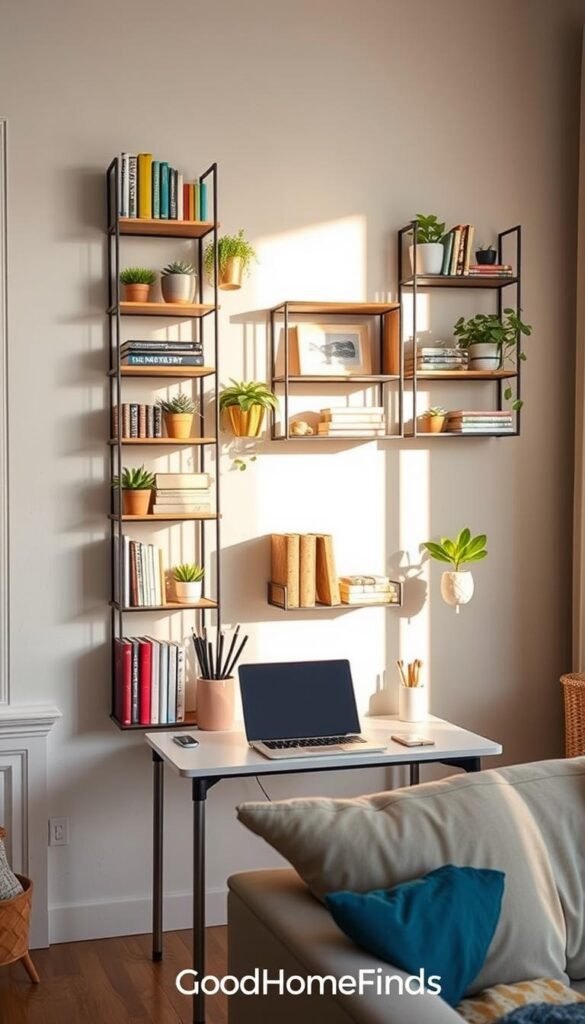
Use tall, narrow pieces to create storage lanes that do not block traffic. These units free floor area and keep everyday items visible and reachable. Renters get flexibility without damaging walls.
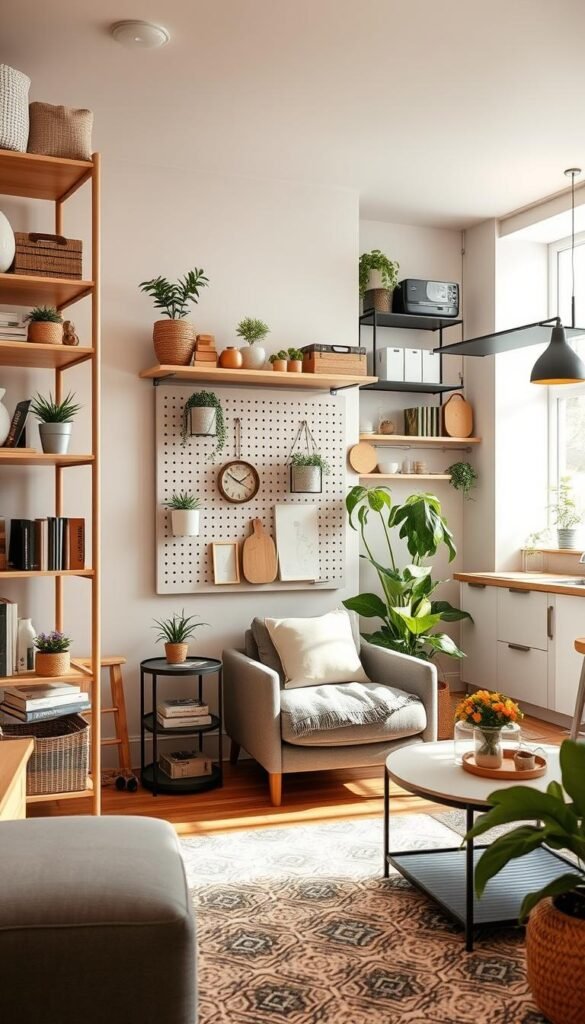
Freestanding shelving and slim shelf options
Freestanding shelving units with a slim footprint are the go-to when a full bookcase would crowd the room. Choose depths under 12 inches for hallways and 10–14 inches beside sofas or desks.
When to pick a slim shelf: behind a couch, in narrow wall gaps, or beside a bed where a wide unit would block walkways.
Hooks and racks for fast entryway order
Heavy-duty hooks and over-the-door racks stop coats and bags from piling on the floor. Use adhesive hooks for moderate loads and over-the-door racks when weight is higher.
Quick routine: designate a drop zone—tray for keys, a hook for the bag, and a defined spot for shoes—so a reset takes under 60 seconds.
Pegboards and modular wall systems with removable strips
Pegboards on removable strips offer flexible hanging for headphones, craft tools, and small baskets. Plan load limits and test each placement with a jiggle-test after hanging items.
- Stability tips: pick units with cross-bracing, store heavier items low, and perform a jiggle-test after assembly and loading.
- Pros/cons: freestanding shelves are flexible but can wobble; hooks clear clutter fast but need compatible surfaces; pegboards are adaptable yet require careful strip placement.
- Best for: renters who can’t drill, roommates needing assigned zones, and anyone in a small apartment who wants vertical solutions without sacrificing the main room.
Over-the-door and door space organizers that add storage fast
Back-of-door solutions add instant capacity without stealing floor room or paint. These renter-safe additions convert otherwise wasted surfaces into neat zones that remove clutter quickly.
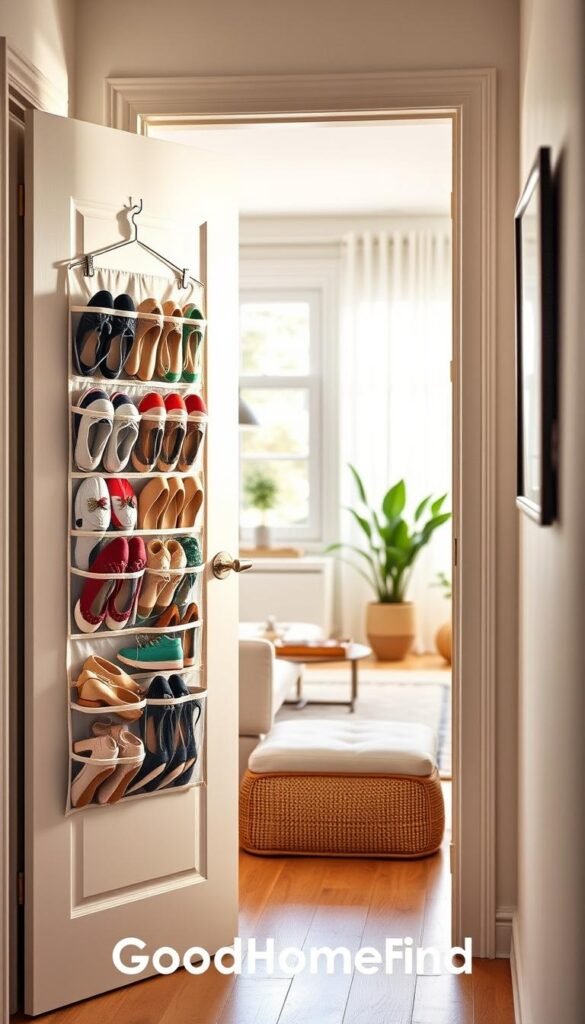
Door shoe organizers that double as pockets for small items and accessories
Over-the-door shoe holders work beyond shoes. Use pockets to hold chargers, hair tools, snacks, cleaning cloths, or workout accessories.
Group by category so items are easy to grab. Keep heavier items in lower pockets to cut sway and avoid slamming.
Pantry door racks for kitchen essentials and cleaning supplies
Pantry racks free up cabinet shelves by holding spices, oils, wraps, sprays, and brushes. Separate food from chemicals on different shelves to stay safe.
- Why it works: adds capacity without taking floor space and is removable when moving out.
- Setup tips: measure door thickness and clearance, add felt pads where metal meets the door, and tighten hooks periodically.
- Quiet door care: avoid overstuffing, check hooks, and keep pockets balanced so doors close cleanly.
- Pros/cons: quick and affordable, but can block closing if overloaded; racks can rattle in older doors.
Good alternatives when doors won’t work include a slim freestanding rack beside the fridge or a narrow rolling cart that tucks into a corner. These give similar access with no door contact.
Small kitchen storage ideas for counters, cabinets, and awkward corners
Freeing prep space starts with moving bulky items off counters and using vertical zones that need no drilling. These fixes keep daily tools within reach and let cleaning stay quick.
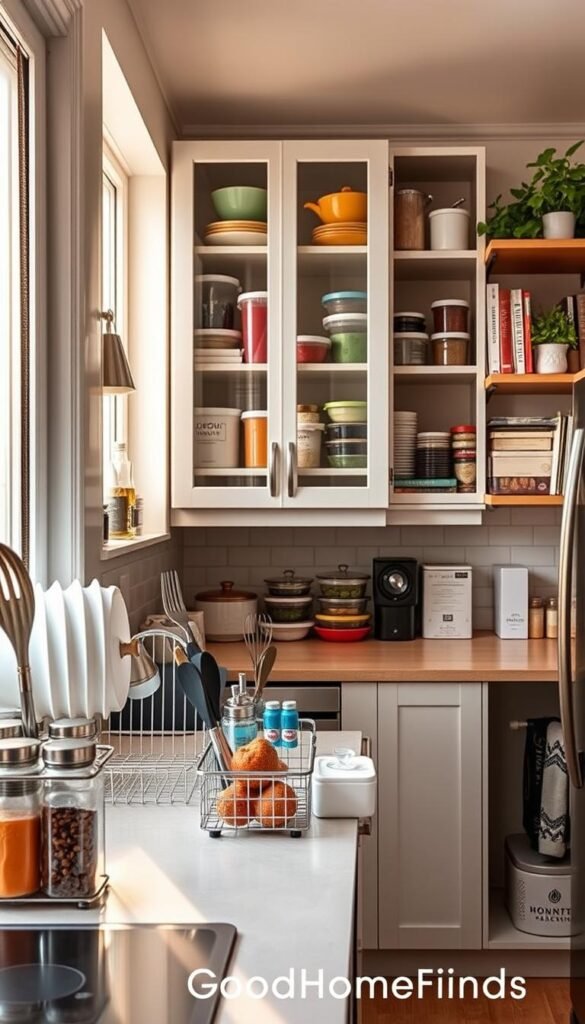
Tension-rod pot hanger near the ceiling
A tension rod placed high with large S-hooks provides a renter-friendly hanging rack for pots. It frees cabinet room and keeps heavy pans visible.
Safety notes: confirm rod tension, use sturdy hooks, and balance weight across the line.
Rolling cart that moves when you clean
A slim cart stores appliances and prep tools. Roll it out to cook, then tuck it back to reclaim counter space.
Wipe wheels and shelves weekly to avoid grime and stuck crumbs.
Vertical organizers for wraps and boxes
A small multi-level rack on the fridge or a shelf stops foil and parchment boxes from collapsing. It keeps boxes upright and easy to grab.
In-cabinet risers, bins, and baskets
Shelf risers double usable shelf area. Bins and baskets group snacks, baking, or breakfast items so nothing hides at the back.
Countertop utensil crocks and small racks
Keep spatulas and spoons in washable crocks to cut drawer clutter. Choose metal or glazed ceramic for easy cleaning.
| Solution | Pros | Cons |
|---|---|---|
| Tension-rod pot hanger | Renter-friendly, frees cabinets | Load limits; needs balance |
| Rolling cart | Mobile, adds shelves | Requires parking spot |
| Vertical wrap rack | Keeps boxes neat, fridge-top fit | Limited capacity |
| Risers + bins | Double shelves, groups items | Can hide duplicates if unlabeled |
Who this helps: small apartment cooks, roommates sharing cabinets, and anyone who wants a quick, no-drill way to keep counters clear.
Bathroom storage solutions for small spaces (no drilling, easy maintenance)
A tidy bathroom starts with vertical pieces that lift bottles off edges and into easy reach. Renter-safe units and modular bins keep counters clear and speed morning routines.
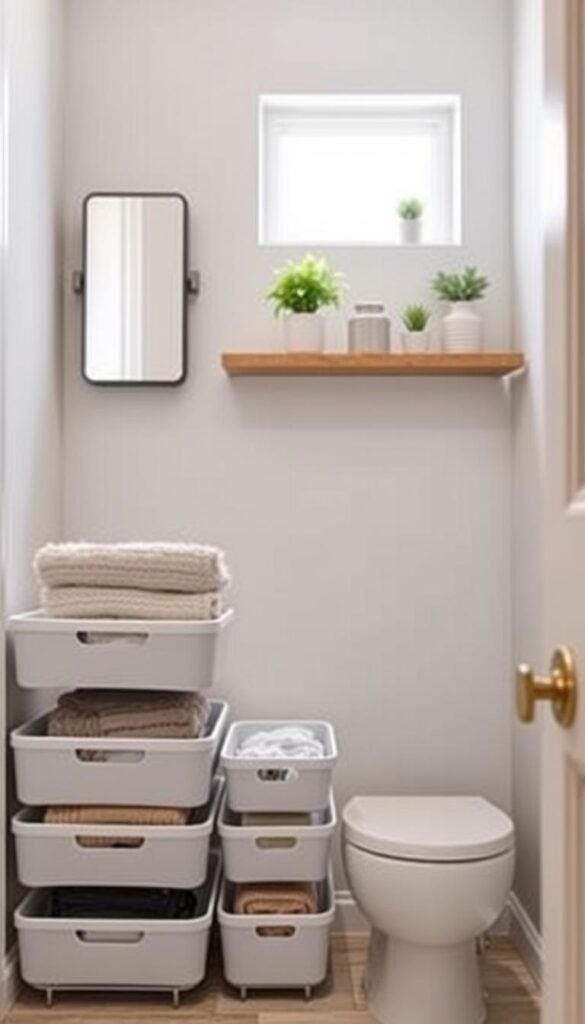
Over-toilet shelves and slim gap units
Over-toilet shelves add usable vertical space without drilling. Pick units with a wider base and lower heavy items on the bottom shelf.
Tip: avoid covering the tank lid and keep ventilation clear.
Shower caddies and tension-corner organizers
Use over-showerhead caddies or tension-corner poles to free tub edges. Tighten regularly and rinse weekly to prevent soap buildup.
Safety note: choose rust-resistant materials and check fittings after each use.
Under-sink drawers, stackable bins, and baskets
Drawers and stackable bins stop product piles and make restocking quick. Label sections for hair, skin, first aid, and backups.
Non-slip feet and accurate measuring ensure units stay steady and do not block pipes.
| Solution | Pros | Cons |
|---|---|---|
| Over-toilet shelf | Vertical use of space; keeps counters clear | May crowd very narrow rooms |
| Tension-corner organizer | No drilling; good wet-area fit | Needs periodic tightening |
| Under-sink drawers & stackable bins | Improves access; divides categories | Requires measuring; watch pipe clearance |
Who this helps: renters who cannot drill, busy households that need fast routines, and small units where floor space is limited.
Closet organizers and bedroom storage that reduce clutter in minutes
Sorting clothing into clear zones makes closets work like compact wardrobes. Treat the space as a system: hanging, folded, and grab-and-go zones speed daily choices. This approach fits shared rooms and small apartments.

Closet systems with shelves, drawers, and hanging space
Renter-friendly systems combine shelves, a short rod, and a few shallow drawers to balance hanging and folded items. Measure width, depth, and rod height before buying. Aim for 12–14″ depth on shelves by a 40–42″ hanging section where possible.
Underbed bins and tested tips
Low-profile underbed bins proved they hold bulky jeans and towels without warping zippers when filled gently. Pick bins with sturdy handles and hard lids for frequent pulling. Cover bins with a breathable sheet to cut dust.
Hanging organizers, shoe pockets, and built-in drawers
Hanging pockets keep shoe pairs and small items visible and off chairs. Bed frames or benches with built-in drawers save valuable floor space and hide seasonal swaps. Keep drawers tidy: use soft inserts and avoid overpacking.
| Solution | Pros | Cons |
|---|---|---|
| Closet system (shelves+rod+drawers) | Improves access; zones reduce clutter | Setup time; needs measuring |
| Underbed bin | High capacity; hidden seasonal items | Can collect dust; needs handles |
| Hanging shoe organizer | Makes shoes visible; frees surfaces | Limited heavy-item load |
| Bed/bench with drawers | Saves floor space; quick access | Heavier furniture to move |
Quick reset: spend two minutes nightly returning items to zones. Daily returns keep clutter low and make mornings calm.
Living room and studio apartment storage hacks using dual-purpose furniture
A single room often needs to act as bed, office, and lounge, so furniture must hide function without stealing floor space.
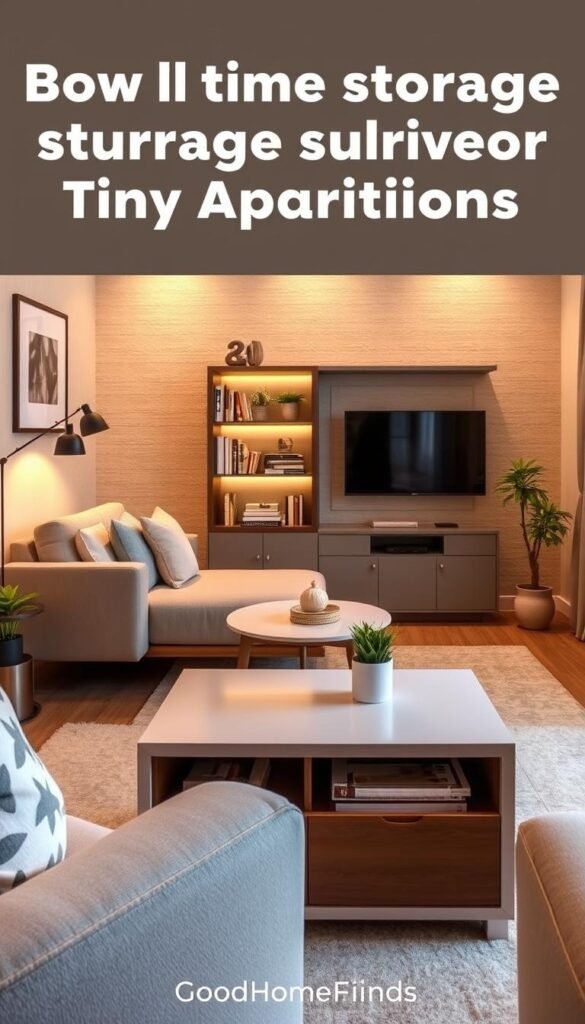
Storage ottomans and benches
Seat + stash pieces hold blankets, games, and workout gear. Pick easy-clean upholstery and strong hinges. Test lids and seams by opening and closing them daily for a week.
Sofa beds and compact tables with shelves
Sofa beds keep the room flexible. Compact tables with built-in shelves give quick access to books and chargers. Arrange pieces so a clear path remains for walking and vacuuming.
Ladder-style bookcases and floating-shelf alternatives
Ladder bookcases lean or stand without drilling. Level the feet and store heavier items low. For renters, use freestanding picture ledges or adhesive strip-mounted ledges for very light decor. Respect weight limits and avoid overloading a wall-mounted look.
| Solution | Pros | Cons |
|---|---|---|
| Storage ottoman/bench | Hidden capacity; doubles as seating | Higher upfront cost; needs durable fabric |
| Sofa bed / table with shelves | Multi-use; frees closets and counters | Can be bulky when unfolded; heavier to move |
| Ladder bookcase | Vertical use of space; no drilling | Can wobble if overloaded; limit top weight |
| Adhesive/freestanding ledges | Renter-friendly look of floating shelves | Only for light items; strict weight limits |
Who this helps: studios and small one-bedrooms that need calm visuals and usable space. These hacks keep the main living room tidy while protecting walls and floor space.
Budget picks and comparison tables for smart apartment storage
Smart budget picks let renters add useful spots without heavy tools or long setup. This section lists wallet-friendly wins under $25 and value upgrades under $50, plus a compact comparison to match rooms and setup time.
Under $25: adhesive hooks for light daily grab items, over-the-door organizers that make an unused surface active, simple bins and baskets to group categories and reduce visual clutter. Check weight limits and keep heavier items low.
Under $50: small rolling carts that move between kitchen and bath, shelf risers to double cabinet capacity, and starter closet organizers that create clear hanging and folded zones. These upgrades improve function without permanent changes.
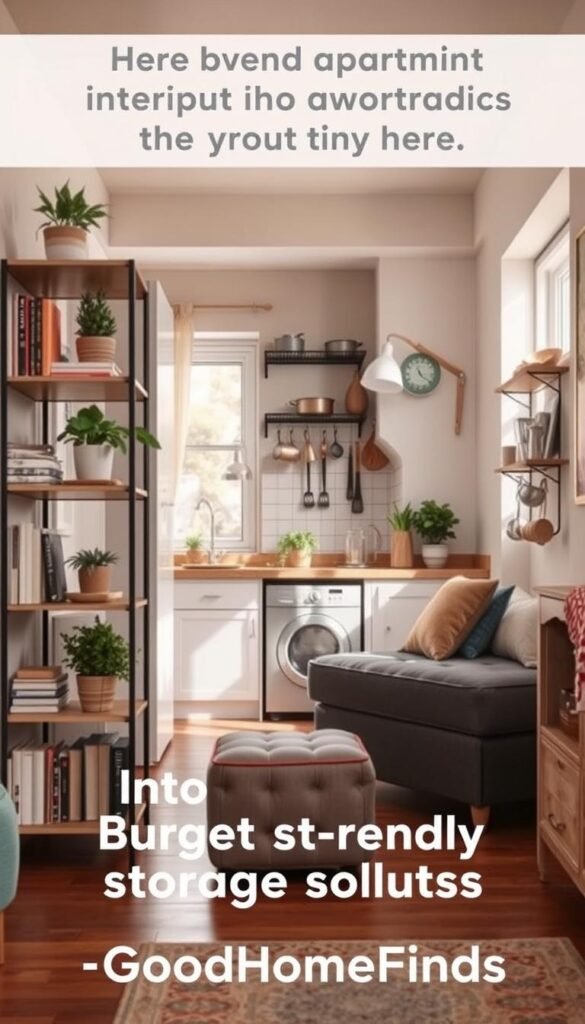
Quick comparison by room and setup time
| Option | Best room | Setup time | Weight notes | Renter-safe |
|---|---|---|---|---|
| Adhesive hooks | Entryway / bathroom | 5–10 min | Light loads only | Yes |
| Over-the-door organizer | Closet / door | 5–15 min | Moderate if even | Yes |
| Bins & baskets | Closet / closet shelves | 5 min | Varies by material | Yes |
| Rolling cart | Kitchen / bathroom | 10–20 min | Higher; check wheels | Yes |
| Shelf riser | Kitchen / pantry | 5–10 min | Moderate | Yes |
Pros, cons, and who benefits
- Pros: fast setup, low cost, renter-friendly; vertical and door options reclaim dead space.
- Cons: door clearance issues, wobble risk with cheap frames, and extra cleaning around bins or carts.
- Who it helps: renters who move often (light, tool-free), roommates (labeled bins and zones), studio dwellers (dual-purpose pieces and vertical solutions), and small one-bedroom households (closet systems plus underbed storage).
Alternatives by apartment size
Micro-studio: prioritize door organizers, underbed bins, and tall narrow pieces that keep floors clear.
Studio: add dual-purpose furniture and a compact cart to shift function between cooking and work.
One-bedroom: consider fuller freestanding shelving and a starter closet organizer to expand long-term capacity.
Safety note: cheap should not mean risky—always verify weight limits, avoid overloading adhesive, and place heavy items low to reduce tipping and wear.
Conclusion
A short plan and a few smart swaps can turn crowded corners into calm, useful zones.
Start with renter-friendly, no-drill moves: add vertical and door-based solutions, then bring in dual-purpose furniture or a closet system if needed. Measure doors, underbed height, and closet width during a quick weekend check.
Pick one entryway fix, one kitchen fix, and one closet fix to cut clutter fast. Keep safety in mind: test weight limits, keep heavier things low, and re-tighten tension systems after loading.
Adopt a one-room nightly reset: return items to hooks, bins, and drawers before bed. Budget basics under $25 and upgrades under $50 both lift daily routines.
Micro-studios: door and underbed efficiency. Studios: dual-purpose pieces. One-bedrooms: freestanding units that protect valuable floor paths.