Your goal: clean, good-tasting drinking water without losing the limited space you rely on each day.
This guide focuses on renter-friendly, no-drill choices that are compact and easy to maintain.
For a small home, the ideal plan pairs a compact filter system with tidy routing, leak protection, and a maintenance routine you will actually follow. You get clear pros and cons and practical product suggestions that remove guesswork.
Quick preview of paths you can take: a certified under-sink filter with a dedicated faucet, a direct-connect option that keeps plumbing simple, and a custom path for specific contaminants. I will also flag renter-first rules so you avoid permanent cabinet changes.
Budget matters. Expect useful organization add-ons under $25 and small upgrades under $50 that make the system feel finished, not cluttered. You will also get an easy maintenance plan and basic safety habits to protect your water and home.
Key Takeaways
- Focus on compact filter systems that save space and improve drinking water.
- Prefer no-drill, renter-friendly options that uninstall cleanly.
- Choose between certified under-sink units, direct-connect models, or targeted contaminant filters.
- Simple add-ons under $25 and upgrades under $50 tidy the area and add value.
- Follow an easy maintenance routine and basic leak protection to keep the system working.
What “Best Under-Sink Setup” Means in a Small Home
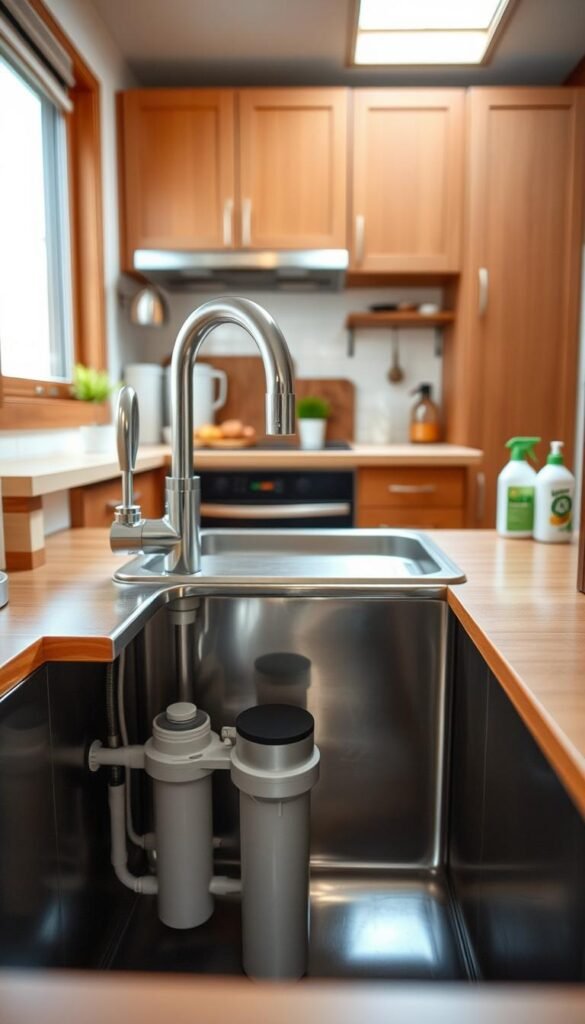
Small cabinets create big problems. The usual scene: a filter housing takes up the main storage zone. Lines kink against cleaning bottles. You lose space for dish soap and trash bags. That adds friction to simple chores.
Common pain points
Limited flow is a daily annoyance. Filling pots, bottles, or a pet bowl back-to-back can feel slow. Low flow drains time and patience.
What a clean arrangement looks like
One compact system, lines routed along the back, supplies in bins, and a waterproof tray on the cabinet floor. Nothing rests directly on the wood.
Renter-friendly priorities
No drilling. No cutting. No permanent mounts that leave holes. A removable installation that you can undo in under an hour keeps landlords happy.
Small habits that matter
A simple replacement routine and quick visual leak checks keep sink water tasting good and prevent surprises. These daily habits are a small effort with real payoff.
Decision points ahead
- Available size and vertical clearance for cartridge swaps
- Cold water access and common fittings
- Which contaminants you need the solution to reduce
| Issue | Practical fix | Renter-friendly? |
|---|---|---|
| Cabinet clutter | Compact filter, stackable bins, drip tray | Yes |
| Low faucet flow | Choose higher-flow cartridges, avoid kinks | Yes |
| Hard maintenance | Clear replacement schedule, labeled parts | Yes |
Measure First: Space, Plumbing, and What You Can Install Without Regrets
Take a few minutes with a tape measure before you buy. Accurate measurements keep a water filter purchase from becoming a return or a regret. You want to confirm the clearances you will need for real-life use, not just whether the housing fits the cabinet.
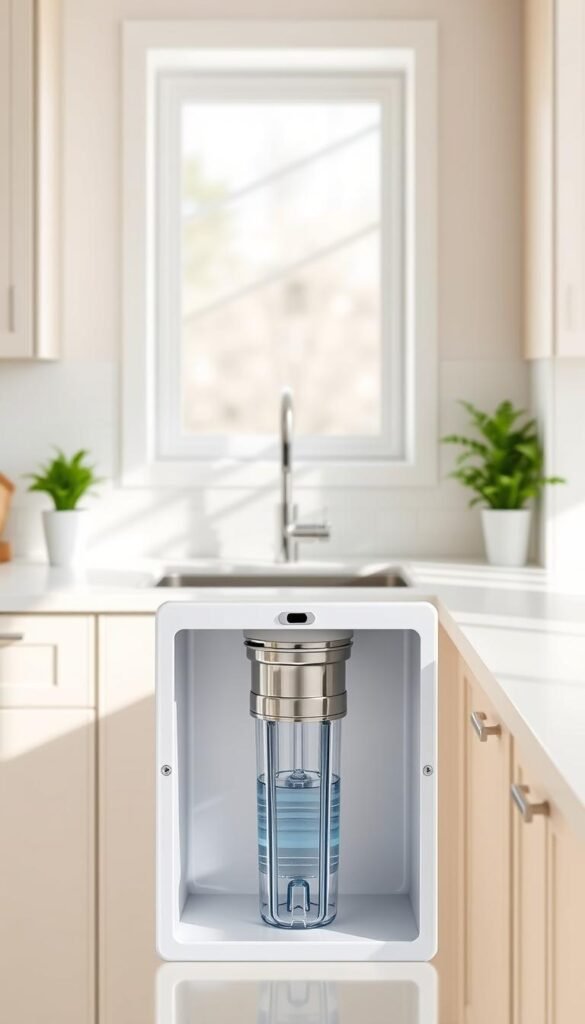
How to measure vertical clearance (and why it matters)
Measure from the cabinet floor to the shelf or sink base. Add two inches to the filter height for comfortable cartridge swaps.
Example: the Aquasana AQ-5200 sits about 9″ high. Plan for ~11″ to remove filters easily without other disassembly.
Cold water line access and common fittings
Locate the shutoff valve and follow the cold water line up to the faucet. Most apartment lines use 3/8″ compression fittings. The AQ-5200 uses a 3/8″ faucet connection, so checking this saves time.
Dedicated faucet vs direct-connect
Dedicated faucet keeps filtered water separate and convenient. It may need an extra hole in the sink.
Direct-connect uses your existing faucet or accessory hole. It avoids drilling but changes how you draw water.
| Choice | Pros | Cons | Renter-friendly? |
|---|---|---|---|
| Dedicated faucet | Separate dispense, clear labeling | May need drilling or permanent hole | No (unless an existing hole is free) |
| Direct-connect | No extra hole, easy removal | Filtered flow tied to faucet use | Yes |
| Accessory-hole use | Uses existing hole, minimal change | Requires compatible faucet or adapter | Yes |
Quick checklist: width at the side wall, depth around the P-trap, and the open space you can reach. If drilling is not allowed, prefer direct-connect or use an accessory hole. For renter-friendly tips and small-budget fixes, see budget fixes.
Water Quality Basics That Actually Affect Your Buying Decision
Before you buy, match the visible issues in your water to the type of filtration you can actually install. That focus keeps purchases useful and renter-friendly.
Bad taste and odor usually trace back to chlorine or chloramine. A carbon-based filter often fixes these quickly and cheaply. Carbon addresses taste and odor without major plumbing changes.
Health-impacting contaminants to watch
Higher-stakes contaminants include lead, VOCs, PFAS, cysts (Cryptosporidium, Giardia), and pesticides. Different technologies target different risks.
- Lead, PFAS, VOCs → multi-stage certified filters or targeted cartridges.
- Cysts and debris → ultrafiltration or certified cyst reduction.
- Pesticides → activated carbon plus specific certifications.
For real-world examples, the AQ-5200 is certified to reduce chlorine, chloramine, lead, VOCs, cysts, PFOA/PFOS, and microplastics. Hydroviv aims at PFAS, lead, arsenic, VOCs, chromium-6, and chloramines with IAPMO/NSF certifications.
When reverse osmosis makes sense
Reverse osmosis (osmosis) gives broad chemical reduction. It is strong for heavy contamination but takes space, uses water to waste, and adds complexity.
If you only have taste problems → choose carbon. If you worry about cysts or turbidity → pick ultrafiltration. For many combined chemical concerns → choose a certified multi-stage filter or RO only if you can handle the space and maintenance tradeoffs.
Certifications to Prioritize: ANSI/NSF Standards and Why They Matter
Not all labels are equal—focus on tested standards to know what a filter system will actually remove from your water.
Certificates mean a lab tested the claims. ANSI/NSF standards tell you whether a product was measured for specific contaminants and at what flow rate. That is the difference between marketing language and verified performance.
What the numbers mean
NSF/ANSI 42 covers taste and odor issues like chlorine. 42 is what you look for when flavor or smell is the main problem.
NSF/ANSI 53 targets health-impacting contaminants such as lead, certain VOCs, and some PFAS when the product lists those tested reductions.
NSF/ANSI 372 confirms lead-free materials in plumbing parts. That matters in older buildings where metal leaching is a risk.
How to read a product page
Look for the exact standard numbers and the certifying body name. Phrases like “meets NSF” are vague. You want a listing such as “NSF/ANSI 42 certified by IAPMO.”
Practical renter tips
- Match certifications to your water concern. Don’t chase every standard.
- Choose systems with 53 if you worry about lead or PFAS in older pipes.
- Remember: changing faucets or adapters can affect the certified configuration and void the tested performance.
| Standard | Targets | Why it matters for renters |
|---|---|---|
| NSF/ANSI 42 | Chlorine, taste/odor | Fixes common taste issues without big installs |
| NSF/ANSI 53 | Lead, VOCs, some PFAS | Protects health in older plumbing |
| NSF/ANSI 372 | Lead-free materials | Reduces metal leaching risk |
Keep it simple: pick the standards that line up with your water test or concern. AQ-5200 and Hydroviv show how clear certifications (NSF/ANSI 42, 53, 372) back real reduction claims and give you lasting peace of mind.
Flow Rate, Capacity, and Replacement Cycles: The Hidden Cost of Convenience
Small changes in flow and cartridge life add up fast when you rely on filtered water every day.
What 0.5 gpm versus ~1.0 gpm feels like
At 0.5 gpm a 20-ounce bottle fills in about 50 seconds. At 1.0 gpm it takes half that time. A coffee kettle or pot shows the same gap.
Capacity: how many gallons before a filter is tired
AQ-5200: ~500 gallons and a six months replacement cycle. Hydroviv: ~720 gallons at roughly 0.72–1 GPM with a six months cartridge life.
Replacement planning and ongoing cost
Replacements drive long-term cost. AQ-5200 replacement sets run about $60 per change. Track the months and set a phone reminder every six months.
Renter-friendly routine: label the swap date inside the cabinet, keep one spare cartridge, and check flow monthly. Slow flow or dull taste usually means it’s time to replace, not that the system failed.
| Spec | Rate (gpm) | Capacity (gallons) | Replacement cadence |
|---|---|---|---|
| AQ-5200 | 0.5 | 500 | Six months (~$60 per set) |
| Hydroviv | 0.72–1.0 | 720 | Six months (cartridge) |
| Practical note | — | Depends on use | Set reminders, keep spares |
Best Under-Sink Filter System Overall for Small Homes: Aquasana AQ-5200
The Aquasana AQ-5200 squeezes wide certification coverage into a very small footprint. It is designed to sit roughly 9″ high × 8″ wide × 4″ deep installed, so plan on ~11″ vertical clearance and ~9″ horizontal space to swap cartridges comfortably.
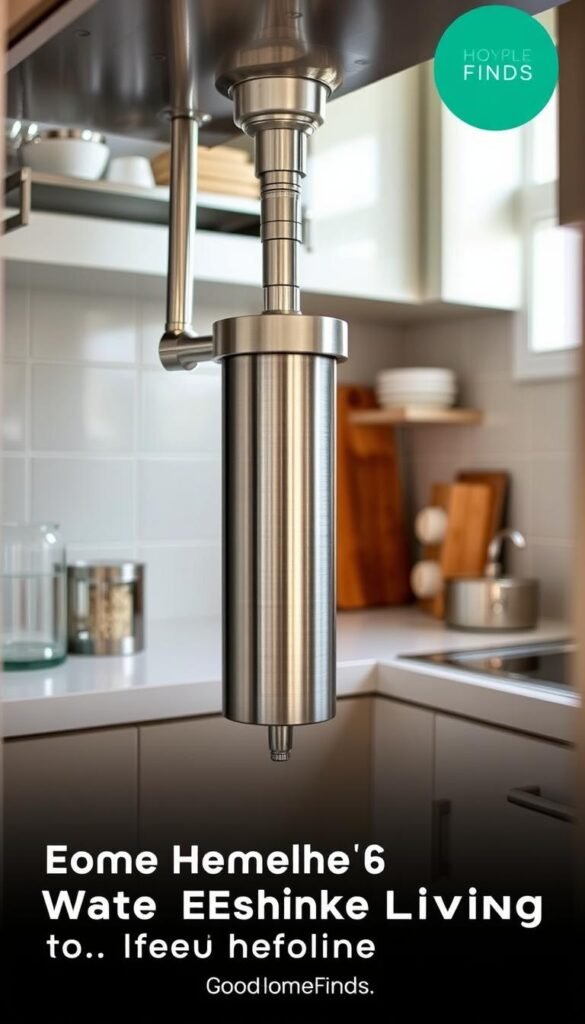
Why it stands out in tight cabinets
Compact housing with verified protection. The AQ-5200 carries ANSI/NSF certifications that target taste and health issues. This means reliable filtration without a large cabinet footprint.
Certified contaminants it reduces
- Chlorine and chloramine for taste and odor.
- Lead, mercury, and many VOCs for health protection.
- Cysts (Cryptosporidium/Giardia), PFAS/PFOA/PFOS, and microplastics.
Build quality and real-world durability
Metal hardware, a metal faucet, and compression fittings cut down on brittle plastic failures during installation. That helps when you do a renter-friendly installation and want fewer surprises.
Tradeoffs and performance notes
The tradeoff is a lower flow rate (~0.5 gpm) and a capacity near 500 gallons, with replacement cartridges roughly every six months. If you fill kettles or many bottles daily, the slower flow may feel noticeable.
Who this is for and practical tips
This water filter and filter system is a practical choice for renters who can handle basic DIY and value verified performance over top flow. For installation, avoid cross-threading, turn water on slowly, and consider a smart leak detector as a small insurance purchase.
„Position it with at least 11″ vertical clearance so cartridge swaps stay quick and clean.“
Best Budget-Friendly Direct-Connect Option: Waterdrop Under-Sink Systems
A compact direct-connect carbon option can give a big taste improvement with very little fuss. These systems tie into your cold water line and deliver clearer drinking water without a tank or large housing.
When a simple carbon system is enough
If chlorine or minor taste and odor are your main worry, a carbon water filter is a practical fix. It reduces chlorine and improves flavor quickly.
Space-saving, tankless design
Waterdrop models are low-profile and tankless. That means they free up cabinet size and fit tight cabinets. The small footprint makes daily access and cartridge changes easier.
Budget pick: price-focused option
Waterdrop offers direct-connect carbon filters as low as $39.99 (WDUA). They list NSF/ANSI 42 and 372 on some models and note faucet compatibility for 1/2″ or 3/8″ female NPT threads.
What to check before purchase
- Confirm cold water line access and shutoff location.
- Verify faucet/thread compatibility on the product page.
- Plan for a quick, no-drill installation and one spare cartridge.
Quick reality check: these systems are a budget, renter-friendly choice for taste; they do not replace multi-stage certified protection for lead, PFAS, or heavy contaminants.
| Feature | Why it matters | Waterdrop note |
|---|---|---|
| Price | Low upfront cost for renters | $39.99 entry models |
| Size | Fits tight cabinets, tankless | Low-profile design |
| Use case | Taste/odor improvement | Carbon filtration, quick install |
| Limitations | Not for broad contaminant reduction | Not a substitute for RO or multi-stage systems |
Best Customized Option for Targeted Contaminant Reduction: Hydroviv Under Sink Water Filter
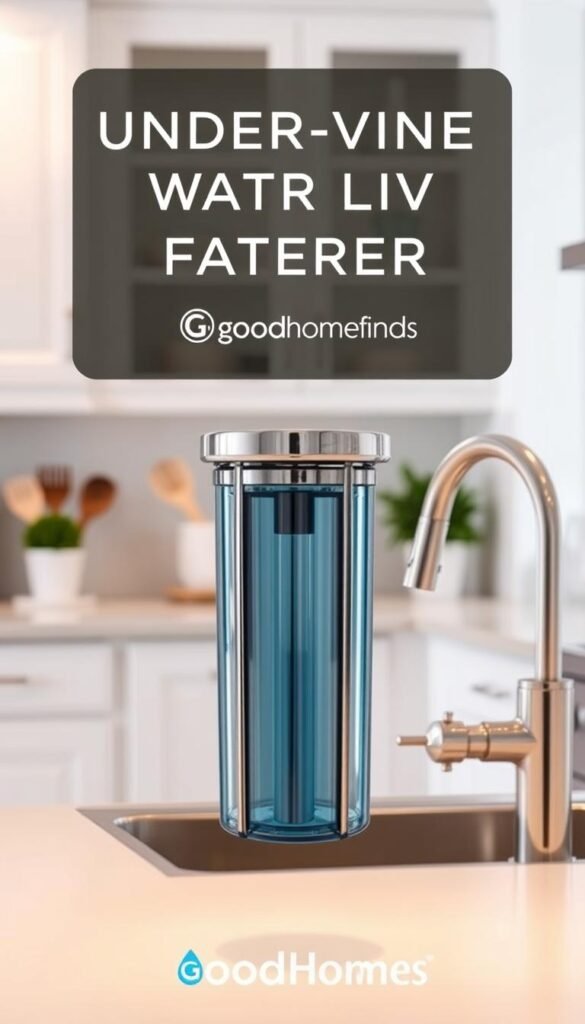
Hydroviv tailors a cartridge to the likely pollutants in your area instead of selling a generic replacement. That means the filter system is tuned using regional water data so it targets PFAS, lead, arsenic, and other common contaminants you might face.
Key specs to compare
IAPMO-certified to NSF/ANSI 42, 53, 372. Rated about 720 gallons capacity and a real-life flow rate near 0.72–1.0 GPM. Cartridge life is about six months and the system carries a 5-year warranty.
Install and renter-friendly notes
It connects to your cold water line with standard 3/8″ compression fittings. Typical install takes ~15 minutes and uses your existing faucet, so you avoid drilling or permanent plumbing changes.
Who should pick this
This option fits you if you worry about PFAS, lead, or arsenic but need a compact, renter-friendly solution. It gives verified contaminant reduction without a large footprint.
- Pros: targeted protection, verified certifications, decent flow and capacity.
- Cons: higher upfront cost than basic carbon filters and a cartridge replacement every six months.
„Customization means the cartridge focuses on what your ZIP code makes likely, not a one-size-fits-all fix.“
Reverse Osmosis vs Ultrafiltration vs Carbon: Choosing the Right Filtration Process
The right process depends on your space, the contaminants you face, and how much maintenance you will do.
Reverse osmosis (RO) removes a wide range of contaminants. It uses a fine membrane to strip many chemicals and dissolved solids from water. That makes osmosis a powerful way to get very clean drinking water.
Tradeoffs: RO units usually need more cabinet space and often produce wastewater during use. You also may need a small tank and more plumbing. For small apartments this can be a real drawback.
Ultrafiltration is a practical middle ground. It blocks debris, cysts, and most particulates while keeping minerals you might want. Many ultrafiltration options are tankless and take less space than RO.
They often use simpler installs and fewer fittings. That makes them a renter-friendly choice when turbidity or sediment is the main worry.
Carbon filtration is the budget workhorse for taste and odor. If chlorine or chloramine is your main issue, activated carbon usually fixes it fast.
Carbon direct-connect systems are typically tankless and low-profile. They are easy to move when you leave and avoid drilling in most cases.
Quick match guide: what to pick
- Taste/odor (chlorine, chloramine) → carbon filtration.
- Sediment, cysts, debris → ultrafiltration.
- Broad chemical reduction (PFAS, heavy dissolved solids) → reverse osmosis or a certified multi-stage system.
„Pick the process that fits your cabinet, your water concerns, and how reliably you’ll change cartridges.“
Renter reality checks: RO often needs extra space and may require more plumbing work. Ultrafiltration and carbon direct-connect systems are usually tankless, simpler to install, and easier to remove at move-out.
In the end, the right water filtration solution balances footprint, maintenance, and the contaminants you actually need to reduce.
Comparison Table: Aquasana vs Waterdrop vs Hydroviv at a Glance
Quick side-by-side facts show how each filter performs in real life, not just on paper.
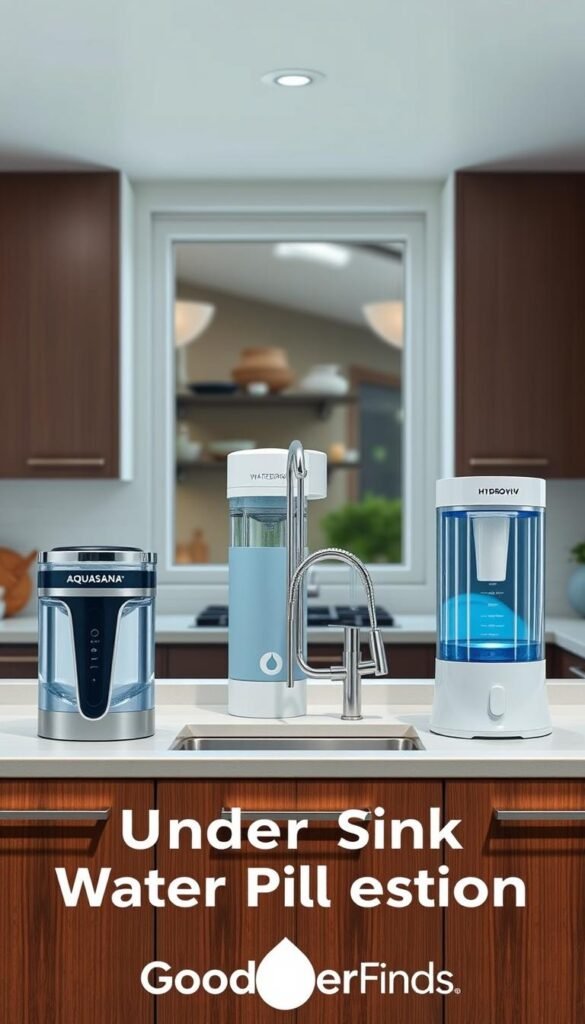
At-a-glance comparison
| Model / Focus | Certifications & contaminants | Flow rate / capacity | Replacement cadence | Size & installation | Best for |
|---|---|---|---|---|---|
| Aquasana AQ-5200 | NSF/ANSI 42, 53, 372 Chlorine, lead, VOCs, PFAS, cysts |
~0.5 gpm · ~500 gal | Replace every six months (plan reminders) | Compact housing; metal hardware; compression fittings; may use dedicated faucet | Verified multi-contaminant protection in tight cabinets |
| Waterdrop (direct-connect) | NSF/ANSI 42 & 372 on some models Carbon or UF options |
Varies by model; tankless designs (higher real-life flow) | Cartridge swaps ~six months depending on use | Low profile; direct-connect to cold line; very renter-friendly | Budget taste and odor fixes with minimal plumbing |
| Hydroviv | IAPMO-certified to NSF/ANSI 42, 53, 372 Targeted PFAS, lead, arsenic reductions |
~0.72–1.0 gpm · ~720 gal | Cartridge replacement every six months | 3/8″ compression fittings; uses existing faucet; compact | Custom contaminant targeting based on local data |
Quick notes to help you decide
Certifications mean measured performance. Look for the specific NSF/ANSI numbers listed in product docs. Marketing claims without numbers are not the same as verified reductions.
Flow rate affects daily use. At ~0.5 gpm you will notice slower fills for bottles and kettles. Hydroviv’s ~0.72–1.0 gpm feels noticeably faster in kitchens with frequent fills.
Replacement planning is simple: set a recurring six months reminder, write the swap date on a label inside the cabinet, and keep one spare cartridge on hand.
Installation choices matter for renters. Direct-connect carbon or UF models avoid drilling and are easiest to remove. Systems that use a dedicated faucet can give separation of filtered water but may need an extra hole or adapter.
„Match the system to your water concerns, cabinet space, and how often you’ll actually change filters.“
The best under sink setup for Renters Who Can’t Drill or Make Permanent Changes
Quick, damage-free choices make a big difference when you rent. You can secure a compact filter system and keep cabinet space useful without making permanent changes. Follow simple mounting, line-routing, and move-out steps to keep the water flowing and your landlord happy.
No-drill mounting ideas that won’t harm cabinets
- Heavy-duty adhesive strips or industrial hook-and-loop for light housings. Check weight limits and replace strips after 6–12 months.
- Tension rods clamped between cabinet sides to hold lightweight brackets or small shelving.
- Freestanding brackets or compact trays that sit on the cabinet floor and brace against the back wall. Keep moisture in mind and pick water-resistant materials.
These renter-friendly options avoid screws and holes. Still, keep the system weight low and test the mount before leaving the cabinet unattended.
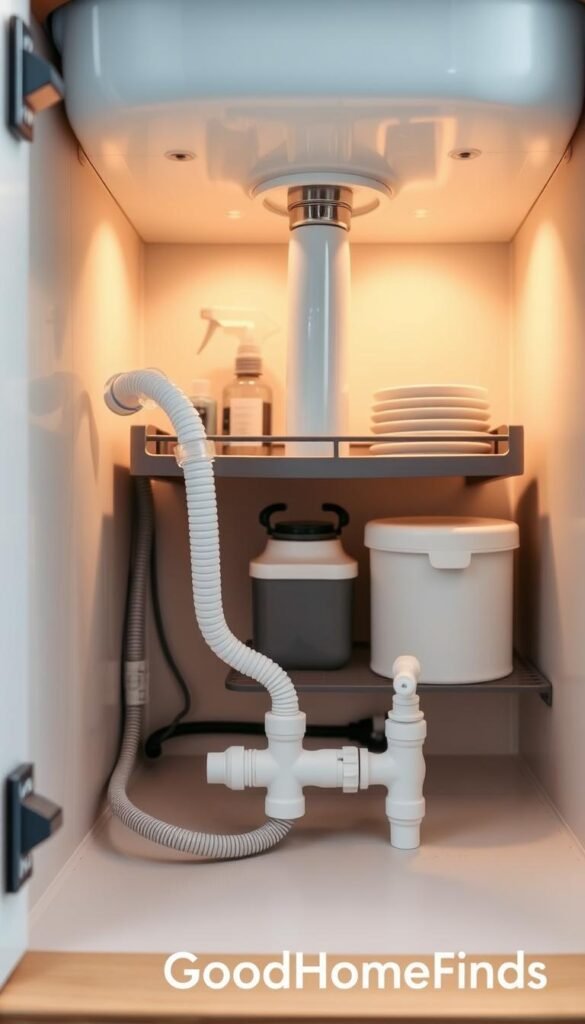
Line routing and cable management to protect flow
Good line routing is the difference between “it works today” and “it still works in six months.”
- Keep gentle curves; avoid sharp bends that pinch cold water or filter lines.
- Clip lines up the back wall and away from the trash can and cleaning bottles.
- Use adhesive hose clips and soft zip ties to prevent kinks and rubbing points.
Move-out friendly checklist: uninstall cleanly
- Shut off the cold water valve and open the filtered tap to relieve pressure.
- Have a small towel and bucket ready. Loosen fittings carefully to avoid cross-threading.
- Dry the cabinet, remove adhesive residues, and store fittings, brackets, and spare filters in a labeled bag for the next install.
Daily habit: glance under the sink for five seconds after you fill a bottle each day. This quick check catches drips or line shifts before they become problems.
Renter tip: define a “filter zone” and a separate “cleaning supply zone” so stored items never press on lines or housings.
Leak Prevention and Safety: Protecting Your Apartment From Water Damage
A careful install and a quick daily check turn a potential water problem into a non-event. Leaks in apartments escalate fast. A slow drip can damage the cabinet floor and the unit below.
Installation basics to avoid common mistakes
Hand-tighten fittings first to avoid cross-threading. Then give a measured turn with a wrench. Turn the water on slowly while watching each joint for wetness.
Why materials and fittings matter
Metal compression fittings and solid hardware resist wear and improve durability compared with cheap push-in plastics. Choose parts that match your plumbing and make reinstallation easier when you move.
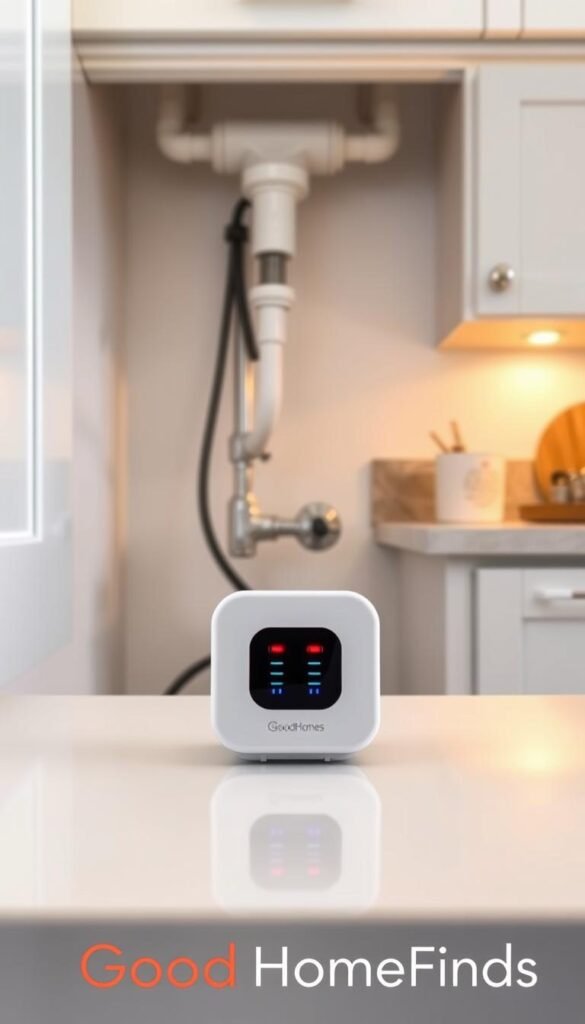
Why a smart leak detector is worth the cost
A small device can alert you before damage spreads. Smart detectors connect to your phone and stop minor leaks from becoming major repairs. This is a low-cost durability and safety upgrade many renters find worth it.
Post-replacement quick routine
- After every replacement, run the filter and check all joints for 60 seconds.
- Check again after a few hours while pressure has settled.
„Careful installation, good materials, and a one-minute daily glance keep water damage rare and manageable.“
Under-Sink Organization Add-Ons Under $25 That Make the Setup Work Better
A few low-cost organizers turn a crowded cabinet into a predictable, maintenance-friendly zone. These small purchases protect your cabinet floor, keep lines clear, and make the six-month replacement routine easy to follow.
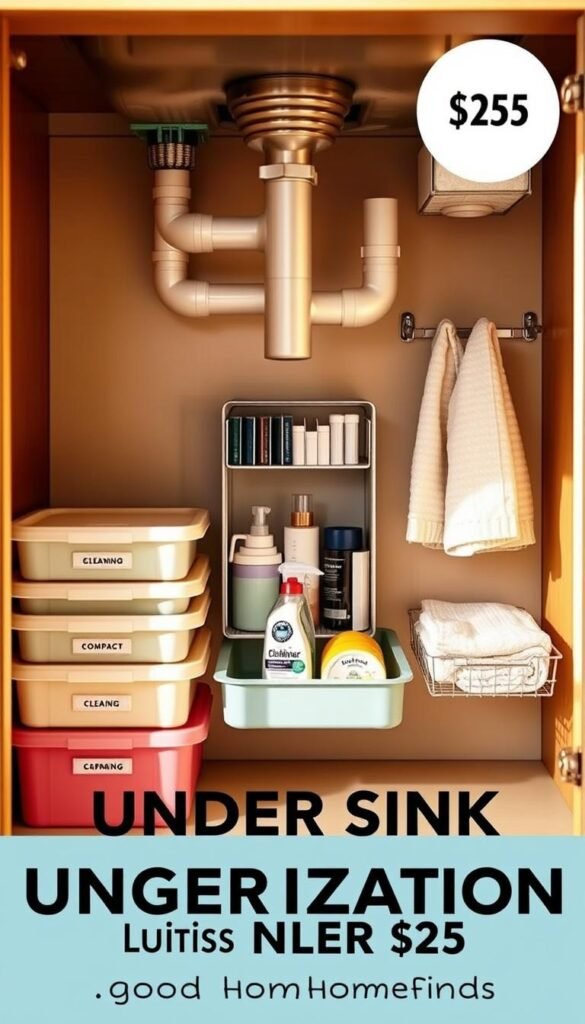
Three practical, renter-friendly add-ons under $25:
Drip tray or waterproof liner
Use a shallow plastic drip tray or waterproof liner as the cheapest insurance against small leaks and spills. Older cabinet floors swell fast when damp.
Why it matters: a liner buys time to catch leaks and prevents staining. It’s a simple water safety solution that costs very little.
Stackable bins for supplies
Choose stackable, clear bins to keep sponges, pods, and backup soap away from the filter and hoses.
This prevents items from pressing on lines or kinking filters while you use the cabinet. It also makes a replacement swap quicker and less fussy.
Labels and a replacement-date tag
Label shelves and bins with “open” vs “backstock.” Add a visible tag that shows the next replacement month for your filter.
When the cabinet looks orderly, you notice drips and flow changes faster and you actually replace filters on time.
- Keep add-ons generic: liners, trays, bins, and printed labels are easy to find locally or online.
- Store only what you use weekly under the cabinet; move extras to a closet to cut clutter.
„A neat under-cabinet zone means you spot issues early and keep your water filter working as intended.“
| Add-on | Typical cost | Primary benefit |
|---|---|---|
| Drip tray / waterproof liner | ~$5–$15 | Catches leaks; protects cabinet floor |
| Stackable bins | ~$8–$20 | Keeps supplies off hoses; eases replacements |
| Labels & replacement-date tag | ~$3–$8 | Reminds you of filter replacement months |
For more budget ideas that help apartment living, see a short list of renter-focused fixes at small-space budget fixes.
Upgrades Under $50 for Better Space Optimization and Easier Maintenance
A few low-cost additions make filter swaps and valve access simple and fast. These renter-friendly purchases focus on access, neat lines, and less daily friction.
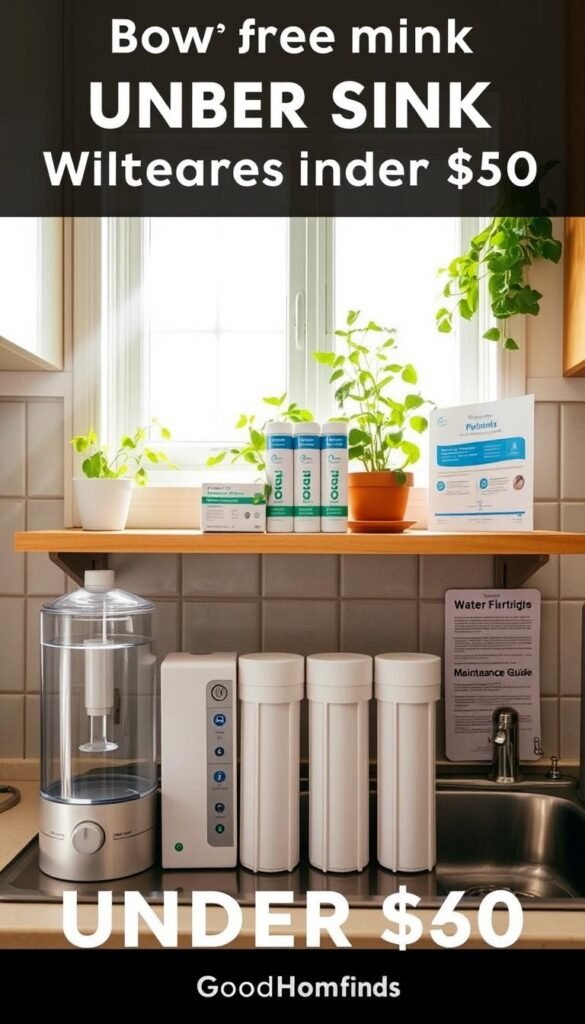
Pull-out caddy or sliding shelf
Why it’s worth it: a pull-out caddy gives you direct access to shutoff valves and the cartridge without unloading the cabinet. That small change saves time during each replacement and makes maintenance feel easy.
Line-management tools that peel off cleanly
Use adhesive hose clips, stick-on hooks, and cord organizers to route the water and filter lines up the back wall. Place clips near the P-trap and at the cabinet lip so lines never snag the trash can.
- Choose products rated for your cabinet size and weight.
- Keep clips and hooks within reach of the filter access point.
- Prefer removable adhesives so the mount peels cleanly when you move.
How tidy routing helps flow and longevity
Neat lines reduce kinks. That keeps steady flow and prevents accidental pinching when you slide cleaning supplies in and out. You will notice fewer slow-flow problems and fewer emergency swaps.
- Install organizers first.
- Mount the filter system second.
- Route lines last so everything stays clean and accessible.
Practical note: these upgrades cost less than $50 and often pay for themselves by making replacement and maintenance simple enough that you actually keep to the schedule.
Small-Space Setup Plans by Apartment Size and Cabinet Layout
Small apartments demand clear, compact plans that match cabinet quirks and daily water use. Start by mapping where the shutoff valve and P-trap sit. Prioritize access over looks.
Studio and micro-kitchens
Go ultra-compact. Choose low-profile, tankless systems that fit vertically with at least 2″ extra for cartridge swaps. Place a shallow drip tray on the cabinet floor.
Keep the filter at the back center or side wall so you can remove cartridges without moving everything else.
One-bedroom apartments
Balance a modest filter with a dedicated cleaning supply zone. Use clear stackable bins so lines stay visible and protected.
Label the replacement month and keep one spare cartridge nearby. That small habit saves time and prevents missed replacements.
Two-bedroom households
Higher daily use means you will notice flow and capacity sooner. Consider a system with a higher flow rate and larger capacity.
Plan replacements every six months or sooner depending on use. Set a calendar reminder and keep spares for busy months.
Odd cabinets and disposal crowding
If the disposal or odd braces block space, mount the filter on the side wall away from the disposal. Low-profile direct-connect systems often fit where bulky housings cannot.
Alternatively, move cleaning backstock to a closet to free cabinet real estate for the filter and lines.
Simple planning rule: always keep shutoff valve access and leak protection as top priorities. That prevents damage and makes maintenance quick.
For quick renter-friendly organization and more small-space ideas, see this small-space fix list.
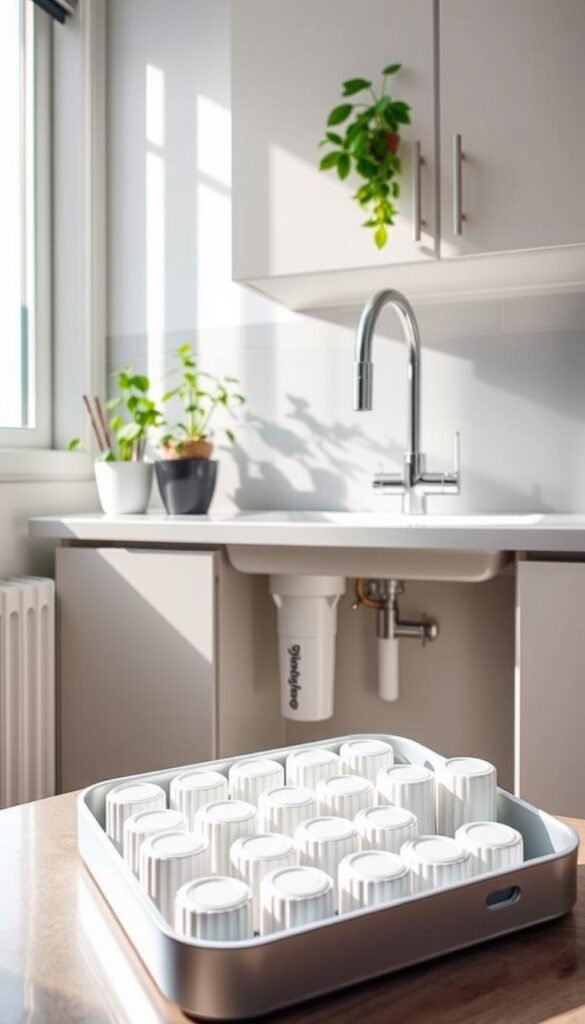
„Prioritize valve access and reversible mounts so you can move without repairs.“
Beyond the Kitchen: Applying Under-Sink Organization Principles to Bathrooms, Closets, and Entryways
Extend the same tidy, renter-friendly rules you use for the kitchen filter to other spots in your home. This keeps daily use simple, protects drinking water access, and reduces clutter so maintenance is easier.
Bathroom: avoid moisture traps and stash overflow
Use clear bins to keep toiletries and cleaning bottles off the cabinet floor. Small trays or a waterproof liner prevent damp spills from turning into smells.
Practical tip: store rarely used items higher and keep only what you need for daily use under the sink. That leaves room for a compact filter and makes replacement checks quick.
Closet: bin zoning for backstock
Create a “filter zone” in your closet for spare cartridges and installation parts. Label bins by month or type so you reach for a replacement without hunting.
Move bulk cleaning supplies to a separate bin. This keeps the kitchen cabinet clear and protects the filter from accidental bumps or leaks.
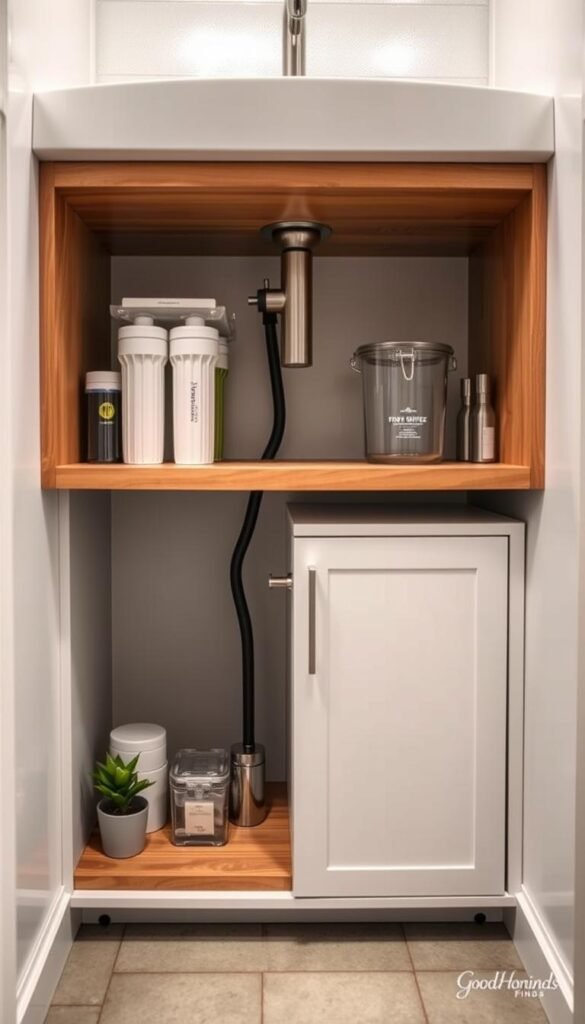
Entryway: a simple refill station
Place one tray or basket by the door for water bottles you use daily. Make refilling a single-step habit before you leave or after you return.
This small routine cuts single-use waste, reduces clutter in the kitchen, and keeps drinking bottles ready so your water filter system works for you, not against you.
Quick rule: bins, labels, and one-minute daily checks across rooms keep your filter accessible and your home calmer.
Conclusion
, A practical home water conclusion: choose a clear filtration path that fits your cabinet, keeps lines tidy, and you will maintain.
Quick recap: AQ-5200 gives compact, certified protection. Waterdrop direct-connect fixes taste on a tight budget. Hydroviv targets local contaminants in small spaces.
Before you buy, measure clearance, confirm cold line access and fittings, and decide dedicated faucet vs direct-connect based on renter rules. Plan a replacement at six months and tag the cabinet with the date.
Safety matters. Turn water on slowly, avoid cross-threading, and add a small leak detector. Start with under-$25 organization, add under-$50 access upgrades, then pick the filtration process that matches your real concerns.