
This guide helps you pick a renter-friendly waste solution that fits small spaces and daily life. You’ll get a real-life comparison of low-cost and higher-end options focused on apartment living, not glossy kitchen ads.

We tested how each bin handles daily waste, tight layouts, and quick cleanups. Expect honest pros and cons, and the key difference we track: upfront price against long-term value when a lid cracks, smells develop, or a spill happens.

✨ Smart Finds Picks
Shopping List
Quick picks that solve the problem fast — renter-friendly, budget-aware, and trend-led.
As an Amazon Associate I earn from qualifying purchases.

Quick example: in a tiny kitchen a loose lid can invite odor and fruit flies. That turns a cheap buy into a daily hassle.

You’ll see practical picks under $25 and under $50, plus renter-friendly setup tips that need no drilling or permanent changes. For deeper context and comparisons, check this short guide on storage choices: storage cheap vs premium.

Key Takeaways

  • We focus on real-world value: fewer messes and easier bag changes.
  • Expect clear pros/cons and who each option is best for.
  • Look for thicker materials and sealed lids for long-term worth.
  • Under-$25 and under-$50 targets let you shop fast with confidence.
  • All picks work for renters — no drilling, no permanent mods.

What “Budget” and “Premium” Really Mean for Home Bins in the US Right Now

When you match a can to your routine, you stop paying for replacements and cleanup. Your upfront price is one number. Your true cost includes replacements, extra liners, and time spent on odor control.
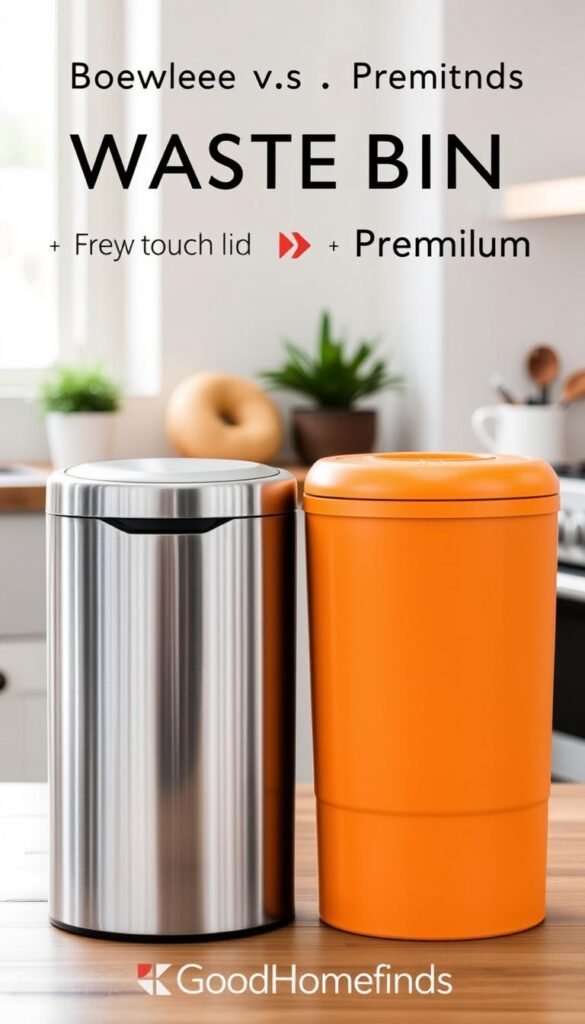
A side-by-side comparison of a budget and a premium waste bin designed for home use, set in a modern kitchen environment. In the foreground, display a sleek, metallic premium bin with a touchless lid and elegant design, contrasted next to a simple, plastic budget bin with a bright color and basic shape. In the middle ground, include subtle kitchen elements such as a wood countertop and nearby potted plants to create a homey feel. The background should have soft, natural lighting coming from a window, enhancing the cleanliness of the scene. Capture the essence of functionality and style, highlighting the distinctions between budget and premium options, evoking a practical yet aspirational mood. The brand "GoodHomeFinds" is subtly implied through the bin designs.

Price vs cost: real savings or hidden expenses?

If you buy a low-price option, you may save money now but pay later for repairs or a messy cleanup. Replacing a cracked lid or buying thicker liners erodes initial savings. If you take out waste often, small conveniences add up fast in time saved.

Where the money goes

Higher pricing often covers better materials. Industrial-grade HDPE or PP hold shape longer than thin blends. UV stabilizers and chemical-resistant additives add durability. Thicker walls, reinforced corners, and quality pedals increase manufacturing complexity and cost.

When extra features are worth it

For renters, you can’t change the space. Choosing a sturdier design reduces risk of spills and odors near heaters or sunny windows. Use this simple rule: pay more when it clearly cuts daily friction and replacement costs.

Feature Low-price trade-off What you gain
Wall thickness Deforms, cracks Impact resistance, longer life
Plastic type Thin blends HDPE/PP hold shape
Lid & mechanism Loose hinges Sealed lids, sturdy pedals
Additives No UV/chem protection Less fading, cleaner surfaces

If you want renter-friendly tips on small-space fixes and cheap upgrades, see our short guide on bathroom fixes here: bathroom fixes for small spaces.

How We Tested Bins for Small Spaces and Daily Routines

We tested each model the way a renter would: quick set-up, daily use, and no permanent changes.

Setup and usability

First, we checked if you can place the bin, add a liner, and start using it with no tools and no damage.

Key checks included lid clearance under counters, one-hand opening, and bag changes without wrestling.

Exposure and wear

We ran real home exposure tests: kitchen odors, bathroom moisture, cleaning sprays, and UV on sunny balconies.

We watched for plastic warping, staining, and whether smells cling after a wipe. UV stabilizers mattered for sun-facing spots.
A stylized, Pinterest-inspired interior scene showcasing various bins designed for small spaces, suitable for daily routines. In the foreground, neatly arranged premium and budget bins in soft pastel colors, displaying items like cleaning supplies, kitchen utensils, and toys. The middle ground features a compact kitchen with a clever use of space, emphasizing organization and functionality. In the background, a well-lit window allows sunlight to filter in, creating a warm, inviting atmosphere. A person in smart casual attire can be seen thoughtfully testing one of the bins, portraying a sense of practicality and efficiency. The overall mood is bright and fresh, reflecting modern living spaces with a focus on smart organization. The brand name "GoodHomeFinds" subtly incorporated into the scene with product placement.

Safety and stability

Safety checks covered tip risk when full, sharp rim seams, and pinch points at hinges or pedals.

For pet and kid needs we tested lids that stay shut but open easily for you and avoid finger-pinching gaps.

  • Routine benchmark: swap a bag and wipe the rim in under two minutes without drips.
  • Design trade-offs: pedals and soft-close add convenience, but increase cleaning and part wear.

Our goal: recommend the safest, most stable, renter-friendly option that works in daily life. For a quick renter setup comparison, see this renter setup comparison.

budget vs premium bins: Side-by-Side Comparison of Value, Risks, and Performance

Start with the facts: not all cans handle daily apartment life the same way.

Materials and build quality

Thin plastic flexes and cracks sooner. Reinforced HDPE/PP and thicker walls resist dents and keep shape under heavy loads.

That means fewer replacements and lower long-term costs when you pull a full liner or bump a corner.

Lids and odor control

Sealed construction and a leak-resistant lip cut kitchen smells. Smooth hinge action and tight fits stop spills and reduce pest risk.
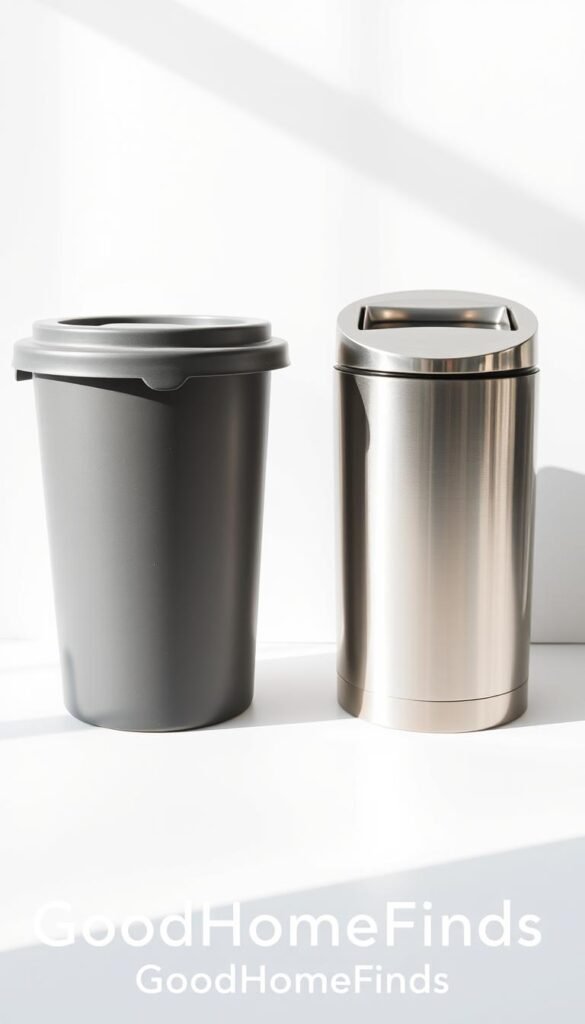
A side-by-side comparison of two waste bins on a clean, white background to highlight their design and features. The left bin is a budget option, made from basic plastic, with a simple, functional shape; its surface shows minor scratches reflecting everyday use. The right bin is a premium model, sleek and modern, constructed from high-quality, shiny steel, with a stylish lid. Soft, natural lighting enhances the textures of both materials, creating subtle shadows for depth. A shallow depth of field focuses on the bins, blurring the background slightly. The overall mood is informative yet inviting, conducive to a lifestyle theme. The brand name "GoodHomeFinds" subtly integrated into the scene, without any text overlay or branding.

Footprint and space power

Tall-slim models win beside cabinets. Short-wide options fit under counters or in closets. Pick the shape that matches your layout, not the showroom.

Noise and convenience

Soft-close and pedals make one-handed use easy. They add parts that need cleaning and can fail over time. Decide if the convenience justifies extra maintenance.

Compartments and sorting

Simple two-stream setups (trash + recycling) reduce contamination and the time you spend re-sorting bottles and cardboard.

Mobility, maintenance, and risk

Handles and small wheels matter when a bin is full. Smooth interiors wipe faster and liners that fit well cut cleaning time.

Risk and compliance: spills attract pests and can raise building waste management fees if contamination is frequent.

Feature Lower-cost option Higher-end option
Durability Thin plastic; deforms HDPE/PP; thicker walls
Odor control Loose lids, leaks Sealed lip, tight hinges
Footprint Short-wide or basic shapes Tall-slim and varied sizes
Convenience Simple, fewer parts Soft-close, pedals (more upkeep)
Cleaning effort Frequent scrubbing Smooth interior, easier wipe-down
  • Pros/Cons: cheaper models save upfront price but can cost more in replacements and labor. Higher-end designs cut daily friction but add parts to maintain.
  • Who it’s for: pick simpler designs for light use and tight budgets. Choose reinforced materials and sealed lids for kitchens, shared units, or heavy use.

„Choose a design that reduces daily work, not one that just looks nice.“

Best Budget Bin Picks Under $25 and Under $50

For light-use rooms, lean on simple designs that fit liners and wipe clean fast.

Under $25: small-room and light waste picks

Choose open-top or swing-top models for bedrooms, offices, and bathrooms. They are easy to empty and use less plastic. Prioritize a smooth rim, a stable base, and a shape that matches common liner sizes.

  • Best for: paper, tissues, and light trash in personal areas.
  • Pros: low price, simple maintenance, small footprint.
  • Cons: looser lids, thinner plastic, higher risk of cracking if dropped.

Under $50: kitchen-ready and higher-use picks

Step-on or tight-lid options work better for kitchens and pet waste. They use firmer plastic and closer-fitting lids that cut odor and drips.

  • Best for: daily trash, food scraps, and pet areas in small kitchens.
  • Pros: improved seal, sturdier construction, easier odor control.
  • Cons: added mechanisms require occasional cleaning and can wear over time.
A visually appealing lifestyle image showcasing a selection of budget bins priced under $25 and under $50. In the foreground, feature a variety of stylish, colorful bins from the brand "GoodHomeFinds," arranged neatly on a clean, light wood table. The bins should include options like woven storage, collapsible fabric, and durable plastic designs, all in vibrant hues. In the middle ground, create a soft, blurred view of a cozy, well-organized living space, complemented by plants and decorative items that suggest a practical yet aesthetically pleasing approach to storage. In the background, natural light streams in through a window, casting gentle shadows, creating a warm and inviting atmosphere. Use a shallow depth of field to emphasize the bins while ensuring the overall scene feels bright and inviting.

Trade-offs and a simple rule

Expect lid fit to loosen, hinges to wear, and small leaks to appear first. Odor leakage is the main risk that nudges renters to upgrade.

„If your kitchen trash smells fast, choose the tighter lid option even if it costs a little more.“

Example: if you cook often, a sub-$50 step-on model will cut odor and reduce drips at the lid edge. For more renter-friendly under-sink storage ideas, see this under-sink solutions guide.

When Premium Bins Win: Durability, Design, and Total Cost of Ownership

Spending a little more upfront often reduces mess, repairs, and the time you spend cleaning. For renters, that idea matters more than the sticker price. This section explains when a sturdier bin is a true investment and when it is just extra features.

Durability pays for itself

Think in renter terms: what you spend now, how often you replace, and how much cleanup you avoid. Thicker wall thickness improves impact resistance and cuts replacement cycles.

Industrial design features that help at home

Feelable upgrades: thicker walls, reinforced corners, and sturdier hinges mean fewer cracks and safer lids. UV stabilizers also reduce brittleness and fading if your bin sits by a sunny window.

Real time savings

Better design speeds bag changes, limits rim drips, and stops sticky floors. Those small moments add up to real labor and time savings each month.

Hidden costs and risks

Cheap models can cause floor scratches, leaks into grout, and pest attraction from lingering odor. In multi-unit buildings, frequent spills can harm your standing with building waste management and increase compliance headaches.
A high-resolution image showcasing a premium bin from GoodHomeFinds in a modern, stylish kitchen setting. In the foreground, focus on the bin's sleek design, highlighting its durable materials and innovative features, such as a soft-close lid and sturdy handle. The middle ground features an aesthetically pleasing arrangement of kitchen items, emphasizing the bin's role in enhancing the overall decor. In the background, a softly lit kitchen environment with warm lighting creates a welcoming atmosphere. The shot is taken from a slightly elevated angle, providing a comprehensive view that accentuates both the bin and its practical integration into a contemporary lifestyle. The mood is sophisticated yet approachable, illustrating the bin's premium durability and design seamlessly.

Buyer concern What to look for Why it matters
Replacement frequency Thicker walls, reinforced base Fewer swaps and lower long-term cost
Sun exposure UV-stabilized plastics or coated steel Less brittleness and fading over time
Odor & leaks Sealed lip, tight hinge Reduces pest risk and floor damage
Cleaning & time Smooth interior, removable liners Faster wipe-downs and bag changes

Worth-it checklist for renters

  • Do you cook often or have pets? Pick sturdier construction for odor control and fewer spills.
  • Is your bin near sun or a balcony door? Choose UV-stabilized or steel options.
  • Do you want less cleanup time? Look for smooth interiors and removable parts.
  • Living in shared housing? Favor sealed designs to lower waste management friction and risks.

„Choose the features that cut daily work, not the extras that only look nice.“

Room-by-Room Bin Solutions for Renters and Small Spaces

Small apartments benefit from targeted solutions. One multipurpose can often creates more clutter than it solves. Pick a spot, then choose the right size and lid for that room.
A beautifully organized small apartment featuring a variety of room-by-room bin solutions designed for renters. In the foreground, showcase a well-arranged living room with stylish, transparent storage bins displaying colorful, neatly labeled items. The middle section captures a cozy kitchen with stackable bins holding pantry essentials and a compact dining area with decorative storage solutions. The background reveals a serene bedroom with aesthetically pleasing bins storing clothing and accessories. Soft, natural lighting filters through sheer curtains, creating a warm atmosphere. The scene is presented from a slightly elevated angle, reminiscent of a Pinterest-style lifestyle photo, highlighting the harmony between functionality and design. The brand name "GoodHomeFinds" subtly incorporated within the scene’s elements for a cohesive look.

Kitchens

Choose a tall, slim model that fits beside cabinets. Prioritize a sealed lid and good liner retention to cut food odor and leaks.

Quick routine: do a 30-second nightly reset — wipe the rim, compress the bag, and stop overflow before it starts.

Bathrooms

Look for moisture-resistant interiors and a lid that won’t hit the vanity in tight clearances. Smooth surfaces make cleaning with common sprays easier and faster.

Closets and Laundry Areas

Use small compartments or two compact receptacles for lint, rags, and waste. This keeps mess out of piles and speeds laundry-day sorting.

For more tailored storage ideas, see practical closet solutions.

Entryways

Add a drop-zone bin for mail and packaging. A shallow bin prevents junk from spreading into living areas and saves you cleaning time.

Balcony and Patio Corners

Sun and temperature swings age plastic faster. Choose UV-stabilized options or move the receptacle to a shaded corner to lower environmental wear and tear.

  • Renter-friendly setups: freestanding units, over-the-door hangers, and countertop compost caddies require no drilling.
  • Watch for risks: wet bathroom floors with a tippy unit and balcony bins that can blow over when empty.
  • Cost tip: using the right type per room prevents buying an oversized, awkward all-in-one that fits nowhere.

„A small, well-placed receptacle beats a large, misplaced one every time.“

Choose the Right Bin by Apartment Size and Lifestyle

Start by mapping where waste accumulates in your apartment, then choose a practical solution. That makes daily use easier and cuts spills and extra trips outside.
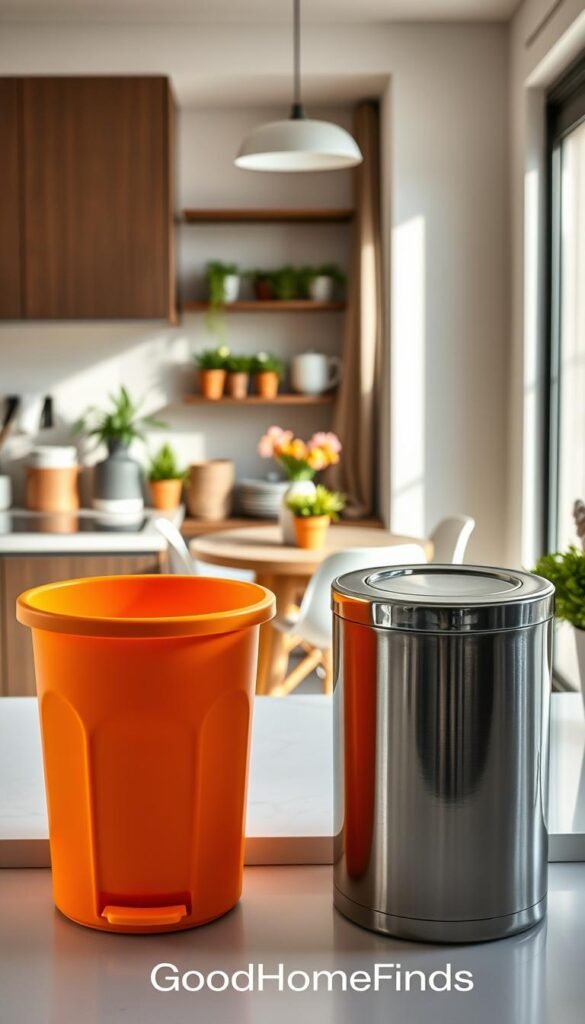
A stylish, modern kitchen featuring two types of bins side by side: a budget-friendly bin made of durable plastic in a cheerful color, and a premium bin made from sleek stainless steel with a polished finish. In the foreground, the bins are positioned on a clean countertop, showcasing their design and functionality. In the middle ground, a cozy dining area is visible, decorated with potted plants and tasteful kitchenware, reflecting a warm, inviting atmosphere. Soft, natural light enters through a nearby window, casting gentle shadows that enhance the scene. The overall mood is practical yet chic, appealing to apartment dwellers who value both style and utility. The brand name "GoodHomeFinds" is subtly implied in the setting, through the aesthetic.

Studio apartments

Go micro-footprint and stackable. Use a slim bin and a small recycling partner to save floor space.

Pros: fits tight layouts, easy to move. Cons: smaller liners need more frequent emptying.

One-bedroom layouts

Use a dual-stream set: one for trash and one for recycling. Keep them side-by-side to reduce sorting errors.

Less re-sorting lowers labor and processing hassles when you take waste out.

Two-bedroom & roommates

Pick rugged construction, clear labels, and a larger shared bin for common areas.

Sturdy hinges cut contamination risk and reduce roommate friction fast.

Pets and kids

Prioritize tip resistance, locking lids, and safer materials to prevent messes and chewing.

These choices lower the risk of spills and cleanup costs.

No-drill alternatives

Consider collapsible containers, over-cabinet hooks, or cabinet-door hangers for sorting without installation.

They are renter-friendly and easy to stash when not in use.

„Power move: one main bin you love using + one secondary bin that makes sorting effortless.“

For quick renter-friendly tweaks and small-space fixes, see our small-space fixes.

Conclusion

, Bottom line: your best buy is the option that lowers replacements and daily hassle.

Core difference: cheaper choices win for light use and spare rooms. Higher-end models pay off when kitchen trash, odor control, and heavy use are constant.

Best-value logic: aim for fewer messes, less smell, and fewer replacement cycles. That is the true savings and the main investment you are making.

Quick picks: under $25 for a bathroom or desk, under $50 for main kitchen use, and invest more when durability and sealed lids matter.

Plastic is lightweight and renter-friendly. Steel looks cleaner and handles odors well but can dent. Keep a simple sorting habit for recycling to help building management and reduce contamination.

Final power tip: prioritize a better lid seal, a sturdier base, and easy bag changes. Small investing choices now save time, money, and hassle later. For more organized picks and practical options, see best organization finds.


FAQ

What’s the real difference between budget and premium bins for home use?

The main difference is materials and construction. Lower-cost models often use thinner plastic and simple hinges. Higher-priced units use reinforced HDPE or polypropylene, thicker walls, better seals, and stronger lids. That affects durability, odor control, and how often you replace them — which changes the true cost over time.

How should I weigh price against long‑term cost for a small apartment?

Don’t look only at sticker price. Add replacement frequency, cleanup time, possible floor or pest damage, and disposal or contamination fees. A slightly higher upfront spend can save money if the bin lasts longer, reduces spills, and needs fewer replacements.

Where does the extra money go when you pay for a higher-quality bin?

You pay for thicker materials, reinforced corners, sealed lids, soft‑close mechanisms, UV stabilizers, and better hardware. Those features increase weight, longevity, and resistance to odor or leaks, so maintenance and replacement rates drop.

When are premium features worth it for renters and apartments?

Pick premium when you need odor control, leak resistance, or a compact design that fits tight cabinetry. Also choose it if you share the space, have pets or kids, or want fewer replacements. For rarely used bedroom or bathroom waste containers, a basic model can be enough.

How did you test bins for small spaces and daily routines?

We set up bins without tools or permanent changes to mimic renter needs. We tracked usability, daily bag changes, odor buildup, cleaning cycles, and exposure to moisture or sunlight. We also tested tip risk, lid safety, and how they withstand common cleaners.

What exposure and wear should I expect near windows or balconies?

Sunlight accelerates fading and brittleness if plastic lacks UV stabilizers. Moisture and outdoor pollutants can corrode metal parts and increase odors. Use weather‑resistant models or move bins away from direct exposure to extend life and reduce maintenance.

What safety checks matter for home bins with kids and pets?

Look for tip resistance, secure or locking lids, no sharp edges, and stable bases. Pedal mechanisms should avoid pinch points. Test the lid action with a light force to ensure pets can’t easily open it and children won’t get trapped or injured.

How do materials affect lifespan: thin plastic vs reinforced designs?

Thin plastic cracks sooner under load or sunlight. Reinforced HDPE/PP resists impact, chemicals, and UV. Stronger builds reduce replacements and lower total waste. They also handle heavier loads without deforming, which helps when you use liners or move full bags.

What features help control odors and leaks in a kitchen?

Tight-fitting lids, sealed rim designs, antimicrobial coatings, and internal liners help. A bin with a raised inner bucket or drip channels prevents leaks from reaching floors. Regular bag changes and using compostable liners for food waste also cut odor risks.

Which bin shapes work best for tight layouts: tall‑slim or short‑wide?

Tall‑slim bins save floor space and fit beside cabinets. Short‑wide bins offer larger capacity and are easier to reach in multitask kitchens. Choose based on your clearance and how often you empty the bin.

Are soft‑close and hands‑free pedals worth the extra cost?

They add convenience and reduce noise and pinch hazards. Pedals are useful in food prep areas. Soft‑close lids prevent slams and extend hinge life. But those features add moving parts that can fail, so weigh convenience against potential repair or replacement.

How many compartments do I need for sorting at home?

For most small households, a dual compartment for trash and recycling is enough. Add a third for compost if you generate food scraps regularly. Compartments that stack or slide save space and keep streams cleaner with less cross‑contamination.

What mobility and handling features matter when a bin is full?

Look for sturdy side handles, stable wheel systems, and a low center of gravity. Wheels should lock for safety. A strong handle and balanced design make bag changes easier and reduce the risk of tipping.

Which surfaces and designs are easiest to clean?

Smooth, nonporous interiors with rounded corners wipe clean fastest. Removable inner buckets and liner retainers speed bag changes. Avoid textured plastics that trap grime. Stainless steel exteriors can resist stains but show fingerprints.

How can a poor bin increase home waste management fees or fines?

Leaks or contamination of recyclables can lead to refusal of pickup or sorting fees. Overflow attracts pests, which may trigger fines in shared housing. Sealed, labeled systems reduce contamination and potential extra charges.

What are reliable picks under for light use?

Under , choose lightweight, small-capacity models for bedrooms, bathrooms, or offices. Expect limited lid seals and thinner walls. These work well for low-volume trash if you accept possible earlier replacement.

What should you expect from options under for kitchen use?

Under offers better capacity and sometimes pedal lids or removable buckets. You’ll see improved hinge quality but still thinner walls than high‑end models. They perform well for moderate daily use with regular maintenance.

What trade‑offs come with lower‑priced units?

Common trade‑offs are imperfect lid fit, hinge wear, cracking over time, and weaker odor control. They save money upfront but may need replacing sooner or require more frequent cleaning.

How do premium bins save money over time?

They reduce replacement frequency, cut cleanup time, and lower spill or pest incidents. That means less money spent on repairs, cleaning supplies, and potential disposal penalties. Over years, the total cost of ownership often favors higher quality.

What industrial design elements help in a home setting?

Thicker walls, reinforced corners, corrosion‑resistant hardware, and UV stabilizers matter. Those features resist impacts, cleaners, and sunlight. They keep the unit functional and attractive longer in daily home use.

What hidden costs should I watch for with any bin purchase?

Watch for floor scratches from dragged bins, replacement lids or pedals, and added liners or specialty bags. Poorly sealed units can lead to pest control bills. Factor these into your buying decision.

Which bin features work best in kitchens for liners and odor control?

Inner buckets with liner grips, vented lids for compost, and tight seals for general trash reduce mess. A bin with a separate compost compartment and a charcoal filter can cut odors without frequent bag changes.

What should I look for in bathroom and laundry area bins?

Choose moisture‑resistant materials, easy‑wipe interiors, and compact lids that won’t hit fixtures. Soft‑close lids and stable bases help in tight clearances and reduce splash or spill risk.

What works well for entryway or drop‑zone bins?

Shallow, wide mouths and open‑top trays make quick cleanups easy. Stackable or wall‑hung solutions keep floors clear. Use labeled compartments for mail, packaging, and recyclables to keep clutter down.

How should I protect a bin used on a balcony or patio?

Use UV‑resistant, weatherproof models or keep the bin in a sheltered corner. Secure lids against wind and choose metals or plastics rated for outdoor use to avoid corrosion and brittleness.

What’s best for studio apartments and micro spaces?

Opt for ultra‑slim, stackable, or hanging solutions that fit beside appliances or inside cabinets. Use dual compartments or small compost containers to manage overflow without clutter.

How do you set up a dual‑bin system in a one‑bedroom apartment?

Place narrow trash and recycling units side‑by‑side near food prep areas. Use clear labeling and matching liners to reduce contamination. Choose models that nest or stack for easy storage when not in use.

What features are critical for households with roommates?

Durability, clear labeling, and larger capacity help. Choose locking or weighted lids to avoid tampering. A sturdier build reduces disputes over replacements and keeps shared areas cleaner.

Which bin qualities matter most for homes with pets and children?

Tip resistance, locking lids, and rounded edges matter most. Avoid brittle plastics and choose stable bases. Soft‑close lids reduce noise and the risk of little fingers or paws getting trapped.

What are good alternatives to traditional bins for renters who can’t drill?

Collapsible fabric bins, hanging models that hook over cabinet doors, and under‑sink pullouts that clip in without hardware are all renter‑friendly. They save space and avoid permanent changes.

How do I choose the right bin by apartment size and lifestyle?

Assess daily waste volume, available floor or cabinet space, and who uses the bin. Studios need compact, multi‑function options. Larger apartments benefit from dual systems and sturdier designs for shared use.

Schreibe einen Kommentar

Deine E-Mail-Adresse wird nicht veröffentlicht. Erforderliche Felder sind mit * markiert