Quick, practical fixes to tame loose wires and clear counters without a big spend. You want items that save minutes each day, not more setup or hidden costs. For most homes, simple clips, straps, and trays do the job fast.
This guide splits two realities: renter-friendly, under-$25 solutions for kitchen and home use, and job-site needs where a locator or tracer may be worth renting or hiring. Worth it here means strong adhesive, reusable straps, easy labeling, and no sharp edges that nick wires.
Real life: you unplug a coffee grinder and air fryer every morning. Loose cords slow cleaning. The right clips stop that tug and cut tidying time.
Flag safety: avoid running wires under rugs, don’t yank cords by the wire, and replace frayed power leads instead of masking damage. For fast fixes and common sizes with simple returns, consider Amazon-first practicality and quick delivery this week via this home problem solver mix.
Key Takeaways
- Pick simple, renter-friendly clips and trays that save daily time.
- Use reusable straps and labeling for neat, low-maintenance setups.
- Avoid hiding wires under rugs; replace frayed leads for safety.
- Home fixes are cheap and quick; underground utilities need professional locating.
- Amazon availability helps with common sizes and fast returns.
What to Buy for Faster, Cleaner Cable Control at Home and in the Kitchen
Start with a handful of low-cost fixes that cut daily clutter and speed cleanup. These are budget items you can fit in a drawer and use today. They keep cords off counters and make unplugging faster.
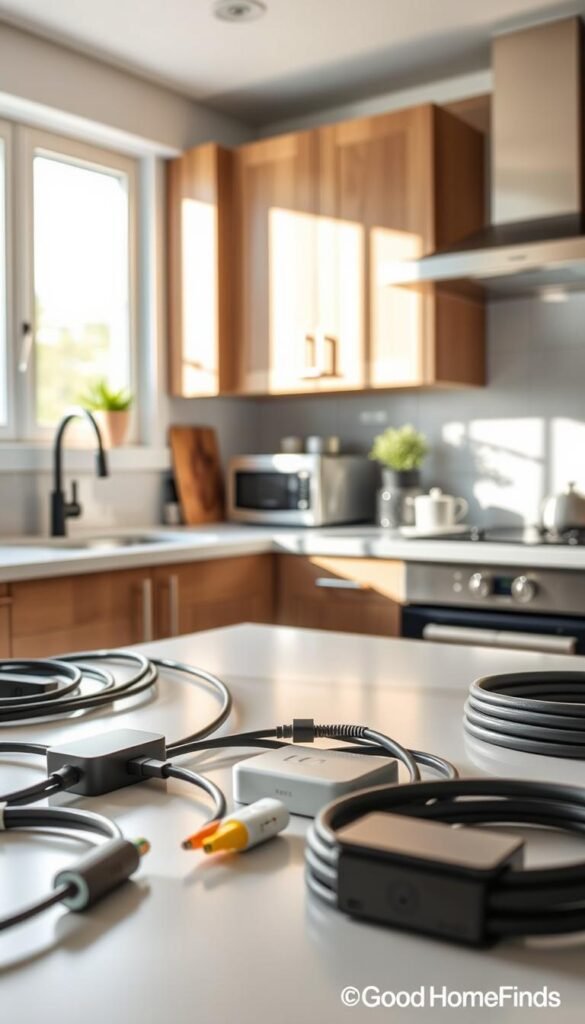
Adhesive clips and cord holders
Why it’s useful: Holds a phone cord at the nightstand edge so it won’t fall. Keeps appliance wires off a wet counter lip.
- Pros: renter-friendly, no tools, under $15 on Amazon.
- Cons: adhesives fail on greasy surfaces.
- Who it’s for: anyone with daily chargers or small appliances.
- What to avoid: tiny clips that pinch the insulation.
- Cheaper alternative: mini 3M hooks + a small zip loop if it won’t crimp the wire.
Velcro ties and reusable straps
Why it’s useful: Coil an Instant Pot cord after dinner. Bundle a power strip lead under your desk.
- Pros: adjustable, gentle on cables, $6–$12.
- Cons: hook‑and‑loop can fuzz over time.
- Alternative: silicone ties for easy wipe-down.
Sleeves, spiral wrap, and labeling
Why it’s useful: Combine 6–10 loose cords behind a TV into one neat bundle. Labels stop the “which wire is the blender?” guessing game.
| Item | Price (typ.) | Best use | Price-to-value |
|---|---|---|---|
| Adhesive clips | $8–$15 | Nightstands, counters | High for daily ease |
| Velcro ties | $6–$12 | Appliance cords, power strips | Very good; reusable |
| Spiral wrap / sleeve | $10–$20 | TV consoles, desks | Good if cables move |
| Labels / tags | $5–$12 | Quick unplugging | High; saves time |
Safety and quality checks
- Clean surfaces with rubbing alcohol before adhesive use.
- Avoid routing a plug across stove edges or trapping cords under drawers.
- Don’t wrap cords so tight they stress the plug or wire jacket.
- Pick wipeable materials (silicone or ABS) for kitchen spots near water.
Bottom line: pick renter‑friendly, under‑$25 options with good adhesives and soft straps. They deliver fast cleanup and keep daily life simple.
Cable Finds for Commercial Use: When You Need to Trace, Locate, or Prevent Damage
On job sites, tracing and locating underground lines is a safety task, not an afterthought. You need clear detection, honest specs, and the right tool for the job. Buying every model is unnecessary. Rent pro gear or hire a locator when stakes are high.
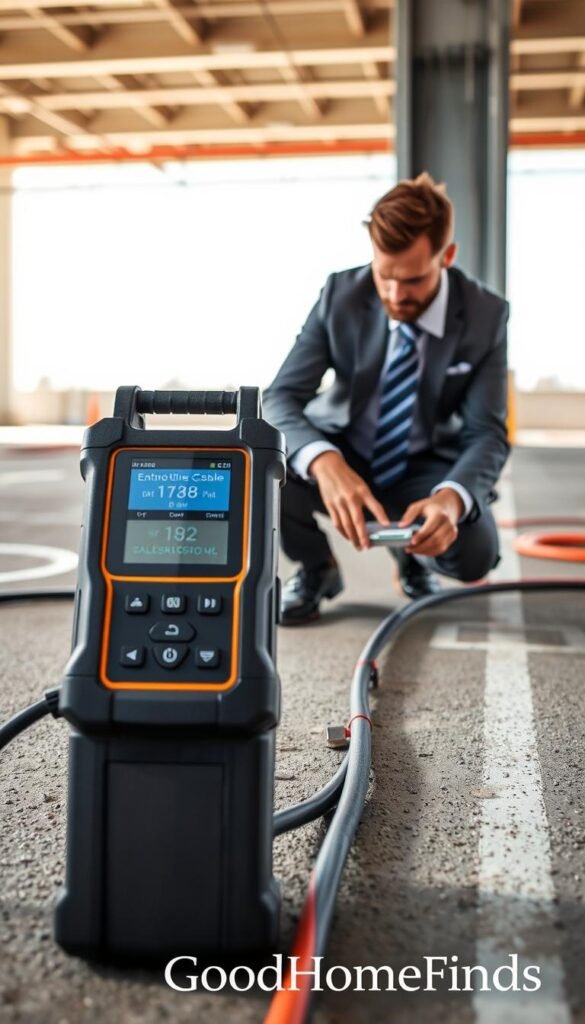
Underground locator basics for commercial work
Most underground detectors use a transmitter and receiver to create and follow an electromagnetic path. The transmitter injects a signal. The receiver follows that signal and shows direction and approximate depth.
Why accuracy and range matter: better accuracy reduces rework, fewer false paths, and less risk of hitting an underground utility. Detection range tells you how far the system will track a line in feet or meters.
Affordable entry-level pick: Vevor underground cable locator
Why it’s useful: rough pathing for low-voltage, non-energized runs. Pros: very low price-to-value, wired headphones included, lightweight for long walks. Cons: limited to under 24V and ~3 feet depth. Who should buy: maintenance techs doing occasional, low-risk tracing. What to avoid: relying on it for public utility locating.
When a line tracer is the right move: Fluke Networks TS100
The TS100 traces pairs and measures distance to faults up to 3,000 feet. It’s one-button simple, moisture proof, and shows distance on-screen. Use it for building runs and telecom troubleshooting. It is not a substitute for underground utility locators when you need depth mapping.
Mid-range and pro-grade locators to rent or request
For accurate depth and long-range detection, rent models like the Fisher TW-6 (~$908) or TW9000 (approx $4,749–$5,287). Renting gives access to better detection, more reliable accuracy, and rugged gear without full purchase cost.
| Tool | Best use | Depth / length | Price / rent |
|---|---|---|---|
| Vevor underground cable locator | Low-voltage path checks | ~3 ft depth; up to 1,000 ft | ~$36 buy |
| Fluke Networks TS100 | Indoor pair tracing and fault distance | Up to 3,000 ft (915 m) | Mid-range purchase |
| Fisher TW-6 | Pro depth and range on site | Extended range; higher accuracy | Rent or buy (~$908) |
| Fisher TW9000 | Multi-frequency professional locating | Long range, precise depth | Rent or buy (~$4.7k–$5.3k) |
Power, operating range, and ruggedness
Plan for batteries and spares. A dead battery costs more time than buying slightly better gear. Check voltage compatibility before testing energized lines. Look for a wide temperature range and moisture-proofing for real job conditions.
Quick decision guide and safety reminder
- Buy an entry locator for routine low-voltage maintenance.
- Rent pro models for one-off digs or long jobs with unknown depth.
- Hire a locating service when public utility impact or high risk exists.
Safety first: utility locating prevents damage and downtime. When in doubt, use qualified locators and follow local utility notification processes.
For budget vs premium gear and sensible organizers that pair with field kits, see our practical comparison on storage price-to-value and compact tool storage ideas like under-sink solutions.
How to Choose the Right Cable Tools Without Overspending
You can save money and time by matching the right organizer or locator to the actual job.
Price-to-value: for most home users, under-$25 organizers beat “smart” solutions. They stop loose cable and messy cords fast. No apps, no batteries, no setup time. Pick clips, straps, or a sleeve that fits the length and diameter you measured.
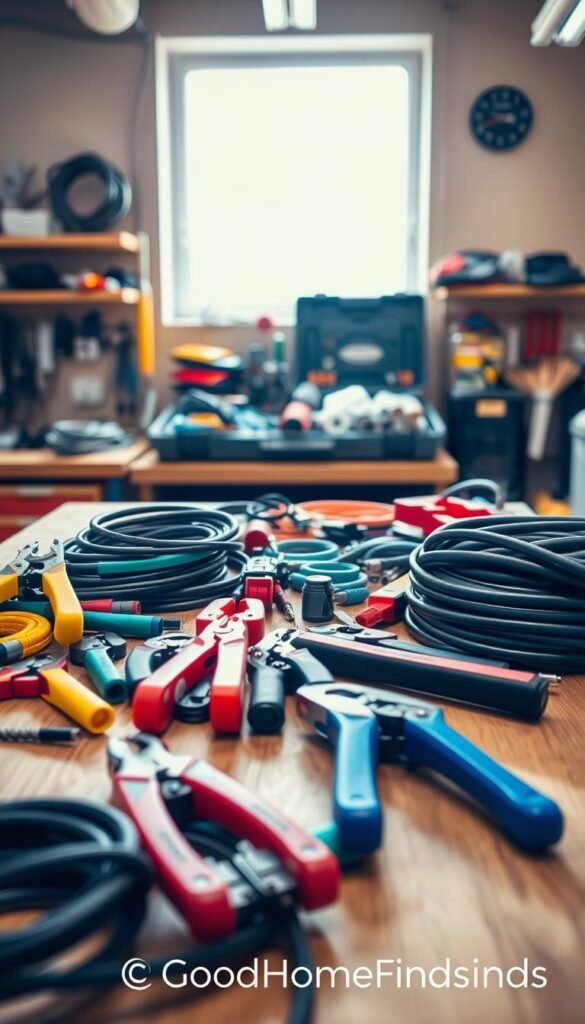
Buy vs. rent vs. hire — quick guide
Buy a basic locator only if you are a maintenance user who will use it often. It pays off for repeated indoor tracing and short runs.
Rent pro-grade models when you need better range or accuracy for a one-off project. Renting gives access to precision without the thousands-instrument cost.
Hire a locating company when underground utility risk, legal exposure, or tight schedules make mistakes costly.
What to avoid
- Brittle plastic clips that snap and leave sharp edges.
- Adhesives that fail in kitchen humidity or near water.
- Sleeves that are overly tight and stress the wire at the plug.
- Bargain organizers that encourage running cords under rugs or door thresholds.
Cheaper alternatives that still work
Use organizers in high-impact spots only: one clip for morning chargers, one sleeve behind the TV. Reusable ties beat one-time fasteners. Choose items on Amazon with clear sizing photos and easy returns.
| Choice | Best for | Pros | Cons |
|---|---|---|---|
| Under-$25 organizers | Daily chargers, counters, desks | Cheap, renter-friendly, no batteries | Adhesive can fail in grease |
| Basic locator (buy) | Routine maintenance users | Low cost for repeated indoor tracing | Limited depth/range for underground runs |
| Pro locator (rent) | One-off digs, longer range | Better accuracy and depth without purchase | Requires learning curve; rental fees |
| Professional locating service | High-risk underground work | Certified detection; reduces liability | Higher cost; scheduling delays |
Simple checklist before buying: count how many cables you need to manage, measure approximate length, and pick organizers for daily zones (counter, desk, TV).
Damage to an underground utility or line is far pricier than the right tool. If risk is real, spend on accuracy or professional help. For user experiences and tool-system tips, see this tracer tool discussion and a practical renter setup comparison.
Conclusion
A single organized spot saves minutes each day and makes upkeep painless.
Start at home with adhesive clips, Velcro ties, and a simple sleeve. These budget items solve most counter and console clutter fast. If you unplug appliances often, add labels and cord holders for daily speed.
Always replace frayed wire and avoid tight bends or pinch points. For underground work, a basic locator can help with low‑risk checks. For high‑stakes digs, rent a pro unit or hire a locator to reduce damage and liability.
Pick one trouble spot today (kitchen counter, desk, or TV area). Order an organizer set with quick delivery and fix that zone first to see results immediately. For protection guidance see submarine cable protection, maintenance notes at the National Academies, and practical organizer picks on best organization options.