
Practical gear and simple routines make small spaces feel orderly without heavy storage or permanent changes. This guide defines a cleaning helper mix as a compact set of tools, a few multi-use ingredients, and quick habits that handle most messes in renter-friendly apartments.
Readers will find categories, not clutter: microfiber cloths, a sturdy scrub brush, refillable spray bottles, and basic ingredients like vinegar, baking soda, soap, and hot water. The article highlights durability, safety, and easy maintenance over trendy products.
Budget tiers are clear: under $25 for starter swaps and under $50 for durable upgrades. Advice includes pros and cons, best-for guidance, and apartment-size alternatives that need no drilling or permanent installation.
The focus is technique as much as tools. Hot water, mild solutions, and brief dwell time improve results. Safety notes explain the difference between cleaning and sanitizing for kitchens, baths, and shared spaces.
Key Takeaways
- “Cleaning helper mix” means a compact, renter-friendly kit of tools and ingredients.
- Microfiber and hot water speed routine maintenance in small homes.
- Two budget tiers—under $25 and under $50—help build a durable kit over time.
- Prioritize refillable, durable supplies and simple storage without drilling.
- The guide gives room-by-room routines and clear pros/cons for real-life use.
Start Safe: What to Clean, What to Sanitize, and What Not to Mix
Identify where germs matter—and where a routine wipe will do the job. This helps choose the right product and keeps small spaces safer. Removing dirt and grease is one task; reducing germs is another.
Cleaning vs. sanitizing in everyday apartments (and when DIY isn’t enough)
Cleaning removes visible soil. Use a mild cleaner or warm water for counters and daily touch-ups. Sanitizing or disinfecting lowers germs on high-touch surfaces like faucet handles, light switches, and shared remotes.
For true disinfection—for example, concerns about SARS‑CoV‑2—use EPA-approved disinfectants. DIY green solutions are not recommended for that purpose.
Chemical safety basics: never mix bleach with ammonia or anything but water
Never mix bleach with ammonia. Never mix bleach with anything but water. Toxic fumes form quickly in small bathrooms.
Always mix solutions in a well-ventilated area and only in appropriate containers. Do not reuse food jars or drink bottles for chemicals.
Ventilation, labeling, and storage rules for bottles, drops, and solutions
- Ventilate: open a window, run the fan, and keep the door cracked when using strong chemicals.
- Label every bottle: date mixed, ingredients, and where it can be used so others don’t misuse solutions.
- Make small batches to preserve effectiveness and save space in under-sink bins.
- Essential oil drops can scent a solution but may irritate babies, people with asthma, and some pets—skip drops essential oil in sensitive homes.
- Store original chemicals in original containers and keep them away from food. Use a lidded bin for shared cabinets.
Who should skip certain products: households with infants, asthma, fragrance sensitivity, or certain pets should avoid fragranced drops and consider fragrance-free cleaners and disinfectants.
Build Your Cleaning Helper Mix: The Small-Space Core Kit That Does the Most
A small, well-chosen core kit handles most tasks in a tight rental without taking over storage.
Reusable tools first: microfiber cloths, a compact scrub brush, and one durable spray bottle speed routine work and cut waste. Microfiber traps soil better than paper and dries fast between uses.
Simple technique: start mild, use hot water when surface-safe, and allow dwell time before scrubbing. This approach saves effort and reduces the need for harsh products in small bathrooms and kitchens.
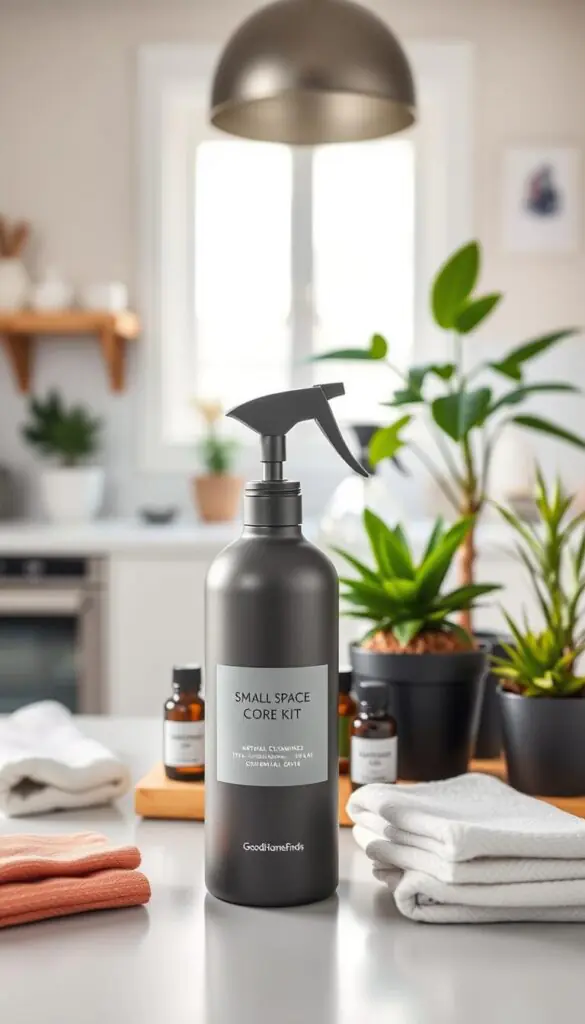
Essentials and what each item does
- Vinegar — deodorizes and tackles mineral deposits.
- Baking soda — mild abrasive and odor absorber for spot scrubs.
- Lemon — cuts grease and freshens surfaces.
- Castile or mild dish soap — everyday detergent for soil removal.
- Hydrogen peroxide — stain and mold spot treatment; store separately.
Essential oils and storage
Essential oils are optional for light deodorizing. Use 2–3 drops per 16 oz bottle and skip oils in homes with pets, asthma, or fragrance sensitivity.
Renter-friendly storage: a handled caddy under the sink, stackable bins for refills, and an over-the-door pocket for cloths and brushes keep the kit accessible without drilling.
| Item | Starter (under $25) | Upgrade (under $50) |
|---|---|---|
| Tools | 3 microfiber cloths, scrub brush, basic spray bottle | Higher-grade sprayer, extra microfiber mop head, matching caddy |
| Ingredients | Vinegar, baking soda, lemon, small castile or dish soap | All starter items + hydrogen peroxide bottle and refill bins |
| Best for | Studios, renters on a budget | Multi-room apartments, longer-term renters wanting durability |
| Pros / Cons | Low cost; less durable sprayer | More durable gear; higher upfront cost |
Kitchen Helpers That Cut Grease Fast (Without Permanent Changes)
Tackling stove splatter and sticky counters starts with one reliable spray and a few targeted tools. A renter-safe all-purpose cleaner saves space and reduces product clutter. Use it for most surfaces and keep stronger options only for stubborn spots.
All-purpose spray: a simple apartment recipe
Mix 1 cup white vinegar with 1 cup water and add 1–2 drops of phosphorous-free dish soap or a pump of castile soap in a 16 oz spray bottle. Shake gently before use.
Tip: Use hot water when the surface allows. Rinse glossy or porous surfaces after use to avoid dulling finishes.
Degrease and deodorize routine
Wipe first with a dry microfiber to remove loose crumbs and oil. Lightly spray, let sit 30–60 seconds, then wipe with a damp cloth. For stuck-on grime, a short scrub with a compact brush helps.
For the trash area, spray inside the bin, let sit, scrub, then air-dry. Keep an open box of baking soda in the fridge and a small cup of baking soda by the trash for odor control.
Stainless steel and chrome care
Wipe steel appliances with a 1:1 vinegar water mix and a microfiber cloth. Follow the grain for best results.
Oil buffing pros/cons: A few drops of oil on a soft cloth can mask fingerprints and add shine. But oil attracts dust and needs occasional deep degreasing.
Fridge quick-clean
Dissolve 2–3 tablespoons of baking soda in a quart of warm water. Remove shelves, wipe with the solution, then dry. Keep an open cup white baking soda inside for ongoing odor control.
„One multipurpose spray and a few cloths can prevent weekend-long kitchen projects.“
- Under $25: 3 microfiber cloths ($10–$15), refillable 16 oz spray bottle ($5–$8), small scrub brush ($5–$10).
- Under $50: Higher-grade adjustable nozzle bottle, extra microfiber set, a sturdy handled caddy for under-sink storage.
Renter-safe notes: Avoid over-wetting seams and appliance controls. Choose non-scratch cloths and test solutions on a hidden spot before wider use.
- Quick daily pass: 10 minutes — wipe counters, stovetop, and trash area.
- Weekly reset: spray, short dwell, scrub problem spots, fridge wipe with baking soda solution.
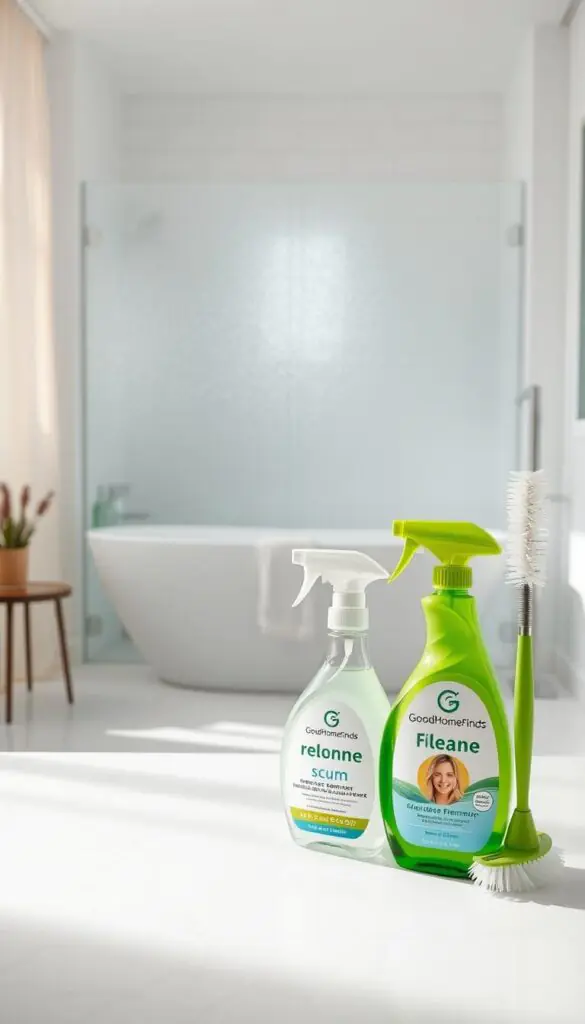
Bathroom Helpers for Soap Scum, Hard Water, and Grime in Tight Spaces
Tight bathrooms demand renter-safe solutions that remove hard water and soap scum without strong fumes.
Less ventilation and frequent humidity make soap films and mineral spots worse in small spaces. The plan here favors mild acids, short dwell times, and tools that fit a narrow cabinet.
Where acids do best
Vinegar and lemon or lemon juice work well on faucets, glass doors, and tile grout for mineral deposits. Spot-test first and avoid natural stone, which acid can etch.
Vinegar water spray + baking paste scrub
Make a 1:1 vinegar water spray in a 16 oz bottle. Lightly mist the surface, let sit for 2–5 minutes, then apply a baking paste (baking soda + water) and scrub gently.
Optionally add 1–2 drops tea tree oil or other essential oils to the bottle for scent, but skip oils in homes with sensitivities.
Toilet, sink, and shower tactics
Apply solutions, let sit the recommended time, then use a narrow grout brush or a non-scratch scrubber. Choose brushes sized for corners and curved bowls to reduce strain and avoid scratching acrylic and glossy finishes.
Mold and tougher stains
Use hydrogen peroxide on mold spots when mild options fail. For stubborn stains, a diluted bleach solution may be appropriate—only with strict ventilation, measured dilution, and never mixed with other products.
Two-minute daily reset
End each shower with a quick squeegee pass, wipe wet surfaces with a microfiber, and tuck toiletries into a lidded caddy. Small daily habits cut deep scrubbing time later.
| Tool | Under $25 | Under $50 |
|---|---|---|
| Squeegee | Small rubber squeegee for glass doors | Pivot-handle squeegee for better reach |
| Brush | Narrow grout brush and toilet brush | Slim handled tub scrubber with replaceable heads |
| Storage | Color-coded microfiber set and small tray | Lidded caddy to keep bottles upright and labeled |
„Short dwell time and the right tool beat stronger products in cramped bathrooms.“
Closets, Entryways, and High-Traffic Areas: Low-Clutter Systems That Stay Clean
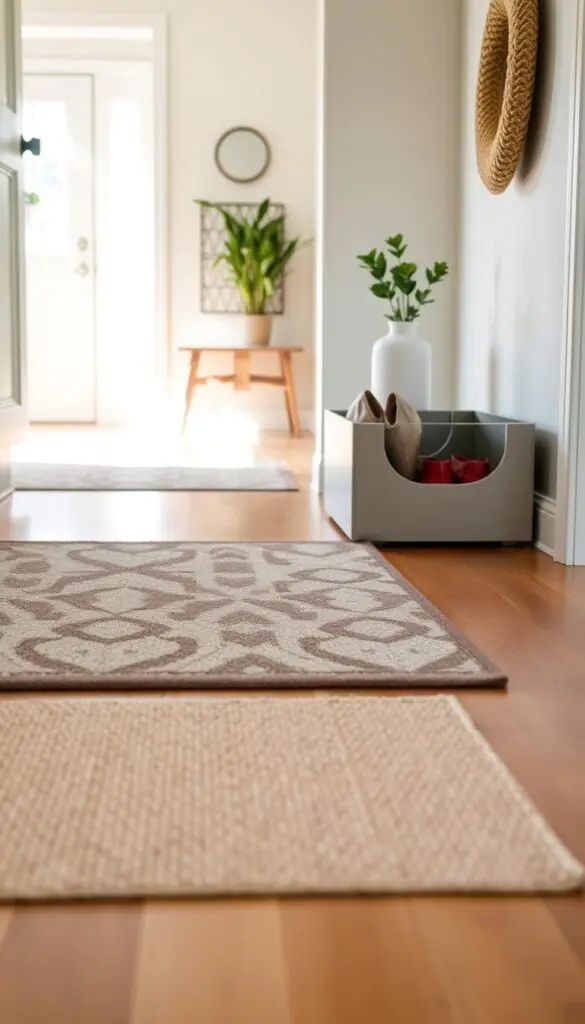
Small changes at the entry make the whole home easier to keep presentable daily. Treat high-traffic maintenance as a system problem: place targeted supplies where dirt arrives, not where it accumulates.
Entryway dirt control
Place a washable mat and a slim shoe bin by the door to stop grit at the threshold. Add a compact grab-and-go caddy with a small spray bottle, a microfiber cloth, and a lint-free cloth for quick spot wipes.
Under $25: basic mat, shoe tray, small bin. Under $50: sturdier mat, covered shoe organizer, heavier caddy.
Closet and laundry-zone helpers
Use an open box of baking soda in closets and a lidded bin in the laundry zone for odor control and spills. Choose wipeable storage bins or trays to catch detergent drips without drilling shelves.
Floors: controlled vinegar water approach
For apartment floors, especially laminate, apply a light vinegar water mist from a spray bottle and mop with a microfiber head. Do not over-wet; excess water causes swelling and dull finishes.
Pro tip: spray small sections, follow with a microfiber mop pad, and air-dry briefly to protect edges and seams.
Studio vs. multi-bedroom tool sizing
Studios benefit from a compact cloth set and one 16 oz spray bottle. Multi-bedroom homes can justify duplicates—one caddy per floor or per bath for faster response and less cross-traffic.
„Place the right tool where dirt starts; short routines stop big jobs later.“
| Area | Best helper | Setup time | Durability | Renter-friendliness |
|---|---|---|---|---|
| Entryway | Washable mat + shoe tray | 5 minutes | Medium | No drilling |
| Closet / Laundry | Lidded bin + baking soda cup | 10 minutes | High | Portable |
| Floors | Microfiber mop + spray bottle | 10–15 minutes | High | Safe for rentals |
| Glass / windows | Small spray bottle + lint-free cloth | 5 minutes | Medium | Compact storage |
- Under $25 wins: washable mat, basic shoe tray, small bin—low footprint, low cost.
- Under $50 upgrades: sturdy caddy, taller closed hamper, microfiber mop with washable pads—more durable, larger footprint.
Conclusion
A few smart choices stop small tasks from piling up. A compact cleaning helper mix of durable tools, basic ingredients, and short routines keeps daily life simpler. Start mild, use hot water and dwell time, then step up only when needed.
Know when a mild cleaner is enough and when EPA‑approved disinfectants are required. Label bottles, ventilate when using strong products, and never mix bleach with ammonia.
Budget paths work: an under‑$25 starter kit gets results fast; an under‑$50 upgrade adds durability and better spray control. Favor refillable bottles and reusable cloths to cut waste.
Quick weekly checklist: kitchen wipe‑down, bathroom two‑minute reset, floor pass in high‑traffic areas, entryway refresh. The best cleaner is the one stored where people will actually grab it.
FAQ
What’s the difference between cleaning and sanitizing in an everyday apartment?
Cleaning removes dirt, grease, and most germs from surfaces using water, soap, or an all-purpose cleaner. Sanitizing reduces bacteria to safer levels with a disinfectant or diluted bleach solution. For routine upkeep, clean first; sanitize high-touch areas like doorknobs, light switches, and faucet handles when someone is sick or after food prep. For heavy contamination or outbreaks, use a product labeled for disinfection rather than a homemade vinegar mix.
Can I mix vinegar with bleach, hydrogen peroxide, or ammonia?
No. Never mix vinegar with bleach or hydrogen peroxide, and never mix bleach with ammonia. Those combinations create toxic gases. Use one product at a time, rinse surfaces between different treatments, and label bottles clearly when you make diluted solutions in a spray bottle or cup.
How should I ventilate and store homemade solutions and cleaners?
Work near an open window or use a fan when applying acidic or scented mixtures. Store DIY solutions in clearly labeled bottles away from children and pets, ideally in a locked caddy or under-sink bin. Keep concentrated chemicals like bleach and hydrogen peroxide in their original containers and out of direct sunlight.
What are the essential items for a small-space core kit?
A few reusable tools cover most tasks: microfiber cloths, a scrub brush, a spray bottle, a microfiber mop, and a squeegee. Keep ingredient basics on hand—white vinegar, baking soda, lemon, castile soap, and hydrogen peroxide—for versatile, low-cost solutions that work across kitchen, bathroom, and entry areas.
How do I make a safe all-purpose spray for counters and general surfaces?
For most counters, mix one part white vinegar with one part water and a few drops of castile or dish soap in a spray bottle. Avoid vinegar on natural stone like marble or granite. For stone, use a mild dish soap diluted in water or a store-bought pH-neutral cleaner. Add 5–10 drops of essential oil such as lemon for scent, unless someone in the home has sensitivities.
Are essential oils safe to use in homemade cleaners?
Essential oils add scent and light deodorizing effects but can cause irritation for some people and pets. Use 5–10 drops per cup of solution, test on a small surface first, and skip oils in homes with infants, people with allergies, or reactive pets. Tea tree oil has antimicrobial properties but should be used sparingly and never applied directly to skin.
What’s the best way to cut kitchen grease without harsh chemicals?
Start with warm water and a few drops of dish soap or castile soap to break down fresh grease. For tougher buildup, sprinkle baking soda, add a little water to make a paste, let it sit, then scrub with a nonabrasive pad. Vinegar water in a spray bottle helps remove residue and shines stainless steel when followed by oil buffing—test a small area first.
How do I clean stainless steel appliances without causing streaks or damage?
Use a microfiber cloth with a vinegar-and-water spray for light cleaning, then buff with a small amount of mineral oil or a dedicated stainless polish to reduce streaks. Wipe in the grain direction and avoid abrasive pads or acidic cleaners on decorative finishes.
What is a safe and effective method for removing soap scum and mineral deposits in the bathroom?
Apply white vinegar or lemon juice to mineral deposits and let it sit for 10–15 minutes, then scrub with a brush or non-scratch pad. For soap scum, a paste of baking soda and water works well—spray vinegar over the paste for fizzing action, scrub, rinse, and ventilate the area. For persistent mold or stains, use hydrogen peroxide or a diluted bleach solution following strict safety rules.
When should I use hydrogen peroxide vs. diluted bleach for bathroom stains or mold?
Use hydrogen peroxide (3%) for light stains, grout discoloration, and some mold spots—apply, let sit, then rinse. Use diluted household bleach only for significant mold infestations on nonporous surfaces and follow label directions carefully: ensure ventilation, wear gloves, and never mix with other products. If mold covers a large area or recurs, consider professional remediation.
How long should I let solutions sit for best results (dwell time)?
Dwell time varies by product: vinegar solutions benefit from 5–15 minutes on mineral deposits; disinfectants and bleach typically need surface contact for 1–10 minutes per label instructions. For degreasing and paste treatments, 10–20 minutes can help loosen buildup before scrubbing. Always follow manufacturer guidance when using commercial cleaners.
What renter-friendly storage and organization options work best?
Use portable caddies, under-sink bins, and over-the-door organizers that require no drilling. Magnetic hooks, tension rods, and stackable bins keep supplies accessible and tidy. Store harmful products out of reach and use a small labeled spray bottle set for each area—kitchen, bathroom, and entry—to avoid cross-contamination.
How can I control odors in the refrigerator and small spaces?
Clean spills with warm water and baking soda solution, then leave an open box of baking soda inside the fridge to absorb odors. For closets or entryways, use small breathable sachets with baking soda or activated charcoal. Replace or refresh every 1–3 months for continued effectiveness.
What’s a quick daily routine for small bathrooms to keep them tidy?
A two-minute reset works well: squeegee shower walls after use, wipe sink and counters with a microfiber cloth, and remove clutter. This limits soap scum and water spots and reduces the need for deeper scrubbing later.
Are there alternatives to wet-mopping floors in apartments to avoid damage?
Use a microfiber mop with a light vinegar-and-water spray for most sealed floors and avoid over-wetting. For wood or laminate, use a barely damp microfiber cloth and a pH-neutral cleaner. Always follow flooring manufacturer recommendations to prevent swelling or finish damage.
What basic safety gear should be used when handling stronger solutions?
Wear gloves and eye protection when using bleach, concentrated hydrogen peroxide, or commercial disinfectants. Ensure good ventilation, work with one product at a time, and keep a cup of water nearby to rinse skin if accidental contact occurs. Keep products out of reach of children and pets.

[…] Quick preview: (1) a low-effort mindset and start method, (2) high-impact tasks you can finish fast, (3) renter-friendly products under $25 and $50 with pros and best-for notes. A handy starter link is here for a compact helper mix: cleaning helper mix. […]
[…] This guide previews zone setup, simple house rules for when the timer ends, and affordable tools under $25. You’ll get five common picks and five better options that actually speed up tasks. I’ll keep advice honest and practical, with price-value checks, pros/cons, and who should buy what. For starter kit ideas, see a compact helper mix here: cleaning helper mix. […]
[…] For a practical helper mix and a baseline kit idea, see this small guide on a reliable helper mix you can order quickly. […]
[…] Later you’ll see budget vs premium picks, setup effort, and upkeep notes. Try this today: in 25 minutes your place should look and feel noticeably better—even if it isn’t perfect. For compact starter mixes and recipes, see a simple helper blend here. […]