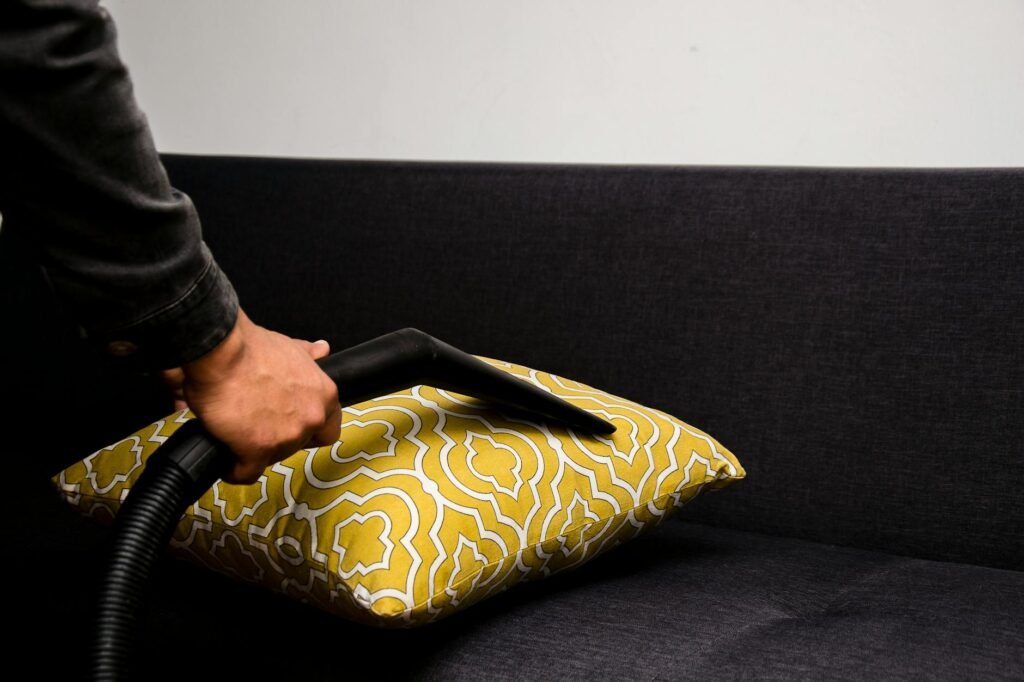
Practical help, not hype. This guide shows how a few well-chosen helpers can save you time and effort at home. You’ll get real-life value, renter-friendly tips, and simple buying advice.
By „cleaning tech mix“ I mean a lean set of devices that handle your biggest messes. Not every gadget. Just the ones that fit small spaces and your daily routine.
What to expect: clear pros and cons, energy and safety notes, and whether a feature actually saves you time. I’ll point out where automation helps and where it feels like a gimmick.
This list is built for apartments and busy people. You’ll learn which helpers cut effort between service visits and which ones make sense for your budget and team at home.
Key Takeaways
- Pick a compact set of tools that target your worst chores.
- Look for real time savings, not buzzwords.
- Watch energy use and safety basics before you buy.
- Fit and storage matter as much as features.
- These helpers can reduce how often you hire services.
What “Cleaning Tech” Actually Helps With in Real Homes Today
Real helpers focus on the small, repeat chores that eat time each week.
These devices tackle day-to-day problems: staying on top of floors, kitchen crumbs, pet hair, allergens, and high-touch messes without turning upkeep into a full project.
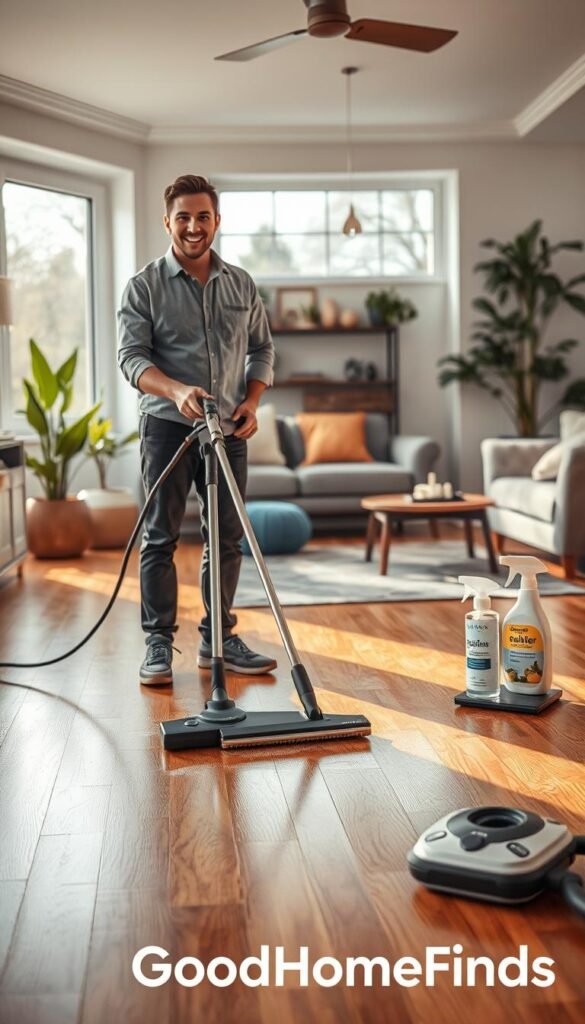
How we picked these helpers: time saved, energy use, noise level, and space needs
Time and noise: We measured how many minutes per week a device can save and how loud it runs in a studio.
Energy and water: Efficient models cut power and waste. That helps your bills and the environment.
Safety and quality: We favored simple, renter-friendly products that lower allergen levels and improve hygiene.
Small-apartment fit: storage, docking, cords, and clutter control
Practical fit matters: Docking stations take floor space, cords add clutter, and tanks or bulky bins are hard to store in a closet.
- Keep devices that nest or dock compactly.
- Pair systems when useful—like a robot for regular sweep-ups and a cordless for quick spills.
- Choose solutions that use plain water, steam, or microfiber when possible.
| Criteria | Why it matters | Small-apartment tip |
|---|---|---|
| Time savings | Frees minutes each week for other tasks | Pick schedule-capable devices you will actually use |
| Energy & water | Reduces bills and household waste | Look for efficient modes and low water use |
| Storage & noise | Impacts daily comfort and clutter | Choose compact docks and low-volume models |
Best Cleaning Tech Helpers for Floors, Kitchens, Air, and Everyday Surfaces
Pick straightforward products that handle the spots you use most and save you minutes each day. Below are renter-friendly options, with honest pros and cons and quick notes on setup and upkeep.
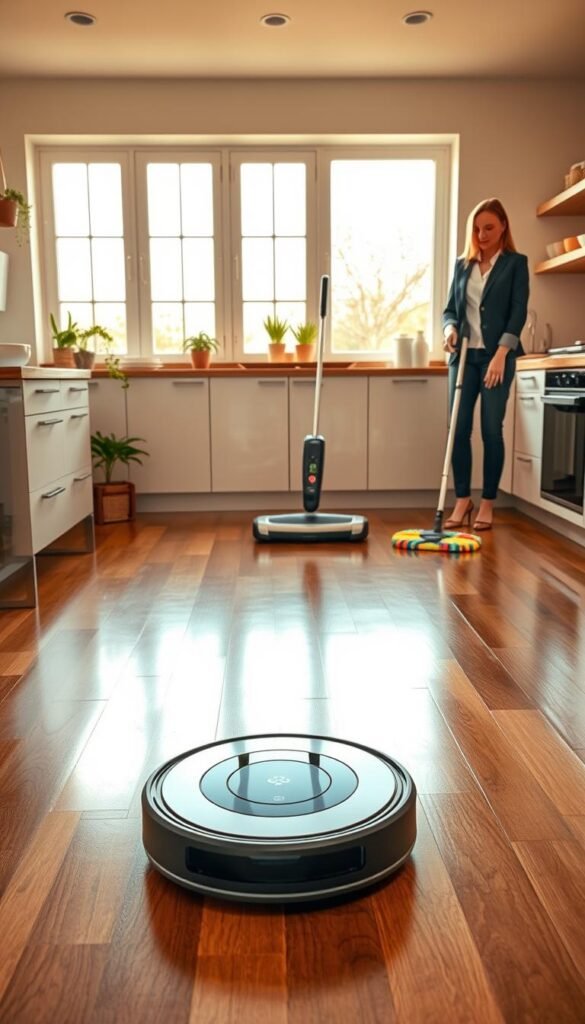
Robot vacuum with sensors
Best for: daily crumbs and pet hair. Use case: scheduled sweeps to keep floors “good enough.”
Setup: dock space and initial mapping. Maintenance: empty bin, clean brushes. Noise: medium. Power: low–medium. Space: small dock footprint.
Pros: saves time with scheduled runs. Cons: can get stuck, needs clutter cleared first.
Smart mop for tile and hardwood
Best for: steady shine without buckets. Use case: quick weekly maintenance on hard floors.
Setup: fill reservoir, pair sensors. Maintenance: wash pads, watch water use. Noise: low. Power: low. Space: compact dock or storage.
Pros: less hauling of water. Cons: not for heavy stains; risk of over-wetting rentals.
Cordless vacuum
Best for: entryways, kitchens, and pet messes. Use case: fast spot pickups after meals.
Setup: charge station. Maintenance: small bin, battery care. Noise: medium. Power: medium. Space: easy to store upright.
Pros: grab-and-go convenience. Cons: limited run time and capacity.
HEPA vacuum
Best for: allergy support and deeper carpet work. It can trap 99.97% of 0.3‑micron particles.
Setup: plug-and-play. Maintenance: filter replacement schedule. Noise: medium–high. Power: high. Space: moderate storage.
Pros: improves indoor air quality. Cons: filter costs and upkeep.
Steam cleaner
Best for: grout, bathrooms, and upholstery touch-ups. Use case: chemical-light disinfection.
Setup: fill water tank. Maintenance: descale occasionally. Noise: low–medium. Power: medium–high. Space: small to moderate.
Pros: reduces harsh products. Cons: avoid delicate surfaces and use caution with hot steam.
Microfiber tools
Best for: daily wipe-downs and reducing waste. Use case: counters, shelves, and quick dusting.
Setup: none. Maintenance: machine wash. Noise: quiet. Power: none. Space: minimal.
Pros: low-waste and low-cost. Cons: need regular laundering.
Touchless trash can with sensors
Best for: cleaner kitchen habits and less contact. Use case: cooking and food prep zones.
Setup: batteries or plug-in. Maintenance: replace batteries, empty bin. Noise: low. Power: low. Space: moderate footprint.
Pros: hygienic. Cons: battery drain on budget models.
UV sanitizer
Best for: phones, keys, and small high-touch items. Use case: targeted germ control.
Setup: place item in chamber. Maintenance: bulb or unit care. Noise: silent. Power: low. Space: small.
Pros: adds hygiene layer. Cons: does not replace visible surface cleaning.
Smart air purifier
Best for: cooking smells, pet dander, and dust. Use case: continuous air filtering with app control.
Setup: place in open area, connect app. Maintenance: filter changes. Noise: low–medium. Power: medium. Space: floor or small table footprint.
Pros: automatic modes and improved air quality. Cons: recurring filter cost.
Automatic window cleaner
Best for: large panes and hard-to-reach glass. Use case: safer monthly window care.
Setup: attach, run cycles. Maintenance: pads and battery check. Noise: medium. Power: medium. Space: store when not used.
Pros: safer and faster for high windows. Cons: setup time and storage size.
How to Build a Cleaning Tech Mix That Fits Your Apartment, Budget, and Routine
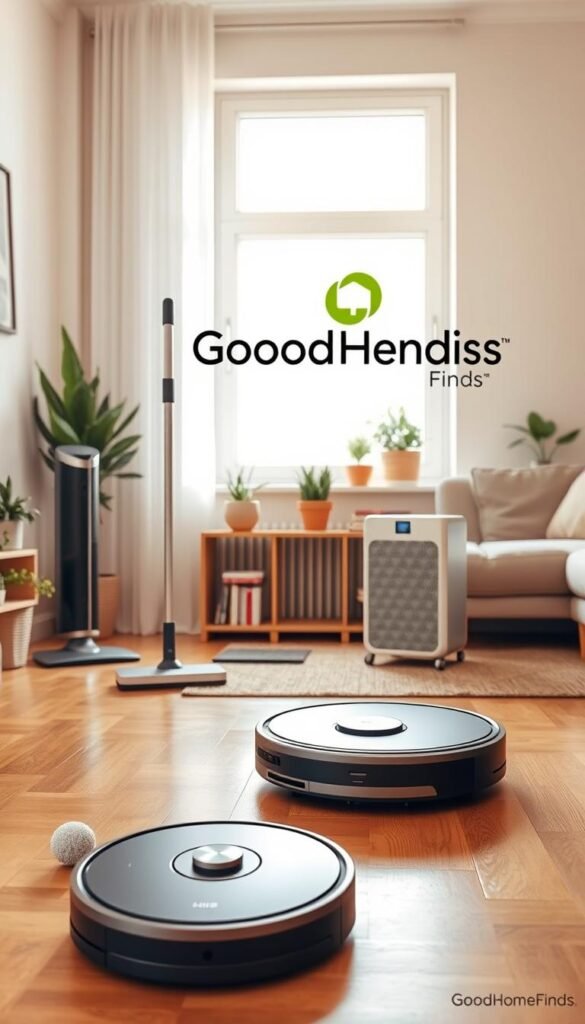
Begin with a single, reliable floor helper and build from there. Pick what solves your most frequent tasks first. This keeps purchases useful and storage light in a small space.
Budget vs premium: what to pay for (and what to skip)
Pay more for reliable navigation, quieter operation, and parts that are easy to replace. These save time and frustration in daily use.
Skip fancy extras you never use: oversized tanks, extra app modes, or accessories that add clutter.
Best combos by lifestyle
- Pets: a robot + cordless vacuum for fur hotspots.
- Allergies: HEPA vacuum + smart air purifier.
- Cooking-heavy: cordless vacuum + touchless trash can + microfiber cloths.
- Roommates: choose quiet models and set clear run schedules.
Compatibility basics
Check Wi‑Fi reliability, app stability, and voice assistant support only if you’ll use them. Confirm easy access to replacement pads, filters, and bags.
Tip: Favor renter-friendly storage, low-water systems, and products that lower waste for your budget and the environment.
Buying and Using These Cleaning Devices Without Regret
Buy fewer, better helpers that slot into your routine and storage, so they get used. This approach saves money, time, and closet space.
Real benefits
Daily wins: fewer crumbs, quicker floor resets, less dust in the air, and faster kitchen cleanups with fewer steps.
Use them consistently and the payoff grows. Expensive models don’t help if they stay boxed.
Who needs this
Best for busy schedules, small apartments, pet owners, and allergy-prone households. Skip heavy vacuums if you have no carpet. Drop the window robot if your panes are tiny.
Setup time
Minutes: cordless vacuums, touchless bins, and microfiber cloths. Afternoon: robot mapping, smart mop scheduling, and purifier app pairing.
Common mistakes
Cluttered floors ruin mapping. Wrong floor settings over-wet wood. Overusing water or solution can damage surfaces. Skipping filter care hurts air quality and performance.
| Topic | What to expect | How to reduce costs |
|---|---|---|
| Maintenance | Filters, pads, bins, and occasional replacements | Buy washable pads; check part prices before you buy |
| Running costs | Batteries, filters, water, and replacement pads | Charge smartly; reuse pads; choose long-life filters |
| Noise & energy | Medium to high during deep runs; low in quiet modes | Run loud cycles when out; use eco modes for daily upkeep |
Conclusion
Wrap up with a focused strategy that matches your space, schedule, and budget.
Main takeaway: choose a small, practical set that fits storage and real use at home. Pick tools that save time and lower energy use.
Start with two: one floor solution and one air or hygiene helper. Expand only if a clear gap remains.
For apartments, insist on low noise, minimal clutter, easy storage, and simple upkeep you will do regularly.
Think long term: filters, pads, and replacement parts matter as much as the price you pay upfront.
You don’t need every gadget. Just the right ones, used consistently and maintained well. Thanks for reading, and treat these devices as your small support team between deeper service visits.