
This guide shows a renter-friendly, small-space path to a calm, functional home.
Good enough is good enough. You will learn short, repeatable routines that fit busy weeks. Most tasks take 5–15 minutes. Little wins beat marathon weekends.
The plan is room-by-room. You get quick reset checklists and renter-safe storage upgrades that need no drilling. Tools focus on removing friction: a portable caddy, microfiber cloths, a small vacuum, and simple drawer dividers that are worth the buy.
This is for busy workers, parents, roommates, and people in studios or one-bedrooms. It also helps folks with ADHD who benefit from starting small.
Safety matters. We cover ventilation, avoiding lung irritants, and sensible product use so daily upkeep stays manageable.
Start with the schedule, then adopt one room system at a time. If you want quick ideas for kitchen fixes and small tools, see this helpful resource: kitchen problem mix.
Key Takeaways
- Short daily routines (5–15 minutes) beat long cleaning marathons.
- A calm, functional home is the goal, not perfection.
- Renter-friendly upgrades require no drilling and stay budget-friendly.
- Choose tools that reduce friction and store flat to save space.
- Follow basic safety: ventilate and use one product at a time.
- Work room-by-room and use weekly resets to prevent buildup.
Why a Clean, Organized Home Feels Better in Real Life
A tidy, predictable space changes how your day begins and ends.
Mental health benefits
Mental health benefits of less clutter and a calmer environment
Less visual clutter reduces the feeling of unfinished tasks. That lowers daily friction and can ease anxiety. You lose fewer minutes hunting for keys or papers. Mornings become steadier and evenings let you actually unwind.
When items have a clear home, you start tasks with less resistance. That supports emotional regulation and boosts productivity. This is about function, not looks. A clean organized spot helps you reset after meals or a long workday.

Physical health benefits from reducing dust, germs, and allergens
Routine upkeep cuts dust and allergens that trigger repeat symptoms. Kitchens and bathrooms hide germs, so small habits matter. In apartments, tight layouts and limited ventilation make buildup feel worse. Simple daily steps reduce exposure and lower illness risk.
„Small, consistent actions protect both your mood and your health.“
| Benefit | Mental impact | Physical impact |
|---|---|---|
| Less visual clutter | Lower anxiety; clearer focus | Fewer surfaces trapping dust |
| Items have a home | Faster starts; less decision fatigue | Reduced cross-contamination in kitchen |
| Small daily habits | Steadier routines; better mood | Less allergen buildup in tight spaces |
You’re not failing if things pile up. Your house reflects your schedule and storage limits. The real benefit comes from a simple schedule that keeps mess from compounding. For more background on practical fixes and renter-friendly ideas, see our approach.
How a Simple Cleaning Schedule Cuts Anxiety and Saves Time
Short, focused sessions turn an overwhelming list into clear, finishable steps.
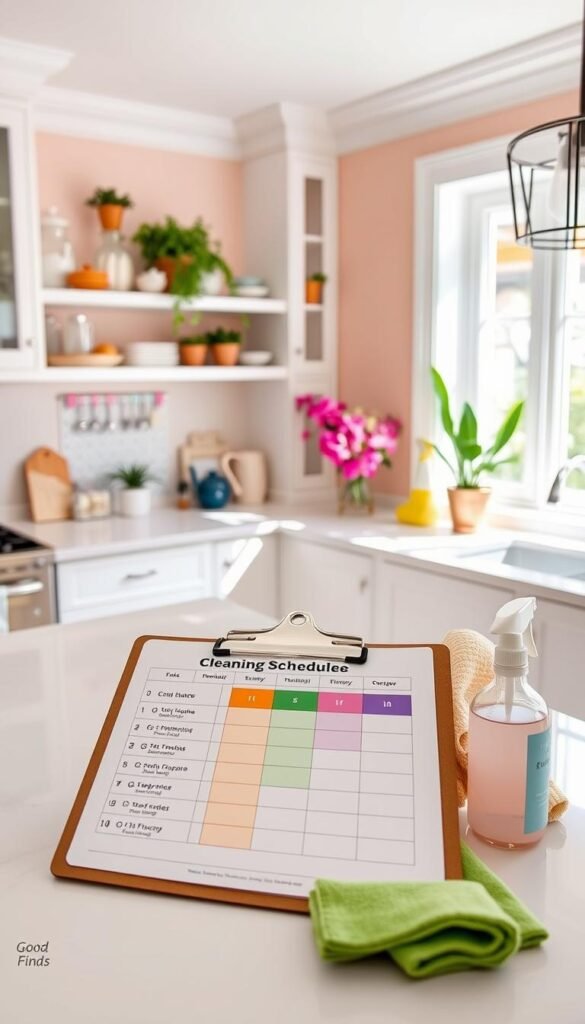
Set small windows of work and stop when the bell rings.
The 5–15 minute timer method
Pick one task. Set a timer for 5, 10, or 15 minutes. Work with focus and stop when the alarm rings. This limits how much time you spend and makes progress visible.
Room-by-room planning that works
Use a weekly template: Kitchen, Bathroom, Living/Entry, Bedrooms, Laundry/Closets, and an optional floors day. Pick one room per day or split a big room into two mini-sessions.
Customize for family, roommates, and work weeks
Assign each member one room or make a shared 10-minute reset after dinner. For busy work weeks, schedule lighter tasks on low-energy days and deeper jobs on the weekend.
| Plan | Typical minutes | Who it suits |
|---|---|---|
| Quick daily reset | 5–10 minutes | Singles; busy work days |
| Room focus | 10–15 minutes | Shared homes; families |
| Floors or deep spot | 15 minutes | Weekend or high-energy day |
Reduce friction: stash a portable caddy, keep wipes under sinks, and put spare bags in bins. Choose tomorrow’s room now and compare renter setup options. Then set a calendar reminder and set timer to start.
Cleaning Without Stress: The Daily Routine That Actually Sticks
Start your day with a tiny routine that makes the rest feel easier. Pick the time of day that matches your energy. A morning person gets momentum before work. A night owl uses a short shutdown after dinner.

Morning vs. evening routines based on your energy
If mornings work for you, do a 2-minute reset. Make the bed. Open blinds. Clear one surface. Wipe the sink if needed.
If evenings suit you, do an 8-minute reset after dinner. Gather stray items. Do a quick trash sweep. Reset the living area so the next day feels lighter.
The kitchen “shutdown” habit that prevents next-day mess
Simple steps: wipe counters and the sink, load or set a soak bin, and place a cloth for morning. Run the dishwasher or schedule it while you relax.
Small tasks to do right away to stop piles before they start
Use a one-touch rule: if it takes under 60 seconds, do it now. Hang towels to dry, return dishes when you leave a room, and sort mail at the door.
Your goal is consistency, not intensity. Choose a routine you can repeat each day. For easy tool ideas that make routines stick, see this helpful roundup: best finds on Amazon.
Kitchen Cleaning for Small Spaces Without the Overwhelm
A tiny kitchen reset can turn a crowded counter into a useful workspace in ten minutes. This routine fits studios and one-bedrooms. It focuses on the sink, quick fridge checks, and floors last.
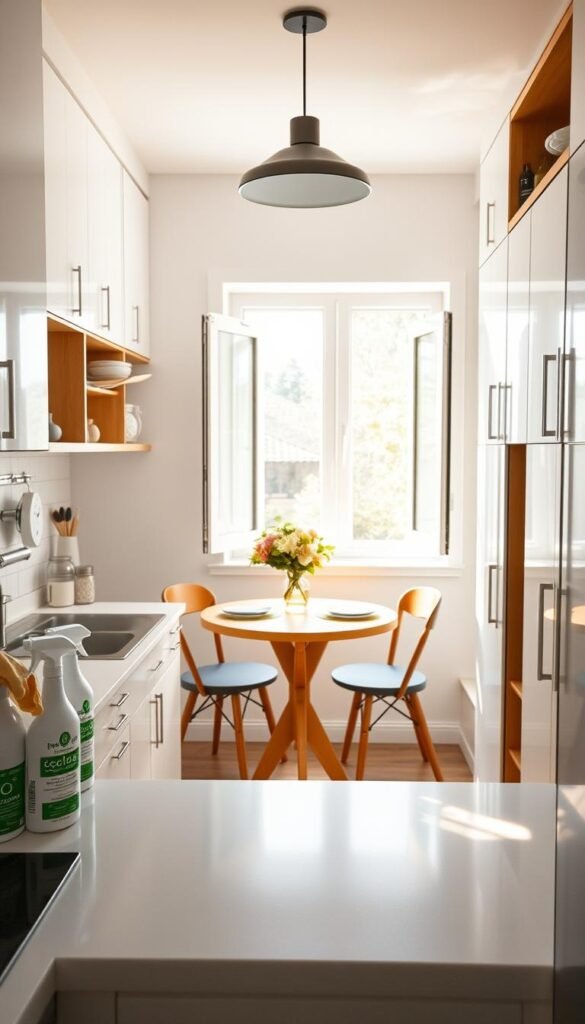
Fast reset checklist for counters, sink, fridge, and floors
10–15 minute kitchen reset (order that works)
- Clear counters of dishes and items.
- Start at the sink: wash or soak dishes so the area is usable.
- Wipe countertops and appliance fronts.
- Quick fridge scan: remove expired items and put perishables in a “use first” bin.
- Sweep or vacuum, then spot-mop high-traffic area last.
Renter-friendly space optimization for cabinets, pantry, and drawers
Shelf risers and stick-on solutions are your best friends.
Use tension rods under the sink to divide bottles. Add stick-on labels so everyone knows where items go. Magazine files hold cutting boards and takeout menus upright.
Hang an over-the-door pocket organizer on the pantry for snacks or spices. Drawer dividers keep utensils usable and cut down time spent searching.
Easy maintenance habits that reduce dishes and food waste buildup
Practical habits save time and trash day headaches.
Clean as you cook. Keep one drying rack to limit clutter. Run the dishwasher nightly if you have one.
Schedule a deeper fridge purge the day before trash pickup. That prevents lingering smells and avoids extra trips to the trash area.
| Solution | Budget tier | Why it works |
|---|---|---|
| Portable caddy | Under $25 | Moves supplies to work area; no drilling; durable plastic |
| Shelf risers & drawer dividers | $25–$50 | Increase usable space; easy install; renter-friendly |
| Over-door pocket organizer | Under $25 | Adds vertical pantry storage; simple setup; fits small areas |
| Compact vacuum or broom + microfiber mop | $30–$80 | Fast floor touch-ups; lightweight and apartment-sized |
Bathroom Cleaning That Feels Quick, Safe, and Manageable
Short, reliable tasks make bathroom upkeep feel doable on busy days. Use one quick routine when time is tight and a deeper routine once a week. Both keep the space usable and reduce anxiety about guests or build-up.
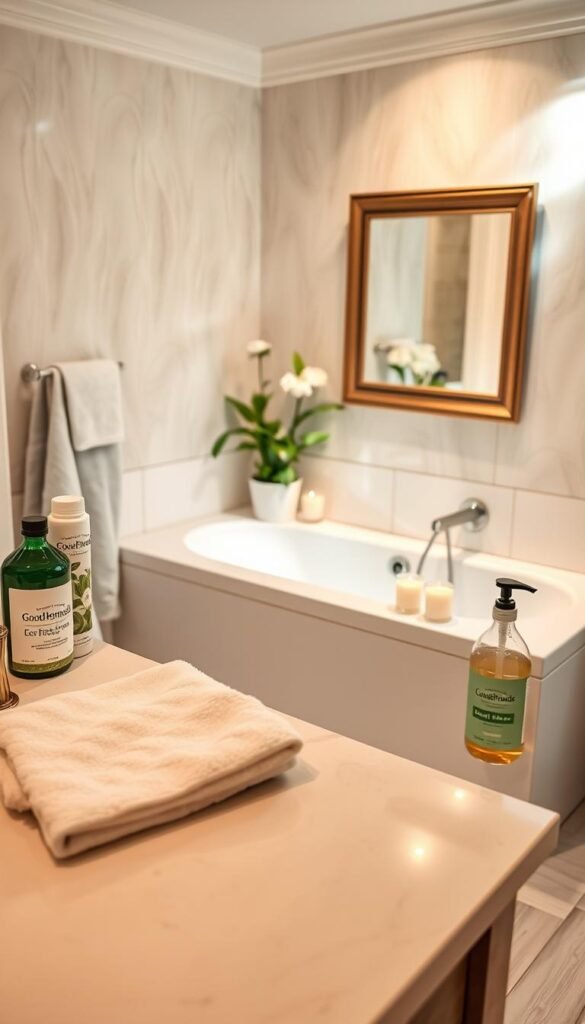
Quick reset: 5-minute company-ready routine
- Swap hand towels and shake bath mats.
- Spray and wipe the sink and counters.
- Quickly wipe the mirror and sweep visible debris from the floor.
Weekly care: 15–20 minute routine
Take trash out and toss towels and mats into laundry. Spray tub or shower, set a 5-minute timer, then scrub and rinse. Finish by sweeping or vacuuming and a short mop pass.
Ventilation and product safety tips
Small bathrooms trap fumes and moisture. Always run the fan or open a window during use. Do not mix cleaners. Choose low-odor options when possible.
Note: Vinegar (acetic acid) can irritate lungs. Use it only with good airflow and skip it if it bothers you.
Renter-friendly tool setup: keep an under-sink bin system so supplies stay organized. One bin for glass/mirror items, one for tub/toilet supplies, and a cloth stack you wash weekly. Add a disposable glove pack and a dedicated bathroom brush to remove barriers to doing the task.
| Routine | Minutes | Why it works |
|---|---|---|
| 5-minute reset | 5 | Makes the room guest-ready and stops mess from spreading |
| Weekly care | 15–20 | Handles laundry, trash, and tub scrubbing so buildup stays low |
| Under-sink bins | Setup time: 5–10 | Keeps supplies durable, easy to reach, and renter-friendly |
For budget fixes and step-by-step ideas to upgrade your bathroom setup, see this short guide: bathroom fixes on a budget.
Closets and Laundry Areas That Stay Clean and Organized
A quick closet and laundry mindset beats the „laundry chair“ trap and keeps things moving.
Start with a two-minute put-away habit. Fold or hang a small load right after drying. Ten minutes of focused work prevents piles from becoming permanent.
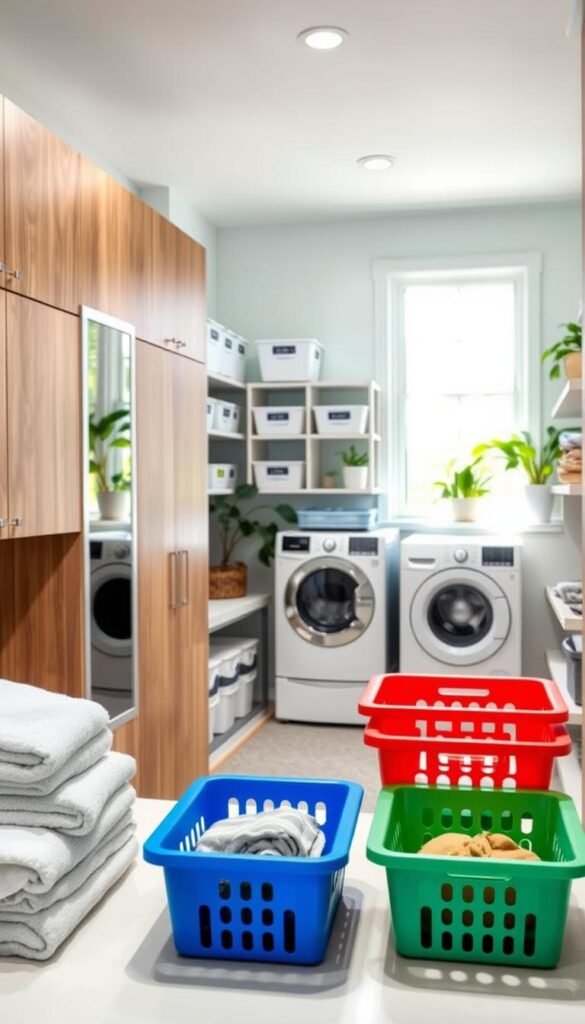
Put-away power to stop the pile
Put-away power means one small action now. Pick one basket and finish it. That makes daily tasks feel doable in shared households.
No-drill upgrades that improve visibility
Use hanging shelf organizers, tension rods for extra hang space, and slim slide-in bins. These add storage and show where items live. They work in rentals and cost little.
Low-effort systems for socks, basics, and linens
Use shoebox dividers or fabric drawer organizers for socks and basics. Keep one bin for sheets and one for towels. Limit spares so overflow doesn’t hide as clutter.
| Solution | Approx. cost | Why it helps |
|---|---|---|
| Hanging shelf organizer | $15–$25 | Creates visible stacks and easy grab zones |
| Tension rod | $10–$20 | Adds hanging space without drilling |
| Slim slide bins | $8–$15 | Slide into shelves for neat, labeled storage |
For shared homes, assign each family member a labeled basket. Wipe washer and dryer surfaces on your weekly reset and keep a small lint bin so things stay tidy. For more quick fixes, see the home problem solver mix.
Entryway and Living Areas: Stop Clutter Before It Spreads
A small, deliberate drop zone keeps everyday items from spreading across your home.
Create a logical place for shoes, keys, and mail so the living area stays usable. Place a narrow shoe rack or low bench near the door. Add a small tray for keys and a lidded bin for mail where you naturally set things down.
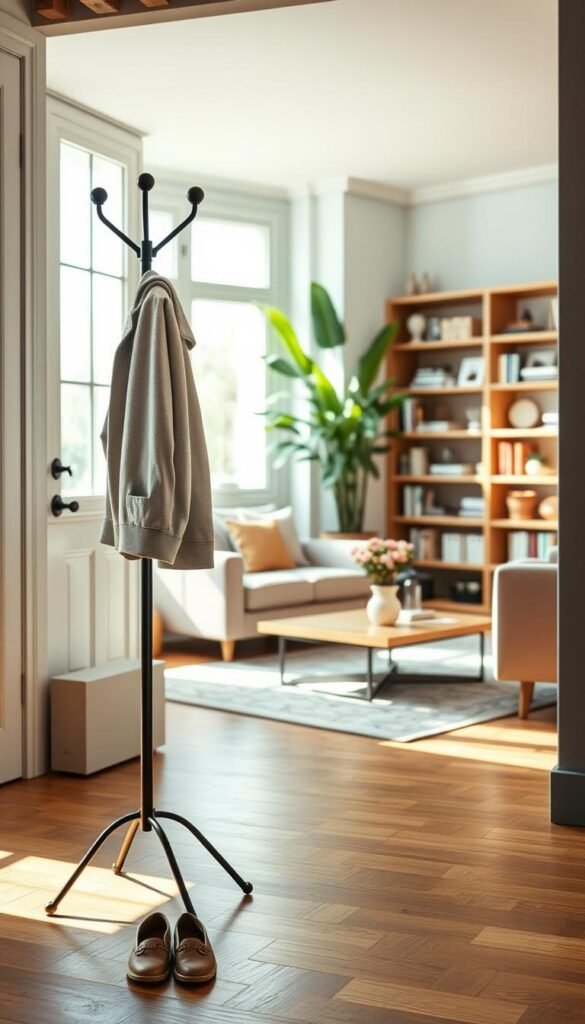
Create a renter-friendly drop zone (no drilling)
Choose freestanding solutions: slim shoe racks, adhesive key pockets, and stackable mail bins. Keep a small shredder or a recycling bin nearby so junk mail gets sorted immediately.
One-touch rules to keep common areas guest-ready
- Put it away first time: don’t set things down „for now.“
- Sort mail immediately: recycle/shred, action, file.
- Nightly 5-minute reset: clear surfaces so the living area looks presentable.
Shared-home tip: give each person a labeled basket for daily carry items. This keeps the system fair and saves time when you leave the house.
„Catch items at the door and you cut the work later.“
Budget-Friendly, Renter-Friendly Products That Make Cleaning Easier
A small set of smart tools can turn weekly upkeep into quick, repeatable wins.
Best under $25: go for things you will grab fast. Examples: a microfiber cloth multipack, scrub and grout brush, compact shower squeegee, sink caddy, lint roller, and Command-style hooks. These remove friction and fit small space living.
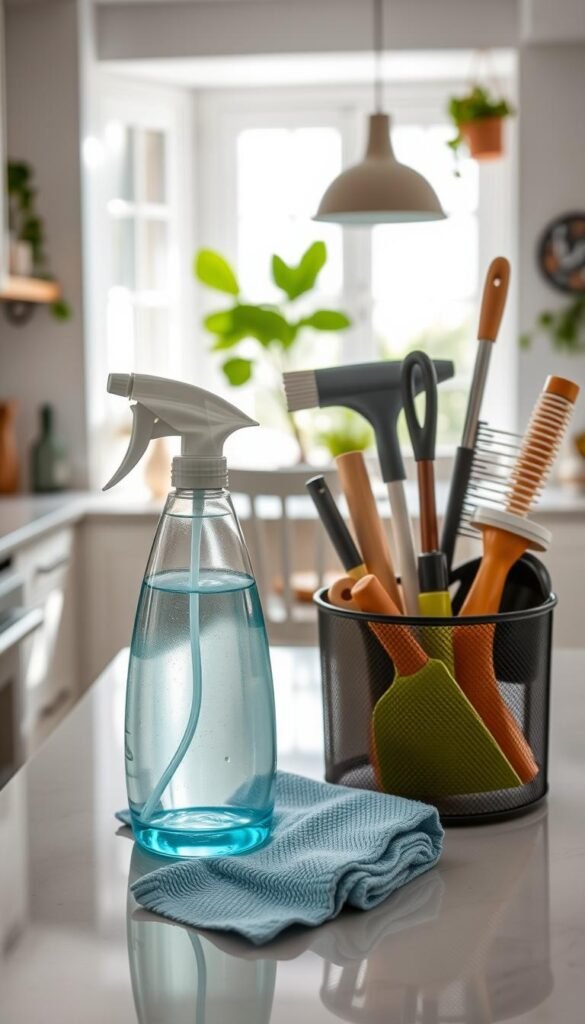
Best under $50: upgrades that save you time
Consider a slim rolling cart, a lightweight stick vacuum for hard floors, a flat microfiber mop kit, or an over-the-door organizer. These items cut weekly work and fit rental rules.
Comparison: best-for, setup time, durability, small-space fit
| Item | Best for | Setup time | Durability | Small-space fit |
|---|---|---|---|---|
| Microfiber cloths | Dusting, spills | None | Washable, long | High |
| Stick vacuum | Quick floor touch-ups | 5 mins | Moderate | Medium |
| Slim rolling cart | Supply storage | 10 mins | High | High |
Pros and cons
- Disposable wipes: ready now, handy for guests. Cons: waste and cost over time.
- Microfiber: reusable and gentle. Cons: need laundering.
- Ready sprays: simple to use. Cons: more packaging and fumes for sensitive lungs.
- Concentrates: save money and waste. Cons: mix time and containers to store.
Rule: store tools where you use them. Wipes under sinks. Broom or small vac by the door.
Apartment alternatives: studio — one caddy and one multi-use cleaner. One-bedroom — two-zone storage (kitchen + bath). Shared home — labeled bins and duplicate basics so everyone can help.
Conclusion
Choose one tiny system this week and watch daily life get a little easier. Small, timed efforts (5–15 minutes) beat rare marathons and cut daily stress. The payoff is steady: better routines, clearer surfaces, and health benefits that add up.
Start simple: pick the kitchen or bathroom. Add one under-$25 tool that removes friction. Do a single 10-minute reset today—try the nightly kitchen shutdown or a quick entry drop zone.
Ventilate when you use stronger products and keep everyday sprays in an easy caddy. For starter kits and practical picks, see the best solutions for busy homes. Small wins compound into a calmer, more usable place week after week.