
Short on time but want a calmer space? This guide shows a renter-friendly, small-space approach that fits real workdays and tired evenings. The plan focuses on quick wins you can repeat.
Pick a 5-minute reset or a 10-minute tidy and stick with it. Small, consistent tasks build sustainable habits and prevent waking up to chaos. High-impact moves keep your place feeling pulled together.
Solutions avoid drilling and permanent changes. Expect safe, durable, budget-conscious suggestions (options under $25 and under $50) that solve clutter without big upgrades.
You’ll see a room-by-room path—kitchen, bathroom, closets/laundry, and entry/living spots—that targets where mess starts. The core rule is simple: give items designated spots so tidying isn’t just moving piles.
Finally, you’ll get a checklist and an easy schedule to adjust for kids, pets, roommates, or busier seasons. For smart small-space gear and measurements, check curated picks at best small-space finds.
Key Takeaways
- Choose a 5- or 10-minute reset to keep things manageable.
- Focus on renter-friendly fixes with no drilling.
- Use affordable, durable products under $25 or $50 for quick wins.
- Designated spots prevent surface pile-ups.
- Follow a simple checklist and tweak it for your household.
Why short, regular resets beat weekend marathons
Short, targeted resets stop chores from eating your weekend and preserve mental space on work nights. When tasks stack through the week you trade free time for a long, stressful catch-up. That zone of chores makes the whole place feel harder to manage.
Quick wins protect your mood and your schedule. Five to ten minutes on a work evening prevents frantic searches for keys, lunch boxes, or that one shirt. Visible progress calms you even if you don’t deep clean.

High-traffic rooms first
Focus where you actually live: kitchen, entry, and living area. Start with the main path and finish one room before moving on. That prevents new piles from forming.
- Priority order: dishes/sink → counters → floors in main path → landing zone → bathroom wipe.
- Do one room at a time so you complete a task instead of scattering mess.
- After a few weeks your process speeds up as clutter shrinks and spots become automatic.
Quick self-check: name your top two trouble areas and make them non-negotiables each day. For renter-friendly bathroom fixes and budget options, see this bathroom fix guide.
Tidying vs. decluttering: the difference that keeps clutter from coming back
Clear rules make upkeep simple. Tidying means returning items to a named spot so the space works again. Decluttering means deciding an item leaves your house for good—donate, sell, recycle, or trash.
What “tidy” looks like
You put mail in a tray, shoes on a rack, and chargers in one drawer. That habit keeps counters and surfaces ready to use. A short, repeatable step wins over perfection.
What “declutter” looks like
You remove duplicate gadgets, old receipts, or broken things. Decluttering frees up real spots so tidying can succeed.
How they work together
Tidying fails if there are too many items and no true spot. Decluttering fails if you don’t return the things you keep. Use both.
„If you can’t name its spot in five seconds, create one or let it go.“

| Action | Example | Renter-friendly fix |
|---|---|---|
| Quick tidy | Mail on the counter | Small tray on shelf |
| Declutter | Duplicate chargers | Donate or recycle extras |
| Prevent clutter creep | Shoes by the door | Over-door shoe organizer |
Simple rule: name a spot in 5 seconds or remove the thing. That rule keeps counters, floors, and surfaces clear and makes small spaces functional.
For compact storage ideas and tools that ship quickly, see these best cleaning finds on Amazon.
Pick your time block: the 5-minute reset or the 10-minute tidy
On rough nights pick five minutes; on calmer ones give yourself ten—either will help. Both options count and make the end of your day feel manageable.
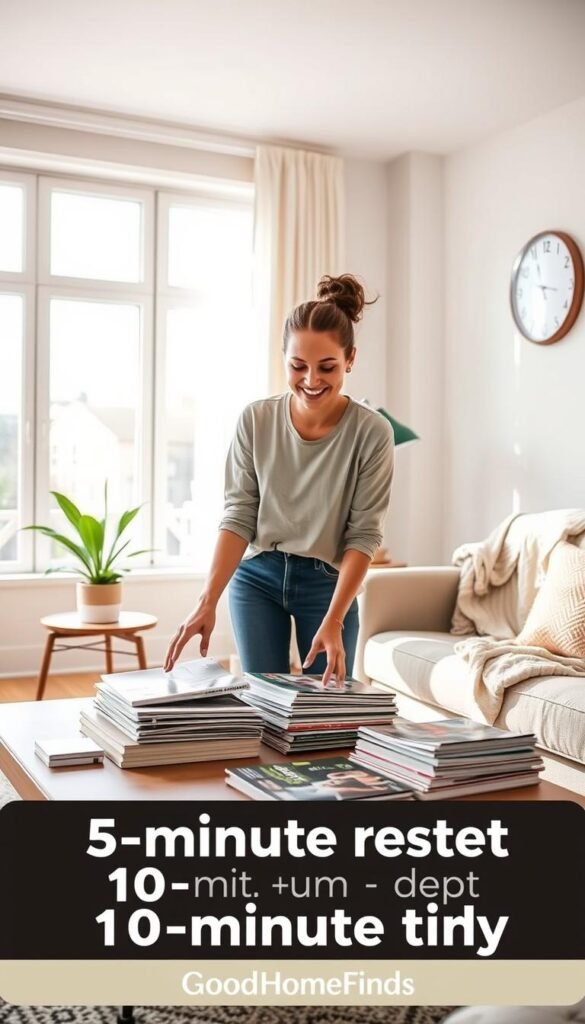
The 5-minute clean sequence
When energy is low: set a timer for five minutes and move fast but safe.
- Clear one main surface (counter or table).
- Load the dishwasher or stack dishes to wash later.
- Quick trash and recycling sweep.
- Put away 10 loose items into their spots.
- Spray one hotspot, let cleaner rest for a minute, then wipe.
Why it works: five minutes lowers the start barrier and builds momentum across days.
The 10-minute evening tidy
When you can spare a little more energy, follow this order:
- Empty or reset the dishwasher and clear the sink.
- Wipe counters and let cleaner sit briefly to avoid streaks.
- Quick floor pass through the main path.
- Reset the landing strip—keys, mail, and bags.
- Prep one thing for tomorrow (pack lunch, set out outfit).
Stop rule: when the timer ends, stop. You can continue, but only if you want to—no pressure.
Safety note: speed-cleaning without accidents
Rushing raises risk. Slow down when handling knives or glass. Carry reasonable loads; don’t stack fragile items too high.
Keep floors dry to avoid slips. Wear shoes if you must move quickly across surfaces.
„Cleaner dwell time beats frantic scrub—spray, wait a moment, then wipe.“
| Length | Key tasks | Safety focus |
|---|---|---|
| 5 minutes | Clear surface, load dishes, 10 items away, quick wipe | Avoid carrying knives; keep floors dry |
| 10 minutes | Dishwasher reset, counters, floor pass, landing prep | Let cleaners sit; move calmly with glass |
| Both | Set a timer; do it before you sit down for the night | Stop when time ends; prioritize safe movements |
Build your “daily tidy routine home” checklist using high-impact tasks
Target the surfaces and hot spots that show first. Small actions on those spots change how the whole place looks. A short, repeatable list beats long, infrequent sessions.
The quick, high-impact basics
- Make the bed — one done task brightens the bedroom.
- Dishes — load or run the dishwasher so counters stay clear.
- Reset the sink — rinse, stack, or wash what remains.
- Wipe counters — one swipe prevents grime build-up.
- Floors — clear main paths; spot-vacuum when needed.
- Laundry — start one small load or move a load to dry.
Vacuum frequency and who needs it more
If you have kids, pets, or a shedding dog, vacuum key lanes more often. In that case, vacuum daily in high-traffic strips. Otherwise every-few-days usually works.
Customize and share the tasks
Track what bugs you for one week. Then build a minimal list that fixes those pain points.
Split chores with family or roommates. Each person owns one micro-zone like shoes, backpack, or a counter.
| Task | Why it matters | Small-space fix |
|---|---|---|
| Make bed | Improves perceived neatness | Lightweight comforter; no-shift sheets |
| Load dishwasher | Keeps counters clear | Collapsible dish rack for small kitchens |
| One laundry action | Prevents weekend overload | Mesh sorter or single small basket |
Kitchen reset routine for busy days (no clutter, no pileups)
Close out the kitchen in five to ten minutes so morning prep feels easy.
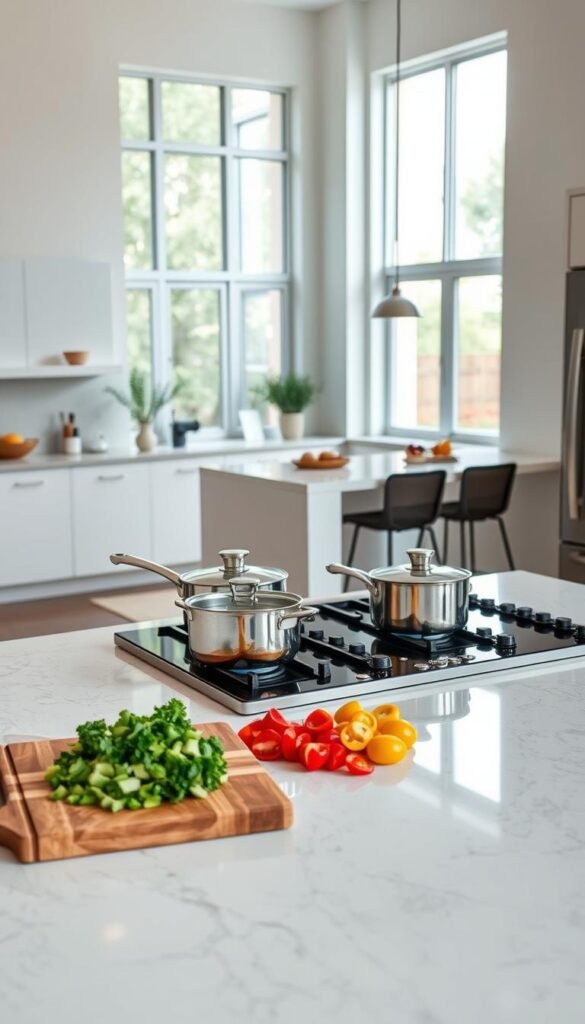
Kitchen closes the day: focus on three things — dishes, sink, and counters. Small, consistent actions stop mess from growing and save you time tomorrow.
The two-minute dish strategy
If the dishwasher is empty, unload key pieces first — plates and pans — so you can load dirty items immediately.
If you don’t have a dishwasher, use a small wash bin. Wash five items, rinse the sink, and stop. That prevents a mountain of stuff and keeps cleaning doable.
Sink and counters reset
Remove items that don’t belong. Spray cleaner, wait 30–60 seconds, then wipe and dry to avoid streaks. This short dwell time makes wiping faster and more effective.
Renter-friendly organizers that set up in minutes
- Under $25: non-slip drawer bins, Command-style hooks, and sink caddies. Easy setup, removable, and practical. Measure first; adhesive has limits.
- Under $50: over-cabinet towel bars, expandable shelf risers, slim rolling carts. These add real storage but need clearance and care for cabinet finishes.
Pros, cons, and best-for
Tiny galley kitchens do best with vertical fixes like risers and over-cabinet bars. Open-plan apartments benefit from lidded bins or a slim cart to hide visual clutter quickly.
| Product | Pros | Cons |
|---|---|---|
| Non-slip drawer bins | Quick categories, keeps utensils organized | Must measure drawers; cheap bins can slide |
| Command-style hooks | Removable, no holes, great for towels | Adhesive weakens in steam; weight limits apply |
| Slim rolling cart | Adds pantry space, mobile for prep | Needs floor clearance; can tip if overloaded |
Durability & safety: pick rust-resistant metal near sinks and non-slip bases for bins. Don’t overload adhesive hooks and avoid heavy items on over-cabinet bars.
Bathroom quick tidy that prevents grime and “clutter creep”
A few quick wipes prevent grime from building up and save you time later in the week. The goal is simple: stop buildup with small, repeatable actions so your weekly cleaning is shorter and easier.
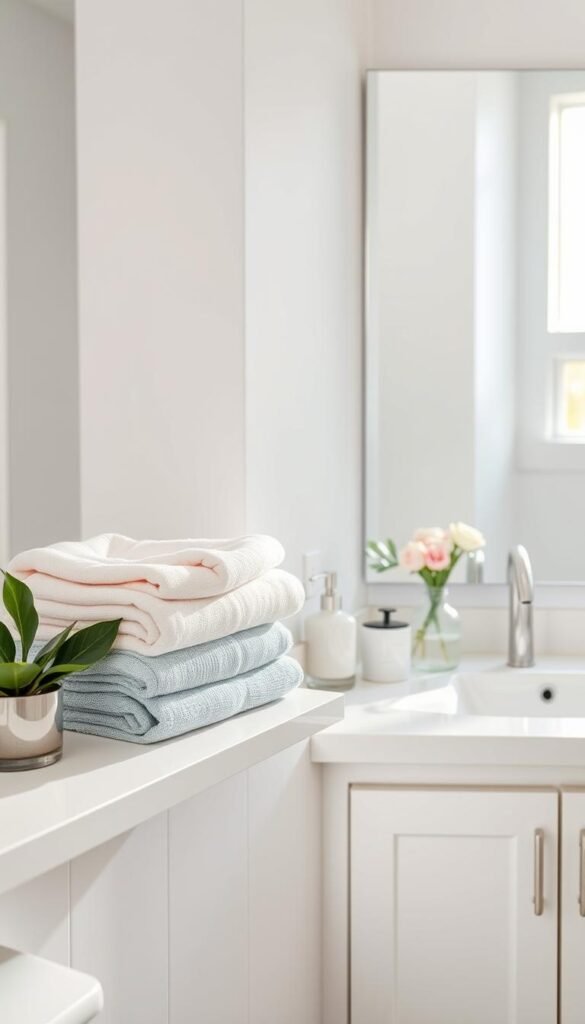
Daily wipe habits that cut weekly scrubbing time
Do this after use: quick sink wipe after brushing, wipe faucet spots, a toilet-seat and handle wipe, plus a one-minute counter clear. These small moves cut soap scum and toothpaste rings before they harden.
Shower and tub: when it belongs on your weekly list
If you see soap scum or you have busy kids, move shower/tub scrubbing to the weekly list instead of monthly. High-use bathrooms need a weekly scrub and a drain check as part of that schedule.
Renter-friendly, moisture-safe storage
Choose tension poles, over-toilet shelves, and adhesive hooks to add space without drilling. Each has pros and cons you should weigh based on bathroom size and load.
| Option | Best for | Watch-outs |
|---|---|---|
| Tension pole caddy | Shower product storage | Can slip if overtightened; test fit |
| Over-toilet shelf | Small bathrooms needing vertical space | Check wobble; secure level |
| Adhesive hooks | Light towels, robes, baskets | Needs clean, dry surface; cure time matters |
Durability and safety checks
Pick rust-resistant finishes and bins with drainage holes. Use non-slip bases for freestanding units and keep heavy bottles low. Test adhesive cure time before loading hooks with towels or robes.
„Small, regular wipes save you from long scrubs later.“
- Why it matters with kids: more splashes and products mean quicker grime. A short wipe strategy reduces full scrubs.
- Micro-bathroom tip: store extras on a slim cart outside the door to cut counter clutter.
Closets, laundry, and the “floordrobe”: systems that don’t require extra time
Turn laundry into a steady flow so weekend piles never take over. Treat the process as small, repeatable actions. This reduces decision fatigue and keeps living spaces usable without extra effort.

Keep the load moving: one small load system
Start one small load in the morning or right after work. Switch it when you pass the machine. Fold a few pieces while dinner warms.
Why this helps: three simple touches spread across the day stop a single big laundry project from consuming your time.
Drop-zone bins for worn-once clothes
Create a compact landing spot. Use one bin for “wear again,” one for “wash,” and a hook to air out items.
This accepts real life — you don’t need perfect, just a named spot so clothes don’t hit the floor.
Renter-friendly closet upgrades
- Hanging shelves: add folded storage; don’t overload the rod.
- Slim hangers: save space; choose sturdy metal or velvet styles.
- Under-bed bags: hide off-season items; label to avoid digging.
Pros, cons, and who benefits
Studio closets gain most from vertical stacking and under-bed storage. Shared closets work best with split zones, duplicate hampers, and clear labels for roommates or couples.
| Solution | Best-for | Pros | Cons |
|---|---|---|---|
| One small load | Busy people, working parents | Prevents weekend overload; low time cost | Needs consistency |
| Drop-zone bins | Renters, small bedrooms | Keeps floors clear; reduces decision fatigue | Needs emptying weekly |
| Hanging shelves & under-bed bags | Studios and seasonal storage | Adds storage without drilling | Can reduce hanging width; label to avoid lost items |
„Reframe laundry as a flow, not a project.“
Entryway and living room reset: control the stuff that lands on flat surfaces
Control the first flat surface someone sees and you change how the whole place feels.
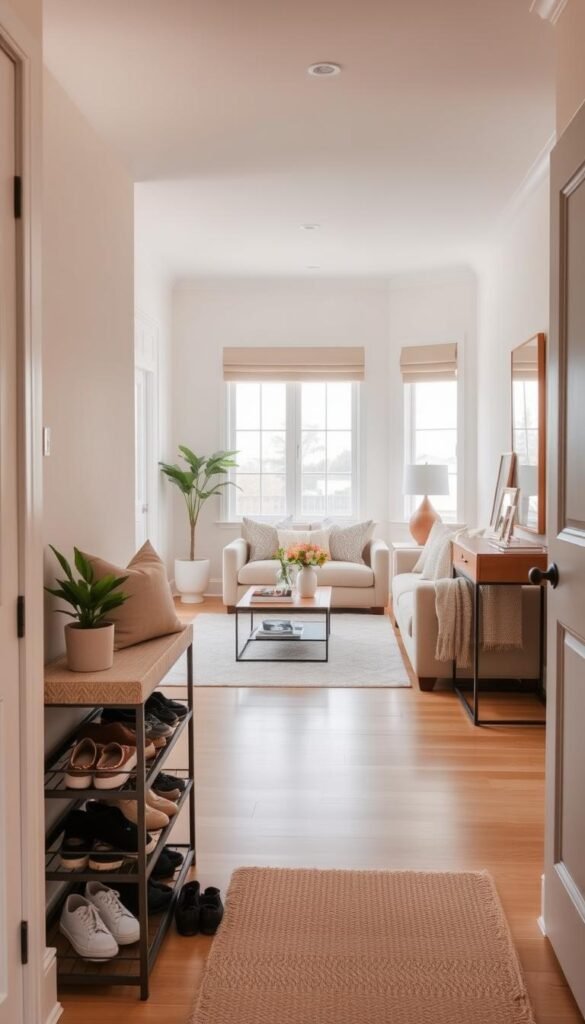
Why this zone matters: the entry and living areas collect incoming items. Mail, keys, bags, shoes, and other items land here. If you corral those things, the rest of the room stays livable and calm.
The landing-strip rule
One home per item. Give mail, keys, bags, and shoes a single assigned spot. That cuts searching and keeps flat surfaces clear.
No-drill, renter-friendly solutions
- Over-the-door hooks — instant install. Pro: fast; Con: may block thick doors.
- Shoe racks — keep floors clear. Pro: visible order; Con: requires a limit to avoid overflow.
- Lidded baskets — hide visual clutter. Pro: neat look; Con: can become a junk bin without a weekly empty.
| Layout | Best-for | Alternative |
|---|---|---|
| Small entry corner | Vertical hooks | Narrow console or adhesive hooks |
| Hallway-only | Slim shoe rack | Wall shelf + small trash bin |
| No-entry (door into living) | Drop tray + basket combo | Garment rack with bottom shelf |
Quick setup and safety
Place hooks at shoulder height. Keep a small trash/recycling bin for junk mail. Add a “return to car” basket for items that leave the property.
„A 60-second nightly reset here makes the whole place look calmer fast.“
For fast comparisons of entryway setups see landing strip options.
Weekly, monthly, and quarterly maintenance that keeps you from falling behind
Set a simple cadence of weekly, monthly, and quarterly checks so small work stays from piling up. This plan lets your short evening resets actually add up to long-term care.

Weekly support that multiplies your effort
Why it matters: brief weekly chores make the rest of your cleaning tasks faster. Aim for one focused session per week.
- Clean bathrooms and wipe sinks.
- Clear sink drains and spot-check traps.
- Dust visible surfaces and wash bedding.
- Mop main floors or quick-swab high paths.
Monthly and quarterly targets
Monthly: quick appliance care—oven wipe-down, dishwasher clean and filter check, fridge shelf wipe. Keep each task under an hour.
Quarterly: forgotten zones—baseboards, doors, lights and fans, windows, and change HVAC or apartment filters to protect durability and air quality over the year.
Simple schedule options
- Rotate by room: week 1 kitchen, week 2 bathroom, week 3 closets, week 4 living areas.
- Rotate by day: assign one small cleaning task to each workday and use the weekend for catch-up.
Stay flexible. If a week is busy, do the smallest version (one bathroom or one drain) and move the rest. Unplug appliances before wiping, don’t mix cleaners, and use a stable step stool for fans.
„Consistent small checks prevent the big, stressful catch-up.“
Conclusion
One short reset per evening makes the next day feel easier and more controlled. Pick five minutes when energy is low or ten when you have more time. Do the high-impact tasks: dishes, sink, counters, floors, and one laundry touch.
Keep a simple schedule: a quick reset each evening plus one focused task each week. Set a timer, choose one room, do a visible reset, then stop. Consistency beats intensity.
Share the load. Ask a family member or roommate to own one small task so you’re not doing everything. Use renter-friendly hooks, bins, and caddies that cost little but give big returns.
Get started tonight: set a timer, reset a surface, and notice how minutes invested now buy you more rest tomorrow. For compact, budget-friendly gear that helps, see these best kitchen finds.