This is a practical buyer’s guide for setting up a small, useful entryway without hype. You’ll get clear ideas about what to buy, what to skip, and what to measure before you order.
Think of entryway tech as a short list of devices and organizers that make leaving and coming home easier. It is not a full smart-home overhaul. You’ll focus on compact items that do more and take up less.
We’ll cover wall organizers, renter-friendly magnetic options, console charging zones, lighting, locks and cameras, plus simple upgrades like benches and runners. I’ll set expectations for setup time, maintenance, space needs, and real benefits.
Decide first on space, power access, noise tolerance, safety, and daily use. Small upgrades change your first impression and save time every day. This guide keeps recommendations honest, budget-aware, and renter-friendly.
Key Takeaways
- Focus on multipurpose items for small spaces to avoid clutter.
- Measure your floor and wall space before you buy any unit.
- Prioritize safety, power use, and ease of daily use over bells and whistles.
- Choose renter-friendly options when you cannot hardwire or drill.
- Expect simple setup and low maintenance for most daily electronics.
What “Entryway Tech” Means in a Small Apartment
Good entryway gear earns its keep by saving seconds and clearing clutter each time you come or go. In a tight space, usefulness beats novelty. Aim for items you will actually touch every day.
Reduces friction means the change must speed routines, stop lost keys, or improve safety. If an item doesn’t do one of those, skip it.
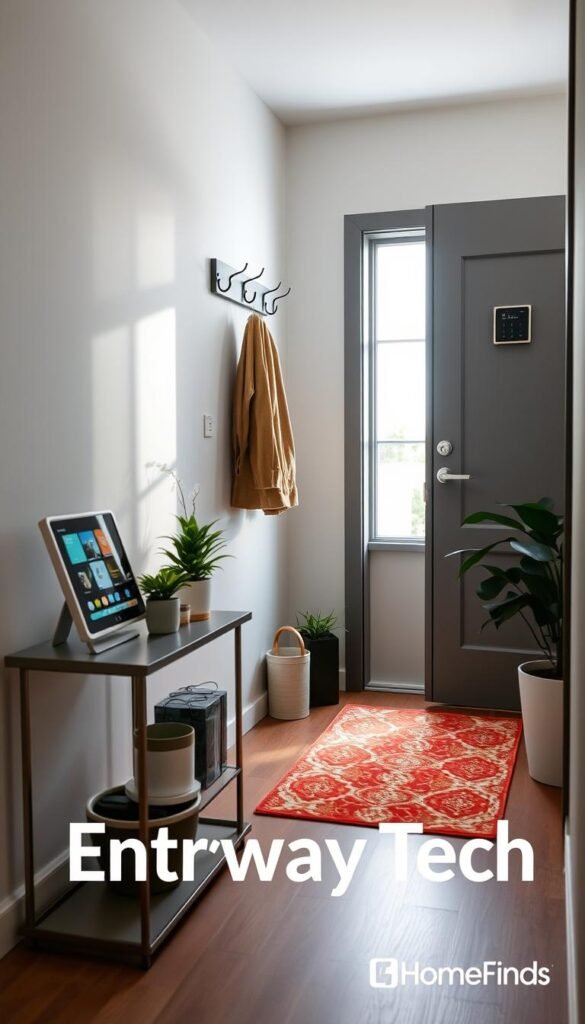
Common, renter-friendly wins are a slim wall rack, a magnetic key holder, motion lighting, and a small mail tray. These save floor space and improve storage by matching what you drop at the door: keys, bags, shoes, and packages.
Avoid oversized furniture, complex hubs you won’t manage, and noisy or blinding fixtures. Too many gadgets create cables, blinking lights, and extra maintenance.
One rule of thumb
- Pick one anchor solution — a wall organizer or narrow console — then add only supportive devices that fit your routine.
Real benefits: What You’ll Actually Notice Day to Day
A compact, intentional setup by the door delivers clear wins you feel every morning and evening. Small changes save time, cut stress, and make your place feel more controlled. These are practical, renter-friendly moves you will use every day.
Faster exits with a reliable “drop zone”
Stop hunting for keys and badges. Put keys, mail, and your badge in one consistent spot by the door. When items always live in the same place, you leave faster and forget less.
Faster exits mean fewer late starts and lower morning stress. That small time saving adds up over weeks and improves daily life.
Safer arrivals with better lighting and cord control
Good light reduces trips. A well-placed, energy-saving light makes the path clear at night. It also calms the space when you come home tired.
„Unmanaged cords near the door are a real trip risk, especially in narrow halls.“
Keep cords tucked away and avoid power strips across walkways. This lowers hazards and keeps the space tidy.
Less mess at the door with smarter shoe and coat control
One spot for shoes, one for coats, and one for bags keeps dirt out of the main rooms. Less pile-up means less sweeping and fewer stains.
Be honest: a weekly reset prevents any organizer from turning into another clutter shelf.
- Best practice: assign one place for keys/mail, one for shoes, and one for bags.
- Check lighting and cord routing for safety and energy savings.
- Keep storage simple and weekly-maintained for consistent benefit.
Who needs this (and who doesn’t)
If you find yourself stepping over bags or hunting for keys, a focused door zone will help. This section helps you decide if upgrades are worth the spend and effort.
Renters and small-space households
Renters benefit the most. No-drill or wall-mounted options give big organization gains without remodeling. They keep walls intact and work on doors, metal frames, or with adhesive strips.
In small spaces, every inch counts. If your door shares space with the living room or kitchen path, choose slim, vertical solutions that stay out of the walk path.
Families juggling gear
If you have a family with backpacks and sports kits, pick higher-capacity hooks and robust racks. Heavy items need strong anchors and a clear place to land so morning routines move faster.
Energy and safety minded people
Energy saving readers should prioritize LED lighting and low-power chargers to cut waste. For safety, improve lighting, remove floor obstacles, and consider reliable locks or cameras where allowed.
When not to buy
- If a closet sits right by your door and nothing piles up, you may only need better lighting and a small tray.
- Quick self-check: if you regularly lose keys, trip over shoes, or dread the mess, you’re the target buyer.
Measure First: Space Requirements That Prevent Regret
Start with a tape measure, not a wishlist; narrow walkways are the biggest source of regret for buyers.
Depth matters most. Measure the clear path from the door into the room. Narrow walkways force returns and wasted purchases.
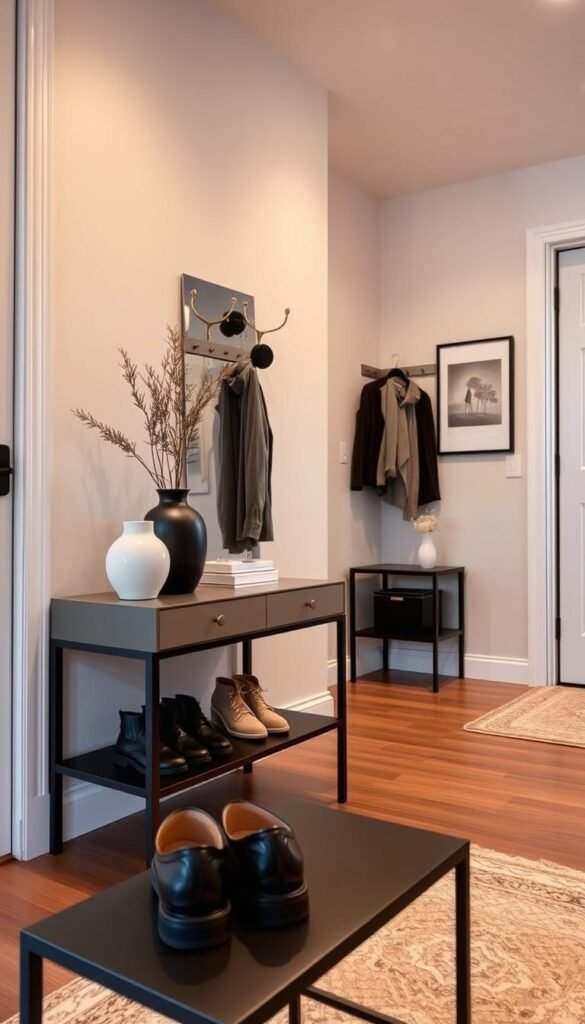
Depth and practical targets
Prioritize slim solutions that keep the walk path clear. If your door opens inward, allow extra clearance so the door and a table or bench never collide.
Wall vs floor choices
Floating shelves and wall racks free floor space. They make cleaning easier and suit renters who avoid drilling into studs.
Door swing, foot traffic, and shoes
Mark where shoes actually land when you come in. Place storage there, not where it looks nice.
- Tape test: Tape the footprint of any bench, table, or shoe cabinet before you buy.
- A bench helps with putting on shoes, but only if it doesn’t pinch the hallway; consider a floating bench when possible.
- Watch for door-swing conflicts: bulky hooks, deep tables, or wide keypads can hit the door or block the handle.
For more on fast setups versus full solutions, see this quick comparison.
Wall-Mounted Organizers That Save Space
Using vertical wall surface turns wasted space into reliable storage and keeps your floor clear for walking and cleaning.
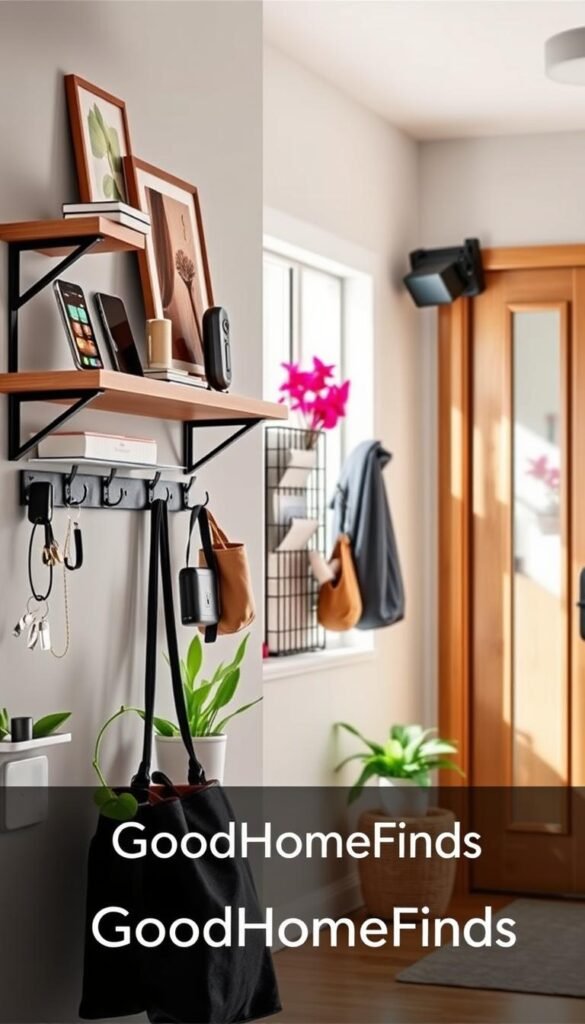
Why designers say “use your wall” in small spaces
Walls act as free storage. Jill Singer recommends consolidating functions on the wall to make a small room feel more open. A single ledge with hooks replaces several bulky pieces and reduces visual clutter.
Scout Regalia SR Wall Rack
Pros: Powder-coated aluminum, 17.5″ wide with a 2.5″ ledge and sturdy curved hooks. It serves as a shelf and hook bank for daily essentials.
Cons: Requires install; heavy loads are safest on a stud. Rated to 50 lb on drywall, more secure if screwed into framing.
Schoolhouse Mollie 6 Hook
Pros: Narrow footprint (under 8″) with high capacity (up to 110 lb). Hardware included and ideal for heavy bags or coats.
Cons: Mount into a stud at max load for safety.
Umbra Estique Organizer
Pros: Basket (~12″ x 3.5″) plus five hooks. Great for mail, keys, and light totes. Keeps small pieces from sliding off a ledge.
Cons: Hooks hold about 5 lb each. Not for loaded backpacks or winter coats.
Most Modest Walter Wall Shelf
Pros: Powder-coated steel, 5″ projection, comes in 11/22/36″ lengths. Magnets can hold notes and the integrated cleat keeps it flush.
Cons: Needs proper anchoring to avoid becoming a clutter shelf; tested to hold a 10 lb tote on drywall.
- How to choose: If you need mail + keys, pick a slim ledge. For heavy bags, prioritize weight rating and vertical hooks.
- Setup notes: Most installs are under an hour with the right anchors; stud mounting is recommended for high loads.
- Maintenance: Clear the ledge weekly and check fasteners so wall storage stays useful, not a dumping ground.
Magnetic Entryway Tech for Renters and No-Drill Setups
For no-drill setups, magnetic mounts give immediate, low-effort storage where you need it most.
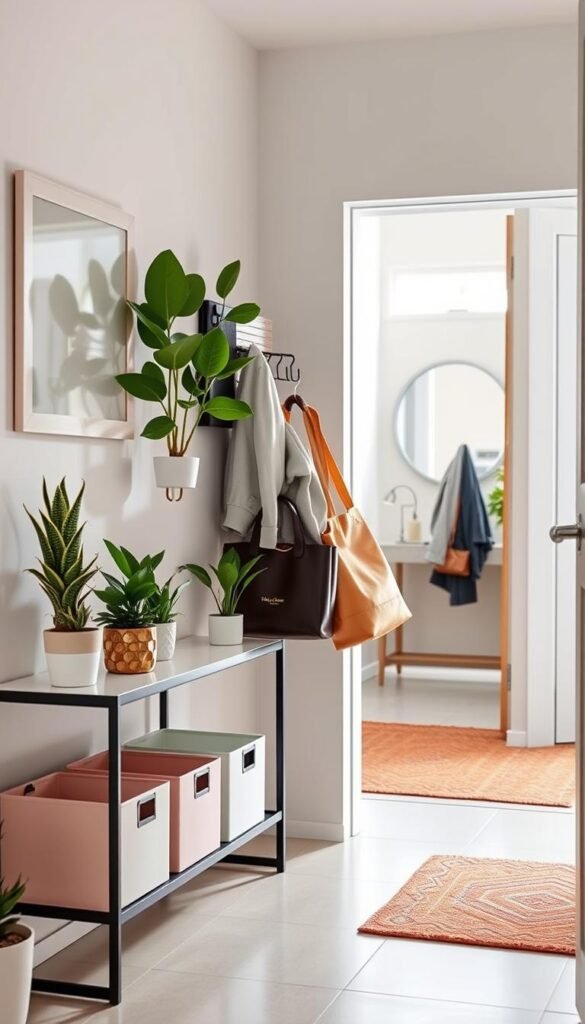
Practical, renter-friendly, and quick to install. Magnetic holders stick to metal doors, fridges, or utility panels and create a tidy spot for keys and mail in seconds. They are the fastest upgrade when you can’t or don’t want to drill into walls.
Yamazaki Rin Magnetic Key Holder: stick-on storage for keys and mail
What it is: a 7″ wide rack with five hooks, room for letters, and a magnetic back. It also ships with screws and anchors if you decide to install permanently.
- Pros: true no-drill use on metal surfaces, slim profile, holds a couple sets of keys and mail.
- Cons: 4 lb capacity — not for heavy bags or loaded backpacks.
- Setup: usually under 15 minutes. Maintenance is sporadic dusting and watching weight limits.
Where magnetic mounting works best — and where it won’t
Best spots include the inside of a metal front door, the side of a fridge close to your path, or a metal utility panel if landlords allow it. These locations keep keys near the door and off counters.
It won’t hold well on hollow wood doors, textured paint, or painted metal with weak magnet pull. Avoid any place the rack can hit a closing door or swing loose when the door slams.
Quick safety tip: place the holder so keys don’t snag clothing or hit the handle. If magnets fail, opt for a slim wall rack with removable adhesive strips or a small tray on a shelf as an alternative.
Console Table “Tech Zone”: Charging, Catch-All Storage, and First Impression
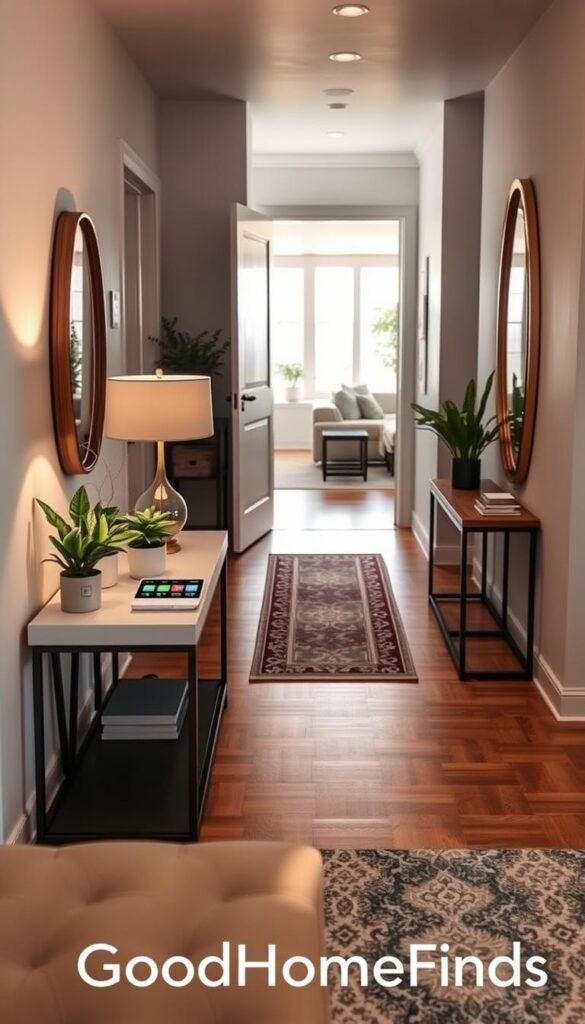
A slim table beside the door becomes a reliable place for phones, wallets, and a quick reset before you leave. It creates a visible landing strip and gives you one consistent charging spot for daily electronics.
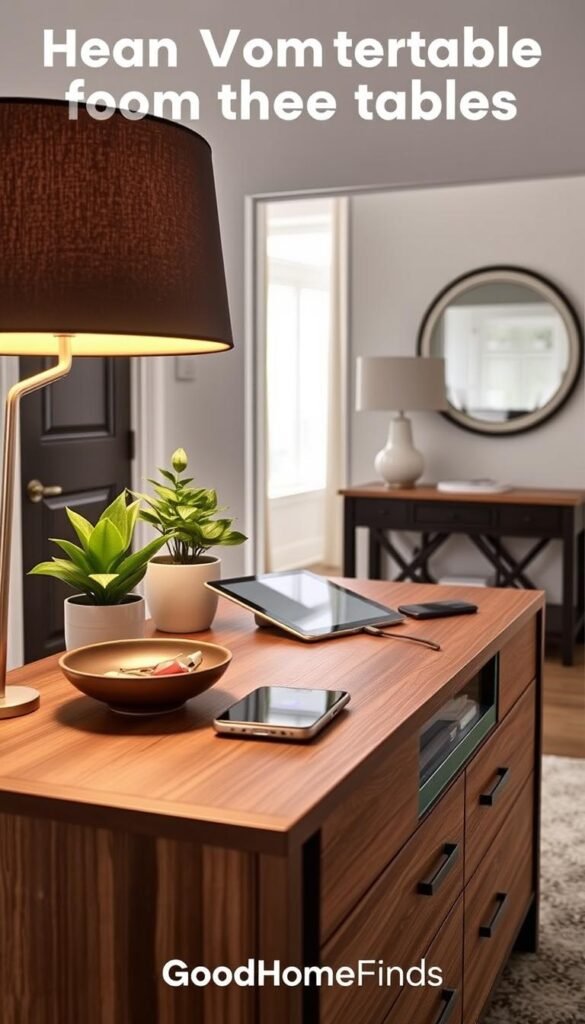
Sizing and when to buy
Buy a console table when you need a tidy drop zone and a charging hub. Pick a narrow depth (10–12 inches) for tight halls so people don’t bump it while passing.
Charging basics
Use one surge-protected power strip mounted under the table. Keep cables short and bundle slack behind the leg so cords don’t trip or look messy.
Hidden storage and styling
Place two baskets under the table for shoes, hats, and extras. Baskets hide clutter but check them weekly so they don’t overflow.
Style smart: one tray for keys and mail, a small vase or plant for warmth, a short stack of books for height, and a mirror to bounce light and boost your first impression.
Real note: cheap tables wobble and wear faster. A sturdier console feels safer when you sit or lean while putting shoes on.
For compact storage ideas and options, see the best entryway storage solutions.
Entryway Lighting Tech That’s Bright, Efficient, and Quiet
A single, quiet fixture can change how safe and warm your small hall feels. Lighting is practical gear: it improves safety, sets mood, and helps you find keys fast without adding gadgets.
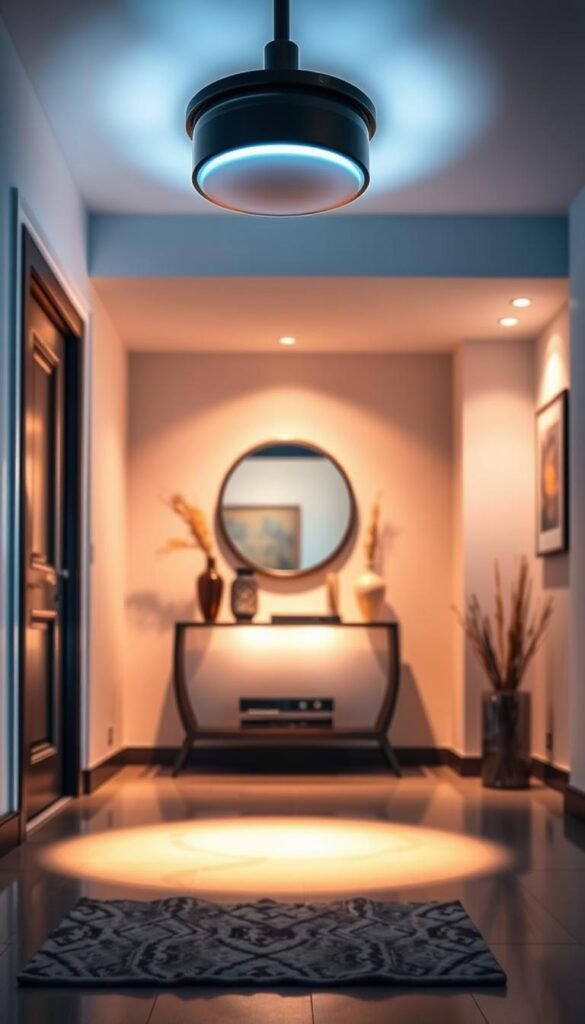
Flush vs semi-flush
Flush mounts sit tight to low ceilings. Pick these when headroom is tight or you share a narrow stair landing.
Semi-flush fixtures hang a few inches lower and spread light wider. Use them when you want softer spread but still need clear headroom.
Light that feels welcoming
Aim for warm, steady light that shows shoes and steps without harsh glare. A 2700–3000K bulb reads colors well and feels inviting.
Tip: add a mirror to bounce light and make the room feel airier.
Energy saving basics
LED bulbs use far less power and last years. They cost more up front but save money if the switch gets flipped often.
Choose an LED with the lumen output you need (around 800 lm for a small hall) and check packaging for estimated run cost.
Noise levels and quiet performance
Avoid cheap fixtures and low-cost drivers that buzz. In small apartments, even a faint hum feels loud.
Buy fixtures from reputable brands and test bulbs before final install. A quiet fixture is worth paying a little more for daily peace.
- Why it matters: good light boosts interior design, makes colors look truer, and improves your first impression.
- Maintenance: keep one spare bulb and swap before you’re left in the dark.
- Practical buy: flush for very low ceilings; semi-flush for a bit more spread.
For simple budgeting on small upgrades and bulb replacements, see a short guide on basic bulb budgeting.
Smart Locks and Door Security Basics Without the Hype
Good door hardware removes guesswork—so you get in and get on with your day. Pick a model that prioritizes reliability and simple fallbacks over gimmicks.
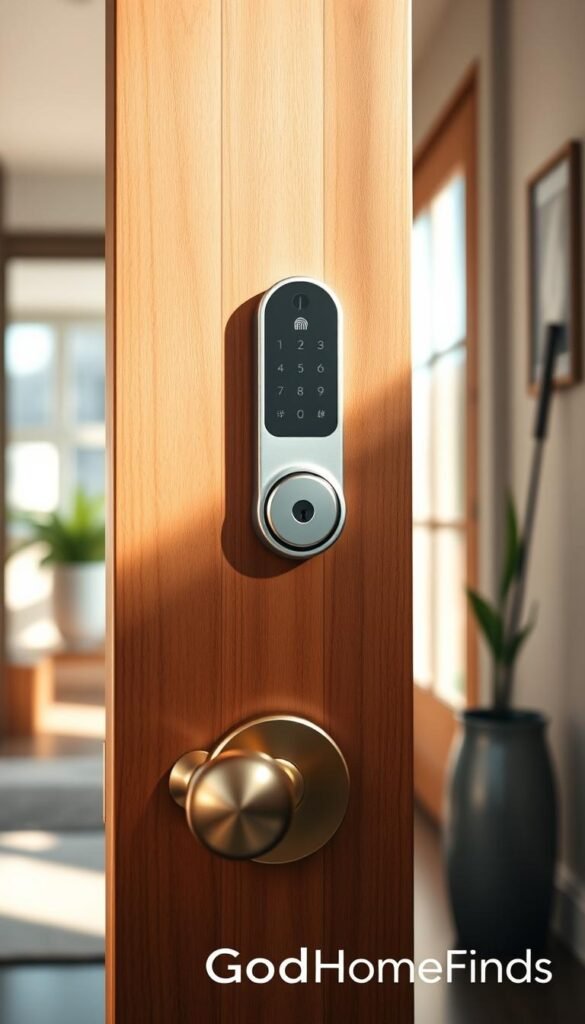
What’s worth paying for in a small apartment
Buy reliability: a lock that wakes up, turns, and closes without constant app fiddling. Choose solid mechanical design, a reputable brand, and clear guest access methods.
Battery upkeep and offline reliability
Set a calendar reminder to replace batteries before they die. Low-battery alerts are helpful, but don’t rely on them alone.
If Wi‑Fi drops, you still need to get in. Prefer locks that offer keypad codes or a physical key as a fallback.
Space and fit considerations
Measure door clearance and frame width before you buy. Bulky keypads and oversized handles can block narrow space or clash with screen doors.
- Honest cons: smart locks need maintenance—batteries, occasional recalibration, and firmware updates.
- They can be frustrating if you pick a finicky model. Test before you commit.
Practical rule: a dependable lock plus a well-lit door often beats a complicated system you don’t trust. For a practical overview of models and features, see this smart door locks guide.
„A simple, reliable lock protects your home more effectively than an elaborate system you avoid using.“
Video Doorbells and Peephole Cameras for Apartments
A compact door camera is often the single device that reduces missed packages for apartment dwellers. It gives you a quick look from your phone when you can’t get to the door. That practical benefit alone makes it worth considering if deliveries are frequent.
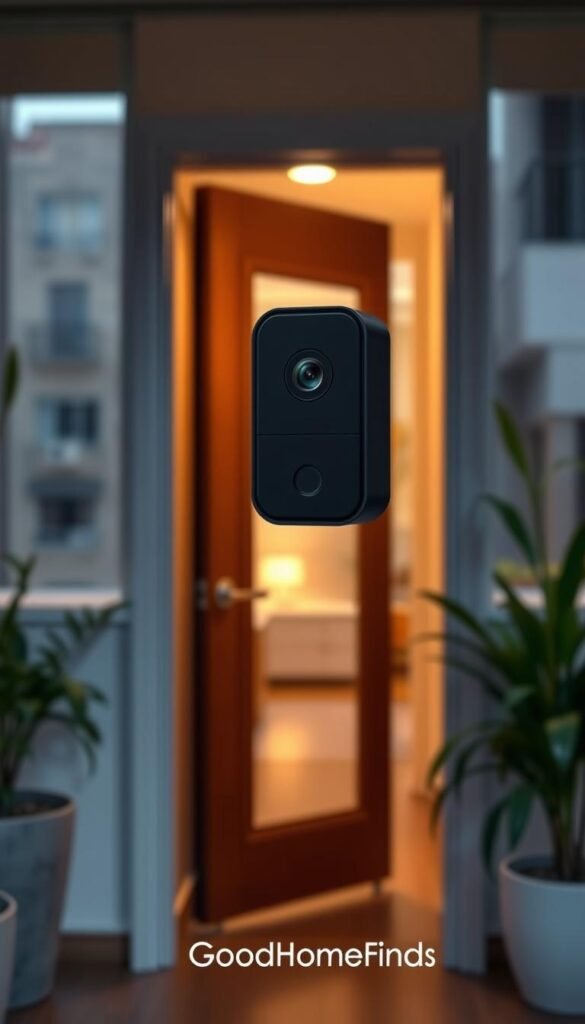
When a camera makes sense
Use one when you get many deliveries, live in a building with a shared hallway, or need to check on guests before you open the door. It saves time and lowers the chance a package vanishes.
Privacy and placement realities
In multi-unit buildings you must be careful where the lens points. Avoid angles that capture neighbors’ doors or common areas. Follow your lease, HOA, or building rules.
Short rule: point the camera at your own door and porch only. That keeps privacy concerns low and reduces complaints from other people in the building.
Power choices and simple maintenance
Battery models are renter-friendly and quick to install, but charge them on a schedule. Wired units are more reliable long-term, but may need landlord approval.
- Check battery level weekly at first, then monthly.
- Clean the lens twice a season so night recordings stay clear.
- Test alerts regularly so you don’t learn about a missed delivery after it’s too late.
„Video helps only when notifications are reliable and not a constant nuisance.“
Honest pros and cons: video cameras add peace of mind and cut missed deliveries, but they require occasional maintenance and good placement to protect privacy and safety. If you get frequent packages, a camera is one of the most useful additions you can make to your small entryway without overhauling the house.
Shoe and Coat Control: Tech-Adjacent Upgrades That Work
A simple bench, a washable runner, and a well-placed mirror change how the space works each day. These are low-effort, high-return fixes that cut mess and reduce trips without adding power or apps.
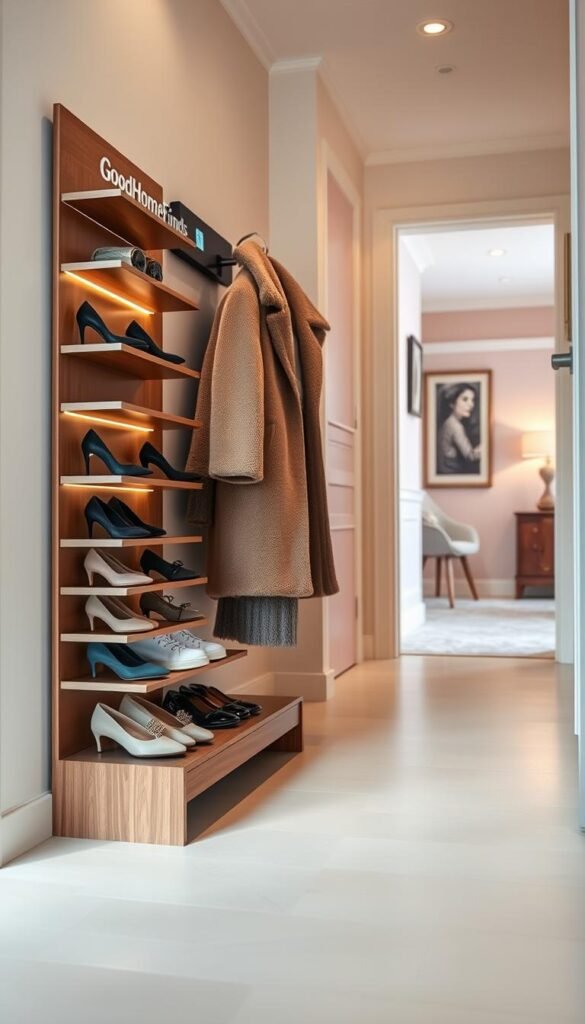
Bench seating that fits narrow halls
Pick a slim bench so you can sit to remove shoes without blocking the path. A wall-mounted or floating bench preserves floor area and keeps the walk clear.
Pros: makes putting shoes on easier and keeps clutter off the floor. Cons: benches attract piles if you don’t set rules for what belongs there.
Durable, washable runners for heavy traffic
Choose a runner rated for grit and water. A washable runner protects floors and wipes off salt, mud, and spilled coffee faster than sweeping alone.
- Why it matters: protects floors and shortens cleaning time.
- Quick tip: pick a pattern that hides dirt so it looks tidy between washes.
Mirror placement that increases light and useable space
Set a mirror where it reflects available light and offers a last check before you leave. A mirror makes the room feel larger and bounces light into darker corners.
Style note: choose one strong focal piece — a patterned runner or a bold mirror — not both, to keep the area intentional.
Safety benefit: fewer shoes in the walkway means fewer trips, especially at night or when your hands are full.
For compact, practical combos and quick installs, see this small-space fix mix.
Budget vs Premium: What Changes When You Spend More
Spending a bit more upfront changes how long your gear lasts and how safe it is.
What you get by paying up: better materials, higher weight ratings, stronger anchors, and finishes that resist chips and scratches. A powder-coated aluminum rack like the Scout Regalia holds up to 50 lb on drywall. Heavier powder-coated steel options, such as the Most Modest Walter, feel firmer and resist bending.
Materials and durability
Powder-coated metal resists scratches and keeps a clean finish. Steel offers higher weight capacity. Solid wood looks warm but needs good joinery to stay strong under daily use.
Safety and weight capacity
Cheap hooks and vague load ratings are a red flag. If you plan to hang heavy backpacks or winter coats, choose pieces with clear weight specs (Mollie lists up to 110 lb). Weak anchors can fail and cause injury.
Design vs function
Premium finish improves first impression, but function comes first. Spend on the anchor piece—a sturdy rack or console—and you often skip several cheap items later.
| Feature | Budget | Premium |
|---|---|---|
| Common materials | Thin metal, MDF, low-grade wood | Powder-coated steel/aluminum, solid wood |
| Typical weight rating | 5–30 lb per hook | 50–110 lb per unit |
| Durability | Shorter, chips and warps | Long-lasting, scratch resistant |
| Average price | $20–$70 | $100–$300+ |
- Shopping checklist: published weight capacity, included hardware, slim depth, easy-to-clean surfaces.
- Rule of thumb: if it will hold heavy loads, skip the cheapest option.
- For practical budget ideas and a real-life update, see this budget-friendly entryway update.
Setup time: How Long It Really Takes (and What Makes It Hard)
Setup time varies by choice and where you put the item. Small pieces often install fast. The hard part is choosing the exact way they fit your daily path.
Quick wins in under 15 minutes
Magnetic racks like the Yamazaki Rin and simple catch-all trays stick on or sit down in minutes. They are renter-friendly and low effort.
Note: fast is great, but magnets and slim hooks have real weight limits. Use them for keys, mail, and light items only.
Standard installs in under an hour
Most wall racks and small shelves go up in under an hour if you have a drill, a level, and the included template. Measure twice, mark once, then follow the hardware guide.
Products such as Scout Regalia or similar offer templates and clear weight specs. Installing into drywall with proper anchors takes slightly longer but pays off in stability.
Harder installs: mounting for heavy loads
Anything that will carry coats, loaded bags, or kids‘ gear needs stud mounting or heavy-duty anchors. That raises difficulty and time.
- Set expectations: most upgrades are quick; the hard part is doing them safely and where you will actually use them.
- Renters: check your lease and consider no-drill options when holes are restricted.
- Space limits: tight halls make placement tricky. Avoid blocking door swings or the main walk path.
Practical tip: lay out your plan with painter’s tape, live with the placement for a day, then mount once you know it works.
Power Consumption, Cable Management, and Safety at the Door
Power planning at the door keeps small spaces safe and stops cords from turning into daily annoyances. This matters because the door zone gets the most foot traffic and the most dropped items.
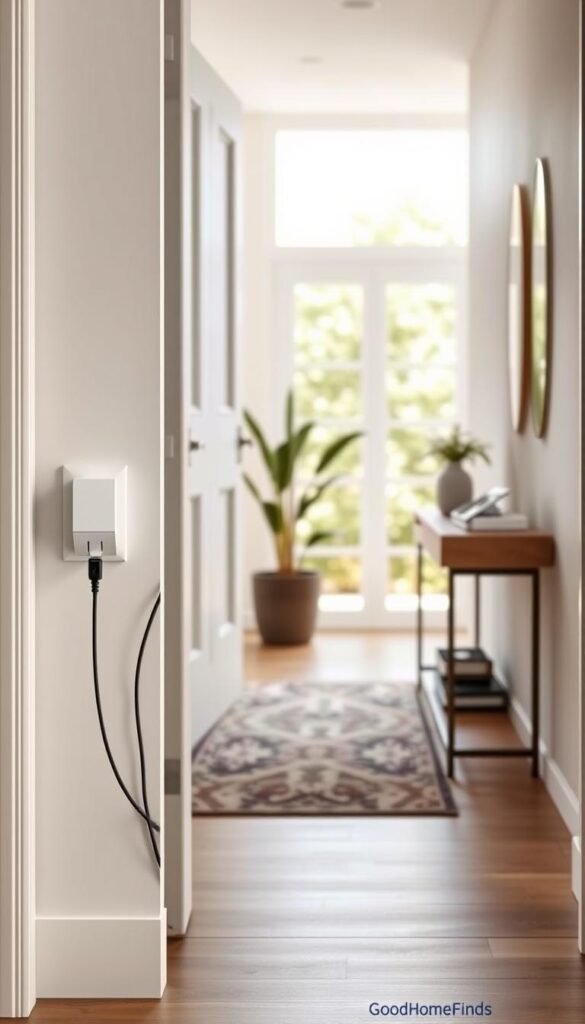
Choosing low-power devices that can stay plugged in
Pick chargers and lights that run cool and use little power. LED lights and low-watt USB chargers are good choices.
Why it helps: low-draw devices can stay plugged in safely and cut replacements and fuss.
Cord routing that won’t trip you (or ruin the look)
Run cords tight to the wall or behind a console. Avoid crossing the floor where people walk.
- Use short cables and tuck slack into a cable box or tray.
- Mount a surge protector under the table to keep the visible look clean.
For more detailed tricks, see this cable management tricks.
Overloading outlets: simple rules for daily electronics
Do not plug many high-draw items into one outlet. A quality surge protector is worth the small cost.
Placement matters: keep power strips away from where wet shoes and umbrellas drip to reduce risk and preserve the look of your home.
„In a tight space, one loose cord becomes a daily trip risk.“
Maintenance: Keeping Entryway Tech Reliable and Clean
Small daily upkeep turns a messy drop zone into a reliable part of your routine. Good maintenance keeps things working and keeps clutter from piling up.
Weekly resets
Sort mail right away. Wipe ledges and empty baskets so they do not become a hidden junk drawer. A two-minute sweep of the storage spots prevents piles from growing.
Hardware check
Tighten hooks and check anchors monthly. Loose screws and weak anchors cause sudden failures, especially if you hang heavy bags every day. A quick torque with a screwdriver saves breakage later.
Battery and bulb cadence
Set reminders to swap batteries and bulbs before they die. A fresh battery or a warm LED keeps a light reliable and avoids last-minute fixes.
Cleaning tips and simple rules
- Wipe shelves, chargers, and the light fixture every week.
- Shake and reset baskets so dirt does not hide at the bottom.
- Keep cords bundled and replace frayed cables promptly.
Honest pro/con: maintenance is small but consistent. If you will not keep a routine, choose fewer items and simpler storage. Ten minutes a week keeps your entryway reliable and guest-ready.
For a quick how-to on simple routines, see keep your entryway clean.
Common mistakes that waste money (and space)
Most costly errors come from buying pieces that look right in photos, not fit your actual door area. That mismatch wastes money and reduces daily usability.
Buying deep furniture that blocks the walkway
Why it matters: a deep table or bench narrows the walk path and makes the space feel cramped.
How it happens: you shop images, not measurements, and forget door swing and bag clearance.
Mounting on drywall when you need a stud
Risk: drywall anchors can pull out under heavy coats or loaded backpacks.
Fix: locate a wood stud or use heavy‑duty anchors rated for the load. For renters consider floor solutions or reinforced cleats that distribute weight.
Overcomplicating with features you won’t use
Extra app features, sensors, or multi‑device setups add setup time and maintenance.
Buy simple, reliable items that support your routine. A quiet, dependable lock or a plain hook often beats an elaborate system you ignore.
Ignoring noise and harsh light
A buzzing fixture or glare makes the area stressful every time you come home.
Choose LED fixtures with quiet drivers and warm color temperature. Test bulbs before final install.
- Biggest mistake: buying deep furniture that narrows the walk and spoils the space.
- Measure depth and door swing before you buy.
- Confirm weight capacity and prefer stud mounts for heavy loads.
- Pick quiet lighting and avoid gadget overload.
| Mistake | Risk | Practical fix |
|---|---|---|
| Too‑deep table or bench | Blocks walk path, causes trips, wastes floor area | Choose slim profiles (10–12″), tape the footprint first |
| Drywall mounting for heavy loads | Rack rips out, damage and injury risk | Mount into a stud or use rated anchors/cleats |
| Overly complex features | Time sink and low use | Prioritize core functions; skip extras you won’t use |
| Buzzing fixtures and harsh light | Stressful arrival, poor visibility | Buy quiet drivers, warm LEDs, and test before install |
For broader pitfalls in layout and finishes, see these common interior design mistakes.
Conclusion
Focus on one reliable anchor and build only what you will use every day. Measure first, pick a slim wall rack or narrow console, then add lighting and simple security when it fits your home.
Keep storage minimal. A clear plan saves money and keeps the design calm for small spaces. A tidy setup improves how your home greets you and your guests.
Start staged: buy one useful item, take one measurement, and try one new habit this week. Test the placement for a few days before adding more ideas.
Maintain with a weekly reset and quiet, efficient lighting. Pay for durability where it matters—hooks, mounts, and reliable fixtures—then keep the rest simple and renter‑friendly.
For inspiration on welcoming spaces and quick, drill‑free options see a gallery of best entrance halls and this practical renter setup comparison.