Reset in 10–20 minutes. You can get your space back to neutral with a quick, repeatable flow. Start with clearing counters, handling dishes, and wiping surfaces. Then contain trash and run a fast floor pass so crumbs do not spread.
Keep tools renter-friendly. Use no-drill hooks, tension rods, and flat-storing items that fit small spaces. A gentle vinegar and water mix works well for daily wipes. Promptly store leftovers in airtight containers with date labels to keep food safe.
Why this matters: Regular resets cut grease buildup, reduce odors, and limit pests. They also shrink weekend deep-clean time. This guide will show prep tips, clean-while-you-prepare moves, the fastest step-by-step reset, grease fixes, and apartment-safe odor control.
Expect practical product picks with clear pros and cons and budget options under $25 and under $50, plus quick recommendations for roommates, families, and frequent fryers. For a useful roundup of problem-solving tools and cleaning mixes see a related list here: smart cleanup tips.
Key Takeaways
- Follow a simple step plan to reset in 10–20 minutes.
- Daily 2-minute wipes and quick floor passes cut grease and odors.
- Use renter-friendly, no-drill storage and flat-storing tools.
- Vinegar + water is a practical surface cleaner for daily use.
- Pack leftovers in airtight, dated containers for safety.
- Budget options and clear „best for“ picks help you buy wisely.
Set up your after-cooking reset routine before you start cooking
Begin by arranging a compact work system that keeps dishes and scraps moving. This upfront step saves time and prevents mid-meal pileups.
Empty the dishwasher first. Make this your default so you can load as you go. An open dishwasher prevents a sink full of dirty dishes and keeps the process flowing.
Simple zones for a small space
Create three small zones: a prep zone with a cutting board and knife, a cooking zone near the stove, and a cleanup zone near the dishwasher or sink. Keep each zone clear of extra tools.
Organize ingredients and containers
Pull ingredients and containers out at once and measure upfront. Put each item away immediately after use. This reduces clutter and decision fatigue.
Use a countertop trash bowl
A small lidded bowl or mini bin holds scraps and packaging so trash doesn’t spread across counters and floors. Keep it away from edges and raw-meat packaging.
„A quick setup kit in a single caddy makes studio and shared spaces work like a pro space.“
| Item | Why it helps | Budget tip |
|---|---|---|
| Empty dishwasher habit | Keeps dishes moving; avoids sink backups | Set a 2-minute pre-start reminder |
| Three-zone layout | Reduces shuffling and spills | Use a cutting board and one tray |
| Trash bowl | Contains scraps; cuts trips to waste can | Small lidded bowl under $10 |
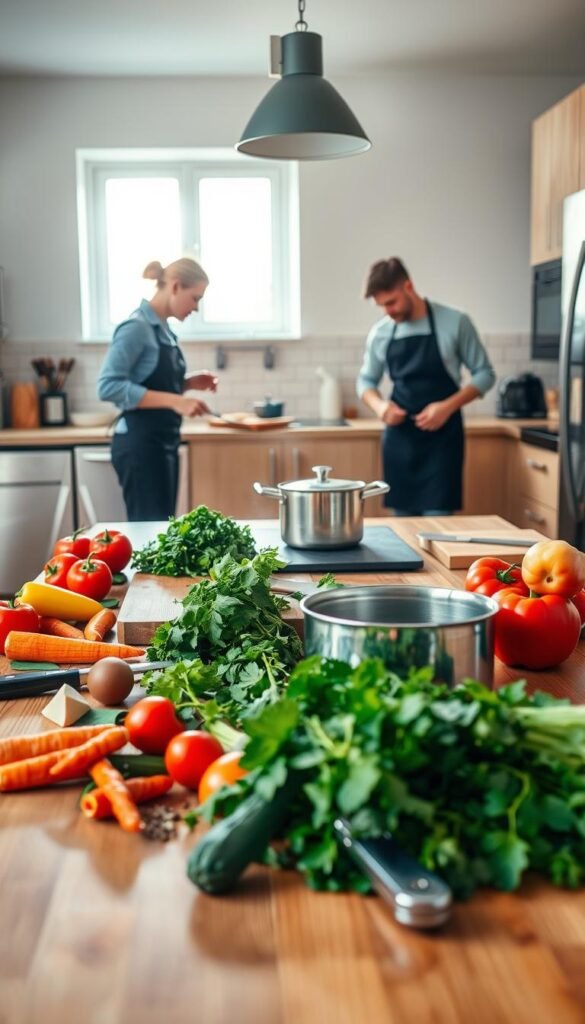
Skip bulky countertop gadgets. They steal prep space and add more surfaces to clean. Keep durable, easy-to-store tools in a single caddy for daily use.
Clean as you cook to prevent a sink full of dishes
A steady rhythm of short actions keeps the mess from growing. If a task takes under 30 seconds, do it now. This rule stops small tasks from piling into a big mess.

Keep a damp cloth nearby
Keep a microfiber cloth within reach for spills and splatter. Wipe wet spots right away so sticky residue does not form. Rinse and ring the cloth often to stay sanitary.
Use separate cutting boards
Use one board for raw proteins and another for produce. This reduces cross-contamination and cuts cleanup time. Swap boards, rinse, and set aside to dry between uses.
Soak pots and pans while you finish
When you’re done with a pan or pot, fill it with hot, soapy water right away. Let it soak while you finish the meal. Stuck-on food lifts with minimal scrubbing later.
Load the dishwasher as you go
Put bowls, measuring tools, and utensils directly into the dishwasher during prep. That keeps counters clear and your sink usable for quick rinses.
When to pause and reset
Two easy windows: when something goes in the oven and while water comes to a boil. Use these minutes to rinse, wipe, and clear a few items. In shared spaces, keep your cleanup supplies on a single tray so you can clear the counter fast and avoid conflict.
- Core rule: if it’s under 30 seconds, handle it now.
- Simple, renter-friendly tools make this way practical and repeatable.
For a compact list of essential tools that support this flow, check these essential tools.
Kitchen after cooking: the fastest step-by-step reset that actually sticks
Start with food safety: pack leftovers first. Use shallow airtight containers so food cools faster. Seal lids and add a date label. This saves fridge space and cuts mystery containers.
Handle dishes fast
Load the dishwasher first to remove the biggest volume. Hand-wash only pans, delicate glass, or items that won’t fit. This keeps the sink free for rinses and saves time.
Wipe surfaces and tackle grease
Wipe countertops, stove, and sink with a gentle cleaner or a vinegar + water mix. For grease, wipe while surfaces are warm, not hot. The oil lifts faster and needs less scrubbing.
Floors, trash, and one-touch put-away
Do a fast sweep or vacuum around the stove and sink to remove crumbs that attract pests. Take out any trash containing food and sanitize the can on a regular schedule to prevent odors.
Finish with one-touch: put each item directly into its home spot. Don’t drop things on counters or chairs. This keeps surfaces open and the routine repeatable.

| Step | Why it helps | Quick tip | When to do it |
|---|---|---|---|
| Leftovers first | Food safety; saves fridge space | Use shallow containers + date labels | Immediately after plating |
| Dishes | Clears sink; reduces mess | Dishwasher load first, hand-wash the rest | While water boils or oven cooks |
| Wipe surfaces | Stops grease and stains | Vinegar + water for daily wipes; sensitive surfaces need special cleaner | Once dishes are out of the way |
| Floors & trash | Prevents pests and odors | Sweep crumbs; take out food trash; sanitize can weekly | Final pass before you sit down |
For a handy cleaning mix and tools that speed this exact flow, check this cleaning helper mix to keep the routine short and renter-friendly.
Grease, splatter, and stuck-on food: practical fixes for the toughest messes
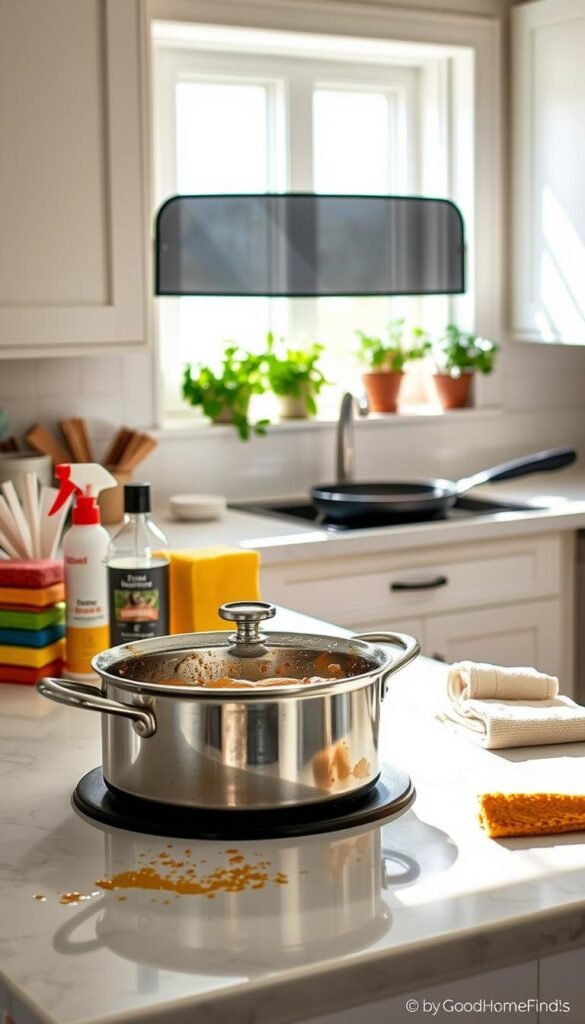
Start by stopping oil where it flies. Use a deep pot or Dutch oven for frying to limit airborne grease and reduce stovetop cleanup. Prevention is the cheapest and most reliable method.
Splatter control tools that reduce stovetop cleanup
Use no-drill, renter-friendly tools that store flat or nest. A mesh splatter screen blocks airborne oil droplets and keeps pans cleaner. A silicone lid cover rinses easily and fits many pots. Add a clip-on thermometer to avoid overheating oil and excess smoke.
| Tool | Pros | Cons |
|---|---|---|
| Mesh splatter screen | Cheap, effective, flat storage | Needs washing; reduces visibility |
| Silicone lid cover | Easy to rinse; flexible | Can trap steam; bulky if not folded |
| Clip-on thermometer | Prevents overheating; safer oil use | Extra item to store; battery or calibration |
Baking soda paste for burnt-on pans and stubborn residues
Mix baking soda with a little water to form a paste. Spread on burnt areas, let it sit 15–30 minutes, then scrub gently with a non-abrasive pad. This lifts stuck-on food without harsh chemicals.
Stainless steel and delicate surfaces: safe cleaning methods and what to avoid
Wipe grease while warm for easier removal. For stainless steel, use a soft cloth and a mild, non-abrasive cleaner. Avoid steel wool and harsh acids on stone or sealed surfaces.
When to escalate: Spot-treat oven or heavy residue first with safer methods before using heavy-duty chemicals in a small space.
Worth it for renters: pick flat, nesting tools and simple cleaners. For practical product suggestions that save time, see this best finds list.
Odors after frying or sautéing: ventilation-first tactics for apartments
Frying and searing send tiny oil particles into the air that cling to fabrics and walls. Move that air out first. Ventilation is the fastest way to cut lingering smells.

Boost airflow with a hood and window fan
Run your range hood from preheat through cooldown and for 15–20 minutes after frying. If the hood is weak, crack a window and place a box fan blowing outward to push greasy air outside.
Vinegar steam deodorizing method
Simmer 1 cup white vinegar + 1 cup water for about 15 minutes. The steam neutralizes odor compounds. The vinegar smell fades quickly and is a low-cost, renter-friendly way to refresh the air.
Overnight absorbers: baking soda vs. activated charcoal
Set bowls of baking soda for an easy, cheap fix. Activated charcoal absorbs faster and stronger but costs more. Both work slowly and help most by morning.
When an air purifier is worth it
If you fry often, a HEPA + activated carbon unit is worth the investment. It reduces lingering odor by the next day but doesn’t replace exhaust. Always wipe greasy surfaces so smells don’t return.
Safety note: never leave simmering pots unattended and avoid blocking exit airflow with fans.
For budget gear that actually helps, check this best cleaning finds.
Renter-friendly, no-drill products that make after-cooking cleanup easier
Small, freestanding gear can cut your reset time and avoid damage to renter walls.
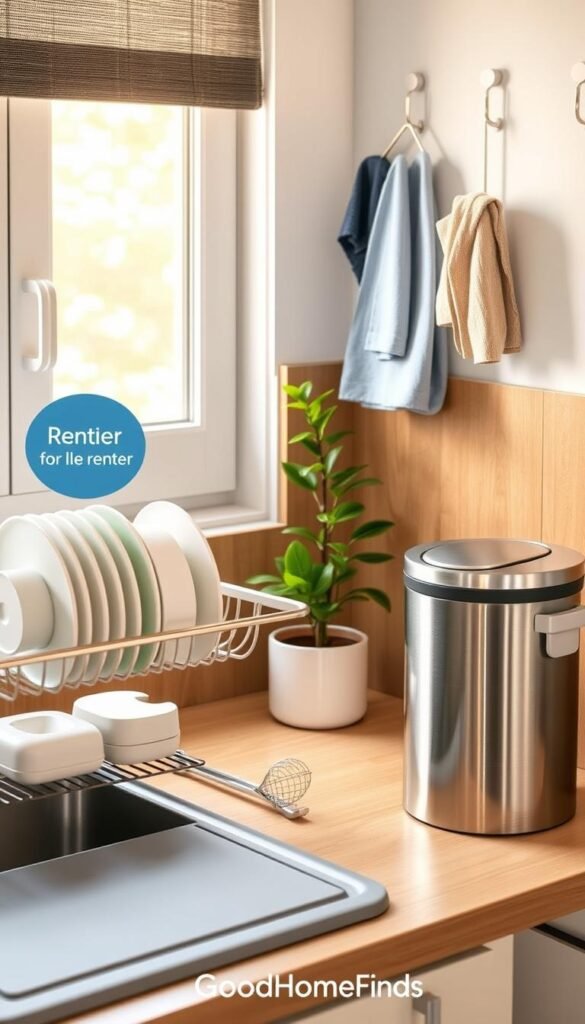
Under $25: a countertop trash bowl/mini bin to collect scraps and reduce trips, a pack of microfiber cloths for fast wipes, and a sink caddy to keep brushes and soap off counters. These are low-cost, easy to stash, and worth the space they take.
Under $50: a compact dish drying rack for items that don’t fit the dishwasher, a mesh splatter screen to cut grease mist, and odor absorbers (baking soda or small activated-charcoal bowls) for overnight help. These reduce daily friction and speed cleanup.
Pros and cons at a glance
| Item | Setup speed | Durability | Safety & cleaning effort |
|---|---|---|---|
| Countertop trash bowl | Fast — grab-and-go | Plastic or stainless, lasts well | Empty frequently; wash weekly |
| Microfiber cloths | Immediate use | High if laundered properly | Rinse after use; machine wash |
| Sink caddy | Instant organization | Long-lasting if plastic/metal | Wipe or rinse to avoid mildew |
| Compact drying rack | Quick setup; needs counter space | Moderate; cheaper models wear | Dry and wipe to prevent rust |
| Mesh splatter screen | Instant use while frying | Durable stainless options | Needs washing after each heavy use |
Who benefits most
Roommates: carry a labeled caddy and keep zones clear to avoid conflict.
Small-space cooks: folding racks and lidded bowls preserve counter space.
Families: larger drying mats and extra cloths speed routine chores.
Frequent fryers: splatter control plus odor absorbers and strong ventilation are worth it.
Apartment-size alternatives
Studio: choose foldable drying gear and a lidded trash bowl that tucks away.
One-bedroom: a larger drying mat and charcoal bowls for lingering odors work well.
Shared kitchen: a portable kit (caddy, cloths, small bin) you can store in your room.
Renter-safe note: use suction, freestanding, or over-sink options only. Avoid permanent hooks or strong adhesives unless labeled removable.
For practical cleaning mixes and time-saving products, see these best cleaning solutions that pair well with the items above.
Space optimization beyond the stove: small kitchen storage that supports the reset
Clear visible work surfaces by giving each daily item a „home“ you can reach and return in one motion. This simple rule makes the reset quick and repeatable. When items have a place, you put them away instead of piling them up.
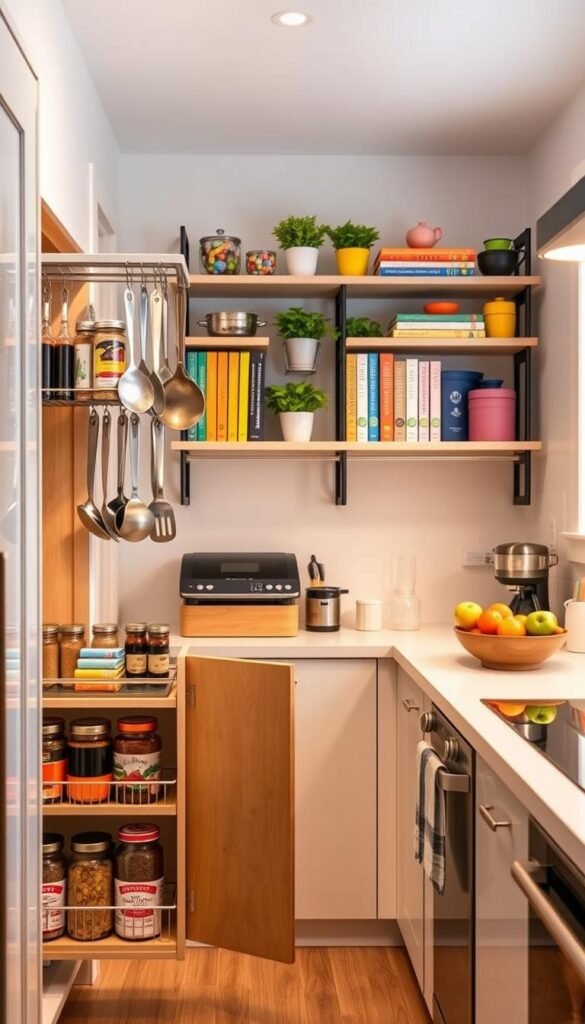
Countertop clutter control
Use one tray for oils, salt, and your most-used tools. Lift the tray to wipe counters fast. A shallow tray is renter-friendly and stores flat when not in use.
Tip: Label the tray’s spot so family or roommates know where things belong.
Sink and dish zone
Pick a compact drying rack or mat that collapses when you don’t need it. Add vertical board storage to keep cutting boards and lids upright and dry.
Design the layout so water drains to the sink. That reduces puddles and stops mold. Keep a small caddy for brushes and soap to clear counters quickly.
Container strategy to cut fridge chaos
Use matching, stackable containers and a dedicated leftovers shelf. Date-label every container at dinner so food is easy to find and nothing grows forgotten.
Choose containers that seal well, resist stains, and are safe for hot food. Avoid overfilling the fridge so air can circulate and food cools evenly.
| Solution | Why it helps | Renter-friendly tip |
|---|---|---|
| Single tray for daily items | Keeps counters clear; lift-and-wipe surface | Use a shallow, non-slip tray you can store upright |
| Compact drying rack / mat | Saves space; drains easily | Choose collapsible or fold-flat models |
| Vertical storage for boards/lids | Speeds drying; reduces clutter | Use tension or freestanding dividers—no drilling |
| Matching stackable containers | Reduces fridge clutter; quick stacking | Pick stain-resistant lids and label with dates |
Store rarely used appliances in a closet or high cabinet. This keeps daily workflow open and keeps counters ready for the next meal.
Best small kitchen solutions collect practical products that make this process easy and renter-safe.
Daily and weekly maintenance: keep the kitchen clean with minimal effort
A few minutes of focused tidy-up each night saves hours on weekends. Build a short, repeatable close-down routine and you stop mess from growing. These small steps keep food safe and smells down.
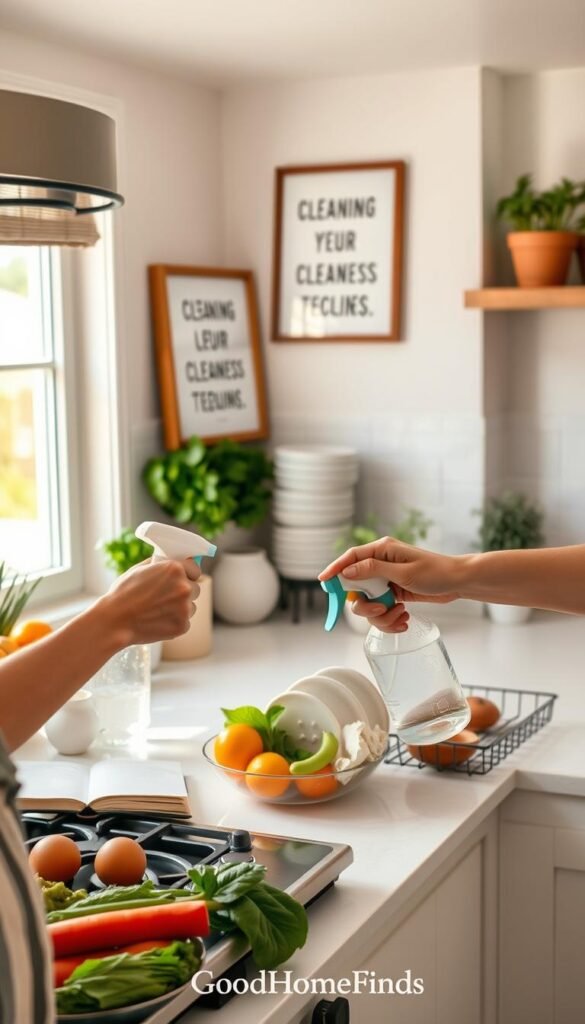
Daily close-down checklist that takes minutes
Load remaining dishes and start the dishwasher or stack by the sink if hand-wash only. Wipe counters and the sink with a mild cleaner and water.
Quick sweep or vacuum the floor where crumbs collect. Take out any food trash to prevent pests and odor.
Weekly deep-clean targets
Wipe refrigerator shelves and toss expired food; this prevents odors and waste. Spot-clean the oven and wipe crumb trays so grease never builds into a big job.
Declutter the pantry and refresh the dishwasher: run a hot cycle with a cleaner or vinegar to keep it working well.
Monthly and seasonal tasks
Wipe cabinet fronts for grease film and clean grout on tile. Descale your coffee maker monthly to protect flavor and function.
Wash curtains or blinds seasonally to cut dust and trapped smells. These moves keep the whole apartment fresher.
Safety and durability reminders
Match cleaner to surface. Use pH-neutral cleaner on delicate surfaces and gentle methods on stainless steel. Avoid abrasives on sealed stone.
Replace sponges and cloths on schedule. Dry boards properly and store brushes upright in a caddy so they last and stay sanitary.
„Small, regular steps are worth far more than rare, long scrubs.“
| Task | Frequency | Why it helps |
|---|---|---|
| Load dishes & wipe surfaces | Daily | Reduces mess and food risk |
| Fridge wipe & toss | Weekly | Prevents odors and waste |
| Descale coffee maker; wash blinds | Monthly/seasonal | Keeps appliances and air fresh |
Extend the habit beyond the room: add an entryway drop-tray, a bathroom vanity caddy, and stackable closet bins. These renter-friendly tools stop clutter from migrating and make daily maintenance easier.
Conclusion
Wrap each meal with a short ritual that keeps your space usable and calm. Prep first, clean as you go, then follow the same short steps so your area returns to „ready“ every night.
Big wins are practical: empty the dishwasher before you start, keep a lidded trash bowl nearby, soak pans while you finish, wipe grease while warm, and do a quick floor pass so crumbs don’t become tomorrow’s problem.
For apartment cooks, ventilation is step one for frying smells. Use vinegar steam and overnight absorbers if needed. Choose renter-friendly picks under $25 and under $50 that save daily friction.
Next step: pick one habit—like load the dishwasher as you go—and do it for a week. The payoff is real: less cleanup, fewer dishes left out, and a home that feels easier to live in.