
This section explains what a small laundry corner means in an apartment. It is a compact, repeatable system that fits your room and your routine. This is not a remodel. You will learn renter-friendly choices for closets, bathrooms, kitchens, and entryways.
Common pain points are tight walkways, no place to fold, supplies scattered, damp items with no place to dry, and clean-clothes piles that spread through your home. The goal is to solve these with no-drill, easy-to-remove storage and moisture-safe materials.
Follow a clear path: pick a spot, reset the area by decluttering, design a workflow, then add vertical storage, a simple countertop for folding, sorting zones, drying, and ironing storage. You can make useful changes with a few under-$25 basics and one or two under-$50 anchors like a rolling cart or tension shelving.
Safety first: keep vents and lint traps clear, store chemicals securely, and maintain a clear path so you don’t trip while carrying clothes. This guide is for studios, one-bedrooms, and shared apartments that need a system that survives daily use and quick resets.
Key Takeaways
- Think small: design a repeatable, renter-friendly system for your space.
- Start by decluttering and assessing needs before buying anything.
- Use vertical storage, a folding surface, and a tension rod to save space.
- Prioritize safety: lint, vents, and chemical storage matter.
- You can upgrade on a budget with smart under-$25 and under-$50 picks.
Pick the Right Spot for Your Laundry Area (Even If You Don’t Have a Laundry Room)
Choose a location that makes laundry chores faster, not harder. Match where you place machines or a compact station to how you actually wash — daily quick loads need easy walk-up access. Weekly big loads benefit from more working space and a nearby folding surface.
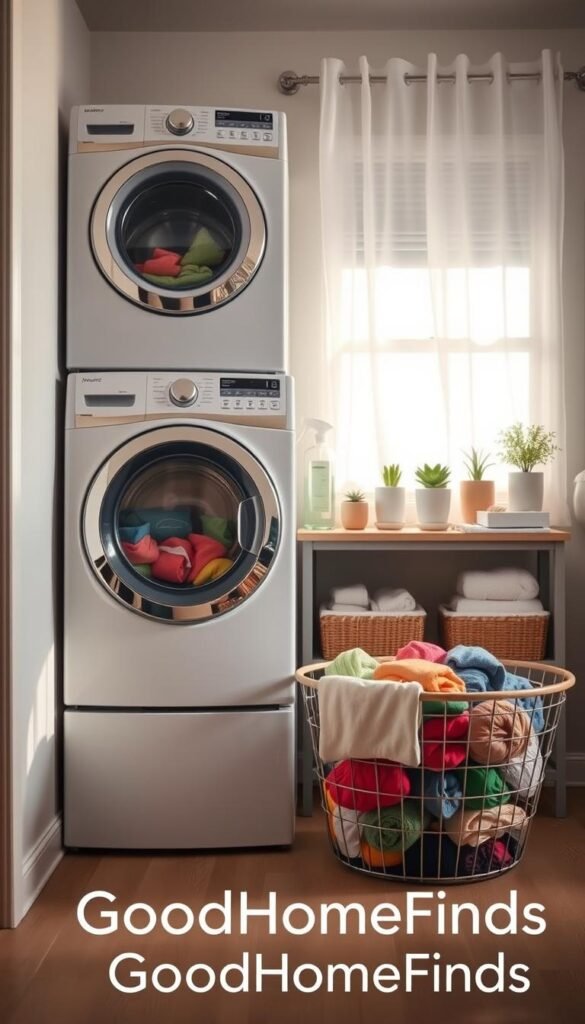
- Hallway nook — low foot traffic and handy for quick drops, but watch for noise and blocked walkways.
- Bathroom corner — great for drying and venting; avoid storing open chemicals near the shower spray.
- Kitchen cabinet zone — hides a washer dryer behind doors; ideal if plumbing and ventilation allow.
- Closet conversion — fits side-by-side machines with a countertop and baskets below for folding and storage.
Measure Before You Buy
Do a quick checklist: door swing, machine clearance behind and at sides, and a clear walkway so a full basket won’t block exits.
Stacked vs Side-by-Side
Stacking frees floor space and gives room for vertical shelves. Choose side-by-side when you want a continuous countertop across both units.
„If you can’t pass comfortably with a full basket, change the layout before you buy organizers.“
Renter-friendly defining tips: use a slim mat, a freestanding shelf or rolling cart, and clear labels to mark the area without drilling. Tape out machine footprints and simulate a laundry run to test pinch points before committing.
Need compact product ideas? See best laundry room solutions for renter-friendly options and small-space ideas.
Declutter and Reset the Corner Before You Add Storage Solutions
Start by emptying the space so you can see every item and decide fast. Pull everything out, work quickly, and keep this to one short session so it doesn’t become a full-house project.
Quick sort method:
- Keep — things you use weekly (detergent and stain tools).
- Relocate — items that belong in another room or cabinet.
- Donate — working gadgets you never use.
- Trash — empties, broken tools, and expired cleaners.
Look for hidden clutter: half-empty bottles, single socks, old rags, and rare-use gadgets that steal shelf space. Combine duplicates only if labels allow.
Downsize bulky items. Large detergent jugs take up most of a shelf. Swap to detergent sheets or small refillable bottles when that fits your routine. Recycle empties right away so you don’t store air in the cabinet.
Contain cleaning supplies in one caddy or bin. That rule makes daily use easy: grab, use, return. Keep daily items within reach and seasonal items up high.
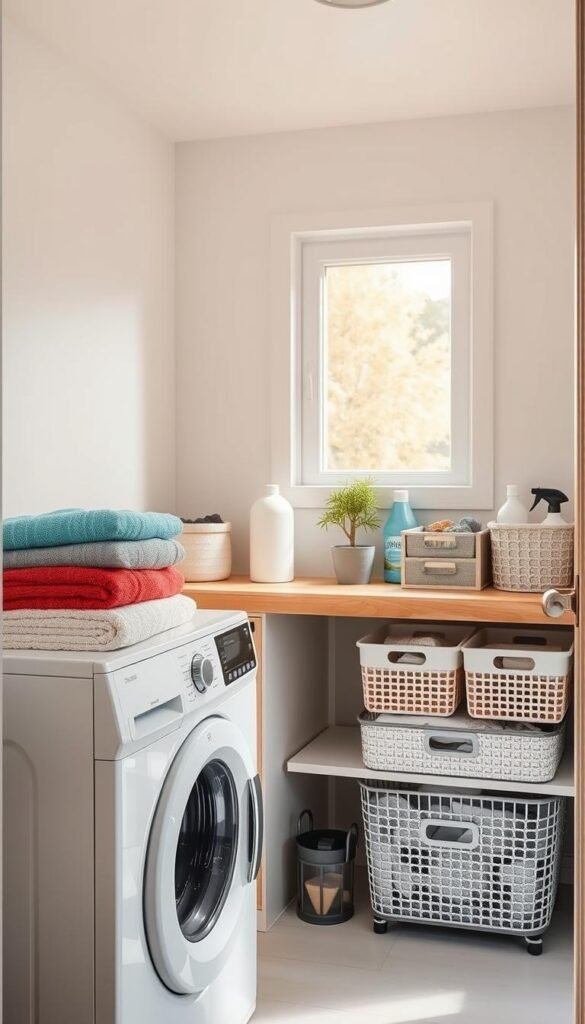
„Fewer visible items, more contained bins — the corner will feel larger and work better.“
Quick surface reset: wipe lint, dust, and drips before you add shelves or adhesive hooks. Aim for fewer items out and a calmer look.
For small-space product ideas and renter-friendly storage solutions, see closet space solutions.
Design a Workflow That Makes Laundry Day Faster
Map a straight line from dirty to done and cut out back-and-forth trips. A clear path stops the common „bounce“ of clothes and saves time on laundry day.

Create five practical zones
Set five zones: sorting, washing, folding, hanging, and ironing. Place the washer where plumbing works and keep detergent within arm’s reach.
Folding near the dryer
Put a folding surface next to the dryer to reduce piles on beds and sofas. Use a slim utility table, a countertop across machines, or a removable board for renters.
Arm’s reach kit and sorting
Keep a tiny caddy at the washer with detergent, stain remover, a scoop, and lint tools. For small space sorting, choose one hamper with dividers or two stackable baskets.
Ironing and accessibility
Most renters don’t need a permanent ironing station. Store a slim board on a hook or behind a door for quick use. Pedestals or shallow drawers cut bending for taller households.
„Small, logical zones save steps and make clean clothes stay clean.“
For compact product ideas and renter-friendly organization solutions see best organization finds.
laundry corner setup Layout Options That Work in Small Spaces
Choose a layout that matches your daily habits and machine type. Below are four renter-friendly plans that fit tight rooms and keep chores practical. Each option notes pros, tradeoffs, and who it works best for.

One-wall with countertop and open shelves
What: Machines in a row, butcher-block countertop for folding, open shelves above for supplies.
Pros: Easy workflow, continuous folding surface, quick access to detergent and tools.
Cons: Open shelves can look busy unless you use matching baskets or bins.
Best for: tight laundry rooms, hallway nooks, and renters who prefer easy access.
Closet conversion with countertop and baskets
What: Side-by-side washer dryer under a countertop with baskets or bins beneath and optional upper cabinets.
Pros: Clean appearance when doors close and good hidden storage for supplies.
Cons: Ventilation needs care; cabinets may require no-drill alternatives for renters.
Best for: one-bedrooms and studio spaces that need visual tidy-up.
Corner split layout: machines + hanging wall
What: Machines on one wall, a hanging/dry area on the adjacent wall for shirts and delicates.
Pros: Reduces bottlenecks and lets two people work together—one folding, one hanging.
Cons: Requires two usable walls and smart placement to avoid blocking walkways.
Best for: entryway areas or mudroom-style rooms where you need separate zones.
Top-loader workaround
What: Over-the-washer shelving that clears the lid plus side storage like a slim rolling cart.
Pros: Keeps the top-load lid usable while adding vertical storage without drilling.
Cons: Shelves must be set back for lid clearance; avoid heavy cabinets that press on the machine.
Best for: households with top-load washers or limited wall width.
Renter-friendly installs: use freestanding shelves, tension poles, adhesive hooks, and matching baskets to keep a tidy look without drilling. For product ideas that save space and time, see small-space fixes.
| Layout | Pros | Cons | Best for |
|---|---|---|---|
| One-wall with countertop | Continuous folding surface; quick access | Open shelves need neat bins | Tight laundry rooms, hallway nooks |
| Closet conversion | Hidden storage; tidy when closed | Needs ventilation and careful clearance | Studios, one-bedrooms |
| Corner split | Separates drying and folding; reduces jams | Requires two usable walls | Entryways, mudroom-style areas |
| Top-loader workaround | Vertical storage without blocking lid | Shelf placement must avoid lid interference | Top-load washers; narrow rooms |
„Keep airflow and service access clear. Do not enclose machines tightly unless ventilation is addressed.“
Go Vertical: Shelves, Cabinets, and No-Drill Wall Storage
If you can’t expand the footprint, look up — vertical space often holds the answer.
Floor-to-ceiling cabinets maximize every inch without widening the room. They create lots of storage and keep items off the floor. Use a tall, freestanding cabinet if you rent. Choose moisture-resistant finishes for bathrooms and near washers.
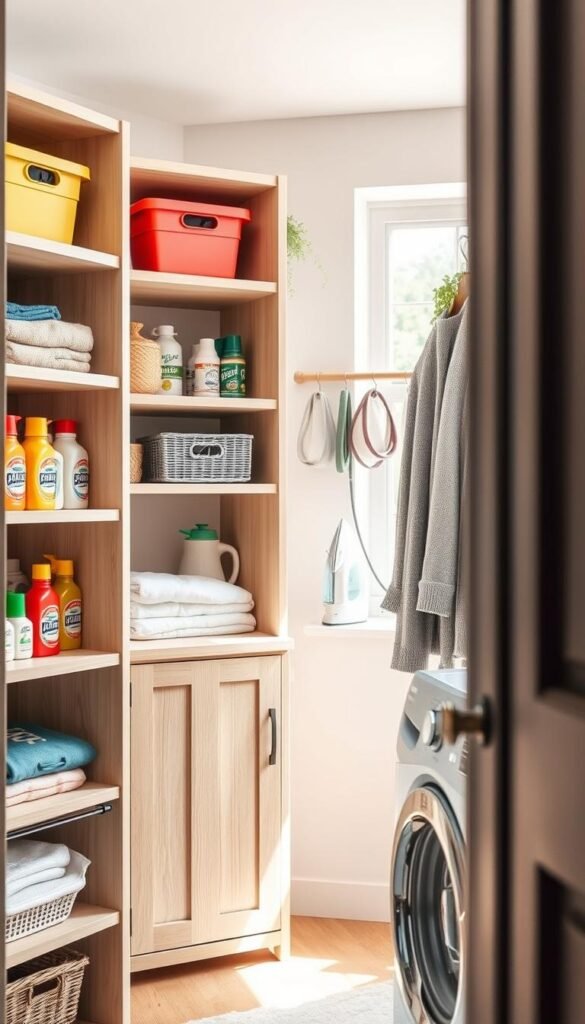
Floating shelves vs. freestanding units
Floating shelves look clean and airy but normally need mounting. They work well in kitchens and dry rooms when you can drill. Freestanding shelves install fast, move easily, and avoid damage to walls. They are the safest renter-friendly pick.
No-drill options and best use cases
- Tension-pole shelving: great for narrow nooks and closets.
- Over-the-door organizers: ideal for closet doors and entryway stashes.
- Adhesive hooks: perfect for lint brushes, mesh bags, and light tools.
Open shelves vs. closed cabinets
Open shelves give quick access to daily items and make a small space feel larger. Closed cabinets hide cleaning supplies and are safer if you have kids or pets. Mix both: use matching bins and one catch-all basket to keep open shelves tidy.
„One upgrade at a time prevents buying organizers that don’t fit your space.“
| Option | Best for | Consider |
|---|---|---|
| Floor-to-ceiling cabinet | Max storage, tidy look | Choose moisture-proof materials |
| Freestanding shelves | Renters who move often | Watch weight limits for heavy products |
| Tension-pole unit | Tight nooks and closets | Measure for lid and vent clearance |
Durability checklist: rust-resistant metal, wipeable surfaces, and clear weight limits. Place heavy detergent on lower shelves to avoid stress. In kitchens, keep storage away from heat. In bathrooms, prefer plastic or sealed wood.
Add a Folding Station Without Remodeling
Add a simple folding surface to make chores faster and gentler on your back. This keeps clothes off the floor and gives you a consistent place to fold and sort. A small counter near the washer and dryer improves workflow and cuts steps.

Budget countertop ideas
Butcher-block look top — sturdy and warm. Pros: stable for folding, looks built-in. Cons: heavier and needs a sealed finish. Best for: one-bedroom plans where you can place a continuous counter across machines.
Sealed plywood panel — cheap and customizable. Pros: light, cut-to-fit. Cons: needs a waterproof seal and rounded edges. Best for: renters who want a removable panel laid over machines or cabinets.
Slim utility table — movable and simple. Pros: easy to store, fits studios. Cons: less continuous workspace if you use both machines at once. Best for: small rooms and flexible needs.
Comfort and durability
Aim near waist height to reduce bending. For front-load models, consider pedestals or a low drawer stack so the door clears and you stand upright.
Durability checklist: sealed, water-resistant surface; easy-wipe finish; rounded edges for tight walkways; anti-slip pads to keep the top steady during use. Account for vibration, humidity, and detergent drips—pick materials that clean up fast.
Lighting and quick setup
Bright light makes folding and stain checks easier and helps a small space feel larger. Use a plug-in under-shelf light if hardwiring is not allowed.
„A stable, waist-height surface saves time and protects your back. Start small and test before you commit.“
Quick setup sequence
- Measure available room and door clearances.
- Test a mock surface with cardboard to check fit.
- Add anti-slip pads and place a small bin for folding tools (lint roller, mesh bags).
| Option | Pros | Cons | Best for |
|---|---|---|---|
| Butcher-block look top | Stable, polished design | Heavier; needs sealant | One-bedrooms wanting a built-in feel |
| Sealed plywood panel | Custom fit; low cost | Requires sealing; rounded edges advised | Renters needing removable solutions |
| Slim utility table | Movable; no install | Smaller surface area | Studios and flexible spaces |
Need compact product ideas and related small-kitchen thinking? See best small kitchen solutions for items that translate well to tight rooms.
Sorting and Hampers That Don’t Eat Up Floor Space
Let your daily habits guide which hampers and bins make the most sense for your space. Choose tools that match how often you wash and how far you carry loads.
Two-drawer hampers slide under counters and give a tidy look. They work well for whites/darks or quick daily turns. Stackable bins save floor width and let you add capacity vertically for weekly loads.

When wheeled options help
Rollers are worth it if you walk down a hallway or share a building laundry room. They tuck into a corner and make heavy loads easy to move.
Pros and cons at a glance
- Soft hampers: light and collapsible but watch seams.
- Hard baskets: stable and easy to carry; they keep form.
- Wheeled units: best for big loads but take more footprint.
„If a bin blocks a door, switch to tall-and-slim or wall-adjacent options.“
| Option | Best for | Pros | Cons |
|---|---|---|---|
| Two-drawer hamper | Under-counter use | Tidy look; sorted | Limited capacity |
| Stackable bins | Tight room, vertical space | Flexible capacity | May tip if unbalanced |
| Wheeled hamper | Shared laundry runs | Easy transport | Occupies floor area |
| Soft collapsible | Studios, occasional use | Store flat; light | Less durable seams |
Label bins (whites/darks/delicates) to avoid mix-ups. Studios can use one tall divided unit. One-bedrooms add a small second sorter. Shared units can assign labeled baskets per person.
Air-Drying and Hanging Solutions for Apartments
Make a small hang-dry zone to stop wrinkles before they start. Air-drying is a small-space superpower: it reduces ironing, protects delicates, and keeps clean clothes from becoming a pile.

Tension rods fit neatly between shelves or inside a closet and let you hang shirts straight out of the dryer. Place the rod so it does not block doors. Use slim hangers and limit load to light-and-medium garments.
Tension rod tips
- Placement: set the rod below an upper shelf and above the floor so clothes hang freely.
- Capacity: good for shirts, delicates, and small items — avoid heavy coats.
- Best for: a laundry closet or narrow nook where you need quick wrinkle prevention.
Retractable line vs. foldable rack
Retractable lines work well in a bathroom corner. They pull across a short room and tuck away when not in use. Foldable racks store flat and set up fast in living areas you can clear after use.
| Option | Setup | Storage | Trip risk |
|---|---|---|---|
| Retractable clothesline | Fast | Hidden | Low when retracted |
| Foldable drying rack | Quick | Needs floor space | Medium if left out |
| Tension rod | Install in seconds | Always ready | Low |
Hooks and hangers for delicates
Use a hook strip on the wall for mesh bags and a few slim hangers for bras and silks. Keep items from touching walls so they dry faster and stay fresh.
„Hang clothes right away to cut wrinkles and keep your workflow moving from washer to wardrobe.“
Safety notes: don’t overload adhesive hooks. Keep lines out of main walk paths and avoid creating hazards in an entryway where people pass with bags and shoes. If airflow is poor, dry smaller loads near a vent or a cracked window for faster results.
Ironing Board Storage That’s Easy to Set Up and Put Away
An ironing spot that tucks away fast keeps small rooms usable and calm. Pick a renter-friendly plan before you buy so the board doesn’t become clutter.

Decide if you need a permanent station. Hang shirts right after drying to cut ironing time. If most items need little attention, a compact tabletop will do.
Fold-out and pull-out alternatives
Fold-out units save space but often need installation. Many true pull-outs require built-in work, so renters should favor portable no-drill options.
Lean-and-store and wall hanging
For quick parking, lean a slim board behind a door or against a narrow wall. Add non-slip pads, a strap, or a low hook to stop sliding.
| Type | Pros | Best for |
|---|---|---|
| Portable slim board | Lightweight; hangs on hooks | Studios, shared rooms |
| Fold-out (installed) | Space-saving when built-in | Homeowners or long-term renters |
| Lean-and-store | No install; fast access | Small rooms; closets |
| Freestanding rack | Stable for heavier boards | Shared apartments |
Safety notes: keep the board out of egress paths, avoid blocking doors, and don’t store it where it could fall onto appliances.
„Store the iron and heat mat together so setup and put-away are one trip.“
Budget Product Checklist Under $25 and Under $50 (With Pros, Cons, and Best-For Notes)
Build a compact kit of essentials that keeps supplies organized and clothes moving. Below are low-cost items that solve small-space friction without drilling or heavy installs.

Under $25 essentials
- Adhesive hooks — pros: instant hanging; cons: limited weight. Best for mesh bags and a slim ironing board.
- Labels — pros: fast sorting; cons: paper fades if wet. Best for baskets and open shelves.
- Slim bins — pros: tuck under counters; cons: smaller capacity. Best for detergent packets and small cleaning supplies.
- Mesh wash bags — pros: protect delicates; cons: occasional replacement. Best for delicate loads and small items.
- Lint tools — pros: reduce fire risk; cons: need weekly use. Best for weekly checks and quick maintenance.
Under $50 upgrades
- Slim rolling cart — pros: mobile storage beside machines; cons: takes narrow floor space. Best for studios that need flexible storage.
- Tension shelving — pros: renter-friendly vertical storage; cons: limited heavy-load capacity. Best when you lack cabinets.
- Foldable drying rack — pros: collapses flat; cons: uses floor space when open. Best for apartments without a line.
- Lidded hamper — pros: hides piles and keeps pets out; cons: bulkier footprint. Best for one-bedrooms and shared spaces.
Quick comparison
| Item type | Setup time | Durability | Renter-friendly | Space saved |
|---|---|---|---|---|
| Adhesive hooks | Minutes | Light-duty | High | Low |
| Slim bins | Minutes | Medium | High | Medium |
| Slim rolling cart | 5–10 min | Medium | High | High |
| Tension shelving | 10–20 min | Medium | High | High |
| Foldable drying rack | Seconds to open | Medium | High | Medium |
Practical note: if you lack cabinets, use lidded bins on open shelves. If you have cabinets but no counter, add a slim table or a rolling cart as a counter alternative.
Best-for guidance: studios do well with a mobile cart plus a foldable rack. One-bedrooms benefit from a lidded hamper and sealed bins. Shared apartments should add labeled baskets and divided hampers to keep items separated.
Safety callout: store detergent and cleaning supplies in a lidded bin or high shelf, especially with kids or pets. Keep lint tools accessible and empty vents regularly to reduce fire risk.
For a short guide on balancing low-cost buys versus pricier upgrades, see storage cheap vs premium.
Daily Routines, Easy Maintenance, and Safety for a Laundry Corner
Small, regular habits keep a tight space useful and safe. A short daily routine prevents piles, cuts time on laundry day, and protects surfaces and vents from buildup.
Daily routine (2–5 minutes):
- Return cleaning supplies to their bin after use and relatch the caddy.
- Hang two to three items immediately on the tension rod or ironing board hook.
- Fold or place clean clothes in a single „to-put-away“ basket—never on the floor or in the entryway.
Weekly reset checklist:
- Restock any low supplies and recycle empties.
- Wipe the folding surface and sweep lint from the floor and shelf edges.
- Empty the dryer’s lint trap to reduce fire risk.
Monthly care:
- Consolidate nearly empty bottles into one small container and recycle the old ones.
- Pull the washer forward if you can to clean behind and under it.
- Check visible vents and intakes; clear lint you can reach safely.
Contain cleaning supplies without new cabinets: use lidded bins on a high shelf, a latched plastic caddy, or a lockable tote. Label containers so you can find items fast and avoid spills that ruin the look of shelves and counters.
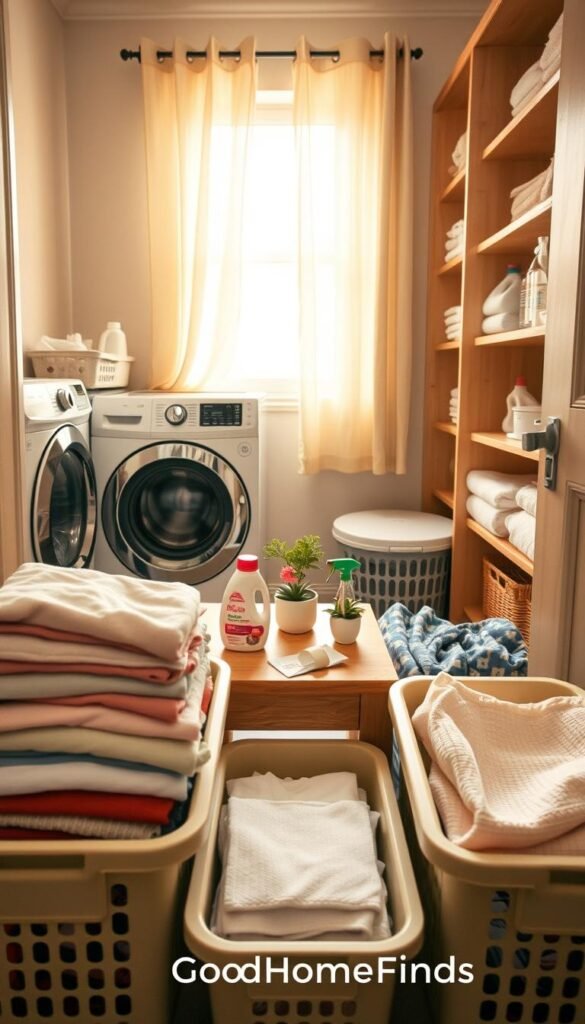
Light and visibility tips: add a plug-in LED strip under a shelf or a bright, daylight bulb in a nearby fixture. Good light helps you spot stains, read labels, and makes the small room feel larger.
Overflow control: enforce one rule: clean clothes must be folded, hung, or placed in the single „to-put-away“ basket. In shared apartments, assign each person a labeled basket to stop mix-ups and clear the area quickly.
„A five-minute daily habit keeps the system working and reduces bigger cleanup later.“
| Task | Frequency | Benefit |
|---|---|---|
| Return supplies to bin | Daily | Keeps counters clear |
| Empty lint trap | Weekly | Reduces fire risk |
| Consolidate products | Monthly | Less clutter and spills |
Quick tip: for related small-room fixes and to avoid common appliance problems, check this helpful guide: small-room product ideas.
Conclusion
A clear routine and a few smart pieces will transform a tight space. Start with one safe, renter-friendly plan and build from there. Pick the spot, measure clearances, declutter, then add vertical storage like shelves or a tension rod and a small folding countertop by the washer and dryer.
Prioritize easy wins: a slim rolling cart, a lidded bin, and one under-$25 organizer. Keep supplies contained and vents clean to reduce risk. Label bins and set one weekly reset reminder to keep the system working.
Quick 15-minute plan: measure your room, choose a layout, buy one small organizer, and schedule a weekly tidy. Studios should favor mobile storage and foldable drying. One-bedrooms add a countertop and a lidded hamper. Shared homes use labeled baskets and a simple schedule.
Make it good enough: if clean clothes are not piling, supplies are easy to grab, and walkways stay clear, your plan is working. Small, repeatable habits beat big renovations every time.