
Small homes can feel chaotic fast. When living in tight quarters, toy piles and papers spread across shared rooms. Start by accepting that organization is a process, not a perfect photo.
Set a practical goal: a house that works for daily life, not a Pinterest-ready snapshot that lasts one day. Use renter-friendly, no-drill fixes and simple systems that match how your family actually lives.
Real-life tips include decluttering often, giving everything a home, containing kid zones, and a quick nightly reset so mess doesn’t balloon into a weekend project. Expect budget tool picks under $25 and under $50, plus safety checks for tip resistance and wipe-clean materials.
Later you’ll find side-by-side comparison tables for storage types and apartment layouts. For fridge-specific ideas and small-space tricks, see a practical guide on fridge space solutions at best fridge space solutions.
Key Takeaways
- Practical wins beat perfection: aim for daily function over flawless photos.
- Choose renter-friendly, no-drill products that are durable and easy to clean.
- Keep systems simple: declutter, home for everything, contain zones, reset nightly.
- Budget picks under $25 and $50 will be reviewed with pros and cons.
- Safety matters in tight spaces: watch tip resistance and pinch points.
- Two comparison tables will help match solutions to your layout.
Start with grace, realistic expectations, and less stuff
Accept that this season of life is messy, and that’s okay. Your home should make space for play, meals, and rest. Aim for a functional everyday routine rather than perfection.
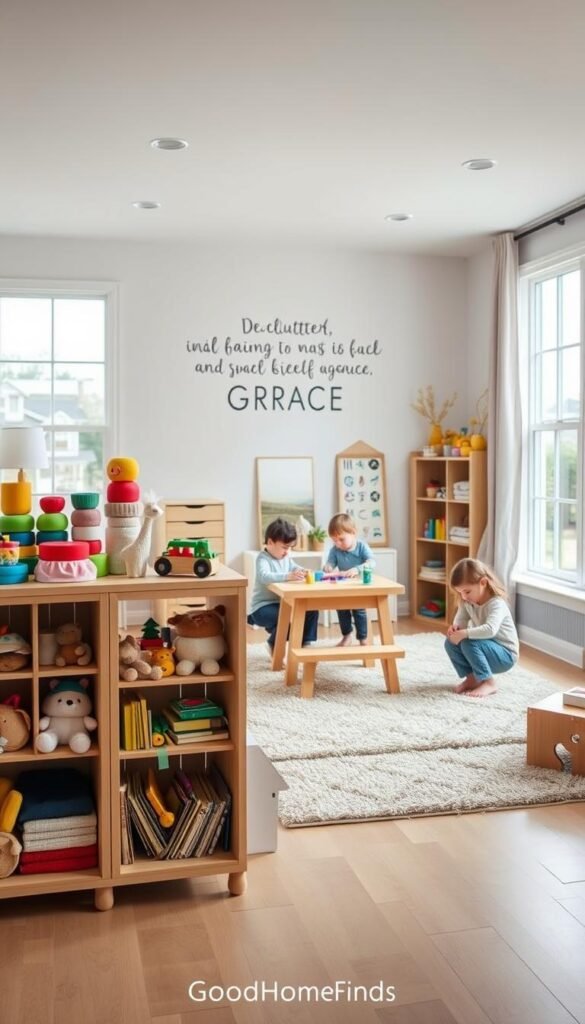
Why “perfect” isn’t the goal
Perfection leads to frustration. Children live in your rooms. If every surface becomes hidden storage, you’ll spend more energy policing than living.
Declutter often: quick routines that work
Make decluttering your leverage. Do a monthly or every-other-month toy purge. Toss broken items, donate things they don’t use, and keep only what is played with often.
- Set a 20-minute timer to purge one bin, drawer, or shelf.
- When overwhelmed, do a “massive purge” by area instead of perfecting every corner.
- Make sure drawers and shelves are not packed full; some empty space keeps order stable.
Micro-decluttering to stop piles fast
Use small moments to cut clutter. Recycle school flyers as they arrive. Toss expired snacks while making lunch. Remove packaging immediately after unboxing.
Involve children by age. Younger children pick a small donate pile. Older children explain what stays and where it lives. Fewer items save you time during daily resets and make mornings smoother.
For practical, budget-friendly gear that helps this approach, see these budget organizer picks.
How to organize with kids using simple, kid-proof systems
Make cleanup painless by designing reach-and-go stations. A kid-proof system means your child can finish a task without you standing over them. Keep containers low, labels clear, and steps obvious.
Home for everything in three steps: pick a category, choose a container, and store it where the item is used. For example, put books near reading spots and art supplies next to the table. That small choice makes putting away near automatic.
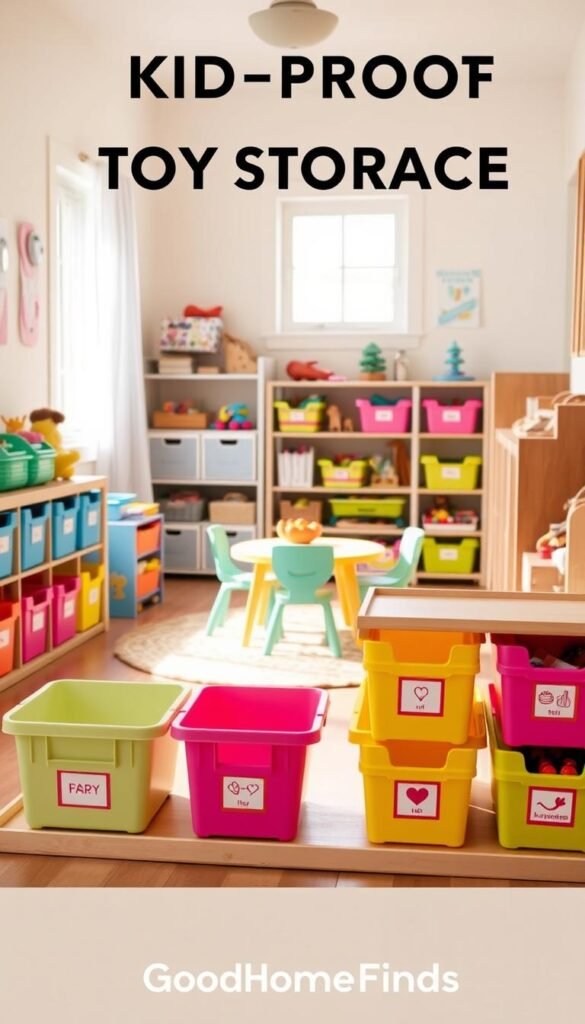
Zones and simple rules
Protect shared living areas by defining a toy zone. Let toys stay in one corner of the living room. Keep kitchen counters and dining tables off-limits.
Open-top vs lidded bins
Open-top bins: fast for toddlers and daily pickup. They reduce friction and invite quick returns.
Lidded bins: good for long-term storage or small parts. Lids, however, can become flat surfaces that collect clutter.
Sort, label, and place
Group toys by type: blocks together, vehicles together, dolls together. Use picture-plus-word labels low on the front of each bin so pre-readers know where things go.
| Container | Best for age | Space | Pros | Cons |
|---|---|---|---|---|
| Open-top bin | Toddlers–5 | Small | Fast access, low friction | Visible mess, needs frequent tidy |
| Lidded plastic bin | 4+ | Medium | Stackable, keeps dust out | Lid surfaces collect items |
| Basket/cubby | All ages | Small–medium | Looks neater, breathable | Smaller pieces can spill |
| 3-drawer closet unit | 5+ | Closet/entry | Hidden, good for rotation | Requires floor or closet space |
For renter-friendly picks and smart product ideas, see these best organization finds. Simple, durable systems make daily life easier and keep shared rooms calm.
No-drill, renter-friendly organizing products under $25 and under $50
You don’t need screws to win back floor space and calm routines. Small, budget tools act as supports for daily habits. Buy gear to back a drop zone, snack station, or nightly reset—not to store more stuff.
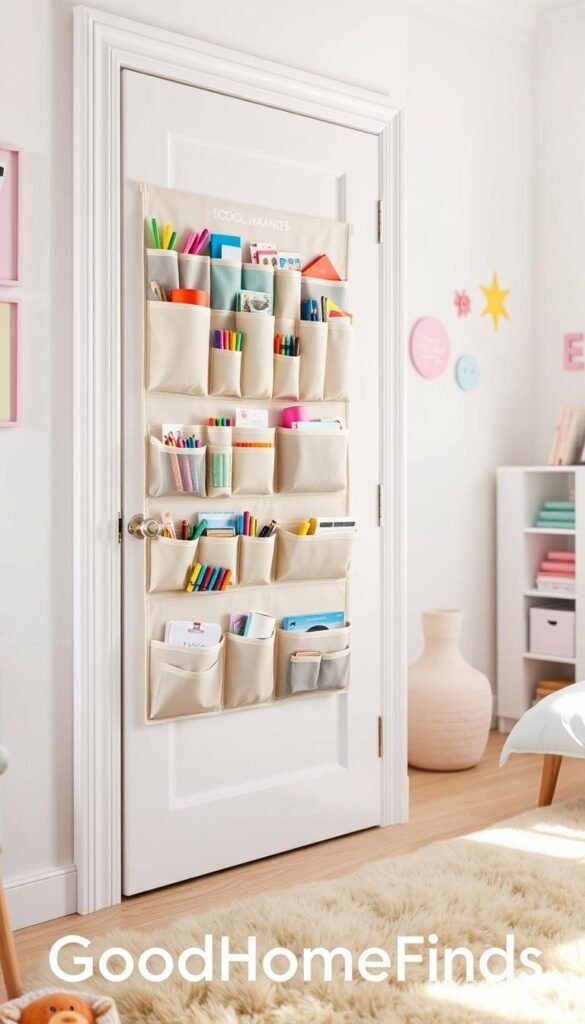
Under $25: quick, no-drill fixes
Adhesive hooks for backpacks and coats stop piles on the floor. Tension rods create vertical storage in closets or under sinks. Over-the-door organizers free shelf space for shoes or art supplies. Simple labels (masking tape or printable picture labels) turn bins into a working system.
Under $50: durable upgrades that last
Rolling carts move art and homework supplies between rooms. Stackable drawers hold small items like LEGO parts or hair ties. Sturdier baskets and bins resist cracking and save time over replacements.
Safety and durability checklist
- Tip resistance: choose wide bases or anchor when possible for heavier pieces.
- Pinch points: avoid tight-lid bins for toddlers and curious hands.
- Wipe-clean materials: easy maintenance keeps things sanitary.
- Weight limits: follow adhesive product guidelines to prevent failure.
Quick pros/cons and who it’s best for
Toddlers do best with open-top bins and low hooks. Bigger children can use drawers and tighter categories. For shared sibling spaces, favor clear labels and fewer “misc” containers so everyone knows where items belong.
„Reachable hooks plus a shoe basket system is a game changer.“
Practical tip: if you lack a closet, use an over-the-door option. For narrow hallways, choose slim rolling carts or go vertical with tension rods. The right pick saves you time and keeps your home usable every day.
Room-by-room setups for small spaces: kitchen, bathroom, closets, and entryway
Entryway: Reachable hooks for coats and backpacks and one sturdy basket for shoes change drop-off habits. Make a simple rule: nothing goes past the entry until it’s returned to its place.
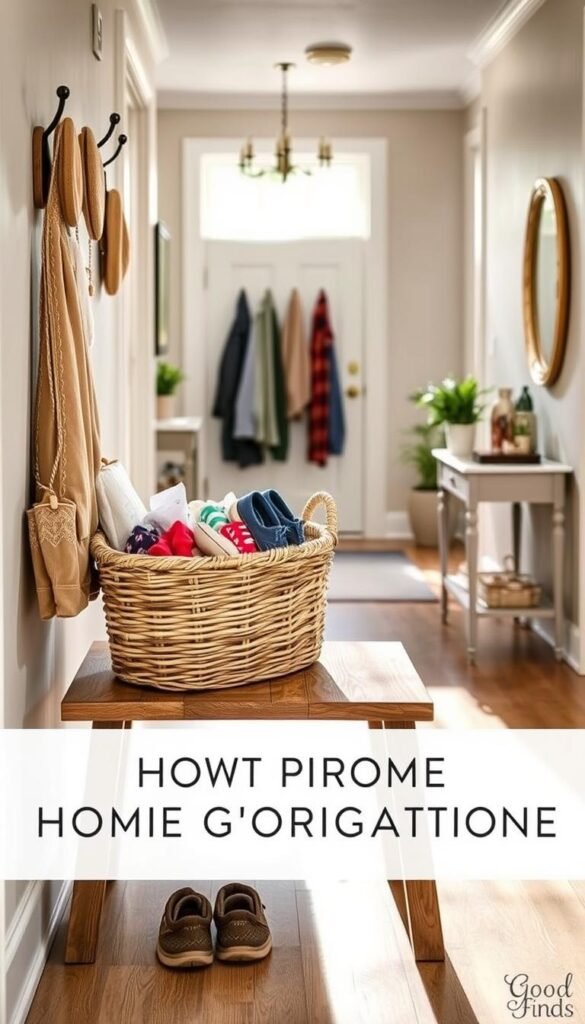
Kitchen sanity
Give snacks a single low shelf or tray that children can access. Use drawer dividers for lunch tools to stop junk-drawer avalanches.
Clean as you go: wipe counters while you cook, do a two-minute sweep after snacks, and clear counters each night to make mornings calmer. For more small-space kitchen ideas, see this best small kitchen solutions.
Bathroom control
Use one open, draining container for bath toys so they dry fast. Adopt a daily five-minute wipe routine to prevent grime building up into a weekend project.
Add a safe step stool with non-slip feet and a defined low shelf so children can reach basics without climbing.
Closets that work harder
Stack shelf risers, hanging organizers, and small cubbies to use vertical area. Keep one set of seasonal items rotated and stored in a labeled tote to save space.
Paper, school items, and hand-me-down clothes
Create a single inbox for incoming school paper. Keep a small rotating display for favorites and a file box with ~25–30 pieces per school year for keepsakes.
For hand-me-down clothes, label drawers by size and store the next-size-up in a dedicated drawer. Use a simple inventory card so you don’t buy duplicates.
| Apartment size | Entry | Kitchen | Closet approach |
|---|---|---|---|
| Studio | Wall hooks + one shoe basket | Low tray for snacks; drawer dividers | Vertical risers + under-bed totes |
| One-bedroom | Hook row + small bench basket | Dedicated snack shelf; rolling cart | Hanging organizers + cubbies |
| Two-bedroom | Shared hook panel + bench storage | Snack zone + labeled drawers | Shelf risers + small 3-drawer unit |
„Reachable hooks plus a shoe basket system is a game changer.“
Daily routines that keep things organized when you don’t have time
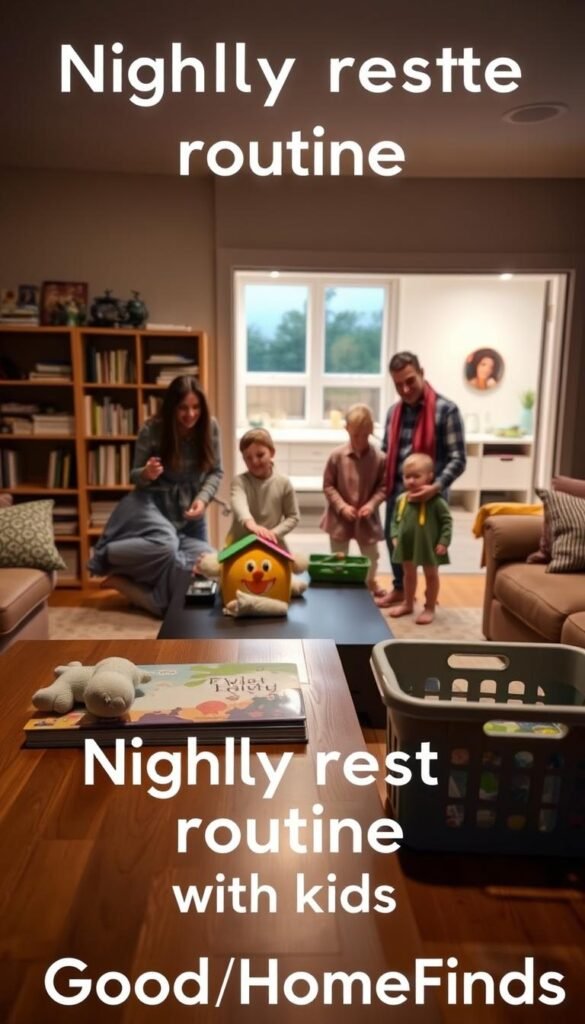
A short nightly routine beats long weekend overhauls every time. Make a habit that lasts by keeping steps quick and repeatable. Small actions nightly save hours during the day.
Nightly reset: a 5–10 minute tidy
Set a 5–10 minute timer. Clear floors, return toys to labeled homes, and wipe main surfaces you use in the morning. Keep a single catch-all bin for stray items so the reset stays fast.
Clean-before-bed habits that prevent waking up to chaos
Clean before bed because small homes show mess immediately. A five-minute habit prevents the day from starting in overwhelm and keeps systems useful for real life.
Family power cleans: make it fast and fun
Do a timed 30-minute family clean once or twice a week. Give everyone one visible job, play upbeat music, or race to finish tasks. Reward the winner with first choice of the next family activity.
Assign simple, age-appropriate jobs
- Toddlers: put board books in a basket.
- Preschoolers: toss blocks into an open bin.
- Elementary: empty small trash cans or match socks.
- Older child: file school papers into the inbox and stage backpacks.
Prep time routines to reduce morning clutter
At night, set out clothes, pack lunches, and stage backpacks by the door. Collect activity gear in one grab-and-go spot so the morning is calm and predictable.
Troubleshooting: if routines fail, simplify the system. Widen catch bins and reduce categories until the flow sticks.
For quick product ideas that support prep time, see best kitchen finds.
Conclusion
Start small: fix one problem area today and build from there.
Cut volume first. Fewer items make organizing and daily use easier. Then set simple systems that people in the house can follow.
Worth-it moves: define zones, use open-top containers for daily access, add clear labels, and do a short nightly reset.
Favor renter-friendly, no-drill tools that install fast and remove cleanly. They keep your home flexible and budget-friendly.
Maintain the gains: a monthly purge, one weekly power clean, and a daily 5–10 minute reset. When a system fails, simplify until it works.
Next step: pick one area—entry, snack shelf, bath toys, or school paper—and set one small system before buying anything. In a future post you can go deeper on paper flow or closet zoning.