
This guide gives you a renter-friendly, no-drill plan to keep your place calm and functional without wasting a weekend.
You will get a simple weekly routine that takes about ten minutes. It covers tossing expired items, a quick wipe, and returning stray things so your living area feels tidy.
Practical product picks under $25 and useful upgrades under $50 are flagged. I also point out safety and durability basics like non-slip storage and stable solutions that hold up in tight quarters.
The system focuses on high-impact spots and fast declutter steps. Expect a renter-friendly toolkit, a step-by-step zone plan you can do in chunks, and routines that fit real schedules.
Bottom line: you’ll walk away with a repeatable baseline that saves you time and keeps your home comfortable for you and guests. For quick appliance and kitchen fixes, see a helpful reference at kitchen problem mix.
Key Takeaways
- A realistic weekly reset is short and repeatable.
- Focus on high-traffic zones and fewer tools.
- Budget picks under $25 and smart upgrades under $50 save time.
- Safety and durability matter in compact living.
- Daily habits like “clean as you go” cut weekend work.
- The plan is renter-friendly and no-drill.
What a “Reset” Means in a Small Space and Why It Saves Time
Spend minutes now so you avoid hours of scrubbing later.
This method is not a deep clean. It is a repeatable routine that restores order, clears surfaces, and gets your place ready for tomorrow.
Think weekly, not daily. A short weekly reset keeps hygiene-critical areas comfortable and cuts back on repeated heavy cleaning.

Clutter multiplies effort. When things pile up you move items before you can wipe counters or vacuum. That “small space multiplier” makes each task slower.
The main difference you’ll notice is practical: faster mornings, fewer lost items, and less stress when someone stops by.
Baseline reset tasks:
- Take out trash and clear the sink.
- Contain laundry and stow stray items.
- Quick sweep or spot-mop floors and wipe key touchpoints.
| Area | Why it matters | Quick action (under 5 min) |
|---|---|---|
| Kitchen counters | Food residue attracts bacteria and pests | Clear dishes, wipe rim and surface |
| Bathroom sink | Soap scum and toothpaste build up fast | Wipe basin and rim, quick mirror swipe |
| Entry ledge | Entry zones show clutter and create trip hazards | Return mail, shoes, and keys to spots |
You’re aiming for consistent, not perfect. The guide shows practical, renter-friendly tactics and product ideas—like the best cleaning solutions—so maintenance stays easy without buying a closet full of supplies.
Plan Your Weekly Reset Routine Around Your Real Schedule
Pick one predictable day and a short block of time each week so chores stop creeping into your free time.

Pick a consistent day and time to reset without losing your weekend
Decide on a single day and the time you can stick to. A midweek evening works if weekends fill up. Or choose Sunday night to start Monday fresh.
Block a realistic session—30, 60, or 90 minutes—based on what you can actually commit to. Consistency beats occasional marathons.
Clean by high-traffic priorities first for the biggest difference
Start where hygiene matters: kitchen and bathroom. Cleaning these areas first shows a fast, visible difference.
Next, move to living and sleep areas. That momentum keeps you working when energy dips and makes the most impact per minute.
Zone-based reset method for studios and open-plan layouts
Break open living into functional zones: prep, refresh, relax, and entry. Treat each as its own mini-session.
Use a simple reset map: always move clockwise or left-to-right through zones. That prevents back-and-forth and saves time.
- Roommate split: one handles kitchen/bath; the other does floors and living. Swap duties next week for fairness.
- Bundle chores into one predictable routine so your weeknights stay protected.
- For more quick fixes and tools, see this quick fix guide.
Declutter Fast Without Regret So Cleaning Stays Easy
Start with one focused hour and you’ll clear a measurable stretch of space that actually makes cleaning faster.

Follow a simple one-hour method: set a 60-minute timer and pick one drawer, one shelf, or one surface. Work until the timer stops. Do not try to do the whole room at once.
The one-hour declutter method for drawers, shelves, and surfaces
Use three boxes or bins labeled Keep, Store, and Donate/Recycle. Move items quickly. Define Keep as things you use weekly. Store is for seasonal or occasional items.
The keep-store-donate setup that prevents clutter from coming back
When stuck, use the rule of five months: if you didn’t use it in five months, consider donating or storing it. Make exceptions for meds, taxes, and specialty tools.
Small-space storage rules that protect walkways, doors, and exits
Keep storage low and stable. Don’t block a door, vent, or exit. Avoid tall, tippy stacks near walkways. Use slim under-bed boxes with sturdy lids and easy pulls for seasonal linens.
- Create a single designated drop place for keys, leashes, and daily carry items so surfaces stay clear.
- Aim to make „putting away“ take less than two minutes to keep cleaning practical all week.
- For closet-specific storage ideas, see this best closet space solutions.
Renter-Friendly Setup: Tools, Storage, and No-Drill Upgrades Under $25 and $50
A compact toolkit can cut weekly chores in half when each item pulls double duty.
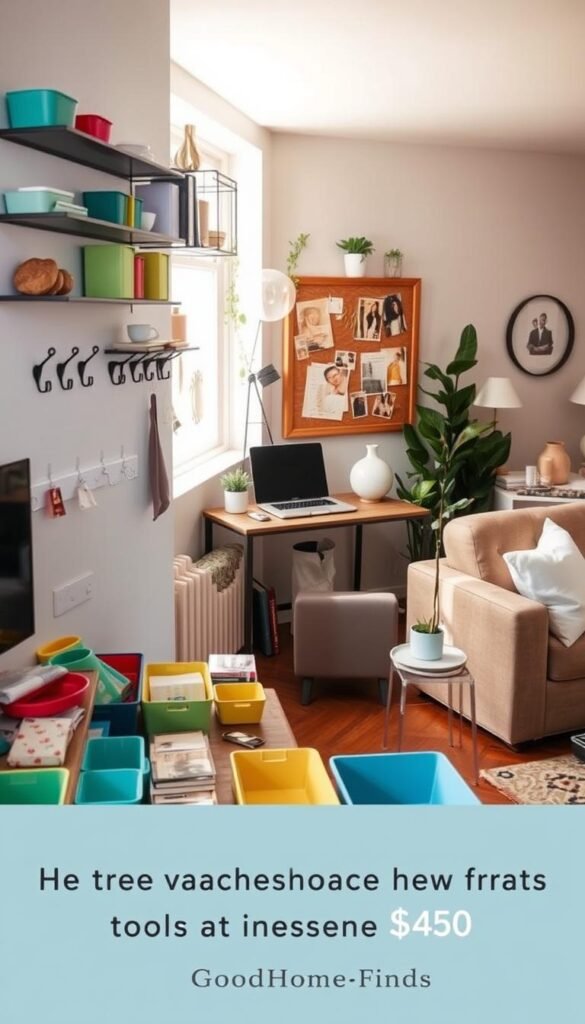
Space-smart cleaning tools that pull their weight
One tool should solve multiple problems. Pick a compact stick vacuum for floors, baseboards, and corners. Add an extendable duster for blinds and high shelves.
Two color-coded microfiber cloths keep kitchen and bathroom surfaces separate and faster to use.
Budget buys under $25 that reduce daily messes
Microfiber cloth set — fast surface wipe. Small squeegee — prevents glass build-up in the shower. Slim grout brush — tackles grout lines. Collapsible bucket — stores flat.
Upgrades under $50 worth the spend
A wall-mountable vacuum dock or adhesive mount keeps the tool ready. Choose a sturdier over-the-door rack that won’t flex. Try a quality mop head that wrings clean for quicker minutes per task.
No-drill organizing that works by room
Use adhesive hooks inside cabinet doors, tension rods under sinks, and over-the-door caddies for the bathroom. Magnetic strips and vertical hooks save floor place and reduce clutter.
| Item | Essentials (value) | Nice-to-have | Best for |
|---|---|---|---|
| Stick vacuum | Compact model, $50 | Stick with wall dock | Hard floors, rugs, quick pickups |
| Microfiber set | Color-coded cloths, $10 | Extra pack for each room | Kitchen counters, bathroom mirrors |
| Over-the-door rack | Budget caddy, $20 | Sturdier metal rack, $45 | Entryways, bathroom storage |
| Squeegee + scrub brush | $12 total | Higher-end grout tool | Shower glass, grout lines |
Pros and cons, and who it helps
- Over-the-door racks: fast install, may limit door swing.
- Under-bed bins: hidden storage, can collect dust; use lids.
- Drawer dividers: tidy daily use, limited by drawer depth.
- Portable caddies: great for shared bathroom care, need a home when not in use.
For a deeper look at compare cheap vs premium options for storage upgrades, see compare cheap vs premium options.
small apartment reset: Step-by-Step Zone Reset for Kitchen, Bathroom, Living, Bedroom, and Entryway
A stepwise zone routine turns big tasks into short, repeatable wins you can finish in minutes.
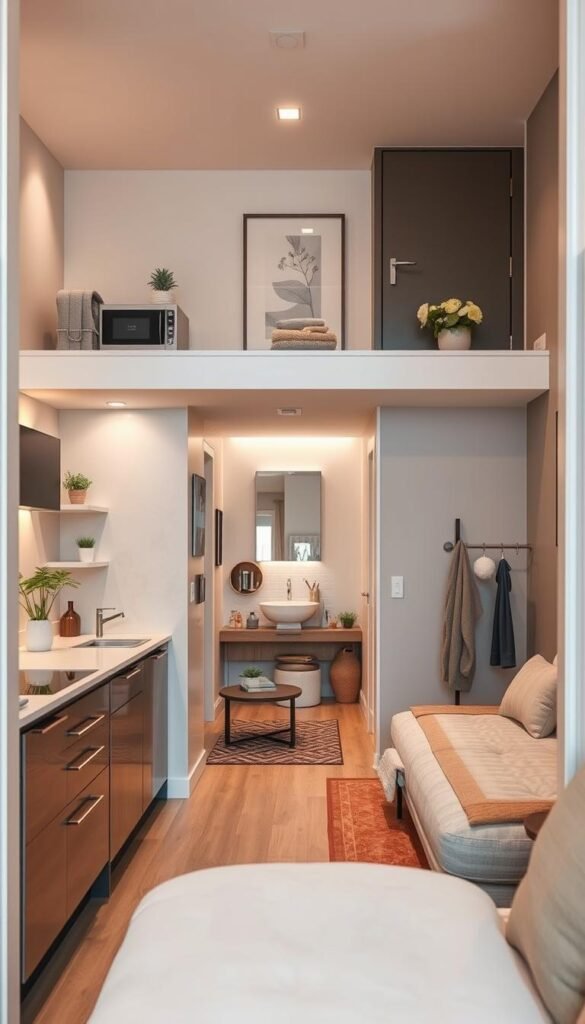
Kitchen: surfaces, sink, stovetop, and oven touch-ups
Clear counters first. Put away items that do not belong and load dishes.
Sanitize the sink and wipe the drain edge—this prevents odors and makes the whole kitchen feel cleaner fast.
Wipe the stovetop and do quick oven touch-ups only when spills are visible. Mop from the far corner toward the exit.
Tight-space hygiene: the sink is often the bottleneck. Keep it clear so other tasks flow.
Kitchen speed-clean (12 minutes)
- 3 min — dishes and loading rack.
- 3 min — counters wiped and sanitised.
- 2 min — stove touch-up and oven spot check.
- 2 min — take out trash and replace liner.
- 2 min — quick floor pass or sweep.
Bathroom: toilet, sink, shower/tub, mirrors, glass, and trash
Start with the toilet exterior and bowl. Wipe the sink and faucet next.
Address shower or tub ledges and clean mirrors and glass. Empty and sanitize the trash last.
Bathroom speed-clean (8 minutes)
- 2 min — toilet spot clean and lid wipe.
- 2 min — sink and faucet wipe.
- 2 min — squeegee shower glass or quick tub rinse.
- 2 min — empty trash and sweep floor.
Prevention: a daily squeegee and quick wipe cut soap scum and reduce weekly scrubbing.
Living and bed area: dust, linens, floors, and high-touch items
Dust high-touch points and quickly straighten shelves and side tables.
Swap or smooth linens and do a fast floor clean where you walk most.
Entryway: control the drop zone
Limit what lives at the door. Straighten shoes, shake mats, and wipe the door handle—it’s a top high-touch point.
Keep a small tray or hook for keys to prevent surface clutter.
How to run a zone reset: always start at the top (remove clutter), then wipe surfaces, and finish with floors. That order prevents back-and-forth and saves time.
| Layout | Top priority when short on minutes | Secondary priority |
|---|---|---|
| Studio | Kitchen sink + counters | Quick sweep of main floor |
| One-bedroom | Bathroom hygiene + sink | Living dust and bed linens |
| Two-bedroom | Main bath + kitchen touch-ups | Bedrooms: linens and high-traffic floors |
Daily Habits That Keep Your Apartment Reset All Week
A few small habits each day will keep chores from building up into a weekend project.

The 10-minute daily routine you can do even when tired
Do this routine in about ten minutes: clear counters, load or wash dishes, sweep high-traffic lanes for two minutes, and do a quick bathroom „blink“ wipe of sink and faucet.
Keep it simple: set a kitchen timer and commit. The time investment prevents larger cleaning tasks later in the week.
Surface habits that make surfaces stay cleaner
Line drawers and shelves with washable liners. Squeegee shower glass after use. Cook with lids to trap grease and reduce greasy film on nearby surfaces.
Open a window for 10 minutes when you can. Fresh air lowers moisture and odors and keeps surfaces fresher longer.
Rotate weekly focus areas to avoid overwhelm
- Week 1 — fridge shelves and food purge.
- Week 2 — oven/range hood touch-up.
- Week 3 — shower grout and tile attention.
- Week 4 — windows and ledges.
This rotation spreads tasks so you never face every deep clean at once.
Laundry and linens for a tight space
Do micro-loads more often. Use a fold-flat drying rack you can store behind a door and quick-dry microfiber towels to speed cycles.
Keep a small laundry caddy near your washer or hamper so carrying a load takes seconds, not a chore.
Make it easy to comply: store a tiny cleaning caddy where you use it. When wipes and a spray are within reach, daily tasks become seconds, not a big time commitment.
If you miss a day, restart the next day. Practical, forgiving habits keep this routine sustainable for real life. For quick bathroom fixes under a budget, check quick bathroom fixes.
When DIY Isn’t Enough: What to Outsource and How to Prep Your Home
If recurring grime or move-out details are taking too long, outsourcing certain jobs can save you stress and cash.
Signs you need help:
- Recurring dust that returns fast despite cleaning.
- Persistent mold on grout or silicone.
- Heavy oven or carbon buildup that won’t scrub off.
- End-of-lease cleans where every detail affects your deposit.

When outsourcing makes sense
Hire pros for jobs that need stronger equipment or many hours you don’t have. A service can give a fresh baseline so your regular cleaning stays effective.
Prep in minutes to save money
- Clear floors and main surfaces.
- Empty sinks and load the dishwasher.
- Contain loose items in one bin and tuck it away.
- Leave short written notes for priority areas.
Alternatives by size and budget
| Layout | Recommended session | Budget option |
|---|---|---|
| Studio | Targeted 1–2 hour session: kitchen + main floor | Quick session or roommate split |
| One-bedroom | 2–3 hour: kitchen, bath, and floors | Rotate weekly tasks between roommates |
| Two-bedroom | Monthly deep clean (3+ hours) to stay ahead | Split rooms by person; monthly pro touch-ups |
Practical note: Cleaning services can be a useful tool, not a luxury. Prep in minutes to make the visit efficient and less costly. For renter-friendly vendor ideas, see this renter-friendly referral list.
Conclusion
Finish by choosing one reliable weekly slot you can actually keep and a tiny kit that lives where you use it.
Repeat this loop: declutter a little, run your weekly reset, and protect progress with a short daily routine. This simple cycle makes the real difference—your home stays company-ready without devouring your free time.
Start at the top priorities: kitchen and bathroom. Let other areas be nice-to-have when minutes run low. Protect the entry drop zone so clutter stops landing on every surface.
One action to do now: pick a weekly day, set a 10-minute timer, and do a quick drop-zone tidy. That tiny step makes upkeep feel worth it and keeps the system working in real life.