Make tight spaces work without remodeling. You’ll learn a repeatable small bathroom system that controls clutter at the sink, in the shower, and around the toilet while keeping floor space clear. This guide focuses on renter-friendly fixes and real-life routines you can keep up.
You’ll use a zone-based setup: sink zone, shower zone, toilet zone, and backstock zone. That approach helps daily use stay easy and keeps the room calmer. Kate Amore calls these layouts puzzle-like; zones make them predictable.
Expect tight corners, awkward doors, and landlord limits on drilling. I’ll show when adhesives, suction hooks, tension poles, over-the-door organizers, and freestanding shelves are worth it for durability and safety on tile, glass, and painted walls.
Budget matters. You’ll get fast wins under $25 and stronger upgrades under $50. I’ll also suggest alternatives for a studio setup versus a shared one, plus a tip to keep bulky backstock out of the room.
Key Takeaways
- Use zones to keep daily routines simple and sustainable.
- Pick renter-friendly installs: adhesives, suction, and tension options.
- Find cheap upgrades under $25 and reliable picks under $50.
- Prioritize safety on tile and glass to prevent falls and damage.
- Store bulk items outside the room to protect valuable space.
- The full guide ends with comparisons and a simple daily/weekly reset.
What a “Small Bathroom System” Means for Small Spaces
Start by mapping tasks to places so each product has a predictable home. This is about a repeatable plan, not a pile of random organizers. You group items by use—sink, shower, and toilet—so you stop wasting time moving stuff around.

Zone-based organizing vs. random add-ons
Zone-based organizing groups items where you use them daily, weekly, or rarely. That makes routines faster and cleaning easier.
Random add-ons often add visual clutter and steal usable space. Buy storage with a purpose: if it does not reduce daily friction, skip it.
The non-negotiables for renters
For renter-friendly installs choose no-drill options: over-the-door racks, tension poles, minimal adhesives on painted walls, and secure suction that lists weight limits.
Pros/cons: over-the-door adds storage with zero remodeling. Suction is cheap but can fail in humidity. Adhesive lasts but may lift paint. Match the tool to the surface and keep heavy loads off glass and tile edges.
- Decision rule: add storage only when it cuts down steps, bottles, or cleaning time.
- Best for: shared rooms — zones let everyone follow the same labels and habits.
- Alternatives: studios lean on door and shower solutions; larger units can store backstock in closets.
Quick Bathroom Audit: Find Your Biggest Space Leaks
Stand in your doorway and scan for the spots that eat the most space and time. This five-minute check helps you see the real problems. It tells you where to add renter-friendly fixes that save time and make upkeep easier.

Counter clutter at the sink
List what lives on the counter. Toothpaste, creams, and tools add up fast.
Why it matters: a crowded counter makes wiping down slower and dust collects in corners.
Renter-friendly fix: use an adhesive toothbrush holder or a small tray to group daily items. That speeds cleaning and reduces visual noise.
Shower bottle overload
Count bottles on the floor or tub edge. Extra bottles block drainage and can slip.
Why it matters: clutter in the shower becomes a safety hazard and slows rinsing.
Renter-friendly fix: choose a tension pole corner shelf or a hanging caddy to keep bottles off the floor.
Dead zones: behind the door, above the toilet, and tight corners
Check behind the door and above the toilet for unused wall space.
Also note narrow gaps and the tightest walking path across the floor.
Why it matters: reclaiming these spots adds storage without eating floor space.
Renter-friendly fix: over-the-door hooks, a slim shelf above the toilet, or a corner tension pole. Measure door swing clearance and the narrowest walk path before buying.
- Five-minute audit steps: list items on the counter, in the shower, and items with no home.
- Identify the #1 leak: sink counter clutter—fix this first for a fast win.
- Pick one stress point to solve this week: sink, shower, or toilet area.
| Space Leak | Immediate Sign | Renter-Friendly Fix | Maintenance Benefit |
|---|---|---|---|
| Counter clutter | Items left out on the counter | Adhesive holders, trays | Faster wipe-downs, less dust |
| Shower bottles | Bottles on floor or tub edge | Tension pole shelf, hanging caddy | Safer shower, clear drain |
| Dead zones | Unused space behind door or above toilet | Over-the-door rack, slim shelving | More storage, preserved floor space |
Renter-Friendly Setup Rules: Adhesives, Suction, and Safety
Choose mounts and hooks that stand up to steam and daily use without damaging walls. Start by matching the mounting method to the surface and the expected load. That keeps your space functional and move-out friendly.

Where adhesive works best — and where it fails
Best: smooth, sealed tile, finished metal, and painted walls that are grease-free and fully dry. Clean with alcohol and let the surface cure before you mount.
Avoid: textured or grout-heavy sections, peeling paint, and locations that take direct spray from the shower. Adhesive often slips in constant steam.
Weight limits and fall-risk rules
Assume loads are heavier than the label suggests. Wet bottles, cords, and hair tools add weight. Pick mounts with at least a 30–50% safety buffer and never max out the rated limit.
On glass or glass shower walls, use low-profile options and avoid places you might bump. A falling caddy on a slick floor is a real hazard.
Door safety and clearance checks
Over-the-doors add plenty of storage but can scrape paint or pinch fingers. Add felt pads where metal meets painted doors. Check swing clearance before you fill pockets or hang heavy items.
Damage-free removal: move-out checklist
- Test a small corner first to see adhesion and finish response.
- Warm adhesive strips with a hair dryer when needed, then pull slowly at a low angle.
- Keep a patch kit handy: a light sanding, spot primer, and touch-up paint fix tiny pulls fast.
Worth it note:spending a bit more on high-quality adhesive mounts or premium suction saves you repair costs and protects valuable products. Durable choices make renter-friendly design practical and low stress.
| Surface | Recommended Mount | Use Case | Risk/Notes |
|---|---|---|---|
| Sealed tile | Strong adhesive strip | Toothbrush holders, soap trays | Low risk if cleaned; avoid grout lines |
| Finished metal (cabinet/door) | Adhesive hook or over-door hanger | Towels, hair tools | Check door clearance; add felt pads |
| Glass or glass shower | Low-profile suction with wide base | Light caddies, razor holders | Avoid heavy loads; place away from high-traffic bumps |
| Textured or peeling walls | Use tension poles or freestanding units | Shelves, multiple bottles | Adhesives fail here; choose non-drill freestanding |
Vertical Storage That Doesn’t Eat Floor Space
Stacking storage upward gives you real capacity gains while keeping the floor clear. This approach is fast, renter-friendly, and practical. It keeps the main path open and adds reachable zones for daily use and backstock.

Floating shelf look without a permanent install
Leaning shelves and freestanding étagères give the built-in look without drilling. They read like a shelf on the wall but remove easily at move-out.
Pros: stylish, easy to place, and simple to reposition. Cons: they can feel tight behind doors and need a flat floor to sit level.
Above-toilet storage that stays stable
Pick étagères or narrow towers with anti-tip straps and wide feet. In a narrow room, stability matters more than extra tiers.
Load shelves safely: heavy items low, daily items at arm height, and backstock on top. This keeps fall risk low and daily reach simple.
- Best-for: renters wanting a built-in look without damage.
- Alternative: if the room is too narrow, use a slim tower just outside the bathroom in a closet or entryway.
| Option | Pros | Cons | Best-for |
|---|---|---|---|
| Leaning shelf | Easy install, stylish, removable | Can crowd door swing; needs level floor | Shared spaces, renters |
| Freestanding étagère | Lots of vertical storage; looks built-in | Must be anchored; wider footprint at base | Narrow rooms needing height storage |
| Slim tower outside room | Protects floor space; large capacity | Requires nearby closet or hall space | Very narrow layouts, studios |
Door Storage Systems for Small Bathrooms
A door can hold daily essentials and free up your vanity without any drilling.

Over-the-door pocket organizers are the best no-install choice for renters who lack cabinet space or use a pedestal sink.
They work well for hair tools, skincare, extra toiletries, backup soap, and small bottles that crowd the counter.
Cabinet-door hooks and slim racks
Use adhesive hooks or narrow racks on the inside of a cabinet to hide belts, brushes, and small products.
This unlocks hidden storage and keeps the top of the vanity clear for daily use.
Pros / Cons and clearance check
- Pros: zero drilling, fast setup, and easy to assign pockets to people in shared rooms.
- Cons: added door noise, swinging friction, and a risk of shifting weight if pockets are overloaded.
- Clearance check: open the door fully, confirm it won’t hit a towel bar or wall, and ensure pockets won’t scrape trim.
Alternatives: if door storage crowds the path, place a slim cart or vertical shelf just outside the bathroom (closet or entryway) to hold backstock zones.
| Option | Best-for | Notes |
|---|---|---|
| Over-the-door pocket organizer | Hair tools, toiletries | No installation; watch weight per pocket |
| Inside cabinet hooks | Brushes, cords, small products | Hidden, keeps counters clear |
| Slim cart outside room | Backstock and bulk items | Preserves floor space and reduces door noise |
Shower Wall Storage Systems for Tight Showers
A clear floor makes daily routines faster and reduces slip risks in a cramped shower. Choose renter-safe options that match your tile or glass surfaces. The right pick keeps bottles off the floor and makes cleaning easier.

Compare the main options
- Showerhead-hung caddies: very simple to install. Best for minimalists. They can sway if overloaded.
- Suction caddies: clean look and easy removal. Work best on smooth tile or sealed glass. Re-seat often; humidity weakens suction over time.
- Tension pole corners: high capacity and stable when fitted right. Ideal for shared showers with many products.
Corner shelves and wall dispensers
Corner shelves reclaim space without reducing elbow room. Put heavy items low and daily items at chest height.
Wall-mounted dispensers cut clutter and speed up wipe-downs. They reduce the number of bottles you store in the shower and simplify refills.
Safety and durability notes
Avoid overloading mounts on glass doors. Keep sharp or heavy objects away from slippery zones. Clean tile and glass before attaching suction or adhesive mounts.
| Option | Best-for | Notes |
|---|---|---|
| Showerhead-hung | Minimalists | Lightweight; check for sway |
| Suction caddy | Smooth tile or glass | Clean, re-seat regularly |
| Tension pole | High-capacity needs | Measure fit; stable when correct |
Maintenance win: fewer bottles on the floor equals faster cleaning and fewer slip hazards during daily use.
Sink and Vanity Systems That Clear Counter Space
A cleaner sink area starts with two moves: wall mounts for daily gear and one tidy tray. These changes cut clutter fast and make wipe-downs simple.

Wall-mounted toothbrush holders and soap dispensers
Move the two messiest items off the counter — toothbrushes and soap — using adhesive wall-mounted holders. Pick mounts rated for humidity and labeled for easy removal. Test small first and follow surface prep instructions.
Pros: frees counter space and reduces splash mess. Cons: check weight limits and avoid textured grout.
Trays that make everyday items look intentional
Use one attractive tray to group daily bottles and tools. Even casual bottles read as styled when contained.
This tray rule makes the counter wipe down in one pass and shortens your daily reset.
Containers that reduce visual clutter while staying functional
Choose tinted glass canisters or a Mosser Glass dish to hide labels but keep contents visible. Add a small catchall for jewelry, Q-tips, and hair ties.
Best-for shared sinks: set clear rules. One tray, one wall holder per person, and labeled canisters keep routines steady and tidy. For more layout ideas see best bathroom space solutions.
Under-Sink Space Maximizers That Work Around Plumbing
Plumbing eats usable cabinet depth; the goal is storage that wraps around pipes, not fights them. Start by clearing the cabinet and spotting the shutoff valves and P-trap. Leave a small inspection gap so you can spot leaks quickly.

Expandable shelving designed for pipes
Choose adjustable shelves that bend around the P-trap. These expandable units create tiers without blocking valves. They hold bottles and cleaners while keeping the floor of the cabinet visible for quick checks.
Pull-out drawers for back-of-cabinet access
When you lose items in the rear, pull-out drawers save time. Install shallow glide drawers so you slide items forward instead of digging. This improves access more than adding raw volume.
Baskets and bins for labeled categories
Group like items. Use washable bins and label categories: hair, dental, first aid, cleaning, and backstock. When everyone follows the label, things return to their place and you save time.
Easy maintenance: preventing leaks, rust, and mildew
Wipe condensation weekly and avoid cardboard that traps moisture. Keep rust-prone cans off the cabinet floor and don’t block shutoff valves. If you have no under-sink cabinet, move this labeled setup to a nearby closet or hall shelf.
For more under-sink ideas and product picks, see best under-sink solutions.
| Problem | Fix | Benefit |
|---|---|---|
| P-trap blocks shelf | Expandable shelf that wraps pipes | Usable tiers, visible floor |
| Items lost in back | Pull-out drawers | Faster access, less waste |
| Moisture build-up | Washable bins, weekly wipe | Less mildew, cleaner cabinet |
Magnetic Micro-Storage for the Stuff That Always Gets Lost
Magnetic strips tame tiny clutter so you stop digging through drawers every morning. Micro-items—bobby pins, tweezers, nail clippers—scatter fast and create daily friction. A small magnetic solution gives each tool a predictable home and clears counter space.

Why this works
Micro-items create macro-mess. They slip into corners, fall behind bins, and force you to rummage. A magnetic strip or tiny magnetic box keeps those items visible and ready.
Best use cases
- Bobby pins, hair clips, and metal barrettes.
- Tweezers, nail clippers, and small scissors.
- Razor heads, metal grooming tools, and spare safety pins.
Where magnets work best
Mount magnets inside a metal cabinet or on the inner face of a metal cabinet door. They also attach to the side of a metal shelf or hidden metal trim. These placements keep items off counters and out of sight while staying easy to reach.
Safety and alternatives
Safety rule: never place magnets where items can fall into a sink or be reachable by children. Anchor strips securely and test strength with your heaviest tool.
If you lack metal surfaces, use a small lidded cup on a tray or a tiny labeled drawer bin inside a cabinet. This renter-friendly way still reduces visual clutter and keeps tools grouped.
| Problem | Magnetic Fix | Alternative |
|---|---|---|
| Lost pins & clippers | Magnetic strip or micro container | Lidded cup on a tray |
| No metal surface | Attach to metal shelf side or cabinet interior | Tiny drawer bin inside the cabinet |
| Safety concern | Mount away from sink and out of kids‘ reach | Use lidded container locked inside cabinet |
Toilet-Area Systems That Add Storage Without Crowding
The area around the toilet is often unused vertical real estate you can turn into tidy, renter-friendly storage. Treat this as a targeted zone. It frees counter and closet space while keeping essentials close at hand.
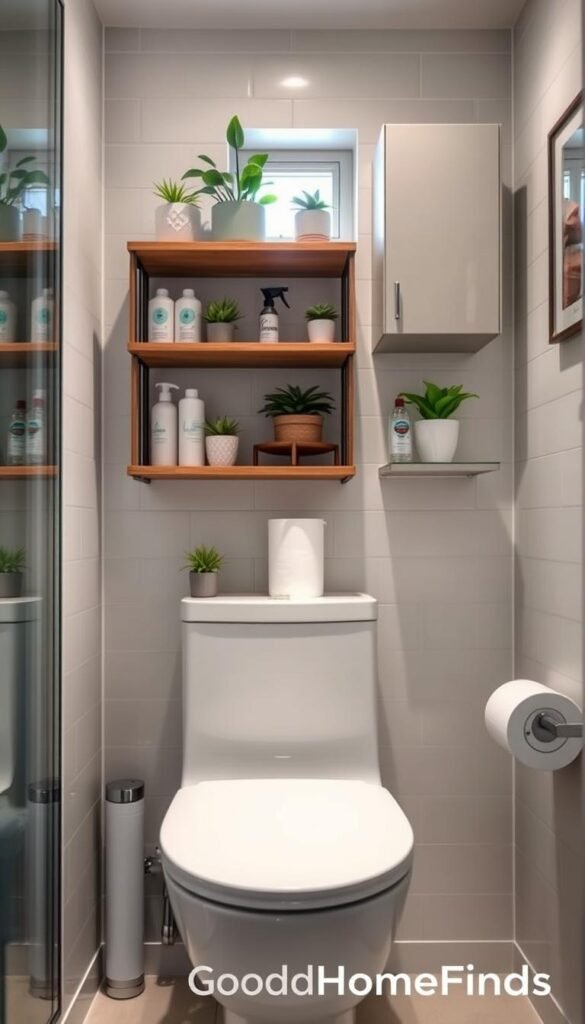
Slim rolling carts for narrow gaps
When you have a few inches between the toilet and wall, a slim rolling cart fits the gap. Use it for backup soap, wipes, small cleaning tools, and an extra roll.
Tip: pick a cart with a solid metal frame and lockable wheels. Keep heavier items on the bottom shelf to prevent tipping.
Toilet paper stands with built-in shelving
A freestanding stand gives you a mini shelf without drilling. It holds spare rolls, a small tray for air freshener, and a closed bin for lightweight towels.
Pros / Cons and hygiene notes
- Pros: renter-friendly, easy to move for deep cleaning, no-drill install.
- Cons: floor pieces can get in the way of mopping and sit in the splash zone.
- Hygiene: choose wipeable materials and avoid fabric storage near the floor. Store clean towels higher or in a closed container.
„Pick sturdy pieces and keep daily weight low so items are reachable without risking a tip.“
| Option | Best-for | Cleaning |
|---|---|---|
| Slim rolling cart | Gaps 2–6 inches | Slide out to mop |
| Toilet paper stand | No-drill zones | Wipeable surfaces |
| Over-toilet shelving | High vertical space | Requires secure install |
For nearby backstock ideas and alternatives that keep the room uncluttered, see best laundry room solutions.
Portable Storage for Bathrooms With Zero Built-Ins
If your room has zero built-ins, add furniture that behaves like a cabinet without drilling. A vintage stool, a narrow chest, or a compact cabinet beside a pedestal sink creates a landing zone for daily items and gives extra counter function without remodeling.

Stools and compact cabinets that act like a vanity
Pick a piece with a flat top and a closed shelf or drawer. It becomes a spot for your toothbrush cup, soap, and a tray for daily tools. Choose wipeable finishes that resist humidity and splashes.
Wheels vs feet: when to pick each
Wheels are best if you need to move storage to clean or to access the shower. Locking casters add stability.
Feet work better when rolling would bump into fixtures in a tight floor plan. Fixed legs feel steadier and quieter.
Corner strategy, durability, and alternatives
Corner-friendly pieces preserve walking paths and keep the main floor space clear. Slim, triangular cabinets fit where a square piece would crowd you.
For very tiny apartments, move a slim cabinet to the entryway or hall closet and keep only daily items in the room.
| Feature | Best-for | Notes |
|---|---|---|
| Wheels | Frequent cleaning, flexible layouts | Use locking casters; avoid on uneven floors |
| Feet | Tight floor plans, stable storage | Quieter; less likely to shift under load |
| Corner piece | Preserve walking path | Triangular tops save space near the vanity |
Make a Small Bathroom Look Bigger Using Light, Mirrors, and Finish Tricks
Bright finishes and a few reflective moves change how a room reads. Visual calm reduces the sense of clutter before you add storage. That makes daily upkeep feel easier and the space more usable.

Wall mirrors that amplify light and add depth
Hang a larger mirror to double available light and create depth. A wide wall mirror or two matching mirrors side-by-side makes the room feel wider.
Renter tip: use multiple smaller framed mirrors with adhesive picture hooks instead of one heavy piece. They are easier to install and remove at move-out.
Light color schemes and reflective finishes
Pick pale paint and semi-gloss or satin trims to bounce light off tiles and fixtures. High-gloss on a cabinet face or trim reflects daylight and helps the room look airy.
Practical note: brighter palettes show water spots more, so pair this with a quick weekly wipe-down routine.
Glass shower doors and renter-friendly alternatives
Clear glass shower doors remove visual barriers and reduce bulk. If you can’t change doors, choose a light, translucent curtain or a solid-color liner that hangs straight.
Keep curtain hardware slim and low-profile so the rail doesn’t read as a heavy line across the room.
Slim details and height cues that add space
Use thin shelving, narrow fixtures, and minimal-profile organizers so storage doesn’t dominate the wall plane.
Introduce vertical stripes or a vertical tile band to draw the eye up. A tall, narrow mirror or striped wallpaper panel gives the sense of higher ceilings without remodeling.
- Why it matters: visual tricks make the room look larger and calmer, cutting perceived clutter.
- Renter-friendly picks: adhesive mirror tiles, semi-gloss trim paint, light sheer curtains, and slim floating shelves.
- Maintenance: plan a weekly wipe-down for mirrors, glass, and glossy tile to keep the look working.
| Technique | Renter-Friendly Option | Impact |
|---|---|---|
| Large mirror | Multiple adhesive mirrors | Amplifies light, adds depth |
| Reflective finishes | Semi-gloss trim or cabinet face | Bounces light, cleaner look |
| Glass shower look | Translucent curtain or clear panel | Reduces visual bulk |
Budget Picks Under $25 That Improve a Small Bathroom Fast
Pick practical, renter-friendly upgrades that earn back minutes each day. These under-$25 buys are about solving daily pain points: fewer items on the counter, reachable towels, and less trash build-up.

Adhesive hooks and wall mounts for towels and daily tools
Why they work: adhesive hooks free counter and cabinet space without drilling. Place them within reach, away from direct shower spray, and avoid weak or textured paint.
- Pick: rust-resistant adhesive hooks for towels and a small wall-mounted toothbrush cup.
- Placement rule: eye level for daily reach; not on grout or peeling paint.
Affordable bins, baskets, and labels for a maintainable setup
Use washable plastic bins and woven baskets to group like items. Label each bin so everyone returns things to the right spot.
This reduces decision fatigue and makes a two-minute reset realistic every morning.
Mini trash solutions with a small footprint
A compact pedal bin keeps tissues and packaging off the counter and is more hygienic than an open cup. The Dusen Dusen pedal trash is a durable statement pick; the Simplehuman 4.5L is a slightly larger alternative with similar pedal action.
Tip: choose a low-profile metal or plastic bin that resists rust and fits beside a cabinet or under a sink.
„Durable adhesives, washable bins, and a pedal trash can cut wipe-down time and keep the room usable.“
| Problem | Under-$25 Fix | Why it helps |
|---|---|---|
| Counter clutter | Adhesive wall mounts | Clears surfaces; faster daily wipe |
| Loose items | Washable bins + labels | Easy return habit; less rummaging |
| Trash on counter | Mini pedal bin | Cleaner hygiene; less visual mess |
For more budget ways to tidy fast, check this budget fixes guide. These picks fit renter rules, protect your finishes, and make real-life upkeep easier.
Budget Upgrades Under $50 for a More Complete System
Upgrade to a sturdier set of gear when cheap fixes keep failing in humidity. These under-$50 picks move you from temporary fixes to reliable, renter-friendly storage that lasts through daily use.

Tension poles and sturdier shower caddies
Choose a tension pole or a rigid caddy when suction cups slip or hangers sway. Tension poles add vertical shelves without drilling and hold multiple bottles safely.
- Pros: stable, high capacity, good for shared shower use.
- Cons: requires careful fit and occasional re-tensioning.
- Renter-friendly setup: no-drill install; measure height and put rubber pads under feet.
Tiered organizers and pull-out cabinet solutions
Tiered shelves stop items from hiding behind one another. Pull-out drawers solve the real problem of access in deep cabinets.
Best for: cabinet clutter and lost items. They speed restock and cut time spent digging.
Durable countertop canisters
Choose tinted glass canisters to reduce visual mess while keeping contents visible. They give a tidy vanity and protect labels from water damage.
Who it’s for: frequent routines, high-traffic rooms, and renters who want style without permanent changes.
| Upgrade | Best-for | Renter note |
|---|---|---|
| Tension pole + caddy | Shared shower, many products | No drilling; measure fit |
| Tiered organizer / pull-out | Cabinet access, stacked items | Fits around pipes; easy install |
| Tinted glass canisters | Counter / vanity styling | Wipeable; hides labels |
„Durability costs a bit more up front, but you replace less and save time on daily upkeep.“
Comparison Tables: Choose the Best Small Bathroom System for Your Layout
Start by naming the biggest constraint—no cabinet, tight door, or shared traffic—and build from there. Below are compact comparison tables to match a layout to a practical kit of pieces. Each row shows pros, cons, and a renter-friendly alternative.

Studio with one cabinet
| Primary Constraint | Best Pieces | Pros | Best Alternative |
|---|---|---|---|
| No cabinet depth | Under-sink pipe shelf, over-the-door organizer, single shower caddy | Maximizes under-sink space; keeps shower bottles grouped | If suction fails → use a tension pole caddy |
Narrow room with inward-swing door
| Primary Constraint | Best Pieces | Pros | Best Alternative |
|---|---|---|---|
| Door clearance | Cabinet-door racks, wall-mounted holders, slim vertical shelf | Saves swing space; low trip risk | Avoid over-door pockets → use slim racks inside cabinet |
Shared high-traffic and pedestal sink layouts
| Primary Constraint | Best Pieces | Pros | Best Alternative |
|---|---|---|---|
| Multiple users, minimal storage | Tension pole caddy, labeled bins, slim rolling cart, over-door pockets | Durable, defines zones per person; fast restock | If floor pieces crowd → move backstock to hall shelf |
„Choose pieces that match the room’s limits. That stops overbuying and makes daily upkeep realistic.“
For a curated mix of renter-friendly picks you can grab today, see this small space fix mix.
Daily Routines and Easy Maintenance to Keep the System Working
A two-minute tidy each day prevents the slow slide back into mess. Start with a quick pass and you save time later.

Two-minute reset: counter, shower, and floor space
Clear the counter into its tray. Return bottles to the shower shelf or caddy. Restore visible floor space so walking paths stay open.
This takes about two minutes. Do it right after you brush or shower. Small habits stop clutter from growing.
Weekly wipe-down plan for shelves, trays, and canisters
Once a week, wipe shelves and trays with a damp cloth and mild cleaner. Rinse shower storage and let it dry. Check under the sink for moisture or leaks.
Why: sticky residue attracts dirt and weakens adhesive mounts. Regular wiping keeps mounts reliable and items tidy.
Restock zones: keep bulk items out of the room
Create restock zones outside the room for excess towels, extra rolls, and spare toiletries.
- Bedroom dresser bin — personal backups and skincare.
- Hall closet shelf — towels and bath linens.
- Entryways or a shallow cabinet — overflow household supplies.
- Top kitchen shelf — rarely used extras, if safe and dry.
Household rule that works: keep one open backup of each category in the room. Store all other stock in a restock zone. This stops cabinets from getting jammed.
„A short daily habit and a weekly wipe keep the setup durable and reliable.“
| Task | Frequency | Benefit |
|---|---|---|
| Two-minute reset (counter, shower, floor) | Daily | Fewer items on surfaces; faster mornings |
| Wipe shelves and trays | Weekly | Stops residue, protects mounts and adhesives |
| Check restock zones | Monthly | Prevents overstocking the room; frees storage area |
Conclusion
Close by picking the one spot that drives you craziest and fix it first. Start with the area that steals the most time—counter, shower, or the gap by the toilet—and make one practical change.
The best approach blends zones: sink counter control, shower product control, and toilet-area overflow. Keep one backstock zone outside the room when you can. Prioritize renter-friendly mounts, safe choices for tile and glass, and easy removal at move-out.
Budget path: begin with under-$25 hooks, bins, labels, and a small trash can. Upgrade under $50 to a tension pole, pull-outs, or tinted canisters if you need durability.
Do a two-minute reset daily and a weekly wipe-down. Use the comparison tables to match design ideas and products to your layout. Pick one problem today, make one change, and build the rest from there.