
You can make your home feel calmer without drilling holes or spending much. This guide shows renter-friendly, low-cost fixes and daily habits that cut clutter and speed up cleaning. Expect quick resets, easy maintenance, and clear pros and cons for each pick.
Think under-$25 quick wins and smarter under-$50 upgrades. You will learn renter-safe tools like adhesive hooks, over-door racks, tension rods, and freestanding units. I’ll note weight limits and stability checks so your setup stays safe.
We’ll tackle kitchen counters, bathroom clutter, closets and laundry bottlenecks, plus entryway pile-ups. The goal is not perfect minimalism but less daily friction: fewer piles and faster mornings. Routines matter more than the size of the house; a five-minute reset prevents clutter from coming back.
Bonus: you can keep an exercise habit in tight quarters using low-impact moves and foldaway gear. For more targeted fixes and mixes, see this compact fix guide.
Key Takeaways
- Short nightly resets (5 minutes) keep clutter from returning.
- Use renter-friendly tools: adhesive, over-door, tension, freestanding.
- Budget tiers: quick wins under $25; sturdier upgrades under $50.
- Prioritize safety: check weight limits and stability before hanging.
- Focus on routines, not perfection, for lasting calm at home.
Start With a Small-Space Mindset and a Five-Minute Reset
Make five-minute habits the backbone of a calmer home you can actually keep. When you live in a tight area, big clean days rarely stick. You need a shift: do fewer marathon cleans and more short resets so clutter never multiplies.
Why consistency matters more than square footage
Training in a small room is a focus upgrade. Progress comes from doing tiny actions every day, not buying more room. Spend a little time each evening and your place will feel larger without change or cost.
Create a “home base” using vertical corners
Pick one corner as your hub. Use one over-door organizer, one slim bin, and a row of hooks. That keeps the floor clear and uses vertical height instead of new furniture.

Five-minute reset script
- Clear one surface (desk or counter).
- Return items to their zones.
- Toss trash.
- Lay out tomorrow’s “first touch” items (keys, towel, mat).
Neighbor-friendly rules
Keep movement low-impact. Avoid stomping and slamming doors. Place a mat or folded towel under noisy gear. Soft surfaces protect floors and cut noise for downstairs neighbors.
Quick checklist for soft landings:
- Washable rug
- Foam tiles
- Thicker grip mat
Practical tip: These habits work when you’re busy, tired, or sharing the place. For targeted kitchen fixes that match this mindset, see the kitchen fix guide.
Set Up a No-Drill Home System That Works in Any Apartment
Set up renter-safe storage that works fast and leaves the walls intact. A few well-chosen tools give you instant zones and less daily friction. Focus on options that install in minutes and hold daily-use items.
The no-damage toolkit
Tension rods for vertical storage. Over-door racks to add hanging zones. Adhesive hooks for light items. Freestanding shelves when you need true weight support. These options cover almost every need without drilling.

Safety first: simple checks
Rule: anything heavy goes on freestanding or over-door gear with a verified rating. Use adhesive only for lightweight daily items.
For door-anchor setups use a solid door that closes toward you. Lock it and do a gradual weight test. In tight rooms, check your movement range so you don’t hit furniture or walls.
15-minute setup checklist
- Measure door thickness and swing direction.
- Clean split areas with isopropyl alcohol before applying adhesive.
- Set a clear weight limit per hook and label zones.
- Test stability slowly; add load in stages.
- Choose powder-coated metal or thicker plastic for humid areas and replace worn adhesive strips promptly.
How this helps: When each item has a home, your five-minute reset will work faster and counters stay clear.
Kitchen Routines for Tiny Counters and Crowded Cabinets
A repeatable ten-minute kitchen reset beats occasional deep cleans.

Daily flow: unload or stack dishes, wipe counters, dry the sink with a towel, and set out your next meal items. Do this in under ten minutes and you cut clutter before it grows.
Counter reset — quick step-by-step
- Clear one landing spot and stack dishes.
- Wipe the counter with a dedicated cloth.
- Dry the sink and put away scrubbers.
- Return only daily-use items to the counter.
Budget picks under $25 (renter-safe)
- Stackable cabinet shelves for plates.
- Slim utensil organizer for drawers.
- Tension rod under sink for spray bottles.
- Adhesive hooks for oven mitts.
Upgrades under $50
- Slim rolling cart for gap storage.
- Sturdy over-cabinet rack for cutting boards.
- Compact dish-drying rack with a clean drain tray.
| Item | Best for | Pros | Cons |
|---|---|---|---|
| Stackable shelves | Cabinet organizers | Adds vertical room; low cost | Can wobble if overloaded |
| Adhesive hooks | Hang mitts & towels | Cheap; no drill | Limited weight; humidity reduces hold |
| Over-cabinet rack | Cutting boards & lids | Sturdy; holds heavier items | May block cabinet doors |
Who it fits: For kitchenettes, focus vertical and one clear prep zone. For a full galley, assign zones by step (prep → cook → clean) to cut back-and-forth.
Keep the floor clear near the stove, avoid overloading cabinet doors, and choose wipeable materials for easy daily care. For more tested picks, see the best small kitchen solutions.
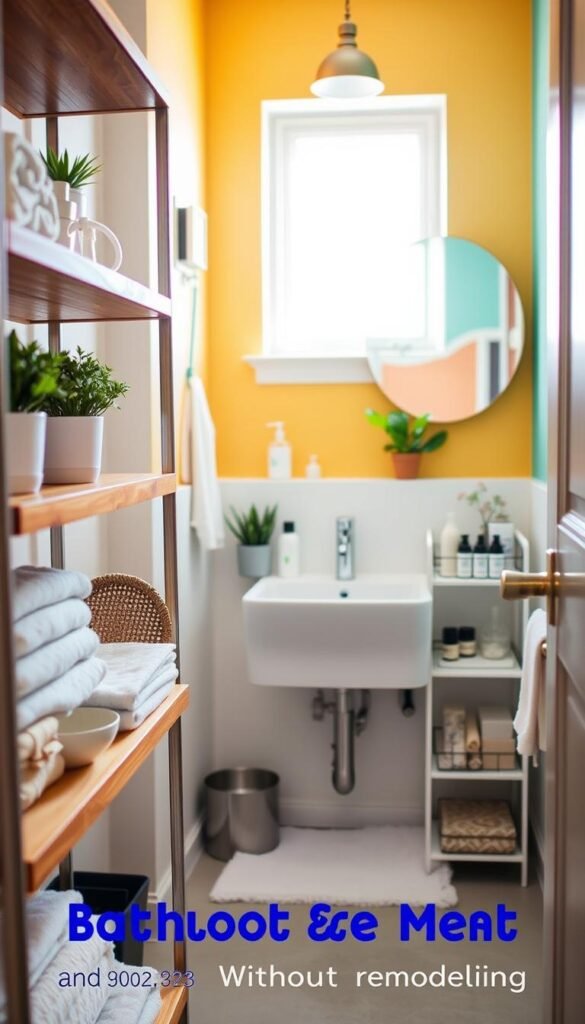
Bathroom Routines That Reduce Mess Without Remodeling
You can tame bathroom messes fast with renter-friendly storage and a two-minute habit. This keeps counters clear and slows mildew without drilling or a major spend.
Two-minute AM/PM script
AM: put products back in one bin, wipe the counter, hang the towel so it can dry, and set out tomorrow’s essentials.
PM: toss trash, return items to a single caddy, hang the towel flat, and close the shower curtain halfway to air the stall.
Under-$25 shower and sink options
- Tension pole caddy for shampoo and body wash — no wall repair needed.
- Adhesive corner shelves for light items like soap or sponges.
- Over-door hooks for towels or robes to keep floors clear.
- Small lidded bin for backup toiletries and travel samples.
Upgrades under $50 for humidity and durability
- Rust-resistant metal caddies that hold heavy bottles.
- Higher-quality quick-dry shower liner to cut mildew time.
- Compact squeegee plus holder to remove excess water after showers.
„Simple daily steps reduce mold risk more than occasional deep cleans.“
Easy maintenance: mold prevention, quick-dry habits, and laundry staging
- Squeegee the tile and glass after each shower.
- Run the fan or crack a window for 10 minutes.
- Spread towels and bathmats so air reaches both sides.
Laundry staging: one slim hamper, one hook for “wear again,” and a small mesh bag for delicates keeps the floor clear and speeds laundry time.
| Problem | Under $25 | Under $50 |
|---|---|---|
| Shower bottle storage | Tension pole caddy | Rust-resistant corner caddy |
| Quick-dry solution | Breathable liner | Higher-quality, fast-dry liner + squeegee |
| Hanging towels | Over-door hooks | Sturdy towel bar or hook with better rating |
Durability & safety note: adhesive fails faster in steam. Keep heavy bottles on tension or freestanding storage and re-check weight ratings before use. For tested storage choices and a deeper comparison, see storage choices.
Closet and Laundry Systems for Small Spaces (Without Extra Furniture)
You can shrink wardrobe chaos with a few hanger tricks and one-touch outfit zones.

One-touch outfit zones that actually work
Create three spots: one hook for tomorrow, one bin for re-wear, and one place for gym or work clothes.
This keeps laundry off chairs and speeds your morning. Add a weekly 15-minute reset to keep the system alive.
No-drill boosters under $25
- Slim velvet hangers to save vertical room.
- Hanger connector hooks to double hanging levels.
- Shelf dividers and labeled slide bins for folded items.
Under-$50 upgrades
Freestanding garment rack for overflow. Slim hamper that tucks between bed and wall. Low-profile under-bed bag for off-season gear.
Open vs closed: pros and cons
Open storage is fast and encourages use but shows dust and visual clutter.
Closed bins hide mess and protect fabric. They can become forgotten if unlabeled.
Best picks and tested options: see the best closet picks for renter-friendly choices by layout and need.
Entryway Routines That Stop Clutter at the Door
Stop clutter at the threshold with a tight, no-drill drop zone that works every day.
Make a rule: everything that comes in gets a home immediately. That habit keeps items from migrating to the couch, counter, or bed.

The drop zone: keys, shoes, bags, and mail with zero drilling
Create a one-foot footprint near the door. Use over-door hooks for bags, a slim key tray, and a vertical mail sorter that hangs on the door. This keeps the doorway clear without tools or holes.
Small-space shoe control: slim racks, over-door organizers, washable mats
Choose a narrow shoe rack or an over-door pocket organizer for flats and sandals. Add a washable mat to trap grit and protect the floor after rainy days.
Durability and safety: preventing trip hazards in tight hallways
Pick stable gear: metal racks with solid legs beat flimsy plastic that tips. Select mats rated for frequent washing and for wet weather.
- Simple entry routine: everything dropped gets returned nightly.
- One-in, one-out: remove one pair before adding another.
- Safety checks: keep walking paths clear and avoid hooks where straps swing into a body or jam the door.
„Label zones if you share the entry. It reduces friction and keeps shoes from piling up.“
Who each setup fits best: studios do best with vertical, door-mounted solutions. Families need higher-capacity racks and a larger mat. Roommates benefit from labeled zones and separate hooks.
For tested product picks and more entryway ideas, see this best entryway storage guide.
Small space routines for fitness: quiet workouts in four to six square feet
You can hit your weekly activity goal from a four-foot corner with quiet, effective moves. The CDC target of 150 minutes per week breaks down to short sessions you can actually keep. Aim for 10–30 minute blocks and alternate cardio and strength days.

Low-noise cardio that fits one spot
Choose marching in place, controlled step-ups on a stable step, or a compact walking pad. These keep your heart rate up without high-impact jumps. Fast marches and step-back variations lower noise for downstairs neighbors.
Resistance bands and minimal equipment
Resistance bands are the best no-clutter tool. They store in a drawer and train upper and lower body. A single band set covers rows, presses, leg lifts, and banded squats.
Door-anchor safety checks
Use a door that closes toward you and lock it. Inspect the frame, clip the anchor above the hinge side, and do a gentle lean test before full load. Stop if the door shifts or you hear creaks.
Beginner-friendly chair circuit
- Squats — 10–15 reps (control the descent).
- Chair dips — 8–12 reps (stable chair only).
- Lunges or stationary split squats — 8–10 each leg.
- Hip bridges — 12–15 reps.
- Plank — 20–40 seconds.
- Incline or knee push-ups — 8–12 reps.
Form cues and neighbor-friendly HIIT
Keep your core braced. Exhale on effort. Shorten range of motion if the room is tight so arms and legs don’t hit furniture. For HIIT, try 20 seconds on / 40 seconds off with low-impact moves like fast marches, step-back burpees, or controlled mountain climbers on a mat.
„Progress comes from consistency, not square footage.“
| Tool | Footprint | Noise | Best use |
|---|---|---|---|
| Resistance band set | Drawer | Low | Full-body strength, rows, presses |
| Sturdy chair | 1–2 sq ft | Low | Dips, step-ups, support for balance |
| Walking pad | 6 sq ft | Moderate | Steady cardio indoors |
| Foldable step | 2 sq ft | Low | Controlled step-ups and plyo alternatives |
Weekly plan: 3 strength sessions, 2 low-noise cardio sessions. Keep bands and chair handy so workouts feel simple and worth it. Small, steady training beats sporadic long sessions.
Budget Product Picks and Comparison Tables (Under $25 and Under $50)
Practical picks save time and avoid clutter. Below are renter-friendly items that actually earn their keep. Pick based on the problem you need solved, not the prettiest ad.

Under $25 essentials
- Adhesive hooks — hang towels, keys, or a light caddy. Pros: no drill, cheap. Cons: limited weight; humidity weakens hold.
- Lidded bins — stash gear, toiletries, or mail. Pros: hides clutter; stackable. Cons: can hide forgotten items if unlabeled.
- Slim drawer organizers — tame utensils and cords. Pros: immediate order. Cons: fit varies by drawer depth.
- Washable mats — noise control under a jump-rope substitute or walking pad. Pros: protects floors and cuts noise. Cons: may slide without a grip layer.
Under $50 upgrades
- Slim rolling cart — mobile counter extension that replaces bulky storage.
- Freestanding rack — holds heavier items safely without using the wall.
- Higher-durability bathroom caddy — metal or rust-resistant plastic for wet rooms.
- Compact fitness gear — resistance bands, adjustable dumbbells, or a ropeless jump tool that reduce equipment clutter.
Comparison: renter-friendly solutions by room/problem
| Room / Problem | Best No-drill Solution | Setup Time | Durability | Safety Notes |
|---|---|---|---|---|
| Entryway – shoes piling | Narrow over-door shoe pocket | 5 min | Medium | Ensure door clears; avoid overfilling pockets |
| Bathroom – bottle clutter | Tension pole caddy | 10 min | High | Place on stable tub base; check tension regularly |
| Kitchen – counter overflow | Slim rolling cart | 5–15 min | High | Lock wheels when in use; keep heavy items low |
| Closet – hanging limit | Hanger connector hooks | 2 min | Medium | Limit weight per hook to avoid bending |
Comparison: fitness tools by footprint, noise, and versatility
| Tool | Footprint | Noise Level | Versatility | Best For |
|---|---|---|---|---|
| Resistance bands | Drawer / bag | Low | High — full-body exercises | Any workout for limited room |
| Noise-reducing mat | 1–2 ft² | Very low | Low — protects floors, reduces impact | Upper-floor apartments or jump alternatives |
| Walking pad | 6 ft² | Moderate | Medium — steady cardio | Compact cardio sessions |
| Adjustable dumbbells | 1–2 ft² | Low | High — replaces many plates | Strength workouts without a rack |
Who each option is best for
Studios: favor vertical, foldable, and multiuse picks that tuck away.
Roommates: buy labeled bins and duplicate drop zones to reduce friction.
Couples: choose dual hooks and a larger cart to share day-to-day load.
Families: invest in washable mats, sturdy racks, and higher-capacity bins that hold frequent use.
Practical buying rule: don’t buy an organizer until you define what it will hold and where it will live. That prevents another item from turning into new clutter.
Conclusion
Make this simple promise: pick one room, spend five minutes there each day, and add one under-$25 fix only if it solves a real pain point.
Start this week: do a 10-minute walkthrough, pick the top problem, run a five-minute reset nightly, and test one renter-friendly tool like an over-door hook, tension rod, or freestanding bin.
Safety and durability: always check weight ratings, confirm door direction for hanging gear, and do a stability test before daily use.
Keep a weekly cadence: ten minutes in the kitchen, two minutes in the bathroom, and one weekly closet reset. Fit a short workout or exercise block into that flow to boost energy and make upkeep easier. For targeted bathroom budget fixes see bathroom budget fixes.
Final step: choose solutions that match your layout and available time so your home stays calm and useful, even in tight spaces.