You’re here because heat waves are getting worse and you want practical, renter-friendly ways to stay cool without hiking your power bill.
This roundup focuses on small, real-life tools you can use in apartments, bedrooms, kitchens, and on the go. I’ll cover portable fans, tower fans, cooling towels, neck fans, cooling blankets, gel packs, and pet cooling mats.
No hype. Expect honest pros and cons, setup difficulty, maintenance notes, and clear budget vs premium trade-offs. I’ll highlight energy use, noise levels for sleep and calls, and space needs for tight rooms.
Record heat and extreme weather make this useful. You won’t get AC-level results from every device, but you will learn what can truly beat heat in daily use and what’s worth the spend.
Key Takeaways
- Focus on energy, noise, and size when choosing a unit for small spaces.
- Budget models work well for short bursts; premium often means quieter and more durable.
- Maintenance matters: filters, water tanks, washable fabrics, and batteries affect daily use.
- Expect realistic cooling, not AC-level temps; combine methods for best results.
- Safety and pet-friendly options matter during extreme heat.
What to expect from these picks for hot summer days
Expect straightforward picks that work best in tight rooms and real daily routines.

Focus on small-room comfort
Practical fit matters more than features. In a small space, placement and airflow beat flashy modes. Tower fans give wide sweep and useful timers. Compact fans fit on a nightstand without stealing floor space.
No-nonsense evaluation criteria
We tested items for power draw, noise at night, physical footprint, and how annoying upkeep is. We also timed setup: plug-and-go units score higher than things that need venting or constant refills.
Budget vs premium: when to pay more
Choose premium for quiet motors, longer battery life, and fewer rattles if you use a device every day. For occasional or backup use, a basic model is fine and more budget friendly. You’ll see which picks are truly worth it for daily use.
| Use case | Good pick | Why |
|---|---|---|
| Bedside sleep | Tower fan with timer | Wide airflow, low footprint, quiet at low speed |
| On the go | Rechargeable neck fan | Hands-free, variable battery life, handy for errands |
| Quick relief | Soak-and-snap towel | Simple, no power, easy to store |
Real benefits (and realistic limits)
Small devices won’t replace an air conditioner, but they do change how hot a room feels to your body. That change matters. Improved airflow and contact cooling can lower overheating risk for everyone, especially older adults and people with medical sensitivity.

Comfort and safety
These tools move air and cool skin. That helps your body shed heat and reduces fainting risk during extreme heat.
Items like gel wraps and head wraps can also ease migraines and localized overheating.
Energy and expectations
Fans let you nudge the thermostat higher without feeling hotter. That can cut energy use compared with running AC full time.
But most units offer targeted relief, not whole-room temperature drops.
Noise and daily life
“Quiet” varies. A fan fine for a living room may still wake a light sleeper or distract on calls. Check decibel notes and test at night if sleep is a priority.
Maintenance reality
Filters clog, water tanks can get funky, fabrics get musty, and batteries lose capacity over months. Cooling towels often last ~2–3 hours per soak.
Use breathable fabrics, avoid blocking airflow, and don’t rely on one small device for an entire apartment.
- Real benefits: lowers skin temperature and reduces sweat and danger during brief heat episodes.
- Limits: not a substitute for whole-home AC or medical-grade cooling when needed.
Who needs this and which type fits your routine
Match the right device to your routine so you get useful relief without fuss.
Who needs this is simple: people who want renter-friendly, low-effort ways to keep cool in small spaces and on the move.

Small-apartment renters who can’t install window AC
If you rent, choose plug-and-play units. Look for compact fans, portable air options that don’t need brackets, and lightweight cooling blankets for the bed.
Hot sleepers who wake up sweaty
Pick breathable blankets and low-noise bedside fans. These are practical upgrades that improve sleep without major room changes.
Commuters, travelers, and outdoor event-goers
Go for packable neck fans and foldable towels that fit in a bag. Rechargeable options work well for a long day out.
Home cooks and people in hot kitchens
Choose small airflow helpers and insulated bottles to stay hydrated while you cook. These products lower discomfort without adding heat or noise.
People prone to headaches, sun sensitivity, or overheating
Targeted items like gel head wraps and neck wraps offer relief without full-room devices. Use them safely and limit direct, long-term icing.
Pet owners
Opt for pet cooling mats that don’t require freezing or constant supervision. Combine mats with good airflow and shaded spots to keep pets safe indoors.
- Practical note: check outlet compatibility, footprint, and noise before buying.
- Safety first: avoid DIY ice setups for pets and monitor anyone using cold packs near skin or sensitive areas.
Summer cooling gadgets for small apartments: fans and portable air options
If you live in a small apartment, the right fan or countertop unit can change how your space feels without major installs. Start by deciding if you need true air conditioning or a simple air mover.

Portable air conditioner vs “air cooler”: what you’re actually buying
Real portable AC needs venting and removes heat. It costs more to run but can lower room temperatures. Many countertop units are evaporative air coolers. They add moisture and cool nearby air, not entire rooms.
Tower fan for apartments
Tower fans save floor space and move wide airflow. Models like the Honeywell tall tower are quiet, oscillate, and include 1–8 hour timers. Setup is usually minutes with no tools.
Mini portable fan
Mini fans (VersionTech-style) make great desk or bedside backups. They are inexpensive, long-lasting, and portable for travel.
| Type | Best use | Power & noise |
|---|---|---|
| Portable AC | Whole room, short bursts | High power, louder |
| Evaporative cooler | Close-range, low cost | Low power, moderate noise (plus humidity) |
| Tower fan | Bedrooms, studios | Low–medium power, quiet on low speeds |
| Mini fan | Desk, travel, spot cooling | Very low power, minimal noise |
Budget vs premium, power, noise, setup time, and common mistakes
Budget fans work for short use. Premium buys mean better motors, quieter operation, and longer life. Fans use far less power than true AC.
Setup time: most fans take minutes; venting an AC takes more time and planning. Water-based coolers need refills and cleaning.
Common mistakes: blocking intake vents, placing units in corners, and expecting one small unit to drop room temperatures like a central system.
For help choosing between cheap and durable options, see a quick guide on budget vs premium choices.
Wearable and packable cooling for errands, commuting, and travel
When you’re juggling bags or a stroller, simple hands-free items keep you moving comfortably. Choose gear that fits in a bag and needs only minutes to prep.

Neck fan
Use when your hands are full. A rechargeable neck fan blows air around neck and face so you can keep cool while carrying things. Charge time is usually under two hours and run time varies by model.
Soak-and-snap towel
Soak the towel in water, wring, snap, and clip it into its bottle for storage. These towels stay cool about 2–3 hours and won’t soak your bag when stored properly.
Bandana, mists, and sun protection
A cooling bandana drapes without dripping and lasts longer outdoors. Face mists can feel great in dry heat, but avoid menthol or alcohol formulas if your skin is sensitive and don’t spray in enclosed spaces.
Budget vs premium and quick setup
Budget fans save money but may lose power after months. Premium models give better battery life and comfort around the neck. Setup takes minutes: charge the fan, soak the fabric, refill the bottle, and go.
Common mistakes
- Over-wetting fabrics and putting them loose in a bag.
- Forgetting to recharge before you leave.
- Using sprays near open flames or in small, unventilated spaces.
Sleep-cooling upgrades that don’t take over your bedroom
Small changes to your bedding and fan setup can make nights far more comfortable without crowding a small bedroom.
Breathable blankets that still cover you
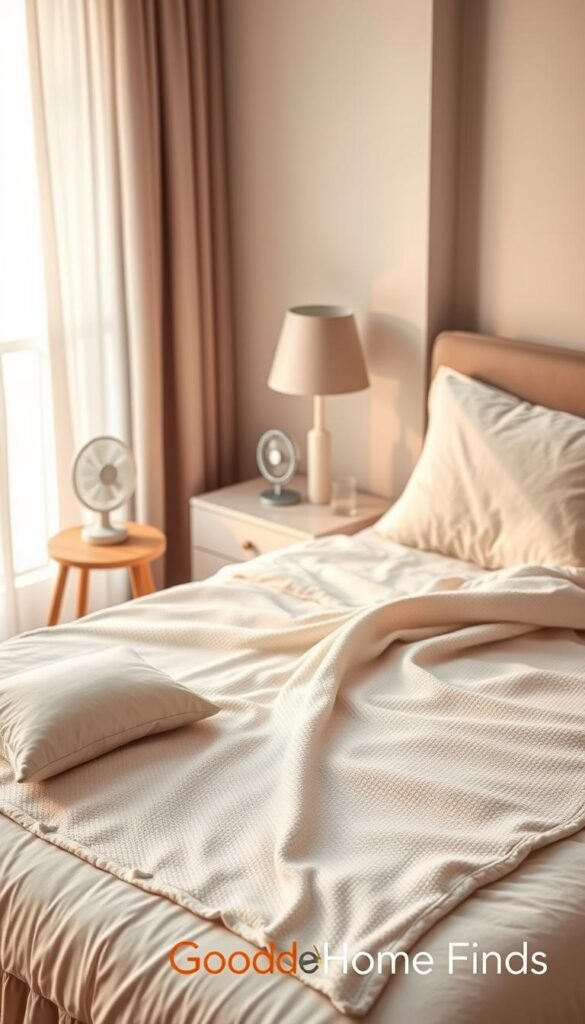
Choose a cooling blanket made from lightweight fibers like bamboo or specialized cooling yarns. These let air move through and stop you from waking sweaty.
Budget options are lightweight and breathable. Premium layers add durability and a softer hand. Either way, skip heavy weaves that trap heat.
Pillows that won’t hold heat
Pick a cooling pillow with latex, bamboo, or cotton fill. Avoid dense memory foam if you sleep hot; it can keep heat against your head.
Fan pairing and airflow
Position a tower fan for gentle circulation. Aim for indirect airflow so you don’t blast your face all night. Use a timer or low, steady setting.
Noise, space, and maintenance
If you’re a light sleeper prioritize smooth low speeds, stable base, and no rattles. Timers help shut things off after you fall asleep.
Nightstand fans fit small spaces. Bigger units can slide under a bed when not in use. Watch cords to avoid tripping hazards.
Wash blankets and pillow covers every 2–4 weeks. Fully dry items to prevent mustiness and store them dry.
Common mistakes to avoid
- Avoid heavy pillowcases that block breathability.
- Don’t buy memory-foam pillows if you run hot.
- Don’t expect bedding alone to cool an entire room.
For a quick look at sleep tech that helps regulate temperature, see this practical guide on sleep tech solutions.
Kitchen and hydration helpers that make heat feel more manageable
A few targeted kitchen upgrades let you manage indoor heat without installing big appliances. These picks focus on keeping fluids cold and offering quick relief during heavy use.

Countertop ice machine: when it’s worth the counter space
When to buy: choose a counter ice machine if you host often, prep cold drinks while cooking, or want portable ice for parties and trips.
Value note: units plug into a standard outlet and can be moved for camping or a backyard cookout.
Reusable insulated water bottle: keeping water cold for hours
An insulated stainless steel bottle is one of the simplest, most useful upgrades. It keeps water cold for hours and makes drinking easier.
Carry one in your bag so you sip more and avoid dehydration symptoms like headache or lightheadedness.
Electrolyte powder: useful for heavy sweating days (and when you don’t need it)
Electrolyte mixes replace minerals you lose with sweat during intense activity or long outdoor exposure.
They are not required for casual errands. Use them on long, sweaty days or when you feel lightheaded.
Power consumption and noise: what to expect
Countertop ice makers draw moderate power and often run intermittently. Expect a low hum while producing ice.
If noise matters for your layout, read decibel notes and place the unit away from work or sleep zones.
Setup time and safe placement
Setup takes minutes, but initial cleaning and a first-cycle flush take time. Refill and drain as the manual directs.
Place the unit away from edges, keep cords clear, and avoid splashing water near outlets or other electronics.
Common mistakes to avoid
- Skipping regular cleaning. Stagnant water breeds odors and bacteria.
- Buying a unit too large for your counter or fridge space.
- Placing the machine or bottles too close to heat sources when you expect cold performance.
| Item | Why it helps | What to watch |
|---|---|---|
| Countertop ice machine | Fast ice for drinks, parties, portable use | Power draw, noise, cleaning cycles |
| Insulated water bottle | Keeps water cold for hours; boosts hydration | Size fits bag; lid seals to avoid spills |
| Electrolyte powder | Replaces minerals lost in heavy sweat | Use for strenuous days; watch sugar content |
For portable, personal options you can also check a practical list of travel-friendly items like neck fans and towels at best personal travel products.
Quick relief and recovery cooling for after sun and peak heat
You don’t always need a whole-room fix—sometimes a wrapped gel pack or a chilled mask is enough to feel better.

Targeted gel packs and head wraps
Use gel ice pack wraps on the back or neck to drop skin temperature and calm overheating. Straps keep packs in place so you can rest.
Cooling head wraps help with migraine relief and post-sun soreness. Apply for 10–15 minutes and check skin often.
Cold facial masks for hot, puffy skin
Chilled masks soothe the face and reduce puffiness. Store them in the fridge for an extra calming effect.
After-sun skincare: what actually helps
Aloe and cocoa-butter lotions feel soothing but barely change core temperatures. They help skin recovery. Use them for comfort, not rapid cool-down.
Safety notes
- Always use a thin cloth between ice and skin to avoid numbness or irritation.
- Limit sessions to 10–20 minutes on sensitive areas like the face and neck.
- If you feel tingling, stop and let skin return to normal.
Maintenance and hygiene
Wash fabric wraps after sweaty use. Wipe gel packs and store them flat and dry. Replace items that crack or leak.
Quick wins: targeted items are practical, renter-friendly ways to help stay cool after outdoor time. For a reusable towel option, see the best cooling towel, or explore MS cooling solutions for wearable wraps.
Setup time, space, noise, and maintenance checklist before you buy
Before you click buy, check how long setup takes and what daily upkeep will feel like. A quick check now avoids frustration later. This brief checklist helps you match a unit to your routine and apartment.

Setup time
Some items take seconds to start. Plug‑in fans and towels are ready in moments.
Other installs can take an hour. Vented portable ACs need a hose, window bracket, and positioning.
Battery devices need charging plans. Count the minutes for first charge and rotation.
Space requirements
Measure countertop clearance and floor footprint for a small space. Think where it stores off‑season.
Choose slim towers for narrow rooms and stackable boxes for storage.
Noise levels
Product pages use “quiet” loosely. Check decibel notes and read night reviews for bedrooms and nurseries.
For work calls pick low‑rpm or white‑noise friendly fans.
Power consumption
Spot energy hogs like true portable ACs. Low‑watt fans and rechargeable units use far less power.
Compare watts and estimate monthly cost before you buy.
Compatibility and safety
Keep water away from outlets and electronics. Water-based coolers and ice machines need refills and cleaning plans.
Use rated extension cords and avoid daisy‑chaining. Pick designs with guarded blades and non‑toxic materials for homes with pets or kids.
Buyer checklist
- Measure space and storage spots.
- Estimate setup time in minutes and first‑use steps.
- Check watts and decibel ratings.
- Confirm water handling and cleaning needs.
- Verify outlet type and safe cord length.
- Look for pet/kid‑safe features and stable bases.
- Read a vented AC install guide if needed: installing an AC unit checklist.
Quick tip: match a unit to real daily use, not just specs. That keeps trips to returns and repairs to a minimum.
Conclusion
Practical wrap-up: Practical items that move air, manage moisture, and support hydration give you usable relief fast.
You now have a short list of trusted tools that help stay cool without relying on high‑power AC all day. Match picks to your routine, noise tolerance, and how much upkeep you’ll do.
Save energy and stay safer: prioritize airflow, water intake, and targeted cold therapy to lower overheating risk during intense heat. Choose premium for quiet, durable comfort or budget options for backup relief.
For extra tips and product ideas, see a tech‑savvy roundup of ways to beat heat at tech-savvy heat tips, an innovative tech list, and a note on affiliate sourcing at affiliate disclosure.