
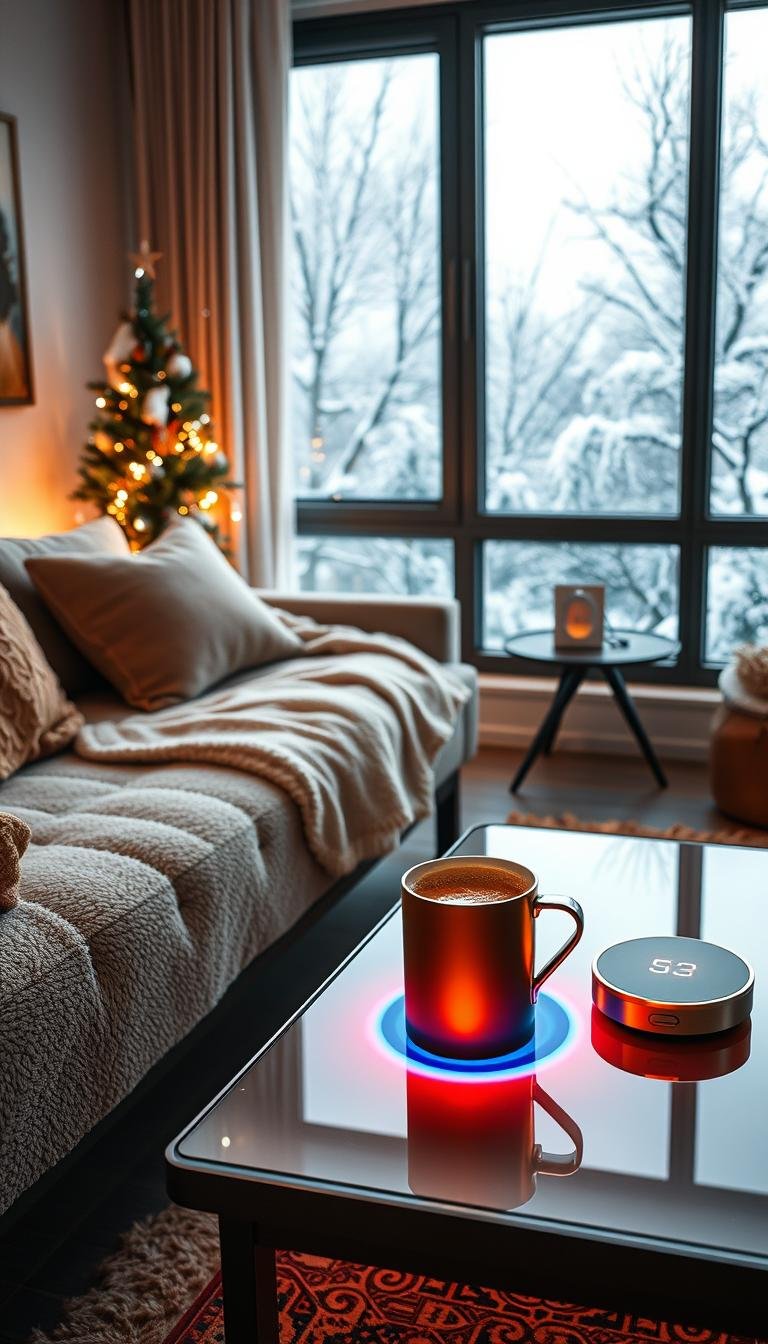
Small, practical gadgets can change how you feel at home without big bills or installs. You’re not trying to overheat your apartment; you want targeted warmth where you sit and sleep, steadier room temps, and fewer drafts.
This guide covers easy fixes and renter-friendly devices. Expect energy-saving ideas, quiet low-footprint picks for studio living, and basic safety rules before you plug anything in. I’ll note real benefits, who needs each item, setup time, and common mistakes to avoid.
We’ll compare budget vs premium honestly and show what daily use actually buys you. The focus is practical: hold heat, control temperature, improve air feel, and keep your body safer and cozier. For background on the testing approach and mission, see our about page at Good Home Finds.
Key Takeaways
- Start simple: fix drafts and control heat zones first.
- Choose small, low-noise devices made for apartments.
- Every pick includes safety notes and easy setup tips.
- Compare real daily value, not flashy features.
- Expect energy savings when you prioritize impactful fixes.
What Winter Comfort Really Means in a Small Apartment
A single gap by a window can undo hours of heating—so locate leaks first.
Small apartments lose heat fast. Poor insulation in ceilings, walls, and floors accounts for about 31% of heat loss. Windows and doors add roughly 21%, and the U.S. Department of Energy notes windows can cause about 30% of heating energy loss. That means one drafty window can chill the whole home.
Where homes lose heat most often and why windows matter
Focus on the obvious areas first: ceilings, walls, floors, and especially windows and doors. Windows alone can drive major losses, so seal them before buying more gadgets.

Quick draft checks you can do today using your hand or a candle
Look for visible gaps around frames. Use your hand—wetting skin can make airflow easier to feel. Follow with a candle test: a flicker shows a draft. Do this around windows, doors, and outlet plates.
Comfort without the bill shock: setting realistic temperature goals
Aim for about 68°F while you’re awake and home, and 60–65°F when you’re away or asleep. Dropping 7–10°F for eight hours can cut roughly 10% from yearly heating costs.
Practical habits help. Wear warmer clothing and slippers so you can keep the thermostat lower. If you work away during the day, schedule a cooler period to save energy and still feel good in the evening.
„Check drafts first so you pick the right seal or gadget for the actual leak.“
Common mistakes: ignoring windows, blocking vents with furniture, and trying to fix everything by cranking the thermostat. Once drafts and temperature goals are set, focused heating control gives the biggest day-to-day payoff.
Winter comfort tech that actually saves energy
A smart or programmable thermostat is often the best first device to cut heating waste without changing your radiator or HVAC.
Why start here? Good controls stop heat when you leave and bring it back on a schedule. That simple change can save about 10% a year if you lower temps 7–10°F for eight hours a day.
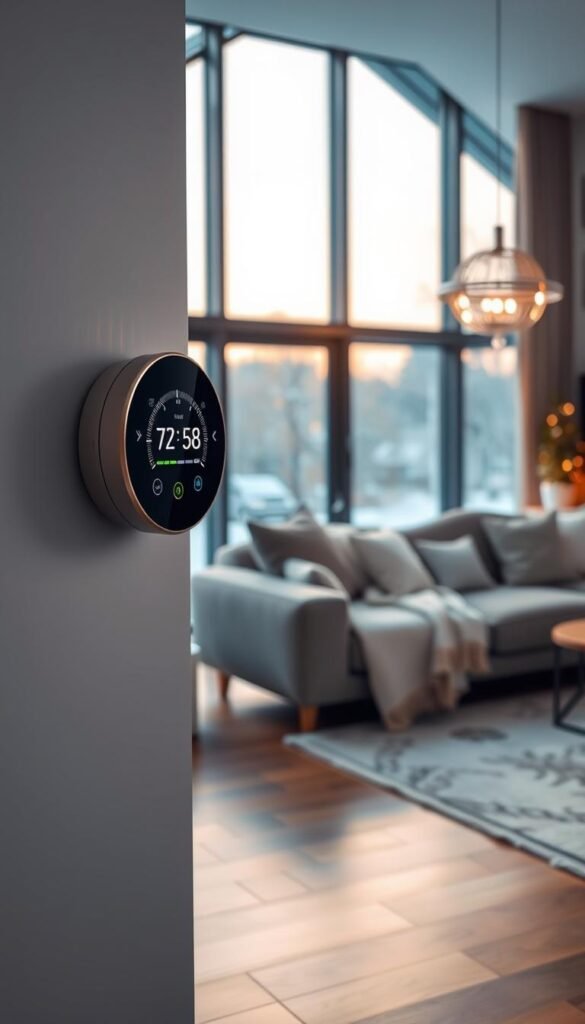
Smart vs programmable
Programmable follows a schedule you set. Smart learns routines, uses sensors, and can adjust via an app. Both cut waste. Smart models add reports and remote control if you will use them.
Budget vs premium
| Feature | Budget | Premium |
|---|---|---|
| Schedule control | Yes | Yes, easier |
| Room sensors | No | Often included |
| Energy reports | Basic | Detailed |
| Integration | Limited | Alexa/Google and more |
Setup, compatibility, and maintenance
Check system type, C-wire needs, and landlord rules before you buy. A simple swap can take 15–30 minutes. Complex wiring or building limits can add time.
Common mistakes: tight temperature triggers, frequent schedule overrides, and settings that cause short cycling. If heat cycles every few minutes, it wastes energy and stresses the system.
Maintenance: change or clean filters monthly in heating season, keep vents and registers clear, and inspect ductwork for leaks. Steady control usually feels better than hot-then-cold, and it saves energy in real life.
The best winter comfort tech for room-by-room warmth
If you spend most days in one room, small heating fixes can change how you feel fast.

Electric blankets and heated mattress pads
Pros: low space, fast body warmth, low power use for short time spans.
Cons: follow safety rules, check auto shutoff, replace if cords fray. Pets can damage cords.
Safe space heaters for small rooms
Look for tip-over shutoff, overheat protection, and a stable base. Fan heaters warm quickly but can be noisy. Oil-filled radiators are quieter but take longer.
Keep a clear zone around the heater. In tight apartments, that clearance matters more than power rating.
Ceiling fans reversed
Set the fan clockwise at low speed to push warm air down. Turn it off when you leave to save power.
Real benefits, who needs this, and setup time
Real benefits: heating one room beats raising the whole-home thermostat for studios, desks, and bedtime.
Who needs this: renters, people in drafty units, and anyone working from one room.
Setup time: plug-in options take minutes. Light DIY like draft blockers takes an hour. Call a pro only for electrical or fan wiring.
Practical tip: warm your body first—use blankets and a heater in short bursts rather than heating the whole apartment all day.
| Device | Power use | Noise | Space needs | Key safety feature |
|---|---|---|---|---|
| Electric blankets | Low (fast, targeted) | Quiet | Minimal | Auto shutoff, replace if worn |
| Fan space heater | High (quick heat) | Medium-high | Clearance required | Tip-over & overheat shutoff |
| Oil-filled radiator | Moderate (steady) | Low | Moderate clearance | Thermostat & overheat protection |
Common mistakes: running a heater unattended, using extension cords, and trying to heat an entire apartment with a single small device.
For small fixes and product mixes that solve common home leaks and drafts, see our home problem solver mix.
Warm air, better skin, and safer breathing: humidity and air comfort gadgets
Controlling humidity often matters as much as controlling temperatures for how a room actually feels.

Humidifiers for dry indoor air
When heat runs, air can dry out. Your skin tightens, your throat gets scratchy, and sleep can suffer.
Upside: targeted humidifiers make sleep and skin better fast. They use little power and are renter-friendly.
Downside: you must clean tanks and change water often. Neglect leads to smells, bacteria, and mold in small spaces.
If you won’t maintain it, skip it.
See curated humidifier options at quality humidifiers and a review round-up at best mist humidifiers.
Dehumidifiers for damp areas
Dehumidifiers are for bathrooms, basements, or musty corners. They remove excess water and reduce mold risk.
Don’t add moisture in units that already feel dry. If you see condensation on windows, you are over-humidifying.
Noise, size, and bedroom picks
Noise matters in apartments. Check decibel ratings and look for a sleep mode if you are sound sensitive.
Tank size affects space and refills. A larger tank runs longer but needs floor room. A small one fits a nightstand but refills often.
„Pick one goal—less dryness or less damp—and match the gadget to the real problem.“
| Problem | Recommended device | Maintenance | Noise |
|---|---|---|---|
| Dry skin, scratchy throat | Cool-mist humidifier | Daily water change, weekly scrub | Low to medium; pick sleep mode |
| Musty bathroom or closet | Compact dehumidifier | Empty water bucket weekly, clean filter monthly | Low to medium; choose quiet model for shared walls |
| Mixed small apartment | Hygrometer + targeted device | Monitor RH, clean as needed | Depends on device; aim under 40 dB for bedrooms |
Simple rule: diagnose the area first. Use exhaust fans in kitchens and bathrooms so gadgets don’t have to do all the work.
Kitchen, cleaning, and daily electronics that make winter easier
Your kitchen and cleaning kit can be the fastest route to feeling better at home without changing the thermostat.
Kitchen tools that pull weight: an electric kettle is a one-minute source of hot water for tea, instant food, and quick meals. It’s efficient but uses counter space and a cord. Pair it with an insulated mug to reheat less. A low-wattage mug warmer with auto shutoff is handy; check wattage and never leave it running unattended.
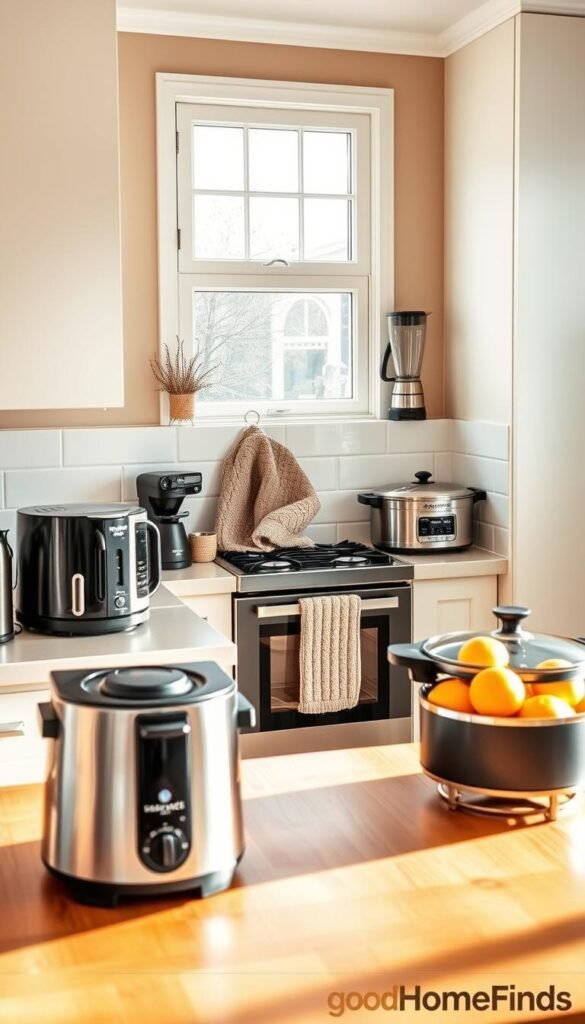
Cleaning and muddy-floor fixes
Salt, grit, and slush need different tools. Stick vacs are fast for quick pickups. Robot vacs are hands-off but need clear floors and can be noisy. Wet-dry cleaners handle slush but require storage under a sink or in a closet.
Drying, odor control, and ventilation
Dry boots and clothing on a folding rack with airflow to a running fan or bathroom exhaust. This prevents musty smells and protects fabrics in small spaces.
Smart plugs, timers, and space planning
Smart plugs add safety and cut standby power. Use schedules for lamps, coffee makers, or small heaters. Setup is usually minutes; Wi‑Fi and app steps may add time.
„Warm drinks and cleaner floors make your home feel better even if you leave the thermostat alone.“
- Counter: kettle, insulated mug, mug warmer.
- Under sink: compact wet-dry tool, cleaning supplies.
- Closet: folding drying rack, compact vac or robot dock.
For curated picks, see the best kitchen gadgets, a roundup of smart kitchen appliances, and our daily life finds mix.
Conclusion
Finish with simple, practical moves you can do this weekend to make your small place feel warmer and use less energy.
First priorities: seal drafts, set a smart schedule (aim for 68°F when you’re home, 60–65°F when away), then add one targeted warmth solution for your body like an electric blanket.
Keep maintenance in mind. Clean filters, clear vents, and wash humidifier tanks. These low-effort tasks improve heating efficiency and protect skin and health.
Safety matters. Buy devices with auto shutoff, never run space heaters on sketchy cords, and keep clear space around heat sources.
Think budget vs premium: upgrade when it saves time or solves a real issue. For deeper home fixes and energy-efficient upgrades, see energy-efficient upgrades.
Comfort isn’t a single number. Stable temperatures and fewer cold spots often feel better than blasting heat. Small, smart changes protect your wallet and the environment as the weather passes.
FAQ
What does “winter comfort” mean for a small apartment?
It means keeping key living areas at a safe, pleasant temperature while minimizing energy use. Focus on bedroom and living room zones, control drafts from windows and doors, and use low-energy items like heated blankets or a smart thermostat to avoid raising whole-home heating. Prioritize solutions that are renter-friendly and easy to set up.
Where do homes lose heat most often and why do windows matter?
Heat escapes mostly through windows, doors, and poorly insulated walls. Single-pane or older windows leak air and let radiant heat pass through. Sealing gaps with weatherstripping or a simple window film reduces drafts and cuts energy loss without major renovations.
How can I do a quick draft check using just my hand or a candle?
Move your hand slowly along window frames, baseboards, and electrical outlets to feel for cool air. With a candle, hold it near suspected gaps; a steady flicker or lean of the flame shows airflow. These checks take minutes and point to where simple sealing will help most.
What temperature goals are realistic to balance comfort and bills?
Aim for about 65–68°F while awake and lower at night or when you’re away. Use layers, blankets, and zoned heaters for occupied rooms rather than raising whole-home setpoints. Small adjustments of 2–3°F can noticeably cut energy use.
Do smart thermostats really save energy?
Yes, when used correctly. Smart thermostats adapt schedules, learn patterns, and allow temperature control from your phone. They reduce wasted heating by avoiding constant high setpoints and by using away or eco modes. Savings depend on your habits and system compatibility.
What’s the difference between budget and premium thermostats for daily use?
Budget models give basic scheduling and remote control. Premium units add features like adaptive learning, geofencing, multi-zone support, and HVAC health alerts. If you want hands-off efficiency and system diagnostics, a premium model is worth it. For renters, a simple programmable or smart plug option may be better.
How long does a thermostat install take and what compatibility checks are needed?
A typical DIY install takes 20–60 minutes if your system has the right wiring. Check for a C-wire, HVAC type (gas, heat pump, electric), and voltage. Some systems need a professional hookup. Read the thermostat’s compatibility guide before buying.
What common mistakes cause short cycling and higher costs?
Setting the thermostat too high, oversized heaters, blocked vents, and dirty filters all cause short cycling. That makes systems run inefficiently and wear faster. Keep airflow clear, use recommended setpoints, and maintain equipment to avoid this.
What basic maintenance keeps filters, vents, and airflow working right?
Replace or clean HVAC filters every 1–3 months. Vacuum vents and registers, keep furniture away from airflow paths, and check indoor-outdoor unit clearances. Schedule professional tune-ups annually for furnaces or heat pumps.
Are electric blankets and heated mattress pads safe and practical for small spaces?
Yes, when used per manufacturer instructions. They provide focused warmth with low energy use and avoid heating the whole room. Choose models with auto-shutoff and adjustable settings. Avoid using damaged cords or leaving them on unattended for long periods.
What should I look for in a safe space heater for small rooms?
Pick a model with tip-over protection, overheat shutoff, and adjustable thermostat. Consider size vs room square footage, noise level for bedrooms, and whether it has an eco or timer mode. Ceramic and oil-filled radiators offer steady heat with lower noise.
Can ceiling fans really help in colder months?
Yes. Running fans in reverse on low pushes warm ceiling air down into the room with minimal power draw. This evens temperature and lets you lower the thermostat by a degree or two without losing comfort.
When does zone heating beat turning up the whole home?
Use zone heating when you occupy only certain rooms, like a living room or bedroom. Zoned approaches—space heaters, heated throws, or smart vents—target comfort where it’s needed and reduce wasted energy in unused areas.
Who benefits most from these room-by-room solutions?
Renters, studio apartment dwellers, and people with cold corners or poorly zoned systems benefit most. These options are typically budget-friendly, easy to set up, and require little to no installation.
What’s the setup time difference between plug-in, light DIY, and professional options?
Plug-in devices work instantly. Light DIY tasks like sealing windows or installing plug-in thermostats take 15–60 minutes. Full HVAC installs or hardwired thermostats may need a professional and take several hours to a day.
Do humidifiers help skin and breathing in dry months?
Yes. Proper humidity (around 40–50%) reduces dry skin, throat irritation, and static. Small humidifiers are renter-friendly. Clean them regularly to prevent mold and bacteria growth. Use a hygrometer to avoid over-humidifying.
When are dehumidifiers appropriate in colder seasons?
Use a dehumidifier in damp areas like basements or if you notice condensation on windows. In general living spaces, adding moisture is more common. Avoid running dehumidifiers in already dry rooms, as that worsens skin and respiratory discomfort.
How important are noise levels for bedroom-friendly air gadgets?
Very important. Look for units labeled “quiet” or with low-decibel ratings. Fans and humidifiers with sleep modes reduce noise. A small sound difference can affect sleep quality, so check product specs and user reviews.
What kitchen electronics make cold mornings easier?
Electric kettles, insulated mugs, and countertop heat cups keep drinks hot fast and use less energy than reheating on a stove. They’re compact and fit well in small kitchens. Look for auto-shutoff and good insulation to avoid spills and heat loss.
Which cleaning tools help with winter salt and grit in small spaces?
Stick vacuums and robot vacs handle daily debris with minimal storage needs. Wet-dry vacs or compact floor washers help remove tracked-in salt. Choose models with washable filters and small footprints for closets or under counters.
How can I dry clothes and control odor in a small apartment?
Use compact drying racks, a vented bathroom fan, and a dehumidifier or spin-only washer cycles to reduce moisture. For faster results, run a fan in the room while drying. Portable drying cabinets are an option if space and budget allow.
Are smart plugs and timers worth it for lowering standby power?
Yes. Smart plugs let you schedule kettles, chargers, and space heaters to avoid standby draw. They’re affordable, easy to use, and make daily routines safer by cutting power when devices aren’t needed.
What space requirements matter for countertop and under-sink winter gadgets?
Measure available width, depth, and clearance before buying. Small kettles and humidifiers fit most counters. Store vacuums and drying racks in closets or under sinks if dimensions match. Always leave clearance for airflow around heaters and fans.
