Your compact, no-hype guide to staying cool and clutter-free in a small apartment. This roundup gives you practical picks built for tight counters and thin walls. You’ll see real use cases, honest pros and cons, space needs, noise, power draw, setup, and maintenance.
You will get focused recommendations for cooling, cold drinks, frozen treats, small-space food prep, and smart-home safety that actually matters. I call out what to avoid: one-hit wonders, oversized units that won’t fit cabinets, and costly “smart” features with no daily value.
Small-apartment lens: think limited counter space, shared circuits, and one clear question: where does this live when you are not using it? I’ll show quick checks for footprint, noise for sleep or work, and what power use will do to your electric bill.
Plan for the next few months: buy a few good upgrades that save energy, cut clutter, and stay renter-friendly. Some items are fine cheap; others are worth paying more for quiet or durability.
Key Takeaways
- Choose items that fit your counters and stow in cabinets or closets.
- Prioritize quiet, low power draw, and renter-friendly storage.
- Avoid gimmicks, oversized units, and flashy smart features that add cost.
- Look for real use cases: cooling, drinks, frozen treats, and safe food prep.
- Balance budget vs premium: spend where noise and durability matter.
- Focus on a few upgrades to keep your place usable and uncluttered.
What to look for in summer gadgets for small apartments
Start with a quick reality check. Measure your counter depth, cabinet height, and one realistic storage spot before you buy. That single step cuts returns and clutter.

Space requirements and storage footprint
Think footprint vs function. A tower fan can tuck in a corner. An ice maker needs counter space, airflow clearance, and a nearby outlet. Note where each item will live when not in use.
Power consumption and what it can add to your electric bill
Higher-watt appliances cost more if run all day. Look for timers, schedules, or auto shutoff to cut wasted runtime. If you can’t say how long you’ll run it per day, you can’t estimate the cost.
Noise levels for sleeping, WFH, and thin walls
“Quiet” is relative. What’s fine for a living room may bother a neighbor or interrupt calls. Pick models with return policies so you can swap if noise is an issue.
Safety basics for heat, water, and countertop appliances
Keep cords away from sinks. Don’t overload strips. Avoid running high-draw devices on the same outlet as large appliances. For items that use water, choose stable placement and easy drip control.
Setup difficulty and ongoing maintenance
Check filter and scale-cleaning needs. Ice makers, coolers, and humidifier-style units require regular cleaning or they can smell and lose performance after a few months. Pop molds and snow-cone tools should be easy to rinse.
Quick evaluation checklist
- Space: measure counter depth and cabinet height.
- Power: note wattage and whether a timer is included.
- Noise: test at night or near thin walls.
- Safety: cord routing, outlet load, and water control.
- Maintenance: filters, descaling, and easy-clean parts to save you time in the kitchen.
Real benefits you’ll notice day to day (without the hype)
Real daily wins come from targeted tools, not trying to cool the whole unit. Aim to make your main zone—the bed, desk, or sofa—comfortable so you use the place more and worry less.

Staying comfortable when temperature spikes
Use portable cooling devices and tower fans to target one room or seating area. This gets you through hot hours without a whole-home system.
Tradeoff: these units help a zone, not the whole apartment. Some models are louder or need a nearby outlet.
Saving time in the kitchen during the hottest months
Cold drinks and frozen treats cut oven and stove runs. That keeps your apartment cooler and reduces cleanup.
Frozen pops or a small nugget ice setup work well if you can spare freezer space.
Reducing food waste with smarter prep and storage tools
Quick-clean tools and easy storage make you more likely to use produce before it spoils. A small colander or fast slicer shortens prep time and keeps fruit fresher.
Maintenance matters. If you want cleaning tips and supplies, check the best cleaning finds to keep things working well.
Making small-space entertaining easier
An ice bucket with drainage and shatter-resistant drinkware lets you host without constant trips inside. Outdoor cups cut spill risk on balconies or patios.
One upgrade at a time over the next months helps you stick with cleaning and storage routines and see what really pays off.
Who needs this
This section helps you decide if the small, renter-friendly tools here match your daily habits. Read fast and find the category that fits you. The goal is practical, not flashy.

Renters and small-apartment households
Pick plug-and-play items. Avoid drilling, venting, or permanent installs. Look for things that store on a shelf or under a bed.
Hot sleepers and people who run warm
If you wake overheating, prioritize quiet airflow and breathable bedding add-ons like a cooling blanket concept. Use simple timers and low-noise fans for steady comfort.
Home cooks who want treats without store runs
Small tools can cut trips for ice and frozen snacks. Choose compact makers that fit counters and tuck away easily.
Pet owners managing indoor heat
Pets feel heat faster in tight spaces. A pet cooling mat that needs no freezer or complex setup is an easy win.
Casual hosts and light entertainers
For occasional hangs, choose compact, multipurpose gear. It should be easy to pull out for a few hours and stow the next day.
Reality check: if you hate cleaning or have no storage, pick fewer items. The best tool is the one you will actually use in the coming months.
Beat-the-heat essentials for small spaces
Small, targeted cooling tools win in tight spaces where every inch and watt counts. Pick items that cool people, not rooms, and plan where each unit lives when not in use.

Portable air cooler / compact portable AC
Pros: Fast spot cooling for a desk, bedside, or sofa. Many are 3-in-1 (cooler/fan/humidifier) and fit countertops or nightstands.
Cons: Uses counter or floor space and can make light noise. Check return policies.
Setup: Stable surface and nearby outlet. Maintenance: Empty trays and clean filters monthly.
Tower fans
A slim tower fan is great for corners and whole-room airflow. The Honeywell tall tower fan is a good renter-friendly example: quiet, 1–8 hour timer, 75° oscillation, 5 speeds, and no-tools setup.
Maintenance: Dust wipes and occasional filter cleaning.
Hands-free neck fans
Personal cooling for chores, commutes, or outdoor lines. They save energy but do not cool a room.
Cooling towels & bandanas
Cooling towel: soak, wring, snap. Lasts about 3 hours and is very portable with a clip bottle.
Bandana: holds water without dripping, gives up to ~4 hours of relief.
Cooling blanket & gel packs
Blanket: lightweight, breathable, moisture-wicking—pair with airflow if your room stays very hot.
Gel pack: fast targeted cooldown with strap; needs freezer space and a towel barrier if you’re sensitive to cold.
Pet cooling mats
Why they work: No freezer, no setup, easy wipe-down, and foldable for travel. Good for pets in apartments with limited space.
„Choose one daily driver item that fits your real use case.“
For quick buys and energy-smart picks, see this best budget home finds that suit small spaces and renter-friendly living.
Energy, noise, and space check for cooling gadgets
A quick check of noise, energy, and space helps you pick the cooling tool that actually works for your room.
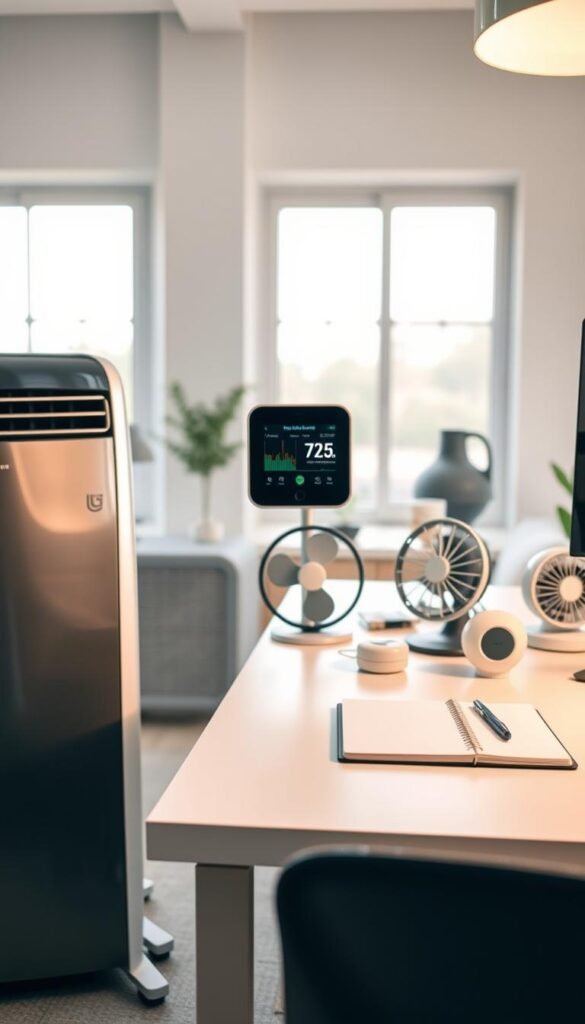
What “quiet enough” means for bedrooms and shared walls
Quiet enough means the sound won’t break sleep or carry into the hallway. If you can hear it over a podcast at low volume, it may be too loud for bedroom use.
Do a simple 10-minute test on the setting you’d use at night. Listen for rattles or a high-pitch whine.
Where these fit: nightstands, countertops, corners, and under-desk spots
Nightstands are perfect for personal cooling. Counters and tabletops work for compact coolers. Corners suit tower fans with a timer and no-tools setup. Under-desk units help during WFH without blasting your face.
When a fan beats an air cooler (and when it doesn’t)
Fan wins: cheaper to run, simpler to maintain, and great when you just need airflow.
Portable AC wins: choose it when you need a real temperature drop in one zone. Expect higher energy use and more upkeep.
Easy rule: pick the quietest option you can afford for sleep and the easiest-to-clean option you’ll actually use each day.
| Use case | Best placement | Noise note | Energy tip |
|---|---|---|---|
| Personal night cooling | Nightstand | Choose low-speed modes | Use a timer for 6–8 hours |
| Whole-room airflow | Corner or center | Tower fans run quieter than small desk fans | Fans cost less to run |
| Work-from-home spot | Under-desk or tabletop | Avoid high-pitch whine near microphone | Set schedule to match work hours |
| When temp must drop | Countertop for portable AC | Expect steady hum | Limit runtime; use timers across months |
Keep cords visible and off rugs. Keep water-based units away from sinks and don’t block vents. For more renter-friendly storage and cleaning ideas, see best laundry room solutions.
Cold drinks and ice: from budget basics to premium splurges
How you get and store ice changes what makes sense in a tight kitchen. Ice convenience depends on counter space, noise tolerance, and how much time you want to spend cleaning and maintaining equipment.

Budget pick: draining ice bucket
A draining ice bucket is the low-effort winner for most renters. Less meltwater means drinks stay colder and don’t dilute fast.
Example: the OXO 3‑Piece Ice Bucket has bottom drainage, a snug lid, a small shelf for citrus, and tongs. It’s easy to stash and requires almost no upkeep.
Premium pick: countertop nugget ice maker
If you use ice every day or host often, a countertop nugget ice maker pays off in saved store trips. The GE Profile Opal 2.0 can make up to 38 lb/day and makes a batch in under 10 minutes.
It includes a scale-inhibiting filter to reduce buildup, but that filter needs replacement over months and adds ongoing cost.
Space, noise, power, and heat realities
Ice machines take semi-permanent counter real estate. They cycle with audible hums and occasional water flow sounds. In a studio, that can be disruptive.
All ice makers dump heat as they run. In a small kitchen this can raise room temp and counter-sit by a few degrees.
Maintenance you can’t skip
Scale buildup, filters, and cleaning cycles matter. Skipping maintenance leads to odors, weak ice, and replacement costs for filters and descaling supplies.
„Choose the solution that fits how often you use ice and the time you will actually spend maintaining it.“
- If you host a few times a season, a draining bucket usually wins on cost and simplicity.
- If you need daily ice, a nugget maker saves trips but adds power, noise, and filter costs over months.
Frozen treats for hot days: popsicles, snow cones, and ice cream
Choose the frozen treat that matches how often you’ll actually make it and how much freezer space you have. Pick a daily option, a quick-fun option, or a weekend batch maker. Your choice should fit storage, cleanup, and noise tolerance.

Pop molds: cheap, quiet, and apartment-friendly
Why they work: Pop molds are low-cost, compact, and need only brief freezer space. They’re ideal for kids and adults who want daily treats.
Example: Zoku Classic Pop Mold is praised for easy use and fast cleaning. Sticky juice is the main reason people stop using molds, so easy washing matters.
Snow cone makers: fast snacks with easy cleanup
Snow cones are great for an afternoon pick-me-up with minimal fuss. They don’t need freezer space like pops or ice cream.
Example: Cuisinart Snow Cone Maker gets repeat praise for being simple to use and easy to clean—important when sinks are small.
Ice cream and cold-plate options
Traditional machines make batches you can eat across the week. They work if you can store a bowl or canister in the freezer.
Example: Cuisinart Pure Indulgence is widely reviewed as reliable and easy to clean.
Cold-plate units like Chef’n Sweet Spot deliver fast portions and small batches. Note: the plate must be pre-frozen, and you’ll wash and dry it between uses.
Common tradeoffs and a practical tip
- Freezer space: the top limiter in small apartments.
- Cleanup: sticky molds and wet bowls push people to stop using gear.
- Noise: some machines hum; choose quiet models if you share walls.
„Pick pops for daily use, snow cones for quick fun, and ice cream makers for planned weekends.“
Small-apartment kitchen wins for summer food prep
In a small kitchen, the goal is faster prep, less heat, and tools that actually earn counter space. Focus on items that cut mess, save time, and tuck away easily when not in use.

Produce tools that save time
Strawberry huller: a quick twist removes the core without wasting berries. It fits a utensil drawer and is dishwasher-safe.
Cherry pitter: preserves fruit shape and juice. You spend less time wiping counters and more time eating.
Mini colander: rinse berries and cherry tomatoes without pulling out a big sieve. Small bowls dry fast and stack in tight cabinets.
Big fruit and corn made easier
Watermelon knife: a serrated, long blade gives control through thick rind. Safer cuts mean fewer slips on cramped counters.
Corn zipper: strips kernels fast for salads, meal bowls, or freezer bags. It saves minutes per ear and cuts waste versus knife slicing.
Batch drinks and cooling grids
Sun tea jar: batch-brew drinks without using the stove. One jar fills pitchers for a day of cold drinks and keeps your apartment cooler.
Cooling grids: Sur La Table stainless steel cooling grids cool cookies, drain fried foods, and double as a trivet. They are sturdy and easy to clean.
Choose slim, dishwasher-friendly tools you will use week after week, not items that sit in a closet for months.
For a short list of renter-friendly picks and space-minded choices, see this small-apartment kitchen gadgets.
Outdoor eating and backyard-friendly gear that stores easily
Take the hassle out of outdoor meals with gear that packs small, cleans fast, and stores flat.

Picnic backpack coolers that carry utensils and keep food cold
Use case: you want a single bag to carry chilled food, plates, and a few utensils to a park, rooftop, or backyard.
Backpack coolers are renter-friendly. They contain items, organize compartments, and collapse more easily than hard coolers. Picnic Time makes models meant to hold cutlery, napkins, and chilled items in one carry-all. They work well for quick trips and casual hosting.
Shatter-resistant outdoor drinkware for patios and parks
Why it matters: fewer broken pieces and fast cleanup. Fortessa Sole outdoor iced tea glasses use shatter-resistant copolyester and are dishwasher safe. That matters when you don’t want hand-wash-only clutter.
Collapsible picnic seating that doesn’t take over your closet
Choose fold-flat chairs only if you will use them several times in the next few months. Otherwise, a sturdy blanket is simpler.
Storage rule: if it doesn’t fold flat or nest, it must earn closet space. Pick seating with a carry strap and a small footprint.
One smart way to host: start with a cooler + cups combo first. Add chairs only if you actually use them.
For a quick curated list of options before you buy, see this best picnic gear.
Smart home basics for summer safety and savings
Use low-tech timers and removable smart plugs to lower bills and stop leaving fans running all day. The goal is simple: fewer worries, lower energy use, and renter-friendly tools that you can remove when you move.

Timers and schedules to avoid running fans all day
Built-in timers like 1–8 hour tower fan settings cut wasted runtime. Set the fan for sleep or a work block and it turns itself off when you forget. That saves energy and reduces noise through the night.
Simple plug-in controls for appliances you forget to turn off
Use removable smart plugs for items behind furniture or on a hard-to-reach outlet. They let you power off kettles, fans, or countertop appliances from your phone or a single button. Pick models that work with basic schedules and no extra accounts.
Heat and kitchen safety habits that matter more than “smart” features
Safety first: stable surfaces, dry hands, clear cords, and never leave heat sources unattended. Smart plugs help, but they do not replace these rules.
Practical habit: set a bedtime routine—fan timer, quick kitchen check, and empty water trays—and repeat it for the next few months.
For a short, non-technical primer on setup and compatibility, see this beginner’s smart-home guide.
Budget vs premium comparisons: what’s worth paying for
A simple rule helps: spend more only where you notice the benefit every day. If an item saves time, cut noise, or you use it daily, it can be worth the extra cost.
When budget wins
Basic cooling towels, bandanas, fans, and pop molds
Cooling towels and bandanas are cheap, water-activated, and portable. They work for about 3–4 hours per use and are easy to replace when worn.
Basic fans are fine if you do not need ultra-quiet sleep. Pop molds win on simplicity: shape and easy cleaning matter more than features.
When premium pays off
Nugget ice makers, quiet tower fans, and durable kettles
If you drink iced beverages daily or host often, a countertop nugget ice maker can feel life-changing. Note: premium models often include a scale-inhibiting filter that needs periodic replacement.
Quieter tower fans matter if you sleep light or work from home. Durable electric kettles with temperature control and a compact footprint save time and last longer. The Zwilling Enfinigy Pro is an example that avoids plastic touching water and heats fast—features some users find worth the price.

Filters, replacement parts, and cleaning supplies
- Filter replacements for ice makers and water-using units.
- Descaling solutions and extra brushes to keep performance steady.
- Replacement seals, trays, and small parts that wear over months.
„Choose one premium upgrade you will use for the next several months, not five budget items you never maintain.“
Quick buying tip: if a device will sit on your counter and run often, invest a bit more. If it’s occasional, choose the simpler, cheaper option and save closet space and effort. For more affordable, tested tech picks, see this best budget buys list.
Setup time
Get realistic about how long each item will take to go from box to useful. That helps you decide what to do tonight versus what to plan for a calm weekend. Below are fast wins and a few things that need a bit more time and care.

Five-minute setup items you can use immediately
Open and use items get you relief with almost no effort. Examples:
- Cooling towels and bandanas — wet, snap, wear.
- Basic draining ice bucket and shatter-resistant drinkware — rinse and set in place.
- Gel packs (once frozen) — toss in freezer and use when solid.
- Simple hand fans and single-speed desk fans — plug in and go.
These are renter-friendly because they need no permanent space and little to no maintenance. That makes them easy to rely on for the next few months.
Half-hour setup items that need assembly, freezing, or a cleaning cycle
Some useful items take more time upfront. Expect assembly, a pre-freeze, or an initial clean.
- Tower fans — position, route the cord, and test oscillation; many are no-tools setup and work right away once plugged in.
- Pop molds and cold-plate ice cream tools — fill, level, and freeze the required time.
- Portable coolers and beverage dispensers — fill, test the drain and seal, then dry before storing.
- Countertop ice makers — run the first cleaning cycle, install any filter, and place on a stable counter near an outlet.
Note: the ice maker step often adds 20–30 minutes the first day for cleaning and setup. Plan for that time so you don’t rush the process.
Quick placement tips for airflow, cords, and tight counters
Placement matters more than brand. Keep fans where they can pull and push air across the bed or desk. Don’t tuck units behind curtains or furniture.
For cords use a short, heavy-duty extension only if needed. Never daisy-chain power strips. Keep cords along baseboards and out of walkways to avoid trips in small apartments.
Reserve one small counter area as your appliance zone. That prevents moving hot or wet devices around the sink and reduces spills and cord crossing.
Practical goal: set up so it’s easy enough to repeat on busy weekdays. If it feels like a chore, you’ll skip cleaning and maintenance in a few months.
For renters who want straightforward buys and tested options, check a short buyer’s list like this cooling and appliance picks and quick maintenance ideas at budget-friendly fixes.
Common mistakes
Small apartments punish oversized purchases fast—measure first, buy second.

Buy with your counters, storage, and noise needs in mind. A “great deal” is no good if the unit blocks prep space or lives on the floor.
Buying items that don’t fit
Measure cabinet heights and counter depth before you click. If it won’t stow away, it becomes clutter. Swap it for a smaller model or return it quickly.
Ignoring noise until the first night
Check decibel info and reviews that mention sleep. A loud unit is more than annoying; it affects neighbors and work calls. Prioritize models with clear return windows.
Skipping cleaning and maintenance
Water-based units and ice machines need regular drain-and-dry habits. Skip that and you get musty smells, scale, weak performance, and bugs.
Ice makers require descaling and filter swaps. If cleaning feels like a chore, pick simpler gear—pop molds and snow-cone tools win when they stay easy to wash.
Overpaying for features you don’t use
Avoid bright app ecosystems, extra modes, or large capacities you can’t store. Spend where noise, durability, or daily value matter.
„If it doesn’t fit your routine and your space, swap it for a better match rather than holding on because you already bought it.“
- Use timers to avoid energy surprises.
- Keep cords tidy and off walkways for safety.
- For electronics handling and safe storage tips, see safely pack electronics.
- For simple kitchen cleaning mixes and habits, check kitchen maintenance mix.
Summer gadget prep: a simple checklist for your next shopping day
Spend five minutes measuring and prioritizing so new gear fits your life, not just your wishlist.
Short planning beats returns. Measure counters, doorways, and your likely storage spot before you add items to cart. Write those numbers down and bring them to any product page.

Measure your space before you buy
- Measurement checklist: counter depth, cabinet height, floor corner space, and distance to a safe outlet. Write it down.
- Check clearance for vents and airflow on countertop units and tower fans with timers.
Match the gadget to your real use case
Decide if you need sleep cooling, WFH comfort, kitchen speed, cleaning ease, or light hosting in the backyard.
Example: choose a quiet tower fan for nightly sleep. Pick a portable countertop unit if you need a real zone temperature drop.
Pick one “daily driver” upgrade, not five clutter-makers
- Choose one item you will use most days—quiet tower fan, cooling bedding, or a reliable ice bucket with drainage.
- A nugget ice maker costs more and needs filter upkeep; buy it only if you will use ice daily.
Plan where it will live and how often you’ll maintain it
- Maintenance plan: be honest about weekly vs monthly cleaning. If you dislike cleaning, avoid water-holding machines.
- Energy check: prefer timers, auto shutoff, and simple controls to avoid long, wasteful runtimes.
- Noise check: prioritize quiet operation for night use; tolerate louder units for daytime tasks.
- Storage plan: assign each gadget a specific home—cabinet, closet shelf, or under-bed bin—so counters stay clear.
- Budget vs premium: spend more only when it fixes a recurring pain like sleep noise, daily ice needs, or constant breakdowns.
Quick rule: measure first, pick one daily driver, and plan maintenance. That keeps your space usable and renter-friendly.
For compact kitchen tools that match small-space realities, see this best kitchen finds.
Conclusion
The best choices fix one real pain—noise, sleep heat, or messy prep—without adding storage headaches.
Start with space, then check noise, power use, and maintenance. A simple timer cuts wasted runtime. A draining ice bucket beats a countertop nugget ice maker if you dislike filter swaps and descaling.
Pick easy-clean frozen-treat tools and compact produce tools that speed prep and reduce dishes. Those small wins save time and keep counters clear.
Safety note: place units on stable surfaces, keep cords tidy, and clean water-using devices regularly to avoid odors or damage.
Practical next step: choose one upgrade you will use weekly, test it for seven days, then decide if a second item is worth the effort.