This is a practical, no‑hype roundup of gadgets and tools that actually saved you time in tight spaces. You’ll get renter‑friendly picks that focus on energy use, safety, noise, and space needs.
You’re not buying flashy features that don’t help. These picks work in small rooms, tight corners, and mixed floors. Expect quick daily resets rather than marathon deep cleans.
Each entry includes honest pros and cons, real use cases, setup difficulty, and maintenance notes. I compare budget versus premium so you can see what you got for the money.
Hints: pick by the mess you hate most—pet hair, kitchen grease, bathroom grime, or dusty air. Jump to that section and choose one device that cuts the most work.
Key Takeaways
- Focus on time saved and renter‑friendly size over gadgets with flashy specs.
- Small homes need easy storage, low noise, and low power draw.
- Each pick lists what it cleans well and what still needs manual effort.
- Compare budget vs premium to find value; some cheap tools beat costly gimmicks.
- Use this guide to match a device to your worst daily mess.
- For more practical finds and specific product ideas, see a curated list here: best cleaning finds.
How we picked these cleaning devices for real homes
We focused on what an apartment really needs: compact designs and reliable results. Our picks had to be easy to store, quiet enough for daily use, and simple to maintain. You’ll see clear trade-offs so you can match a device to your space and habits.
Apartment-friendly criteria
- Measured footprint and storage. Does the dock fit behind a sofa or under a console?
- Cord management. Fewer cords means less clutter and safer walkways for kids and pets.
- Floor compatibility. Safe on vinyl, hardwood, and common apartment rugs.
Daily performance we tested
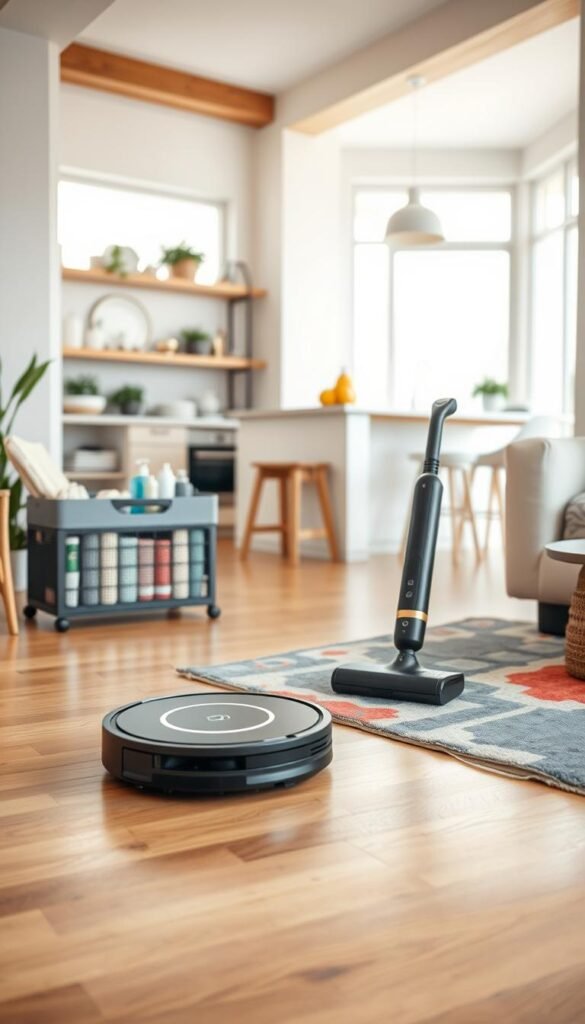
We ran real messes: dust and dirt at entryways, crumbs by the table, pet hair on rugs, and grease near stoves. We checked how well devices picked up hair and small debris and whether stains or grime still needed a swipe of elbow grease.
What we ignored
We skipped gimmicky modes, flashy lights, and apps that added troubleshooting. Instead, we prioritized strong suction, good edge cleaning, and easy emptying. Affordable models like the Roomba 694 earned points for reliable scheduling. Premium models stood out when they solved real problems—smart mopping that retracts on carpet, or washable rollers with small onboard water tanks.
Our quick rating lens
- Setup difficulty: out of box to first clean, in minutes.
- Maintenance: filters, rollers, and brush access.
- Noise: can you run it during calls?
- Power: battery vs plug-in and whether it encourages short, frequent cleans.
Before you buy—check space, flooring type, pets, and allergies. For kitchen-specific fixes and product ideas, see this kitchen problem mix.
Floor cleaning tech that replaces the most work
Floors take up the most daily work in small homes; the right device cuts that time dramatically.
Robot vacuums that handle crumbs, hair, and dust while you’re busy
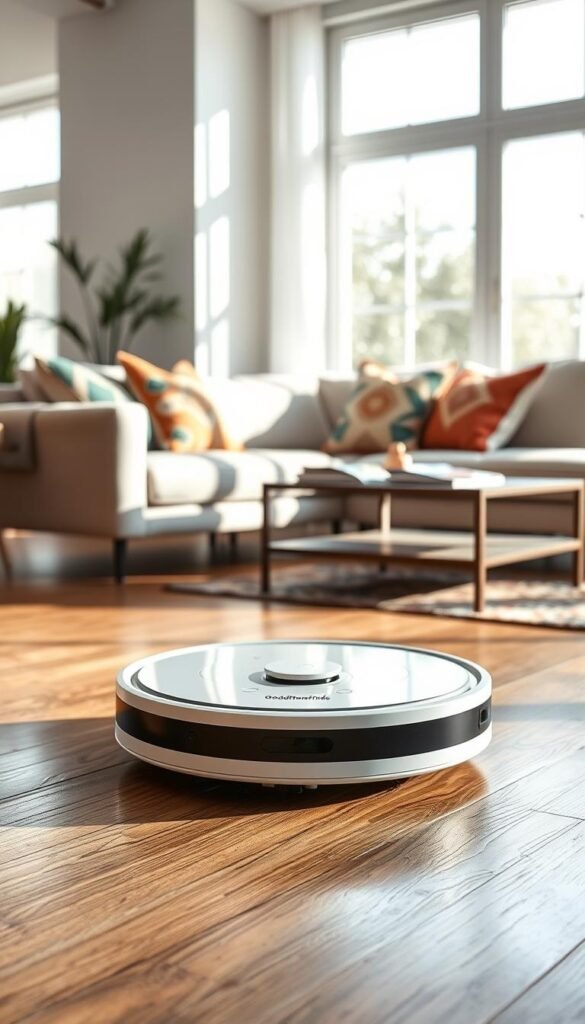
Schedule a robot vacuum to run while you cook or work. It scoops crumbs, pet hair, and dust from high‑traffic paths with no effort from you.
Budget vs premium: Wyze and Roomba 694 cover basic pickup at a friendly price. Higher‑end robots add better obstacle avoidance and less babysitting.
Watchouts: cords, fringe rugs, and tight chair legs can trap a robot. Expect light maintenance: empty the bin, clean filters, and untangle brush rolls weekly.
Robot vacuum and mop combos for mixed floors (and why carpets change the game)
Combos save you from switching tools. Models like the Roomba Combo j7+ retract the mop on carpet, so you can leave mixed floors to one run.
Still, manage water, pads, and drying time. A combo reduces daily wiping but adds pad care and occasional refills.
Cordless stick vacuums for fast daily resets in small apartments
Cordless stick units are your daily reset. Grab one for quick crumbs and light spills. Dyson models claim long runtime, but real use on high suction cuts minutes off the run.
Empty bins often and check filters. They store vertically and beat corded options for small spaces.
Upright and canister vacuum cleaners for deeper cleans and better suction power
Use an upright for carpeted rooms and pet hair days. Sharks offer strong value; Miele canisters give durable suction for long lifespans.
These are heavier to store but deliver the suction you need for a proper deep clean.
Carpet cleaners for stains and winter grime (when vacuuming isn’t enough)
When salt, spills, or pet accidents hit, a carpet machine helps. Tineco Carpet ONE heats water to reduce scrubbing and speed drying.
They need more storage and drain care. Expect longer drying times and occasional solution refills.
Window‑cleaning robots for city apartments with lots of glass
Window robots work for tall or many panes. ECOVACS Winbot W2 Omni uses a portable station; HOBOT 298 is faster per square meter. Always use tethers and never leave them unattended around kids or pets.
| Device | Best for | Pros | Cons |
|---|---|---|---|
| Wyze / Roomba 694 | Daily crumbs, basic pickup | Low price, easy setup | Basic navigation, may snag on cords |
| Roomba Combo j7+ | Mixed floors | Mop retracts on carpet; hands‑free runs | Manage water and pads |
| Dyson V15 / V15s Submarine | Quick resets, detectable dust | Strong suction, cordless convenience | Battery use on high power; higher price |
| Shark / Miele | Deep cleans, pet hair, carpets | High suction power, durable | Heavier, larger storage footprint |
| Tineco Carpet ONE | Stains, winter dirt | Heated wash reduces scrubbing | Noise, drying time, storage needs |
Quick ownership notes: clean filters monthly, remove hair from brush rolls, empty bins after runs, and run short daily cycles to save power and extend battery life.
For focused solutions for busy homes, see our recommended supplies and routines here: best cleaning solutions for busy homes.
Top 10 cleaning tech for kitchens and food messes
Small kitchens reward targeted tools that stop smells and sticky buildup fast.
Dishwasher cleaning tablets
Run one tablet in an empty cycle placed in the detergent chamber. It removes limescale, rust spots, grease, and gunk that cause smells.
Pros: no power, quick routine. Cons: don’t overuse or you waste products and money.
Garbage disposal and drain foaming cleaner
Foaming cleaners reach the splash guard and pipes to fight odor and bacteria. Use when the sink smells or after heavy food prep.
Maintenance: rinse with hot water, avoid harsh soap on rubber seals.
Automatic sensor trash cans
Sensor cans give you cleaner hands during raw‑meat prep. Simplehuman (~$152) is reliable; a budget lidded can works if you don’t need motion open.
Check battery life, liner fit, and footprint for small spaces.
Food storage helpers
Devices like Ovie LightTags use teal/yellow/red cues to cut waste and nudge you to freeze or eat food sooner.
They save time and money by keeping the fridge organized without adding clutter.
| Product | Best for | Pros | Cons |
|---|---|---|---|
| Dishwasher tablet | Limescale & grease | Easy routine, no power | Overuse wastes money |
| Foaming drain cleaner | Disposal odor | Reaches splash guard, disinfects | Needs periodic repeats |
| Simplehuman sensor can | Messy prep, hands-free | Tight seal, motion open | Battery cost, higher price |
| Ovie LightTags | Reduce food waste | Visual freshness cues | Small learning curve |
Quick tip: balance power needs—tablets and foams need no electricity, sensor cans use batteries, and wet roller-style devices need water and pad care to avoid odors.
For more practical supplies, see our cleaning helper mix.
Small tools that make detail cleaning faster
A handful of focused tools saves you ten minutes every day and keeps small spaces livable. These are cheap wins that stop spots and stains from growing into big jobs.
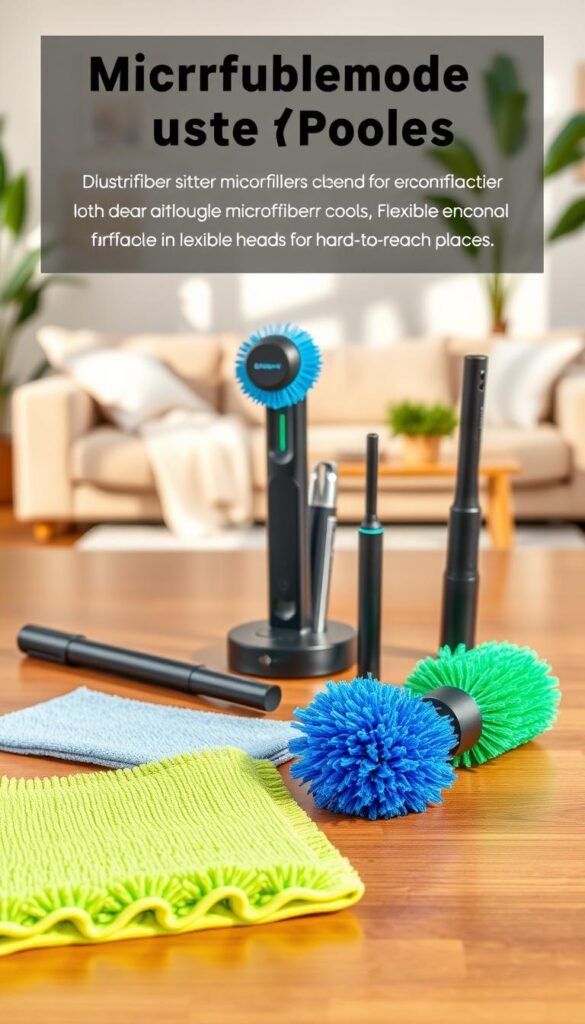
Rubber broom and squeegee-style combo
Why it helps: Rubber brooms grab hair, dust, and dirt without getting gunky. The squeegee edge handles quick spills on tile or wet rugs.
Pros: picks up hair better than a standard broom; works on wet messes. Cons: some heads need wall space or a slim hook to store. Setup difficulty: none.
Maintenance: rinse, hang to dry, replace head every year or when bristles wear.
Appliance and crevice brush sets
Use small brushes for coffee grinder oils, blender gasket gunk, and vent slats. A compact set beats forcing a full sponge into tiny nooks.
Best use: tight gaps, electronics vents, and grout lines. Cons: small brushes wear; replace tips as needed. Setup: ready out of the package.
Microfiber cloths that actually lift dust
Microfiber saves time on mirrors, glass, and stainless surfaces. They reduce streaks and cut re-wiping.
Care: wash separately, skip fabric softener, dry low. Replace when fibers stop lifting dust.
Melamine-style sponges for mystery marks
Magic Eraser-style sponges remove scuffs, soap scum, and stubborn marks with only water.
„These sponges are the fastest fix for scuffs, but they abrade—test an inch first.“
Warning: avoid delicate paint and sealed surfaces. Rinse and discard when thin.
Drill brush attachments vs scrubber pads on a stick
Drill brushes speed up grout and tub grime when you have a cordless drill. Pads on a stick give similar scrubbing without power tools or splatter.
Choose: drill brush for speed; pad-on-stick for simple use and less risk. Check surface compatibility first.
| Tool | Best for | Pros | Cons |
|---|---|---|---|
| Rubber broom + squeegee | Hair, debris, quick spills | Grabs hair, wet/dry use, no gunk | Needs wall hook; larger head |
| Appliance brush set | Blender gaskets, grinder oils, vents | Reaches nooks, low cost | Brush tips wear; small pieces to store |
| Microfiber cloths | Glass, stainless, dusting | Streak-free, reusable | Must be washed right to stay effective |
| Melamine sponge | Scuffs, soap scum, mystery marks | Works with only water, fast | Mildly abrasive; not for delicate finishes |
| Drill brush / pad-on-stick | Grime on grout, tubs, tile | Drill = fast; pad = simple | Power can damage soft surfaces; pads wear |
Renter-friendly notes: always spot-test painted walls and sealed finishes. Keep tools compact and hang to dry so damp microfiber or brushes don’t smell.
For a pro list of affordable cleaning tools and gear, see a practical roundup here: professional cleaning tools and equipment. For small fixes and product ideas, check this home problem mix.
Air and everyday electronics that get overlooked
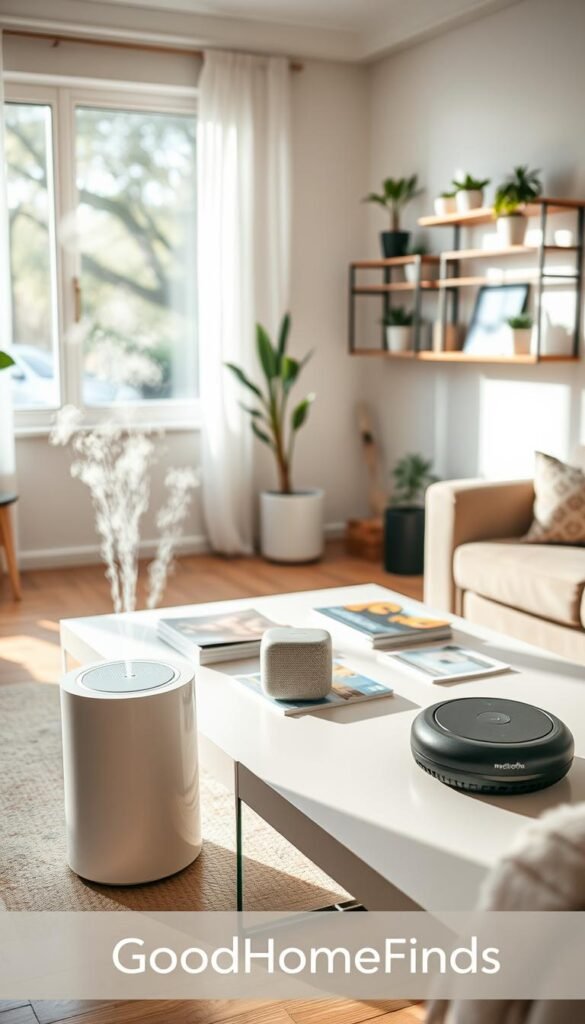
Invisible messes—stale air, fine particles, and high-touch phone screens—shape how clean your home feels. In small spaces these issues concentrate fast. A few small devices give practical wins without drama.
Smart air quality monitors that spot poor ventilation
Why it helps: a monitor like the Amazon Smart Air Quality Monitor alerts you when CO2 or particles rise. That simple signal tells you to open a window or run an exhaust fan during cooking, gatherings, or wildfire smoke.
Setup: minutes. Maintenance: battery or plug power and occasional app checks. Place it in the room center, not behind curtains.
Air purifiers for smoke, allergens, and odor control
Purifiers offer ongoing control for smoke, pet dander, and odors. The Coway Airmega 230 balances effective filtration with a subtle design that fits living rooms. Expect filter replacements and a space/noise tradeoff in studios.
Tip: run low settings for longer periods to save power and cut noise.
Phone and small-device sanitizers for high-touch items
Sanitizers like the PhoneSoap Pro claim quick germ reduction in about five minutes. They help when you touch your phone during cooking, transit, or workouts. They don’t remove grime—wipe greasy screens first.
Safety note: keep UV and corded devices away from kids, and don’t block purifier airflow.
| Device | Best for | Setup time | Ongoing care |
|---|---|---|---|
| Amazon Smart Air Quality Monitor | CO2 alerts, ventilation cues | 5–10 minutes | Plug or battery, app checks |
| Coway Airmega 230 | Smoke, allergens, living-room friendly design | 10 minutes | Filter replacement every 6–12 months |
| PhoneSoap Pro | Sanitizing phones and keys | Minutes per cycle (≈5 min) | Wipe first; replace bulbs per manual |
„Small air devices don’t replace surface care, but they restore comfort fast in compact homes.“
For practical gadget cleaning and sanitizer ideas, see this sanitizer roundup and a review of useful devices like cordless scrubbing helpers here.
Buying guide: budget vs premium cleaning tech that’s worth it
Spend on what saves you the most minutes each week, not the fanciest features. Focus on real wins: less daily upkeep, fewer emergency deep clean sessions, and better day‑to‑day control of messes in small spaces.
Real benefits you can expect
You get measurable time back. A good robot vacuum or cordless stick handles crumbs and hair so you skip a long sweep each day.
You also cut down on deep clean weekends. Small, frequent runs stop stains and grit from becoming big jobs.
Who needs this
Renters with limited storage, pet owners fighting hair, and people with allergies benefit most. If you have a busy schedule, automation gives you daily control without added chores.
Setup time and learning curve
Most robot vacuums map in minutes and are ready after cord pickup and a quick app setup. A carpet cleaner or window robot can be a weekend project because of storage and drain needs.
Common mistakes that waste money
Don’t buy a robot if you have many thresholds or thick rugs—wheels and carpets can jam. Avoid assuming a mop‑vac combo will remove deep stains. And don’t ignore filters; clogged filters cut suction and value.
| Budget vs Premium | What you pay more for | When budget wins | Typical price range |
|---|---|---|---|
| Budget | Basic navigation, simpler filters | Small rooms, mostly hard floors, tight budgets | $20 (manual tools) – $200 (robot/vacuum) |
| Premium | Smarter mapping, easier emptying, better filtration, mop retraction | Large or mixed floors, pets, allergy needs | $400 – $1,000+ |
| Manual tools | Low price, low power use | Spot fixes, renters who store small items | Under $20–$60 |
Power, noise, and energy notes
Check battery runtime vs charge time and the vacuum’s power draw. High power means stronger suction but shorter runtime. If you work at home, test noise levels — loud modes are often unusable during calls.
Maintenance and replacement costs
Factor in filters, brushes, rollers, pads, and cleaning solutions. A cheap vacuum can cost more long term if parts are scarce. Keep a replacement budget for regular items.
Compatibility and safety basics
Match devices to carpets and thresholds. Ensure mop units retract on carpet. Secure small parts away from kids and pets. Useful smart home control features are scheduling and low‑battery alerts, not flashy app extras.
„Buy for the mess you hate most: that one choice often saves the most time and money.“
For vetted product picks and tested consumables, see a trusted list of reliable products here: best cleaning products.
Conclusion
A small change that you do often beats a big machine you never take out. Choose gear that fits your space, your rugs, and your storage. The real benefit is daily control: less grime, fewer deep‑clean weekends, and less mental clutter.
Who needs this: renters, pet owners, and busy schedules that value routine over gadgets. Setup time is usually minutes for a robot or cordless unit; bigger machines take a weekend.
Watch for common mistakes: wrong carpet choices, ignored filters, and buying features you won’t use. Prioritize low‑friction items first.
Next step: pick your worst daily mess—crumbs, hair, odors, stains, or dusty air—and choose one device or small tool that removes that chore with the least upkeep. For a tested all‑purpose option and product notes, see this practical review: best all-purpose cleaner.