
Practical, renter-friendly plans that fit small spaces and busy lives. This short guide shows you how to protect your security deposit and keep your home guest-ready without drills or permanent changes.
Simple means short daily resets and one weekly reset so mess never steals your weekend. You’ll spend a few minutes most days and one focused day each week for a bigger refresh.
This how-to covers tiny-space tasks, no-drill organization, and budget product picks under $25 and time-saving upgrades under $50. You’ll get step-by-step actions, pros/cons, and „best for“ notes for roommates, pets, allergies, or tight schedules.
Expect room-by-room tips, quick monthly prevention steps, and tools that are durable, safe, and easy to store. For targeted problem fixes and renter-safe solutions, see a practical kitchen approach at kitchen problem fixes.
Key Takeaways
- Short daily tasks plus a weekly reset keep small spaces under control.
- Consistent effort protects deposits by reducing stains and odors.
- Budget picks under $25 and upgrades under $50 save time and space.
- No-drill storage ideas work well for renters with limited space.
- Daily minutes prevent big, weekend-only cleaning sessions.
Set Up a Routine That Fits Apartment Life and Protects Your Security Deposit
Set a practical plan that keeps your space safe and your deposit intact without eating your free time.

Who does what? You handle daily upkeep, basic removal of spills, and prompt reporting. Property management handles structural issues, major repairs, and building systems. Review your lease and emergency protocols so you know when to call maintenance.
When to report now
„Report leaks, persistent drain backups, electrical faults, HVAC failures, or anything that risks water damage immediately.“
Document move-in condition with photos. Log each request and completion date. This protects you and speeds repairs.
Pick a realistic weekly plan
Attach short micro-tasks to habits you already have. Choose one reset day and stick to it.
- Option A: 10–15 minutes daily + 60-minute weekly reset.
- Option B: 5 minutes daily + 90-minute weekly reset.
| Focus | Short option | Less-daily option | Benefit |
|---|---|---|---|
| Daily time | 10–15 min | 5 min | Keeps clutter low |
| Weekly reset | 60 min | 90 min | Deeper refresh |
| Air & moisture | Filter check | Dehumidify as needed | Better air, less odor |
| Room split | By area (kitchen/bath) | By day (Mon/Tue) | Fair for roommates |
Note: Recurring mold, constant humidity, or repeated clogs are not just a tougher clean. Those are maintenance issues to report.
Daily Micro-Tasks That Keep Mess From Piling Up
Ten focused minutes each day keep surfaces tidy and tasks manageable. Do a short reset so weekly work is shorter and less stressful.
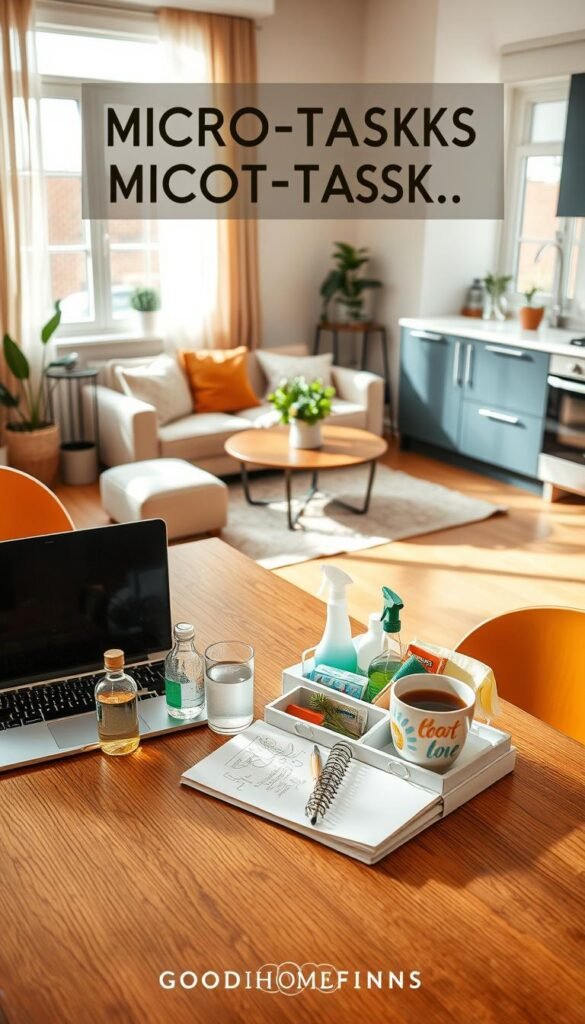
Ten-minute reset habits that make weekly cleaning faster
Clear obvious clutter. Return items to their place. Wipe key surfaces and reset the sink so the space feels fresh.
Kitchen daily basics
Rinse dishes right away or load the dishwasher. Wipe counters and clear crumbs to stop ants, gnats, or cockroaches.
Clean spills immediately and empty food wrappers from trash. This renter-friendly habit reduces pest risk and stubborn stains.
Bathroom daily basics
After use, do a quick wipe of the sink and high-splash spots. Keep the shower area dry-ish to slow grime and odors.
For targeted fixes, see a budget bathroom approach at bathroom fixes on a budget.
Entryway and closet habits
Designate one small drop zone for keys, bags, and shoes so dirt stays out of main areas.
Turn dirty clothes right-side out as you toss them in. This makes laundry day faster and less annoying.
- Quick sink and smell control: rinse, scrub the drain area, and wipe dry.
- No-drill helpers: over-the-door hooks and slim bins keep items off floors without permanent changes.
- Trash rule: take out wet food packaging promptly to avoid lingering smells and sticky residue.
Weekly Reset apartment cleaning routine for the Whole Space
Pick one day each week, set a timer, and follow a simple order so the job stays short and effective.

Start where smell and hygiene matter most. Declutter first. Then dust, wipe surfaces, scrub wet areas, and finish with floors. This order stops you from re-soiling what you just cleaned.
Kitchen and bathroom first
Wipe appliance exteriors, degrease the stovetop, and do a quick fridge check for expired food. In the bathroom, clean the toilet, sink, tub/shower, mirrors, and empty the trash can.
Living, bedroom, and floors
Do a fast dust pass, change linens, and wipe furniture touchpoints. Sweep hard floors and vacuum rugs and carpets, including under cushions.
High-touch disinfect list
- Doorknobs and light switches
- Handles, remotes, and counters
- Finish with one dishwasher load to keep the sink clear
Apartment-size tip: In a studio combine living and bedroom steps into one pass. For larger spaces, split the session into two shorter blocks.
For time-saving product picks, see best cleaning solutions that work well in small spaces.
Bi-Weekly and Monthly Deep Clean Tasks That Prevent Bigger Problems
Regular bi-weekly and monthly tasks stop grime and moisture before they cause lasting damage. These checks protect surfaces, appliances, and air quality so you avoid the „how did it get this bad?“ moment.

Bi-weekly targets focus on fast wins. Detail the toilet (including under the rim), wash bath mats, and disinfect sinks. Steam-clean the microwave with equal parts water and white vinegar, then wipe. Do a quick fridge check for leaks or spoiled food.
Monthly maintenance checklist
Replace or confirm air filters. Clear slow drains and inspect for leaks. Wipe baseboards and door frames where dust and dirt collect out of sight.
- Run a dishwasher deep clean: about 2 cups of vinegar on the top rack on the hottest cycle to cut buildup and odor.
- Run the washing machine hot with ~3 cups vinegar and an extra rinse to keep laundry fresh.
- Vacuum around accessible appliance bases to reduce lint and dust that harm air quality.
Quick safety checks: test smoke detectors, monitor bathroom humidity to prevent mold, and keep floors dry to avoid slips. A short monthly pass saves time at move-out and lowers repair risk.
For a renter-focused supply comparison and setup ideas, see a compact renter setup comparison that helps you pick the right tools for small spaces.
Renter-Friendly, Small-Space Products That Make Cleaning Easier
Pick a compact kit of practical tools that solve everyday messes and save you time each week.
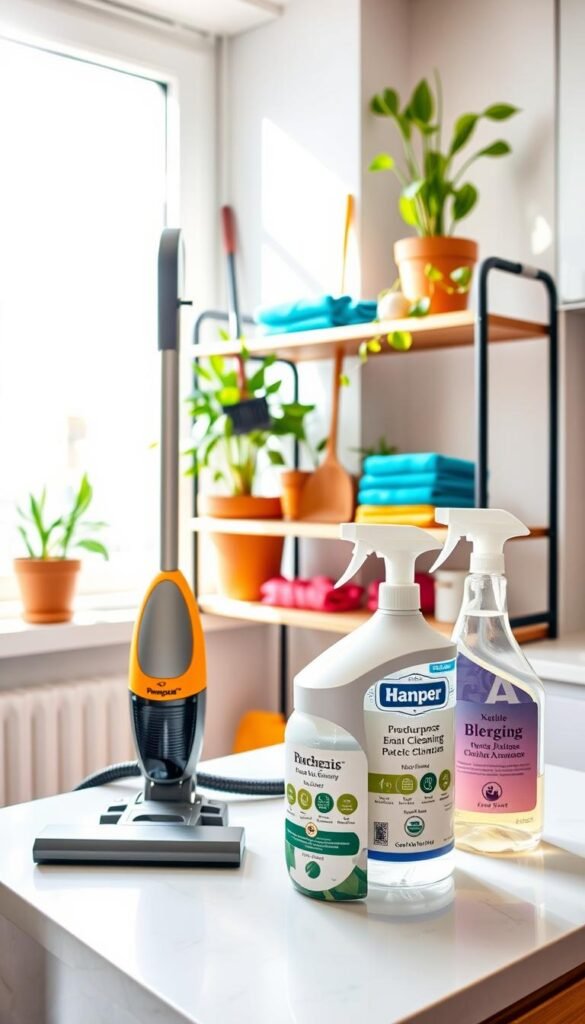
Under $25: essentials that solve everyday messes. Reusable microfiber cloths, a small dish soap + sponge, a basic disinfectant spray or wipes, a compact scrub brush, gloves to protect hands, and a slim squeegee for shower glass cover common needs.
Problem-solvers under $25: a sink strainer or hair catcher to cut clogs, a microwave splatter cover, and a lint roller for pet hair on furniture.
Under $50: time-saving upgrades
Consider a compact stick vacuum (corded or cordless). Add a swivel mop for hard floors and a small drying mat for hand-washed dishes.
If you work long hours or have pets, a basic robot vacuum is often worth it for daily floor care.
No-drill storage and helpers
- Over-the-door hooks for towels and bags.
- Tension rods under sinks for spray bottles.
- Adhesive caddies on clean surfaces and slim rolling carts for narrow gaps.
Pros and cons
- Disposable wipes vs reusable cloths: convenience vs ongoing cost and laundry.
- Pods vs liquids: less mess vs more control over dose and dilution.
- Cordless vs corded tools: easy storage and quick use vs steady power for larger areas.
„Pick the tool that matches your schedule and space. A small investment can cut weekly work in half.“
| Feature | Small spaces | Larger areas |
|---|---|---|
| Vacuum | Compact stick or robot — easy store | Stronger stick or upright for more floor |
| Storage | Over-door hooks, under-bed bins | Slim rolling cart, extra closet bins |
| Best use | Quick spot work, high-traffic room | Whole-home weekly passes |
Best for: roommates need labeled bins and a shared caddy. Pet owners should focus on a stronger vacuum, lint roller, and washable mats. Allergy sufferers benefit from HEPA-style filters and more frequent dust removal. If your schedule is tight, pair a robot vacuum with wipes and one grab-and-go kit for the week.
For more targeted small-space fixes and product mixes, see small-space fixes.
Space Optimization and Easy Maintenance by Room
Design small workflows so surfaces stay usable and clutter never multiplies. A clear plan saves minutes each day and cuts decision fatigue.

Kitchen
Adopt a „clean as you go“ flow: wipe while you cook and rinse tools right after use. Keep counters for daily-use items only.
Use a small bin for „put away later“ items. Empty it during your 10-minute cleanup so piles don’t form.
Bathroom
Control moisture to prevent mold without harsh scrubbing. Hang towels, spread the curtain, and run the fan if you have one.
Do a fast wipe of splash zones and keep floors dry. This lowers slip risk and keeps odors under control.
Closets
Use a simple sorter—two bags or bins for lights and darks. This keeps clothes off floors and speeds laundry trips.
Under-bed bins or over-the-door racks give no-drill storage for seasonal items and reduce dust on fabrics.
Entryway
Create a single drop zone: one hook, one tray, one shoe spot. If you lack a foyer, use a thin mat and narrow shoe rack—easy to move at lease end.
„Small, consistent setups save minutes every day and keep living areas calm.“
For laundry tips and compact sorter ideas, see best laundry room solutions.
Conclusion
Wrap your plan into one simple loop: small daily wins, one weekly reset, and a monthly check. This keeps mess from building and makes each session faster.
Why it works: short daily tasks cut big jobs into minutes. A focused weekly pass resets the whole place. Monthly maintenance protects surfaces, filters, and pipes so problems stay small.
Pick a realistic day and stick to it. Start with under-$25 basics, add under-$50 upgrades that save time, and favor renter-friendly, no-drill tools. For a ready-made product mix that fits small spaces, see this cleaning helper mix.
Next step: copy the weekly checklist into your calendar and set a repeating reminder. A simple schedule you follow beats a perfect plan you quit.