
You can refresh a rental bathroom fast without risking your deposit. Keep changes reversible and store originals. Small swaps and smart choices lift the look and feel of your home in hours.
Small space means tight counters, narrow floors, poor airflow, and harsh light that makes rooms feel smaller. This guide shows practical, renter-friendly ways to update that suit studios and shared apartments.
Start with rules and safety. Then do a deep clean for the biggest impact. Next, focus on visual upgrades like curtain and mats, then storage and surface fixes such as contact paper or tile decals. Finish with plants, eucalyptus, and better towels.
Budget-first approach: I highlight wins under $25, under $50, and when spending more saves time. Decision rule: if it sticks, screws in, or touches plumbing or electrical, pause and check your lease or ask your landlord.
Quick daily baseline: a 60-second wipe-down after a shower, hang towels to dry, and keep floors dry to avoid slips. These small routines keep the space tidy and durable.
Key Takeaways
- Make only reversible changes and keep originals to protect your deposit.
- Focus on cleaning first; it gives the biggest visual boost.
- Choose budget wins under $25 and smart upgrades under $50.
- Use contact paper and hanging storage for renter-friendly updates.
- Follow the decision rule before any install that alters fixtures.
- Daily 60-second habits keep the space fresh and safe.
- Best for studio renters, shared units, and anyone with dated finishes.
Before You Start: Lease Rules, Landlord Approval, and Zero-Damage Setup
Protect your deposit: learn what needs permission and what you can swap freely. Read your lease, note clauses about alterations, and ask for written approval when in doubt. This saves time and avoids disputes at move-out.

What “reversible” really means
Reversible means you can remove an item at move-out with no residue, no holes, and no permanent finish changes. You should be able to reinstall original parts and leave the wall or surface as you found it.
When to ask your landlord vs. DIY swaps
Ask first: paint, major fixture swaps, hardwired mirror replacements, or any glazing/refinishing work (professional glazing can be transformative but costly — expect prices like ~£900).
- paint — usually needs permission
- fixtures that alter wiring or plumbing — confirm with landlord
- tile or basin glazing/refinishing — ask before proceeding
Usually OK to swap: shower curtain and liner, bath mat, tension rods, stick-on hooks, countertop organizers, decant bottles, and freestanding storage. These are renter-friendly and easy to reverse.
Safety checklist for humid rooms
Risk zones: adhesive failure on wet walls, mold growth behind stored items, and electrical hazards near sinks and showers.
- Verify GFCI outlets work before adding plug-in lights.
- Don’t overload extension cords or place cords in splash zones.
- Use non-slip mats and keep floors dry after use.
- Ventilate after showers to limit mold growth.
Documentation routine: take dated before photos, save receipts, and store original hardware in a labeled box. This simple habit makes move-out easy and proves you left the space intact.
Who this suits and quick alternatives: studio baths benefit from vertical and behind-door solutions. Shared spaces work best with labeled caddies and clear zones to reduce conflict and clutter. These practical solutions balance durability, safety, and landlord rules.
For storage comparisons and where to spend more for longevity, see storage cheap vs premium.
Deep Clean Reset That Makes Everything Look Better
Cleaning smart gives the biggest visual return for the least time. A short, focused reset brightens tiles, fixtures, and walls without swapping a thing. Do this before any styling changes to see real difference fast.
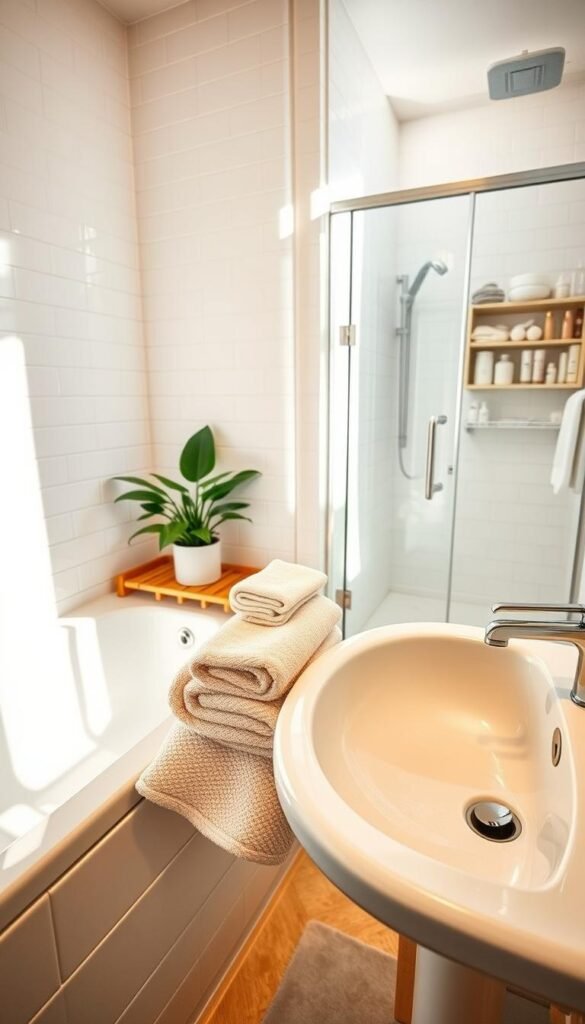
Grout scrub basics using an old toothbrush and bleach
Grout darkens first. Brighten it with a simple method that fits real life.
- Ventilate the room and open a window.
- Wear gloves and spot-test a small area.
- Apply a diluted bleach solution to grout lines.
- Scrub with an old toothbrush using short back-and-forth strokes.
- Rinse thoroughly and dry to discourage mold.
Safety note: avoid breathing fumes and keep the floor dry while you work.
Descale faucets with lemon soaks for a mirror-like finish
Use lemon juice instead of harsh acids on most finishes. Soak a kitchen towel in lemon juice and wrap it around the faucet overnight.
- Use lemon-soaked cotton pads in tight posts and crevices.
- Unwrap and wipe with a soft cloth for a shiny result.
- If the finish is delicate, skip acidic methods and try a mild vinegar solution after a spot-test.
Quick corner routine: walls, baseboards, doors, and window panes
Do this weekly in about 10 minutes to keep the whole room bright.
- Wipe walls near the sink and toilet with a damp cloth.
- Clean baseboards and door edges; disinfect handles.
- Wipe window panes to increase light and reduce grime.
Daily micro-routine: squeegee shower walls or door, hang the curtain open to dry, and quick-wipe the sink after use. These small steps cut cleaning time later.
Slip prevention while you clean: keep floors dry, use non-slip shoes, and don’t leave wet towels on the floor.
When to escalate: persistent black spots, soft drywall, or recurring damp smells can mean hidden moisture. Document the issue, keep dated photos, and notify your landlord promptly.
For a simple cleaning booster you can try, see this cleaning helper mix for practical, renter-friendly solutions.
Shower Curtain and Liner Upgrades That Change the Whole Bathroom Look
A new shower curtain can reset the whole room in one quick swap. It covers the largest vertical surface and sets the tone for color, pattern, and overall style.
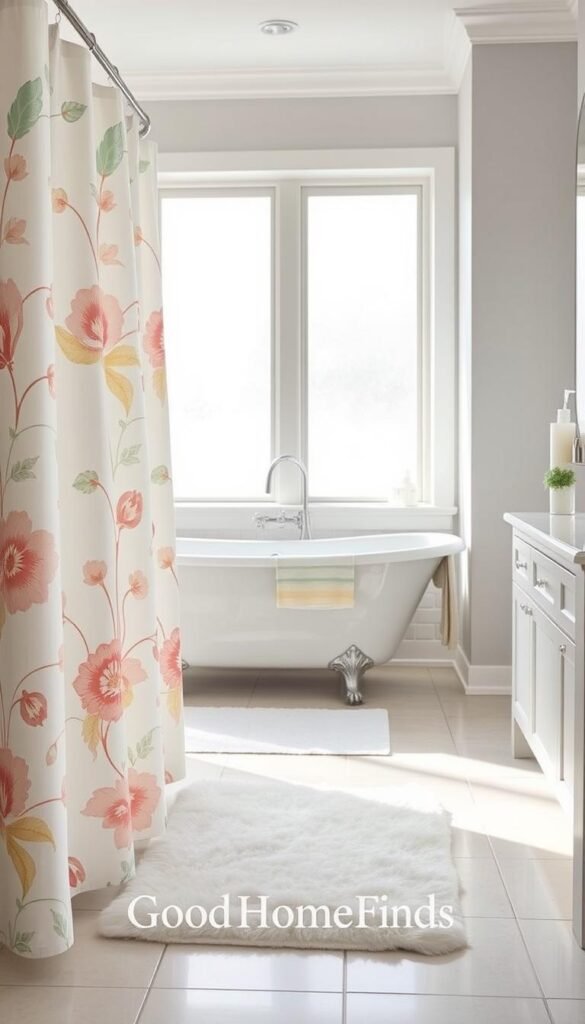
How to pick color, pattern, and material for a small space
Choose light color or simple patterns to make a small room feel bigger. Bold prints work only if walls and fixtures stay neutral.
Material rules: fabric + liner for a polished look; all-in-one for simplicity; PEVA liners for a budget, wipe-clean option.
Easy maintenance: wash and replace schedules
Wash fabric curtains monthly. Wipe a liner weekly. Replace any liner that keeps smelling or shows permanent stains.
„Swap a grimy curtain — the room looks fresher instantly.“
- Under $25: washable fabric curtain, basic rings, clear PEVA liner you can replace often.
- Under $50 (worth it): heavy fabric with reinforced holes, smooth-glide rings, weighted liner to reduce cling.
Pros/cons at a glance: fabric sets a cohesive style but needs laundry. All-in-one is low-effort but can look cheaper. PEVA is cheap and practical for humid spaces.
Small-space setup tip: hang the curtain higher (within rod limits) to lift the sightline. After showering, open it fully so the liner dries fast.
| Choice | Best for | Drawback |
|---|---|---|
| Fabric + liner | Styled look, guests | More laundry |
| All-in-one | Quick install, low fuss | Can look less refined |
| PEVA liner | Budget, easy wipe | Less durable |
Slip-Resistant Bath Mats and Floor Comfort Without Replacing Tile
A well-chosen mat protects feet and keeps wet floors from becoming dangerous. Start with safety first: a grippy backing and quick absorbency reduce slips and accidents.
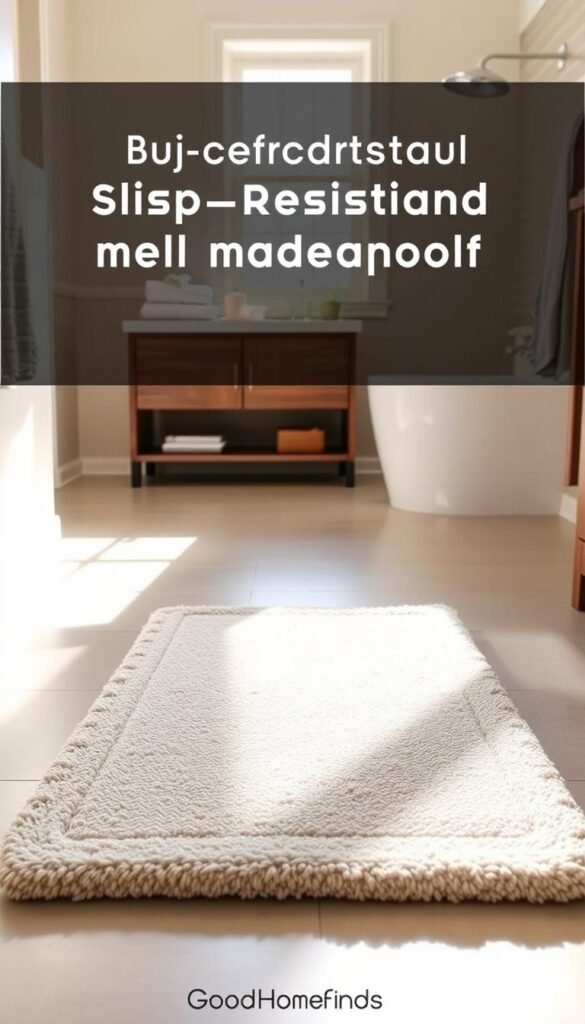
What to look for when you buy
Buying checklist: prioritize absorbency, fast drying, grippy backing, and machine-washability. Thick, plush mats feel great but can trap moisture if your room stays damp.
Budget vs. longer-lasting options
Under $25: thin microfiber or cotton mats. They wash easily, dry fast, and suit small bath areas where quick turnover matters.
Under $50: denser stitched mats or diatomaceous stone-style pads. These offer better quality and a spa-like feel. Note: some feel firmer underfoot.
Pros, cons, and placement tips
- Pros: add texture, color, and warmth; improve safety; upgrade style without work.
- Cons: plush mats dry slower; rubber backing may degrade over years.
- In tight layouts, pick a smaller mat that clears door swing or use two narrow runners for split floor zones.
„A fast-drying mat keeps the space cleaner and reduces mould risk.“
Care routine
- Wash weekly in shared spaces.
- Air-dry fully between uses.
- Replace any mat whose backing peels or traps odor.
| Feature | Under $25 | Under $50 |
|---|---|---|
| Absorbency | Good | Very good |
| Drying speed | Fast | Faster (stone-style) |
| Grip | Rubber backing | Improved backing or textured base |
| Feel / style | Soft, casual | Spa-like, premium |
Bathroom Rental Hacks for Better Storage in Tight Layouts
Tight layouts demand smart storage so everyday items stop taking over your sink and floor. Small, frequent use makes clutter appear fast. Focus on renter-friendly options that install in minutes and remove cleanly.
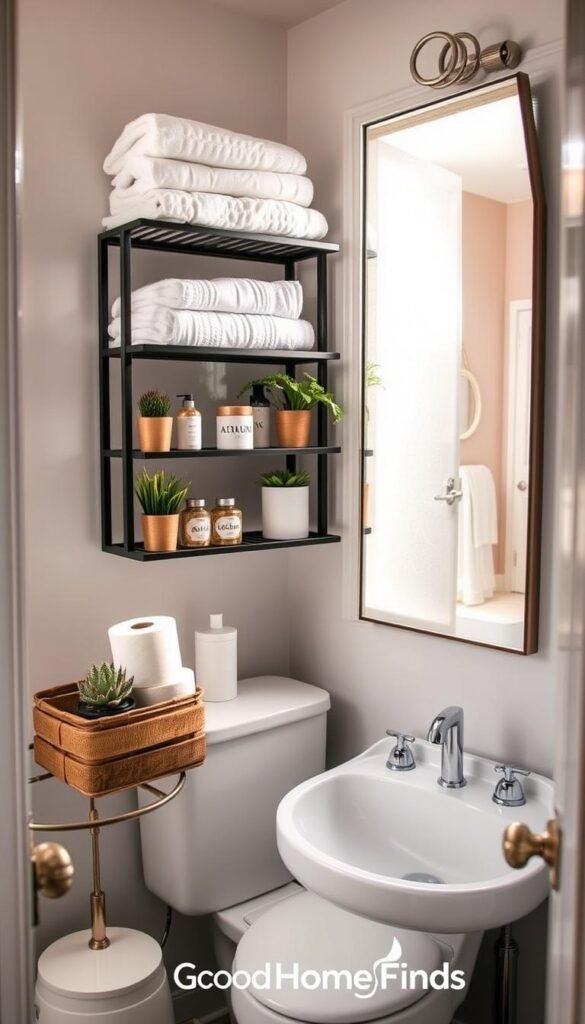
Over-the-toilet and behind-the-door fixes
Over-the-toilet frees floor space with freestanding etagere shelves, tension-rod shelves, or a slim rolling cart. Keep the tank lid accessible and test stability before use. If straps are allowed, an anti-tip strap adds safety.
Behind the door works well with over-door hooks, pocket organizers, and clamp-on towel bars. Protect paint with felt pads where hardware touches. These no-drill choices are quick, durable, and easy to swap.
Shower and counter organization
Use tension-corner caddies, hanging head caddies, or adhesive baskets rated for humidity to tame tall bottles and razors. Dry the mounting surface first and avoid textured tile where adhesive can fail.
Keep drawers tidy with modular bins and stacked trays. A single „daily-use“ caddy on the counter keeps essentials visible but neat. In shared units, labeled trays stop the „whose bottle is this“ problem.
Laundry control and daily routines
A woven basket or lidded hamper (many under $25) prevents clothes piling on the floor. For tiny spaces, try a folding pop-up hamper. Adopt simple habits: reset the counter nightly, restock toilet paper weekly, and do a 5-minute sweep to return items to their shelf.
„Visible but tidy beats hidden chaos in high-use rooms.“
| Layout | Top picks | Where to place |
|---|---|---|
| Small studio | Vertical etagere, slim cart, woven hamper | Over toilet, beside sink, under counter |
| Shared apartment | Labeled trays, durable adhesive baskets, multiple shelves | Counter zones, shower head, behind door |
| Tiny/guest | Over-door pocket, pop-up hamper, single caddy | Back of door, corner, under sink |
Best for: studio renters and shared units that need quick, reversible storage solutions. For closet-focused picks, see best closet space solutions.
Temporary Tile Decals and Peel-and-Stick Options for Floors and Backsplashes
Peel-and-stick tiles can transform dated surfaces without tools or paint. They work best when you want a renter-friendly, quick update that you can remove later. Follow a test-first approach to avoid surprises.
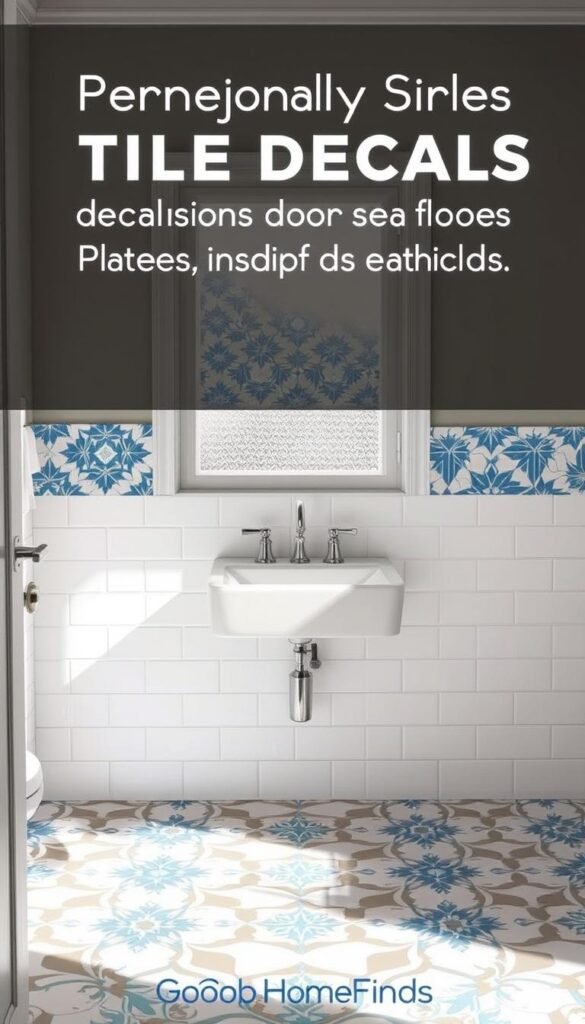
Where these decals work — and where they fail
Best spots: low-splash backsplashes, vanity surrounds, and small accent borders. These areas see less foot traffic and moisture.
Risk zones: floor edges near shower entry, textured tile, and constantly wet zones. Expect edge lifting where water pools or adhesive can’t grip.
Durability and cleaning notes
Durability: many decals claim waterproof performance, but adhesion varies by surface and humidity. Test one decal for a week before covering a large area.
Cleaning rules: use mild cleaners, avoid soaking edges, and pat dry after wiping. Don’t scrub corners with abrasive pads.
Style, paper looks, and faux marble options
Light colors and simple pattern repeats enlarge a small room visually. Faux marble sheets can look sharp, but seams show if misaligned.
Paper-backed decals are fine for low-moisture zones; higher-grade vinyl holds up better around sinks.
„Test one tile and a cleaning routine for a week before committing to a full update.“
- Under $25: small accent strip or backsplash sample.
- Under $50: larger backsplash or limited floor area in a small room.
Pros: fast, reversible, low cost. Cons: can lift in wet spots, looks less seamless than real tile.
Best for: renters and anyone with dated tiles who wants a short-term style lift.
Alternatives: washable rugs, interlocking deck tiles where clearance allows, or focus on grout cleaning plus better lighting if decals fail.
| Feature | Peel-and-stick decals | Alternative |
|---|---|---|
| Cost | Under $25–$50 depending on area | Rugs or deck tiles: $20–$75 |
| Durability in wet zones | Moderate; risk of edge lift | Deck tiles or rugs: better in high-moisture spots |
| Style options | Pattern, marble, many colors | Rugs/textiles: limited pattern alignment |
| Removal | Removable if applied to smooth, clean surfaces | Rugs: instant; deck tiles: removable with no adhesive |
Contact Paper Countertop Refresh for Yellowed or Dated Surfaces
A tired vanity top can age an otherwise clean room; contact paper is a fast, reversible fix. Pick a matte or marble look for a subtle result that reads higher-end at a glance.
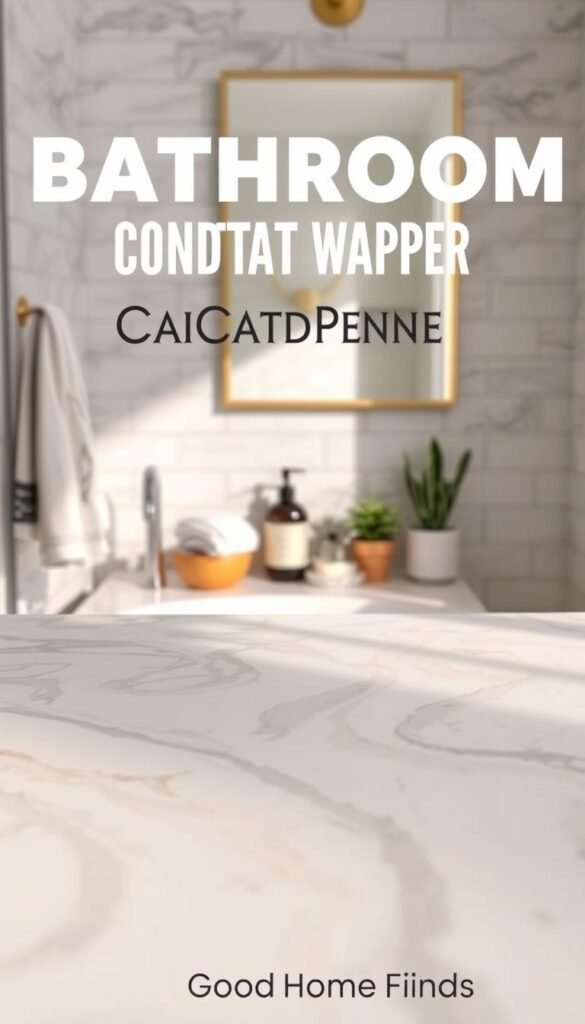
How to apply cleanly: measuring, cutting, and seam placement
Deep clean and dry the surface first. Measure twice and cut once. Use a sharp blade and a metal ruler for straight edges.
- Lay the sheet face down and trim to size with 1/2″ extra for wrapping edges.
- Peel a short section of backing and align the front edge. Smooth with a plastic squeegee as you go.
- Place seams away from the sink and direct water paths where possible.
- Cut clean holes for faucets and wrap edges neatly to reduce lifting.
Pros, cons, budget guidance
Pros: affordable new-top look, quick install, and removable at move-out. This suits a rental bathroom when you need a reversible upgrade.
Cons: heat and standing water shorten life. Seams can get grubby and may need yearly refresh in heavy use.
| Feature | Under $25 | Under $50 |
|---|---|---|
| Coverage | Small vanity top | Larger surfaces, better thickness |
| Durability | Basic paper finish | Higher grade vinyl, improved quality |
| Style | Simple patterns | Realistic marble options |
Alternative: if edges stay damp, use a tray system to hide the wettest zone and keep daily items contained. For more renter-friendly ideas, see best home finds for renters.
Mirror Swaps and Framing Tricks to Add Light and Make the Room Feel Bigger
Mirrors do more than reflect—you can use them to add depth and brightness fast. In small spaces a mirror bounces natural and artificial light and visually widens the room. That change alone can shift the whole look.
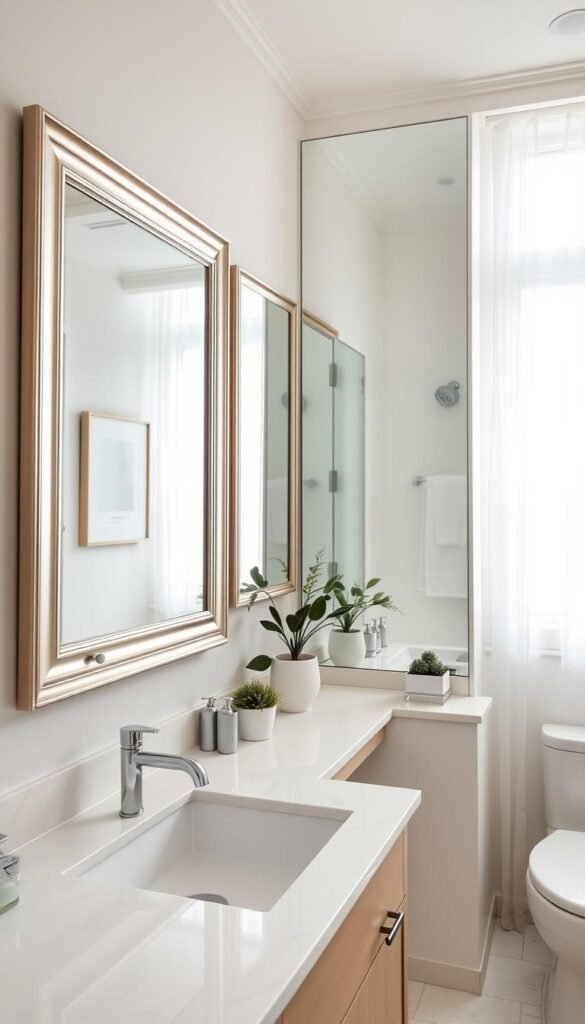
Over-the-counter swap vs. framing an installed mirror
Buying a new hangable mirror is the fastest route. Pick a size that fits the vanity and hang it with renter-friendly hardware. A countertop-leaning mirror works without any wall fixings.
Framing an existing glued-on mirror is cheaper. Use a removable frame kit or adhesive-frame trim. Ask your landlord if you’re unsure. A frame hides chips and stains and gives a modern edge.
Pros, cons, and who it helps most
- New mirror: clean style reset, reflects more light, slightly pricier.
- Frame kit: budget-friendly, less risk, keeps original mirror in place.
- Best for: dark rental bathroom layouts, narrow vanities, or any small room that needs more depth.
Practical safety notes: use rated hangers if allowed, avoid mounting over unstable drywall, and keep mirror edges clear of direct splash zones to prevent damage.
„If you can’t change fixtures, a spotless mirror and brighter bulbs create a big difference.“
Budget guide: under $25 for a simple frame kit or leaner mirror; under $50 for a larger statement piece that reflects more light and opens the room.
Lighting That Flatters: Bulbs, Shades, and Fixture Changes When Allowed
A quick bulb change often solves poor visibility and flat-looking finishes faster than any decor swap.
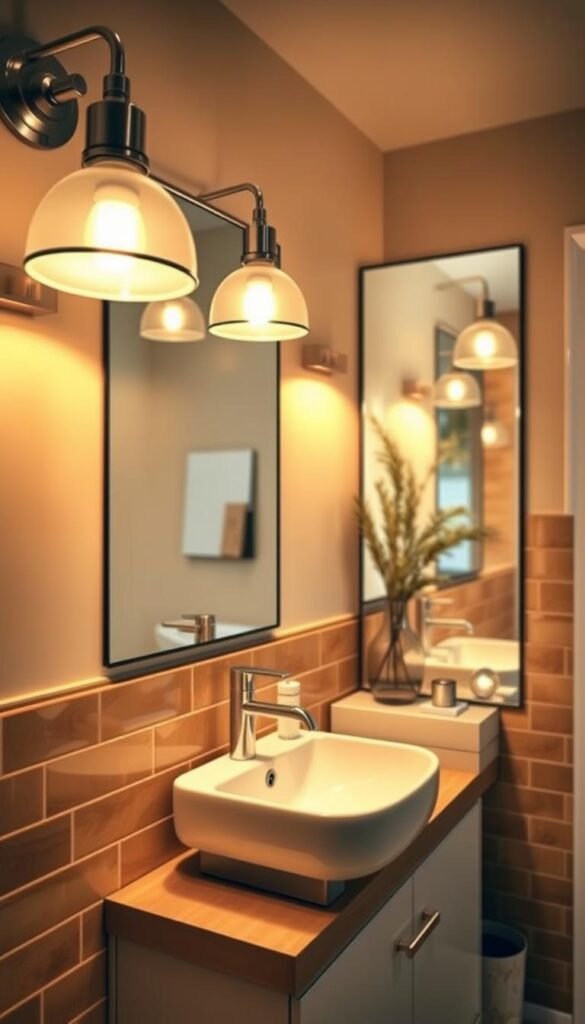
Start simple: swap to brighter LED or Energy Star-rated bulbs to cut bills and brighten the room instantly. Even, warm-white LEDs reduce shadows at the mirror and make surfaces read cleaner.
No-permission upgrade
Bulbs first: choose higher CRI bulbs for truer color. This costs under $25 and is zero-permission. It’s the fastest of the practical ways to improve a small bathroom.
Low-risk style move
Replace just the shade to change styles without touching wiring. Keep the original shade for move-out and match the new one to your overall color plan.
If approved: fixture swaps
If the landlord approves, swap fixtures using existing wiring. Turn off power at the breaker and hire a licensed electrician if unsure.
- Pros: bulbs = cheap; shades = medium impact; fixtures = high impact.
- Cons: fixtures need permission and safe handling in humid spaces.
„Good lighting saves time and makes the room feel larger and more welcoming.“
Who it helps: rooms with one dim overhead light, anyone doing makeup or shaving, or renters who want a quick style update. For more budget tips, see budget lighting fixes.
Quick Hardware Updates That Are Easy to Reverse
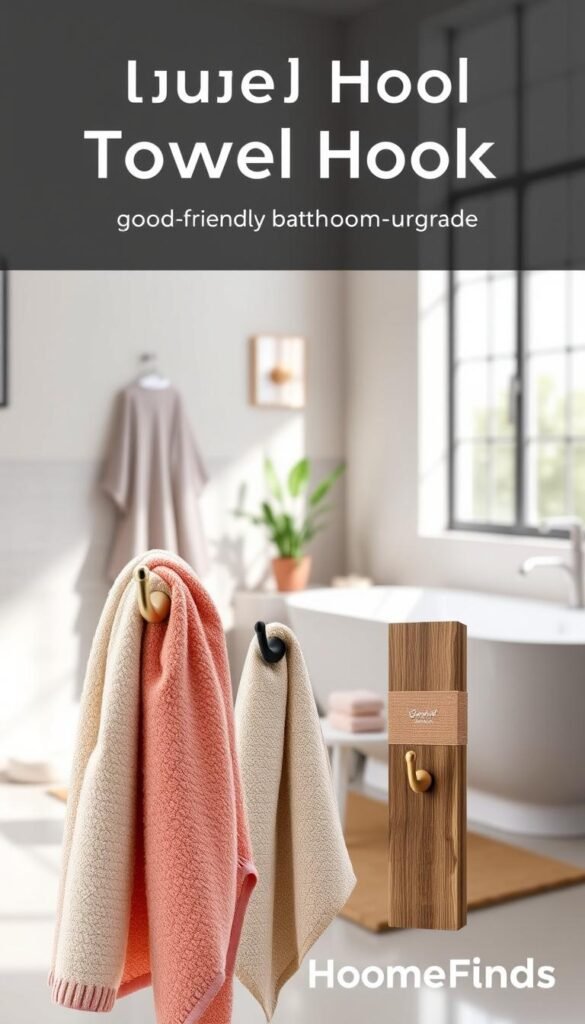
Small hardware swaps give daily wins that feel expensive. Changing pulls, towel hooks, or a towel bar updates how the room looks and functions. These are renter-friendly moves when you keep originals and avoid drilling where possible.
What to try first
No-drill defaults are your safest bet. Use over-door hooks, adhesive hooks rated for humidity, and tension shower or rod-mounted solutions. Always check weight limits and clean the mounting surface before sticking anything.
When to swap screws
If matching screw holes exist, you can replace cabinet pulls or handles and keep the change reversible. Measure hole spacing, save the original screws, and store them in a labeled zip bag for move-out.
Pros, cons, and budgets
- Pros: low cost, high visual payoff, easier daily use for towels and storage.
- Cons: cheap finishes can peel in humid rooms; adhesive hooks can fail on textured tile.
- Under $25: multiple adhesive hooks or a coordinated set of simple pulls.
- Under $50: higher-quality pulls plus a slim tension towel bar for a cohesive style and better quality.
„Label a zip bag with original screws and take a photo of each install for a smooth move-out.“
Who benefits most
This is ideal for renters with builder-grade hardware, shared spaces that need more hooks, and anyone who wants a neater routine for towels. For comparisons on quality vs. price, see a useful kitchen fix comparison that applies to small upgrades here.
| Upgrade | Best for | Durability |
|---|---|---|
| Adhesive hooks | Light towels, temporary use | Moderate; surface-dependent |
| Tension towel bar | No-drill towel rail alternative | Good; avoids holes |
| Coordinated pulls | Vanity refresh with matching look | Best when higher quality |
Plants and Steam-Friendly Greenery for a Softer, Spa-Like Bathroom Feel
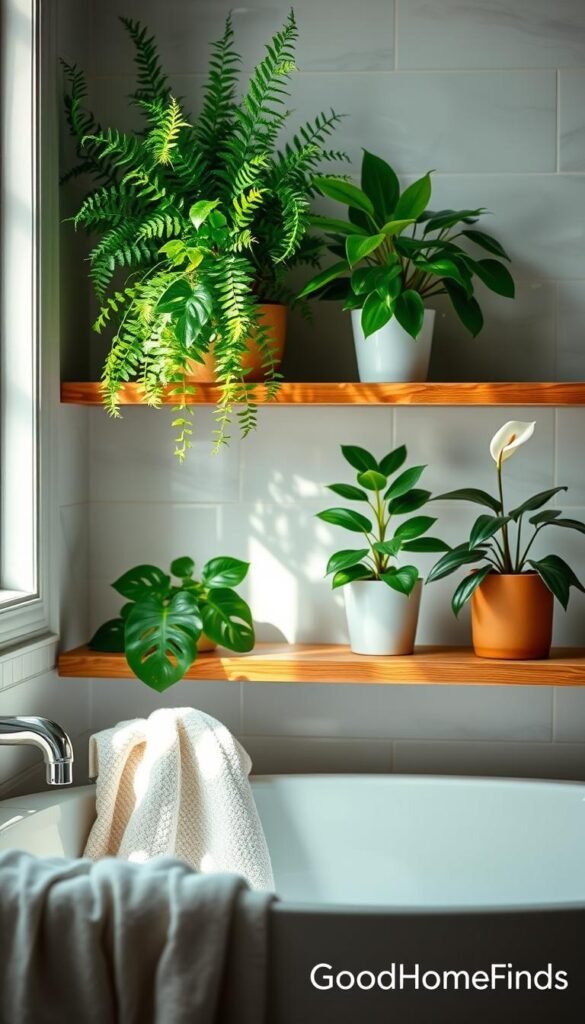
A single shelf with the right plant can create a spa-like corner in a compact house layout. Greenery softens hard tile and adds warmth. It changes the feel of the room without any permanent work.
Humidity-loving options for dim light and small shelves
Practical picks: spider plant, moth orchid, and a small China doll tolerate steam and low light. These plants like humidity and recover from the occasional missed watering.
Placement rule: keep plants on a small shelf or windowsill away from direct splash. Don’t crowd the vanity; leave space for daily items.
Low-maintenance routine to avoid gnats, moldy soil, and mess
Water less than you think in a humid room. Use well-draining pots and empty saucers after watering.
Remove dead leaves promptly. This stops mold and keeps soil healthy.
- Top-dress with sand to deter gnats.
- Use sticky traps if small flies appear.
- Avoid compost-heavy mixes in tight spaces.
Who benefits: renters and anyone wanting a calmer, spa-like feel in a tile-heavy house. If you dislike upkeep, high-quality faux greenery gives the same visual lift with zero mess.
| Need | Best plant | Care tip |
|---|---|---|
| Low light | Spider plant | Bright indirect light; water sparingly |
| Dim & humid | Moth orchid | Mist occasionally; avoid soggy roots |
| Small shelf | China doll (small pot) | Rotate weekly; empty saucer |
Eucalyptus in the Shower and Other Low-Cost “Spa” Updates
Steam and scent can turn a quick wash into a peaceful, spa-like moment. A small, controlled eucalyptus bundle releases a clean, menthol note when steam warms the leaves. That scent can feel decongesting and calming in a practical, low-cost way.

Safe hanging and upkeep
How to hang: tie stems with cotton twine and loop it over the shower head so leaves sit above the water flow. Keep the bundle clear of direct spray and your face. Secure stems tightly so nothing drops and creates a slip risk.
Keep it clean: replace the bundle weekly or when scent fades. Remove at first sign of mildew. Good ventilation after showering cuts mold risk and prolongs the sprig’s life.
Low-clutter alternatives
- Small diffuser: place it outside the shower for steady scent without wetting foliage.
- Scent tablet: a shower-safe tablet on a shelf away from direct water.
- Linen spray: spritz towels or curtains for a quick spa- vibe.
„If it reduces usable space or makes cleaning harder, skip it and stick to one scent element only.“
Who this suits: people who want a spa- feel without adding more bottles or shelf clutter. In very small showers, prefer an external diffuser or a linen spray to keep the place functional.
Daily routine tips: ventilate after use, open the curtain to dry, and avoid storing extra bottles in the shower when adding scent elements. These steps keep surfaces dry and reduce slipping and mildew.
Upgrade Towels, Soap Dispensing, and Small Accessories for a More Cohesive Style
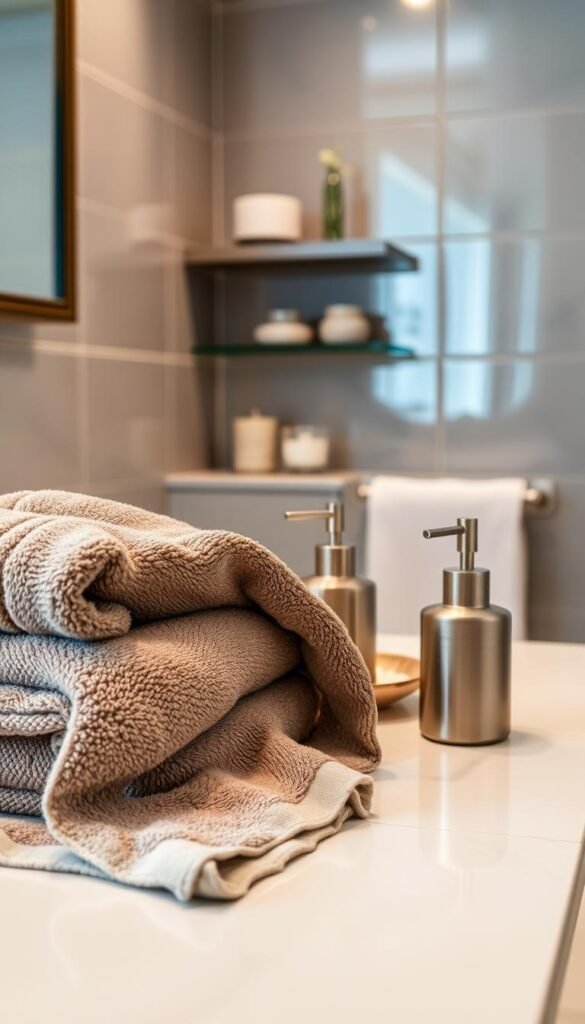
Fresh textiles and tidy dispensers lift a room’s visual tone in minutes. Swap in coordinated towels and matching pumps to make fixtures and finishes feel newer. These moves are fully reversible and show big impact where guests look first.
Why textiles change the look instantly
Towels are large, visible surfaces. A set in one or two core colors makes the whole place read as intentional.
Pick a simple texture—waffle, rib, or plush—and avoid mixing many patterns. This keeps the look calm in small spaces.
Decanting for less visual clutter
Decanting shampoos and lotions into matching pump bottles removes label noise and creates a neat shelf. Keep original bottles in storage for refills at move-out.
Safety note: label each bottle clearly and keep conditioner and shampoo separate to avoid confusion.
Care routine, pros/cons, and who benefits
- Rotate sets weekly so you always have a dry towel ready. Hang wet items to air out.
- Pros: instant uplift, cohesive style, easier cleaning zones.
- Cons: decanting needs refilling and occasional bottle cleaning to avoid residue.
- Best for: shared baths, tiny spaces without closed storage, and renters seeking visible improvement on a budget.
| Package | Under $25 | Under $50 |
|---|---|---|
| Key items | Set of hand towels, simple soap pump, toothbrush cup, small tray | Higher-quality bath towels (set), sturdier tray, matching dispensers, lidded bin |
| Visual impact | Good—small visible wins | Very good—luxury feel and cohesive style |
| Maintenance | Wash weekly; refill pumps often | Rotate towels; deep-clean dispensers monthly |
Conclusion
End with a clear order of work so small changes actually add up over time. Deep clean first. Fix the shower zone and floor safety next. Then improve light and mirror, add storage, and finish with surface coverings and accessories.
Keep originals safe and ask before paint or fixture swaps to protect your deposit. For a quick under-$25 plan today, pick a new liner or curtain basics, a grippy mat, a small organizer, and one declutter routine.
For under $50 this weekend, upgrade towels, add a better shelf solution, swap bulbs for brighter light, and tweak the mirror if you can. Use simple upkeep: daily squeegee and ventilation, weekly wipe-down and mat wash, monthly curtain wash and declutter.
Studios gain most from vertical storage and light colors. Shared rooms benefit from labeled zones and duplicate caddies. Apply the same drop-zone and container approach you use in the kitchen or entryway to keep the whole home tidy.
Practical reminder: if an item traps moisture or makes cleaning harder, skip it — good looks aren’t worth ongoing problems.